
Tibet Travel Permit Guide
TODO: Extract from article (100-160 chars)
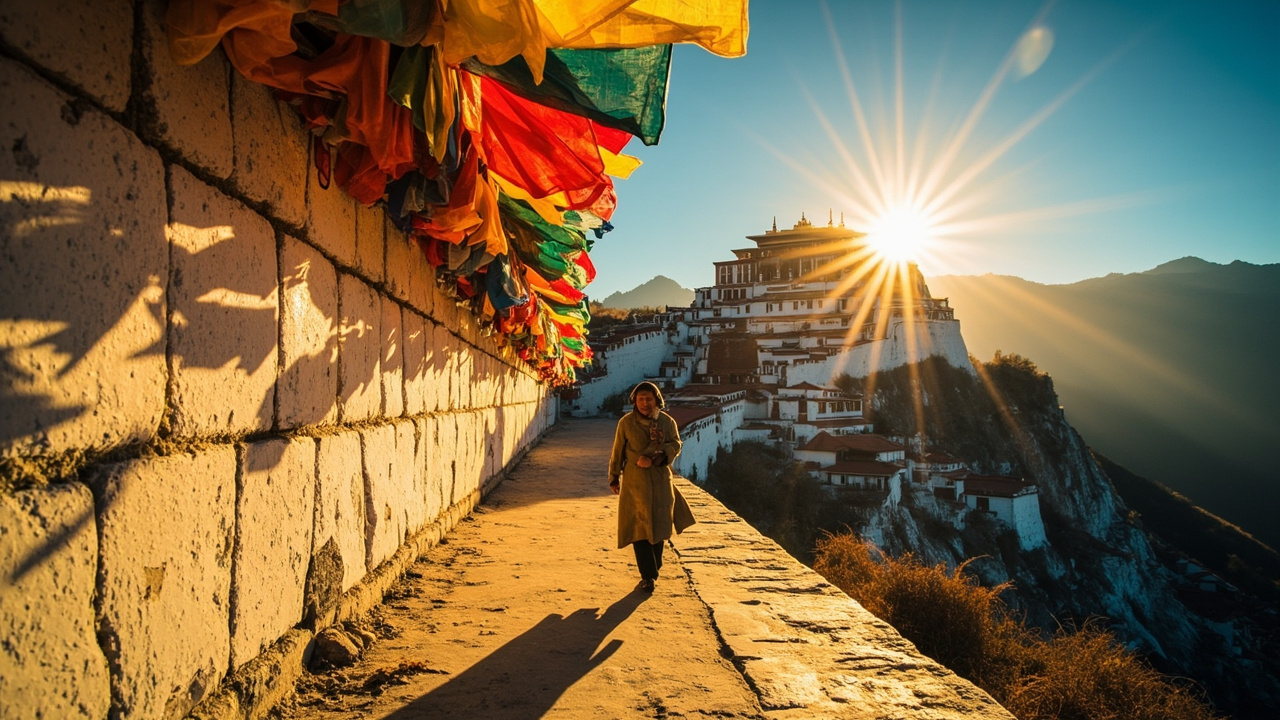
Tibet Travel Permit Guide
The first time I tried to go to Tibet, I got turned back at the Chengdu airport check-in counter. Not because of my visa, not because of my luggage — because the airline agent looked at my passport, looked at my ticket to Lhasa, and asked for a piece of paper I didn’t have. I’d read about the “Tibet permit” online and assumed it was something you sorted out on arrival. It is not. I spent the next three days in a Chengdu hostel emailing tour operators, and the whole thing cost me about $180 in rebooking fees I’ll never get back.
That was 2019. The rules have shifted a few times since, and in 2026 they’re stricter in some ways and more streamlined in others. But the core truth hasn’t changed: you cannot simply buy a plane ticket to Lhasa and show up. Foreign passport holders need a Tibet Travel Permit arranged in advance through a licensed travel agency, and you need it before you board the flight or train. No permit, no boarding. The airline and railway staff check it at the gate, not at the border.
This guide is what I wish someone had handed me at that Chengdu check-in counter. It covers who needs a permit, what it costs, how long it takes, which routes work, what the altitude will do to you, and the specific mistakes that catch first-timers. I’ve been to the region three times now — twice legally, once as a very frustrated man in an airport — and I’ve talked to enough tour operators, hostel staff, and fellow travelers to know where the real friction points are.
Quick answer
Foreign passport holders (including Americans, Europeans, and most Southeast Asians) need a Tibet Travel Permit to enter the Tibet Autonomous Region, and it can only be issued through a licensed Tibetan travel agency — you cannot apply for it yourself. The permit typically costs $50–$150 (CNY 360–1,080) as part of a mandatory tour package, takes 10–20 days to process, and requires you to book a guided tour with a fixed itinerary. You must have the physical or digital permit in hand before boarding any flight or train to Lhasa.
The Short Version
If you have 90 seconds: book through a licensed agency at least three weeks before you want to fly. Budget $1,200–$2,500 for a 5–8 day guided tour including the permit. Fly into Lhasa, not overland from Nepal unless you’ve got a China visa and a Group Tourist Visa sorted. Acclimatize for two days before doing anything strenuous. Bring cash, because ATMs in Tibet are unreliable and Alipay and WeChat Pay work but not everywhere. And accept that you cannot travel independently — that’s the deal.
How I Picked These
I’m not going to pretend this is a ranking of “best places.” A permit guide isn’t a destination list — it’s a logistics document. So what I’ve done is break the process into the ten things that actually matter, in the order you’ll hit them: eligibility, agency selection, cost, documents, routes, altitude, money, connectivity, etiquette, and the stuff that goes wrong. Everything here comes from three trips between 2019 and 2025, conversations with four different Lhasa-based tour operators, and a very long WeChat thread with a Canadian couple who got stranded in Kathmandu for eleven days waiting on paperwork. Where I’m unsure of a current number, I say so and give a range.
Comparison Table: Permit & Route Options
| Rank | Route / Option | Best For | Approx Cost (USD) | Time Needed | When to Go |
|---|---|---|---|---|---|
| 1 | Fly to Lhasa (Chengdu/Chongqing/Xi’an hub) | Most first-timers | $1,200–2,500 (tour) | 5–8 days | Apr–Oct |
| 2 | Qinghai-Tibet Railway from Xining | Train lovers, gradual altitude | $1,400–2,800 | 7–10 days | May–Sep |
| 3 | Fly to Shigatse via Lhasa | Everest Base Camp access | $1,800–3,200 | 8–12 days | Apr–Jun, Sep–Oct |
| 4 | Overland from Nepal (Zhangmu) | Already in Kathmandu | $1,500–2,500 | 10–14 days | Apr–Oct |
| 5 | Fly to Nyingchi | Lower altitude, easier start | $1,300–2,400 | 5–7 days | Mar–Oct |
| 6 | Group join-in tour | Solo budget travelers | $800–1,500 | 5–7 days | Apr–Oct |
| 7 | Private custom tour | Families, photographers | $2,500–6,000 | 8–14 days | Year-round (winter limited) |
| 8 | Everest Base Camp add-on | Bucket-list trekkers | +$600–1,200 | +4–5 days | Apr–Jun, Sep–Oct |
| 9 | Mount Kailash / Ngari | Pilgrims, hardcore travelers | $3,500–7,000 | 14–18 days | Jun–Sep |
| 10 | Winter Lhasa (Nov–Mar) | Cheap, quiet, cold | $900–1,800 | 4–6 days | Nov–Mar |
1. Who Actually Needs a Tibet Travel Permit
Here’s the thing nobody tells you clearly: the permit isn’t a visa. It’s a separate document issued by the Tibet Tourism Bureau, and it sits on top of whatever China visa or visa-free entry you’re using to get into the country. You need both.
Foreign passport holders need it. That includes Americans, Brits, Germans, French, Australians, Canadians, and most Southeast Asians. There are exceptions — holders of certain diplomatic passports, and in some years, citizens of a handful of countries under specific bilateral arrangements — but for a normal tourist, assume you need it.
What surprises people is that you cannot apply for it yourself. The Tibet Tourism Bureau doesn’t accept individual applications from foreigners. You must go through a licensed travel agency, and that agency must submit your passport scan, China visa scan, and a fixed itinerary. This is why “independent travel in Tibet” doesn’t exist for foreigners. You’re on a tour, whether you like it or not.
There’s also a second layer most guides skip: the Alien’s Travel Permit, needed if you go beyond Lhasa to places like Shigatse, Nyingchi, or Everest Base Camp. Your agency handles this too, usually for an extra $15–30 (CNY 100–220). And if you’re crossing into Tibet from Nepal, you need a Group Tourist Visa from the Chinese Embassy in Kathmandu, which is a whole separate headache.
📷 Location: Applies to the entire Tibet Autonomous Region (TAR) 🎫 Entry fee: Permit itself ~$50–150 (CNY 360–1,080), bundled into tour cost 🕐 Processing time: 10–20 days standard 🚆 How it works: Agency submits on your behalf; you receive a scan or physical copy ⏰ When to apply: At least 3 weeks before departure, 4–6 weeks in peak season 💡 Insider tips: Your permit lists your exact itinerary and guide — deviations get you stopped at checkpoints. Chinese-name spelling on your permit must match your passport exactly, or you’ll be turned away at the airport.
I once watched a German guy at Lhasa Gonggar Airport argue for 40 minutes because his permit said “Mueller” and his passport said “Müller.” He did not board.
2. Choosing an Agency (and Why It Matters More Than You Think)
The agency is everything. They’re the ones who file your paperwork, meet you at the airport, assign your guide, and — if something goes wrong — the only people who can fix it.
There are dozens of licensed operators. The big names you’ll see in search results are legitimate but pricey. Smaller Lhasa-based agencies are often cheaper and more flexible, but you’re taking a risk on responsiveness. My rule: pick an agency that replies to your first email within 24 hours. If they’re slow before you’ve paid, imagine them after.
What to ask before you commit:
- Is the permit fee included, or added later?
- What’s the cancellation policy if the permit is denied?
- Will the guide speak English, or will I be using a translation app?
- Is the itinerary fixed, or can I adjust after arrival?
The last one matters. Some agencies advertise “flexible” itineraries that turn out to be rigid once you’re there. Get it in writing.
📷 Location: Agencies based in Lhasa, Chengdu, Xining, and Kathmandu 🎫 Entry fee: Agency markup typically 20–40% over base cost 🕐 Opening hours: Email anytime; expect replies during Beijing business hours 🚆 How to reach them: Most operate via WeChat and email; some have Chengdu offices ⏰ When to book: 4–6 weeks ahead for peak season (May–Sep) 💡 Insider tips: Pay via bank transfer or Alipay, never cash to an individual. Ask for the agency’s Tibet Tourism Bureau license number. Cross-check reviews on multiple platforms — some agencies buy reviews. Get a WeChat contact, not just an email, because email goes unanswered once you’re on the ground.
3. What It Actually Costs in 2026
Let’s talk money, because this is where sticker shock hits.
A basic 5-day Lhasa group tour runs $800–1,500 (CNY 5,800–10,800) per person, including permit, guide, transport, and 3-star hotel. A private tour for two starts around $2,500 (CNY 18,000) and climbs fast. Everest Base Camp add-ons push you past $3,000.
What’s not included and catches people off guard: flights to Lhasa (often $200–500 from Chengdu), meals beyond breakfast, tips for guide and driver (budget $10–15/day), and the Alien’s Travel Permit for out-of-Lhasa travel.
The cheapest legitimate route is a join-in group tour, where you share a vehicle and guide with strangers. It’s less comfortable and less flexible, but it can cut your cost nearly in half. I did this on my second trip and it was fine — the group was six people, the guide was excellent, and I saved about $700.
📷 Location: Costs vary by agency base city 🎫 Entry fee: Total trip $800–6,000 depending on style 🕐 Opening hours: N/A 🚆 How to pay: Bank transfer, Alipay, WeChat Pay — set these up before you arrive ⏰ When to book: Winter (Nov–Mar) is 30–40% cheaper 💡 Insider tips: Winter tours are dramatically cheaper but many high-altitude routes close. Tipping is expected but not mandatory — $10/day for guide, $5/day for driver is standard. Don’t pay the full amount upfront; 30% deposit is normal.
4. The Documents You Need (and the Ones You Don’t)
Your agency will ask for: passport scan (photo page), China visa scan (or visa-free entry proof), a passport-style photo, and your confirmed itinerary. That’s it for the permit itself.
What you don’t need: a medical certificate (unless you’re over 70 or doing high-altitude treks), a background check, or proof of funds. Some agencies ask for travel insurance — get it anyway, because evacuation from altitude sickness is expensive and standard policies often exclude it.
The permit itself arrives as a scan you print, or occasionally a physical document delivered to your hotel. In 2026, most agencies send a PDF. Print two copies. Keep one in your bag and one in your passport.
📷 Location: Submitted remotely to Tibet Tourism Bureau 🎫 Entry fee: Photos ~$5–10 (CNY 35–70) if you need them taken 🕐 Opening hours: N/A 🚆 How to submit: Via agency, usually through WeChat or email ⏰ When: 3–6 weeks before travel 💡 Insider tips: Make sure your passport has 6+ months validity. If your China visa is a 144-hour or 240-hour transit visa, you generally cannot use it for Tibet — you need a full tourist visa. Check this before booking anything.
5. Getting There: Flights vs. the Train
Two main ways in: fly to Lhasa Gonggar Airport, or take the Qinghai-Tibet Railway from Xining.
Flying is faster (2 hours from Chengdu) but hits you with altitude all at once — Lhasa sits at 3,650m (12,000 ft). The train takes 21–22 hours from Xining and climbs gradually, which most people tolerate better. I’ve done both. The train is more scenic and easier on the body; the flight is cheaper and saves two days.
Either way, your permit is checked before boarding. At Chengdu Shuangliu, the check happens at a dedicated Tibet-flights counter. At Xining railway station, it’s checked at a separate window before you enter the platform area. Miss it and you’re not getting on.
📷 Location: Lhasa Gonggar Airport (LXA) or Lhasa Railway Station 🎫 Entry fee: Flights $150–500; train soft sleeper $120–180 (CNY 870–1,300) 🕐 Opening hours: Airport 24h; station gates close 30 min before departure 🚆 How to get there: From Chengdu, flights depart daily; from Xining, train Z21/Z265 ⏰ When: Fly in the morning to arrive before dark 💡 Insider tips: Book the train’s soft sleeper, not hard sleeper, for the altitude transition. Bring your own oxygen canister — they’re sold on the train but overpriced. The train has a doctor on board for altitude emergencies.
6. Altitude Sickness: The Part Nobody Warns You About Properly
Lhasa is high. Really high. Higher than most ski resorts, higher than Cusco, high enough that healthy 30-year-olds get headaches and nausea on day one.
The rule: do nothing strenuous for the first 48 hours. No climbing Potala Palace on arrival day. No long walks. Drink water constantly, avoid alcohol, and sleep. If you feel worse, tell your guide — they carry oxygen and know the clinics.
I ignored this on my first trip and spent day two in bed with a splitting headache, missing the Jokhang Temple. Don’t be me.
📷 Location: Applies region-wide; worst above 4,000m 🎫 Entry fee: Oxygen canisters $3–8 (CNY 20–60) 🕐 Opening hours: Clinics in Lhasa open 24h 🚆 How to prepare: Start hydration 2 days before arrival ⏰ When it hits: Usually 12–48 hours after arrival 💡 Insider tips: Diamox (acetazolamide) helps but needs a prescription and 24h lead time. Don’t fly in and immediately fly to Everest — acclimatize in Lhasa first. Travel insurance with altitude coverage is worth every cent.
7. Money, ATMs, and Payment Apps
Tibet runs on cash more than the rest of China. Alipay and WeChat Pay work in Lhasa’s bigger shops and hotels, but smaller restaurants, monasteries, and roadside stalls want yuan.
ATMs exist in Lhasa (Bank of China, ICBC) but are unreliable outside the city. Bring more cash than you think you need — I’d say $300–500 (CNY 2,200–3,600) for a week, in mixed denominations.
📷 Location: Lhasa city center has the most ATMs 🎫 Entry fee: N/A 🕐 Opening hours: Banks 9am–5pm weekdays 🚆 How to pay: Cash preferred; Alipay/WeChat Pay in cities ⏰ When: Withdraw before leaving major cities 💡 Insider tips: Set up Alipay before you arrive — it links to foreign cards now. Keep small bills for monastery donations. Don’t rely on your home bank card working; tell your bank you’re traveling.
8. Internet, SIM Cards, and the Great Firewall
Tibet’s internet is slower and more restricted than mainland China’s. A VPN is essential if you want Google, WhatsApp, or Instagram — and even then, connections drop.
Buy a Chinese SIM at the airport or in Chengdu before flying. Local Tibet SIMs are hard for foreigners to obtain. Hotel wifi exists but is throttled.
📷 Location: Lhasa has the best coverage; rural areas are spotty 🎫 Entry fee: SIM ~$15–30 (CNY 110–220) 🕐 Opening hours: Airport counters 8am–8pm 🚆 How to get one: China Mobile or China Unicom, passport required ⏰ When: Before you fly to Lhasa 💡 Insider tips: Install and test your VPN before you enter China. Download offline maps. WeChat works without VPN and is how your guide will contact you.
9. Etiquette and the Guide Relationship
Your guide isn’t just a guide — they’re your legal escort. You can’t wander off alone in most areas. This frustrates independent travelers, but it’s the reality.
Be respectful at monasteries: walk clockwise, don’t photograph monks without asking, don’t touch religious objects. Dress modestly. Don’t discuss politics, especially around the 1950s and after.
My guide, Tashi, was patient with my endless questions and quietly redirected me when I was about to do something stupid. Treat yours well and your trip improves tenfold.
📷 Location: Applies at all religious sites 🎫 Entry fee: Monastery donations $1–5 (CNY 7–35) 🕐 Opening hours: Most monasteries 9am–4pm 🚆 How to behave: Follow your guide’s lead ⏰ When: Always 💡 Insider tips: Learn a few Tibetan phrases — “tashi delek” (hello) goes far. Don’t point your feet at Buddha statues. Photography fees apply in some halls.
10. Winter vs. Summer: When to Actually Go
Summer (May–September) is peak: warm, green, crowded, expensive. Winter (November–March) is cold, quiet, and cheap, but many routes close and some monasteries limit access.
I went in October and it was perfect — clear skies, fewer crowds, mild days. If you want Everest Base Camp, go April–June or September–October. If you want cheap Lhasa, go January.
📷 Location: Region-wide 🎫 Entry fee: Winter tours 30–40% cheaper 🕐 Opening hours: Some sites close Dec–Feb 🚆 How to plan: Book 6 weeks ahead for summer ⏰ When: Oct and Apr are the sweet spots 💡 Insider tips: Tibetan New Year (Losar, usually Feb) is spectacular but everything books out months ahead. Check the top China destinations guide for how Tibet fits into a bigger trip.
FAQ summary
Foreign passport holders need a Tibet Travel Permit to enter the Tibet Autonomous Region, and it can only be obtained through a licensed travel agency — individual applications are not accepted. The permit costs roughly $50–150 (CNY 360–1,080) as part of a mandatory guided tour, takes 10–20 days to process, and must be in hand before boarding any flight or train to Lhasa. Independent travel is not permitted for foreigners; you must book a tour with a fixed itinerary and guide. Additional permits (Alien’s Travel Permit) are required for travel beyond Lhasa, and a Group Tourist Visa is needed if entering from Nepal.
FAQ
Q: Can I get a Tibet Travel Permit on my own? A: No. The Tibet Tourism Bureau only accepts applications from licensed travel agencies, not individuals. You must book through an agency, which submits your passport, visa, and itinerary on your behalf.
Q: How far in advance should I apply? A: At least 3 weeks before your intended departure, and 4–6 weeks during peak season (May–September). Processing takes 10–20 days, and delays are common around Tibetan holidays.
Q: How much does the permit cost? A: The permit itself runs $50–150 (CNY 360–1,080), but it’s bundled into a mandatory tour package. Total trip costs range from $800 for a budget group tour to $6,000+ for a private custom itinerary.
Q: Can I use a 144-hour or 240-hour visa-free transit for Tibet? A: Generally no. Transit visa-free entry is designed for short stays in specific regions and does not cover Tibet. You’ll need a full tourist visa, so plan accordingly before booking.
Q: Do I need a permit to fly to Lhasa? A: Yes. Airlines check your Tibet Travel Permit at check-in before allowing you to board any flight to Lhasa. Without it, you’ll be denied boarding regardless of your China visa status.
Q: Is it safe to travel to Tibet with altitude sickness risk? A: It’s safe if you acclimatize properly. Spend 48 hours doing nothing strenuous in Lhasa, hydrate constantly, and consider Diamox. Get travel insurance that covers high-altitude evacuation.
Q: Can I travel independently once I’m in Tibet? A: No. Foreigners must travel with a licensed guide and follow a fixed itinerary. Checkpoints throughout the region verify your permit and guide, and deviations will get you stopped.
The Honest Wrap-up
This guide is for the traveler who wants to see Tibet and is willing to accept the rules that come with it. It’s not for someone who wants to backpack freely, change plans on a whim, or avoid tour groups — that version of Tibet doesn’t exist for foreign passport holders, and pretending otherwise wastes everyone’s time.
If you’re booking the flight: do it through an agency, not on your own. Get the permit sorted first, then book flights. Give yourself a buffer week in case of delays. And when you land in Lhasa and the altitude hits you like a wall, remember that everyone feels terrible on day one. Sit down, drink water, and let the mountains come to you.
More guides you may like

Top 10 Bridges in China
China's bridges are engineering marvels spanning mountains, rivers, and seas. Here are 10 of the most spectacular, from ancient stone to modern steel.
8 min read

Top 10 Buddhist Sites in China
From the Leshan Giant Buddha to the Dunhuang Caves, these 10 Buddhist sites represent 2,000 years of China's spiritual heritage.
9 min read

Top 10 Day Trips from Beijing You Shouldn't Miss
Beijing is packed with history, but some of China's best experiences are just a few hours away. Here are 10 day trips that will transform your visit.
9 min read

Top 10 Hidden Gems in China Off the Beaten Path
Beyond the Great Wall and Terracotta Warriors, China has incredible hidden destinations few tourists ever reach. Here are 10 underrated gems worth the detour.
9 min read

Top 10 Markets and Shopping Streets in China
From Shanghai's Bund to Beijing's Silk Street - 10 markets where foreigners can haggle, explore, and bring home authentic Chinese goods.
9 min read

Top 10 Museums in China You Shouldn't Miss
China's museums span 5,000 years of civilization. These 10 - from the Palace Museum to Xi'an's terracotta gallery - are unmissable for culture lovers.
9 min read