
China Packing List Essentials
TODO: Extract from article (100-160 chars)
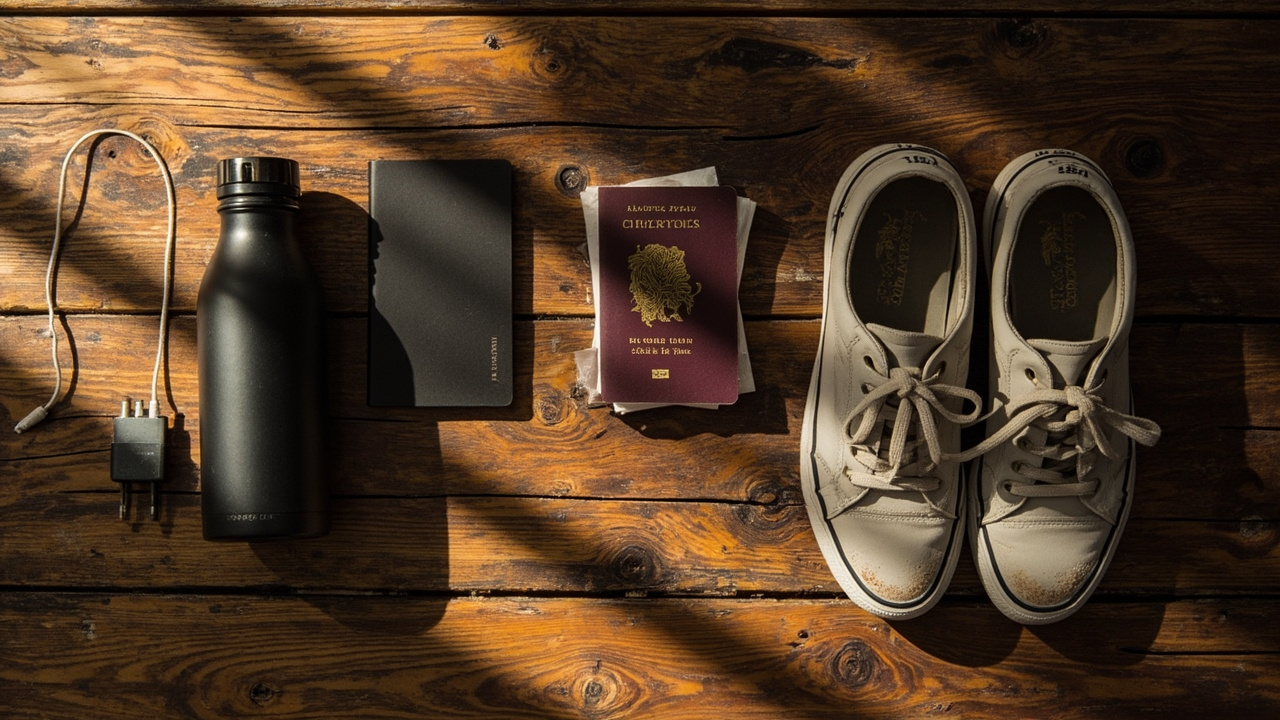
China Packing List Essentials
The thing I remember most about my first week in China isn’t the Great Wall or the soup dumplings. It’s standing in a Beijing hotel bathroom at 11pm, scrubbing a pair of socks in the sink with hand soap because I’d packed for a five-day trip and it was day two. My feet were wrecked from 19,000 steps. My phone was at 8% because my power adapter didn’t fit the wall socket the way I assumed it would. And I had a cold because I’d packed for “spring in China” using the weather app from my apartment in Chicago.
Nobody tells you this stuff. Guidebooks tell you to bring “comfortable shoes” and “layers.” Thanks. What I actually needed was a second pair of socks, a power bank, and someone to explain that a VPN has to be installed before you land, not after.
So this isn’t a generic list of ten things to throw in a suitcase. It’s the specific, unglamorous stuff that separates a smooth trip from a trip where you’re buying underwear at a 7-Eleven in Chengdu at midnight. I’ve been back and forth through China more than 40 times in seven years, and everything below is either something I learned the hard way or something a local finally explained to me after watching me struggle.
Quick answer
For a typical 7–14 day China trip, pack light layers, broken-in walking shoes, a universal power adapter with a Type A/C/I plug, a 10,000mAh+ power bank, and any prescription medication in original packaging. Install a VPN and set up Alipay or WeChat Pay before you fly, since both are hard to configure once you’re on Chinese networks. Most visa-free travelers from the US, UK, and much of the EU can now enter for up to 30 days without a visa, but you still need a passport valid for 6+ months.
The Short Version
Pack half the clothes and twice the electronics. Bring shoes you’ve already walked 10 miles in. Assume you’ll do laundry in a sink at least once. Download a VPN, Alipay, WeChat, DiDi, and a translation app before you leave home. Bring your own meds. Everything else — toothpaste, umbrellas, cheap t-shirts, phone cables — you can buy in China for less than you’d pay at home. The single biggest packing mistake is overpacking clothes and underpacking adapters.
How I Picked These
This list comes from actual mistakes, not a spreadsheet. I’ve forgotten a power bank in Shanghai and paid triple for a bad one at a train station kiosk. I’ve worn new sneakers to the Great Wall and regretted every step. I’ve watched a friend get turned away from a pharmacy because her prescription was in a ziplock bag with no label. I’ve also asked hotel staff, hostel receptionists, and a very patient pharmacist in Xi’an what foreigners always forget. Their answers were more useful than any packing guide I’ve read. Everything here is either something I’ve personally needed or something multiple locals have told me tourists always need.
Comparison Table
| Rank | Item | Best For | Approx Cost (USD) | Time Needed | When to Buy |
|---|---|---|---|---|---|
| 1 | Universal power adapter (Type A/C/I) | Everyone | $10–20 | 5 min | Before you fly |
| 2 | Power bank (10,000–20,000mAh) | Everyone | $20–40 | 5 min | Before you fly |
| 3 | VPN subscription | Everyone | $5–12/month | 15 min | Before you fly |
| 4 | Broken-in walking shoes | Everyone | Already own | — | Weeks before |
| 5 | Prescription meds + copies | Anyone on medication | Varies | 20 min | Before you fly |
| 6 | Reusable water bottle | Everyone | $15–30 | 5 min | Before or in China |
| 7 | Lightweight rain jacket | Spring/summer/autumn | $40–100 | 5 min | Before you fly |
| 8 | eSIM or local SIM | Everyone | $10–30 | 10 min | Before or on arrival |
| 9 | Small tissue packs | Everyone | $1–2 | 1 min | In China |
| 10 | Foldable tote bag | Shoppers, day-trippers | $5–15 | 1 min | Either |
Universal Power Adapter — The One Thing You Cannot Forget
I once watched a guy in a Chengdu hostel lobby try to charge his laptop by jamming a US plug into a Chinese socket with a pen. It did not work. He was not happy.
China uses Type A, C, and I plugs, with 220V at 50Hz. If you’re from the US or Canada, your flat two-prong plugs will sometimes fit Type A sockets, but not reliably, and definitely not for three-prong plugs. From the UK, you need an adapter, full stop. From the EU, your Type C plugs often fit directly, but a universal adapter is still worth carrying because hotel outlets vary wildly.
Buy a universal adapter with USB-C and USB-A ports built in. That way you can charge your phone, laptop, and camera from one wall socket, which matters when your hotel room has exactly one usable outlet behind the bed.
📍 Location: Buy before you fly. Airport adapters are overpriced and often sold out. 🎫 Cost: $10–20 (¥70–145) for a decent one 🕒 Buy when: At least a week before departure 🚇 Where in China: If you forget, convenience stores and electronics shops sell them, but quality varies ⏰ When you need it: From the moment you land 💡 Insider tip: Chinese hotel rooms often have outlets in odd places — behind the bed, under the desk, near the door. Bring a short extension cord if you have multiple devices.
Power Bank — Because Your Phone Is Your Wallet
Here’s the thing nobody tells you: in China, your phone is your wallet. Alipay and WeChat Pay handle almost everything — metro tickets, street food, temple donations, taxi rides. If your phone dies, you’re suddenly a person with no money and no way to get back to your hotel.
I learned this the hard way in Chongqing. My phone hit 3% at 4pm while I was on the wrong side of the river. I had cash, but the noodle shop didn’t take it. I ended up walking 40 minutes back to my hostel because I couldn’t hail a DiDi without a working phone.
Bring a 10,000mAh power bank minimum. 20,000mAh if you’re doing long travel days. Make sure it’s under 100Wh so you can carry it in your carry-on (China has strict rules about lithium batteries in checked luggage — they’re banned).
📍 Location: Buy before you fly or at any electronics store in China 🎫 Cost: $20–40 (¥145–290) 🕒 Buy when: Before departure 🚇 Where in China: Xiaomi stores, JD.com pickup points, convenience stores ⏰ When you need it: Every single day 💡 Insider tip: China has shared power banks (like 怪兽充电) scattered around malls and restaurants, but they require a Chinese phone number and deposit. Don’t rely on them.
VPN — Install It Before You Land
This is the one that ruins trips. A VPN is not optional if you want to use Google, Instagram, WhatsApp, Gmail, or basically any Western app while you’re in China. And here’s the catch: you cannot download a VPN from inside China. The app stores are blocked.
I’ve met at least a dozen travelers who landed in Beijing, realized their email didn’t work, and spent their first day trying to figure out how to get a VPN on a network that blocks VPN websites. It’s a nightmare.
Install your VPN at home, test it, and make sure it works on both your phone and laptop. I use one that costs about $10/month, and I keep it active the entire trip. Some VPNs work better than others in China — do a quick search for “VPN that works in China 2026” before you buy, because the reliable ones change every year.
📍 Location: Before you fly, on your home WiFi 🎫 Cost: $5–12/month (¥35–85) 🕒 Buy when: At least a week before departure 🚇 Where in China: Nowhere. You cannot install it here. ⏰ When you need it: From the moment you land 💡 Insider tip: Test your VPN on hotel WiFi, mobile data, and airport WiFi before you rely on it. Some networks block certain protocols.
Broken-In Walking Shoes — Not New Ones
I made this mistake on my second trip. I bought a pair of “travel sneakers” two days before flying and wore them straight to the Great Wall. By the time I got back to Beijing, I had blisters on both heels and a new appreciation for the phrase “break them in.”
You will walk more in China than you expect. Metro stations are enormous. Temple complexes sprawl. Old towns have cobblestones. Even a “relaxing” day in Shanghai involves 15,000+ steps.
Bring shoes you’ve already worn for at least a month. Bring two pairs if you can — one for walking, one for evenings. Skip the heavy hiking boots unless you’re actually hiking. And bring blister plasters, because even broken-in shoes can betray you on day four.
📍 Location: Your closet, weeks before you leave 🎫 Cost: Already own them 🕒 Buy when: Not now 🚇 Where in China: If you need replacements, Decathlon and Anta stores are everywhere ⏰ When you need it: Every day 💡 Insider tip: Chinese shoe sizes run smaller than US/EU sizes. If you must buy shoes here, go up one size.
Prescription Medication — Bring the Original Packaging
This one is serious. Chinese pharmacies generally won’t fill foreign prescriptions, and customs can be strict about unlabeled pills. I once watched a traveler at Shanghai Pudong get pulled aside because her medication was in a weekly pill organizer with no labels.
Bring your prescriptions in their original pharmacy packaging with your name on the label. Bring a copy of your prescription. If you take anything controlled (Adderall, certain painkillers, some sleep aids), check China’s restricted medication list before you fly — some common Western drugs are illegal here.
📍 Location: Your pharmacy, before you leave 🎫 Cost: Varies 🕒 Buy when: At least two weeks before departure 🚇 Where in China: Pharmacies exist but won’t fill foreign scripts ⏰ When you need it: Daily 💡 Insider tip: Bring more than you need. If your trip extends or you get stuck, you’ll be glad you have extra. Also bring a doctor’s note for anything injectable.
Reusable Water Bottle — But Not for Tap Water
Do not drink Chinese tap water. I repeat: do not drink Chinese tap water. Hotels usually provide bottled water or a kettle, and there are hot water dispensers everywhere — train stations, airports, temples, even some street corners.
Bring a reusable bottle with a wide mouth so you can fill it from kettles and dispensers. A insulated one is nice in winter. Avoid the collapsible silicone ones — they leak.
📍 Location: Any outdoor store 🎫 Cost: $15–30 (¥110–220) 🕒 Buy when: Before you fly 🚇 Where in China: Convenience stores sell bottled water for ¥2–5 ⏰ When you need it: Constantly 💡 Insider tip: Hot water is the default. If you want cold water, ask for “bīng shuǐ” (冰水) or just buy bottled. Restaurants will often give you hot water by default.
Lightweight Rain Jacket — Because Weather Lies
I checked the forecast before my first trip to Guilin and packed for “light rain.” It rained for three days straight. My “water-resistant” jacket gave up on day one.
China’s weather is regional and unpredictable. Spring in the south is wet. Summer is monsoon season in many places. Autumn is usually the safest bet, but even then, a sudden shower can soak you.
Bring a packable rain jacket with a hood. Not an umbrella — you’ll look like a tourist and they’re a pain on crowded streets. A jacket you can stuff into your bag is worth its weight.
📍 Location: Any outdoor store 🎫 Cost: $40–100 (¥290–725) 🕒 Buy when: Before you fly 🚇 Where in China: Uniqlo and Decathlon sell decent ones cheap ⏰ When you need it: Spring through autumn 💡 Insider tip: In southern China, humidity makes rain feel worse than it is. A breathable jacket beats a heavy waterproof one.
eSIM or Local SIM — Get Connected Fast
You have two options: an eSIM (if your phone supports it) or a physical SIM from China Mobile, China Unicom, or China Telecom. I’ve done both.
The eSIM is easier — you can buy one before you fly and activate it the moment you land. No store visit, no passport registration. The downside is that some eSIMs route through Hong Kong or Singapore, which means your traffic isn’t subject to mainland restrictions (a bonus, actually).
A local SIM requires a passport and a store visit, but it’s cheaper for long trips and gives you a Chinese phone number, which some apps require. For a 7–14 day trip, I’d go eSIM. For a month or more, get a local SIM.
📍 Location: eSIM online; local SIM at airport or carrier stores 🎫 Cost: $10–30 (¥70–220) 🕒 Buy when: eSIM before you fly; SIM on arrival 🚇 Where in China: Airports, China Mobile stores, some convenience stores ⏰ When you need it: From day one 💡 Insider tip: Check out our full SIM card and internet guide for the details on which carriers work best for foreigners.
Small Tissue Packs — The Unsung Hero
Public restrooms in China often don’t have toilet paper. Not “sometimes.” Often. I learned this in a temple outside Xi’an and have carried tissue packs ever since.
Buy a few packs at any convenience store for ¥1–2 each. Keep one in your day bag, one in your jacket pocket, one in your luggage. You’ll use them more than you expect — for napkins, for spills, for the aforementioned restroom situation.
📍 Location: Any convenience store in China 🎫 Cost: $1–2 (¥7–15) for a multi-pack 🕒 Buy when: On arrival 🚇 Where in China: 7-Eleven, FamilyMart, Lawson, local shops ⏰ When you need it: Daily 💡 Insider tip: Some restrooms also lack soap and hand dryers. Bring hand sanitizer too. And note that many public restrooms are squat-style — if that’s an issue, plan around hotel and mall restrooms.
Foldable Tote Bag — For the Stuff You Buy
You will buy things. Tea, silk, snacks, a random ceramic bowl from a market stall. Chinese shops often charge for plastic bags (¥0.5–1), and street vendors just hand you things loose.
Bring a foldable tote. It weighs nothing and saves you from juggling souvenirs on the metro. I bought a cheap one in Shanghai five years ago and still use it every trip.
📍 Location: Anywhere 🎫 Cost: $5–15 (¥35–110) 🕒 Buy when: Before you fly or on arrival 🚇 Where in China: Muji, Uniqlo, convenience stores ⏰ When you need it: Shopping days 💡 Insider tip: If you’re buying tea or fragile items, ask the vendor to wrap them. Most will, but they won’t offer unless you ask. “Qǐng bāng wǒ bāo yīxià” (请帮我包一下) works.
FAQ summary
For most first-time visitors, the essential China packing list comes down to four things: a universal power adapter, a power bank, a pre-installed VPN, and broken-in walking shoes. Set up Alipay or WeChat Pay before you fly, since your phone becomes your wallet in China. Bring prescription medication in original labeled packaging and more than you think you need. Most Western travelers can now enter China visa-free for up to 30 days, but your passport must be valid for at least 6 months. Everything else — toiletries, umbrellas, cheap clothes, phone cables — is easy and inexpensive to buy once you’re here.
FAQ
Q: Do I need a visa to visit China in 2026? A: Most travelers from the US, UK, EU, Australia, and much of Southeast Asia can enter China visa-free for up to 30 days under current policies. Check the latest rules before booking, since they’ve changed several times in recent years. Your passport must be valid for at least 6 months beyond your entry date.
Q: Can I use my credit card in China? A: Rarely. China runs on Alipay and WeChat Pay, and many small vendors don’t accept cash or foreign cards. Set up Alipay or WeChat Pay with your international card before you fly — both now support foreign cards, but the setup process is much easier outside China.
Q: Do I really need a VPN in China? A: Yes, if you want to use Google, Gmail, Instagram, WhatsApp, or most Western apps. You cannot download a VPN once you’re in China, so install and test it before you fly. Budget $5–12/month.
Q: What should I do if I forget something important? A: Most things are easy to buy in China — adapters, power banks, toiletries, umbrellas, even basic clothing. The exceptions are prescription medication, specific VPNs, and anything requiring a foreign credit card setup. Convenience stores and electronics shops cover almost everything else.
Q: How much cash should I bring? A: Very little. ¥500–1,000 ($70–140) in cash is plenty for emergencies. Most transactions happen through your phone. Keep some small bills for the rare cash-only vendor or temple donation box.
Q: Is English widely spoken in China? A: In major cities and tourist areas, some English is spoken, especially by younger people and hotel staff. Outside those zones, expect very little. Download a translation app (Google Translate with offline Chinese, or Baidu Translate) before you fly.
Q: What’s the one thing people always forget? A: A power bank. Your phone is your wallet, your map, your translator, and your camera. If it dies, your day gets complicated fast. Bring a 10,000mAh minimum.
The Honest Wrap-up
This list is for the first-timer who’s never navigated a country where their phone is their wallet and their VPN is their lifeline. It’s not for the backpacker who’s been through Southeast Asia ten times and knows the drill. If that’s you, you already know most of this.
For everyone else: pack light on clothes, heavy on electronics, and assume you’ll do laundry in a sink at least once. Buy your adapter, power bank, and VPN before you fly. Set up Alipay before you land. Bring your meds in labeled packaging. And bring shoes you’ve already walked 10 miles in — your feet will thank you on day three, when you’re standing at the top of a Great Wall watchtower wondering why you ever considered new sneakers.
One last thing: don’t stress about the stuff you forget. China is one of the easiest countries in the world to buy things in. The only real mistakes are the ones you can’t fix once you’re there — no VPN, no payment app, no medication. Get those right, and everything else works itself out.
More guides you may like

Top 10 Bridges in China
China's bridges are engineering marvels spanning mountains, rivers, and seas. Here are 10 of the most spectacular, from ancient stone to modern steel.
8 min read

Top 10 Buddhist Sites in China
From the Leshan Giant Buddha to the Dunhuang Caves, these 10 Buddhist sites represent 2,000 years of China's spiritual heritage.
9 min read

Top 10 Day Trips from Beijing You Shouldn't Miss
Beijing is packed with history, but some of China's best experiences are just a few hours away. Here are 10 day trips that will transform your visit.
9 min read

Top 10 Hidden Gems in China Off the Beaten Path
Beyond the Great Wall and Terracotta Warriors, China has incredible hidden destinations few tourists ever reach. Here are 10 underrated gems worth the detour.
9 min read

Top 10 Markets and Shopping Streets in China
From Shanghai's Bund to Beijing's Silk Street - 10 markets where foreigners can haggle, explore, and bring home authentic Chinese goods.
9 min read

Top 10 Museums in China You Shouldn't Miss
China's museums span 5,000 years of civilization. These 10 - from the Palace Museum to Xi'an's terracotta gallery - are unmissable for culture lovers.
9 min read