
Vegetarian Food in China
TODO: Extract from article (100-160 chars)
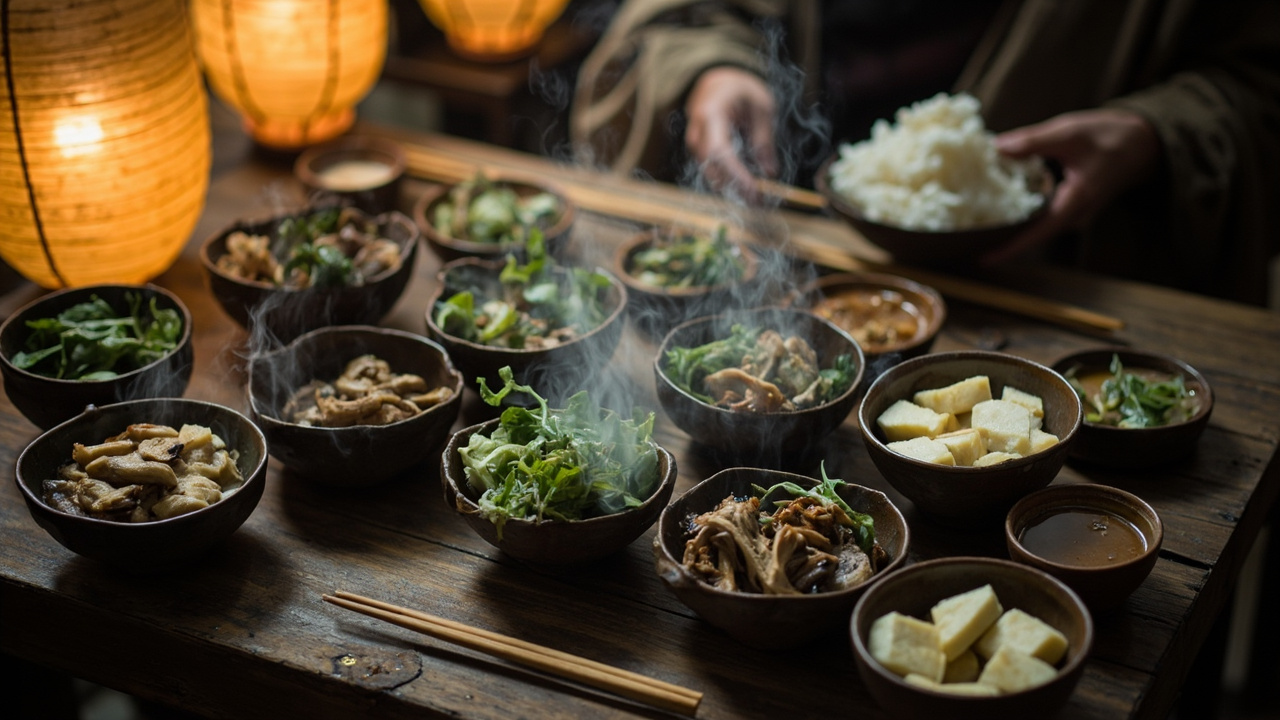
Vegetarian Food in China
The woman at the next table watched me struggle with a menu for about ninety seconds before she leaned over, pointed at one line, and said in careful English: “This one. No meat. Potato and green pepper.” I was in a tiny chuanchuan place in Chengdu, the kind with plastic stools and a floor you peel your shoes off. She didn’t ask if I was vegetarian. She just saw a foreigner drowning and decided to help. That’s been my experience eating vegetarian in China for seven years now — the food is easier than you think, and the people are kinder than the guidebooks let on.
Here’s the thing nobody tells first-timers: China is one of the best countries in the world to eat vegetarian, and also one of the most confusing. Buddhist temple restaurants have been perfecting meat-free cooking for a thousand years. Meanwhile, the broth in your “vegetable” soup was probably made with pork bones, and that tofu dish has minced pork hiding in the sauce. The gap between “this country has incredible vegetarian food” and “I accidentally ate meat four times this week” is entirely about knowing where to look and what to say.
This guide is the cheat sheet I wish I’d had in 2019. Ten places and food traditions worth planning a trip around, with real prices, real directions, and the specific phrases that actually work when you’re standing in a restaurant with a translation app and a growling stomach.
Quick answer
China is genuinely excellent for vegetarian eating once you know the system: Buddhist temple restaurants, dedicated sushi chains, and regional cuisines like Yunnan and Sichuan offer deep meat-free menus, and a full vegetarian meal typically costs $3–$10 (¥20–70). The single most useful thing you can do is learn the phrase “我吃素” (wǒ chī sù — “I eat vegetarian”) and download a Chinese translation app before you land, because English menus are rare outside five-star hotels. Most travelers on the 240-hour visa-free transit or a standard tourist visa can eat well for under $15 a day without trying hard.
The Short Version
If you read nothing else: eat at Buddhist temple restaurants (they’re cheap, beautiful, and 100% vegetarian), search the app Dianping for “素食” (sùshí) in any city, and never assume a vegetable dish is meat-free — ask. Yunnan and Sichuan cuisine are your best friends. Beijing and Shanghai have dedicated vegetarian restaurants that rival anything in London or San Francisco. Skip the airport. Bring a translation app. You will eat extremely well.
How I Picked These
I’ve eaten vegetarian across roughly 40 trips through China since 2019, from temple kitchens in the mountains to a vegan burger joint in a Shanghai basement. For this list I prioritized three things: places a first-timer can actually find and navigate, food that’s reliably meat-free without a twenty-minute negotiation, and regional variety so you’re not eating the same mushroom dish in every city. I also leaned on recommendations from Chinese friends who eat vegetarian for religious reasons — they know the landscape better than any blog. Where I wasn’t certain about a current price or opening hour, I’ve given a range and flagged it.
Comparison Table
| Rank | Place | Best For | Approx Cost (USD) | Time Needed | When to Go |
|---|---|---|---|---|---|
| 1 | Buddhist Temple Restaurants (nationwide) | Authentic, cheap, reliable | $3–8 | 1–2 hrs | Lunch, any day |
| 2 | Yunnan Cuisine (Kunming, Dali, Lijiang) | Mushrooms, fresh herbs, variety | $5–12 | 1–2 hrs | Dinner |
| 3 | Beijing Vegetarian Scene | Dedicated veg restaurants | $8–20 | 1–2 hrs | Dinner |
| 4 | Shanghai Veg & Vegan | Fine dining, international | $10–35 | 1–2 hrs | Dinner |
| 5 | Sichuan Sù Dishes (Chengdu) | Spicy, bold, cheap | $4–10 | 1–2 hrs | Lunch or dinner |
| 6 | Hangzhou & Jiangnan Cuisine | Subtle, seasonal, elegant | $6–15 | 1–2 hrs | Lunch |
| 7 | Xi’an Muslim Quarter Veg Options | Street food, noodles | $2–6 | 1–2 hrs | Evening |
| 8 | Guangzhou & Cantonese Dim Sum | Steamed, delicate, varied | $5–15 | 1–2 hrs | Morning/lunch |
| 9 | Buddhist Mountain Retreats (Wutai, Emei) | Pilgrimage, full immersion | $4–10 | Half day | Spring/autumn |
| 10 | Hong Kong (if you’re passing through) | Vegan scene, English-friendly | $8–25 | 1–2 hrs | Any |
Buddhist Temple Restaurants — The Cheat Code Nobody Tells You About
The first time I ate at a temple restaurant I almost walked out, because the menu had “braised pork” and “sweet and sour fish” on it. A monk saw my face and laughed. It’s all tofu, gluten, and mushroom — shaped and sauced to look like meat for the pilgrims who miss it. This is zhāicài (斋菜), Buddhist vegetarian cuisine, and it’s been refined over centuries in temple kitchens across the country.
Why it’s special: these restaurants exist to feed people, not to make money, so the quality is high and the prices are low. You’ll eat five or six dishes for the price of one entrée in a tourist restaurant. The cooking is often vegetable-forward and seasonal, and because it’s religious, you never have to worry about hidden fish sauce or chicken stock. It’s the one place in China where you can order anything on the menu without asking a single question.
📍 Location: Every major city has at least one. In Beijing, try the restaurant at Lama Temple or the famous Gongdelin near the Temple of Heaven. In Shanghai, Jue Wei near Jade Buddha Temple. In Hangzhou, the restaurants at Lingyin Temple.
🍽️ Entry fee: Temple entry is often separate ($2–8 / ¥15–55); the restaurant itself is free to enter.
🕐 Opening hours: Usually 11am–2pm and 5–8pm, but temple restaurants often close earlier than city restaurants. Some close on lunar calendar dates — check ahead.
🚕 How to actually get there: For Beijing’s Gongdelin, take Subway Line 5 to Tiantan Dongmen, Exit A, walk 3 minutes north. For Lama Temple’s restaurant, Line 2 or 5 to Yonghegong, Exit C.
⏰ When to visit: Lunch is quieter and cheaper. Avoid the 1st and 15th of the lunar month, when pilgrims flood in.
💡 Insider tips: Order the set meal (tàocān) — it’s cheaper and gives you a taste of everything. Bring cash as a backup; some temple restaurants don’t take foreign cards. The “meat” dishes are the most fun to try. Ask for mǐfàn (rice) separately if it’s not included.
I once watched a monk gently correct a tourist who tried to leave a tip — it’s not done, and they’ll hand it back.
Yunnan Cuisine — Where Vegetarians Actually Thrive
Kunming’s wet market at 7am smells like crushed mint, wet earth, and something fermenting that I still can’t identify. I spent an hour there with a local friend, Chen, who kept handing me mushrooms I’d never seen and saying “this one, try.” Yunnan is the most vegetarian-friendly province in China, full stop — the cuisine is built on wild mushrooms, fresh herbs, flowers, and vegetables rather than meat.
Why it’s special: Yunnan has more edible mushroom species than anywhere on earth, and the cooking treats vegetables as the star, not a side. Dishes like qīngchǎo shān gū (stir-fried wild mushrooms), liáng bàn mǐxiàn (cold rice noodles), and zhá rǔbǐng (fried cheese — yes, Yunnan makes cheese) are all naturally meat-free. The flavors are sour, herbal, and bright, a total departure from the heavy soy-and-chili profile of northern cooking.
📍 Location: In Kunming, head to the Zhuanxin market area or the restaurants around Green Lake Park. In Dali, the old town is packed with small Yunnan kitchens. In Lijiang, look for Naxi-run family restaurants.
🍽️ Entry fee: None — these are regular restaurants.
🕐 Opening hours: Typically 11am–2pm and 5–9:30pm.
🚕 How to actually get there: In Kunming, take Metro Line 2 to Dongfeng Square, then walk 10 minutes to the Green Lake area. In Dali, most old-town restaurants are a 5-minute walk from the South Gate.
⏰ When to visit: Mushroom season is June–September, when the variety is staggering. Otherwise, spring and autumn are ideal.
💡 Insider tips: Ask for bù fàng ròu (no meat) explicitly — some dishes default to a meat version. The fried cheese is a must. Yunnan coffee is excellent and cheap. English is rare; have your translation app ready.
Chen took me to a hole-in-the-wall where the owner refused to let me pay for the mushroom soup. “You’re a guest,” she said. I still think about that soup.
Beijing’s Dedicated Vegetarian Restaurants — Better Than You’d Expect
I’ll be honest: I expected Beijing to be the hardest city for vegetarians. It’s the land of Peking duck and lamb skewers. I was wrong. Beijing has one of the strongest dedicated vegetarian restaurant scenes in Asia, partly because of its large Buddhist population and partly because the city’s food culture is deep enough to support niche kitchens.
Why it’s special: These aren’t temple restaurants — they’re modern, creative, and often upscale. King’s Joy near the Lama Temple is a Michelin-starred vegetarian restaurant that will change how you think about Chinese food. Tianchu Miaoxiang and Lotus are cheaper, casual, and excellent. You get full menus with English translations, staff who understand dietary needs, and dishes that stand on their own rather than imitating meat.
📍 Location: King’s Joy is at Wudaoying Hutong near the Lama Temple. Tianchu Miaoxiang has branches in Chaoyang and Dongcheng.
🍽️ Entry fee: None.
🕐 Opening hours: Lunch 11am–2pm, dinner 5–10pm. Book ahead for King’s Joy.
🚕 How to actually get there: For King’s Joy, Subway Line 2 or 5 to Yonghegong, Exit C, then walk 5 minutes into Wudaoying Hutong. For Tianchu Miaoxiang’s Chaoyang branch, Line 10 to Tuanjiehu, Exit A.
⏰ When to visit: Weekday lunch is the best value. King’s Joy requires a reservation at least a few days out.
💡 Insider tips: Set up Alipay or WeChat Pay before you arrive — most of these restaurants are cashless. King’s Joy’s tasting menu is worth the splurge. Wudaoying Hutong itself is a lovely walk.
I took a carnivore friend to King’s Joy and he didn’t realize until dessert that there’d been no meat.
Shanghai’s Vegan Scene — International and Polished
Shanghai is where vegetarian eating in China feels most like home for a Western visitor. The city has a mature vegan and vegetarian scene with English menus, Instagram-friendly plating, and staff who understand “no dairy, no egg” without a translation app. If you’re nervous about your first vegetarian meal in China, start here.
Why it’s special: You get everything from Buddhist classics to raw vegan bowls to plant-based xiaolongbao. Godly in Jing’an does incredible plant-based Chinese food. Wujie is a long-running vegetarian institution. The international community means restaurants are used to dietary requests and won’t look at you like you’ve grown a second head when you ask about ingredients.
📍 Location: Godly is in Jing’an near West Nanjing Road. Wujie has locations in Huangpu and Pudong.
🍽️ Entry fee: None.
🕐 Opening hours: Typically 11am–10pm, some later.
🚕 How to actually get there: For Godly, Subway Line 2/12/13 to West Nanjing Road, Exit 4, walk 5 minutes. For Wujie’s Huangpu branch, Line 1 to South Huangpi Road, Exit 1.
⏰ When to visit: Dinner any night; weekends get busy so book ahead.
💡 Insider tips: Shanghai is the easiest city in China for English speakers, but still set up a Chinese SIM and VPN before you land — Google Maps doesn’t work without it. Amap (Gaode) is the local alternative. Tipping isn’t expected.
A hostel receptionist in Shanghai once drew me a hand map to a vegan dumpling place that wasn’t on any app. It was perfect.
Sichuan Sù Dishes — Spicy, Cheap, and Everywhere
Chengdu nearly broke me the first week. I ordered what I thought was a vegetable dish and got a mouthful of minced pork. But once I learned the system, Sichuan became my favorite place to eat vegetarian in China — the cuisine is so flavor-forward that meat-free versions lose nothing.
Why it’s special: Sichuan cooking is built on chili, Sichuan peppercorn, garlic, and fermented bean paste, all of which are naturally vegetarian. Dishes like mápó dòufu (ask for the vegetarian version), gān biān sìjì dòu (dry-fried green beans), yúxiāng qiézi (fish-fragrant eggplant — no fish involved), and liángfěn (cold mung bean noodles) are everywhere and cheap. The spice level means you never feel like you’re eating “health food.”
📍 Location: Any neighborhood xiǎochī (snack) street. In Chengdu, try the area around Kuanzhai Alley or the streets off Chunxi Road.
🍽️ Entry fee: None.
🕐 Opening hours: Street stalls run 10am–10pm; sit-down restaurants 11am–9pm.
🚕 How to actually get there: In Chengdu, Metro Line 2 to People’s Park for the Kuanzhai area, or Line 2/3 to Chunxi Road.
⏰ When to visit: Evening, when the street food comes alive. Avoid peak dinner rush if you want to talk to staff.
💡 Insider tips: Say bù yào ròu (no meat) and bù yào ròu tāng (no meat broth). The “fish-fragrant” dishes contain no fish — it’s a flavor profile. Ask for wēi là (mild) if you can’t handle heat. Bring tissues; street stalls rarely provide them.
I made the mistake of assuming mápó dòufu was vegetarian. It usually has pork. Ask every time.
Hangzhou & Jiangnan Cuisine — Subtle and Seasonal
After a week of Sichuan heat, Hangzhou felt like a palate cleanser. Jiangnan cooking (the region around Shanghai, Hangzhou, and Suzhou) is delicate, seasonal, and vegetable-forward in a way that feels almost Japanese in its restraint. If you’re a vegetarian who loves subtle flavors, this is your region.
Why it’s special: Jiangnan cuisine prizes freshness and texture over heavy sauce. Dishes like yóumèn chūn sǔn (oil-braised spring bamboo), lóngjǐng xiārén (Longjing shrimp — ask for the vegetarian version with mushrooms), and sù shāo (vegetarian braised “meat”) are staples. Hangzhou’s temple restaurants near Lingyin are outstanding.
📍 Location: Around West Lake in Hangzhou; the old town in Suzhou.
🍽️ Entry fee: None; West Lake itself is free.
🕐 Opening hours: 11am–2pm and 5–9pm.
🚕 How to actually get there: In Hangzhou, Metro Line 1 to Longxiangqiao, then bus 7 to Lingyin Temple. Or take a taxi to West Lake’s Broken Bridge area.
⏰ When to visit: Spring (March–May) for bamboo shoots and green tea season. Autumn is also lovely.
💡 Insider tips: Longjing tea is a must — visit a tea house. The vegetarian restaurants near Lingyin Temple are excellent and cheap. Rent a bike around West Lake. English is limited; translation app essential.
A tea farmer near Longjing poured me three cups of tea and refused payment, then insisted I take a bag home.
Xi’an Muslim Quarter — Street Food That Works for Vegetarians
Xi’an’s Muslim Quarter is famous for lamb, but it’s also a goldmine for vegetarians if you know what to order. The Hui Muslim community has a long tradition of noodle and vegetable cooking, and several dishes are naturally meat-free.
Why it’s special: Liángpí (cold noodles), yóupō miàn (oil-splashed noodles), suān tāng shuǐjiǎo (sour soup dumplings — ask for vegetable filling), and zhēng gāo (steamed rice cakes) are all vegetarian and cheap. The atmosphere alone is worth the trip — lanterns, sizzling woks, and the smell of cumin and chili.
📍 Location: Beiyuanmen Street and the surrounding lanes in the Muslim Quarter.
🍽️ Entry fee: None.
🕐 Opening hours: Best from 5pm–11pm.
🚕 How to actually get there: Metro Line 2 to Zhonglou (Bell Tower), Exit A, walk 5 minutes west into the quarter.
⏰ When to visit: Evening, but avoid weekends if you hate crowds.
💡 Insider tips: Ask yǒu ròu ma? (does it have meat?) before ordering. Some noodle broths are meat-based. The yángròu pào mó (lamb soup with bread) is the famous dish — skip it. Bring cash for small stalls.
I bought a bag of dried persimmons from a vendor who gave me two extra “for the road.”
Guangzhou Dim Sum — Steamed, Delicate, and Vegetarian-Friendly
Cantonese food has a reputation for being meat-heavy, but dim sum is secretly one of the best vegetarian meals in China. The steamed, small-plate format means you can order ten things and only eat the vegetable ones.
Why it’s special: Chángfěn (rice noodle rolls), luóbo gāo (radish cake), mǎtí gāo (water chestnut cake), zhēng shūjiǎo (steamed vegetable dumplings), and jiǔcài bǐng (chive pancakes) are all vegetarian and delicious. The tea culture around dim sum makes it a slow, social meal.
📍 Location: Any traditional chálou (tea house) in Liwan or Yuexiu districts.
🍽️ Entry fee: None.
🕐 Opening hours: Morning dim sum 7am–11am; some places serve all day.
🚕 How to actually get there: Metro Line 1 to Chen Clan Academy for the Liwan area.
⏰ When to visit: Morning, ideally before 9am, when it’s locals-only and the food is freshest.
💡 Insider tips: Point at what you want — dim sum is often ordered from carts or picture menus. Ask zhège yǒu ròu ma? (does this have meat?). The tea is bottomless; just leave the lid open to signal a refill. English is limited outside hotels.
An elderly woman at the next table showed me how to fold my napkin into a holder. Small kindness, still remember it.
Buddhist Mountain Retreats — Wutai Shan and Emei Shan
If you want to eat vegetarian in China at its source, go to a Buddhist mountain. Wutai Shan in Shanxi and Emei Shan in Sichuan are two of the four sacred Buddhist mountains, and both have temple restaurants and guesthouses where every meal is zhāicài.
Why it’s special: You eat what the monks eat — simple, seasonal, and 100% vegetarian. The setting is the point: misty peaks, temple bells, and meals served in communal halls. It’s the most immersive vegetarian experience in China and costs almost nothing.
📍 Location: Wutai Shan (Shanxi province) and Emei Shan (Sichuan province).
🍽️ Entry fee: Wutai Shan entry ~$20 (¥135); Emei Shan ~$23 (¥160). Temple meals $4–10.
🕐 Opening hours: Meals at fixed times — usually 11am and 5:30pm. Don’t be late.
🚕 How to actually get there: Wutai Shan: bus from Taiyuan or train to Xinzhou then bus. Emei Shan: high-speed rail from Chengdu to Emeishan Station, then bus to the mountain.
⏰ When to visit: Spring and autumn. Winter is brutal at altitude; summer is crowded.
💡 Insider tips: Bring cash — ATMs are scarce. Dress modestly for temple dining halls. Silence is expected during meals. Book guesthouse rooms ahead in peak season.
I ate a bowl of mushroom soup at Emei Shan that I still think about. No meat, no fuss, just perfect.
Hong Kong — The English-Friendly Vegan Stopover
If your trip routes through Hong Kong, it’s worth a day for the food alone. The city has a mature vegan scene, English is widely spoken, and you can eat plant-based versions of Cantonese classics you’d struggle to find vegetarian on the mainland.
Why it’s special: Restaurants like LockCha, Manakamana, and Green Common serve everything from vegan dim sum to plant-based char siu. The city is compact, walkable, and easy to navigate. It’s a soft landing before or after the mainland.
📍 Location: Central, Sheung Wan, and Tsim Sha Tsui.
🍽️ Entry fee: None.
🕐 Opening hours: Varies; most 11am–10pm.
🚕 How to actually get there: MTR to Central or Sheung Wan. Green Common has multiple branches.
⏰ When to visit: Any time; autumn (Oct–Dec) is best weather.
💡 Insider tips: Octopus card works everywhere. English menus are standard. This is the easiest place in the region to ask about ingredients. Vegan dim sum at LockCha is a highlight.
A waiter in Sheung Wan corrected my Cantonese pronunciation with a grin, then brought me an extra dumpling.
FAQ summary
The most important takeaways for anyone eating vegetarian in China: Buddhist temple restaurants (zhāicài) are the single most reliable and affordable option, typically $3–8 (¥20–55) per meal and 100% meat-free; dedicated vegetarian restaurants in Beijing, Shanghai, and Hong Kong offer English menus and modern menus; and regional cuisines like Yunnan and Sichuan are naturally vegetable-forward. The critical practical step is learning “我吃素” (wǒ chī sù) and using a translation app, because English menus are rare outside major cities. Set up Alipay or WeChat Pay and a Chinese SIM/VPN before arrival, and always ask whether broths or sauces contain meat — “vegetable” dishes often don’t mean vegetarian.
FAQ
Q: Is it hard to eat vegetarian in China as a foreigner? A: No, but it requires a little preparation. Buddhist temple restaurants and dedicated vegetarian restaurants make it easy, and regional cuisines like Yunnan and Sichuan are naturally vegetable-forward. The main challenge is hidden meat in broths and sauces, which you solve by learning the phrase “我吃素” and asking before you order.
Q: What’s the phrase for “I’m vegetarian” in Chinese? A: “我吃素” (wǒ chī sù). To be more specific, say “我不吃肉” (wǒ bù chī ròu — “I don’t eat meat”) and “不要肉汤” (bù yào ròu tāng — “no meat broth”). Show the characters on your phone if pronunciation fails.
Q: How much does vegetarian food cost in China? A: A temple restaurant meal runs $3–8 (¥20–55). A dedicated vegetarian restaurant in Beijing or Shanghai is $8–35 (¥55–250). Street food and casual noodle dishes are $2–6 (¥15–40). You can eat well for under $15 a day without trying hard.
Q: Do I need a VPN or special apps to find vegetarian food? A: Yes. Google Maps doesn’t work reliably in mainland China, so download Amap (Gaode) and Dianping (the local Yelp). Set up Alipay or WeChat Pay before you arrive, since most restaurants are cashless. A Chinese SIM or eSIM makes everything easier.
Q: Are there vegan options in China, or just vegetarian? A: Both. Buddhist zhāicài is often vegan by default (no dairy, no egg). Dedicated vegan restaurants exist in Beijing, Shanghai, Guangzhou, and Hong Kong. On the mainland, always confirm no egg (bù yào jīdàn) and no dairy (bù yào niúnǎi), since these hide in sauces and desserts.
Q: Can I eat vegetarian on a tour or with a group? A: Yes, but tell your guide in advance and confirm at each meal. Group tours often stop at banquet-style restaurants where vegetable dishes are sides, not mains. Ask for a separate vegetarian set menu (sùshí tàocān) — most restaurants can accommodate it with notice.
Q: Do I need a visa to visit China for a vegetarian food trip? A: Many nationalities can enter visa-free for up to 30 days, and 240-hour visa-free transit is available for 55 countries if you’re passing through to a third country. Check the current visa-free transit rules before booking. Otherwise, apply for a standard tourist visa in advance.
The Honest Wrap-up
This guide is for the traveler who wants to eat well in China without eating meat, and who’s willing to learn four Chinese characters and ask a few questions. It’s not for someone who wants a fully English-speaking, allergen-certified dining experience at every meal — that exists in Shanghai and Hong Kong, not in a Chengdu noodle stall. My one piece of advice before you book: don’t over-plan your food. Learn the phrase, download the apps, and let the temple restaurants and street stalls surprise you. The best vegetarian meal I’ve had in China cost $4 and came with a stranger’s kindness. That’s the trip you want.
More guides you may like
Top 10 Bridges in China
China's bridges are engineering marvels spanning mountains, rivers, and seas. Here are 10 of the most spectacular, from ancient stone to modern steel.
8 min read

Top 10 Buddhist Sites in China
From the Leshan Giant Buddha to the Dunhuang Caves, these 10 Buddhist sites represent 2,000 years of China's spiritual heritage.
9 min read

Top 10 Day Trips from Beijing You Shouldn't Miss
Beijing is packed with history, but some of China's best experiences are just a few hours away. Here are 10 day trips that will transform your visit.
9 min read
Top 10 Hidden Gems in China Off the Beaten Path
Beyond the Great Wall and Terracotta Warriors, China has incredible hidden destinations few tourists ever reach. Here are 10 underrated gems worth the detour.
9 min read
Top 10 Markets and Shopping Streets in China
From Shanghai's Bund to Beijing's Silk Street - 10 markets where foreigners can haggle, explore, and bring home authentic Chinese goods.
9 min read
Top 10 Museums in China You Shouldn't Miss
China's museums span 5,000 years of civilization. These 10 - from the Palace Museum to Xi'an's terracotta gallery - are unmissable for culture lovers.
9 min read