
Namco Lake Tibet Guide
TODO: Extract from article (100-160 chars)
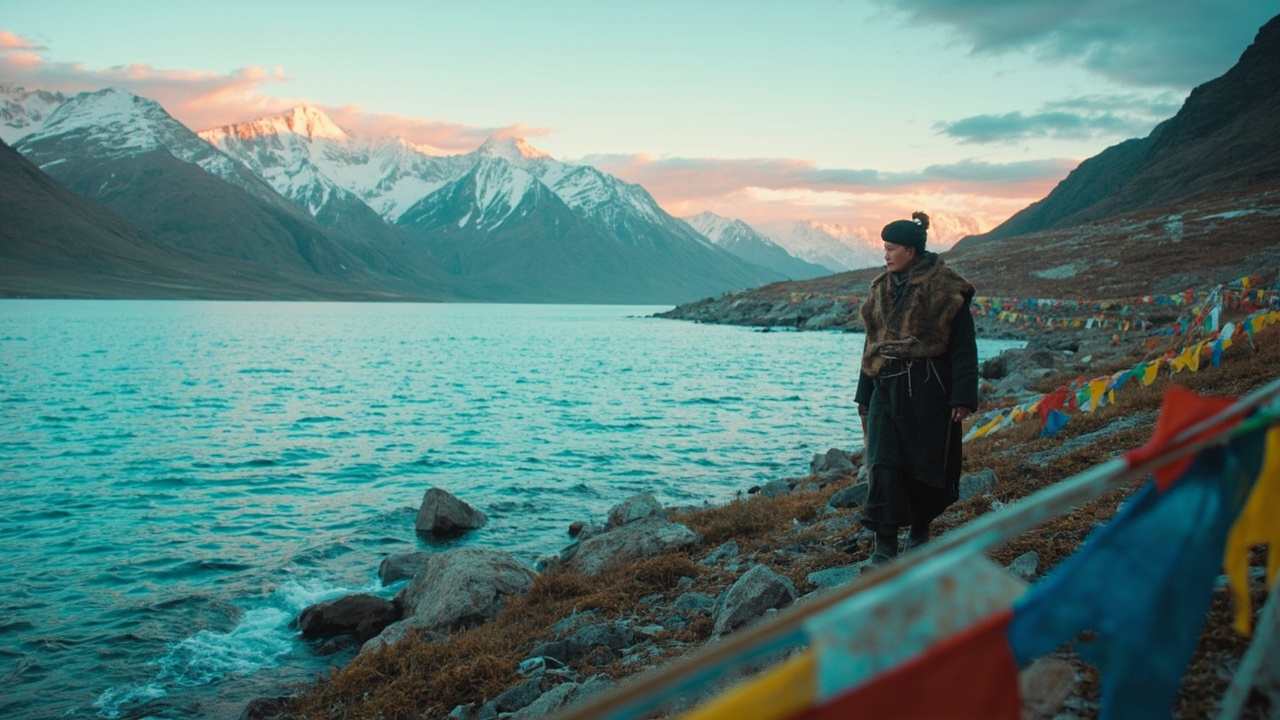
Namco Lake Tibet Guide
The first thing I noticed was the silence. Not real silence — there was wind snapping at the prayer flags and a yak somewhere behind me clanking a bell — but the kind of quiet that makes your ears ring because there’s nothing mechanical in it. I’d been in Lhasa for three days, still waking up at 4 a.m. with a headache, and my guide Tashi kept telling me to drink more water and stop walking so fast. Then we crested the last pass on the G109 highway, and Namtso appeared below us like a sheet of blue metal someone had dropped on the plateau.
Namco — also spelled Namtso, meaning “Heavenly Lake” in Tibetan — sits at 4,718 meters (15,479 feet) above sea level, about 240 kilometers north of Lhasa. It’s one of the three great sacred lakes of Tibet, and for most first-time visitors it’s the single most accessible high-altitude lake experience you can have. It’s also where a lot of people get sick, spend too much money, or turn around too early because nobody told them what to expect.
This guide is for someone who’s never been to China, is probably nervous about the Tibet permit situation, and wants to know exactly what Namco costs, how to get there, and whether it’s worth the altitude headache. Short answer: yes, but go prepared.
Quick answer
Namco Lake is a saltwater lake at 4,718 m (15,479 ft) reachable only on a guided tour from Lhasa, roughly 4–5 hours by road, and foreigners need a Tibet Travel Permit plus an Alien’s Travel Permit arranged through a licensed agency at least 15–20 days in advance. A 2-day/1-night tour from Lhasa costs about $180–$320 (CNY 1,300–2,300) per person including transport, permit, meals, and basic guesthouse accommodation. The best months are May through October, and you should spend at least 2–3 full days acclimatizing in Lhasa first.
The Short Version
If you only read one paragraph: Namco is worth it, but not as a day trip. The 8–10 hours of driving in one day will wreck you at altitude. Book a 2-day tour, sleep at the lake, watch the sunrise hit the Nyenchen Tanglha mountains, and accept that you’ll feel like garbage for a few hours. Bring cash, because the card readers at the lake don’t work reliably. Skip the “horse ride to the viewpoint” scam at the parking lot.
How I Picked These
I’ve been to Namco three times — once in July, once in late September, and once in a stubborn February attempt that ended with a closed road and a very apologetic driver named Liu. I’ve stayed in the tent guesthouses on the south shore, eaten yak butter tsampa with a family near Tashi Dor peninsula, and once paid 80 yuan for a bowl of instant noodles because I was too proud to ask where the cheap food was. The recommendations below come from those trips plus long conversations with Tibetan guides, Lhasa hostel staff, and other travelers I met in the common rooms. I’ve flagged the things that have changed since 2024, especially around permits and the new visitor center.
Comparison Table
| Rank | Option | Best For | Approx Cost (USD) | Time Needed | When to Go |
|---|---|---|---|---|---|
| 1 | 2-day/1-night group tour from Lhasa | Most first-timers | $180–$320 | 2 days | May–Oct |
| 2 | Private 2-day tour with own driver | Couples, small groups | $400–$700 total | 2 days | May–Oct |
| 3 | 3-day tour with Yangpachen hot springs | Slow travelers | $280–$450 | 3 days | Jun–Sep |
| 4 | Day trip from Lhasa | Tight schedules only | $120–$200 | 1 long day | Jun–Sep |
| 5 | Namco + EBC combo (7–8 days) | Serious Tibet trips | $900–$1,500 | 7–8 days | May–Oct |
1. The South Shore Tent Camp — Where Almost Everyone Actually Stays
I woke up at 5:40 a.m. because someone in the next tent was coughing and the canvas walls are about as thick as a bedsheet. I unzipped the flap, and there was the lake, flat and pink under the pre-dawn sky, with the Nyenchen Tanglha range behind it still holding snow. I sat on a rock for forty minutes and didn’t take a single photo. That’s the thing about Namco — the photos never match what you saw.
The south shore tent camp is where 90% of visitors end up. It’s a cluster of canvas and yurt-style structures about 200 meters from the water, with a shared dining tent, a few pit toilets, and a parking lot that fills with tour vans by 11 a.m. It’s not romantic in the way a boutique lodge is romantic. It’s romantic because you’re sleeping at 4,700 meters next to a sacred lake and the sky at night is genuinely absurd.
📍 Location: South shore, near Tashi Dor peninsula, Damxung County, about 240 km north of Lhasa via the G109.
🎫 Entry fee: Lake entrance $17 (CNY 120) per person, included in most tour prices. Tent bed $15–$30 (CNY 110–220) per night depending on season and whether you want a real mattress.
🕐 Opening hours: The lake area is technically open year-round, but the tent camp only operates roughly May 1 to October 15. Outside that window, you’re looking at a day trip or nothing.
🚐 How to actually get there: You can’t drive yourself as a foreigner — you must be on a permitted tour. Tours leave Lhasa between 7 and 8 a.m. from the Barkhor area or your hotel. The drive is 4–5 hours with a stop at the Lakenla Pass (5,190 m) for photos and a very cold toilet.
⏰ When to visit: July and August are warmest (daytime 15°C / 59°F) but also rainiest and most crowded. Late September has clearer skies and fewer people. Avoid the first week of October — Chinese National Day holiday turns the parking lot into a bus depot.
💡 Insider tips: Bring your own toilet paper. The dining tent sells it for 5 yuan a roll. The “hot shower” advertised by some touts is a bucket of warm water behind a curtain. Charge your phone before you leave Lhasa — there’s a generator but it runs only 7–10 p.m. And if you have a China SIM card, you’ll lose signal about an hour before the lake.
I met a Dutch couple in the dining tent who’d paid for the “deluxe tent” and were furious it was the same tent with a thicker blanket. They were right to be annoyed. Book standard.
2. Tashi Dor Peninsula — The Walk Everyone Skips
Tashi Dor is a rocky peninsula jutting into the lake, and most tour groups give you 30 minutes there before herding you back to the van. I stayed for two hours. There’s a small monastery, a cave shrine, and a network of stone paths with prayer flags strung between the rocks. A monk named Lobsang showed me the cave where pilgrims leave photos of the dead, and I stood there for a while not sure what to do with my hands.
The peninsula is the spiritual heart of Namco. Pilgrims walk clockwise around it, and if you’re respectful and quiet, you can join the circuit. It’s maybe 45 minutes at a slow pace, and it’s the closest you’ll get to understanding why Tibetans consider this lake sacred rather than just scenic.
📍 Location: Northeast corner of the south shore camp, about a 15-minute walk from the main tent area.
🎫 Entry fee: Free — included with the lake entrance.
🕐 Opening hours: Daylight hours. The monastery closes around 6 p.m.
🚐 How to actually get there: Walk east from the tent camp along the shoreline. If you’re on a tour, tell your guide you want to be dropped at Tashi Dor first and picked up later.
⏰ When to visit: Early morning, before the tour vans arrive around 10 a.m. The light on the water is best before 9.
💡 Insider tips: Walk clockwise. Don’t point your feet at the monastery. If you want to leave a photo of a deceased relative, that’s a real practice and it’s welcomed. Bring small bills (1–5 yuan) for the donation box.
I left a photo of my grandmother. I don’t know why. It felt right.
3. The Lakenla Pass (5,190 m) — The Stop That Makes or Breaks You
Every tour stops at Lakenla Pass on the way in, and every tour tells you to “walk slowly.” Nobody listens. I watched a guy in flip-flops sprint to the viewpoint sign, take a selfie, and then sit down on the pavement looking gray. His girlfriend was fanning him with a map.
Lakenla is the highest point of the drive and the first real test of how your body handles altitude. The view from the top — Namco spread out below, prayer flags everywhere, yaks grazing on the slope — is genuinely one of the best roadside views in Tibet. But it’s also where altitude sickness hits people who thought they were fine in Lhasa.
📍 Location: On the G109, about 3.5 hours north of Lhasa, before the final descent to the lake.
🎫 Entry fee: Free.
🕐 Opening hours: Always accessible, but the toilet hut only opens roughly 9 a.m.–5 p.m.
🚐 How to actually get there: Every Lhasa–Namco tour stops here. If you’re on a private tour, ask your driver to give you 20 minutes instead of the standard 10.
⏰ When to visit: Midday is fine. The pass is exposed and windy — bring a real jacket even in July.
💡 Insider tips: Don’t eat a heavy meal right before. Don’t drink alcohol the night before. If you feel a headache coming on, tell your guide — they carry oxygen and Diamox. The vendors selling “oxygen cans” for 30 yuan are selling compressed air; skip them.
I made the mistake of jogging to the prayer flag pile for a photo. I regretted it for two hours.
4. The Yak Rides at the Parking Lot — Skip This
I’m going to be blunt: the yak and horse rides offered at the south shore parking lot are a tourist trap. You pay $7–$10 (CNY 50–70) for a 5-minute walk around a roped-off circle while a teenager takes your photo. The animals look tired. The “traditional Tibetan costume” rental is a polyester robe made in Zhejiang.
If you want to interact with yaks, do it properly. Ask your guide to arrange a visit to a nomad family camp, where you’ll actually learn how the animals are used and probably get offered yak butter tea you’ll pretend to like.
📍 Location: Main parking lot, south shore.
🎫 Entry fee: $7–$10 (CNY 50–70) per ride.
🕐 Opening hours: 9 a.m.–6 p.m. in season.
🚐 How to actually get there: You’ll walk past it whether you want to or not.
⏰ When to visit: Never, honestly. If you must, go early before the animals are exhausted.
💡 Insider tips: If a “guide” approaches you in the parking lot offering a private tour of the lake, they’re not licensed and your travel agency permit doesn’t cover them. Politely decline.
A Tibetan woman selling prayer flags told me the yaks are rotated every three days, which made me feel marginally better. Marginally.
5. Sunrise at the Lake — The Reason You Stayed Overnight
The tour groups that do the day trip miss this entirely, and it’s the single best argument for spending the night. I set an alarm for 5:30, stumbled out of the tent with three layers on, and watched the sky go from black to deep blue to a color I don’t have a word for. The lake doesn’t reflect the sunrise so much as it absorbs it. The Nyenchen Tanglha peaks catch the first light about 20 minutes before the water does.
There were maybe eight of us out there. A French photographer with a tripod. A Tibetan grandmother doing prostrations. Two Chinese university students sharing a thermos. Nobody talked.
📍 Location: Anywhere along the south shore facing north/northeast.
🎫 Entry fee: Free.
🕐 Opening hours: Sunrise in summer is around 6:45 a.m.; in late September closer to 7:30.
🚐 How to actually get there: Walk 100 meters from your tent toward the water. That’s it.
⏰ When to visit: Any clear morning May–October. Check the forecast — if it’s overcast, sleep in.
💡 Insider tips: The temperature at 5:30 a.m. in July is around 2°C (36°F). Bring gloves. Your phone battery will die fast in the cold — keep it in an inside pocket.
I cried a little. I’m not going to pretend I didn’t.
6. The Nomad Family Visit — What Your Tour Might Not Offer
Some 3-day tours include a stop at a nomad camp on the way back to Lhasa, and if yours does, take it seriously. I spent an hour with a family near Damxung — a grandmother, her daughter-in-law, and two kids — drinking yak butter tea and eating tsampa I was terrible at mixing. They laughed at me. I laughed at me.
This is the part of the trip that stays with you, more than the lake itself. The nomads on the Changtang plateau live at 4,500+ meters year-round, herding yaks and sheep, and their hospitality is genuine. You don’t need to bring gifts, but small things — fruit, chocolate, pens for the kids — go over well.
📍 Location: Various camps along the G109 between Namco and Damxung.
🎫 Entry fee: Usually free or included; some tours charge $15 (CNY 100) for a “cultural visit.”
🕐 Opening hours: Daytime, whenever you pass.
🚐 How to actually get there: Ask your tour operator in advance. Not all include it.
⏰ When to visit: Summer, when families are camped at lower elevations.
💡 Insider tips: Accept the tea even if you don’t like it. Drink with your right hand. Don’t photograph people without asking — use gestures, most will say yes.
The grandmother gave me a small woven bracelet. I still have it.
7. Yangpachen Hot Springs — The Recovery Stop
After two days at 4,700 meters, a soak in a hot spring sounds like exactly what your body needs. Yangpachen, about 90 km from Lhasa on the way back from Namco, is a geothermal area with outdoor pools at around 4,300 meters. The water is genuinely hot (40–45°C) and the setting — steam rising against brown hills — is strange and beautiful.
Here’s the catch: hot springs at altitude can make some people feel worse, not better. The heat dilates blood vessels and can drop your blood pressure. I felt great. A guy in my group nearly fainted. Know your body.
📍 Location: Yangpachen, Damxung County, on the G109 about 87 km north of Lhasa.
🎫 Entry fee: $15–$25 (CNY 100–180) depending on which pool complex.
🕐 Opening hours: 9 a.m.–9 p.m. daily.
🚐 How to actually get there: Only on a tour that includes it, or a private car. No public transport.
⏰ When to visit: Late afternoon, when the light is soft and the day-trippers have left.
💡 Insider tips: Don’t soak more than 20 minutes. Drink water before and after. Bring your own towel — rentals are grim.
I lasted 15 minutes and then ate a bowl of noodles that tasted like the best thing I’d ever eaten.
8. The G109 Highway Drive — The Part Nobody Talks About
Everyone focuses on the lake. The drive there is its own thing. The G109 out of Lhasa climbs through the Nyainqentanglha range, past barley fields, through villages where kids wave at tour vans, and up onto the Changtang plateau where the landscape turns into something closer to Mars than anything green. You’ll see herds of yaks, maybe a wild ass, and the kind of sky that makes you understand why people wrote poems about this place.
It’s also where you’ll start feeling the altitude. The road climbs from 3,650 m in Lhasa to 5,190 m at Lakenla in about 3 hours. That’s a lot of vertical in a short time.
📍 Location: G109 from Lhasa to Namco.
🎫 Entry fee: Free.
🕐 Opening hours: N/A.
🚐 How to actually get there: You’re on it. Enjoy it.
⏰ When to visit: Any time in season. The drive is more comfortable in a proper van than a sedan.
💡 Insider tips: Sit on the left side of the van going north for the best views. Bring snacks — the roadside “restaurants” are mostly instant noodles. If you get carsick easily, take something before you leave Lhasa.
Our driver, Liu, played Tibetan pop music the whole way and refused to turn it down. I still hum one of the songs sometimes.
9. The Night Sky — If You Can Stay Awake
At 4,700 meters, with no light pollution for 100 km in any direction, the night sky over Namco is one of the best you’ll ever see. The Milky Way is not a faint smudge — it’s a bright, structured band across the whole sky. I’ve seen it from the Atacama and from the Australian outback, and Namco is right up there.
The problem is you’ll be exhausted, cold, and probably headachey. I forced myself out of the tent at 11 p.m., stood there for 20 minutes shivering, and went back in. Worth it.
📍 Location: Anywhere away from the dining tent lights.
🎫 Entry fee: Free.
🕐 Opening hours: Dark.
🚐 How to actually get there: Walk 200 meters from camp.
⏰ When to visit: New moon is best. Check the lunar calendar before booking.
💡 Insider tips: Bring a headlamp with a red light. A basic star app works offline if you download the map first. Don’t bother with a tripod unless you know what you’re doing — the cold will kill your hands before it kills your patience.
I saw two shooting stars. I made the same wish twice.
10. The Return to Lhasa — The Come-Down
The drive back is quieter than the drive out. Everyone’s tired, a little sunburned, and processing. You’ll stop at Lakenla again, and this time the view will feel different — less like a photo op and more like a goodbye. Then the road descends, the air gets thicker, and by the time you see the Potala Palace on the horizon you’ll feel like you’ve been gone a week.
I always sleep on the way back. So does everyone else.
📍 Location: G109 southbound.
🎫 Entry fee: Free.
🕐 Opening hours: N/A.
🚐 How to actually get there: Same road, opposite direction.
⏰ When to visit: Leave the lake by 10 a.m. to be back in Lhasa by mid-afternoon.
💡 Insider tips: Book a hotel in Lhasa with a real shower and a heater for the night you return. You’ll want it. Don’t schedule anything demanding the next morning.
I got back to my guesthouse, showered for 20 minutes, and slept for 12 hours. Best sleep of my life.
FAQ summary
Foreigners need a Tibet Travel Permit and an Alien’s Travel Permit to visit Namco, arranged through a licensed agency at least 15–20 days before travel; independent travel is not allowed. A standard 2-day/1-night group tour from Lhasa costs $180–$320 (CNY 1,300–2,300) per person and includes transport, permits, meals, and tent accommodation. The lake sits at 4,718 m (15,479 ft), so spend 2–3 days acclimatizing in Lhasa first, bring cash since card readers are unreliable, and plan your trip between May and October when the tent camp operates.
FAQ
Q: Do I need a special permit to visit Namco Lake as a foreigner? A: Yes. You need a Tibet Travel Permit (arranged by your tour agency) plus an Alien’s Travel Permit for the areas outside Lhasa. Your agency handles both, but you must book at least 15–20 days in advance and provide a scanned passport and China visa. Permits are not issued to independent travelers.
Q: How much does a Namco Lake tour cost in 2026? A: Group tours run $180–$320 (CNY 1,300–2,300) per person for 2 days/1 night, including transport, permits, meals, and tent accommodation. Private tours for 2–4 people cost $400–$700 total. Day trips are $120–$200 but I don’t recommend them.
Q: Can I visit Namco Lake without a tour? A: No. Foreign passport holders cannot travel to Namco independently. You must be on a licensed tour with a registered guide and driver, and your permit must list Namco as a destination.
Q: How do I avoid altitude sickness at Namco? A: Spend at least 2–3 full days in Lhasa (3,650 m) before going. Drink 3–4 liters of water daily, avoid alcohol, and consider Diamox starting 24 hours before the drive. Tell your guide immediately if you get a bad headache, nausea, or shortness of breath — they carry oxygen.
Q: What’s the best time of year to visit Namco Lake? A: Late May through early October. July–August is warmest but rainiest and busiest. Late September offers the clearest skies and fewest crowds. The tent camp closes around October 15 and roads can be blocked by snow November–April.
Q: Can I pay with Alipay or WeChat Pay at Namco? A: Sometimes, but don’t rely on it. The signal is weak and card readers at the tent camp often fail. Bring at least $70–$100 (CNY 500–700) in cash for food, drinks, and tips. Set up Alipay or WeChat Pay before you arrive in China anyway — you’ll need them in Lhasa.
Q: Do I need a VPN or special SIM card for Namco? A: You’ll lose mobile signal about an hour before the lake regardless of carrier. Download offline maps, translation apps, and anything else you need before leaving Lhasa. If you’re relying on Google services, sort out your SIM and internet setup before you fly.
The Honest Wrap-up
This guide is for the traveler who’s willing to feel mildly awful for 24 hours in exchange for a landscape that will rearrange something in their head. It’s not for people who want a comfortable resort experience, who can’t handle altitude, or who are squeezing Tibet into a 3-day China itinerary alongside Beijing and Shanghai. Namco deserves its own trip.
If you’re on the fence, book the 2-day tour, spend the extra day in Lhasa first, and bring more cash than you think you need. And when you’re standing at the edge of the lake at sunrise, cold and tired and slightly dizzy, don’t take a photo right away. Just stand there for a minute. That’s the part you’ll remember.
More guides you may like
Top 10 Bridges in China
China's bridges are engineering marvels spanning mountains, rivers, and seas. Here are 10 of the most spectacular, from ancient stone to modern steel.
8 min read

Top 10 Buddhist Sites in China
From the Leshan Giant Buddha to the Dunhuang Caves, these 10 Buddhist sites represent 2,000 years of China's spiritual heritage.
9 min read
Top 10 Day Trips from Beijing You Shouldn't Miss
Beijing is packed with history, but some of China's best experiences are just a few hours away. Here are 10 day trips that will transform your visit.
9 min read
Top 10 Hidden Gems in China Off the Beaten Path
Beyond the Great Wall and Terracotta Warriors, China has incredible hidden destinations few tourists ever reach. Here are 10 underrated gems worth the detour.
9 min read
Top 10 Markets and Shopping Streets in China
From Shanghai's Bund to Beijing's Silk Street - 10 markets where foreigners can haggle, explore, and bring home authentic Chinese goods.
9 min read
Top 10 Museums in China You Shouldn't Miss
China's museums span 5,000 years of civilization. These 10 - from the Palace Museum to Xi'an's terracotta gallery - are unmissable for culture lovers.
9 min read