
Best Tea Houses in China
TODO: Extract from article (100-160 chars)
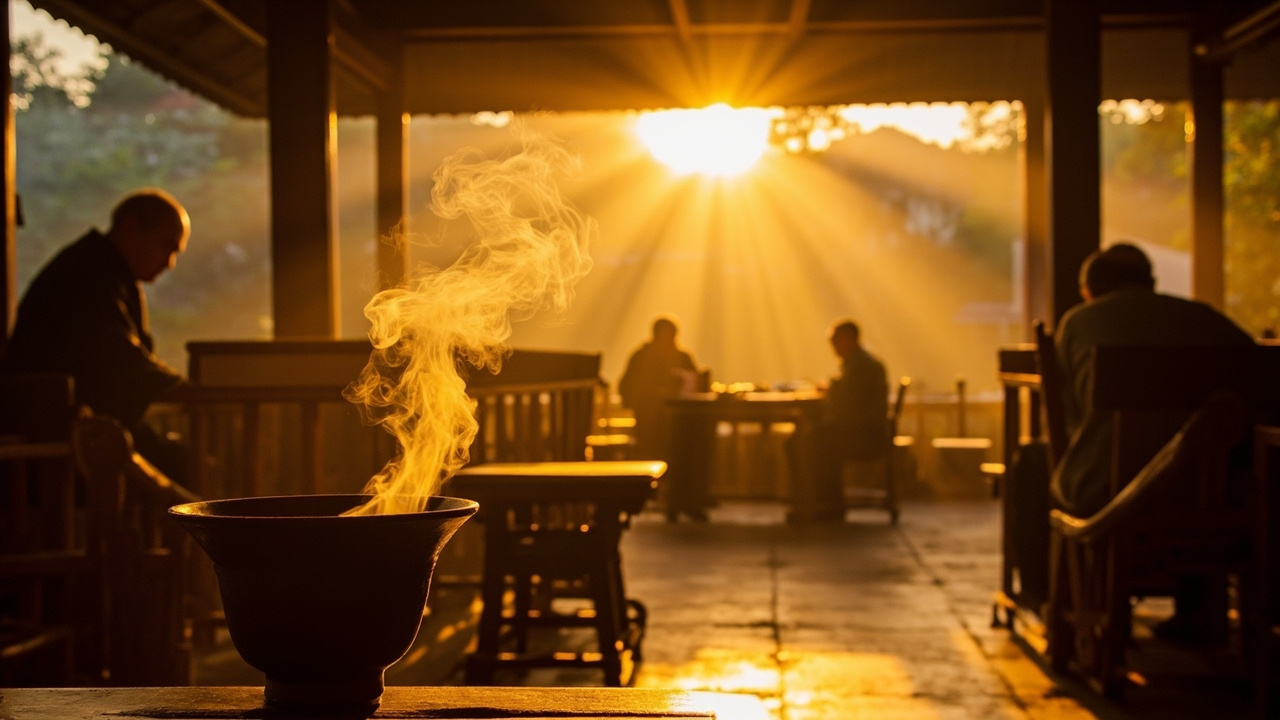
Best Tea Houses in China
The old man at the next table watched me struggle with the gaiwan for a full minute before he leaned over, tapped the lid twice, and said something I didn’t catch. Then he did it again, slower. Tip the lid, pour through the gap, don’t lift the whole thing off. I’d been drinking tea in China for three years by then and still didn’t know that. He didn’t introduce himself. He just went back to his newspaper and his own cup, and I sat there feeling like I’d been handed a small key.
That’s what a real tea house gives you. Not a ceremony, not a photo op. A room full of people who’ve been doing this their whole lives, willing to let you sit among them if you pay attention. China has thousands of these places, from grand courtyard houses in Beijing to hole-in-the-wall shops in Chengdu where the owner’s grandmother does the pouring. Most tourists never find them because they’re not on the itinerary. This guide is my attempt to fix that.
I’ve spent seven years in Beijing and traveled through China more than forty times, and tea houses are the one thing I plan every trip around. What follows are the ten I’d send a first-time visitor to, with real directions, real prices, and the small things I wish someone had told me before my first cup.
Quick answer
The best tea houses in China cluster in Chengdu, Beijing, Hangzhou, and Shanghai, and a proper session costs $8–25 (60–180 CNY) per person including refills. Most are open daily 10am–10pm, no reservation needed, and you can pay with Alipay or WeChat Pay — cash is often refused. Go on a weekday afternoon, order one tea and let it steep for two hours; nobody will rush you.
The Short Version
If you only have time for one, go to Heming Teahouse in Chengdu’s People’s Park. It’s the most foreigner-friendly, the cheapest, and the most alive. If you want the fancy version, go to a Beijing courtyard house. If you want to buy tea to take home, skip the tourist markets and go to a shop where the owner makes you taste before you buy. Avoid any “tea ceremony” sold by a tour guide near a major attraction — that’s a commission trap, not a tea house.
How I Picked These
I’ve sat in every one of these rooms at least twice, usually alone, sometimes with a book, occasionally with a friend who speaks better Mandarin than I do. I picked them on four criteria: does the tea actually taste good, can a non-Chinese speaker order without a fight, is the room worth sitting in for two hours, and does it feel like a place locals use rather than a place built for visitors. I asked taxi drivers, hostel staff, and one very patient tea vendor in Hangzhou’s Longjing village for recommendations, and I threw out anything that felt like a performance. A few famous names didn’t make the cut. You’ll see why in the entries.
Comparison Table
| Rank | Place | Best For | Approx Cost (USD) | Time Needed | When to Go |
|---|---|---|---|---|---|
| 1 | Heming Teahouse, Chengdu | First-timers, atmosphere | $3–8 (20–60 CNY) | 2 hours | Weekday afternoon |
| 2 | Lao She Teahouse, Beijing | Performances + tea | $15–30 (110–220 CNY) | 2–3 hours | Evening show |
| 3 | Longjing Village Tea Rooms, Hangzhou | Dragon Well tea, views | $10–25 (70–180 CNY) | Half day | April–May |
| 4 | Huxinting Teahouse, Shanghai | Old Shanghai setting | $12–20 (85–145 CNY) | 1–2 hours | Morning |
| 5 | Pengzhen Teahouse, Chengdu | Locals-only vibe | $2–5 (15–35 CNY) | 1–2 hours | Early morning |
| 6 | Maliandao Tea Market, Beijing | Buying tea to take home | Free to browse | 2–3 hours | Weekday |
| 7 | Wangfujing Tea Street, Beijing | Convenience, variety | $10–30 (70–220 CNY) | 1–2 hours | Any |
| 8 | Meijiawu Tea Village, Hangzhou | Tea + countryside walk | $8–20 (60–145 CNY) | Half day | Spring/fall |
| 9 | Tianfu Teahouse, Chengdu | Quiet, traditional | $5–10 (35–70 CNY) | 1–2 hours | Afternoon |
| 10 | Yuyuan Garden Teahouse, Shanghai | Tourist-friendly classic | $15–25 (110–180 CNY) | 1 hour | Weekday morning |
Heming Teahouse, Chengdu — The One You’ve Seen in Photos
I got there at 9:30am on a Tuesday and every bamboo chair under the pavilion was already taken. A woman with a thermos waved me toward a plastic stool at the edge, and I sat there for two hours watching men play mahjong, a barber give a shave, and a man clean his ears with a long metal tool that I still think about.
This is the tea house people mean when they say Chengdu is relaxed. It’s inside People’s Park, which is itself worth an hour. The tea is nothing special — jasmine, green, chrysanthemum — but that’s not the point. You’re paying for the chair, the shade, and the permission to do absolutely nothing.
📍 Location: Inside People’s Park, Qingyang District, Chengdu 🍵 Entry fee: Free to enter the park; tea $3–8 (20–60 CNY) per cup with unlimited refills 🕒 Opening hours: Roughly 7am–9pm daily, weather permitting 🚇 How to actually get there: Take Metro Line 2 to People’s Park Station, Exit B, walk into the park and follow the sound of clinking cups ⏰ When to visit: Weekday mornings before 10am for a seat; avoid weekends entirely 💡 Insider tips: Bring small bills or set up Alipay before you arrive — the staff rarely speak English and won’t take cards. Order by pointing at someone else’s cup. Refills are free, so one cup lasts all morning. The ear-cleaning guys will approach you; it’s about $5 (35 CNY) and completely safe, but say no if you’re squeamish. I paid $4 for jasmine tea and left a $1 tip that confused everyone.
Lao She Teahouse, Beijing — Tea With a Show
My first visit here was a mistake. I booked the evening performance expecting tourist fluff and got a two-hour variety show with face-changing, acrobatics, and a crosstalk comedian who made the entire room laugh at a joke I understood roughly 40% of.
It’s named after the writer Lao She, who set his famous play Teahouse in a place like this. The building is a proper three-story hall near Qianmen, and yes, it’s on the tourist circuit. But the performances are genuinely good, and the tea is better than it needs to be.
📍 Location: 3 Qianmen West Street, Dongcheng District, Beijing 🍵 Entry fee: Performance tickets $15–30 (110–220 CNY) including tea and snacks 🕒 Opening hours: Daily 2pm–10pm; performances usually 7:30pm 🚇 How to actually get there: Metro Line 2 to Qianmen Station, Exit A, walk 5 minutes north ⏰ When to visit: Book the evening show 2–3 days ahead; weekday shows are less crowded 💡 Insider tips: Buy tickets through the official WeChat account or at the door, not from touts outside. The front rows get pulled into audience participation. Snacks are refillable — ask for more melon seeds. If you want the full Beijing experience, pair this with a Qianmen walk beforehand. The crosstalk performer paused mid-set to welcome “our foreign friends” and I’ve never been more aware of my own face.
Longjing Village Tea Rooms, Hangzhou — Where the Tea Actually Grows
I walked up the hill from the bus stop in the rain, and by the time I reached the first tea room my shoes were soaked and the owner handed me a towel before she handed me a menu. That’s Hangzhou for you.
Longjing (Dragon Well) is China’s most famous green tea, and this is where it’s grown. The village sits in the hills west of West Lake, and dozens of small family operations sell tea from their own fields. The best ones let you taste before you buy, and the price depends entirely on when the leaves were picked — pre-Qingming (early April) tea can cost ten times the late-season stuff.
📍 Location: Longjing Village, Xihu District, about 30 minutes west of West Lake 🍵 Entry fee: Free to walk around; tastings $10–25 (70–180 CNY), tea to buy from $20 (145 CNY) per 50g 🕒 Opening hours: Most shops 8am–6pm, daily 🚇 How to actually get there: Bus 27 from West Lake or a 25-minute taxi from downtown; ask for “Longjing Cun” ⏰ When to visit: April and May for the first flush; autumn for fewer crowds 💡 Insider tips: The first shop you see is not the best — walk uphill. Ask to smell the dry leaves before tasting. Real Longjing is flat and pressed, not rolled. Bring cash as backup; some family shops still prefer it. Don’t buy the “imperial grade” label — it’s marketing. The owner’s daughter, maybe eight years old, poured my second cup and corrected my grip on the gaiwan without saying a word.
Huxinting Teahouse, Shanghai — The One in the Middle of the Pond
You’ve seen this building. It’s the hexagonal pavilion in the middle of Yuyuan Garden’s pond, reached by a zigzag bridge, and it’s been serving tea since the 1850s. I went expecting a tourist trap and got a genuinely lovely hour.
The tea list is long, the service is brisk, and the view of the garden’s rooftops from the second floor is worth the price alone. It’s not cheap by Chinese standards, but it’s cheaper than a coffee in Manhattan.
📍 Location: Middle of Yuyuan Garden pond, Huangpu District, Shanghai 🍵 Entry fee: $12–20 (85–145 CNY) per person, tea included 🕒 Opening hours: Daily 8:30am–9pm 🚇 How to actually get there: Metro Line 10 to Yuyuan Garden Station, Exit 1, walk 5 minutes into the bazaar ⏰ When to visit: Right at opening on a weekday; the garden crowds arrive by 10am 💡 Insider tips: You need a Yuyuan Garden bazaar ticket to enter the area during peak season — buy it at the gate. The second floor has better views than the ground floor. Skip the snacks, they’re overpriced. If you’re doing Shanghai properly, this fits neatly into a half-day old-city loop. A German couple at the next table asked me to translate the menu and we ended up sharing a pot of pu’er for an hour.
Pengzhen Teahouse, Chengdu — The One Tourists Don’t Find
I only went here because a Chengdu friend insisted. It’s a 40-minute bus ride from the city center, in a small town called Pengzhen, and the tea house is a wooden building that’s been operating for over a century. There were no other foreigners. There were also no menus in English, no Wi-Fi, and no one who cared that I was there.
The tea is cheap, the room smells like woodsmoke and old paper, and the regulars have been coming for decades. This is what Heming was 30 years ago.
📍 Location: Pengzhen Old Town, Shuangliu District, Chengdu 🍵 Entry fee: $2–5 (15–35 CNY) per cup 🕒 Opening hours: Roughly 8am–6pm daily 🚇 How to actually get there: Bus from Chengdu Chadianzi Bus Station toward Pengzhen, then ask locals for the old tea house; or a $12 (85 CNY) taxi ⏰ When to visit: Any weekday morning 💡 Insider tips: Download an offline translation app before you go — nobody here speaks English. Bring small cash. Don’t expect food beyond peanuts. The town itself is worth a slow walk. This is a half-day trip, not a quick stop. An old man shared his sunflower seeds with me without asking and I still think about that small kindness.
Maliandao Tea Market, Beijing — For Buying, Not Sipping
Maliandao is not a tea house. It’s a wholesale market with hundreds of shops, and it’s where Beijing’s restaurants and offices buy their tea. I went to buy a gift for my mother and spent three hours tasting pu’er, oolong, and one very expensive white tea I couldn’t afford.
The trick is to walk past the first row of shops, which are aimed at tourists, and go deeper. The shops in the back will sit you down, brew you tea, and talk to you for an hour before mentioning a price.
📍 Location: Maliandao Road, Xicheng District, Beijing 🍵 Entry fee: Free to browse; tastings usually free if you’re serious about buying 🕒 Opening hours: Daily 9am–6pm, some shops close Sundays 🚇 How to actually get there: Metro Line 7 to Wanzi Station, Exit A, walk 10 minutes west ⏰ When to visit: Weekday mornings when shop owners aren’t busy 💡 Insider tips: Never buy from the first shop you enter. Ask “how much per 50g” not “how much for this box.” Bring a Chinese-speaking friend if you can. Prices are negotiable but not by much. Shipping to your home country is possible but expensive — check customs rules first. The shop owner, a woman named Chen, refused to let me pay for the tasting and gave me a small bag of jasmine to take home.
Wangfujing Tea Street, Beijing — The Convenient One
I’m including this mostly because it’s easy. It’s a pedestrian street near the Forbidden City, and there are a dozen tea shops of varying quality. It’s not where I’d send a tea obsessive, but if you’re already in the area and want a decent cup without a detour, it works.
The best of the bunch is a small shop on the second floor of the Donghuamen Night Market building. The tea is fine. The people-watching is excellent.
📍 Location: Wangfujing Street, Dongcheng District, Beijing 🍵 Entry fee: $10–30 (70–220 CNY) depending on the tea 🕒 Opening hours: Daily 10am–10pm 🚇 How to actually get there: Metro Line 1 to Wangfujing Station, Exit A ⏰ When to visit: Late afternoon, before the dinner rush 💡 Insider tips: Ignore the shops with English signs and photos of celebrities. Ask for the tea menu, not the “ceremony package.” If you’re doing the classic China highlights, this is a fine pit stop. Don’t buy tea here to take home — Maliandao is better and cheaper. I paid $18 for a mediocre oolong and learned my lesson about tourist streets.
Meijiawu Tea Village, Hangzhou — The Quieter Longjing Alternative
Everyone goes to Longjing Village. Meijiawu is 20 minutes further out, less crowded, and honestly just as good. I spent an afternoon here in October, walking between tea fields and sitting in a family tea room while the owner explained the difference between first and second flush using dried leaves on the table.
If you want the tea village experience without the tour buses, come here.
📍 Location: Meijiawu Village, Xihu District, Hangzhou 🍵 Entry fee: Free; tastings $8–20 (60–145 CNY) 🕒 Opening hours: Daily 8am–6pm 🚇 How to actually get there: Bus 4 from West Lake or a 30-minute taxi; ask for “Meijiawu Chacun” ⏰ When to visit: Spring for harvest, autumn for weather 💡 Insider tips: The walk between the village and the tea fields is the best part — allow 90 minutes. Bring a hat. Most tea rooms here are family-run and will let you try before buying. Cash is safer than cards. The owner’s husband drove me back to the main road when the last bus had already gone.
Tianfu Teahouse, Chengdu — The Quiet One
Tianfu is smaller and calmer than Heming, tucked into a side street near the Wenshu Monastery. I went on a rainy Wednesday and had the place nearly to myself. The tea list is short, the service is gentle, and the room smells like wet wood and jasmine.
It’s not famous. That’s the point.
📍 Location: Near Wenshu Monastery, Qingyang District, Chengdu 🍵 Entry fee: $5–10 (35–70 CNY) 🕒 Opening hours: Daily 9am–9pm 🚇 How to actually get there: Metro Line 1 to Wenshu Monastery Station, Exit B, walk 8 minutes ⏰ When to visit: Rainy days, weekday afternoons 💡 Insider tips: Pair it with a visit to the monastery next door. The tea here is simple, so don’t expect rare varieties. Bring a book. The staff will leave you alone for hours. A monk from the monastery came in, ordered one cup, and read for two hours without looking up.
Yuyuan Garden Teahouse, Shanghai — The Classic
This is the tea house inside Yuyuan Garden itself, not the one on the pond. It’s smaller, quieter, and slightly more expensive. I went because a friend insisted the pu’er here was the best in the city, and she was right.
The room is small, the tables are close together, and you’ll probably end up talking to whoever’s next to you. That’s part of it.
📍 Location: Inside Yuyuan Garden, Huangpu District, Shanghai 🍵 Entry fee: $15–25 (110–180 CNY) including garden entry 🕒 Opening hours: Daily 8:30am–5pm 🚇 How to actually get there: Metro Line 10 to Yuyuan Garden Station, Exit 1 ⏰ When to visit: Right at opening on a weekday 💡 Insider tips: Garden entry is separate from the tea house — buy both at the gate. The pu’er is the standout. Skip the tourist snacks. If you’re short on time in Shanghai, this is the one to pick. I shared a table with a retired teacher who corrected my pronunciation of “pu’er” three times.
FAQ summary
The best tea houses in China for first-time visitors are Heming Teahouse in Chengdu (cheapest, most atmospheric), Lao She Teahouse in Beijing (best for performances), and Longjing Village in Hangzhou (best for buying real tea). Expect to pay $3–25 (20–180 CNY) per person for tea with free refills, and plan for 1–3 hours per visit. Most tea houses are open daily, don’t require reservations, and accept Alipay or WeChat Pay but not foreign credit cards. Weekday afternoons are the best time to go; avoid weekends and major holidays.
FAQ
Q: Do I need to speak Chinese to visit a tea house? A: No, but it helps. In Chengdu and Beijing’s tourist areas, staff usually understand “tea,” “green tea,” and “how much.” Download a translation app before you go — Pleco or Google Translate with offline Chinese both work. At smaller tea houses like Pengzhen, you’ll need the app or a lot of pointing.
Q: How much should I tip at a tea house? A: You shouldn’t. Tipping is not customary in China and can cause confusion or mild offense. The price on the menu is the price. If you want to show appreciation, buy a bag of tea to take home instead.
Q: Can I pay with a credit card? A: Rarely. Most tea houses accept only Alipay, WeChat Pay, or cash. Set up Alipay or WeChat Pay before your trip — you’ll need a Chinese bank account or an international card linked through the app. Bring 200–300 CNY in cash as backup.
Q: Do I need a VPN to use my phone at a tea house? A: Yes, if you want to use Google, Instagram, or WhatsApp. Most tea houses have free Wi-Fi, but it’s behind the Great Firewall. Install a VPN before you arrive — see our SIM and internet guide for setup details.
Q: Is it rude to leave tea unfinished? A: Not at all. Tea houses expect you to come and go. What’s rude is rushing — sitting for 20 minutes and leaving feels odd to staff. Stay at least an hour if you can.
Q: What’s the best tea to try as a beginner? A: Jasmine green tea (hua cha) or Dragon Well (longjing) if you want something light. Pu’er if you want something earthy and strong. Oolong sits in the middle. Tell the server “light” or “strong” and they’ll guide you.
Q: Do I need a visa to visit China in 2026? A: Many nationalities can enter visa-free for up to 30 days, and 240-hour visa-free transit is available for 54 countries. Check the current visa-free policy before booking, and confirm your passport is valid for at least six months.
The Honest Wrap-up
This list is for travelers who want to sit still for two hours and drink something that tastes like where they are. It’s not for people who want a checklist, a photo, and a move on. If you’re the second kind, pick Heming and give it 90 minutes — you’ll get it. If you’re the first kind, start in Chengdu and work outward.
One last thing. The best tea house you visit won’t be on this list. It’ll be the one you stumble into because it started raining, or because someone waved you in, or because the sign was in characters you couldn’t read. Say yes to that one. Order whatever the person next to you is having. Tip the lid. Pour through the gap. Stay longer than you planned.
More guides you may like

Top 10 Bridges in China
China's bridges are engineering marvels spanning mountains, rivers, and seas. Here are 10 of the most spectacular, from ancient stone to modern steel.
8 min read

Top 10 Buddhist Sites in China
From the Leshan Giant Buddha to the Dunhuang Caves, these 10 Buddhist sites represent 2,000 years of China's spiritual heritage.
9 min read

Top 10 Day Trips from Beijing You Shouldn't Miss
Beijing is packed with history, but some of China's best experiences are just a few hours away. Here are 10 day trips that will transform your visit.
9 min read

Top 10 Hidden Gems in China Off the Beaten Path
Beyond the Great Wall and Terracotta Warriors, China has incredible hidden destinations few tourists ever reach. Here are 10 underrated gems worth the detour.
9 min read

Top 10 Markets and Shopping Streets in China
From Shanghai's Bund to Beijing's Silk Street - 10 markets where foreigners can haggle, explore, and bring home authentic Chinese goods.
9 min read

Top 10 Museums in China You Shouldn't Miss
China's museums span 5,000 years of civilization. These 10 - from the Palace Museum to Xi'an's terracotta gallery - are unmissable for culture lovers.
9 min read