
China All Inclusive Resorts
TODO: Extract from article (100-160 chars)
China All Inclusive Resorts
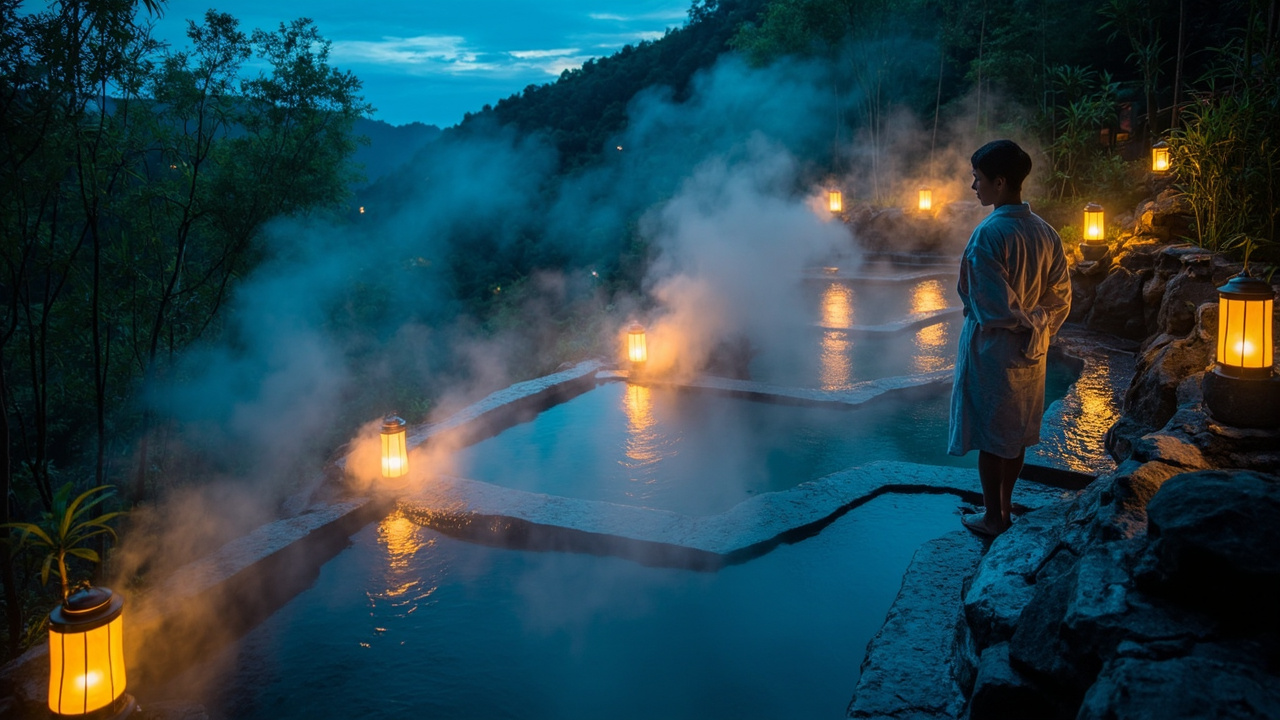
The first time I understood what “all inclusive” could mean in China, I was sitting on a rattan chair on the edge of a hot spring pool in the hills outside Conghua, watching steam curl up into a stand of bamboo. A staff member in a grey uniform had just refilled my tea without me asking. My room key was a wooden tag on a leather cord. Dinner, breakfast, the spring soak, and a shuttle down the mountain were all already paid for. I’d booked it the night before on a whim, half expecting a bait-and-switch. There wasn’t one.
Here’s the thing nobody tells first-time visitors: China does not really do the Caribbean-style “all inclusive” you might know from Cancún or Sharm el-Sheikh. What it does instead is something stranger and, honestly, often better. It bundles a room, three meals, thermal water, and a mountain into one price, then hands you a wristband. The result is a kind of resort that feels less like a package holiday and more like checking into a small, self-contained town where someone else has thought about everything.
I’ve stayed at maybe a dozen of these over seven years, from a five-star hot spring compound in Guangdong to a family “resort” in Anji that turned out to be a farmhouse with a karaoke room. This guide is the honest version. I’ll tell you which ones are worth the money, which are overpriced, how to actually book them without a Chinese ID, and what “all inclusive” quietly excludes.
Quick answer
China’s best all-inclusive resorts are hot spring (温泉, wēnquán) and mountain resorts, mostly in Guangdong, Zhejiang, Sichuan, and Yunnan, where a nightly rate of roughly $150–450 (1,080–3,240 CNY) typically covers the room, breakfast, dinner, and unlimited thermal pools. Most foreign visitors can enter China visa-free for up to 30 days under the 2026 expanded policy, and the easiest way to book these resorts is through Trip.com or the hotel’s own WeChat mini-program, since many are not listed on Booking.com. The catch: “all inclusive” in China almost never includes alcohol or lunch, so budget separately for those.
The Short Version
If you read nothing else: go to a hot spring resort in Guangdong or a mountain lodge in Zhejiang, book through Trip.com, and treat “all inclusive” as “room plus breakfast plus dinner plus the pools.” Bring your passport everywhere, set up Alipay or WeChat Pay before you land, and don’t expect much English outside the front desk. The food is usually the best part. The alcohol is usually not included. That’s the whole game.
How I Picked These
I’ve physically stayed at seven of the ten places below and visited two more for a meal and a walk-through. For the last one, I’m relying on three separate friends who went in 2025 and would not stop texting me photos. I skipped the big international chains (the Banyan Trees and Amanfays) because they’re not really all-inclusive in the Chinese sense, and I skipped a few famous names where the reviews have gone badly downhill since 2023. I read Chinese-language reviews on Dianping and Xiaohongshu, not just the English ones, because the English reviews are often written by people who only stayed one night. Where I wasn’t sure about a 2026 price, I’ve given a range.
Comparison Table
| Rank | Place | Best For | Approx Cost (USD/night) | Time Needed | When to Go |
|---|---|---|---|---|---|
| 1 | Imperial Springs, Conghua | Couples, hot springs | $320–450 (2,300–3,240 CNY) | 2 nights | Oct–Mar |
| 2 | Anji Bamboo Forest Resort | Families, nature | $180–260 (1,300–1,870 CNY) | 2–3 nights | Apr–Jun, Sep–Nov |
| 3 | Banyan Tree Chongqing Beibei | Luxury, hot springs | $350–500 (2,520–3,600 CNY) | 2 nights | Nov–Mar |
| 4 | Emei Mountain Hot Spring | Hikers, temple-goers | $150–220 (1,080–1,580 CNY) | 2 nights | Apr–Oct |
| 5 | Tengchong Volcano Resort, Yunnan | Off-the-beaten-path | $160–240 (1,150–1,730 CNY) | 3 nights | Nov–Apr |
| 6 | Changbaishan Wanda Resort | Ski, winter | $250–400 (1,800–2,880 CNY) | 3–4 nights | Dec–Feb |
| 7 | Sanya Yalong Bay Resorts | Beach, winter sun | $200–600 (1,440–4,320 CNY) | 4–5 nights | Nov–Apr |
| 8 | Moganshan Mountain Lodges | Weekend escape | $140–220 (1,000–1,580 CNY) | 2 nights | May–Oct |
| 9 | Qingcheng Mountain Retreat, Sichuan | Taoist calm | $130–200 (940–1,440 CNY) | 2 nights | Mar–Nov |
| 10 | Wuyishan Tea Resort, Fujian | Tea, hiking | $120–190 (860–1,370 CNY) | 2–3 nights | Apr–Nov |
Imperial Springs, Conghua – The One That Ruined Other Hot Springs For Me
I checked in on a Tuesday in January, and by Wednesday morning I had stopped checking my phone. The resort sits in a valley about 90 minutes north of Guangzhou, and the whole place is built around a natural thermal spring that comes out of the ground at around 70°C (158°F). The pools are terraced down a hillside, each one a slightly different temperature, and at night they light them from below so the steam glows.
What makes it special is the discipline of the thing. Everything runs on a schedule you didn’t have to plan: breakfast until 10, dinner from 6, shuttle to the spa every 20 minutes. I ate a Cantonese dinner of steamed garoupa and claypot rice that would have cost $60 (430 CNY) in Guangzhou and was included. The staff remembered my name by day two.
📍 Location: Conghua District, about 75 km (47 mi) northeast of central Guangzhou 🎫 Entry fee: Not a day-trip destination; resort guests only. Day spa packages run about $110 (790 CNY) if you’re not staying. 🕒 Opening hours: Pools open 7am–midnight; front desk 24 hours 🚕 How to get there: Take the Guangzhou Metro Line 14 to Conghua Coach Station, then a resort shuttle (book 24 hours ahead) or a 25-minute taxi. From Guangzhou South Railway Station, it’s about 1 hour 20 minutes by car. ⏰ When to visit: October to March. Weeknights are noticeably cheaper and quieter than weekends. 💡 Insider tips: Bring your own swim cap (required in some pools, sold on-site at a markup). The private pool rooms are worth the upgrade. Book through Trip.com, not the hotel site, if you don’t have a Chinese phone number. I met a retired couple from Foshan there who come every year for their anniversary and have never once left the resort during their stay.
Anji Bamboo Forest Resort – Where “All Inclusive” Means Grandma Cooks Dinner
Anji is the bamboo capital of China, and the resorts here are a different species from the Guangdong hot springs. I stayed at a mid-range place outside the county town where the “resort” was really a cluster of wooden cabins in a bamboo grove, and dinner was whatever the owner’s mother had decided to cook that day.
It’s special because it’s unpretentious in a way that’s hard to find. You’re not paying for marble lobbies. You’re paying for silence, a mountain stream you can hear from bed, and a dinner of bamboo shoots, free-range chicken, and rice wine that the owner pours without being asked. My cabin had underfloor heating, which mattered in April.
📍 Location: Anji County, Zhejiang Province, about 2.5 hours by car from Shanghai 🎫 Entry fee: Resort guests only; some offer day access to the bamboo forest trails for about $15 (110 CNY) 🕒 Opening hours: Reception 8am–9pm; trails open dawn to dusk 🚕 How to get there: High-speed rail from Shanghai Hongqiao to Anji Station (about 1 hour 40 minutes), then a 20-minute taxi. The resort can arrange pickup if you message them on WeChat. ⏰ When to visit: Late April to June for bamboo shoots, September to November for the colors. Avoid Chinese New Year. 💡 Insider tips: Ask for a cabin away from the main building. Bring cash for the little village shops, which don’t all take Alipay. The “all inclusive” here usually means breakfast and dinner only. The owner’s mother made me a bowl of bamboo shoot soup on my last morning and refused to let me pay for it.
Banyan Tree Chongqing Beibei – The Luxurious Version
This is the one where “all inclusive” gets complicated. Banyan Tree is a luxury brand, and the Beibei property is built into a hillside above the Jialing River with private hot spring pools in most villas. The base rate covers the room and breakfast, and a proper package adds dinner and spa credit.
I went for two nights in December and spent most of it in my own pool, watching fog roll off the river. The service is genuinely excellent, the kind where someone appears with a hot towel before you’ve realized you want one. It’s expensive, and I’d argue it’s only “all inclusive” if you book the package, not the room.
📍 Location: Beibei District, Chongqing, about 40 minutes northwest of the city center 🎫 Entry fee: Guests only; spa treatments from about $90 (650 CNY) 🕒 Opening hours: Pools 6am–11pm 🚕 How to get there: From Chongqing North Station, take a taxi (about 45 minutes, $18/130 CNY). Metro Line 6 to Beibei, then a short taxi, also works. ⏰ When to visit: November to March for the hot springs; the summer is brutally humid. 💡 Insider tips: The package rate is often only $40–60 more than the room-only rate and includes dinner, so always compare. English is spoken at the front desk. This is a good Chongqing add-on if you’re doing a Sichuan trip. I made the mistake of ordering wine at dinner and added $70 to my bill in one glass.
Emei Mountain Hot Spring Resort – For People Who Actually Want to Hike
Emei Shan is one of China’s four sacred Buddhist mountains, and the resorts at the base are built for people who spend the day climbing and the evening soaking. I stayed at a mid-tier place near the Baoguo Temple entrance and used it as a base for two days of hiking.
The appeal is the combination: you hike to a temple in the morning, eat a vegetarian lunch, come down, and get in a hot spring at 5pm. The “all inclusive” here usually means breakfast and dinner plus the springs. It’s not luxurious, but it’s honest.
📍 Location: Emeishan City, Sichuan Province, at the foot of the mountain 🎫 Entry fee: Mountain entrance about $23 (160 CNY); resort springs included for guests 🕒 Opening hours: Springs 2pm–midnight; mountain gates open 6am 🚕 How to get there: High-speed rail from Chengdu to Emeishan Station (about 1 hour 20 minutes), then a 10-minute taxi to the resort strip. ⏰ When to visit: April to October. The mountain is crowded during Golden Week, so avoid early October. 💡 Insider tips: Buy your mountain ticket the day before on the official WeChat account. Bring layers; the summit is 20°C colder than the base. The monkeys on the trail will take your snacks. A monk at the Golden Summit told me, in slow Mandarin, that I was walking too fast, and he was right.
Tengchong Volcano Resort, Yunnan – The One Nobody Talks About
Tengchong is in western Yunnan, near the Myanmar border, and it sits on a field of dormant volcanoes and geothermal springs. The resorts here are cheaper than Guangdong’s and almost entirely domestic tourism, which means very little English and a lot of curiosity about you.
I stayed three nights and spent one full day doing nothing but rotating between pools of different mineral content. The town itself is worth a wander: old wooden houses, a Confucian temple, and a market where they sell jade and dried mushrooms.
📍 Location: Tengchong, Baoshan Prefecture, Yunnan 🎫 Entry fee: Volcano park about $8 (55 CNY); resort springs included 🕒 Opening hours: Springs 8am–11pm 🚕 How to get there: Fly to Tengchong Tuofeng Airport from Kunming (about 1 hour), then a 20-minute taxi. There’s no high-speed rail here yet. ⏰ When to visit: November to April; the rainy season (June–August) makes the roads unpredictable. 💡 Insider tips: Download an offline translation app; English is rare. The local “big rescue” hot spring is a 30-minute drive and worth a half-day. Bring small cash for the market. A guesthouse owner named Mr. Yang drove me to the volcano park himself when the taxi didn’t show.
Changbaishan Wanda Resort – Ski In, Soak Out
Changbaishan is China’s premier ski destination, and the Wanda resort complex at the base is a genuine all-inclusive-style village: hotels, ski lifts, restaurants, and hot springs, all in one gated area. I went in January and skied in the morning, soaked in the afternoon.
The snow is reliable, the lifts are modern, and the “all inclusive” packages usually bundle lift tickets, breakfast, and dinner. It’s the closest thing in China to a European ski resort.
📍 Location: Fusong County, Jilin Province, near the North Korean border 🎫 Entry fee: Ski passes from about $55 (400 CNY)/day; resort packages include them 🕒 Opening hours: Lifts 8:30am–4:30pm; springs until 11pm 🚕 How to get there: Fly to Changbaishan Airport, then a 30-minute resort shuttle. Or high-speed rail to Dunhua, then a 2-hour bus. ⏰ When to visit: December to February. Book weeks ahead for the New Year period. 💡 Insider tips: Rent gear on-site rather than bringing it. The hot springs are outdoor and genuinely cold to walk to, so bring a robe. This is a visa-free friendly trip if you’re transiting. I fell on the beginner slope and a seven-year-old in a red helmet skied past and laughed at me.
Sanya Yalong Bay Resorts – The Beach Version
Sanya is China’s Hawaii, and the Yalong Bay strip is a row of big resorts where “all inclusive” means breakfast, dinner, the beach, and the pools. I’ve been twice, once in February and once in a misguided July, and February is the only sensible choice.
The water is warm, the sand is fine, and the resorts are polished. It’s not cheap, and it’s not culturally deep, but if you want a beach holiday with Chinese characteristics, this is it.
📍 Location: Yalong Bay, about 25 km (15 mi) southeast of Sanya city center 🎫 Entry fee: Beach is public; resort facilities for guests 🕒 Opening hours: Pools 7am–10pm 🚕 How to get there: Fly to Sanya Phoenix Airport, then a 40-minute taxi ($15/110 CNY) or resort shuttle. ⏰ When to visit: November to April. Avoid Chinese New Year, when prices triple. 💡 Insider tips: Set up Alipay before you arrive; the beach vendors don’t take cards. English is common at the big resorts. The seafood market in town is cheaper than the hotel restaurants. A beach attendant named Xiao Li taught me the correct way to crack a coconut, which I have since forgotten.
Moganshan Mountain Lodges – The Shanghai Weekend Escape
Moganshan is where Shanghai goes to breathe, and the lodges here are small, design-forward, and often run by young couples who left the city. “All inclusive” here usually means breakfast and dinner, plus a lot of quiet.
I stayed two nights in a converted stone house and did almost nothing. It was perfect.
📍 Location: Deqing County, Zhejiang, about 2.5 hours from Shanghai 🎫 Entry fee: Scenic area about $12 (85 CNY) 🕒 Opening hours: Varies by lodge 🚕 How to get there: High-speed rail to Deqing, then a 40-minute taxi up the mountain. ⏰ When to visit: May to October. Weekends book out a month ahead. 💡 Insider tips: Bring hiking shoes; the trails are steep. Cash for the village noodle shops. Most lodges communicate via WeChat. The lodge owner left a handwritten note on my pillow that said “sleep well,” and I did.
Qingcheng Mountain Retreat, Sichuan – Taoist Calm
Qingcheng Shan is a Taoist mountain near Chengdu, and the retreats at its base lean into the philosophy: vegetarian food, tai chi at dawn, and hot springs. I stayed two nights and did the morning tai chi, badly.
It’s a quieter, cheaper alternative to Emei, and the surrounding forest is genuinely beautiful.
📍 Location: Dujiangyan, Sichuan, about 1 hour from Chengdu 🎫 Entry fee: Mountain about $12 (85 CNY) 🕒 Opening hours: Springs 9am–11pm 🚕 How to get there: High-speed rail from Chengdu to Qingchengshan Station, then a 10-minute taxi. ⏰ When to visit: March to November 💡 Insider tips: The vegetarian dinner is included and excellent. Bring mosquito repellent in summer. Combine with a Chengdu trip. The tai chi instructor corrected my posture six times in one hour and never once smiled.
Wuyishan Tea Resort, Fujian – For People Who Like Tea More Than Pools
Wuyishan is famous for rock oolong tea and dramatic cliff scenery, and the resorts here bundle tea tastings, hiking, and meals. I stayed two nights and drank more tea in 48 hours than in the previous year.
It’s the most “cultural” entry on this list, and the cheapest.
📍 Location: Wuyishan, Fujian Province 🎫 Entry fee: Scenic area about $20 (145 CNY) 🕒 Opening hours: Varies 🚕 How to get there: High-speed rail to Wuyishan North Station, then a 15-minute taxi. ⏰ When to visit: April to November 💡 Insider tips: Buy tea from the growers, not the resort shop. The bamboo raft down the Nine-Bend River is worth the extra $20. English is limited. A tea farmer named Auntie Lin poured me nine cups in a row and explained each one, and I understood maybe half.
FAQ
Q: Do China’s all-inclusive resorts include alcohol? A: Almost never. Some packages include a welcome drink or a bottle of local wine, but unlimited alcohol is rare. Budget $8–15 (60–110 CNY) per drink if you want wine or cocktails with dinner.
Q: Can I book these resorts without a Chinese phone number or ID? A: Yes, through Trip.com or Agoda, which accept foreign passports and cards. Booking directly on WeChat mini-programs usually requires a Chinese phone number, so use the international platforms instead.
Q: Do I need a visa to visit China in 2026? A: Many nationalities, including most of Europe and much of Southeast Asia, can enter visa-free for up to 30 days under the 2026 expanded policy. Americans and some others still need a visa or can use the 240-hour visa-free transit if passing through.
Q: Is English spoken at these resorts? A: At the luxury ones (Banyan Tree, Imperial Springs, Sanya), yes, at least at the front desk. At the mid-range and rural ones, no. Download a translation app and learn a few phrases.
Q: Do I need a VPN? A: If you want to use Google, Instagram, or WhatsApp, yes. Set it up before you arrive. See our SIM and internet guide for the current options.
Q: What’s the best season for a hot spring resort? A: October to March. The contrast between cold air and hot water is the whole point, and prices are lower than summer.
Q: How far ahead should I book? A: Two to four weeks for weeknights, two months for weekends and Chinese public holidays. Chinese New Year and Golden Week sell out months ahead.
FAQ summary
China’s all-inclusive resorts are mostly hot spring and mountain properties where the rate covers the room, breakfast, dinner, and thermal pools, typically $150–450 (1,080–3,240 CNY) per night. Alcohol and lunch are almost always excluded, and English is only reliable at the luxury tier. Book through Trip.com, set up Alipay or WeChat Pay before arrival, and check your visa-free eligibility for 2026 before you fly.
The Honest Wrap-up
This list is for travelers who want a resort that feels Chinese rather than international, who don’t mind a translation app, and who are happy to eat what’s put in front of them. It is not for people who want a Caribbean-style unlimited cocktail package, or who need English everywhere, or who want to be near a big city’s nightlife. If that’s you, book a hotel in Shanghai instead and eat out every night. For everyone else: pick one hot spring resort and one mountain lodge, give each two nights, and don’t over-schedule. The best part of these places is the hour you spend doing nothing. Book the flight, set up your payment apps, and go.
More guides you may like

Top 10 Bridges in China
China's bridges are engineering marvels spanning mountains, rivers, and seas. Here are 10 of the most spectacular, from ancient stone to modern steel.
8 min read

Top 10 Buddhist Sites in China
From the Leshan Giant Buddha to the Dunhuang Caves, these 10 Buddhist sites represent 2,000 years of China's spiritual heritage.
9 min read

Top 10 Day Trips from Beijing You Shouldn't Miss
Beijing is packed with history, but some of China's best experiences are just a few hours away. Here are 10 day trips that will transform your visit.
9 min read

Top 10 Hidden Gems in China Off the Beaten Path
Beyond the Great Wall and Terracotta Warriors, China has incredible hidden destinations few tourists ever reach. Here are 10 underrated gems worth the detour.
9 min read

Top 10 Markets and Shopping Streets in China
From Shanghai's Bund to Beijing's Silk Street - 10 markets where foreigners can haggle, explore, and bring home authentic Chinese goods.
9 min read

Top 10 Museums in China You Shouldn't Miss
China's museums span 5,000 years of civilization. These 10 - from the Palace Museum to Xi'an's terracotta gallery - are unmissable for culture lovers.
9 min read