
Potala Palace Lhasa Guide
TODO: Extract from article (100-160 chars)
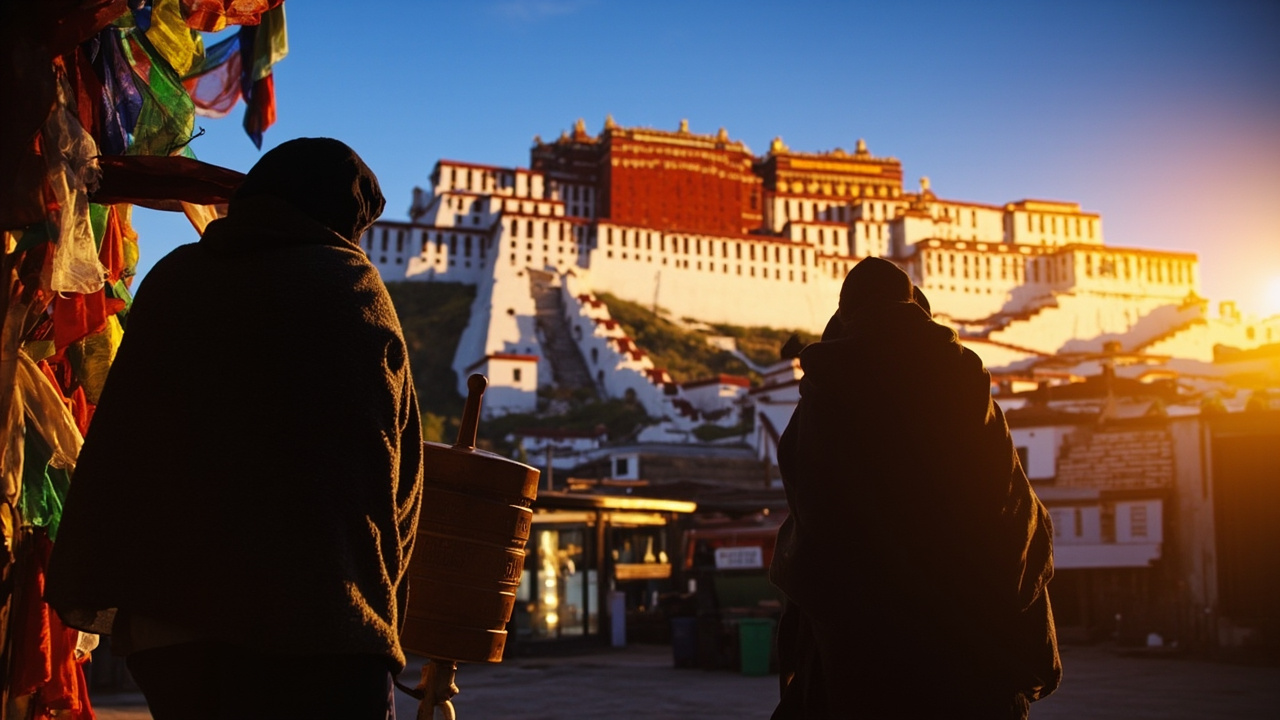
Potala Palace Lhasa Guide
The first thing I noticed wasn’t the building. It was the sound of a wooden stick tapping stone, over and over, somewhere below me on the pilgrim path. I’d been in Lhasa for about six hours, still dizzy from the altitude and slightly annoyed at myself for not budgeting a rest day. I walked toward the noise and found an elderly woman in a dark chuba, prostrating her way up the long kora circuit around the Potala, her hands wrapped in wooden blocks, her forehead dark with dust. She’d probably been at it since before dawn. I stood there for maybe ten minutes, not taking photos, just watching. That’s when the Potala stopped being a photo on a poster and became a place.
Most first-time visitors to China never make it to Tibet. It’s the hardest part of the country to visit, full stop. You need permits, you need a guide, you can’t just book a hostel and show up. But if you’re willing to do the paperwork, the Potala Palace is one of the few genuinely overwhelming structures I’ve seen anywhere — a 13-story, 1,300-year-old fortress-monastery stacked on a hill above a city at 3,650 meters (12,000 feet). It holds over 1,000 rooms, 10,000 shrines, and the tombs of eight Dalai Lamas. No photo prepares you for the scale.
This guide covers the Potala itself plus nine other places in and around Lhasa that are worth your limited oxygen. I’ve been to Lhasa three times, most recently in 2025, and I’ve made almost every mistake you can make there — wrong permits, wrong season, wrong shoes, wrong expectations. Here’s what I’d tell a friend.
Quick answer
Foreign tourists need a Tibet Travel Permit arranged through a licensed Tibetan travel agency at least 15-20 days before arrival, and you cannot book flights or trains to Lhasa without it. The Potala Palace costs ¥200 ($28) in high season (May-October) and ¥100 ($14) in low season, and tickets sell out days in advance — your agency usually books them for you. The best months are April-May and September-October; July-August is rainy and crowded with domestic tourists.
The Short Version
If you only have three days in Lhasa: Day 1 acclimatize, do nothing, drink water, walk the Barkhor slowly. Day 2, Potala Palace in the morning (booked in advance), Jokhang Temple in the afternoon. Day 3, Sera Monastery for the monk debates at 3pm, then the kora around the Potala at sunset. Skip anything that requires a long drive until you know how your body handles the altitude. The Potala is the headline, but the Jokhang and the Barkhor circuit are what people actually remember.
How I Picked These
I’ve spent about five weeks total in Lhasa across three trips — 2018, 2022, and 2025 — always with a Tibetan guide, always through a licensed agency, because that’s the only legal way for a foreigner to be there. I’ve done the Potala twice (once in summer, once in winter, and the winter visit was better). I’ve eaten in the same momo shop near the Barkhor three times and the owner still doesn’t remember me. I’ve talked to guides, monks, tea house owners, and other travelers stuck in the same permit queue. The ten places below are the ones I’d actually go back to, not the ones that look best on Instagram.
Comparison Table
| Rank | Place | Best For | Approx Cost (USD) | Time Needed | When to Go |
|---|---|---|---|---|---|
| 1 | Potala Palace | The main event | $14-28 (¥100-200) | 2-3 hrs | Apr-May, Sep-Oct |
| 2 | Jokhang Temple | Pilgrim atmosphere | $12 (¥85) | 1.5-2 hrs | Morning |
| 3 | Barkhor Street Kora | Watching real devotion | Free | 1-2 hrs | Dawn or dusk |
| 4 | Sera Monastery | Monk debates | $7 (¥50) | 2 hrs | Weekday 3pm |
| 5 | Drepung Monastery | Scale + views | $8 (¥60) | 3 hrs | Morning |
| 6 | Norbulingka | Summer palace gardens | $8 (¥60) | 2 hrs | Afternoon |
| 7 | Namtso Lake | Landscape, altitude bragging rights | $80-120 tour | Full day | Jun-Sep |
| 8 | Ganden Monastery | Kora with locals | $7 (¥50) | Half day | Clear days |
| 9 | Tibet Museum | Context before you look | Free | 2 hrs | Rainy days |
| 10 | Sweet Tea Houses | Just sitting with locals | $1-2 (¥7-15) | 1 hr | Any time |
1. Potala Palace — The Building That Breaks Your Brain
I climbed the 300+ steps to the Potala’s entrance on my first morning in Lhasa, which was a mistake. I was breathing like I’d sprinted a mile by step 80. My guide, Tashi, kept saying “slow, slow, slow” in a tone that suggested he’d watched a lot of foreigners do exactly this. Take his advice. The steps are the hardest part.
The palace itself is genuinely unlike anything else. It’s split into the White Palace (administrative, the Dalai Lama’s living quarters) and the Red Palace (religious, the stupas containing the remains of past Dalai Lamas). The Red Palace is the part that stays with you — the tomb of the 5th Dalai Lama is plated in gold and studded with thousands of pearls and gems, and the whole room smells of butter lamps and old wood. Photography is banned inside, which is honestly a relief. You just look.
The interior is a maze of narrow corridors, low doorways, and rooms that seem to go on forever. It’s dark, warm, and slightly claustrophobic, and after about 90 minutes you’ll be glad to be back in the sun. The exit spits you out on the north side, looking down over the city.
📍 Location: Chengguan District, central Lhasa, on the Red Hill (Hongshan) west of the old town.
🎫 Entry fee: ¥200 ($28) May-Oct, ¥100 ($14) Nov-Apr. No discount for foreigners.
🕐 Opening hours: 9:00am-4:00pm, with last entry around 2:00pm. Closed on some Tibetan festival days. Your ticket has a fixed entry time — you cannot enter early or late.
🚕 How to actually get there: Most visitors walk from the Barkhor area (about 20 minutes) or take a taxi to the west entrance. There’s no metro in Lhasa. If you’re coming from the train station, it’s a 15-minute taxi, roughly ¥30 (~$4).
⏰ When to visit: April-May or September-October. Avoid July-August (rain, crowds) and the weeks around Tibetan New Year (Losar) when access is restricted. Morning slots are less crowded.
💡 Insider tips: Your ticket has a time stamp and the guards enforce it. Bring your passport — it’s checked at least twice. No liquids, no lighters, no tripods. Wear shoes you can slip off easily, since several chapels require it. The toilet situation is grim; go before you enter.
🍜 The butter tea served at the small stand near the exit is an acquired taste, but I drank it anyway because Tashi insisted it would help with the altitude. It didn’t, but it was warm.
2. Jokhang Temple — The Actual Heart of Lhasa
The Potala is the icon. The Jokhang is the soul. Tibetan pilgrims will tell you this without hesitation.
The Jokhang is a 7th-century temple in the middle of the old town, and it’s the most sacred site in Tibetan Buddhism. The line of pilgrims outside starts before dawn and never really stops. Inside, it’s a labyrinth of chapels, each with its own queue of people waiting to make offerings, press their foreheads to statues, and leave butter. The air is thick with smoke and the sound of murmured mantras. I watched a woman in her 70s, walking with a cane, do a full circuit of the inner chapels on her knees. Nobody helped her. She didn’t need it.
The rooftop is worth the climb — you get a view over the Barkhor and, on a clear day, the Potala in the distance. It’s the single best photo spot in Lhasa, and it’s free once you’re inside.
📍 Location: Barkhor Square, Chengguan District, old town Lhasa.
🎫 Entry fee: ¥85 ($12). Free if you’re Tibetan.
🕐 Opening hours: 9:00am-5:30pm for tourists. Morning hours (before 11am) are reserved for pilgrims only — foreigners can’t enter until after 11am in high season, sometimes later.
🚶 How to actually get there: Walk. If you’re staying anywhere near the Barkhor, you’re already there. From further out, taxi to Barkhor Square and walk in.
⏰ When to visit: Late morning or early afternoon. Avoid the 4pm-5pm window when tour groups arrive.
💡 Insider tips: Dress conservatively — shoulders and knees covered, no hats inside. You’ll be asked to remove your shoes in some chapels. The circumambulation direction is clockwise; walking counterclockwise will get you looks. Bring small bills (¥1, ¥5) for offerings.
☕ The sweet tea shop on the corner of the Barkhor, near the Jokhang’s north entrance, has been there for decades. I paid ¥8 ($1.10) for a glass and sat for an hour.
3. Barkhor Street Kora — Where You Stop Being a Tourist
The Barkhor isn’t a street. It’s a circuit — a clockwise loop around the Jokhang that pilgrims walk, sometimes for hours, sometimes all day. Vendors line the edges selling prayer flags, yak butter, turquoise, and cheap souvenirs. But the middle of the path belongs to the walkers.
I walked the kora three times during my last trip. The first time I was self-conscious, taking photos, trying to look like I belonged. The second time I put my phone away. The third time I just walked, and by the end I understood why people do this every day. There’s a rhythm to it. You fall into step with strangers, then they peel off and you’re alone, then you’re in a new cluster. Old women spin prayer wheels. Kids run ahead. A monk in maroon robes walks past you muttering under his breath.
The whole loop takes about 30-45 minutes at a slow pace. Do it at dawn if you can, when the light is soft and the crowds are mostly locals.
📍 Location: Circling the Jokhang Temple, old town. 🎫 Entry fee: Free. 🕐 Opening hours: Always open. Best at dawn (around 6:30-8:00am) and dusk. 🚶 How to actually get there: Anywhere in the old town. Look for the flow of people. ⏰ When to visit: Dawn or dusk. Midday is hot and crowded. 💡 Insider tips: Walk clockwise. Always. If you want to buy anything, bargain hard — the first price is usually 3-4x what they’ll accept. Don’t photograph people’s faces without asking, especially during prayer. Cash is still king here; many vendors don’t take WeChat or Alipay, though that’s slowly changing. If you haven’t set up Alipay or WeChat Pay before you leave home, do it — it makes everything easier. 🧎 The woman I mentioned in the opening, with the wooden hand blocks — I saw her again on my third walk, same spot, same rhythm. I don’t know her name. I think about her more than I think about the palace.
4. Sera Monastery — The Monk Debates Are Not a Performance
Every afternoon around 3pm, except Sundays, the monks at Sera Monastery gather in a courtyard and debate Buddhist philosophy. It looks theatrical — one monk stands and claps his hands loudly, the other sits and responds — but it’s not a show. It’s an exam. They’re testing each other on years of study, and the clapping is a way of punctuating a point.
I sat on the edge of the courtyard for about an hour and understood maybe 2% of what was happening. It didn’t matter. The energy is what you come for. Dozens of debates happening at once, hands clapping, robes flapping, laughter, argument, the occasional monk walking off in frustration. It’s the most alive place in Lhasa.
The monastery itself is worth an hour before or after — it’s one of the three great Gelug universities, founded in 1419, and the chapels have some remarkable statuary.
📍 Location: Northern edge of Lhasa, about 5km from the old town.
🎫 Entry fee: ¥50 ($7).
🕐 Opening hours: 9:00am-4:00pm. Debates start around 3:00pm and run until about 5:00pm, Monday-Saturday.
🚕 How to actually get there: Taxi from the Barkhor, about 20 minutes, ¥30-40 ($4-6). Agree on the price before you get in.
⏰ When to visit: Weekday afternoons for the debates. Sunday is quiet.
💡 Insider tips: Sit at the edges, not in the middle. Don’t use flash. You can photograph the debates, but not close-up faces without permission. Bring a hat and sunscreen — the courtyard is fully exposed. Some guides will tell you the debates are “cancelled” — they’re not, they just don’t happen on certain festival days.
🍵 There’s a small tea house inside the monastery grounds where monks eat lunch. I had a bowl of thukpa (noodle soup) for ¥15 (~$2) and it was one of the best meals of the trip.
5. Drepung Monastery — The One That Feels Like a Small City
Drepung used to house 10,000 monks. Now it’s closer to 600, but the scale of the place still feels absurd — it’s built into the side of a mountain, white buildings stacked up the slope like they were poured there. At its peak it was the largest monastery in the world.
The highlight is the kora around the back, which takes about 90 minutes and gives you views over the whole Lhasa valley. You’ll pass rock carvings, prayer flag poles, and small shrines where locals stop to make offerings. It’s a real hike, not a stroll — bring water and go slowly.
The main assembly hall is enormous, with pillars wrapped in yak-hair fabric and thangkas hanging from the ceiling. The kitchens, which once fed thousands of monks a day, are still in use.
📍 Location: About 8km west of central Lhasa, on the slope of Mount Gephel.
🎫 Entry fee: ¥60 ($8).
🕐 Opening hours: 9:00am-4:00pm.
🚕 How to actually get there: Taxi from the Barkhor, 25-30 minutes, ¥50-70 ($7-10). Or join a tour group.
⏰ When to visit: Morning. The light is better and the kora is cooler.
💡 Insider tips: The kora is not for people with knee problems — it’s steep and uneven. Bring cash for the tea house at the top. The monastery is at 3,800m, so if you’re still adjusting to altitude, save this for day 3 or later. There’s a small shop near the entrance selling prayer flags — buying a set and hanging them on the kora is a nice thing to do, but not required.
🧗 I met a Dutch couple on the kora who had skipped their acclimatization day and were both miserable. Don’t be them.
6. Norbulingka — The Summer Palace, and a Break From the Intensity
After three days of monasteries and pilgrims, Norbulingka is a relief. It’s the former summer palace of the Dalai Lamas, a walled garden complex with palaces, ponds, and — this is the important part — trees. Actual shade. Grass. A place to sit and do nothing.
The palaces themselves are smaller and less overwhelming than the Potala, but the interiors are beautifully preserved, with murals, thangkas, and the Dalai Lama’s personal quarters. The gardens are where locals come to picnic on weekends, and it’s a nice reminder that Lhasa is a living city, not just a pilgrimage site.
📍 Location: Western Lhasa, about 2km southwest of the Potala.
🎫 Entry fee: ¥60 ($8).
🕐 Opening hours: 9:00am-6:00pm, shorter hours in winter.
🚕 How to actually get there: Taxi from the Barkhor, 15 minutes, ¥25-35 ($3.50-5). Or walk from the Potala, about 30 minutes.
⏰ When to visit: Afternoon, especially on a sunny day. Weekdays are quieter.
💡 Insider tips: The garden is a good place to recover if altitude is hitting you hard. There’s a small café near the entrance with decent coffee. Bring a book. This is the one Lhasa sight where you’re allowed to just relax.
📖 I read half a novel here on my second trip and it’s still one of my favorite memories of Lhasa.
7. Namtso Lake — The One That Requires a Full Day and a Strong Stomach
Namtso is a saltwater lake at 4,718 meters (15,479 feet), about 4-5 hours by road from Lhasa. It’s one of the highest lakes in the world, and the drive there crosses a 5,190-meter pass that will make you feel like you’re on another planet.
The lake itself is a deep, unreal blue, framed by the Nyenchen Tanglha mountains. There are prayer flag poles everywhere, and yaks wandering around the shore. It’s genuinely one of the most beautiful places I’ve been in China.
But — and this is a big but — it’s a long day. The drive is rough, the altitude is punishing, and most tour groups rush you through in 90 minutes at the lake before driving you back. If you can, stay overnight at one of the guesthouses near the shore. The sunrise is worth it.
📍 Location: About 240km north of Lhasa, in Damxung County.
🎫 Entry fee: Usually included in tour packages. Standalone entry is around ¥120 ($17).
🕐 Opening hours: Accessible May-October. Closed in winter due to snow.
🚐 How to actually get there: You cannot go independently — you need a tour or a private driver. Most agencies in Lhasa offer day trips for ¥500-800 ($70-110) per person, or overnight trips for more.
⏰ When to visit: June-September. July-August is warmest but also rainiest.
💡 Insider tips: Bring layers — it’s freezing at the lake even in summer. Bring your own snacks and water; the food options are limited and expensive. If you’re prone to altitude sickness, this is the trip that will trigger it. Take Diamox the day before if your doctor approves. The toilets at the lake are holes in the ground. Plan accordingly.
🥶 I did this as a day trip and regretted not staying overnight. The drive back in the dark, at altitude, after a long day, is not fun.
8. Ganden Monastery — The Kora With the Best Views
Ganden is about 45km east of Lhasa, high on a ridge, and it’s the head of the Gelug school of Tibetan Buddhism. It was largely destroyed during the Cultural Revolution and rebuilt, so it feels newer than Sera or Drepung, but the setting is spectacular.
The reason to come is the kora — a 90-minute loop around the monastery that takes you along a ridge with views over the whole valley. It’s a proper hike, with some scrambling, but it’s the best half-day trip from Lhasa if you’re not up for the Namtso drive.
📍 Location: About 45km east of Lhasa, Tagtse County.
🎫 Entry fee: ¥50 ($7).
🕐 Opening hours: 9:00am-4:00pm.
🚐 How to actually get there: Taxi or private car from Lhasa, about 1 hour, ¥300-400 ($40-55) round trip. Some tour agencies offer shared trips.
⏰ When to visit: Morning, on a clear day. Avoid if it’s raining — the kora gets slippery.
💡 Insider tips: The kora is not marked in English — follow the prayer flags and the locals. Bring more water than you think you need. There’s a tea house at the top with basic food. The drive up is winding; if you get car sick, take something before you go.
🌄 I did this kora with a Tibetan guide who grew up nearby, and he pointed out plants and rock formations I’d have walked right past.
9. Tibet Museum — Do This Before the Potala, Not After
I know, I know — nobody wants to spend a sunny Lhasa day in a museum. But the Tibet Museum is genuinely worth two hours, and doing it before the Potala makes the palace make more sense. It covers Tibetan history from pre-Buddhist times through the 20th century, with excellent English signage and a huge collection of thangkas, ritual objects, and manuscripts.
The museum moved to a new building near the Potala in 2023, so it’s more accessible than it used to be. The exhibits on Tibetan medicine and daily life are particularly good.
📍 Location: Near the Potala, Chengguan District. 🎫 Entry fee: Free with passport. 🕐 Opening hours: 10:00am-5:00pm, closed Mondays. 🚶 How to actually get there: Walk from the Potala, about 15 minutes. Or taxi from the Barkhor, ¥20-30 (~$3-4). ⏰ When to visit: A rainy afternoon, or your first day while you’re acclimatizing. 💡 Insider tips: Bring your passport — you need it to enter. The audio guide is worth the small fee. The museum shop has good-quality thangkas and books, less touristy than the Barkhor. 📚 I went here on my second trip and wished I’d gone on the first. It would have saved me a lot of confused staring at the Potala’s interiors.
10. The Sweet Tea Houses — Where Lhasa Actually Happens
You can’t leave Lhasa without spending at least an hour in a sweet tea house. These are the social hubs of the city — long wooden tables, glass after glass of milky sweet tea (¥1-2 each, ~$0.15-0.30), and a mix of locals, monks, and the occasional lost foreigner. Nobody rushes you. You just sit, drink, and watch.
The most famous is the Ani Tsankhung Nunnery tea house near the Jokhang, but there are dozens across the city. My favorite was a tiny one near the Barkhor with no English sign — I found it by following the smell of butter and the sound of laughter. I sat there for two hours, drank seven glasses of tea, and spent less than $2.
📍 Location: Everywhere in the old town. Ask your hotel for the nearest one. 🎫 Entry fee: Free. Tea is ¥1-2 per glass. 🕐 Opening hours: Usually 8:00am-8:00pm. 🚶 How to actually get there: Walk. They’re on almost every block in the old town. ⏰ When to visit: Mid-morning or late afternoon. 💡 Insider tips: You pay at the end, usually by counting your glasses. Cash is preferred. Don’t expect English menus — point at what someone else is having. Sweet tea is different from butter tea; try both. If you want to sit with locals, just ask “can I sit here?” with a gesture — nobody will say no. ☕ The tea house owner near the Barkhor, a woman in her 60s, poured me an extra glass on the house on my last day. I have no idea why. I didn’t ask.
FAQ summary
Foreign visitors need a Tibet Travel Permit arranged through a licensed agency at least 15-20 days in advance, and cannot book flights or trains to Lhasa without it. The Potala Palace costs ¥200 (~$28) in high season and requires a timed ticket booked in advance through your agency. Most travelers spend 3-5 days in Lhasa, and the best months are April-May and September-October. Altitude sickness is the biggest practical concern — plan a rest day on arrival.
FAQ
Q: Do I need a special permit to visit Lhasa as a foreigner? A: Yes. You need a Tibet Travel Permit, which can only be arranged through a licensed Tibetan travel agency, not directly. You’ll also need a Chinese visa first (or visa-free entry eligibility), and the agency will need a scan of your passport and visa. Apply at least 15-20 days before your trip, and longer in peak season.
Q: Can I book my own flight or train to Lhasa? A: No. You cannot board a flight or train to Lhasa without a Tibet Travel Permit, and the permit is only issued through an agency. Your agency will usually book your transport as part of the package. If you’re coming by train from Chengdu or Xining, the permit is checked at the station.
Q: How much does a Lhasa trip cost? A: A basic 4-day Lhasa package through an agency runs about $400-700 per person, including permits, guide, transport, and some meals. Flights from major Chinese cities are $150-400 round trip. Budget another $30-50 per day for food, tea houses, and incidentals. Total for a week in Tibet: roughly $800-1,500.
Q: Is altitude sickness a real problem? A: Yes, and it’s the most common issue for first-time visitors. Lhasa sits at 3,650m (12,000 ft). Plan a full rest day on arrival, drink more water than you think you need, avoid alcohol for the first 48 hours, and consider Diamox (ask your doctor). If you have heart or lung conditions, talk to a doctor before booking.
Q: Do I need a VPN or a Chinese SIM card? A: Yes to both, ideally. Google, WhatsApp, Instagram, and most Western apps are blocked in China, including Tibet. Set up a VPN before you arrive. For internet, a local SIM from China Mobile or China Unicom works, but coverage in Tibet is patchy. See our China SIM and internet guide for the full setup.
Q: Is English spoken in Lhasa? A: Not widely. Your guide will speak English, but most restaurants, shops, and taxi drivers won’t. Download a translation app with offline Chinese before you go. Pointing, gestures, and a calculator app for prices work fine. Tibetan is also spoken locally, but Mandarin is the common second language.
Q: Can I visit Tibet independently without a guide? A: No. Foreigners must travel with a licensed guide and a fixed itinerary. You can’t wander off on your own outside Lhasa, and even within Lhasa you’re technically supposed to be with your guide for certain sites. In practice, you’ll have free time in the old town, but don’t plan any solo side trips.
The Honest Wrap-up
This guide is for people who are willing to do the paperwork. If you want a spontaneous trip where you book a flight and figure it out when you land, Lhasa is not that. It’s also not for anyone with serious heart or lung issues, or anyone who can’t handle a few days of feeling slightly awful while their body adjusts.
But if you’re willing to plan ahead, pay for a guide, and accept that you’ll be moving at half your normal speed for the first two days — go. The Potala is one of the few places I’ve been that genuinely lives up to its reputation, and the Barkhor at dawn is something I’d fly back for tomorrow.
One last piece of advice: book your trip for April or October. Not July. Everyone goes in July. You’ll be miserable and so will everyone around you. Go in the shoulder season, bring layers, and give yourself one more day in Lhasa than you think you need. You’ll use it.
More guides you may like

Top 10 Bridges in China
China's bridges are engineering marvels spanning mountains, rivers, and seas. Here are 10 of the most spectacular, from ancient stone to modern steel.
8 min read

Top 10 Buddhist Sites in China
From the Leshan Giant Buddha to the Dunhuang Caves, these 10 Buddhist sites represent 2,000 years of China's spiritual heritage.
9 min read

Top 10 Day Trips from Beijing You Shouldn't Miss
Beijing is packed with history, but some of China's best experiences are just a few hours away. Here are 10 day trips that will transform your visit.
9 min read

Top 10 Hidden Gems in China Off the Beaten Path
Beyond the Great Wall and Terracotta Warriors, China has incredible hidden destinations few tourists ever reach. Here are 10 underrated gems worth the detour.
9 min read

Top 10 Markets and Shopping Streets in China
From Shanghai's Bund to Beijing's Silk Street - 10 markets where foreigners can haggle, explore, and bring home authentic Chinese goods.
9 min read

Top 10 Museums in China You Shouldn't Miss
China's museums span 5,000 years of civilization. These 10 - from the Palace Museum to Xi'an's terracotta gallery - are unmissable for culture lovers.
9 min read