
Wudang Mountain Guide
TODO: Extract from article (100-160 chars)
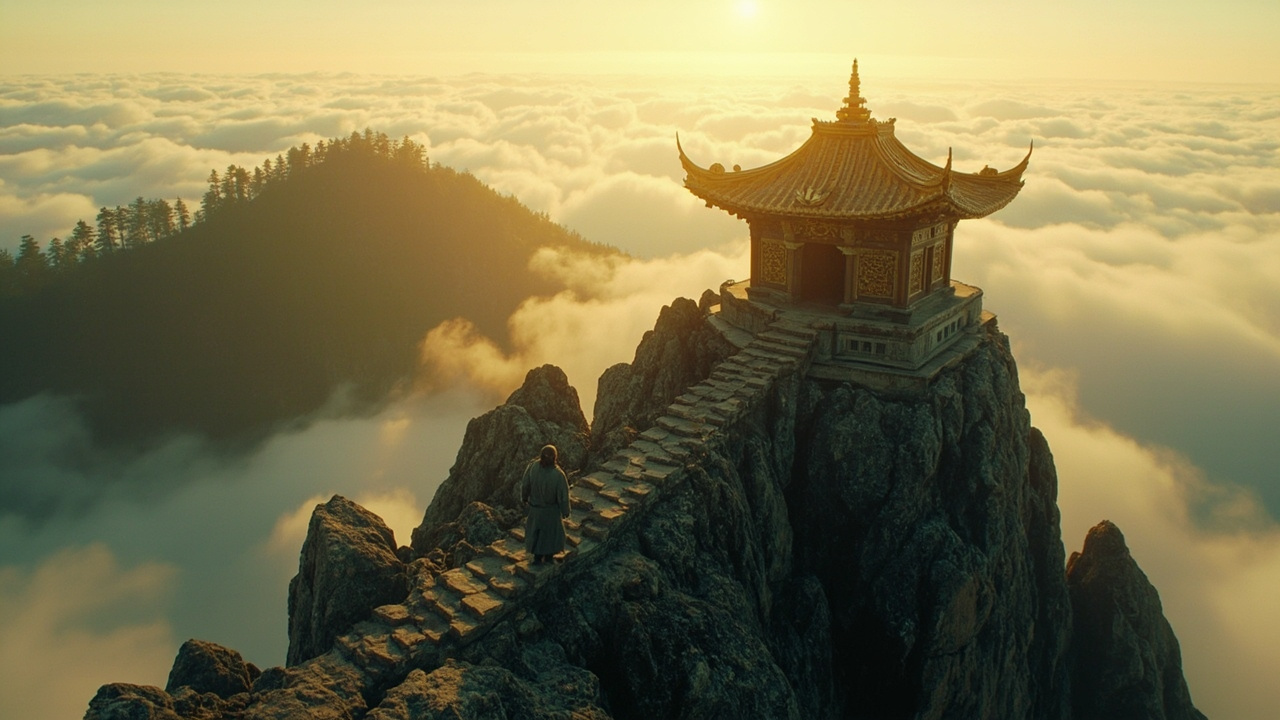
Wudang Mountain Guide
The old man at the ticket gate looked at my boots, then at my face, then back at my boots. He said something in thick Hubei dialect that I didn’t catch, but the woman behind me in line translated: “He says you’ll be cold up there. The clouds sit on the mountain after 3pm.” She was right. By the time I reached Nanyan Temple, my hands were numb and the valley below had vanished into white.
Wudang Mountain is where Taoism got its most famous address. It’s the birthplace of tai chi, the setting for roughly a thousand kung fu films, and a UNESCO World Heritage site since 1994. But none of that prepares you for the actual experience of climbing 600-year-old stone steps through fog while monks in grey robes pass you going the other direction.
Most foreigners skip Wudang. They do Beijing, Xi’an, Shanghai, maybe Chengdu, and fly home. That’s a mistake. Wudang is one of the few places in China where the tourist infrastructure is good enough to be comfortable but the spiritual atmosphere hasn’t been completely Disney-fied. You can still find a quiet courtyard at 6am with nothing but incense smoke and the sound of someone practicing sword forms.
This guide covers the ten things worth your time on the mountain, how to actually get there from Wuhan or Xiangyang, what things cost in 2026, and the mistakes I made so you don’t have to.
Quick answer
Wudang Mountain (Wudangshan) is in northwestern Hubei province, about 4 hours by high-speed train from Wuhan or 1.5 hours from Xiangyang. Entry to the scenic area costs ¥264 (~$37) for a multi-day pass including shuttle buses, plus ¥100-200 extra for cable cars and individual temple access. Most foreign visitors can now enter China visa-free for up to 30 days under the 2025-2026 expanded policy, so no visa paperwork is needed for a short trip. The best months are April-May and September-October; avoid Chinese national holidays (October 1-7, Lunar New Year) when crowds triple.
The Short Version
Go for two days minimum. One day is a rushed mistake. Stay overnight on the mountain at Nanyan or Zixiao, wake up before sunrise, and walk the Golden Summit path when it’s empty. Bring cash for small vendors, download a translation app, and don’t expect much English. The cable car saves your knees but skips the best part.
How I Picked These
I’ve been to Wudang four times since 2019, most recently in October 2025. I’ve climbed the Golden Summit three times (twice on foot, once by cable car when my knee was acting up), stayed in four different guesthouses, and eaten roughly my body weight in mountain tofu. I talked to taxi drivers in Shiyan, a tai chi teacher from Belgium who’s lived at Zixiao for six years, and a 70-year-old woman who sells incense sticks near the Nanyan Temple entrance and has been doing it since she was nineteen. Everything below comes from those trips. Where I’m unsure about a 2026 price, I say so.
Comparison Table
| Rank | Place | Best For | Approx Cost (USD) | Time Needed | When to Go |
|---|---|---|---|---|---|
| 1 | Golden Summit (Jinding) | Sunrise, the iconic view | $14 (¥100) temple fee | 3-4 hrs round trip | 5-7am, clear days |
| 2 | Nanyan Temple | Cliffside architecture | Included in pass | 1.5 hrs | Morning |
| 3 | Zixiao Palace | Tai chi, quiet courtyards | Included in pass | 2 hrs | Weekday mornings |
| 4 | South Cliff Cable Car | Saving your legs | $11 (¥80) one-way | 25 min | Any time |
| 5 | Purple Cloud Palace | Imperial architecture | Included in pass | 1.5 hrs | Afternoon |
| 6 | Yuxu Palace | Photography, fewer crowds | Included in pass | 1 hr | Late afternoon |
| 7 | Taizipo (Prince Slope) | Easy hiking, families | Included in pass | 1 hr | Any time |
| 8 | Qiongtai Temple | Meditation retreats | Free to enter | 2 hrs | Weekdays |
| 9 | Wulong Palace | Off-the-beaten-path | $7 (¥50) | 2 hrs | Half day trip |
| 10 | Shiyan City | Base camp, food, hotels | Varies | 1 night | Before/after mountain |
1. Golden Summit (Jinding) 鈥?the reason you came
I’ve seen the Golden Summit in three conditions: blazing sun, thick fog, and a light snow that made the bronze temple look like something from a dream. The fog version was the most atmospheric, honestly. You climb 600+ steps from the cable car station, lungs burning, and then the clouds part for maybe ninety seconds and there it is: a 600-year-old bronze temple sitting on a granite peak at 1,612 meters.
Why it’s special: this is the highest point on Wudang and the spiritual center of the entire mountain. The temple itself was built in 1416 during the Ming Dynasty, assembled without a single nail, and it’s survived lightning strikes, earthquakes, and centuries of pilgrims. On a clear day you can see the Danjiangkou Reservoir glittering to the north. On a foggy day you feel like you’re standing inside a Chinese landscape painting.
📍 Location: Top of the main peak, reachable by foot from Nanyan or by cable car from Qiongtai 🎫 Entry fee: ¥100 (~$14) on top of the scenic area pass 🕒 Opening hours: 6:30am-5:30pm (last entry 4:30pm), closed during heavy snow 🚕 How to actually get there: From Nanyan Temple, it’s a 2.5-hour uphill hike. From the Qiongtai cable car station, it’s a 25-minute ride plus 20 minutes of stairs. ⏰ When to visit: Sunrise (arrive by 5:30am) or the last hour before closing. Avoid 10am-2pm when tour groups swarm. 💡 Insider tips for foreign visitors: Buy your ¥100 temple ticket at the bottom, not at the top 鈥?the line up there is brutal. Bring layers even in summer; it’s 10°C colder at the summit. The “lucky coin” toss area is a scam; skip it. If you’re afraid of heights, the cable car is genuinely terrifying in wind. I met a retired teacher from Zhengzhou at the summit who’d climbed it 47 times. She told me the fog is luckier than the sun.
2. Nanyan Temple 鈥?the one built into a cliff
The first time I saw Nanyan, I actually said “oh” out loud. It’s a temple complex built directly into a vertical rock face, held up by wooden beams driven into the cliff. From a distance it looks impossible.
Why it’s special: this is the most photogenic spot on the mountain and the one that appears on every Wudang postcard. The main hall is carved into a natural cave, and the incense smoke has stained the rock ceiling black over centuries. It’s also where a lot of the resident monks actually live and practice, so you’ll see real religious life, not just tourist performances.
📍 Location: About 1km below the Golden Summit, on the southern route 🎫 Entry fee: Included in the ¥264 scenic area pass 🕒 Opening hours: 7am-5:30pm daily 🚕 How to actually get there: From the Nanyan cable car station, walk 10 minutes downhill. From the main shuttle bus terminus, it’s the second-to-last stop. ⏰ When to visit: Early morning before 9am. The light hits the cliff face beautifully around 7:30-8:30am. 💡 Insider tips for foreign visitors: There’s a small vegetarian restaurant inside serving mountain vegetables and tofu for ¥30-50 (~$4-7). The bathrooms are squat-style and bring your own tissue. Don’t photograph the monks without asking; a few will say yes. The “tai chi demonstration” at 10am is mostly for tour groups 鈥?the real practice happens at 6am. A monk there, maybe 25 years old, laughed when I asked if he’d seen Crouching Tiger, Hidden Dragon. “Everyone asks that,” he said. “Yes. We watched it here.”
3. Zixiao Palace 鈥?where the tai chi actually happens
Zixiao is the largest palace complex on the mountain and the one with the most active religious community. I stayed in a guesthouse nearby for three nights once and woke up every morning to the sound of swords.
Why it’s special: this is where Zhang Sanfeng, the legendary founder of tai chi, is said to have developed his martial arts in the 14th century. Whether or not that’s historically accurate, the palace still functions as a working Taoist center. You’ll see genuine practitioners, not just performers. The architecture is also stunning 鈥?Ming Dynasty halls with yellow glazed tiles, arranged along a central axis that climbs up the hillside.
📍 Location: Central Wudang, about 15 minutes by shuttle from the main gate
🎫 Entry fee: Included in the scenic area pass
🕒 Opening hours: 7am-6pm (last entry 5pm)
🚕 How to actually get there: Shuttle bus from the main gate to Zixiao stop, then 5-minute walk. From Shiyan, take bus 202 to the scenic area entrance, then transfer.
⏰ When to visit: Weekday mornings. Weekends get busy with domestic tour groups.
💡 Insider tips for foreign visitors: The tai chi classes offered to tourists are hit-or-miss 鈥?ask to observe first. There’s a small English-speaking teacher named Master Chen who runs a 3-day intro course for around ¥800 ($110). Cash only. The tea house behind the main hall serves excellent local green tea for ¥20 ($3).
An elderly woman selling prayer beads outside told me she’d been coming every week for 30 years. “It’s the only place I feel calm,” she said.
4. South Cliff Cable Car 鈥?the practical option
I have mixed feelings about this cable car. It’s efficient, it saves your knees, and on a windy day it’s genuinely scary in a fun way. But it also skips the best part of the mountain.
Why it’s special: it’s not really “special” in a spiritual sense 鈥?it’s infrastructure. But if you’re short on time, have knee problems, or are traveling with older family members, it’s essential. The ride itself gives you aerial views of the forested slopes and the cliff temples that you can’t get any other way.
📍 Location: From Nanyan Temple area up to near the Golden Summit trail
🎫 Entry fee: ¥80 ($11) one-way, ¥150 ($21) round trip
🕒 Opening hours: 8am-5pm, weather dependent
🚕 How to actually get there: Shuttle to Nanyan stop, follow signs to the cable car station
⏰ When to visit: Before 9am to avoid queues. It shuts down in high winds.
💡 Insider tips for foreign visitors: Buy tickets at the bottom station, not online 鈥?the app is Chinese-only. If you’re even slightly claustrophobic, skip it; the cars hold 8 people and get packed. The walk from the top station to the Golden Summit is still 20 minutes of steep stairs, so it’s not a total shortcut.
I rode it once with a French couple who were both visibly terrified. The husband kept his eyes closed the whole way. His wife took photos.
5. Purple Cloud Palace 鈥?the imperial one
Purple Cloud Palace (Zixiao Gong) is technically part of the Zixiao complex but deserves its own mention because the architecture is on another level. This was the imperial temple, built with money from the Ming court.
Why it’s special: the main hall has a double-eave roof with yellow glazed tiles, which in imperial China was reserved for buildings connected to the emperor. The interior has original Ming-era statues and a ceiling covered in painted panels. It’s the most “official” feeling place on the mountain, and the least crowded because it’s a bit off the main shuttle route.
📍 Location: Within the Zixiao complex, uphill from the main gate 🎫 Entry fee: Included in the scenic area pass 🕒 Opening hours: 8am-5pm 🚕 How to actually get there: From Zixiao shuttle stop, walk uphill 10 minutes following signs ⏰ When to visit: Mid-afternoon when tour groups have moved on 💡 Insider tips for foreign visitors: The small museum in the back has English labels. There’s a quiet courtyard behind the main hall where you can sit for as long as you want. Photography is allowed but no flash. The bathrooms here are cleaner than most on the mountain. A caretaker there, maybe 60, spent twenty minutes explaining the roof tiles to me in slow Mandarin. I understood maybe a third of it. It was still worth it.
6. Yuxu Palace 鈥?the photographer’s spot
Yuxu Palace is smaller and less famous than the others, which is exactly why I like it. It’s where I go when I want to actually be alone with the architecture.
Why it’s special: the light here in late afternoon is incredible. The palace faces west, so around 4-5pm the stone courtyard glows gold and the shadows get long. There are fewer tourists, more resident cats, and a general sense of “nobody’s in a hurry.”
📍 Location: Between Zixiao and Nanyan, on the main shuttle route 🎫 Entry fee: Included in the scenic area pass 🕒 Opening hours: 8am-5:30pm 🚕 How to actually get there: Shuttle to Yuxu stop, 3-minute walk ⏰ When to visit: 4-5pm for the light 💡 Insider tips for foreign visitors: This is a good spot to practice tai chi without an audience. There’s a small shop selling bottled water and snacks, but no restaurant. The resident cats are friendly but don’t feed them. Bring a wide-angle lens. I once sat here for an hour reading a book and nobody bothered me. That’s rare on Wudang.
7. Taizipo (Prince Slope) 鈥?the easy hike
Taizipo is the first major stop after the main gate and the easiest section of the mountain to walk. If you’re not sure about your fitness level, start here.
Why it’s special: it’s a gentle introduction to Wudang’s architecture and forest, with a pretty stream running alongside the path. The temple itself is smaller but has a lovely garden and a famous “dragon head” incense burner. It’s also where a lot of domestic tourists stop for photos, so it has a lively atmosphere.
📍 Location: Near the main scenic area gate, first shuttle stop 🎫 Entry fee: Included in the scenic area pass 🕒 Opening hours: 7:30am-5:30pm 🚕 How to actually get there: First shuttle stop from the main gate, 5-minute walk from the drop-off ⏰ When to visit: Morning, before the crowds build 💡 Insider tips for foreign visitors: Good place to test your hiking shoes before committing to the harder trails. There’s a small teahouse with English menu. The path here is paved, so it’s wheelchair-accessible up to the temple entrance. I watched a Chinese family with a toddler and a grandmother do this walk in about 40 minutes. Everyone looked happy.
8. Qiongtai Temple 鈥?the meditation retreat
Qiongtai is where serious practitioners go. It’s quieter, more remote, and offers multi-day meditation and tai chi retreats for foreigners.
Why it’s special: this is the most authentic “spiritual” experience on the mountain. The temple runs 3, 5, and 7-day retreats that include accommodation, vegetarian meals, and daily practice. You don’t need experience. You do need patience with the language barrier.
📍 Location: Mid-mountain, accessible by cable car or a 2-hour hike 🎫 Entry fee: Free to enter the temple; retreats cost ¥1,500-3,500 (~$210-490) depending on length 🕒 Opening hours: Temple open 8am-5pm; retreats by reservation 🚕 How to actually get there: Cable car from Qiongtai station, or hike from Nanyan ⏰ When to visit: Spring or fall for retreats; summer is humid and crowded 💡 Insider tips for foreign visitors: Book retreats at least a month ahead through their WeChat account. Bring your own meditation cushion if you’re particular. The food is simple but good. No Wi-Fi in the retreat quarters. A Belgian guy I met there had been coming every year for six years. He said the first three days are miserable and then something shifts.
9. Wulong Palace 鈥?the one most tourists miss
Wulong Palace is technically part of the Wudang scenic area but it’s a separate ticket and a separate shuttle, so most tourists skip it. That’s their loss.
Why it’s special: it’s quieter, less restored, and feels more like a ruin than a museum. The stone carvings here are older and more weathered, and there’s a genuine sense of age that the more polished temples lack. It’s also surrounded by forest and has excellent birdwatching.
📍 Location: About 30 minutes by shuttle from the main Wudang area 🎫 Entry fee: ¥50 (~$7) 🕒 Opening hours: 8am-5pm 🚕 How to actually get there: Separate shuttle from the main scenic area; ask at the gate for the Wulong bus ⏰ When to visit: Half-day trip, any time 💡 Insider tips for foreign visitors: Bring cash; no card readers here. The path is rougher than the main mountain. There’s a small village nearby with a noodle shop that’s better than anything on the main mountain. I ate lunch there with a farmer who insisted I try his homemade rice wine. It was strong and slightly sweet.
10. Shiyan City 鈥?the base camp
Shiyan is the city at the foot of Wudang, and most foreigners spend at least one night here before or after the mountain. It’s not a tourist destination, which is exactly why I like it.
Why it’s special: it’s a real Chinese city with real Chinese food, cheap hotels, and no tourist markup. The night market near Renmin Road has some of the best street food in Hubei. It’s also where you’ll find the closest thing to Western amenities (a Starbucks, a few English-speaking hotels).
📍 Location: Hubei province, about 40km from the Wudang scenic area 🎫 Entry fee: Free 🕒 Opening hours: Always 🚕 How to actually get there: High-speed train from Wuhan (2.5 hrs, ¥180-260 / $25-36) or Xiangyang (40 min, ¥50 / $7). From Shiyan station, bus 202 goes to the Wudang gate. ⏰ When to visit: One night before and/or after the mountain 💡 Insider tips for foreign visitors: The Wudang Mountain International Hotel has English-speaking staff. Alipay and WeChat Pay work everywhere; set them up before you arrive. The night market is cash-friendly but vendors prefer QR codes. I ate grilled squid skewers at a stall there for ¥15 (~$2) and they were better than anything I’ve had in Beijing.
FAQ summary
Wudang Mountain is a 2-3 day destination best reached by high-speed train from Wuhan (2.5 hours) or Xiangyang (40 minutes), with a total cost of roughly $150-300 per person including transport, entry, accommodation, and food. Most foreign visitors can enter China visa-free for up to 30 days under the 2025-2026 policy, so no advance visa is needed. The mountain is best visited in April-May or September-October, and you should budget at least one overnight stay on the mountain to experience the Golden Summit at sunrise without crowds.
FAQ
Q: Do I need a visa to visit Wudang Mountain in 2026? A: Most foreign tourists from the US, EU, UK, Australia, and Southeast Asia can enter China visa-free for up to 30 days under the expanded 2025-2026 policy. If your country isn’t covered, apply for a standard tourist visa in advance. Check the current visa-free rules before booking.
Q: How do I get to Wudang Mountain from Wuhan? A: Take a high-speed train from Wuhan Station to Shiyan East (2.5 hours, ¥180-260 / $25-36), then bus 202 to the Wudang scenic area gate (40 minutes, ¥5 / $0.70). Trains run roughly every 2 hours from 7am to 7pm. Book on Trip.com or at the station.
Q: How much does a Wudang Mountain trip cost?
A: Budget $150-300 per person for 2-3 days including transport from Wuhan, the ¥264 ($37) scenic area pass, cable car (¥80-150 / $11-21), one night’s accommodation (¥200-600 / $28-84), and meals (¥100-200 / $14-28 per day). Add ¥100 ($14) for the Golden Summit temple.
Q: Is English spoken on Wudang Mountain? A: Not much. Signs at major sites have English, but staff, vendors, and guesthouse owners mostly speak Mandarin or Hubei dialect. Download a translation app like Pleco or Baidu Translate before you go. Set up Alipay or WeChat Pay in advance since many places don’t take cash.
Q: What’s the best time of year to visit Wudang Mountain? A: April-May and September-October for mild weather and clear views. Avoid Chinese national holidays (October 1-7, Lunar New Year, May 1-3) when crowds triple. Winter is beautiful but cold and some trails close. Summer is humid and busy.
Q: Do I need a VPN or local SIM card? A: Yes to both if you want reliable internet. Google, WhatsApp, Instagram, and most Western apps are blocked in China. Get an eSIM or local SIM at the airport, and install a VPN before you arrive. See our China SIM and internet guide for details.
Q: Can I do Wudang Mountain as a day trip? A: Technically yes, but I don’t recommend it. You’d spend 5+ hours in transit and only 4-5 hours on the mountain, which isn’t enough for the Golden Summit plus one or two temples. Stay overnight at least once.
The Honest Wrap-up
Wudang Mountain isn’t for everyone. If you want five-star hotels, English menus, and Instagram-ready photo spots with no effort, go to Zhangjiajie instead. If you want a place that still feels slightly wild, where you’ll get lost, eat something you can’t identify, and wake up at 5am to climb stairs in the dark 鈥?Wudang is for you. Two days minimum. Bring layers. Learn to say “duōshǎo qián” (how much?). And don’t skip the tofu.
More guides you may like
Top 10 Bridges in China
China's bridges are engineering marvels spanning mountains, rivers, and seas. Here are 10 of the most spectacular, from ancient stone to modern steel.
8 min read

Top 10 Buddhist Sites in China
From the Leshan Giant Buddha to the Dunhuang Caves, these 10 Buddhist sites represent 2,000 years of China's spiritual heritage.
9 min read
Top 10 Day Trips from Beijing You Shouldn't Miss
Beijing is packed with history, but some of China's best experiences are just a few hours away. Here are 10 day trips that will transform your visit.
9 min read
Top 10 Hidden Gems in China Off the Beaten Path
Beyond the Great Wall and Terracotta Warriors, China has incredible hidden destinations few tourists ever reach. Here are 10 underrated gems worth the detour.
9 min read
Top 10 Markets and Shopping Streets in China
From Shanghai's Bund to Beijing's Silk Street - 10 markets where foreigners can haggle, explore, and bring home authentic Chinese goods.
9 min read
Top 10 Museums in China You Shouldn't Miss
China's museums span 5,000 years of civilization. These 10 - from the Palace Museum to Xi'an's terracotta gallery - are unmissable for culture lovers.
9 min read