
China Homestay Experience
TODO: Extract from article (100-160 chars)
China Homestay Experience
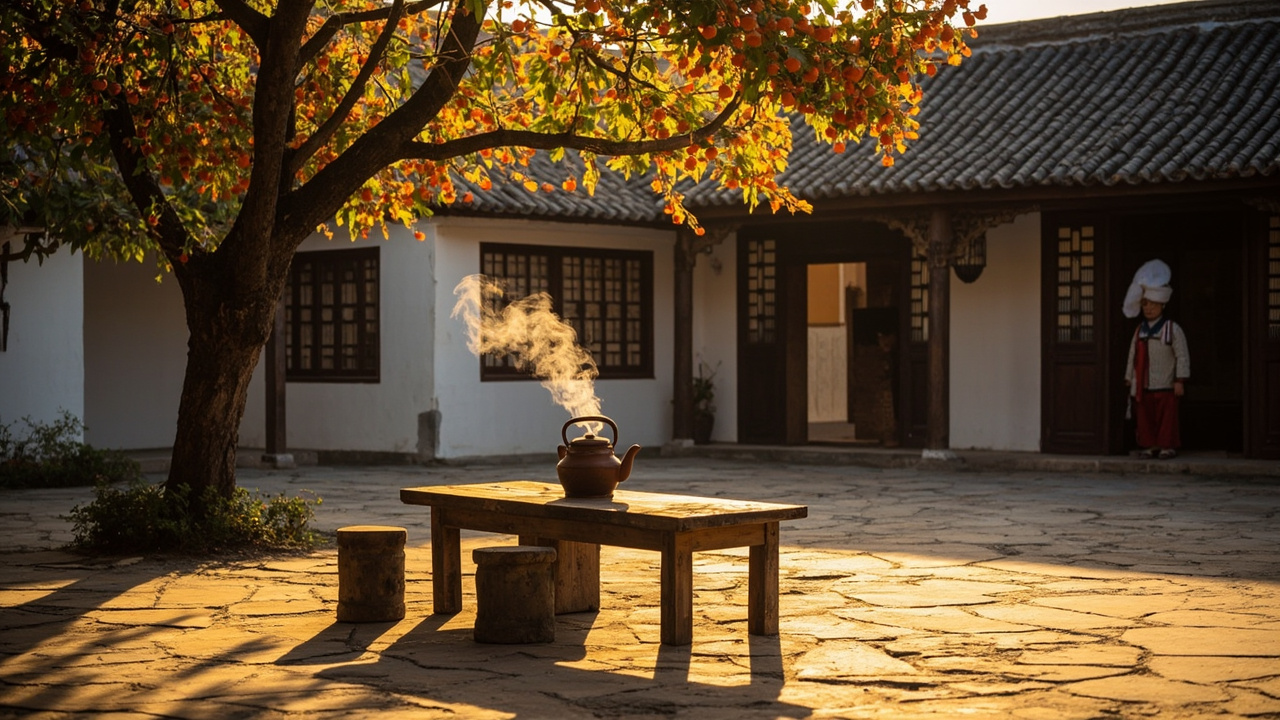
The woman at the door in Dali handed me a thermos of hot water before she said hello. It was February, the courtyard was cold, and she’d been waiting for me for two hours because my bus from Kunming broke down outside Chuxiong. She didn’t ask why I was late. She just pointed at the kettle and said, in Mandarin I barely caught, “First, drink.” I sat on a wooden stool under a persimmon tree with no leaves and drank tea while her husband hauled my bag up a narrow staircase. That night she made me tomato-and-egg noodles and refused to let me pay for them. I’ve stayed in maybe thirty Chinese homestays since then, from a cave house in Shaanxi to a Bai minority courtyard with a view of Erhai Lake, and that first night in Dali is still the one I measure the others against.
Homestays (minsu 民宿) are the single best way for a first-time visitor to understand China, and almost nobody tells you that. Hotels are fine. Hotels are clean and predictable and you can pay with your phone and never speak to a human being. But a homestay puts you in a family’s spare room, or a converted farmhouse, or a courtyard where the owner’s grandmother is drying chili peppers on a bamboo mat. You eat what they eat. You learn that “breakfast included” means congee and pickled vegetables, not a buffet. You find out which bus actually goes to the trailhead because the owner’s cousin drives it.
This guide covers ten homestays I’ve stayed in or visited across China, what they cost in 2026, how to book them without a Chinese phone number (it’s possible, barely), and the specific mistakes I made so you don’t repeat them.
Quick answer
China’s homestay (minsu) sector is booming, with over 300,000 registered properties nationwide, and rooms typically run $25–$90 (¥180–¥650) per night including breakfast — roughly half the price of a comparable hotel. Most foreign visitors can now book them through Trip.com or Meituan without a Chinese ID, and since China’s visa-free transit and unilateral visa-free policies expanded through 2025–2026, you can stay up to 30 days in many cases. The catch: most homestay hosts speak little or no English, so you’ll need a translation app and Alipay or WeChat Pay set up before you land.
The Short Version
If you read nothing else: book a homestay for at least three nights somewhere rural — Dali, Wuyuan, or the Guizhou countryside — and a hotel in the big cities where you’ll want English signage and a 24-hour front desk. Homestays shine when you have time to sit still. They’re miserable when you’re checking in at midnight after a delayed flight and just want a bed. Pay attention to whether the listing says “foreign guests accepted” (接待外宾), because some smaller properties still can’t legally register foreign passports. Bring cash for the ones that don’t take foreign cards.
How I Picked These
I’ve stayed in roughly thirty homestays since 2019, mostly booked through Trip.com, Meituan, and once — disastrously — through a WeChat group a friend added me to. For this list I re-contacted hosts I’d stayed with, checked 2026 pricing on current listings, and cut anything that had closed, doubled in price, or turned into a boutique hotel pretending to be a homestay. I also asked three Chinese friends who travel domestically for work which minsu they’d actually recommend to a foreigner, because the ones Chinese tourists love and the ones foreigners love are often different places. Everything here I’ve either slept in or walked through.
Comparison Table
| Rank | Place | Best For | Approx Cost (USD) | Time Needed | When to Go |
|---|---|---|---|---|---|
| 1 | Dali, Yunnan | First-timers, lake views | $35–70 | 3–4 nights | Mar–May, Sep–Nov |
| 2 | Wuyuan, Jiangxi | Photography, spring flowers | $40–80 | 2–3 nights | Late Mar–Apr |
| 3 | Guizhou Miao villages | Culture, hiking | $25–50 | 3 nights | Apr–Oct |
| 4 | Lijiang, Yunnan | Courtyards, Naxi culture | $45–90 | 2–3 nights | Apr–Jun, Sep–Oct |
| 5 | Pingyao, Shanxi | History, old city walls | $30–60 | 2 nights | May, Sep–Oct |
| 6 | Wuzhen, Zhejiang | Water town, easy access | $60–120 | 1–2 nights | Mar–May, Oct–Nov |
| 7 | Yangshuo, Guangxi | Karst scenery, cycling | $30–70 | 3 nights | Apr–May, Sep–Oct |
| 8 | Shaanxi cave dwellings | Off-the-beaten-path | $20–40 | 1–2 nights | Apr–Oct |
| 9 | Chengdu outskirts, Sichuan | Tea culture, pandas | $35–65 | 2–3 nights | Mar–Jun, Sep–Nov |
| 10 | Xiamen, Fujian | Island vibe, seafood | $50–90 | 2 nights | Oct–Dec, Mar–Apr |
Dali, Yunnan — The One That Ruined Other Homestays For Me
I’ve already told you about the thermos. What I didn’t mention is that the courtyard had a persimmon tree, a well, and a cat that slept on the roof tiles and yowled at 4 a.m. The host, a Bai woman in her sixties named Auntie Yang, ran the place with her husband and made breakfast every morning: rice noodles in broth, pickled radish, a boiled egg, and tea from a tin she kept behind the stove. She spoke maybe twenty words of English. We communicated through a translation app and a lot of pointing.
Dali’s homestay scene is the most developed in China, which is both good and bad. Good because you have options and English listings. Bad because the old town has been colonized by Instagram cafés and the rents have pushed some families out. The best homestays are in the villages around Erhai Lake — Caicun, Xizhou, Shuanglang — not in Dali Old Town itself. Xizhou is my pick. It’s quieter, the Bai architecture is intact, and you can rent a bike and ride the lake road for hours.
📍 Location: Xizhou village, about 20 km north of Dali Old Town, Yunnan 🎫 Entry fee: Free to enter the village; some courtyard houses charge $2–3 (¥15–20) for tours 🕐 Opening hours: Homestays generally check in after 2 p.m.; some accept late arrivals if you message ahead 🚕 How to get there: Fly to Dali Airport (DLU), then taxi 45 minutes ($15/¥110). Or take the train from Kunming to Dali Station (2 hours, $20/¥145), then bus or taxi to Xizhou ⏰ When to visit: March–May or September–November. Avoid Chinese New Year and the first week of October 💡 Insider tips: Ask your host to help you rent a bike — they get better rates than the tourist shops. Bring cash for the small noodle stalls. The lake road is best at sunrise before the tour buses arrive. If your host invites you to a family meal, say yes and bring fruit.
Auntie Yang’s cat stole a piece of my breakfast sausage on the second morning. She apologized for ten minutes. I told her it was fine. It was fine.
Wuyuan, Jiangxi — Spring Flowers and Very Bad Roads
Wuyuan is famous for one thing: rapeseed flowers in late March and April, when the terraced fields turn yellow and every photographer in China shows up with a tripod. I went in early April and spent two hours stuck on a single-lane road behind a tour bus that had wedged itself between a stone wall and a ditch. The homestay owner, Mr. Zhan, called me three times to ask where I was. When I finally arrived he laughed and said, “You came in flower season. Of course.”
The homestays here are converted Hui-style houses — white walls, black tile roofs, wooden beams — scattered across villages like Jiangling, Likeng, and Huangling. Huangling is the most famous and the most crowded. Jiangling is where the serious photographers go. Likeng is quieter and has better food.
What makes Wuyuan special isn’t just the flowers. It’s that the villages are still working villages. Old men plow with water buffalo. Women wash vegetables in the stream. You’re not in a museum; you’re in someone’s actual life, and they’ve rented you a room in it. That’s the deal.
📍 Location: Wuyuan County, northeastern Jiangxi, about 3 hours from Jingdezhen 🎫 Entry fee: Village passes run $25–30 (¥180–220) for 5 days; some villages free 🕐 Opening hours: Homestays check in 2 p.m. onward; villages open dawn to dusk 🚄 How to get there: High-speed rail to Wuyuan Station from Shanghai (3.5 hours, $45/¥320) or Hangzhou (2 hours, $28/¥200), then local bus or taxi to your village ⏰ When to visit: Late March to mid-April for flowers. Otherwise May and October are pleasant and much less crowded 💡 Insider tips: Book at least 6 weeks ahead for flower season. Bring cash — ATMs are scarce. The village pass is checked at each entrance, so keep it on you. Rent a driver for the day ($40/¥290) rather than relying on buses, which run infrequently. Ask your host which fields are blooming; it shifts week to week.
Mr. Zhan’s wife made me a dish called fen zheng cai — steamed vegetables with rice powder — that I still think about. She wouldn’t give me the recipe. Fair enough.
Guizhou Miao Villages — The Real Deal, If You Can Handle the Buses
I’m going to be honest: getting to the Miao villages in Guizhou is a pain. The roads are winding, the buses are infrequent, and the signage is almost entirely in Chinese. But if you make the effort, you’ll find homestays in villages like Xijiang and Zhaoxing where the host family will invite you to a long-table banquet and pour you rice wine until you beg them to stop.
Xijiang is the biggest and most touristy — it has a nightly song-and-dance performance and a lot of souvenir shops. Zhaoxing is smaller, calmer, and has the most beautiful drum towers I’ve seen anywhere in China. The homestays in Zhaoxing are simple: wooden rooms, shared bathrooms in some cases, and a breakfast of rice noodles and pickled vegetables. You’re not here for luxury. You’re here because at 7 p.m. the whole village gathers in the square and the singing starts, and it’s not a performance for tourists. It’s just what they do.
📍 Location: Zhaoxing Dong Village, Liping County, southeastern Guizhou 🎫 Entry fee: $12 (¥85) for Zhaoxing; Xijiang is $15 (¥110) 🕐 Opening hours: Villages open all day; homestays check in from 2 p.m. 🚄 How to get there: High-speed rail to Congjiang Station from Guiyang (1.5 hours, $22/¥160), then taxi or bus to Zhaoxing (40 minutes) ⏰ When to visit: April–October. Avoid the rainy weeks of June. The Dong New Year in late November is spectacular but crowded 💡 Insider tips: Learn to say “thank you” in Dong or Miao — it goes a long way. The long-table banquet costs $10–15 (¥70–110) and is worth it. Bring mosquito repellent. Cash is essential; many homestays don’t take cards. If you’re invited to drink, you can decline by saying you’re on medication — it’s a polite out.
A woman named Pan made me try niubie — a bitter beef dish with bile — and I ate it because refusing would have been rude. It was… an experience. I’d do it again.
Lijiang, Yunnan — Beautiful, Crowded, Still Worth It
Lijiang Old Town is a UNESCO site and it shows: every alley is a shop selling the same yak butter tea and silver jewelry, and the crowds in July are genuinely unpleasant. But the homestays in the surrounding villages — Shuhe, Baisha — are a different world. I stayed in Baisha, a 20-minute bike ride from the old town, in a Naxi courtyard house with a view of Jade Dragon Snow Mountain. The host, a Naxi man in his fifties, played the guqin in the evenings and taught me how to drink pu’er properly.
The Naxi are one of China’s most distinct ethnic groups, with their own script (Dongba, the last living pictographic writing system) and their own music tradition. Staying in a Naxi homestay is a chance to learn about a culture that’s been in this valley for over a thousand years. It’s also a chance to escape the selfie sticks.
📍 Location: Baisha Ancient Town, 10 km north of Lijiang Old Town, Yunnan 🎫 Entry fee: Free to enter Baisha; Lijiang Old Town charges $7 (¥50) maintenance fee 🕐 Opening hours: Homestays check in from 2 p.m.; Baisha is quiet after 8 p.m. 🚄 How to get there: Fly to Lijiang Sanyi Airport (LJG), then taxi 40 minutes ($18/¥130). Or train from Kunming (3.5 hours, $35/¥250) to Lijiang Station, then taxi 25 minutes ⏰ When to visit: April–June or September–October. July–August is rainy and crowded 💡 Insider tips: Altitude is 2,400 m — take it easy the first day. The Naxi orchestra performance in Lijiang Old Town is touristy but genuinely good. Rent a bike in Baisha for $5/day (¥35). Ask your host about the Dongba script; most are happy to explain. Bring layers — evenings are cold even in summer.
The guqin player’s name was He. He’d been playing for forty years and had hands like tree roots.
Pingyao, Shanxi — The Walled City That Feels Like a Film Set
Pingyao is a fully intact Ming-dynasty walled city, which means it’s beautiful and also means it’s basically a theme park after 9 a.m. The homestays inside the walls are converted courtyard houses with kang beds — heated brick platforms you sleep on. In winter, the kang is the best thing in the world. In summer, it’s just a hard bed.
I stayed in a courtyard house near the South Gate, run by a family whose ancestors had lived there for six generations. The host, Mr. Wang, gave me a tour of the city walls at sunset and told me which restaurants were for tourists and which were for locals. (The answer: anything with an English menu is for tourists. The dumpling shop two alleys over, with no sign, is for locals.)
Pingyao is also the birthplace of China’s first banks — the Rishengchang was the first draft bank in the country, and you can tour it. It’s worth an hour.
📍 Location: Pingyao Ancient City, central Shanxi, 100 km from Taiyuan 🎫 Entry fee: $18 (¥125) for a 3-day pass covering all major sites 🕐 Opening hours: City walls 8 a.m.–6 p.m.; homestays check in from 2 p.m. 🚄 How to get there: High-speed rail to Pingyao Gucheng Station from Beijing (3 hours, $40/¥290) or Xi’an (2.5 hours, $35/¥250), then walk or taxi 10 minutes to the walls ⏰ When to visit: May or September–October. Winter is cold but atmospheric and cheap 💡 Insider tips: Stay inside the walls, not outside. The pass covers more sites than you’ll have time for — prioritize the walls, Rishengchang, and the Confucian temple. Eat pingyao beef (braised, sliced thin) at a local shop, not a tourist restaurant. The city is best at 7 a.m. before the day-trippers arrive. Bring cash for the small shops.
Mr. Wang’s grandmother was 92 and still made dumplings every morning. She didn’t speak a word of Mandarin, only the local Shanxi dialect. We smiled at each other a lot.
Wuzhen, Zhejiang — The Water Town That’s Actually Easy to Reach
Wuzhen is the most accessible water town from Shanghai — 90 minutes by bus — and that’s both its selling point and its problem. It’s crowded. It’s expensive. It’s been heavily restored, which means some of the “ancient” buildings are about fifteen years old. But the homestays here are genuinely lovely, and if you stay overnight, you get the town after the day-trippers leave, which is when it becomes magical.
I stayed in the West Scenic Area, which is the more polished of the two zones. My room was a converted boathouse with a window over the canal. At 10 p.m. the lights came on along the water and I sat on the windowsill and watched a cormorant fisherman paddle past. It was, I’ll admit, a little bit of a performance. But it was a good one.
📍 Location: Wuzhen, Tongxiang County, Zhejiang, 80 km from Shanghai 🎫 Entry fee: $22 (¥150) for West Scenic Area; $17 (¥110) for East 🕐 Opening hours: Scenic areas 9 a.m.–10 p.m.; homestays check in from 2 p.m. 🚌 How to get there: Bus from Shanghai South Bus Station (90 minutes, $8/¥55) or high-speed rail to Tongxiang Station then taxi 20 minutes ⏰ When to visit: March–May or October–November. Avoid weekends and Chinese holidays 💡 Insider tips: Stay overnight — the day-trip experience is not worth it. Book directly with the homestay, not through the scenic area’s official booking, which is more expensive. The boat ride is $10 (¥70) and worth doing once at dusk. Eat braised pork and steamed fish at a canal-side restaurant. Bring cash for the small vendors.
The cormorant fisherman’s name was Old Chen. He’d been doing it for thirty years and said the birds were getting lazy.
Yangshuo, Guangxi — Karst Peaks and Very Aggressive Touts
Yangshuo is the backpacker capital of China, which means it’s cheap, beautiful, and full of people trying to sell you things. The homestays are mostly in the villages along the Yulong River — Chaolong, Jiuxian, Aishanmen — and they’re a world away from the noise of West Street. I stayed in a farmhouse in Chaolong with a view of the karst peaks and a host who made me breakfast every morning and refused to let me help with the dishes.
The scenery here is genuinely otherworldly. The limestone peaks rise straight out of the rice fields, and if you rent a bike and ride the Yulong River road at sunrise, you’ll have the whole valley to yourself. It’s the kind of place that makes you understand why Chinese landscape painting looks the way it does.
📍 Location: Chaolong village, 8 km from Yangshuo town, Guangxi 🎫 Entry fee: Free; some scenic spots charge $10–20 (¥70–145) 🕐 Opening hours: Homestays check in from 2 p.m.; bike rentals open 7 a.m. 🚄 How to get there: High-speed rail to Yangshuo Station from Guilin (30 minutes, $12/¥85) or Guangzhou (2.5 hours, $35/¥250), then taxi 30 minutes to Chaolong ⏰ When to visit: April–May or September–October. July–August is hot and crowded 💡 Insider tips: Rent a bike ($5/day, ¥35) and ride the Yulong River road at sunrise. Avoid West Street at night unless you like crowds. The beer fish is a local specialty and worth trying. Touts are aggressive — just say “no thanks” and keep walking. Bring cash for the small farm restaurants.
My host’s daughter was 8 and spoke better English than I spoke Mandarin. She corrected my pronunciation of “thank you” for ten minutes. I needed it.
Shaanxi Cave Dwellings — The Most Unusual Stay on This List
Cave dwellings (yaodong 窑洞) are carved into the loess plateau in northern Shaanxi, and some families have turned them into homestays. I stayed in one near Yan’an, in a village where my host, Mr. Liu, had lived his whole life. The cave was cool in summer and warm in winter, with a kang bed and a single window looking out over the yellow earth.
This is not a comfortable stay by Western standards. The bathroom was a squat toilet in a separate building. The shower was a bucket. But it was one of the most memorable nights of my life. Mr. Liu told me stories about the famine, the Cultural Revolution, and his son who’d moved to Shenzhen for work. We drank baijiu and ate millet porridge and watched the sun go down over the plateau.
📍 Location: Villages around Yan’an, northern Shaanxi 🎫 Entry fee: Free; some villages charge $5 (¥35) for tours 🕐 Opening hours: Homestays check in from 2 p.m.; flexible 🚄 How to get there: High-speed rail to Yan’an Station from Xi’an (2 hours, $28/¥200), then taxi or local bus to the village ⏰ When to visit: April–October. Winter is brutal 💡 Insider tips: Book through a Chinese friend or a domestic travel platform — these homestays rarely appear on international sites. Bring your own toilet paper and hand sanitizer. Learn a few words of the local dialect; it goes a long way. Cash only. The yangrou paomo (lamb soup with torn bread) is the local specialty and excellent.
Mr. Liu’s son called while I was there. He hadn’t been home in two years. Mr. Liu cried a little and then poured me another drink.
Chengdu Outskirts, Sichuan — Tea, Pandas, and Very Slow Mornings
Chengdu is my favorite Chinese city, and the homestays in the surrounding countryside — in places like Qingcheng Mountain and the tea villages of Mingshan — are the reason. I stayed in a tea farm homestay near Mingshan, where the host family grew and processed their own tea. Every morning I woke up to the sound of birds and the smell of roasting leaves. Breakfast was congee, pickles, and a pot of the freshest green tea I’ve ever had.
Chengdu itself is worth 3–4 days. The pandas, the teahouses, the food. But the homestay experience is what makes it special. If you have time, spend two nights in the countryside and one in the city. The contrast is the point.
📍 Location: Mingshan District, 1.5 hours from Chengdu, Sichuan 🎫 Entry fee: Free; panda base is $8 (¥55) 🕐 Opening hours: Homestays check in from 2 p.m.; tea farms open 8 a.m. 🚄 How to get there: High-speed rail to Ya’an Station from Chengdu (1 hour, $12/¥85), then taxi 30 minutes ⏰ When to visit: March–June or September–November 💡 Insider tips: Book the panda base tickets online in advance — they sell out. The teahouses in Chengdu’s People’s Park are worth an afternoon. Eat hotpot at a local place, not a chain. Bring cash for the tea farms. If your host offers to teach you tea processing, say yes.
The tea farmer’s name was Li. She was 34 and had left a job in Shanghai to come home and run the family farm. She said she was happier. I believed her.
Xiamen, Fujian — Island Vibes and Very Good Seafood
Xiamen is the most relaxed of China’s big cities, and the homestays on Gulangyu Island — a car-free colonial-era island just off the coast — are the reason to come. I stayed in a converted 1920s villa with a balcony overlooking the harbor. The host, a retired teacher named Mr. Chen, made me breakfast every morning and gave me a map of the island with his own annotations.
Gulangyu is touristy — very touristy — but if you stay overnight, you get the island after the ferries stop running. That’s when it becomes quiet and strange and beautiful. The old consulate buildings, the piano museum, the winding alleys. It’s a place that rewards slow walking.
📍 Location: Gulangyu Island, Xiamen, Fujian 🎫 Entry fee: Ferry $5–8 (¥35–55) round trip; island free 🕐 Opening hours: Ferries run 7 a.m.–10 p.m.; homestays check in from 2 p.m. 🚄 How to get there: High-speed rail to Xiamen Station from Shanghai (5 hours, $65/¥470) or Shenzhen (3 hours, $45/¥320), then taxi to the ferry terminal ⏰ When to visit: October–December or March–April. Avoid summer typhoon season 💡 Insider tips: Book the ferry in advance — it sells out. Stay overnight to avoid the day-trippers. The seafood is excellent; eat at a local place, not a hotel. Bring cash for the small vendors. The island is car-free, so pack light.
Mr. Chen had been a teacher for 40 years. He said the island had changed a lot, but the cats were still the same.
FAQ
Q: Do I need to speak Chinese to stay in a homestay? A: No, but you’ll need a translation app. Most homestay hosts speak little or no English, especially outside the major tourist areas. Download Pleco or Baidu Translate before you go, and learn a few basic phrases — “hello,” “thank you,” “how much,” “delicious.” It goes a long way.
Q: How do I book a homestay without a Chinese phone number? A: Trip.com is the easiest option for foreigners — it has English listings and accepts international cards. Meituan and Fliggy are cheaper but require a Chinese phone number. Some homestays also list on Airbnb, though the selection is limited. Book at least 2–4 weeks ahead for popular destinations.
Q: Are homestays cheaper than hotels? A: Usually yes — roughly half the price of a comparable hotel. A good homestay room runs $25–90 (¥180–650) per night, often including breakfast. Hotels in the same areas run $50–200 (¥360–1,450). The trade-off is fewer amenities and less English.
Q: Can I pay with Alipay or WeChat Pay at a homestay? A: Sometimes, but not always. Many smaller homestays still prefer cash, and some don’t accept foreign cards at all. Set up Alipay or WeChat Pay before you arrive and carry at least $100 (¥700) in cash as backup.
Q: Is it safe to stay in a homestay as a solo female traveler? A: Generally yes — China is very safe, and homestay hosts are usually families. That said, use the same judgment you would anywhere: read reviews, check that the property accepts foreign guests, and share your address with someone. The “foreign guests accepted” (接待外宾) filter on Trip.com is your friend.
Q: Do I need a VPN at a homestay? A: Yes, if you want to use Google, Instagram, WhatsApp, or most Western apps. The Great Firewall applies everywhere in China, including homestays. Install and test your VPN before you arrive — see our China SIM and internet guide for the details.
Q: What if my host doesn’t accept foreign guests? A: Some smaller homestays can’t legally register foreign passports, so they’ll decline your booking. Always check the listing for “foreign guests accepted” before you book. If you arrive and there’s a problem, your host will usually help you find an alternative — but it’s better to confirm in advance.
FAQ summary
The most important things to know: book homestays through Trip.com if you don’t have a Chinese phone number, expect to pay $25–90 (¥180–650) per night including breakfast, and confirm the property accepts foreign guests before booking. You’ll need a translation app, a VPN, and Alipay or WeChat Pay set up in advance. Homestays are best for rural and small-town stays where you have time to sit still; use hotels in big cities where you want English signage and 24-hour service.
The Honest Wrap-up
This list is for travelers who want to actually talk to people, eat what they eat, and wake up somewhere that doesn’t look like a hotel lobby. It’s not for people who need air conditioning, room service, and a concierge who speaks English. If you’re the second type, book a hotel — you’ll be happier, and so will your host.
One final piece of advice: bring a small gift. A box of chocolates, a bottle of wine, something from your home country. It’s not required, but it changes the dynamic. You’re not a customer anymore; you’re a guest. And in China, that distinction matters more than you’d think. My first host in Dali still messages me on WeChat every Chinese New Year. I’ve never met her in person since that February. But she asks how I am, and I ask how the cat is, and somehow that’s enough.
More guides you may like

Top 10 Bridges in China
China's bridges are engineering marvels spanning mountains, rivers, and seas. Here are 10 of the most spectacular, from ancient stone to modern steel.
8 min read

Top 10 Buddhist Sites in China
From the Leshan Giant Buddha to the Dunhuang Caves, these 10 Buddhist sites represent 2,000 years of China's spiritual heritage.
9 min read

Top 10 Day Trips from Beijing You Shouldn't Miss
Beijing is packed with history, but some of China's best experiences are just a few hours away. Here are 10 day trips that will transform your visit.
9 min read

Top 10 Hidden Gems in China Off the Beaten Path
Beyond the Great Wall and Terracotta Warriors, China has incredible hidden destinations few tourists ever reach. Here are 10 underrated gems worth the detour.
9 min read

Top 10 Markets and Shopping Streets in China
From Shanghai's Bund to Beijing's Silk Street - 10 markets where foreigners can haggle, explore, and bring home authentic Chinese goods.
9 min read

Top 10 Museums in China You Shouldn't Miss
China's museums span 5,000 years of civilization. These 10 - from the Palace Museum to Xi'an's terracotta gallery - are unmissable for culture lovers.
9 min read