
China Wine Regions Guide
TODO: Extract from article (100-160 chars)
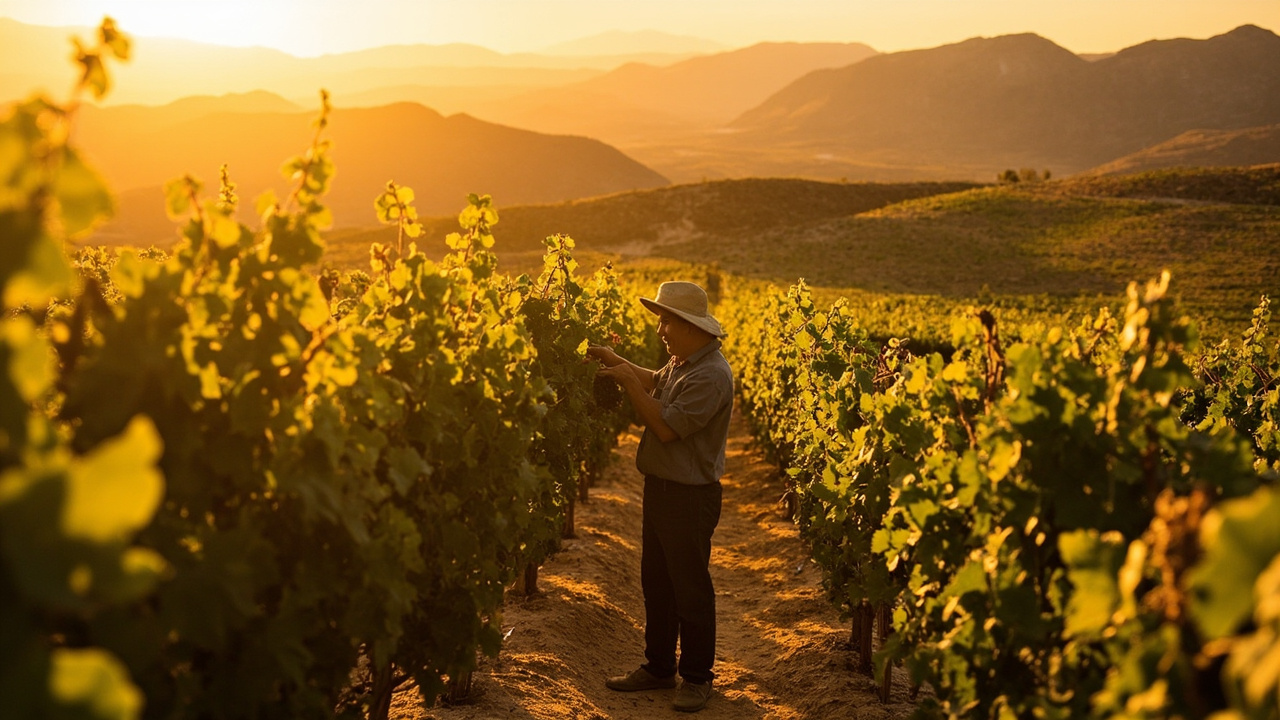
The first time someone handed me a glass of Chinese wine, I was sitting on a plastic stool outside a noodle shop in Yantai, and I assumed it was a joke. It was a Cabernet from a winery twenty minutes down the coast, poured by a guy named Wang who ran a seafood stall and kept a bottle under the counter for friends. It tasted like green pepper and cassis and a little bit like the sea air. I’d been in China four years by then and had no idea the country made serious wine at all. That was my mistake, and it’s most people’s.
China has been growing grapes for two thousand years, but the modern wine industry is barely forty years old, and it has moved fast. There are now vineyards in the dry northwest deserts, on the high Tibetan plateau, along the Yellow Sea coast, and in valleys so remote the roads wash out every summer. Some of it is genuinely good. Some of it is overpriced oak juice sold to banquet halls. The fun is figuring out which is which, and doing it in places where almost no foreign tourist ever shows up.
This guide covers the wine regions I’ve actually visited and drunk my way through, with the practical stuff you need: how to get there, what it costs, when to go, and whether you can realistically do it on a first trip to China. A few of these are easy add-ons to a normal itinerary. A couple require real commitment. I’ll tell you which is which.
Quick answer
China’s main wine regions are Ningxia (near Yinchuan), Shandong (around Yantai and Qingdao), Hebei (around Huailai and the Miyun area near Beijing), Yunnan (Shangri-La and the Mekong valley), and Xinjiang (around Turpan and Ili). Ningxia is the most developed for visitors and the best single choice for a wine-focused trip; it’s about 1.5 hours by high-speed rail from Yinchuan to the main winery cluster, tastings typically run $10–25 (70–180 CNY), and September to early October is harvest season and the best time to go. Most nationalities currently enter China visa-free for up to 30 days, so you don’t need a special visa for a wine trip.
The Short Version
If you have one wine stop in China, make it Ningxia. Fly to Yinchuan, base yourself there, and spend two or three days visiting wineries in the Helan Mountain foothills — this is where China’s best reds come from and where the tasting infrastructure actually works for foreigners. If you’re already going to Beijing, tack on a day trip to Huailai or Miyun instead. If you’re going to Yunnan or Xinjiang anyway, drink local and don’t build the trip around wine. Skip Shandong unless you’re already in Qingdao for the beer.
How I Picked These
I’ve lived in Beijing for seven years and have been to every region on this list at least once, usually more. For Ningxia I’ve done three separate trips, including one where I tagged along with a Chinese wine importer who got us into cellars that don’t take walk-ins. For Shandong I leaned on a friend who works for a Yantai producer. In Yunnan I mostly just asked around in Shangri-La and followed the answers. I’ve also cross-checked prices and opening hours against what wineries currently publish, because these change constantly and a lot of the English-language info online is five years stale. Where I’m unsure, I say so.
Comparison Table
| Rank | Place | Best For | Approx Cost (USD) | Time Needed | When to Go |
|---|---|---|---|---|---|
| 1 | Ningxia (Helan Mountain) | Serious wine, best reds | $80–200/day | 2–3 days | Sep–early Oct |
| 2 | Shandong (Yantai/Qingdao) | Coast + wine combo | $70–150/day | 2 days | May–Jun, Sep–Oct |
| 3 | Hebei (Huailai/Miyun) | Beijing day trip | $50–120/day | 1 day | Apr–Oct |
| 4 | Yunnan (Shangri-La) | High-altitude whites | $90–180/day | 2 days | May–Oct |
| 5 | Xinjiang (Turpan/Ili) | Off-grid adventure | $60–140/day | 2–3 days | Jun–Sep |
| 6 | Shanxi (Taigu) | Historic cellars | $50–100/day | 1 day | Apr–Oct |
| 7 | Gansu (Wuwei) | Emerging, cheap | $50–90/day | 1–2 days | Jun–Sep |
| 8 | Inner Mongolia (Wuhai) | Desert wine | $60–120/day | 1 day | Jun–Sep |
| 9 | Sichuan (Panzhihua) | Tropical reds | $60–110/day | 1 day | Nov–Mar |
| 10 | Tibet (Lhasa valley) | Novelty, altitude | $80–150/day | 1 day | May–Sep |
Ningxia (Helan Mountain) — where China actually figured out red wine
I remember standing on a ridge above the Helan Mountain foothills in late September, looking at a wall of vines running to the desert, and thinking it looked more like eastern Washington than anything I’d pictured for China. The soil is gravel and sand, the air is dry enough that your lips crack, and the mountains block the worst of the Gobi wind. This is the region that put Chinese wine on the map.
Ningxia is where the serious money and the serious winemakers went. Chateau Changyu Moser XV, Helan Qingxue (the winery that won a Decanter award and shocked everyone), Silver Heights, and a dozen others are clustered within about 40 km of each other. The reds — mostly Cabernet, Merlot, and increasingly Syrah — are the draw, and the best of them can hold their own against mid-tier Bordeaux. The whites are improving but less interesting. What makes it special for a visitor is that the wineries are close together, several have proper tasting rooms with English-speaking staff, and the whole scene is small enough that you can hit three or four in a day without rushing.
📍 Location: Helan Mountain East Foothills wine zone, roughly 30–50 km west of Yinchuan, Ningxia.
🍷 Entry fee: Most tastings are $10–25 (70–180 CNY), often waived if you buy a bottle. Some premium wineries charge $30–40 (220–290 CNY) for a guided tour plus tasting.
🕒 Opening hours: Generally 9am–5pm, but many wineries require advance booking and some close entirely November–March.
🚕 How to actually get there: Fly into Yinchuan Hedong International Airport (INC), then take a taxi or Didi about 40 minutes to the wine zone. There’s no useful public transport between wineries — hire a driver for the day ($50–70 / 360–500 CNY) or join a wine tour from Yinchuan.
⏰ When to visit: September to early October for harvest. Weekdays are far quieter than weekends, when Chinese tour groups descend.
💡 Insider tips: Book tastings on WeChat at least three days ahead — most wineries don’t answer English emails. Bring cash or set up Alipay/WeChat Pay before you arrive, because smaller wineries don’t take foreign cards. The tasting pours are generous, so don’t plan to drive yourself. And ask about the “garage” wineries — small independent producers without a formal tasting room who’ll pour for you if you’re introduced.
The best meal I had in Ningxia was lamb, not wine — a whole roasted lamb leg at a roadside place near the wineries, eaten with my hands while the owner kept refilling my glass with his own homemade Cabernet.
Shandong (Yantai and Qingdao) — the old guard, coast included
Yantai is where modern Chinese winemaking actually started, back in 1892 when a Chinese businessman brought in European vines and founded Changyu. I visited on a grey October day and the whole place felt like a faded seaside town that happened to have vineyards — which is basically what it is.
Shandong is the biggest wine region by volume and the most historic, but honestly the quality is uneven. Changyu is a massive operation and the main winery in Yantai is more of a wine-themed museum than a working cellar you’d want to linger in. The smaller producers around the Penglai sub-region are more interesting, and the coastal climate gives the whites — Chardonnay, Riesling, some decent Cabernet Franc — a freshness you don’t get in Ningxia. The reason to come is the combination: you can taste wine in the morning and eat oysters by the Yellow Sea in the afternoon. Qingdao, an hour away by high-speed rail, adds beer, beaches, and a German colonial old town.
📍 Location: Yantai’s Penglai district and the coastal strip toward Qingdao, Shandong province.
🍷 Entry fee: $8–20 (60–150 CNY) for most tastings; Changyu’s main complex is around $15 (110 CNY) including the museum.
🕒 Opening hours: 8:30am–5pm, daily, though smaller wineries close on Mondays and during winter.
🚕 How to actually get there: Fly to Yantai Penglai International (YNT) or take the high-speed rail from Beijing (about 5 hours) or Qingdao (1.5 hours). From Yantai city, taxis to Penglai take 60–75 minutes.
⏰ When to visit: May–June and September–October. Summer is humid and crowded with domestic tourists.
💡 Insider tips: The Penglai wineries are spread out and poorly signposted in English — download offline maps. Qingdao’s beer museum is a better use of an afternoon than most of the Yantai wine tours. English is limited outside the big wineries, so a translation app is essential. And don’t expect Ningxia-level reds; come for the whites and the seafood.
A receptionist at my Yantai hotel, a woman in her fifties, told me her grandfather had picked grapes for Changyu in the 1950s and that the family still got a discount at the company store. She seemed genuinely proud of it.
Hebei (Huailai and Miyun) — the Beijing escape
Huailai is the wine region closest to Beijing, about 90 minutes northwest by car or train, and it’s where I take visiting friends who want a taste of Chinese wine without committing a whole trip to it. The climate is cool and continental, the vineyards sit near the Guanting Reservoir, and the scene is small but real.
The wines here lean toward crisp whites and lighter reds — Chardonnay, Viognier, some Pinot Noir experiments that are hit or miss. The bigger draw is the setting: you can do a morning tasting, eat lunch at a farm restaurant, and be back in Beijing by dinner. Miyun, northeast of the city, has a handful of wineries too, plus the reservoir and the Great Wall at Simatai nearby if you want to combine. Neither region is going to blow a wine nerd’s mind, but for a first-timer who’s already in Beijing, it’s a low-effort way to see Chinese viticulture up close. If you’re building a longer Beijing itinerary, this slots in nicely alongside the Great Wall and the main city sights.
📍 Location: Huailai County, Zhangjiakou, Hebei — around the Guanting Reservoir. Miyun District for the Beijing-side option.
🍷 Entry fee: $10–20 (70–150 CNY) per tasting; some wineries charge for tours separately.
🕒 Opening hours: 9am–5pm, mostly by appointment. Many close November–April.
🚕 How to actually get there: From Beijing, take the high-speed train from Beijing North Station to Huailai (about 50 minutes), then a taxi. For Miyun, take the Line 15 subway to the end and then a Didi.
⏰ When to visit: April–October. Autumn is the prettiest and coincides with harvest.
💡 Insider tips: Almost everything here needs a reservation, and English is rare — book through your hotel or a tour operator. Combine with a Great Wall visit rather than making it the whole day. Bring layers; the reservoir wind is cold even in summer. And set up Alipay or WeChat Pay before you go, because small wineries won’t take your Visa card.
I once got lost on a back road near Huailai for an hour because my Didi driver and I both misread the same Chinese sign. We ended up at a winery neither of us had heard of, and the owner poured us both a glass while we figured out where we were.
Yunnan (Shangri-La and the Mekong Valley) — high-altitude whites
Shangri-La sits at 3,200 meters, and the first thing you notice about the wine there is that it tastes different — leaner, more acidic, almost alpine. The vineyards are planted with Cabernet and some Riesling and Chardonnay at altitudes that would be extreme anywhere else, tended mostly by Tibetan and Naxi farmers.
This is the most beautiful wine region in China, full stop. The vines grow on terraced slopes with snow peaks behind them, and the wineries are small, family-run, and often more interested in yak butter tea than in marketing. The quality is inconsistent — some bottles are genuinely lovely, others are rustic — but the experience is unlike any other wine region I’ve been to. Ao Yun, the LVMH-backed project in the Mekong valley further south, is the famous name and produces serious (expensive) wine, but it’s not open to casual visitors. The Shangri-La-area wineries are the accessible ones.
📍 Location: Shangri-La (Zhongdian) and surrounding Diqing Tibetan Autonomous Prefecture, plus the Mekong valley near Deqin.
🍷 Entry fee: $10–20 (70–150 CNY) for tastings at smaller wineries; some are free if you buy a bottle.
🕒 Opening hours: Irregular. Most operate by appointment and many shut entirely in winter.
🚕 How to actually get there: Fly to Shangri-La Diqing Airport (DIG) from Kunming or Chengdu, or take a long bus from Lijiang. From the town, hire a driver — there’s no public transport to the vineyards.
⏰ When to visit: May–October. Winter is cold and many places close.
💡 Insider tips: The altitude is no joke — give yourself a day to acclimatize before drinking. Bring cash, as card and mobile payment coverage is spotty outside town. English is very limited, so learn a few phrases or lean on a translation app. And don’t skip the local food: the yak dishes and mushroom hotpot are better than the wine.
A Naxi winemaker near Shangri-La refused to let me pay for a bottle, insisting I take it as a gift, then spent twenty minutes explaining in broken Mandarin why the mountain soil made his Cabernet taste like “cold iron.”
Xinjiang (Turpan and Ili) — wine at the edge of the map
Xinjiang is where wine gets genuinely adventurous. Turpan is a desert oasis where grapes have been grown for two thousand years, mostly for raisins and table fruit, but there’s a growing wine scene. Ili, in the far northwest near Kazakhstan, is greener and cooler, with vineyards in river valleys backed by the Tian Shan mountains.
I went to Turpan in July and it was 42°C in the shade. The wine, frankly, was secondary to the experience of drinking it in a grape trellis courtyard while a Uyghur family fed me hand-pulled noodles. The reds here are big and ripe, sometimes jammy, and the local sweet wines are worth trying. Ili is more serious about quality but much harder to reach. This is not a beginner’s wine trip — the region is vast, English is scarce, and travel logistics require patience. But if you want to drink wine somewhere almost no foreign tourist has been, this is it.
📍 Location: Turpan Depression and the Ili River valley, Xinjiang Uyghur Autonomous Region.
🍷 Entry fee: $5–15 (40–110 CNY) at most wineries; some are informal and free.
🕒 Opening hours: Varies wildly. Many are family operations with no fixed hours.
🚕 How to actually get there: Fly to Urumqi (URC), then high-speed rail to Turpan (about 1 hour). Ili requires a flight to Yining (YIN) or a long overland trip.
⏰ When to visit: June–September. Turpan is unbearable in midsummer; aim for late spring or early autumn.
💡 Insider tips: Carry your passport at all times — there are security checks throughout Xinjiang. Download offline maps and a translation app before you arrive. Mobile signal is fine in towns but patchy in the countryside. And be respectful and low-key; this is a politically sensitive region and tourists are watched.
A Uyghur vineyard owner in Turpan poured me a glass of his home-pressed red and said, in careful English he’d clearly practiced, “This is not Bordeaux. This is my grandfather’s grapes.” It was the best thing I drank in Xinjiang.
Shanxi (Taigu) — the historic cellars
Taigu, in central Shanxi, is home to some of the oldest continuously operating wineries in China, and the region has a wine history that predates most of the modern industry. The climate is dry and continental, the soils are loess, and the wines — mostly Cabernet and some local varieties — are earthy and rustic.
This isn’t a destination I’d build a trip around, but if you’re passing through Shanxi for Pingyao or the Yungang Grottoes, it’s worth a half-day. The old cellars are atmospheric, the tastings are cheap, and the winemakers are happy to talk if you can bridge the language gap. The quality is modest but the history is real.
📍 Location: Taigu District, Jinzhong, Shanxi province, about an hour south of Taiyuan.
🍷 Entry fee: $5–15 (40–110 CNY).
🕒 Opening hours: 9am–5pm, closed some weekdays — call ahead.
🚕 How to actually get there: High-speed rail from Beijing to Taiyuan (about 3 hours), then a taxi or local train to Taigu.
⏰ When to visit: April–October.
💡 Insider tips: Combine with Pingyao’s old town. English is very limited. Bring cash for small tastings. The local vinegar is more famous than the wine — try both.
Gansu (Wuwei) — the emerging frontier
Wuwei sits on the old Silk Road in Gansu, and its wine industry is young and small. The climate is dry, the altitude is high, and the wines are improving fast, though they’re not yet at Ningxia’s level. What you get here is cheap, honest wine and almost no other tourists.
I stopped in Wuwei on a train journey west and spent an afternoon at a winery that had opened three years earlier. The owner was a former engineer who’d decided to plant Cabernet in the desert. The wine was rough but promising, and he was thrilled to have a foreign visitor.
📍 Location: Wuwei, Gansu province, on the Hexi Corridor.
🍷 Entry fee: $5–10 (40–70 CNY).
🕒 Opening hours: By appointment mostly.
🚕 How to actually get there: High-speed rail from Lanzhou (about 2 hours) or a long ride from Xi’an.
⏰ When to visit: June–September.
💡 Insider tips: Very little English. Bring a translation app. The desert scenery is the real draw.
Inner Mongolia (Wuhai) — desert wine
Wuhai, on the edge of the Gobi in Inner Mongolia, has a small but growing wine scene planted in sandy, alkaline soil. The wines are big and tannic, and the setting — desert, dust, and the Yellow River — is dramatic.
This is a niche stop, best for someone already traveling through Inner Mongolia. The wineries are few and hard to find without a local guide.
📍 Location: Wuhai, Inner Mongolia.
🍷 Entry fee: $5–15 (40–110 CNY).
🕒 Opening hours: Irregular.
🚕 How to actually get there: Fly to Wuhai (WUA) or take a train from Hohhot.
⏰ When to visit: June–September.
💡 Insider tips: Hire a local driver. English is essentially nonexistent. The lamb here is outstanding.
Sichuan (Panzhihua) — tropical reds
Panzhihua, in southern Sichuan near the Yunnan border, has a hot, dry microclimate that lets it grow grapes most of China can’t. The wines are young and fruity, and the region is more of a curiosity than a destination.
I visited in winter, when the rest of China was freezing, and it was 25°C. The wine was forgettable but the experience of drinking it in a tropical valley in Sichuan was not.
📍 Location: Panzhihua, southern Sichuan.
🍷 Entry fee: $5–15 (40–110 CNY).
🕒 Opening hours: By appointment.
🚕 How to actually get there: Fly to Panzhihua (PZI) or train from Chengdu (about 5 hours).
⏰ When to visit: November–March, when the weather is pleasant.
💡 Insider tips: Combine with a trip to Chengdu for pandas and food. English is limited.
Tibet (Lhasa valley) — wine at altitude
There are a handful of small vineyards in the Lhasa valley, growing hardy varieties at over 3,600 meters. The wine is a novelty — thin, acidic, and made in tiny quantities — but drinking it with the Potala Palace in view is an experience you won’t forget.
This is not a wine trip. It’s a Tibet trip with wine attached. But if you’re going to Lhasa anyway, seek out a local bottle.
📍 Location: Lhasa valley, Tibet Autonomous Region.
🍷 Entry fee: Varies; most are informal.
🕒 Opening hours: Irregular.
🚕 How to actually get there: Fly or take the Qinghai-Tibet train to Lhasa. Foreigners need a permit and a guided tour.
⏰ When to visit: May–September.
💡 Insider tips: You need a Tibet Travel Permit arranged through a tour operator, and you can’t travel independently. Altitude sickness is real — take it slow. English is limited outside tour groups.
FAQ summary
China’s wine regions are real, visitable, and mostly overlooked by foreign tourists. Ningxia, near Yinchuan, is the best single destination for a wine-focused trip, with tastings around $10–25 (70–180 CNY) and harvest season in September and early October. Shandong and Hebei are easier add-ons to a standard itinerary, while Yunnan and Xinjiang reward travelers willing to go further. Most visitors enter China visa-free for up to 30 days, tastings are cheap by Western standards, and you’ll need Alipay or WeChat Pay set up because most wineries don’t accept foreign cards.
FAQ
Q: Do I need a visa to visit China’s wine regions? A: Most nationalities currently enter China visa-free for up to 30 days, which covers a wine trip to Ningxia, Shandong, or anywhere else on this list. Check your specific nationality before booking, and see the current visa-free transit rules if you’re only passing through.
Q: How much does a wine tasting cost in China? A: Expect $10–25 (70–180 CNY) per tasting at most wineries, sometimes waived if you buy a bottle. Premium guided tours at top Ningxia estates run $30–40 (220–290 CNY). Budget $80–200 per day total if you’re hiring a driver and eating well.
Q: Can I pay with a foreign credit card at Chinese wineries? A: Usually not. Most wineries, especially smaller ones, only accept Alipay or WeChat Pay, so set those up before you arrive. Carry some cash as a backup. See our payment guide for setup steps.
Q: Do I need a VPN in China’s wine regions? A: Yes, if you want to use Google, Instagram, or WhatsApp. Install a VPN before you arrive, since they’re hard to download once you’re inside China. You’ll also want a local SIM or eSIM for data — see our SIM and internet guide.
Q: Is English spoken at Chinese wineries? A: At the bigger Ningxia and Shandong wineries, sometimes. Everywhere else, rarely. Download a translation app like Pleco or Baidu Translate with offline Chinese before you go.
Q: What’s the best time of year for a China wine trip? A: September to early October for harvest, especially in Ningxia. Spring (April–June) is also good. Avoid midsummer in Turpan and winter in most northern regions, when wineries close.
Q: Can I visit China’s wine regions without speaking Chinese? A: Yes, but it takes planning. Book tastings through your hotel or a tour operator, hire a driver, and rely on translation apps. Ningxia is the easiest region for non-Chinese speakers; Xinjiang and Tibet are the hardest.
The Honest Wrap-up
This list is for travelers who are curious enough to leave the standard Beijing–Xi’an–Shanghai loop and drink wine somewhere unexpected. It’s not for people who want a Napa-style experience with valet parking and English menus — that doesn’t exist in China yet, and honestly the roughness is part of the appeal. If you only have one wine stop in you, make it Ningxia in September. If you’re already going to Beijing, do the Huailai day trip. And if you’re going to Yunnan or Xinjiang for other reasons, drink whatever the locals pour you and don’t overthink it. My one piece of advice: book your tastings before you fly, set up Alipay the week before you leave, and bring a bottle opener. You’ll need it.
More guides you may like

Top 10 Bridges in China
China's bridges are engineering marvels spanning mountains, rivers, and seas. Here are 10 of the most spectacular, from ancient stone to modern steel.
8 min read

Top 10 Buddhist Sites in China
From the Leshan Giant Buddha to the Dunhuang Caves, these 10 Buddhist sites represent 2,000 years of China's spiritual heritage.
9 min read

Top 10 Day Trips from Beijing You Shouldn't Miss
Beijing is packed with history, but some of China's best experiences are just a few hours away. Here are 10 day trips that will transform your visit.
9 min read

Top 10 Hidden Gems in China Off the Beaten Path
Beyond the Great Wall and Terracotta Warriors, China has incredible hidden destinations few tourists ever reach. Here are 10 underrated gems worth the detour.
9 min read

Top 10 Markets and Shopping Streets in China
From Shanghai's Bund to Beijing's Silk Street - 10 markets where foreigners can haggle, explore, and bring home authentic Chinese goods.
9 min read

Top 10 Museums in China You Shouldn't Miss
China's museums span 5,000 years of civilization. These 10 - from the Palace Museum to Xi'an's terracotta gallery - are unmissable for culture lovers.
9 min read