
Best Great Wall Sections to Visit
TODO: Extract from article (100-160 chars)
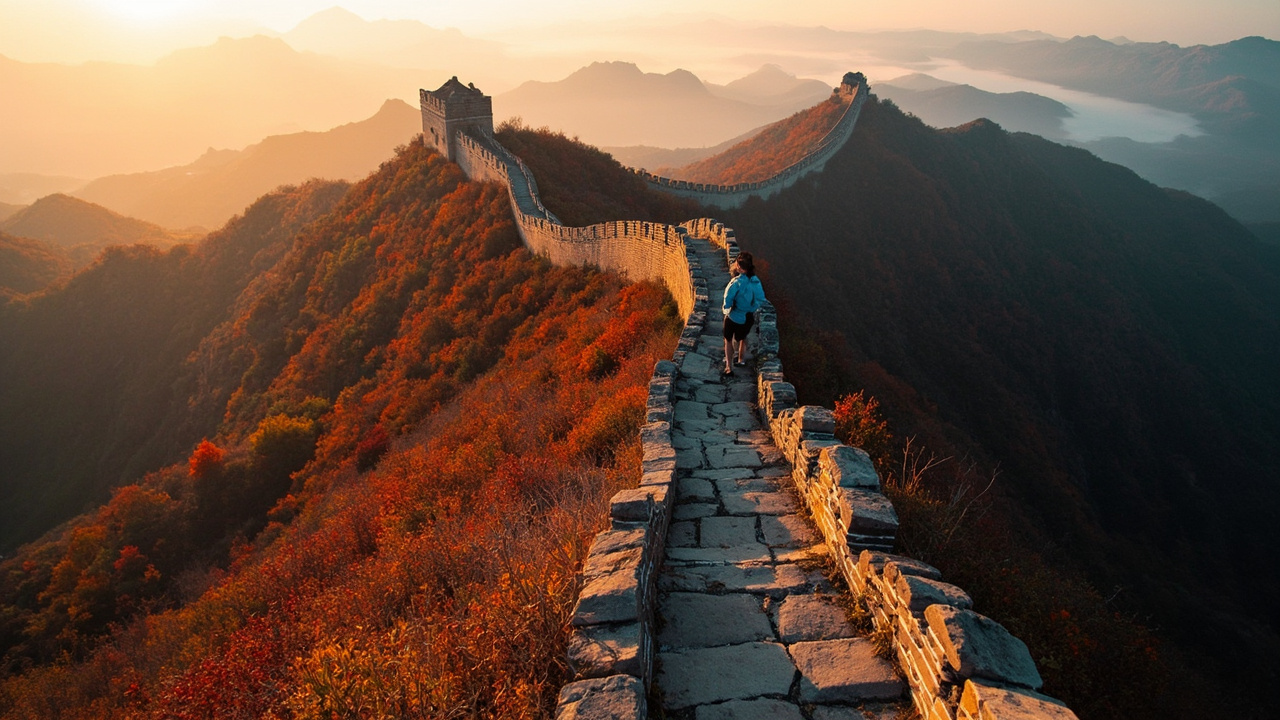
Best Great Wall Sections to Visit
The guy selling roasted chestnuts at the foot of the Mutianyu cable car looked at my shoes and shook his head. I was wearing running sneakers with almost no tread, and it had rained the night before. He pointed at the steep stone steps disappearing into the mist, said something in fast Mandarin I didn’t catch, and handed me a cheap pair of cloth-soled shoes from a cardboard box. I paid him 20 yuan. Best money I spent that whole trip. Halfway up, watching a German couple slip-slide in their Nikes, I understood exactly what he’d been telling me.
That’s the thing about the Great Wall. Everyone pictures the same postcard — the snaking brick ribbon over green mountains, perfect blue sky. The reality is that “the Great Wall” isn’t one place. It’s a 13,000-mile (21,000 km) collection of walls, trenches, and fortresses built across 2,000 years, and the sections you can actually visit range from a fully restored Disney-style experience with a Starbucks at the exit to a crumbling Ming-dynasty ruin where you’ll be the only person for miles and genuinely worried about the drop on your left.
I’ve now been to eight of these sections across seven years of living in Beijing. Some I’d send my own mother to. Others I’d tell you to skip unless you have very specific reasons. This guide is the honest version — what each section actually feels like when you’re standing on it, how to get there without a tour bus, and which one fits the kind of traveler you are.
Quick answer
For most first-time visitors, Mutianyu is the best all-around Great Wall section — it’s restored enough to be safe and walkable, dramatically scenic, and only 90 minutes from Beijing by car or direct tourist bus. Badaling is the easiest to reach by public transport but also the most crowded. Jinshanling is the best choice if you want to hike a wild, unrestored wall and don’t mind a longer trip. Most sections cost $5–$8 (¥35–¥55) entry, plus $15–$20 (¥100–¥140) for a round-trip cable car or toboggan. The best months are April–May and September–October; avoid Chinese public holidays like Golden Week (Oct 1–7) at all costs.
The Short Version
If you read nothing else: go to Mutianyu, take the cable car up, walk to the left toward the watchtower with the best views, come down on the toboggan, and leave Beijing by 7am to beat the crowds. Skip Badaling unless you have mobility issues or a tight schedule. Book your ticket online in advance through the official WeChat mini-program — walk-up tickets are increasingly hard to get in peak season. Bring cash for the chestnut guy.
How I Picked These
I’ve visited eight sections over seven years, some multiple times and in different seasons. I’ve gone solo, with visiting family, and once with a Chinese friend who grew up in a village at the base of Jiankou and whose uncle used to farm the terraces right up to the wall. I’ve taken the public bus, the tourist shuttle, a hired driver, and once a very questionable shared van from a hostel. I’ve also read the Chinese-language hiking forums, which are far more useful than the English ones for anything off the main tourist routes. My picks favor sections that are actually worth the trip for a first-timer, not just the ones with the best Instagram reputation.
Comparison Table
| Rank | Section | Best For | Approx Cost (USD) | Time Needed | When to Go |
|---|---|---|---|---|---|
| 1 | Mutianyu | First-timers, scenery, families | $25–35 | Half day | Apr–May, Sep–Oct |
| 2 | Jinshanling | Serious hikers, wild wall | $30–45 | Full day | May, Sep–Oct |
| 3 | Badaling | Easy access, mobility needs | $20–30 | Half day | Weekday mornings |
| 4 | Jiankou | Adventurers, photographers | $15–25 | Full day | Apr–Jun, Sep–Nov |
| 5 | Simatai | Night views, dramatic ridges | $35–50 | Half day + evening | May–Oct |
| 6 | Huanghuacheng | Lakeside scenery, fewer crowds | $25–35 | Half day | Apr–Jun, Sep–Oct |
| 7 | Gubeikou | Quiet hiking, history buffs | $20–30 | Full day | May, Sep–Oct |
| 8 | Shanhaiguan | Where wall meets sea | $30–40 | Full day | Jun–Sep |
| 9 | Huangyaguan | Steep climbs, less touristy | $25–35 | Full day | Apr–Oct |
| 10 | Juyongguan | Passes, easy half-day | $20–30 | Half day | Weekday mornings |
1. Mutianyu — The One I Send Everyone To
The first time I went to Mutianyu, I made the mistake of taking the cable car up and then immediately walking right, toward the more famous view. Everyone walks right. The left side was nearly empty, and the watchtowers there have the same sweeping ridge views without a single selfie stick in frame.
Mutianyu is the sweet spot. It’s restored, so the steps are even and there are handrails where you need them, but it hasn’t been scrubbed clean the way Badaling has. The wall here runs along a ridgeline with 22 watchtowers, and the forested hills drop away on both sides in a way that actually makes you understand why they built the thing here. The cable car saves you a brutal 30-minute stair climb, and the toboggan down is genuinely fun — I’m not going to pretend it isn’t.
📷 Location: Huairou District, about 45 miles (73 km) northeast of central Beijing. 🎫 Entry fee: $6 (¥40) for adults, plus $17 (¥120) round-trip cable car or $14 (¥100) for the toboggan. 🕒 Opening hours: 7:30am–6pm (Apr–Oct), 8am–5pm (Nov–Mar). Last entry 90 minutes before close. 🚗 How to get there: From Beijing, take the 916 Express bus from Dongzhimen to Huairou, then a local minibus (haggle, ~¥30). Easier: book a direct tourist bus from Qianmen or Dongzhimen for $10–15 (¥70–100) round trip. A private car is $80–120 (¥580–870) round trip. ⏰ When to visit: Arrive by 8am on a weekday. Weekends after 10am are packed. October is the best month — the hills turn red and gold. 💡 Insider tips: Buy tickets through the official WeChat mini-program “慕田峪长城” the night before. Bring cash for the chestnut and shoe vendors at the base. The left-side walk toward watchtower 20 is quieter and just as scenic. Skip the restaurant at the exit — overpriced and mediocre. 🍜 I ate a bowl of instant noodles at the summit kiosk for ¥15 and it was one of the better meals of that trip, purely because of where I was eating it.
2. Jinshanling — The Wild Wall for Real Hikers
I got to Jinshanling at 7:40am, before the ticket office even opened, and walked for two hours without seeing another person. The wall here is partially restored and partially crumbling, with grass growing through the brickwork and watchtowers you can actually climb inside. It’s the version of the Great Wall that made me understand why people cry when they see it.
Jinshanling is where you go if you want the “wild wall” experience without the genuine danger of Jiankou. The hike from Jinshanling to Simatai is about 6 miles (10 km) and takes 3–4 hours, passing through around 30 watchtowers. Some sections are steep enough that you’ll be using your hands. The eastern end has been restored for the Simatai night-tour crowd, so you get both worlds in one walk.
📷 Location: Luanping County, Hebei Province, about 80 miles (130 km) northeast of Beijing. 🎫 Entry fee: $9 (¥65), plus $17 (¥120) for the cable car if you take it. 🕒 Opening hours: 6:30am–6:30pm (Apr–Oct), 8am–5pm (Nov–Mar). 🚗 How to get there: No direct public transport. Book a shared minibus from Beijing ($25–35 round trip) or a private car ($120–160). Some hostels in Beijing run day trips for around $40 including transport. ⏰ When to visit: May and September–October. Go on a weekday. Start by 7am to have the wall to yourself for the first hour. 💡 Insider tips: Bring at least 2 liters of water — there’s almost nothing on the wall. Wear shoes with actual grip; the unrestored sections are loose underfoot. The “Jinshanling to Simatai” hike requires a separate Simatai ticket if you want to exit there. Cash only at the small vendors at the base. 🥾 I twisted my ankle on a loose brick here and limped the last 2 miles. The lesson: the wild wall is wild.
3. Badaling — The One Everyone Warns You About
Yes, it’s crowded. Yes, there’s a KFC at the entrance. Yes, you’ll share the wall with 30,000 other people on a busy day. But Badaling is also the section with the best infrastructure, the easiest access, and the most complete restoration, and for some travelers that’s exactly what they need.
I took my parents here because my dad has knee problems and can’t handle uneven steps. The cable car goes almost to the top, the walkways are wide and paved, and there are handrails the entire way. My mom, who is terrified of heights, felt safe. That matters. Badaling also has the most dramatic “classic” views — the wall climbs steeply up both sides of a valley, and from the highest watchtower you can see it disappearing into the mountains in both directions.
📷 Location: Yanqing District, about 43 miles (70 km) northwest of Beijing. 🎫 Entry fee: $6 (¥40), plus $20 (¥140) round-trip cable car. 🕒 Opening hours: 6:30am–4:30pm (peak season), 7am–4pm (winter). Closed Mondays in low season. 🚗 How to get there: Take Line 2 to Jishuitan Station, Exit B2, walk to Deshengmen bus station, and catch the 877 bus directly to Badaling ($2, ¥12, ~70 minutes). Or take the S2 commuter train from Beijing North Station (~1 hour). ⏰ When to visit: Weekday mornings, ideally arriving by 7:30am. Avoid weekends, holidays, and the entire month of October. 💡 Insider tips: The 877 bus is the cheapest and most reliable public option. Buy tickets online through the official mini-program — walk-up tickets sell out. The left side (toward watchtower 8) is less crowded than the right. Bring your passport; it’s required for ticket pickup. 😅 My dad insisted on walking the last stretch instead of taking the cable car down. It took 50 minutes and he was sore for two days. Worth it, he says.
4. Jiankou — For People Who Want a Story
Jiankou is not a tourist site. It’s a ruin. The wall here was built in the Ming dynasty and has been slowly collapsing for 400 years, and the government has technically closed it to visitors multiple times, though enforcement is inconsistent. If you go, you go at your own risk, and you go with a guide.
The section is famous among photographers for the “Beijing Knot” — a spot where three ridges of wall converge in a way that looks almost impossible. The climb up from the village of Xizhazi takes about 90 minutes and involves scrambling over loose rock and pulling yourself up on tree roots. The wall itself is crumbling, with sections where the walkway has completely collapsed and you have to walk along the outer edge. I’m not exaggerating when I say it’s dangerous.
📷 Location: Huairou District, near the village of Xizhazi, about 50 miles (80 km) north of Beijing. 🎫 Entry fee: Officially free, but local villagers often charge $3–5 (¥20–35) informally. Guides cost $50–80 per person. 🕒 Opening hours: No official hours. Go with a guide, in daylight, in dry weather. 🚗 How to get there: Hire a driver from Beijing ($100–140 round trip) or join a guided hike from a Beijing hostel ($60–90 including transport and guide). ⏰ When to visit: April–June and September–November. Never in rain, snow, or high wind. 💡 Insider tips: Do not go alone. Do not go without a local guide who knows the current access situation. Wear hiking boots with ankle support. Bring gloves — you’ll be using your hands. Tell someone where you’re going and when you expect to be back. 🧗 I went with a guide named Wei who grew up in Xizhazi and whose grandfather helped build the village school. He pointed at a collapsed watchtower and said, “My grandmother remembers when that still had a roof.”
5. Simatai — The Night Wall
Simatai is the only section of the Great Wall open for night tours, and walking it after dark, with the wall lit up in warm yellow light and the ridges disappearing into blackness, is one of the strangest and most beautiful things I’ve done in China. It’s also the steepest major section, with sections that hit 45-degree angles.
The wall here is a mix of restored and original, and the surrounding Gubei Water Town at the base is a purpose-built resort that feels a bit like a Chinese Disneyland. Some people love it; I found it a little artificial. But the wall itself is spectacular, especially the eastern section toward watchtower 12, which has the most dramatic ridge views.
📷 Location: Miyun District, about 75 miles (120 km) northeast of Beijing, adjacent to Gubei Water Town. 🎫 Entry fee: $6 (¥40) for the wall, plus $25–35 (¥180–250) for the night tour package including the water town. 🕒 Opening hours: Day: 9am–5pm. Night tour: 6pm–10pm (May–Oct only). 🚗 How to get there: Direct tourist buses from Dongzhimen ($15, ¥100, ~2 hours). Or take a train to Miyun and then a taxi. ⏰ When to visit: May–October for the night tour. Weeknights are much quieter than weekends. 💡 Insider tips: The night tour requires advance booking and often sells out. Bring a light jacket — the ridge is windy and cold even in summer. The cable car stops running at 9pm, so plan your descent. Gubei Water Town has decent food but inflated prices. 🌙 I ate dinner at a noodle shop in Gubei and watched the wall light up through the window. The owner told me he’d lived there his whole life and had never been up the wall. “Too steep,” he said.
6. Huanghuacheng — The Wall in the Water
Huanghuacheng is the only section where the wall meets a lake, and the combination of crumbling brick, blue water, and forested hills makes it one of the most photogenic spots on the entire wall. It’s also one of the least visited, partly because it’s harder to reach and partly because parts of it are unrestored and technically off-limits.
The restored section is small — maybe 1 mile (1.6 km) — but the views over the lake are worth the trip. The surrounding area is a nature reserve, and the hike down to the water’s edge is lovely. It’s a good choice if you want something quieter than Mutianyu but don’t want the danger of Jiankou.
📷 Location: Huairou District, about 45 miles (70 km) north of Beijing. 🎫 Entry fee: $6 (¥40). 🕒 Opening hours: 8am–5pm (Apr–Oct), 8:30am–4:30pm (Nov–Mar). 🚗 How to get there: No direct public transport. Hire a driver ($90–130 round trip) or join a small-group tour from Beijing ($40–60). ⏰ When to visit: April–June and September–October. Weekdays only if you can manage it. 💡 Insider tips: Bring a picnic — there’s nowhere good to eat nearby. The best views are from the restored section at the top of the ridge. Don’t try to walk the unrestored sections; they’re genuinely dangerous and patrolled. 📸 I took my favorite photo of the entire wall here — the wall curving down into the lake with mist rising off the water. It’s the one I still use as my phone background.
7. Gubeikou — The Quiet Historian’s Wall
Gubeikou is the oldest section of the wall still standing, with origins going back to the Northern Qi dynasty (550–577 AD), though most of what you see is Ming. It’s unrestored, quiet, and mostly visited by Chinese hikers and history buffs. I saw maybe 15 other people in four hours.
The wall here runs through a valley with a mix of original brick, packed earth, and rubble. It’s less dramatic than Jiankou or Jinshanling, but it has a particular atmosphere — you can feel the age of the place. There’s also a small museum at the base with artifacts and photos from the various dynasties that built and rebuilt the wall here.
📷 Location: Miyun District, about 75 miles (120 km) northeast of Beijing. 🎫 Entry fee: $6 (¥40). 🕒 Opening hours: 8am–5pm daily. 🚗 How to get there: Take a train to Miyun North Station, then a taxi ($15–20). Or hire a driver from Beijing ($100–140 round trip). ⏰ When to visit: May and September–October. Any day of the week is fine — it’s never crowded. 💡 Insider tips: The museum is worth 30 minutes. Bring lunch — there’s nothing nearby. The eastern section toward the Panlongshan ridge is the most scenic. 🏛️ The museum curator, a retired teacher named Mr. Zhang, spent 20 minutes explaining the different brick patterns to me. I understood maybe a third of it, but his enthusiasm was infectious.
8. Shanhaiguan — Where the Wall Meets the Sea
Shanhaiguan is the eastern terminus of the Ming Great Wall, where it literally runs into the sea at a spot called Laolongtou (“Old Dragon’s Head”). It’s a 4-hour train ride from Beijing, which is why most tourists skip it, but it’s worth the trip if you have the time.
The wall here is fully restored and includes a fortress city, several temples, and the famous “First Pass Under Heaven” gate. The sea section is short but striking — the wall extends about 60 feet (20 meters) into the water, and on a clear day you can see the Bohai Sea stretching out to the horizon.
📷 Location: Shanhaiguan District, Qinhuangdao, Hebei Province, about 190 miles (300 km) east of Beijing. 🎫 Entry fee: $9 (¥65) for the combined ticket covering the main sites. 🕒 Opening hours: 7:30am–5:30pm (Apr–Oct), 8am–5pm (Nov–Mar). 🚗 How to get there: High-speed train from Beijing South Station to Shanhaiguan ($30–40, ¥220–290, ~4 hours). Then a local bus or taxi to the sites. ⏰ When to visit: June–September, when the sea is warm enough to enjoy. Avoid weekends if possible. 💡 Insider tips: The combined ticket covers five sites — plan a full day. The seafood in the nearby town is excellent and cheap. Stay overnight if you can; the sunset over the sea wall is worth it. 🌊 I ate grilled squid on a stick from a street vendor near the sea wall and watched the sun go down. It was the most peaceful evening of that entire trip.
9. Huangyaguan — The Steep One
Huangyaguan (“Yellow Cliff Pass”) is one of the steepest restored sections, with a famous 3,600-step stairway that climbs almost vertically up a cliff face. It’s less crowded than Mutianyu or Badaling, and the surrounding scenery — cliffs, forest, and a small reservoir — is genuinely beautiful.
The wall here was restored in the 1980s and includes a section with a “Great Wall Museum” and a small water park at the base. The steep climb is the main draw, and the views from the top are excellent. It’s a good alternative for people who want a challenge without the danger of the wild sections.
📷 Location: Ji County, Tianjin, about 85 miles (140 km) northeast of Beijing. 🎫 Entry fee: $7 (¥50). 🕒 Opening hours: 8am–5pm daily. 🚗 How to get there: Hire a driver from Beijing ($100–140 round trip) or take a train to Jizhou and then a taxi. ⏰ When to visit: April–October. Weekdays are much quieter. 💡 Insider tips: The 3,600-step stairway is no joke — bring water and take your time. The museum at the base is small but interesting. There’s a decent restaurant near the entrance. 🥵 I climbed the 3,600 steps in July heat and had to sit at the top for 20 minutes before I could stand up. Do not do this in summer.
10. Juyongguan — The Pass on the Way to Badaling
Juyongguan is the pass you drive through on the way to Badaling, and most people don’t realize it’s a separate, visitable section of the wall. It’s a restored fortress with a circular walled compound, a central tower, and a short but steep section of wall you can climb. It’s much quieter than Badaling and takes only about 2 hours.
The wall here is famous for its cloud platform, a 14th-century stone structure with Buddhist carvings in six scripts, including Tibetan, Sanskrit, and Tangut. It’s a UNESCO site and genuinely interesting if you care about history.
📷 Location: Changping District, about 37 miles (60 km) northwest of Beijing, on the road to Badaling. 🎫 Entry fee: $6 (¥40). 🕒 Opening hours: 8am–5pm daily. 🚗 How to get there: Take the 919 bus from Deshengmen to Juyongguan ($2, ¥12, ~1 hour). Or stop here on the way to Badaling if you have a private driver. ⏰ When to visit: Weekday mornings. It’s rarely crowded. 💡 Insider tips: The cloud platform is the highlight — don’t skip it. The wall climb is short but steep. Combine with Badaling if you have a driver. 📖 I met an Australian couple here who had accidentally gotten off the bus at the wrong stop and discovered Juyongguan by mistake. They said it was the best accident of their trip.
FAQ summary
The best Great Wall section for most first-time visitors is Mutianyu, which offers restored, safe walking, dramatic scenery, and easy access from Beijing (90 minutes by car or direct bus). Badaling is the most accessible by public transport but also the most crowded — go on a weekday morning if you choose it. Jinshanling and Jiankou are the best options for serious hikers who want unrestored, wild wall, but both require a guide or private transport and carry real risk. Entry fees range from $5–9 (¥35–65), with cable cars and toboggans adding $14–20 (¥100–140). The best months are April–May and September–October; avoid Chinese public holidays like Golden Week (Oct 1–7). Book tickets in advance through official WeChat mini-programs, bring your passport, and set up Alipay or WeChat Pay before you arrive.
FAQ
Q: Which Great Wall section is best for first-time visitors? A: Mutianyu. It’s restored and safe, has the most dramatic scenery of the easily accessible sections, and is only 90 minutes from Beijing by direct tourist bus or private car. Arrive by 8am on a weekday to avoid crowds.
Q: Do I need a visa to visit the Great Wall in 2026? A: Most Western European, Australian, and Southeast Asian passport holders can enter China visa-free for up to 30 days under the current policy (check your specific nationality). Americans and some others still need a visa, though 240-hour visa-free transit is available for many nationalities passing through to a third country. See our China visa guide for details.
Q: How much does it cost to visit the Great Wall? A: Entry fees range from $5–9 (¥35–65) depending on the section. Add $14–20 (¥100–140) for a cable car or toboggan round trip. Transport from Beijing costs $2–15 (¥12–100) by public bus, or $80–160 (¥580–1,160) for a private car. A typical half-day trip to Mutianyu runs $25–35 per person all-in.
Q: Can I visit the Great Wall without a tour? A: Yes, for Mutianyu, Badaling, and Juyongguan. All three have public bus connections from Beijing. For Jinshanling, Jiankou, Huanghuacheng, and Gubeikou, you’ll need a private driver or a small-group tour, as public transport is limited or nonexistent.
Q: What should I bring to the Great Wall? A: Water (at least 1–2 liters), sunscreen, a hat, comfortable shoes with grip, cash for vendors, and your passport (required for ticket pickup at most sections). Bring a light jacket even in summer — the ridge is windy and cooler than the city.
Q: Is the Great Wall safe for children and older visitors? A: Mutianyu and Badaling are both fine for children and older visitors, thanks to cable cars, paved walkways, and handrails. Jinshanling and Jiankou are not suitable for young children or anyone with mobility issues — the unrestored sections are steep, uneven, and genuinely dangerous.
Q: Do I need a VPN or SIM card to visit the Great Wall? A: Yes, you’ll want a local SIM or eSIM for maps and translation, and a VPN if you need Google, WhatsApp, or Instagram. See our China SIM and internet guide for setup details. Set up Alipay or WeChat Pay before you arrive — most ticket offices and vendors are cashless now.
The Honest Wrap-up
This list is for travelers who want to actually experience the Great Wall, not just check it off. If you’re on a tight schedule or traveling with someone who can’t handle stairs, stick to Mutianyu or Badaling and don’t feel bad about it — they’re popular for a reason. If you have an extra day and decent fitness, Jinshanling will give you the version of the wall you’ve been imagining since you were a kid. And if you’re the kind of person who reads “technically closed” and thinks “sounds interesting,” Jiankou is waiting, but go with a guide and tell someone where you are.
One last thing: don’t overplan the wall. Pick one section, get there early, and give yourself time to just stand there. The best moments I’ve had on the wall weren’t at the famous viewpoints — they were the quiet stretches in between, when the crowds thinned out and the only sound was wind through the watchtowers. Book the flight. The wall isn’t going anywhere, but you should.
More guides you may like

Top 10 Bridges in China
China's bridges are engineering marvels spanning mountains, rivers, and seas. Here are 10 of the most spectacular, from ancient stone to modern steel.
8 min read

Top 10 Buddhist Sites in China
From the Leshan Giant Buddha to the Dunhuang Caves, these 10 Buddhist sites represent 2,000 years of China's spiritual heritage.
9 min read
Top 10 Day Trips from Beijing You Shouldn't Miss
Beijing is packed with history, but some of China's best experiences are just a few hours away. Here are 10 day trips that will transform your visit.
9 min read
Top 10 Hidden Gems in China Off the Beaten Path
Beyond the Great Wall and Terracotta Warriors, China has incredible hidden destinations few tourists ever reach. Here are 10 underrated gems worth the detour.
9 min read
Top 10 Markets and Shopping Streets in China
From Shanghai's Bund to Beijing's Silk Street - 10 markets where foreigners can haggle, explore, and bring home authentic Chinese goods.
9 min read
Top 10 Museums in China You Shouldn't Miss
China's museums span 5,000 years of civilization. These 10 - from the Palace Museum to Xi'an's terracotta gallery - are unmissable for culture lovers.
9 min read