
Best Street Food in Shanghai
TODO: Extract from article (100-160 chars)
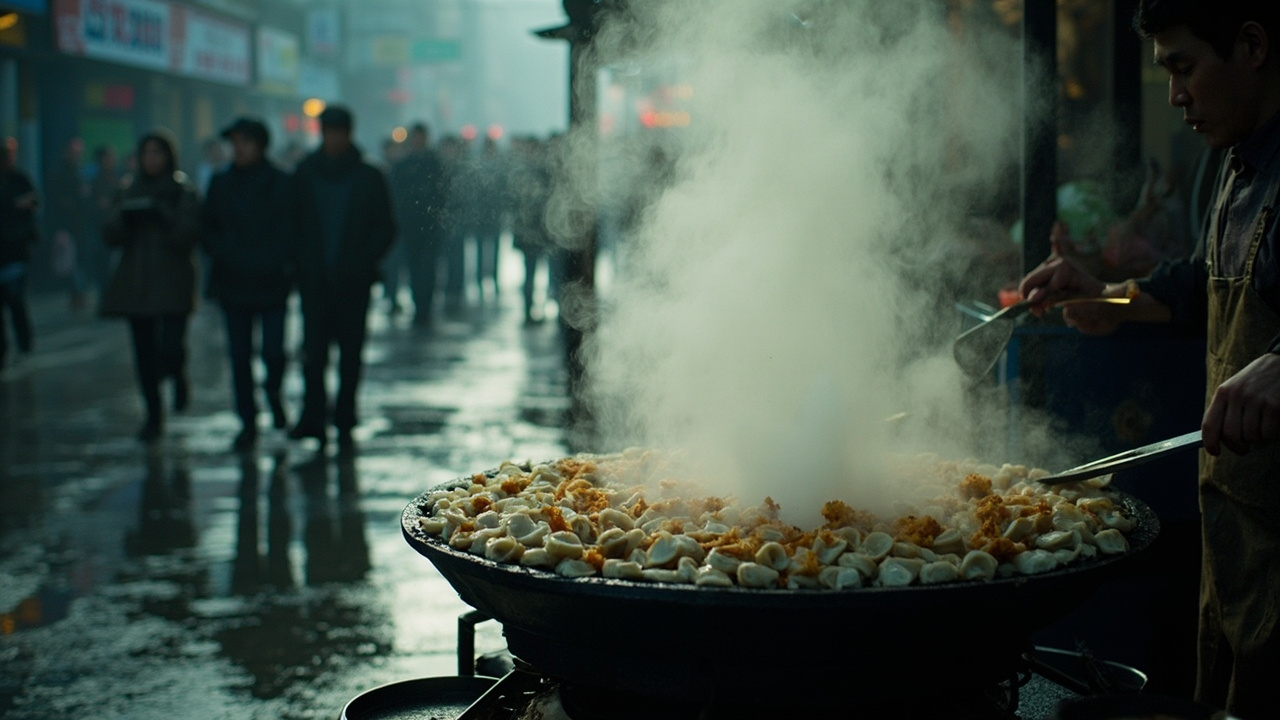
Best Street Food in Shanghai
The first thing I ate in Shanghai was a mistake. I’d just dropped my bags at a hostel off Nanjing West Road, walked two blocks, and pointed at something sizzling on a griddle because I couldn’t read the sign and the woman behind it was moving too fast for my translation app to catch up. It turned out to be shengjianbao — soup dumplings fried upside down — and I bit straight into one, which sent a jet of scalding pork broth down my chin in front of about fifteen amused locals. The woman handed me a napkin, laughed, and showed me the correct technique: nibble a hole, sip, then eat. That’s Shanghai street food in a nutshell. It punishes impatience and rewards anyone willing to look like an idiot for five minutes.
I’ve been back to Shanghai maybe a dozen times over seven years, and I still plan my days around what I’m going to eat standing up. The city’s food scene gets overshadowed by its skyline and its shopping, which is a shame, because the street level is where Shanghai actually lives. Breakfast happens on the sidewalk at 6:30am. Lunch is a scallion pancake eaten while walking to the metro. Dinner might be a bowl of noodles at a plastic stool on a lane so narrow the delivery scooters honk at you to move.
This guide covers the ten street foods and specific stalls worth your time as a first-timer — where they are, what they cost, how to order without Mandarin, and the mistakes I made so you don’t have to. Everything here I’ve eaten myself, usually more than once.
Quick answer
Shanghai’s best street food clusters in the old neighborhoods — the Former French Concession, the lanes around Yuyuan Garden, and the breakfast stalls near People’s Square — and most items cost $1–4 (¥7–30). The can’t-miss dishes are shengjianbao (pan-fried soup dumplings), xiaolongbao (steamed soup dumplings), congyoubing (scallion pancakes), and cifantuan (sticky rice rolls). Go for breakfast between 6:30–9am, bring WeChat Pay or Alipay since many stalls no longer take cash, and expect almost no English — download a translation app before you land.
The Short Version
Eat breakfast on the street. That’s the whole game. Shanghai’s morning food is better than its dinner food, cheaper, and gone by 9:30am. If you only do one thing, get shengjianbao from a stall with a line of locals and no English menu. Skip the tourist food courts near the Bund. Bring small bills and set up Alipay or WeChat Pay before you arrive, because half the good stalls are cashless now.
How I Picked These
I ate at every place on this list at least twice, usually on separate trips, and I asked the people around me — hostel staff, a taxi driver named Liu who insisted I try his aunt’s cifantuan stand, a barista in Jing’an who wrote down four addresses in Chinese so I could show them to drivers. I deliberately skipped the famous tourist spots that show up in every listicle unless they genuinely hold up. A few didn’t make it: the “famous” dumpling house on the Bund is fine but overpriced and always packed with tour groups. I also cross-checked opening hours with locals because a lot of these stalls close when they sell out, which can be 10am or noon depending on the day.
Comparison Table
| Rank | Place | Best For | Approx Cost (USD) | Time Needed | When to Go |
|---|---|---|---|---|---|
| 1 | Yang’s Fry Dumpling (小杨生煎) | Shengjianbao | $2–3 (¥15–20) | 30 min | Weekday 10am or 2pm |
| 2 | Jia Jia Tang Bao (佳家汤包) | Xiaolongbao | $3–5 (¥20–35) | 45 min | Weekday 9–11am |
| 3 | Ah Da Scallion Pancake (阿大葱油饼) | Congyoubing | $1–2 (¥7–12) | 15 min | Weekday morning |
| 4 | Shen Da Cheng (沈大成) | Cifantuan & rice cakes | $1–3 (¥7–20) | 20 min | Any time before 7pm |
| 5 | Yuyuan Bazaar Snack Street | Variety / first-timer sampler | $5–10 (¥35–70) | 1.5 hrs | Weekday 11am |
| 6 | Da Hu Chun (大壶春) | Shengjianbao (soupier style) | $2–4 (¥15–28) | 30 min | Lunch, weekdays |
| 7 | Wu Fang Zhai (五芳斋) | Zongzi (sticky rice parcels) | $2–4 (¥15–28) | 20 min | Morning or lunch |
| 8 | Tianzifang Food Lanes | Fusion snacks, sit-down | $4–8 (¥28–55) | 1 hr | Weekday afternoon |
| 9 | Wujiang Road Food Street | Late-night skewers | $3–6 (¥20–40) | 1 hr | 8pm–midnight |
| 10 | Local wet market breakfast stalls | Everything, cheapest | $1–3 (¥7–20) | 30 min | 6:30–9am |
Yang’s Fry Dumpling (小杨生煎) — The One Everyone Gets Right
There’s a Yang’s on almost every other block in central Shanghai, and I mean that literally. I once counted three within a ten-minute walk in Jing’an. The chain gets dismissed by food snobs, but here’s the thing: it’s consistent, it’s cheap, and the shengjianbao are genuinely good. Crispy bottom, chewy top, hot soup inside.
Why it’s special: Shengjianbao is Shanghai’s signature breakfast, and Yang’s is the most reliable introduction because every branch has the same quality and a picture menu you can point at. You get four dumplings for around $2 (¥15). The trick is the eating order — bite a small hole in the side, let the steam out, sip the broth, then eat the rest. Do not put a whole one in your mouth. I learned that the hard way.
📍 Location: Multiple branches; the Huanghe Road one near People’s Square is the classic. 🎫 Entry fee: Free to enter; dumplings $2–3 (¥15–20) for four. 🕐 Opening hours: Roughly 7am–9pm daily, but breakfast is the move. 🚇 How to get there: Take Metro Line 1, 2, or 8 to People’s Square, Exit 11, walk 5 minutes north on Huanghe Road. ⏰ When to visit: Weekday mid-morning (10am) avoids both the breakfast and lunch rush. 💡 Insider tips: Order at the counter, take the ticket, and wait for your number. Vinegar is on the table — dip, don’t pour. Cash works here but Alipay is faster. The line moves fast; don’t overthink it. I watched a businessman in a suit eat six dumplings standing up in under four minutes, then walk out without a word. That’s the energy.
Jia Jia Tang Bao (佳家汤包) — Worth the Wait, Every Time
Jia Jia is a tiny shop with maybe eight tables and a permanent line out the door, and I’ve stood in that line four separate times. The xiaolongbao here are thinner-skinned and more delicate than anywhere else I’ve found in the city. You order by pointing at a wall menu, pay at the counter, and hover for a table.
Why it’s special: This is the xiaolongbao benchmark. The crab-and-pork version is the one to get if it’s available. The soup inside is clean and porky without being greasy. It’s not a secret — every guidebook knows it — but it survives the attention, which is rare. Go early or go home disappointed; they sell out.
📍 Location: Huanghe Road, near People’s Square, same neighborhood as Yang’s. 🎫 Entry fee: Free; a steamer of eight runs $3–5 (¥20–35). 🕐 Opening hours: Approximately 7:30am–8pm, closed when sold out. 🚇 How to get there: Metro Line 1/2/8 to People’s Square, Exit 11, walk 3 minutes. ⏰ When to visit: Arrive by 9am on a weekday. Weekends are a zoo. 💡 Insider tips: There’s no English menu, so screenshot the Chinese characters before you go. Bring your own napkin — they’re stingy with them. Order the crab roe version if you see it; it’s seasonal and worth the extra dollar. A woman at the next table saw me struggling with chopsticks and wordlessly slid a spoon toward me. Small kindnesses like that are everywhere here.
Ah Da Scallion Pancake (阿大葱油饼) — The Legend That Earned It
Ah Da is a single man making scallion pancakes in a tiny window, and he’s been doing it for decades. There’s usually a line, sometimes an hour long on weekends. I went on a Tuesday and waited twenty minutes. The pancake is flaky, layered, and heavy with scallion and lard, and it costs about a dollar.
Why it’s special: This is the kind of place that gets written up everywhere and somehow still delivers. The pancake is genuinely one of the best things I’ve eaten in China — crisp exterior, soft interior, salty and rich. It’s a snack, not a meal, but it’s the snack. I’d honestly rank it above most sit-down restaurants in the city.
📍 Location: Maoming South Road area, Former French Concession. 🎫 Entry fee: Free; pancake $1–2 (¥7–12). 🕐 Opening hours: Roughly 6am until he runs out, usually by early afternoon. Closed some Mondays — check locally. 🚇 How to get there: Metro Line 1 or 10 to South Shaanxi Road, Exit 4, walk about 8 minutes. ⏰ When to visit: Weekday morning, ideally before 9am. 💡 Insider tips: Cash is your friend here. Have small bills ready. Don’t ask for a menu — there isn’t one. Eat it immediately; it’s not the same cold. I made the mistake of saving mine for later and it went limp in my bag. Eat it on the spot.
Shen Da Cheng (沈大成) — The Rice Roll Breakfast
Shen Da Cheng is an old institution on Nanjing East Road, and its cifantuan — sticky rice wrapped around fried dough and pickles — is the breakfast I still think about. It’s a dense, chewy, savory-sweet log of a thing that costs about a dollar and keeps you full until lunch.
Why it’s special: Cifantuan is Shanghai comfort food and almost nobody outside China talks about it. The contrast of textures — sticky rice, crunchy youtiao, tangy pickled vegetable — is the whole point. Shen Da Cheng also does excellent rice cakes and mooncakes, so it’s a good one-stop shop for edible souvenirs.
📍 Location: Nanjing East Road, near the Bund end. 🎫 Entry fee: Free; items $1–3 (¥7–20). 🕐 Opening hours: Approximately 8am–7pm daily. 🚇 How to get there: Metro Line 2 or 10 to East Nanjing Road, Exit 2, walk 3 minutes. ⏰ When to visit: Morning for cifantuan, which sells out by early afternoon. 💡 Insider tips: Point at what you want — the staff are used to foreigners. The line is fast. Buy two; you’ll want a second. This is also a great spot to grab snacks for a train ride. A shop worker, seeing me hesitate, just handed me a cifantuan and gestured “this one.” She was right.
Yuyuan Bazaar Snack Street — The Tourist Version, Done Honestly
Yes, this is the touristy one. I’m including it anyway because for a first-timer it’s the easiest place to try eight things in one afternoon without a word of Mandarin. The lanes around Yuyuan Garden are packed with stalls selling soup dumplings, stinky tofu, candied fruit, and skewers.
Why it’s special: It’s a sampler. You’ll pay a bit more and the food is a notch below the specialist stalls, but you get variety, English-ish signage, and no risk of ordering something you can’t handle. Treat it as a scouting mission — figure out what you like, then chase the real version elsewhere.
📍 Location: Yuyuan Garden area, Old City, Huangpu District. 🎫 Entry fee: Free to walk; the garden itself costs about $6 (¥40). 🕐 Opening hours: Stalls roughly 9am–9pm daily. 🚇 How to get there: Metro Line 10 or 14 to Yuyuan Garden, Exit 1, follow the crowds. ⏰ When to visit: Weekday 11am, before the tour buses arrive. 💡 Insider tips: Stinky tofu is milder than you expect — try it. Prices are negotiable-ish at some stalls but not the food ones. Bring wet wipes. Skip the restaurants with photo menus and touts. I paid double for a cup of “fresh juice” that was mostly ice. Lesson learned.
Da Hu Chun (大壶春) — The Other Shengjianbao
Da Hu Chun is the old-school rival to Yang’s, and the shengjianbao here are soupier and a little rougher around the edges. It’s been around since the 1930s and it feels like it — tiled floors, fluorescent lights, no frills.
Why it’s special: If Yang’s is the polished version, Da Hu Chun is the original. The dumplings have more broth and a slightly thicker skin. It’s a good comparison to make if you’re doing a shengjianbao crawl, which you should. It’s also less crowded than Yang’s, which matters when you’re jet-lagged and hungry.
📍 Location: Sichuan Middle Road, near the Bund. 🎫 Entry fee: Free; dumplings $2–4 (¥15–28). 🕐 Opening hours: Approximately 6:30am–8pm daily. 🚇 How to get there: Metro Line 2 or 10 to East Nanjing Road, Exit 5, walk 6 minutes. ⏰ When to visit: Lunch on a weekday. 💡 Insider tips: Order at the counter, take the receipt to the pickup window. The vinegar here is sharper — use less. It’s a good rainy-day stop because it’s indoors and warm. An older man next to me ate his dumplings with a spoon and a look of total concentration. I copied him. It worked better.
Wu Fang Zhai (五芳斋) — Zongzi and Sticky Rice Everything
Wu Fang Zhai is technically a Jiaxing chain famous for zongzi — sticky rice and fillings wrapped in bamboo leaves — but the Shanghai branches are excellent and cheap. A pork zongzi runs about $2 (¥15) and is a full meal.
Why it’s special: Zongzi is a food most visitors never try because it looks intimidating. It isn’t. You unwrap the leaves and eat the rice parcel inside. The pork version is savory and rich; the red bean version is sweet. Wu Fang Zhai does both well and has branches everywhere, so it’s a reliable backup when you’re lost and hungry.
📍 Location: Multiple branches; the one near Nanjing West Road is convenient. 🎫 Entry fee: Free; zongzi $2–4 (¥15–28). 🕐 Opening hours: Approximately 8am–8pm daily. 🚇 How to get there: Metro Line 2/12/13 to West Nanjing Road, Exit 4, walk 2 minutes. ⏰ When to visit: Anytime; it’s a good lunch-on-the-go option. 💡 Insider tips: Ask them to heat it if it’s not warm. The leaves are not edible — unwrap fully. This is a great food to carry on a high-speed train. I once ate a zongzi on a train to Hangzhou and it was better than the dining car by a mile.
Tianzifang Food Lanes — Where to Sit Down
Tianzifang is a maze of converted shikumen lanes in the Former French Concession, now full of small shops and cafes. The food here is more fusion than traditional, but it’s a pleasant place to sit, and there are a few genuinely good snack stalls tucked in the alleys.
Why it’s special: It’s the most comfortable place on this list. You can sit, order in English at many spots, and take your time. The food won’t blow your mind, but after a few days of eating standing up, a chair and a cold drink matter. It’s also great for photos.
📍 Location: Taikang Road, Former French Concession. 🎫 Entry fee: Free. 🕐 Opening hours: Shops roughly 10am–10pm daily. 🚇 How to get there: Metro Line 9 to Dapuqiao, Exit 1, walk 3 minutes. ⏰ When to visit: Weekday afternoon, before the evening crowd. 💡 Insider tips: Prices are 30–50% higher than street stalls. Wander off the main lane for better value. Good spot to buy tea as a souvenir. Bring your phone with a working SIM for maps — it’s easy to get turned around. I got mildly lost here for twenty minutes and found a tiny dumpling stall that wasn’t on any map. That’s the fun of it.
Wujiang Road Food Street — Late-Night Skewers
Wujiang Road is a pedestrian food street near West Nanjing Road that comes alive after dark. Skewers, grilled squid, fried noodles, and beer. It’s loud, smoky, and exactly what you want at 10pm.
Why it’s special: This is where you go when you’re hungry and it’s late and you don’t want a restaurant. The skewers are cheap — a few dollars gets you a plate — and the atmosphere is half the point. It’s not gourmet. It’s fun.
📍 Location: Wujiang Road, Jing’an District. 🎫 Entry fee: Free; skewers $3–6 (¥20–40) for a plate. 🕐 Opening hours: Roughly 5pm–midnight, later on weekends. 🚇 How to get there: Metro Line 2/12/13 to West Nanjing Road, Exit 4, walk 4 minutes. ⏰ When to visit: 8–10pm on a weekend for the full scene. 💡 Insider tips: Point at what you want and they’ll grill it. Ask for “bu la” (不辣) if you don’t want spice. Watch your bag in the crowd. Cash is fine here but Alipay is easier. I ordered something I thought was chicken and it turned out to be chicken cartilage. Crunchy. Not my favorite. Now I point more carefully.
Local Wet Market Breakfast Stalls — The Real Shanghai
Every neighborhood has a wet market, and every wet market has a breakfast stall or three. This is where you’ll find the cheapest and most authentic food in the city — soy milk, fried dough sticks, steamed buns, congee, all for a dollar or two.
Why it’s special: No English, no menu, no tourists. Just locals getting breakfast before work. The food is simple and excellent, and the prices are the lowest on this list. If you want to feel like you’re actually in Shanghai rather than visiting it, come here.
📍 Location: Any residential neighborhood; the one off Jianguo West Road in Xuhui is a good example. 🎫 Entry fee: Free; breakfast items $1–3 (¥7–20). 🕐 Opening hours: Roughly 6–9:30am, then they pack up. 🚇 How to get there: Metro Line 1/9/11 to Xujiahui, then walk into the surrounding lanes. ⏰ When to visit: 6:30–8am on a weekday. 💡 Insider tips: Use your translation app’s camera mode. Have small bills or Alipay ready. Don’t linger — it’s a working market. Try the fresh soy milk (豆浆) and a youtiao. A vendor handed me a free youtiao when I couldn’t figure out the price. I tried to pay and she waved me off.
FAQ summary
Shanghai’s best street food is a breakfast food, and the top picks are shengjianbao at Yang’s or Da Hu Chun, xiaolongbao at Jia Jia Tang Bao, and scallion pancakes at Ah Da. Most items cost $1–4 (¥7–30), and the best stalls are in the Former French Concession, around People’s Square, and in residential wet markets. Go early, bring Alipay or WeChat Pay, download a translation app, and expect little to no English. Cash still works at some stalls but is increasingly rare.
FAQ
Q: Is Shanghai street food safe for foreigners to eat? A: Yes, generally. Stick to stalls with high turnover and a line of locals, eat food that’s cooked fresh in front of you, and avoid anything sitting out lukewarm. I’ve eaten street food in Shanghai for years and gotten sick exactly once, from a lukewarm skewer I shouldn’t have bought.
Q: How much should I budget for street food per day in Shanghai? A: About $10–15 (¥70–105) per person per day covers three solid street meals plus snacks. Breakfast is the cheapest meal, usually $1–3 (¥7–20). Sit-down restaurants will push that to $25–40 (¥175–280).
Q: Do I need cash, or can I use Alipay and WeChat Pay? A: Set up Alipay or WeChat Pay before you arrive — most stalls prefer them and some are cashless. Carry ¥100–200 in small bills as backup, since a few older vendors still take cash.
Q: Do I need a VPN or a local SIM card for Shanghai? A: You’ll want a working SIM or eSIM for maps, translation, and payments. Google, Instagram, and WhatsApp are blocked, so install a VPN before you land if you need them. Apple Maps and Baidu Maps work without one.
Q: What if I don’t speak any Mandarin? A: You’ll be fine with a translation app. Point at what you want, use the camera mode to read signs, and screenshot Chinese names of places you plan to visit so you can show them to taxi drivers. Most young staff know a few English words.
Q: What’s the best time of day for street food in Shanghai? A: Breakfast, 6:30–9:30am. That’s when the best stalls are open and the food is freshest. Many famous stalls sell out by noon and close. For late-night eating, head to Wujiang Road after 8pm.
Q: Which neighborhoods have the best street food? A: The Former French Concession (Xuhui and Jing’an) for variety and atmosphere, People’s Square for the classic dumpling spots, and any residential wet market for the cheapest and most authentic food. Avoid the Bund’s tourist strips.
The Honest Wrap-up
This list is for the traveler who’s willing to eat standing up, point at things they can’t pronounce, and get a little messy. It’s not for someone who wants a white tablecloth and an English menu — Shanghai has plenty of that too, but it’s not what this guide is about. If you’re nervous, start at Yuyuan or Yang’s and work your way toward the wet markets as you get comfortable. My one piece of advice before you book: fly in on a weekday, sleep on the plane if you can, and go straight to breakfast. The city’s best food is gone by 10am, and the first bite — even if you burn your chin — is the one you’ll remember.
More guides you may like

Top 10 Bridges in China
China's bridges are engineering marvels spanning mountains, rivers, and seas. Here are 10 of the most spectacular, from ancient stone to modern steel.
8 min read

Top 10 Buddhist Sites in China
From the Leshan Giant Buddha to the Dunhuang Caves, these 10 Buddhist sites represent 2,000 years of China's spiritual heritage.
9 min read

Top 10 Day Trips from Beijing You Shouldn't Miss
Beijing is packed with history, but some of China's best experiences are just a few hours away. Here are 10 day trips that will transform your visit.
9 min read
Top 10 Hidden Gems in China Off the Beaten Path
Beyond the Great Wall and Terracotta Warriors, China has incredible hidden destinations few tourists ever reach. Here are 10 underrated gems worth the detour.
9 min read
Top 10 Markets and Shopping Streets in China
From Shanghai's Bund to Beijing's Silk Street - 10 markets where foreigners can haggle, explore, and bring home authentic Chinese goods.
9 min read
Top 10 Museums in China You Shouldn't Miss
China's museums span 5,000 years of civilization. These 10 - from the Palace Museum to Xi'an's terracotta gallery - are unmissable for culture lovers.
9 min read