
China Northwest Loop Guide
TODO: Extract from article (100-160 chars)
China Northwest Loop Guide
The first time I smelled it, I was standing outside a noodle shop in Xining at 7 a.m., and the whole street reeked of lamb fat and chili oil. A man in a gray tracksuit was pulling noodles by hand, slapping them against the counter so hard the flour jumped. I’d been in China seven years by then, but I’d never gone northwest. Everyone goes to Beijing, Shanghai, Chengdu. Nobody tells you about the loop.
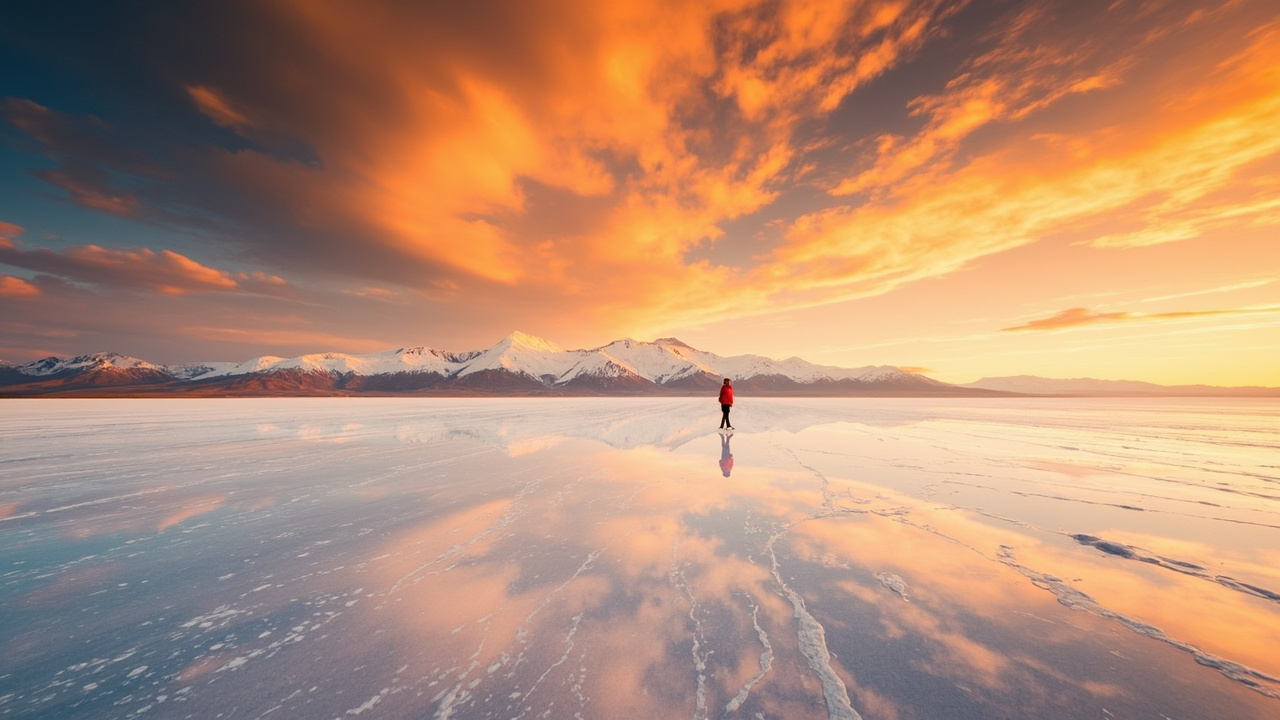
The Northwest Loop — usually called the Qinghai-Gansu Loop, or 青甘大环线 — is a roughly 2,500 km (1,550 mi) circuit through Qinghai and Gansu provinces. You start in Xining, swing past a salt lake so flat it mirrors the sky, cross a desert where you can hear your own heartbeat, and end up staring at Buddhist cave murals that are older than most European cathedrals. It takes 7 to 10 days by car. It’s not easy. The altitude will humble you. The distances between towns are genuinely enormous.
But it’s the most varied stretch of landscape I’ve seen anywhere in China, and I’ve done the loop three times now. This guide is what I’d tell a friend who just texted me “hey, thinking about the northwest, any tips?”
Quick answer
The Northwest Loop is a 7–10 day road trip from Xining through Qinghai Lake, Chaka Salt Lake, Dachaidan, Dunhuang, Jiayuguan, and Zhangye, best done May–October. Most Western tourists can now enter China visa-free for up to 30 days (check your nationality), and the loop costs roughly $700–1,200 (¥5,000–8,700) per person excluding international flights. You need a private driver or a small group tour — public transport can’t cover this route.
The Short Version
If you only remember one thing: hire a driver, go in September, and don’t skip Dunhuang. The loop rewards people who can sit in a car for six hours and then be amazed. It punishes people who want convenience. Skip it if you hate altitude, long drives, or basic hotels. Do it if you want the China that isn’t on the postcards everyone else buys.
How I Picked These
I’ve driven the full loop three times — 2019, 2022, and again last September — and I’ve done the Xining-to-Dunhuang leg a fourth time by train. I’ve stayed in everything from a ¥180 guesthouse in Dachaidan to a proper hotel in Dunhuang. I talked to drivers, noodle vendors, a Tibetan yak herder near Qinghai Lake, and a woman who runs a small inn in Zhangye. I also cross-checked prices with two Chinese friends who live in Xining. Everything below is either something I did myself or something I confirmed with someone who lives there.
Comparison Table
| Rank | Place | Best For | Approx Cost (USD) | Time Needed | When to Go |
|---|---|---|---|---|---|
| 1 | Dunhuang | Caves, desert, dunes | $150–250 | 2 days | Sep–Oct |
| 2 | Qinghai Lake | Scale, cycling, views | $60–100 | 1 day | Jul–Aug |
| 3 | Zhangye Danxia | Colored rock formations | $50–80 | 1 day | Jun, Sep |
| 4 | Chaka Salt Lake | Mirror photos | $40–70 | Half day | May–Sep |
| 5 | Jiayuguan | Great Wall fort, history | $50–80 | 1 day | Apr–Oct |
| 6 | Dachaidan Emerald Lake | Quiet, cheap, surreal | $30–50 | Half day | Jun–Sep |
| 7 | Xining | Food, gateway city | $40–80 | 1 day | Any |
| 8 | Qilian Mountains | Grasslands, yaks | $30–60 | 1 day | Jul–Aug |
| 9 | Yadan Ghost City | Mars-like landscape | $40–70 | Half day | May–Oct |
| 10 | Tongren / Rebkong | Tibetan art, monasteries | $40–70 | 1 day | Jun–Sep |
1. Dunhuang — The Reason You Came
I cried a little in Cave 45. Not dramatically — just a sting behind the eyes. The paint on those walls is over a thousand years old, and the colors are still blue.
Dunhuang is the anchor of the whole loop. The Mogao Caves hold 735 Buddhist grottoes carved into a cliff face, with murals and statues spanning from the 4th to the 14th century. You can’t just walk in — you book a timed slot, watch two short films, then take a shuttle and a guide walks you through 8 caves. The guides rotate which caves they show to protect the art, so no two visits are identical.
Then there’s the Mingsha Sand Dunes, right at the edge of town, where you can ride a camel or just climb a 200-meter dune and watch the sunset turn the sand orange. Crescent Lake sits at the bottom, improbably, and hasn’t dried up in 2,000 years.
📍 Location: Mogao Caves are 25 km southeast of Dunhuang city center; the dunes are directly south of downtown.
🎫 Entry fee: Mogao Caves ¥238 ($33) for the standard A ticket; dunes ¥120 ($17) plus ¥100 ($14) for camel ride.
🕒 Opening hours: Mogao 8:00–18:00 (last entry 16:00); dunes open until sunset, roughly 20:30 in summer.
🚕 How to actually get there: Fly into Dunhuang Mogao International Airport (DNH) or take the train from Xining (about 7 hours on the D-series). From the train station, taxi to the caves is ¥50–60 ($7–8).
⏰ When to visit: Late September to mid-October. Peak summer is brutally hot and crowded.
💡 Insider tips: Book Mogao tickets 30 days ahead on the official WeChat mini-program — they sell out. Bring a scarf for the dunes; sand gets everywhere. The night market on Shazhou Night Market Street is worth one dinner, but the food is tourist-priced.
I ate lamb skewers at a stall run by a man named Ma who insisted I try the apricot juice. It was better than the skewers.
2. Qinghai Lake — A Lake That Feels Like an Ocean
The first time I saw Qinghai Lake, I thought the driver had made a wrong turn and we’d ended up at the sea. It’s that big. At 4,489 sq km (1,733 sq mi), it’s China’s largest lake, sitting at 3,200 meters (10,500 ft) elevation.
The color is the thing. In July, when the rapeseed fields bloom yellow along the southern shore, the contrast between the yellow flowers, the deep blue water, and the green mountains behind is almost aggressive. You’ll see yaks grazing on the shore, Tibetan prayer flags flapping, and cyclists from all over China grinding along the 360 km ring road.
Most tourists stop at Erlangjian Scenic Area on the south shore, which is the developed, ticketed section. I’d skip it and drive further along the western shore, where it’s quieter and you can walk right down to the water for free.
📍 Location: 150 km west of Xining; the south shore is the main tourist strip.
🎫 Entry fee: Erlangjian ¥100 ($14); western shore free.
🕒 Opening hours: 24 hours (the lake doesn’t close, but ticketed areas run 8:00–18:00).
🚕 How to actually get there: From Xining, buses leave from Bayi Road Bus Station every 30 minutes (2.5 hours, ¥37/$5). Most loop travelers go by private car.
⏰ When to visit: July and August for the rapeseed bloom. September is quieter and still warm.
💡 Insider tips: The altitude hits hard here — don’t run around on arrival day. Bring layers; it can be 25°C at noon and 5°C at night. Cash still helps at roadside yak-butter tea stands.
A Tibetan herder named Dorje let me hold his baby yak for a photo and then charged me ¥20. Fair enough.
3. Zhangye Danxia — The Rainbow Mountains That Aren’t a Filter
Everyone posts the same photo of Zhangye Danxia, and everyone assumes it’s been saturated in Photoshop. It hasn’t. The rock really is striped in red, orange, yellow, and gray, layered like a cake that someone dropped.
The geopark covers about 510 sq km, and there are four viewing platforms connected by shuttle buses. Platform 4 has the best view of the classic “rainbow” ridge. Go at sunrise or sunset when the low light makes the colors pop. Midday, the whole thing looks flat and dusty.
Here’s my honest take: it’s beautiful, but it’s also crowded and a bit theme-park-ish. The best way to enjoy it is to accept that and go early. I got there at 6:30 a.m. and had Platform 2 to myself for twenty minutes.
📍 Location: Linze County, 40 km southwest of Zhangye city. 🎫 Entry fee: ¥74 (~$10) including shuttle. 🕒 Opening hours: 6:00–18:00 (extended to 20:00 in summer). 🚕 How to actually get there: Take a taxi from Zhangye city (¥100–120, ~$14–17) or join a shared minibus from the Zhangye West bus station (¥15, ~$2). ⏰ When to visit: June and September. Avoid Golden Week (first week of October) at all costs. 💡 Insider tips: Bring water — there’s almost no shade. The shuttle queues get long after 10 a.m. The nearby Binggou Danxia is less famous and much quieter. I met a retired teacher from Lanzhou on Platform 3 who told me she’d been coming every year for a decade. “It changes,” she said. “The light is never the same.”
4. Chaka Salt Lake — The Mirror, With Caveats
Chaka is the “Mirror of the Sky” — a shallow salt lake where, on a still day, the water reflects the clouds so perfectly that photos look fake. It’s become a massive Instagram destination for domestic tourists, complete with rental red dresses and plastic flamingos.
Here’s the thing nobody tells you: it only works when the wind is calm and the water is shallow enough. On a windy day, it’s just a gray puddle. I went twice — once in perfect conditions and once in a gale — and the difference was night and day.
The lake is divided into two sections: the older Chaka Lake scenic area and the newer “Sky Mirror” area. The newer one is bigger and has the famous salt-crust walkways. Wear the plastic shoe covers they sell at the entrance (¥10, ~$1.40) — the salt will destroy your shoes otherwise.
📍 Location: Chaka Town, 160 km west of Qinghai Lake. 🎫 Entry fee: ¥60 (~$8) plus ¥10 for shoe covers. 🕒 Opening hours: 7:00–19:00 (sunrise and sunset sessions in summer). 🚕 How to actually get there: By private car on the loop; public buses from Xining are slow and infrequent. ⏰ When to visit: May to September. Go at sunrise if you can — the crowds arrive by 9 a.m. 💡 Insider tips: Check the wind forecast before you go. Bring sunglasses — the glare is serious. The salt crust is fragile; stay on the marked paths. I watched a woman in a rented red dress pose for 40 minutes while her husband took photos. He looked exhausted. I understood.
5. Jiayuguan — The End of the Wall
Most people think the Great Wall ends at the sea near Shanhaiguan. It doesn’t — the western end is here, at Jiayuguan, a massive fort built in 1372 to guard the Silk Road’s narrowest pass. The fort is intact, restored, and genuinely impressive: three concentric walls, a moat, and a gate that opens onto nothing but desert.
What I loved was the silence. You stand on the ramparts and look west, and there’s just empty Gobi stretching to the horizon. It’s the same view a Ming dynasty soldier would have had 600 years ago.
The fort is about 6 km west of Jiayuguan city. There’s also an “Overhanging Great Wall” section on a nearby ridge that’s steeper and less restored — worth the extra hour if you have it.
📍 Location: Jiayuguan city, Gansu province; fort is 6 km west of downtown.
🎫 Entry fee: ¥110 ($15) for the fort; ¥120 ($17) combo ticket with Overhanging Wall.
🕒 Opening hours: 8:30–18:00 (until 20:00 in summer).
🚕 How to actually get there: Jiayuguan has a high-speed rail station on the Lanzhou–Xinjiang line. From the station, taxi to the fort is ¥40 (~$6).
⏰ When to visit: April to October. Summer afternoons are scorching; go in the morning.
💡 Insider tips: The combo ticket is worth it. Bring a hat and sunscreen — there’s no shade. The on-site museum has good English signage.
I bought a bottle of water from a vendor who told me, in perfect English, “Everyone thinks the wall ends at the beach. They’re wrong.” He was right.
6. Dachaidan Emerald Lake — The One Nobody Talks About
Dachaidan is a small town in the Qaidam Basin, and the Emerald Lake nearby is what Chaka wishes it was: quiet, cheap, and just as photogenic. The water is a deep green-blue, ringed by white salt crust, and there’s almost no infrastructure — no rental dresses, no flamingos, no crowds.
I spent two hours there and saw maybe fifteen other people. The lake is actually a series of small salt ponds left over from industrial extraction, which sounds unromantic but looks like a painting.
The town itself is basic — a few hotels, a couple of restaurants, one gas station. But it’s a good overnight stop between Chaka and Dunhuang, and the hotel prices are half of what you’d pay in Dunhuang.
📍 Location: Dachaidan Town, about 200 km northwest of Chaka.
🎫 Entry fee: ¥50 ($7).
🕒 Opening hours: 8:00–18:00.
🚕 How to actually get there: Private car only. It’s a 3-hour drive from Chaka.
⏰ When to visit: June to September. The lake freezes in winter.
💡 Insider tips: The town has no ATMs that reliably work with foreign cards — bring cash. The altitude here is around 3,100 m, so take it slow.
I ate a bowl of lamb soup at a tiny restaurant with no menu. The owner just brought me food. It was excellent and cost ¥25 ($3.50).
7. Xining — The Gateway With the Best Food
Xining gets treated as a transit city, which is a mistake. It’s the capital of Qinghai, it’s at 2,275 m elevation, and it has the best food on the entire loop.
The city is about 35% Hui Muslim, 20% Tibetan, and the rest Han, and the food reflects that. You eat hand-pulled noodles, lamb kebabs, yogurt with honey, and something called 酿皮 (niang pi) — cold wheat noodles in chili oil that I still think about.
The Dongguan Mosque is worth a visit — it’s one of the largest in China, with a green-and-white dome and a courtyard full of men in white caps. The nearby Mojia Street night market is where you eat.
📍 Location: Xining city center; Mojia Street is in the Chengdong District. 🎫 Entry fee: Free (mosque and market). 🕒 Opening hours: Market runs 17:00–midnight. 🚕 How to actually get there: Xining Caojiabao Airport (XNN) has flights from Beijing, Shanghai, and Chengdu. The high-speed rail from Lanzhou takes 1 hour. ⏰ When to visit: Any time, but summer is best for the loop. 💡 Insider tips: Set up Alipay or WeChat Pay before you arrive — most stalls don’t take cash. Buy a China SIM card at the airport; you’ll need data for translation apps. A noodle vendor named Li refused to let me pay for a second bowl. “You’re a guest,” she said. I left ¥20 on the table anyway.
8. Qilian Mountains — Grasslands and Yaks
The Qilian Mountains are the green part of the loop, which is strange to say about a place at 3,500 m elevation. In July, the grasslands are covered in wildflowers, and yaks graze in herds of a hundred.
The drive from Xining to Qilian via the G227 highway is one of the most beautiful stretches of road in China. You climb through a pass at 3,800 m, drop into a valley, and the whole thing looks like a Windows wallpaper.
There’s not much to “do” here except drive, stop, and look. That’s the point. I spent an hour sitting on a rock watching a yak herder move his herd across a stream. He waved. I waved back.
📍 Location: Qilian County, about 280 km north of Xining. 🎫 Entry fee: Free (the mountains don’t charge admission). 🕒 Opening hours: N/A. 🚕 How to actually get there: Private car on the loop, or bus from Xining to Qilian Town (5 hours). ⏰ When to visit: July and August for the wildflowers. 💡 Insider tips: Bring a jacket even in summer — it’s cold at altitude. The road has hairpin turns; if you get carsick, take medication. I stayed in a family-run guesthouse where the owner’s daughter practiced her English on me. She was nine. She was better than me at Chinese.
9. Yadan Ghost City — Mars, Basically
Yadan is a landscape of wind-carved rock formations in the middle of the Gobi, and it looks like another planet. The formations are called “yardangs” — ridges sculpted by thousands of years of wind — and they rise out of the desert like ruined castles.
The “Ghost City” name comes from the sound the wind makes at night, which is genuinely eerie. I went during the day, which was less spooky but more practical.
The site is huge — about 100 sq km — and you tour it by shuttle bus with stops at a few viewpoints. The best time is late afternoon when the shadows stretch long. Bring water; there’s none on site.
📍 Location: About 180 km northwest of Dunhuang. 🎫 Entry fee: ¥120 (~$17) including shuttle. 🕒 Opening hours: 8:00–18:00. 🚕 How to actually get there: Private car from Dunhuang (2.5 hours) or as part of a loop tour. ⏰ When to visit: May to October. Avoid midday heat. 💡 Insider tips: The shuttle only stops at designated points; you can’t wander freely. Bring a dust mask if it’s windy. I met a photographer from Guangzhou who’d been waiting three days for the right light. He said it was worth it. I believed him.
10. Tongren / Rebkong — Tibetan Art and Quiet Monasteries
Tongren, called Rebkong in Tibetan, is a small town in eastern Qinghai that’s famous for thangka painting — the intricate Buddhist scroll paintings you see in monasteries across Tibet. There’s an art school here that’s been training painters for centuries.
The town itself is quiet and mostly Tibetan. The Rongwo Monastery sits on a hill above the main street, and you can walk up in about 20 minutes. Inside, monks in red robes chant in a hall lit by butter lamps. Nobody asked me for money.
This is the most “authentic” stop on the loop in the sense that it isn’t set up for tourists. There are no English signs, no ticket booths, no souvenir shops. You just walk around and look.
📍 Location: Tongren County, about 180 km southeast of Xining. 🎫 Entry fee: Free (donations welcome). 🕒 Opening hours: Monastery open daylight hours; avoid prayer times if you’re not Buddhist. 🚕 How to actually get there: Bus from Xining (3.5 hours) or private car. ⏰ When to visit: June to September. The town is cold in winter. 💡 Insider tips: Ask before photographing monks or paintings. Learn a few words of Tibetan — “tashi delek” (hello) goes a long way. Bring cash for donations. An old painter named Tsering showed me his workshop and let me watch him work for an hour. He didn’t speak English. We communicated with gestures and tea.
FAQ summary
The Northwest Loop is best done May–October as a 7–10 day private car or small-group tour from Xining, costing roughly $700–1,200 (¥5,000–8,700) per person excluding flights. Most Western tourists can enter China visa-free for up to 30 days in 2026 — verify your nationality before booking. The must-sees are Dunhuang (Mogao Caves and the sand dunes), Qinghai Lake, and Zhangye Danxia. You need a driver, altitude preparation, and Alipay or WeChat Pay set up before arrival. Public transport cannot cover this route efficiently.
FAQ
Q: Do I need a visa to visit China for the Northwest Loop in 2026? A: Most Western passport holders (US, UK, EU, Australia, Canada) can enter China visa-free for up to 30 days as of 2026. Check your specific nationality on the official China visa guide before booking. The visa-free policy applies to tourism and doesn’t require pre-registration.
Q: How much does the Northwest Loop cost in total? A: Budget roughly $700–1,200 (¥5,000–8,700) per person for 7–10 days, excluding international flights. This covers a shared driver (¥600–900/day split between 2–4 people), hotels ($20–60/night), food ($10–20/day), and entry fees ($100–150 total). Solo travelers pay more for the car.
Q: What’s the best month to do the Northwest Loop? A: September is the sweet spot — warm days, cool nights, fewer crowds than July–August, and the rapeseed fields near Qinghai Lake are still partly in bloom. Avoid the first week of October (Golden Week), when every domestic tourist in China is on the road.
Q: Can I do the Northwest Loop without a private driver? A: Technically yes, but it’s painful. Buses connect Xining, Qinghai Lake, Chaka, and Dunhuang, but schedules are infrequent and some stops (Dachaidan, Yadan) have no public transport at all. Most travelers hire a driver or join a small group tour. Expect ¥600–900 (~$85–125) per day for a car and driver.
Q: Is altitude sickness a problem on the loop? A: Yes, if you’re not careful. Xining is at 2,275 m, Qinghai Lake at 3,200 m, and some passes reach 3,800 m. Symptoms usually hit on day 2 or 3. Take it slow the first day, drink water, and consider acetazolamide (Diamox) if you’re prone. Don’t plan anything strenuous for the first 48 hours.
Q: Do people speak English on the Northwest Loop? A: Almost no one outside of hotel front desks in Dunhuang and Xining. Download a translation app (Baidu Translate or Google Translate with offline Chinese) before you go. Your driver will likely use WeChat to communicate — set up WeChat Pay before arrival.
Q: What should I pack for the Northwest Loop? A: Layers, sunscreen, sunglasses, a hat, lip balm, and a dust mask. Temperatures swing from 25°C (77°F) at noon to 5°C (41°F) at night, even in summer. Bring a power bank — charging opportunities are limited. Cash helps at small stalls, though most places take Alipay.
The Honest Wrap-up
This loop is for travelers who are okay with long drives, basic hotels, and the occasional communication breakdown. It’s not for people who want everything pre-arranged, air-conditioned, and English-speaking. If you need a concierge, go to Shanghai instead.
If you’re on the fence: go in September, book a driver through your hostel or a Chinese friend, and give yourself ten days instead of seven. The extra three days are what turn a checklist into a memory. And bring a real jacket — the desert gets cold at night, and nobody warns you.
One last thing. If you only have time for one stop, make it Dunhuang. Fly in, spend two days, fly out. You’ll understand why the rest of us keep coming back.
More guides you may like
Top 10 Bridges in China
China's bridges are engineering marvels spanning mountains, rivers, and seas. Here are 10 of the most spectacular, from ancient stone to modern steel.
8 min read

Top 10 Buddhist Sites in China
From the Leshan Giant Buddha to the Dunhuang Caves, these 10 Buddhist sites represent 2,000 years of China's spiritual heritage.
9 min read
Top 10 Day Trips from Beijing You Shouldn't Miss
Beijing is packed with history, but some of China's best experiences are just a few hours away. Here are 10 day trips that will transform your visit.
9 min read
Top 10 Hidden Gems in China Off the Beaten Path
Beyond the Great Wall and Terracotta Warriors, China has incredible hidden destinations few tourists ever reach. Here are 10 underrated gems worth the detour.
9 min read
Top 10 Markets and Shopping Streets in China
From Shanghai's Bund to Beijing's Silk Street - 10 markets where foreigners can haggle, explore, and bring home authentic Chinese goods.
9 min read
Top 10 Museums in China You Shouldn't Miss
China's museums span 5,000 years of civilization. These 10 - from the Palace Museum to Xi'an's terracotta gallery - are unmissable for culture lovers.
9 min read