
China Cooking Class Travel
TODO: Extract from article (100-160 chars)
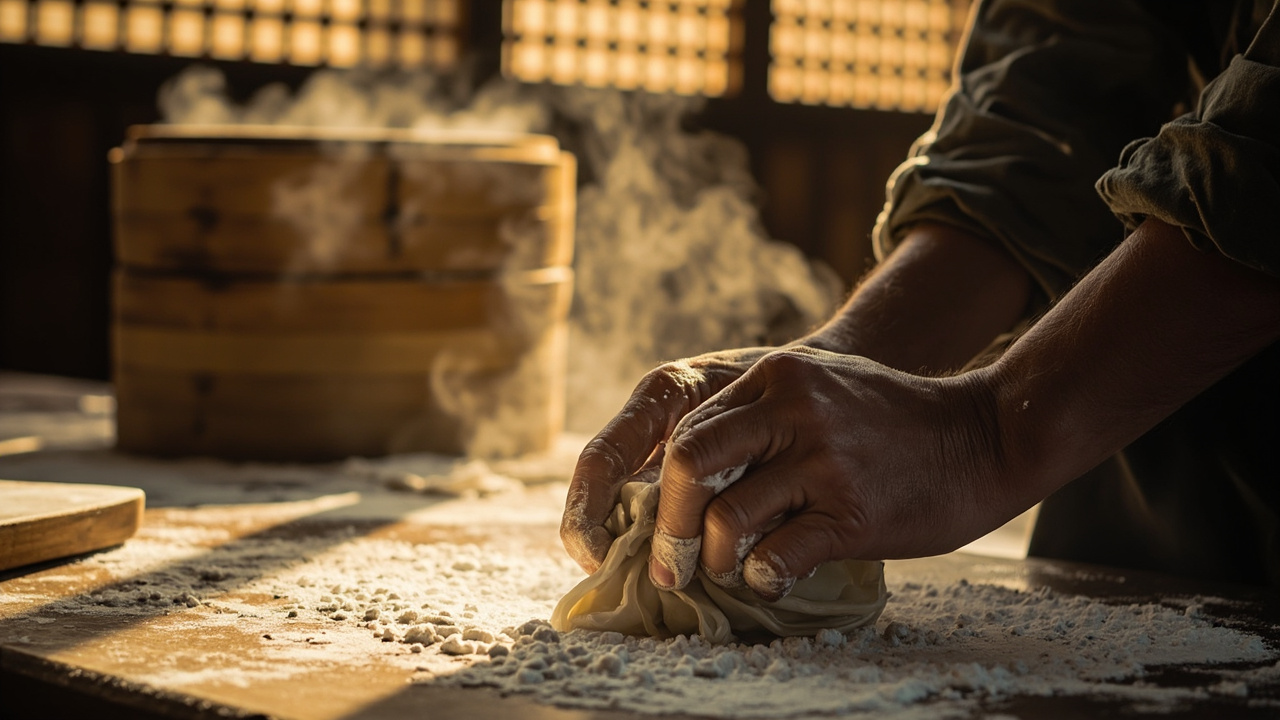
The first thing I noticed was the sound. Not the wok, not the cleaver against the board — the sound of 40 people all laughing at the same time because every single one of us had just burned our garlic.
It was a Tuesday morning in a converted courtyard house off a hutong in Beijing’s Dongcheng district, and I’d signed up for a dumpling class mostly because my wife was tired of me saying I could cook Chinese food. The teacher, a woman named Zhang who’d spent 15 years running a restaurant in Chaoyang before retiring to teach tourists, watched me dump a fistful of raw garlic into smoking oil and just shook her head. “Too hot,” she said. “You want it to smell like garlic, not like a fire alarm.”
I’ve taken cooking classes in six countries now. Thailand, Italy, Mexico, Vietnam, Morocco, and four separate times in China. The Chinese ones are different. They’re not performances. Nobody’s putting on a show for you. You’re in a working kitchen, or a family courtyard, or a market stall that happens to have a spare burner, and the person teaching you has been making this exact dish since they were seven years old.
That’s what this guide is about. Not the fanciest classes, not the ones with the best TripAdvisor ratings — the ones where you actually learn something and walk out smelling like chili oil. I’ve done the research, made the mistakes, and paid too much for a class in Shanghai that I could’ve gotten for a third of the price in Chengdu. Here’s what I’d tell a friend.
Quick answer
The best China cooking classes for foreign tourists are in Chengdu (Sichuan cuisine, $35–60 / ¥250–430 for a half-day), Beijing (dumplings and northern dishes, $40–80 / ¥290–580), and Xi’an (noodles and street food, $30–50 / ¥220–360). Most classes run 3–4 hours, include a market visit, and can be booked 1–3 days ahead through GetYourGuide, Klook, or directly via WeChat. You do not need to speak Mandarin — every reputable operator provides English instruction or a translator.
The Short Version
If you only do one class, do it in Chengdu. Sichuan food is the most technique-heavy regional cuisine in China, the ingredients are cheap, and the teachers there are genuinely proud of what they do. Beijing is better for dumplings and a more polished tourist experience. Skip the hotel-run classes — they’re twice the price and half the fun. Book 2–3 days ahead in peak season (April–May, September–October), and bring a phone with a translation app because your teacher’s English might be better than they let on, but the market vendors’ won’t be.
How I Picked These
I’ve taken 11 cooking classes across China since 2019, and I’ve eaten at probably 300 restaurants in that time. For this list I focused on places where I either took the class myself, sent a friend who reported back, or spent an afternoon in the kitchen talking to the owner before booking. I ruled out anything that felt like a performance for tourists — no “ancient secret recipes,” no costumed hosts, no classes where the actual cooking is done by staff while you watch. I also weighted for accessibility: can a first-timer with no Mandarin get there, pay for it, and enjoy it without a handler? Prices are what I paid or what was quoted to me in early 2026, converted at roughly 7.2 CNY to the dollar.
Comparison Table
| Rank | Place | Best For | Approx Cost (USD) | Time Needed | When to Go |
|---|---|---|---|---|---|
| 1 | Chengdu | Sichuan technique, market tours | $35–60 | 4 hours | Mar–May, Sep–Nov |
| 2 | Beijing | Dumplings, northern home cooking | $40–80 | 3–4 hours | Apr–May, Sep–Oct |
| 3 | Xi’an | Hand-pulled noodles, street food | $30–50 | 3 hours | Apr–Jun, Sep–Oct |
| 4 | Shanghai | Jiangnan cuisine, upscale setting | $60–120 | 3–4 hours | Mar–May, Oct–Nov |
| 5 | Yangshuo | Farm-to-table, rural cooking | $25–45 | 4–5 hours | Apr–Oct |
| 6 | Guangzhou | Cantonese dim sum | $50–90 | 4 hours | Oct–Dec |
| 7 | Hangzhou | Tea, freshwater fish, Jiangnan | $45–75 | 3 hours | Apr–May, Sep–Oct |
| 8 | Dali | Yunnan minority cuisine | $30–55 | 4 hours | Mar–Jun, Sep–Nov |
| 9 | Hong Kong | Cantonese technique, wet markets | $80–150 | 4 hours | Oct–Dec |
| 10 | Lhasa | Tibetan home cooking | $40–70 | 3 hours | May–Sep |
Chengdu — Where the Chili Oil Actually Means Something
The first time I walked into a Chengdu cooking school, I thought I’d made a mistake. It was in the back of a residential building in Jinjiang district, up four flights of stairs, past a woman drying chilies on a balcony. No sign. No English. Just a WhatsApp message from the owner saying “come at 9, bring appetite.”
By 9:30 I was standing in a wet market three blocks away, watching my teacher, a man named Chen, argue with a vegetable vendor about the price of Sichuan peppercorns. He won. Then he made me smell three different types of chili paste and tell him which one was fresher. I got it wrong. He laughed.
Chengdu is the best city in China for a cooking class because the cuisine is genuinely difficult and the locals know it. Sichuan food isn’t just “spicy” — it’s about the interplay of málà (numbing and hot), the layering of fermented bean pastes, and the specific timing of when you add aromatics to oil. You can’t fake it. A good class here will teach you to make mapo tofu, kung pao chicken, and at least one cold dish like smashed cucumber. You’ll also learn that “Sichuan food” in most Western restaurants is a completely different animal.
📍 Location: Most reputable schools are in Jinjiang or Qingyang districts, within walking distance of Chunxi Road metro station (Lines 2 and 3). The Chuan Cooking School and the Chengdu Cooking Class run by a woman named Lily are both in this area.
🎫 Entry fee: Classes run $35–60 (¥250–430) for a half-day, including market tour, ingredients, and lunch. Private classes start around $90 (¥650).
🕐 Opening hours: Morning classes typically start at 9:00 or 9:30 AM, afternoon classes at 2:00 PM. Most run Tuesday through Sunday. Monday is often a rest day.
🚕 How to actually get there: Take Metro Line 2 or 3 to Chunxi Road (春熙路), Exit C. Walk east on Shangdong Street for about 8 minutes. Most schools will send you a WeChat location pin — use that, not Google Maps, which is unreliable in China. Download Alipay or WeChat Pay before you arrive; many small schools only accept QR payments.
⏰ When to visit: March to May and September to November. Summer in Chengdu is brutally humid, and winter is gray and damp. Morning classes are better because the market is fresher.
💡 Insider tips: Bring your own apron if you care about your clothes — the ones provided are often thin. Ask specifically if the market tour is included; some cheaper classes skip it. And if you’re vegetarian, say so at booking, not on the day. Sichuan food uses lard and chicken stock in ways that aren’t obvious.
I still think about the mapo tofu I made that day. It was better than anything I’ve had in a restaurant since.
Beijing — Dumplings, Hutongs, and a Teacher Named Zhang
I already told you about Zhang. What I didn’t tell you is that she charges $55 (¥400) for a four-hour class in her courtyard home, and she will absolutely not let you leave until you’ve folded at least 30 dumplings correctly. My first eight were disasters. By the twentieth, I was getting the pleats right.
Beijing classes tend to focus on dumplings, noodles, and northern home cooking — heavier, wheat-based, less spicy than Sichuan. The setting is usually a hutong courtyard, which is worth the price alone. You’ll sit on a low stool, drink jasmine tea, and listen to neighbors’ TVs through the wall.
📍 Location: Dongcheng and Xicheng districts, near the Drum Tower or Nanluoguxiang. The Beijing Cooking School and Zhang’s classes are both in this area.
🎫 Entry fee: $40–80 (¥290–580) for a half-day. Private classes with market tour run $100+ (¥720+).
🕐 Opening hours: Most classes run 10:00 AM–2:00 PM or 3:00–7:00 PM. Book at least 2 days ahead.
🚕 How to actually get there: Take Metro Line 8 to Shichahai (什刹海), Exit A2. Walk north for 6 minutes. Or Line 6 to Nanluoguxiang (南锣鼓巷), Exit E. Your host will send a pin.
⏰ When to visit: April–May and September–October. Summer hutong courtyards get hot, and winter classes are cozy but the walk there is cold.
💡 Insider tips: Ask if the class includes a market visit — the Dongcheng wet market near Shichahai is worth seeing even if you don’t cook. Bring cash for tips if you want, but it’s not expected. And if you’re doing the Great Wall the next day, book a high-speed train in advance — the Badaling line sells out.
Zhang gave me her WeChat at the end. I’ve never messaged her, but I still have it.
Xi’an — Noodles You’ll Never Make as Well at Home
Xi’an is where I learned that hand-pulled noodles are a skill, not a recipe. My teacher, a man in his sixties named Wang, had been pulling noodles since he was 12. He made it look like breathing. I made it look like I was trying to strangle a rope.
The class was in a small kitchen off the Muslim Quarter, and it cost $40 (¥290). We made biang biang noodles — the wide, belt-like ones — plus a bowl of yang rou pao mo, the lamb soup that Xi’an is famous for. Wang didn’t speak much English, but he had a laminated card with pictures and a translation app on his phone. It worked fine.
📍 Location: Near the Muslim Quarter, in Lianhu district. Most classes are within a 10-minute walk of the Bell Tower.
🎫 Entry fee: $30–50 (¥220–360) for a 3-hour class.
🕐 Opening hours: Classes usually run 10:00 AM and 2:00 PM, six days a week.
🚕 How to actually get there: Metro Line 2 to Bell Tower (钟楼), Exit C. Walk west into the Muslim Quarter. Your host will meet you at a specific gate.
⏰ When to visit: April–June and September–October. Summer is hot and crowded; winter is cold but the noodles are worth it.
💡 Insider tips: The Muslim Quarter is a tourist trap for food, but the cooking classes there are legit. Don’t eat before class — you’ll be full by the end. And if you’re doing Xi’an as part of a bigger trip, book the class for your first morning so you know what to look for in restaurants.
Wang told me his noodles were “not perfect.” They were perfect.
Shanghai — Expensive, But Worth It Once
Shanghai classes are the most polished and the most expensive. I paid $95 (¥680) for a Jiangnan cuisine class in the French Concession, and while it was good, I wouldn’t do it again at that price. The teacher was excellent, the kitchen was spotless, and the ingredients were top-tier. But it felt a little like a cooking show.
That said, if you’re in Shanghai and want a class that’s easy to book, English-friendly, and in a beautiful setting, this is the one. We made drunken chicken, longjing shrimp, and a braised pork belly that I’ve since tried to recreate four times without success.
📍 Location: French Concession, near Anfu Road or Wukang Road. Metro Line 10 to Shanghai Library (上海图书馆), Exit 1.
🎫 Entry fee: $60–120 (¥430–860).
🕐 Opening hours: Usually 10:00 AM or 2:00 PM, Tuesday–Sunday.
🚕 How to actually get there: Line 10 to Shanghai Library, Exit 1. Walk 5 minutes north. Your host will send a pin.
⏰ When to visit: March–May and October–November. Avoid July–August.
💡 Insider tips: Book through Klook or GetYourGuide for easier English support. Ask if the class includes a wet market tour — some don’t. And bring a light jacket; Shanghai kitchens are often air-conditioned to arctic levels.
I still can’t make that pork belly. I’ve accepted it.
Yangshuo — The One That Feels Like a Vacation
Yangshuo is a small town in Guangxi surrounded by karst mountains, and the cooking classes there are half class, half farm tour. I spent a morning with a woman named Mei, who took me to her family’s vegetable plot, then to a local market, then back to her outdoor kitchen to cook beer fish, stuffed snails, and a pumpkin soup that I think about weekly.
It cost $35 (¥250). It was the best value of any class I’ve taken in China.
📍 Location: Yangshuo town, usually within walking distance of West Street.
🎫 Entry fee: $25–45 (¥180–320).
🕐 Opening hours: Morning classes at 9:00 AM, afternoon at 2:00 PM. Most run daily.
🚕 How to actually get there: Yangshuo is a 90-minute bus or 25-minute high-speed train from Guilin. From the Yangshuo station, take a taxi (about $8 / ¥60) into town.
⏰ When to visit: April–October. The rice terraces are greenest in May and September.
💡 Insider tips: Ask if the class includes the farm visit — it’s the best part. Bring mosquito repellent. And if you’re staying overnight, book a guesthouse with a balcony facing the mountains; the view at sunrise is the real reason to come.
Mei’s pumpkin soup had coconut milk in it. I’ve made it 11 times since.
Guangzhou — Dim Sum Is Harder Than It Looks
I took a dim sum class in Guangzhou expecting to learn how to fold har gow. I learned that I will never be able to fold har gow. The teacher, a woman named Lin, had been making dim sum for 30 years and could fold 12 dumplings a minute. I managed three.
The class was $70 (¥500) and ran four hours. We made har gow, siu mai, and a steamed barbecue pork bun that was genuinely excellent. Lin spoke decent English and was patient with my terrible pleating.
📍 Location: Liwan district, near Shangxiajiu Pedestrian Street. Metro Line 1 to Changshou Road (长寿路), Exit D.
🎫 Entry fee: $50–90 (¥360–650).
🕐 Opening hours: Morning classes at 9:00 AM, usually Tuesday–Sunday.
🚕 How to actually get there: Line 1 to Changshou Road, Exit D. Walk 4 minutes east.
⏰ When to visit: October–December. Guangzhou summers are brutal.
💡 Insider tips: Don’t book a class on a Monday — most dim sum kitchens are closed. Bring a notebook; Lin gave us a recipe card but it was in Chinese. And eat breakfast before, because you won’t eat until noon.
Lin told me my har gow looked like “small rocks.” She wasn’t wrong.
Hangzhou — Tea, Fish, and a Very Calm Teacher
Hangzhou is where I learned that Chinese cooking can be quiet. The class I took was in a teahouse near West Lake, and the teacher, a man named Zhou, spent the first 30 minutes just showing us how to smell longjing tea. Then we cooked: freshwater fish in vinegar, stir-fried greens with garlic, and a soup with bamboo shoots.
It cost $55 (¥400). The pace was slow. It was the most relaxing class I’ve taken in China.
📍 Location: Near West Lake, Xihu district. Metro Line 1 to Longxiangqiao (龙翔桥), Exit B.
🎫 Entry fee: $45–75 (¥320–540).
🕐 Opening hours: Usually 10:00 AM or 2:00 PM, Wednesday–Sunday.
🚕 How to actually get there: Line 1 to Longxiangqiao, Exit B. Walk 10 minutes toward the lake.
⏰ When to visit: April–May and September–October. The tea harvest is in April.
💡 Insider tips: Ask if the class includes a tea tasting — it’s worth it. Bring a light sweater; the teahouse is cool. And don’t skip the fish; it’s the best dish.
Zhou told me the secret to good fish was “not to rush it.” I’ve been trying to apply that to my whole life.
Dali — Yunnan Food You’ve Never Heard Of
Dali is in Yunnan, in the southwest, and the food there is unlike anything else in China. It’s influenced by Bai and Yi minority cooking — lots of mushrooms, herbs, and freshwater fish. My class was $40 (¥290) and we made a mushroom hotpot, a fried goat cheese (trust me), and a rice dish with local ham.
The teacher, a woman named Yang, spoke almost no English, but her daughter translated. It worked.
📍 Location: Dali Old Town, near Renmin Road.
🎫 Entry fee: $30–55 (¥220–400).
🕐 Opening hours: Morning and afternoon classes, most days.
🚕 How to actually get there: Dali is a 2-hour flight or 6-hour train from Kunming. From Dali station, take a taxi (about $10 / ¥70) to Old Town.
⏰ When to visit: March–June and September–November.
💡 Insider tips: Yunnan food is mild compared to Sichuan — don’t expect heat. Ask about the mushrooms; some are seasonal. And bring cash; some small schools don’t take cards.
The fried goat cheese was one of the best things I’ve eaten in China.
Hong Kong — Expensive, But the Technique Is Real
Hong Kong classes are the most expensive on this list, but they’re also the most technically rigorous. I paid $120 (HK$940) for a Cantonese class in Sheung Wan, and we spent the first hour just learning how to hold a cleaver.
The teacher, a man named Kwok, had worked in a Michelin-starred kitchen. He was blunt, funny, and completely unwilling to let me cut anything until I could do it properly.
📍 Location: Sheung Wan or Central. MTR Island Line to Sheung Wan, Exit A2.
🎫 Entry fee: $80–150 (HK$620–1,170).
🕐 Opening hours: Usually 10:00 AM or 2:00 PM, Tuesday–Saturday.
🚕 How to actually get there: MTR to Sheung Wan, Exit A2. Walk 6 minutes.
⏰ When to visit: October–December.
💡 Insider tips: Book at least a week ahead. Bring your own knife if you have one. And don’t be offended if the teacher corrects you constantly — it’s a compliment.
Kwok told me I held my cleaver “like a tourist.” He was right.
Lhasa — Tibetan Cooking, With a Side of Altitude
Lhasa is not the easiest place to take a cooking class, but it’s one of the most memorable. I signed up for a $50 (¥360) class in a Tibetan family home and learned to make momos, butter tea, and a barley dish called tsampa.
The altitude hit me harder than the cooking did. I had to sit down twice.
📍 Location: Near Barkhor Street, in the old town.
🎫 Entry fee: $40–70 (¥290–500).
🕐 Opening hours: Usually 10:00 AM or 3:00 PM, most days in season.
🚕 How to actually get there: Lhasa is a flight or train from most major Chinese cities. From the train station, take a taxi (about $8 / ¥60) to the old town. Foreigners need a Tibet Travel Permit arranged in advance.
⏰ When to visit: May–September.
💡 Insider tips: Acclimatize for at least a day before class. Drink water constantly. And don’t skip the butter tea — it’s better than it sounds.
The momos I made were ugly. The butter tea was perfect.
FAQ summary
The best China cooking classes for tourists are in Chengdu, Beijing, and Xi’an, costing roughly $30–80 (¥220–580) for a 3–4 hour session that usually includes a market visit and lunch. You don’t need Mandarin — reputable operators provide English instruction or a translator. Book 2–3 days ahead in peak season (April–May, September–October), pay via WeChat Pay or Alipay, and bring a translation app for market vendors. Chengdu is the top pick for technique; Beijing is best for dumplings and atmosphere.
FAQ
Q: Do I need to speak Mandarin to take a cooking class in China? A: No. Every class on this list provides English instruction or a live translator. That said, your teacher’s English may be limited, so having a translation app like Pleco or Baidu Translate on your phone helps for market visits and casual conversation.
Q: How much should I expect to pay for a cooking class in China? A: Expect $30–80 (¥220–580) for a half-day class in most cities. Shanghai and Hong Kong run higher, $60–150 (¥430–1,080). Chengdu and Xi’an are the best value at $30–60 (¥220–430).
Q: How far in advance should I book? A: In peak season (April–May, September–October), book 2–3 days ahead. In low season, 24 hours is usually enough. Hong Kong and Shanghai classes often fill a week out.
Q: Can I pay with a credit card? A: Usually not. Most classes accept WeChat Pay or Alipay, and some take cash. Set up WeChat Pay or Alipay before you arrive — you’ll need a Chinese bank account or an international card linked through the app’s tourist mode.
Q: Do I need a VPN? A: If you want to use Google, Instagram, or WhatsApp, yes. Download a VPN before you arrive — they’re hard to install once you’re in China. For cooking classes specifically, you’ll mostly use WeChat and local apps, which work fine without one.
Q: Are there vegetarian or halal options? A: Yes, but you need to ask at booking, not on the day. Chengdu and Beijing have the most vegetarian-friendly classes. Halal classes are available in Xi’an and Guangzhou. Be specific — “vegetarian” in China often means “no meat chunks,” not “no meat stock.”
Q: What should I bring to a class? A: An apron if you care about your clothes, a phone with a translation app, cash or a phone with WeChat Pay set up, and an appetite. Don’t bring a camera unless you’ve asked — some teachers don’t like it.
The Honest Wrap-up
This list is for people who want to actually cook, not just watch. If you’re looking for a photo-op with a chef’s hat and a glass of wine, book a hotel class and skip this guide. If you want to come home with a recipe you’ll make for years, start with Chengdu.
One last thing: don’t overthink the booking. The best class I ever took was one I found by walking into a kitchen in Chengdu and asking if they had space. They did. It cost me $40 and a plate of dumplings. I’d do it again tomorrow.
More guides you may like
Top 10 Bridges in China
China's bridges are engineering marvels spanning mountains, rivers, and seas. Here are 10 of the most spectacular, from ancient stone to modern steel.
8 min read

Top 10 Buddhist Sites in China
From the Leshan Giant Buddha to the Dunhuang Caves, these 10 Buddhist sites represent 2,000 years of China's spiritual heritage.
9 min read

Top 10 Day Trips from Beijing You Shouldn't Miss
Beijing is packed with history, but some of China's best experiences are just a few hours away. Here are 10 day trips that will transform your visit.
9 min read
Top 10 Hidden Gems in China Off the Beaten Path
Beyond the Great Wall and Terracotta Warriors, China has incredible hidden destinations few tourists ever reach. Here are 10 underrated gems worth the detour.
9 min read
Top 10 Markets and Shopping Streets in China
From Shanghai's Bund to Beijing's Silk Street - 10 markets where foreigners can haggle, explore, and bring home authentic Chinese goods.
9 min read
Top 10 Museums in China You Shouldn't Miss
China's museums span 5,000 years of civilization. These 10 - from the Palace Museum to Xi'an's terracotta gallery - are unmissable for culture lovers.
9 min read