
China Solo Female Travel Guide
TODO: Extract from article (100-160 chars)
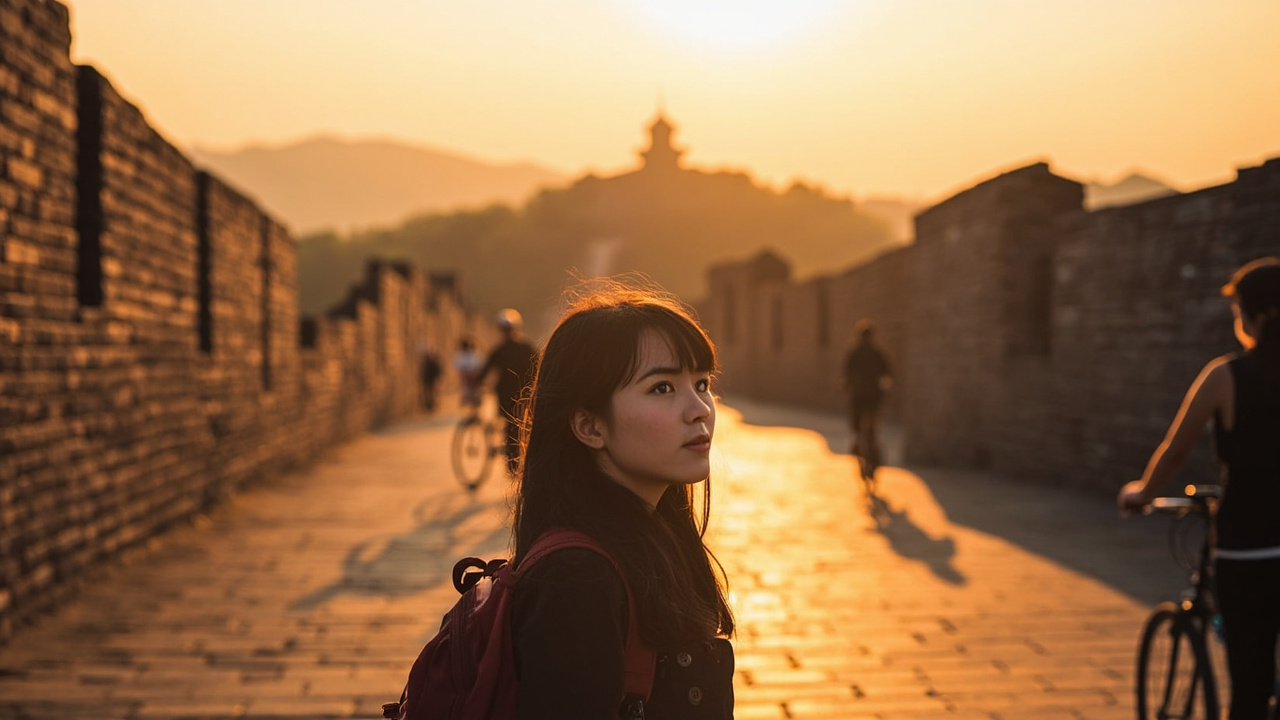
China Solo Female Travel Guide
The woman at the Xi’an hostel front desk looked at my passport, then at me, then back at the passport. “You’re traveling alone? For how long?” Three weeks, I said. She slid a paper map across the counter and circled three streets near the Muslim Quarter. “Don’t eat at the places with English menus,” she said. “Walk one block past them. That’s where I eat.” I followed her advice that night and ended up at a stall where the owner, a man in his sixties, handed me a plastic stool, pointed at a bubbling pot of yangrou paomo, and tore bread into my bowl with his bare hands before I could object. It was the best meal of the trip. It cost 18 yuan.
That’s the thing about traveling China solo as a woman. The country has a reputation abroad that doesn’t match the lived reality. What I found over seven years and more than 40 trips was a place where the biggest risks are usually logistical (getting lost, misreading a bus schedule, underestimating how far the Great Wall entrance is from the parking lot) rather than personal. Where I got stared at on the subway in smaller cities, but also where a grandmother in Chengdu pulled me into a park dance circle and refused to let me leave until I’d learned the steps. Where the language barrier is real and constant, but translation apps and the sheer helpfulness of strangers close the gap faster than you’d expect.
This guide is for the woman who’s booked the flight or is about to. It covers ten places I’d send a first-time solo female traveler, with the specific logistics that actually matter: which exit to take, what things cost, when to go, and the small things locals know that no English-language blog told me.
Quick answer
China is one of the safest countries in the world for solo female travelers, with violent crime against tourists being extremely rare and street harassment far less common than in most Western cities. As of 2026, citizens of 50+ countries including the US, UK, Australia, and most of the EU can enter visa-free for up to 30 days, and 240-hour (10-day) visa-free transit is available for 55 countries. Budget roughly $60–120 per day (430–860 CNY) for mid-range solo travel including accommodation, food, and transport. The main challenges are language (download a translation app before you land) and payments (set up Alipay or WeChat Pay in advance, since cash is increasingly awkward).
The Short Version
Go. China is safer than most people assume and more logistically annoying than most people expect. Set up Alipay before you fly, download Pleco and Baidu Maps, and don’t overthink the safety question. Stick to the eastern corridor (Beijing–Xi’an–Shanghai–Chengdu) for a first trip. Avoid overnight buses. Trust the high-speed rail. And yes, you can drink the tap water question is settled: don’t, but bottled water is everywhere for 2 yuan.
How I Picked These
I’ve spent seven years based in Beijing and traveled through China more than 40 times, mostly solo, sometimes with a partner. The ten places below are the ones I’d send a female friend on her first trip, filtered through three criteria: safety and ease of navigation for a non-Mandarin speaker, genuine payoff for the effort of getting there, and whether I’d go back myself. I ruled out places where solo women consistently report discomfort (a few remote trailheads in Yunnan, certain border towns), and I skipped the obvious tourist traps that eat three days and give you nothing. Every entry below is somewhere I’ve personally stayed at least two nights.
Comparison Table
| Rank | Place | Best For | Approx Cost (USD/day) | Time Needed | When to Go |
|---|---|---|---|---|---|
| 1 | Beijing | First-timers, history, infrastructure | $90–130 | 4–5 days | Apr–May, Sep–Oct |
| 2 | Xi’an | Terracotta Warriors, food, walkability | $60–90 | 2–3 days | Mar–May, Sep–Nov |
| 3 | Shanghai | Urban comfort, nightlife, day trips | $110–160 | 3–4 days | Mar–May, Oct–Nov |
| 4 | Chengdu | Pandas, tea houses, relaxed pace | $55–85 | 3–4 days | Mar–Jun, Sep–Nov |
| 5 | Guilin & Yangshuo | Karst scenery, cycling, river | $50–80 | 3–4 days | Apr–May, Sep–Oct |
| 6 | Hangzhou | Tea culture, lake, easy from Shanghai | $70–100 | 2 days | Mar–May, Sep–Nov |
| 7 | Suzhou | Gardens, canals, silk | $65–95 | 2 days | Apr–May, Oct–Nov |
| 8 | Zhangjiajie | Avatar mountains, hiking | $60–90 | 3 days | Apr–Jun, Sep–Oct |
| 9 | Hong Kong | Easiest entry, English-friendly | $130–180 | 3–4 days | Oct–Dec |
| 10 | Dali & Lijiang | Old towns, slower Yunnan | $45–75 | 4–5 days | Mar–May, Sep–Nov |
Beijing — Where Everything Is Bigger Than You Expect
My first week in Beijing, I got lost in the hutongs near the Drum Tower for two hours. No phone signal in the alleys, no English anywhere, and a growing sense that I’d somehow wandered into someone’s private courtyard. An elderly man on a bicycle finally pointed me toward Gulou Dongdajie and laughed when I thanked him in broken Mandarin. “Meiguoren?” he asked. American, yes. He nodded, said something I didn’t catch, and pedaled off. That’s Beijing. Massive, disorienting, and full of people who’ll help you the second you look lost.
The city is the best starting point for a first China trip because the infrastructure is built for exactly this. Subway signs are bilingual. Attendants at major stations speak enough English to sell you a ticket. And the scale of the historical sites — the Forbidden City, the Temple of Heaven, the Great Wall at Mutianyu — is genuinely worth the jet lag.
📍 Location: Base yourself in Dongcheng District near Nanluoguxiang or the Drum Tower. Walkable to hutongs, 20 minutes by subway to Tiananmen.
🎫 Entry fee: Forbidden City 60 CNY ($8.50), Temple of Heaven 35 CNY ($5), Mutianyu Great Wall 45 CNY ($6.50) plus 120 CNY ($17) for the cable car.
🕒 Opening hours: Forbidden City 8:30am–5pm (closed Mondays), Temple of Heaven 6am–10pm for the park, 8am–5:30pm for the main halls.
🚇 How to get there: From Beijing Capital or Daxing Airport, take the Airport Express to Dongzhimen, transfer to Line 2. For the Forbidden City, take Line 1 to Tiananmen East, Exit A. For Mutianyu, book a shared van ($25–35) or take bus 916 from Dongzhimen to Huairou, then a local taxi.
⏰ When to visit: April–May and September–October. Avoid Chinese New Year and the first week of October (National Day), when the Forbidden City sells out days ahead.
💡 Insider tips: Book Forbidden City tickets on the official WeChat mini-program 7 days in advance — they release at midnight Beijing time and sell out. The east side of the Forbidden City (the treasure gallery) is less crowded than the central axis. For the Great Wall, Mutianyu is the easiest solo option; skip Badaling unless you enjoy crowds. And download Didi (China’s Uber) — it works with an international card and is safer than hailing taxis at night.
I still think about the jianbing (savory crepe) I bought from a cart near the Drum Tower every morning for 8 yuan ($1.15). The woman who ran it started recognizing me by day three and would add extra baocui (crispy cracker) without being asked.
Xi’an — The City That Surprised Me Most
I expected Xi’an to be a one-stop trip for the Terracotta Warriors. I stayed four days. The Muslim Quarter at night is loud and smoky and overwhelming in the best way, and the city walls are wide enough to cycle on (rent a bike for 45 CNY / $6.50 and do the full 14km loop at sunset). What got me was the food. Xi’an is where Chinese cuisine stops being a monolith and starts being regional in a way you can taste.
The Terracotta Warriors are genuinely worth the hype, but go early and go with a guide or an audio guide — otherwise they’re just a lot of clay soldiers in a big pit. The real Xi’an is in the backstreets around the Bell Tower, where you’ll find roujiamo (Chinese “hamburger”) for 10 yuan and biangbiang noodles the width of your belt.
📍 Location: Stay inside the city walls, near the Bell Tower or South Gate. Everything central is walkable.
🎫 Entry fee: Terracotta Warriors 120 CNY ($17), city wall 54 CNY ($7.75), Big Wild Goose Pagoda 50 CNY ($7).
🕒 Opening hours: Warriors 8:30am–6pm (March–November), 8:30am–5:30pm (winter). City wall 8am–10pm.
🚇 How to get there: High-speed rail from Beijing West to Xi’an North takes 4.5–6 hours ($75–110). From Xi’an North, take Metro Line 2 to Bell Tower. For the Warriors, take Line 2 to Beidajie, transfer to Line 1, then bus 306 (green bus, 7 yuan) from the east square of the train station.
⏰ When to visit: March–May and September–November. Summer is brutally hot and the Warriors site has almost no shade.
💡 Insider tips: Buy Terracotta Warriors tickets on the official WeChat account at least 2 days ahead. The site has three pits — start with Pit 1 (the big one), then Pit 3, then Pit 2, which is the most underrated. Skip the “factory tour” that some tours tack on; it’s a jade shop. And the Muslim Quarter is best explored between 6–9pm, but eat at stalls with the longest local queues, not the ones with English signs.
A woman running a small noodle shop near the South Gate refused to let me pay for my second bowl of biangbiang. “You came back,” she said in Mandarin I barely understood. “That’s enough.”
Shanghai — The Easy Mode of China
Shanghai is where I’d send a nervous first-timer if Beijing feels like too much. It’s the most international city in mainland China, English is common in the central districts, and the metro is genuinely world-class. It’s also the least “Chinese-feeling” city in the country, which is either a feature or a bug depending on what you want.
I lived in Shanghai for a year and never stopped loving the contrast between the Bund’s colonial architecture and the sci-fi skyline of Pudong across the river. The French Concession is where you’ll spend most of your wandering time — plane-tree-lined streets, coffee shops, and the kind of quiet that’s hard to find elsewhere in China.
📍 Location: Jing’an or the French Concession (Xuhui District) for atmosphere. People’s Square for maximum transit convenience.
🎫 Entry fee: The Bund is free. Shanghai Museum is free (book ahead). Yu Garden 40 CNY ($5.75). Shanghai Tower observation deck 180 CNY ($26).
🕒 Opening hours: The Bund 24 hours. Shanghai Museum 9am–5pm (closed Mondays). Yu Garden 8:45am–4:45pm.
🚇 How to get there: From Pudong Airport, take Metro Line 2 (55 minutes, 8 yuan) or the Maglev to Longyang Road then transfer. From Hongqiao, Line 2 or 10 directly into the center.
⏰ When to visit: March–May and October–November. Summer is humid and unpleasant; winter is cold and gray.
💡 Insider tips: The Bund is best at 6–7am, when it’s just you and the tai chi practitioners. The Bund Sightseeing Tunnel is a tourist trap — skip it. For a cheap river crossing, take the public ferry (2 yuan) from Jinling East Road instead of the tourist boats. And if you want a day trip, Hangzhou is 45 minutes by high-speed rail.
I met a woman named Lily at a coffee shop in the French Concession who’d moved from Chengdu five years earlier. She told me the thing I’ve repeated to every solo female traveler since: “Shanghai is safe, but it’s also lonely if you don’t speak Chinese. Join a language exchange on Meetup or a WeChat group. Otherwise you’ll spend two weeks talking to no one.”
Chengdu — The City That Made Me Slow Down
Chengdu is the only Chinese city where I’ve lost entire afternoons doing nothing and felt fine about it. The tea houses are the reason. You sit, you order a cup of jasmine tea for 20 yuan, a woman comes by every 20 minutes to refill your thermos with hot water, and suddenly three hours have passed. Nobody rushes you. Nobody cares.
The pandas are the draw, and they’re worth it, but go early — by 10am they’re asleep and the crowds are unbearable. The real Chengdu is in the parks, where retirees dance, play mahjong, and practice calligraphy with water on the pavement.
📍 Location: Stay near Chunxi Road or Taikoo Li for central access. The Panda Base is northeast of the city.
🎫 Entry fee: Panda Base 55 CNY ($8), Wenshu Monastery free, People’s Park free.
🕒 Opening hours: Panda Base 7:30am–6pm (arrive by 7:30am). Tea houses generally 9am–11pm.
🚇 How to get there: From Chengdu East or North Railway Station, Metro Line 2 or 7 to central stops. For the Panda Base, take Line 3 to Panda Avenue, then a shuttle bus (2 yuan) or walk 15 minutes.
⏰ When to visit: March–June and September–November. Summer is hot and humid; winter is gray but mild.
💡 Insider tips: Buy Panda Base tickets on the official WeChat account the day before. Go to the nursery first, then the adult enclosures. The tea house at People’s Park (Heming Teahouse) is the classic, but the smaller ones in Wangjianglou Park are quieter. And Chengdu is where you should try hotpot — but ask for 微辣 (wei la, mildly spicy), which is still spicy.
A woman at Heming Teahouse, maybe 70, sat down at my table without asking, poured me tea, and started telling me about her grandson in Shenzhen. I understood maybe 20% of it. It didn’t matter.
Guilin & Yangshuo — The Postcard That’s Actually Real
The karst mountains around Guilin look fake in photos. They’re not. I took the Li River cruise from Guilin to Yangshuo on a gray, drizzly morning and spent four hours on the top deck in a light jacket, watching the peaks emerge and disappear in the mist. It’s the closest thing to a Chinese landscape painting I’ve experienced.
Yangshuo itself is touristy — the West Street area is basically a backpacker theme park — but rent a bike and get 20 minutes out of town and it’s a different world. Rice paddies, water buffalo, and small villages where nobody speaks English and nobody cares that you don’t speak Mandarin.
📍 Location: Stay in Yangshuo (not Guilin) for the scenery. The Yulong River area is quieter than West Street.
🎫 Entry fee: Li River cruise 210–450 CNY ($30–65) depending on boat class. Yulong River bamboo raft 200 CNY ($29). Moon Hill 15 CNY ($2).
🕒 Opening hours: Cruises depart 9–11am. Rafts run 8am–5pm.
🚇 How to get there: High-speed rail from Guilin to Yangshuo takes 30 minutes ($4). From Yangshuo Station, take the shuttle bus to the town center (20 yuan). The Li River cruise departs from Zhujiang Pier, about 40 minutes from Guilin city.
⏰ When to visit: April–May and September–October. Summer is hot and crowded; winter is misty and cold but atmospheric.
💡 Insider tips: The Li River cruise is one-way — you end in Yangshuo, so plan to stay there. Book the cruise through your hotel, not a street agent. Rent an e-bike (80–100 CNY/day) instead of a regular bike if you’re not a cyclist; the hills are real. And the “impression” light show is expensive and skippable.
I got caught in a downpour on the Yulong River and sheltered under a farmer’s tarp for 40 minutes. He didn’t speak a word of English. He gave me a mandarin orange and we sat in silence. Best 40 minutes of the trip.
Hangzhou — The Day Trip That Deserves Two Days
I went to Hangzhou expecting a quick escape from Shanghai. I stayed three nights. West Lake is the obvious draw, and it’s genuinely beautiful, but the city’s real charm is in the tea villages in the hills above the lake. Longjing (Dragon Well) tea is grown here, and you can walk through the terraces, sit in a farmer’s courtyard, and drink tea that was picked that morning.
It’s also the most romanticized city in China — every Chinese person I’ve met has a strong opinion about Hangzhou, usually involving a poem or a legend. That cultural weight is part of the appeal.
📍 Location: Stay near West Lake (Hubin area) or in the Longjing tea village if you want quiet.
🎫 Entry fee: West Lake free. Lingyin Temple 45 CNY ($6.50) plus 30 CNY ($4.30) for the temple itself. Longjing Village free to walk.
🕒 Opening hours: West Lake 24 hours. Lingyin Temple 7am–6pm.
🚇 How to get there: High-speed rail from Shanghai Hongqiao to Hangzhou East takes 45–60 minutes ($10–15). From Hangzhou East, Metro Line 1 to Longxiangqiao for West Lake.
⏰ When to visit: March–May (tea season) and September–November. Avoid summer weekends — West Lake gets packed with domestic tourists.
💡 Insider tips: Rent a bike and cycle the Su Causeway early in the morning. Skip the boat tours — they’re crowded and overpriced. In Longjing Village, buy tea directly from a farmer, not a shop; expect to pay 200–600 CNY ($29–86) per 50g for good stuff. And the Hefang Street “ancient” street is a reconstruction — skip it.
A tea farmer named Mr. Chen poured me four cups of Longjing in his courtyard and refused payment. “You came all this way,” he said. “This is hospitality, not business.” I bought two tins anyway.
Suzhou — The Gardens That Reward Patience
Suzhou is 30 minutes from Shanghai by high-speed rail and feels like a different century. The classical gardens are UNESCO sites, and the best ones — the Humble Administrator’s Garden, the Master of the Nets — are genuinely worth the ticket. But the city’s real pleasure is the canals. Walk along Pingjiang Road at dusk, when the lanterns come on and the tourists thin out, and you’ll understand why Suzhou is called the Venice of the East.
I went on a Tuesday in April and had whole gardens almost to myself. Go on a weekday, go early, and don’t try to see more than two gardens in a day.
📍 Location: Stay near Pingjiang Road or the Guanqian Street area.
🎫 Entry fee: Humble Administrator’s Garden 80 CNY ($11.50), Master of the Nets 40 CNY ($5.75), Lion Grove 40 CNY ($5.75).
🕒 Opening hours: Gardens generally 7:30am–5:30pm. Pingjiang Road is always open.
🚇 How to get there: High-speed rail from Shanghai to Suzhou takes 25–35 minutes ($6–10). From Suzhou Station, Metro Line 4 to Chayuanchang for the gardens.
⏰ When to visit: April–May and October–November. Weekdays only if you can manage it.
💡 Insider tips: Buy garden tickets on the Suzhou Garden WeChat account. The Humble Administrator’s Garden is the most famous but also the most crowded — go at 7:30am opening. The Master of the Nets is smaller and quieter. And the Suzhou Museum (designed by I.M. Pei) is free and worth an hour.
I got lost on a canal-side alley and ended up in a residential courtyard where three women were doing laundry in a stone basin. One of them pointed me back toward the main road and gave me a piece of candied ginger. I still don’t know what street I was on.
Zhangjiajie — The Mountains That Inspired Avatar
The floating peaks of Zhangjiajie are the ones from Avatar, and yes, they’re real. They’re also genuinely difficult to see if the weather doesn’t cooperate — I spent two days in fog before the clouds lifted on the third morning and the pillars appeared. Worth the wait.
This is the most physically demanding place on this list. The trails are steep, the cable cars have long queues, and the park is enormous. It’s doable solo, but you need to plan your routes the night before.
📍 Location: Stay in Wulingyuan (the town at the park entrance), not Zhangjiajie city, which is 40 minutes away.
🎫 Entry fee: 228 CNY ($33) for a 4-day park pass. Cable cars and the Bailong Elevator are extra (65–76 CNY / $9–11 each).
🕒 Opening hours: Park 7am–6pm. Cable cars 7:30am–5:30pm.
🚇 How to get there: High-speed rail from Changsha to Zhangjiajie West takes 2.5 hours ($20). From the station, take a bus or Didi to Wulingyuan (40 minutes, 30–50 CNY).
⏰ When to visit: April–June and September–October. Avoid July–August (rainy and crowded) and Chinese holidays.
💡 Insider tips: Buy the park pass on the official WeChat account. Start at the Bailong Elevator (the glass one) early to avoid the queue. The Golden Whip Stream trail is the easiest and most beautiful — flat, 7.5km, follow the water. And bring a rain jacket; the weather changes fast.
A woman from Guangzhou shared my cable car and told me she’d come specifically because her son loved Avatar. “He’s 8,” she said. “He thinks this is where the movie was filmed. I’m not going to correct him.”
Hong Kong — The Easiest Entry Point
If you’re nervous about mainland China, start in Hong Kong. It’s technically a separate jurisdiction, English is widely spoken, the MTR is one of the best metro systems in the world, and you can ease into the China experience without the language barrier. Then take the high-speed rail to Shenzhen or Guangzhou when you’re ready.
I used Hong Kong as my reset button every few months when I lived in Beijing. The food, the efficiency, the sheer walkability of it — it’s a different rhythm from the mainland.
📍 Location: Stay in Central, Sheung Wan, or Tsim Sha Tsui depending on your budget.
🎫 Entry fee: Most sights free. Peak Tram 62 HKD ($8) round trip. Tian Tan Buddha cable car 270 HKD ($35).
🕒 Opening hours: Varies. Most temples 6am–6pm.
🚇 How to get there: Direct flights from most major cities. From the airport, take the Airport Express (115 HKD / $15) or bus A21 to Tsim Sha Tsui (33 HKD / $4).
⏰ When to visit: October–December. Avoid summer (hot and humid) and Chinese New Year.
💡 Insider tips: Get an Octopus card at the airport — it works on the MTR, buses, ferries, and convenience stores. The Star Ferry (4 HKD / $0.50) is the best value sightseeing in the city. And the Mid-Levels Escalator is a great way to see the city without walking uphill.
A taxi driver named Mr. Wong drove me from Central to Stanley and spent the whole 30 minutes explaining Hong Kong’s history. He’d been driving for 40 years. “You’re alone?” he asked. “Good. Hong Kong is safe. Just don’t go to Chungking Mansions at 2am.”
Dali & Lijiang — The Yunnan Slowdown
Yunnan is where Chinese tourists go to slow down, and Dali and Lijiang are the two classic stops. Dali is the more relaxed of the two — a walled old town on a lake, with mountains behind it and a strong backpacker and digital nomad scene. Lijiang is more polished and more touristy, but the Naxi minority culture and the surrounding villages are worth the trip.
I spent five days in Dali and did almost nothing. Cycled around Erhai Lake, drank coffee, ate rice noodles for breakfast every day. It was exactly what I needed.
📍 Location: Dali Old Town (not Xiaguan, the modern city). Lijiang Old Town for the second stop.
🎫 Entry fee: Dali Old Town free. Three Pagodas 75 CNY ($11). Lijiang Old Town maintenance fee 50 CNY ($7).
🕒 Opening hours: Old towns always open. Three Pagodas 8am–6pm.
🚇 How to get there: Fly to Dali or Lijiang from major cities, or take the high-speed rail from Kunming (2 hours to Dali, 3 hours to Lijiang).
⏰ When to visit: March–May and September–November. Winter is cold at altitude; summer is rainy.
💡 Insider tips: Dali’s old town is walkable but the lake is 15km away — rent an e-bike or take a Didi. Lijiang’s old town is a maze; download an offline map. And the altitude in Lijiang (2,400m) can affect you — take it easy the first day.
A guesthouse owner in Dali, a woman from Beijing who’d moved there five years earlier, told me the thing I’ve told every solo traveler since: “Yunnan is where Chinese people go to remember how to relax. You should do the same. Don’t schedule anything for the first two days.”
FAQ summary
China is statistically very safe for solo female travelers, with violent crime against tourists being rare and street harassment less common than in most Western cities. The main practical hurdles are language (download a translation app before arrival) and payments (set up Alipay or WeChat Pay in advance). As of 2026, most Western passport holders can enter visa-free for up to 30 days, and 240-hour visa-free transit is available for 55 countries. Budget $60–120 per day for mid-range solo travel, use high-speed rail for intercity transport, and stick to the eastern corridor (Beijing–Xi’an–Shanghai–Chengdu) for a first trip.
FAQ
Q: Is China safe for a solo female traveler? A: Yes, statistically safer than most Western countries for violent crime. Petty theft is rare, and street harassment is uncommon. The main risks are logistical — getting lost, scams at tourist sites, and overpaying for taxis. Use Didi instead of hailing cabs, and stay aware in crowded tourist areas.
Q: Do I need a visa to visit China in 2026? A: As of 2026, citizens of 50+ countries including the US, UK, Australia, and most of the EU can enter visa-free for up to 30 days. There’s also a 240-hour (10-day) visa-free transit policy for 55 countries if you’re passing through to a third country. Check the current visa rules before booking.
Q: Can I use my credit card in China? A: Rarely. China runs on Alipay and WeChat Pay, both of which now accept international cards. Set them up before you arrive — you’ll need your passport and a phone number. Cash works but is increasingly awkward. See the payment guide for setup steps.
Q: Do I need a VPN in China? A: Yes, if you want to use Google, Instagram, WhatsApp, or most Western apps. Download and test a VPN before you fly — they’re hard to install once you’re inside China. Alternatively, buy an eSIM with international roaming, which bypasses the firewall. See the SIM and internet guide.
Q: How much does a solo trip to China cost? A: Budget $60–120 per day (430–860 CNY) for mid-range travel including accommodation, food, and transport. Hostels run $15–30/night, mid-range hotels $50–100. High-speed rail between major cities is $30–110 per leg. Street food meals are $2–5; restaurant meals $8–20.
Q: Is English widely spoken in China? A: Not in most places. Major tourist sites, international hotels, and big-city metro stations have English signage, but restaurants, taxis, and small shops usually don’t. Download a translation app (Google Translate works offline if you pre-download Chinese; Pleco is better for reading characters) and learn a few basics.
Q: What should I do if I get sick or need a doctor? A: International hospitals in Beijing, Shanghai, and Hong Kong have English-speaking staff. Elsewhere, use a translation app and go to a public hospital. Travel insurance with medical evacuation coverage is essential — a hospital visit can cost $200–500 without it. Pharmacies (药店, yàodiàn) are everywhere and can help with basic issues.
The Honest Wrap-up
This list is for the woman who wants to see China but is nervous about doing it alone. It’s not for someone looking for a party trip or a luxury resort experience — China isn’t that, and trying to make it that will leave you frustrated. It’s also not for someone who needs everything in English; you’ll be uncomfortable, and that’s part of the point.
If you’re about to book the flight: do it. Set up Alipay and a VPN the week before you leave. Book your first two nights in Beijing or Shanghai so you have a soft landing. Then trust the high-speed rail, trust the translation app, and trust the woman at the hostel front desk who circles three streets on a paper map. She knows what she’s talking about.
More guides you may like

Top 10 Bridges in China
China's bridges are engineering marvels spanning mountains, rivers, and seas. Here are 10 of the most spectacular, from ancient stone to modern steel.
8 min read

Top 10 Buddhist Sites in China
From the Leshan Giant Buddha to the Dunhuang Caves, these 10 Buddhist sites represent 2,000 years of China's spiritual heritage.
9 min read

Top 10 Day Trips from Beijing You Shouldn't Miss
Beijing is packed with history, but some of China's best experiences are just a few hours away. Here are 10 day trips that will transform your visit.
9 min read

Top 10 Hidden Gems in China Off the Beaten Path
Beyond the Great Wall and Terracotta Warriors, China has incredible hidden destinations few tourists ever reach. Here are 10 underrated gems worth the detour.
9 min read

Top 10 Markets and Shopping Streets in China
From Shanghai's Bund to Beijing's Silk Street - 10 markets where foreigners can haggle, explore, and bring home authentic Chinese goods.
9 min read

Top 10 Museums in China You Shouldn't Miss
China's museums span 5,000 years of civilization. These 10 - from the Palace Museum to Xi'an's terracotta gallery - are unmissable for culture lovers.
9 min read