
Mutianyu Great Wall Guide
The first thing I noticed wasn't the wall. It was the silence. I'd braced myself for the Badaling experience everyone warns you about — the selfie sticks,…
Mutianyu Great Wall Guide
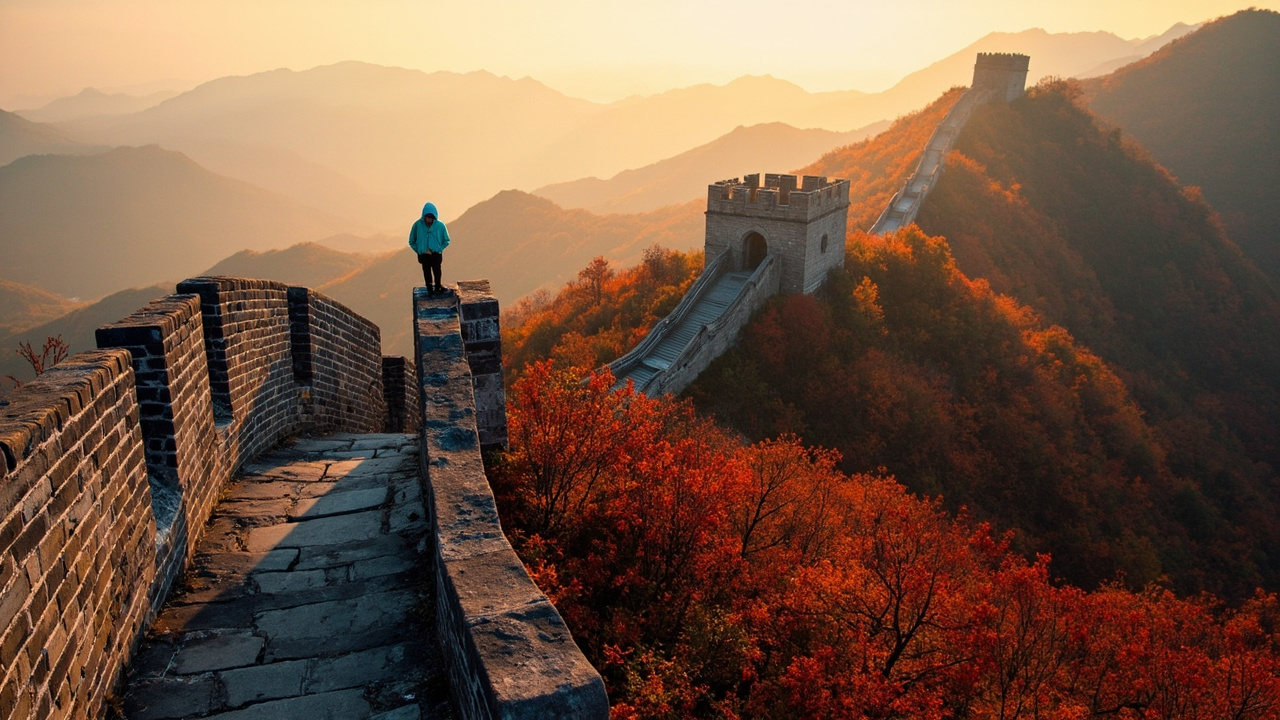
The first thing I noticed wasn’t the wall. It was the silence. I’d braced myself for the Badaling experience everyone warns you about — the selfie sticks, the tour-group megaphones, the guy selling “I climbed the Great Wall” medals at the exit. Instead, at 8:40 on a Tuesday morning in October, I stood on a watchtower at Mutianyu with maybe six other people, watching fog peel off the ridgeline like someone pulling back a blanket. A woman in her sixties from Ohio was crying quietly next to me. I pretended not to notice. Then a hawk drifted past below our feet, and I understood why the Ming dynasty generals picked this exact ridge to build on.
Mutianyu is the section of the Great Wall most first-time visitors should choose, and I’ll defend that opinion against anyone who tells you to go to Jiankou for the “authentic” experience or Badaling because “it’s the famous one.” Mutianyu sits about 70 km (43 miles) northeast of central Beijing in Huairou District, and it threads the needle between accessibility and atmosphere better than any other section within day-trip range. It’s fully restored, which some purists sneer at, but restored means you can actually walk it without scrambling over rubble in flip-flops. It has a cable car, a toboggan, 23 watchtowers, and — crucially — far fewer people than Badaling on any given day.
This guide covers everything I wish someone had told me before my first visit in 2019: which tower to start at, why the toboggan is worth the ¥100, how to get there without a tour bus, and the one mistake that ruins most people’s day. I’ve been back four times since, in every season, and I’ve made most of the mistakes so you don’t have to.
Quick answer
Mutianyu is the best Great Wall section for first-time visitors: fully restored, 70 km from Beijing, reachable by direct tourist bus from Dongzhimen in about 90 minutes, and open 7:30am–6pm (last entry 5pm, shorter hours in winter). Entry is ¥45 ($6.30) plus ¥120 ($17) round-trip for the cable car, or ¥100 (~$14) for the toboggan down. Most nationalities currently enter China visa-free for up to 30 days under the 2025–2026 expanded policy, so check your passport against the current list before booking. Go on a weekday, arrive by 8:30am, and walk east from Tower 14 toward Tower 20 for the best views with the fewest crowds.
The Short Version
If you read nothing else: take the 916 Express bus or a Didi from Beijing, arrive before 9am on a weekday, buy the cable car up + toboggan down combo, walk east toward Tower 20, and leave by early afternoon. Budget ¥300–400 (~$42–56) per person including transport and food. Skip Badaling. Skip the “wild wall” tours unless you’re an experienced hiker with proper shoes. Mutianyu in autumn (late October) is the single best day trip you can take from Beijing, full stop.
How I Picked These
I’ve walked Mutianyu four times between 2019 and 2025 — once in January snow, once in peak-summer humidity that nearly killed me, twice in autumn. I’ve done it solo, with my parents, and once with a Beijing friend named Wei who grew up in Huairou and showed me the village restaurant where the bus drivers eat. The recommendations below come from those trips plus conversations with local guides, hostel staff in Beijing, and a very patient cable car operator who explained the seasonal schedule to me twice because my Mandarin wasn’t good enough the first time. Where I’m unsure about a 2026 price, I say so.
Comparison Table
| Rank | Section | Best For | Approx Cost (USD) | Time Needed | When to Go |
|---|---|---|---|---|---|
| 1 | Mutianyu | First-timers, families, photos | $25–40 | 4–6 hrs | Oct, weekday AM |
| 2 | Badaling | Accessibility, wheelchair access | $20–30 | 3–4 hrs | Avoid weekends |
| 3 | Jinshanling | Hikers, fewer crowds | $35–50 | Full day | Apr–May, Sep–Oct |
| 4 | Jiankou | Experienced hikers only | $40–60 | Full day | Apr–Oct only |
| 5 | Simatai | Night views, resort stay | $45–70 | Overnight | Year-round |
1. Mutianyu Main Section — The One You Actually Want
I’ll be honest: my first reaction to Mutianyu was mild disappointment. It looked too clean, too manicured, like a movie set. Then I walked 20 minutes east past Tower 14 and the crowds thinned to nothing, and the wall started doing that thing where it snakes up a ridge and disappears into the next valley, and I got it. The restoration isn’t a flaw. It’s what lets you focus on the landscape instead of your footing.
Mutianyu was originally built in the Northern Qi dynasty (550–577 AD) and rebuilt under Ming general Xu Da around 1368. About 2.25 km (1.4 miles) is open to visitors, running from Tower 6 in the west to Tower 20 in the east, with 23 watchtowers total. The gradient is steep in sections — Tower 20 is a genuine climb — but there are no technical scrambles.
📍 Location: Huairou District, about 70 km northeast of central Beijing, near the village of Mutianyu.
🎫 Entry fee: ¥45 ($6.30) adults, ¥25 ($3.50) students/seniors. Cable car ¥120 ($17) round-trip, ¥100 ($14) one-way up. Toboggan ¥100 (~$14) one-way down.
🕒 Opening hours: 7:30am–6pm (Apr–Oct), 8am–5pm (Nov–Mar). Last entry 1 hour before close. Open daily, including holidays — which is exactly when you should avoid it.
🚕 How to get there: From Beijing, take the 916 Express bus from Dongzhimen Bus Station to Huairou, then transfer to the H23 or H24 local bus to Mutianyu. Total 2 hours, $35–49) each way, 90 minutes. There’s also a direct tourist bus from Dongzhimen (look for the green “Mutianyu” sign, departs 7:30am and 9am, ¥80 round-trip).
⏰ When to visit: Weekday mornings, ideally arriving by 8:30am. October is peak beauty. Avoid Chinese public holidays entirely — the May Golden Week and October National Day crowds are genuinely unpleasant.
💡 Insider tips: Buy tickets online via the official WeChat mini-program to skip the queue. Bring cash for the toboggan in case the card reader is down. The cable car and toboggan are at Tower 14 — walk east from there. There’s a Subway sandwich shop at the base, but the village restaurants 1 km down the road are cheaper and better. English signage is decent; a translation app helps for the bus.
🍜 What I ate: A bowl of zhajiangmian (noodles with soybean paste) at a tiny village place Wei took me to — ¥18, and better than anything at the tourist complex.¥20 ($2.80). Easier: a Didi from central Beijing runs ¥250–350 (
2. Tower 20 — The View That Justifies the Climb
The last stretch from Tower 19 to Tower 20 is brutal. It’s maybe 200 meters of near-vertical stone steps, and I watched a man in leather loafers give up halfway. But the top is the payoff: an unobstructed panorama of the wall folding into three separate ridgelines, with no buildings visible in any direction. On a clear day you can see the Miyun Reservoir glinting to the east.
Why it’s special: this is the highest accessible point at Mutianyu, around 1,000 meters elevation, and it’s where the wall stops being a tourist attraction and starts being a piece of geography. The Ming soldiers who manned this tower had a 40-km sightline. Standing there, you understand why they picked it.
📍 Location: Eastern end of the open section, past Tower 19. 🎫 Entry fee: Included in the main ¥45 ticket. 🕒 Opening hours: Same as the main section, but the last 100 meters sometimes closes in icy conditions. 🚕 How to get there: From the cable car at Tower 14, walk east. It’s about 40 minutes at a steady pace. ⏰ When to visit: Before 10am, before the tour groups arrive. Afternoon light is better for photos but the crowds triple. 💡 Insider tips: Wear shoes with actual grip. Bring water — there’s nothing between Towers 14 and 20. The wind at the top is stronger than you expect; a light jacket helps even in summer. If you have knee issues, turn around at Tower 18. 🧗 My mistake: I did this in July once in 34°C heat with one small bottle of water. Don’t.
3. Tower 14 — Where Everything Happens
Tower 14 is the logistical heart of Mutianyu: the cable car arrives here, the toboggan departs from here, and the main viewing platform is here. It’s also, predictably, the most crowded spot on the wall. I’ve seen tour groups spend their entire visit within 100 meters of this tower and never walk further.
Why it’s special: it’s genuinely convenient, and the view west toward Towers 6–13 is excellent. But if you never leave Tower 14, you’ve seen the Great Wall the way you’d see Paris from the airport.
📍 Location: Central section, cable car terminus. 🎫 Entry fee: Included. 🕒 Opening hours: Same as main section. 🚕 How to get there: Cable car from the base station, 5 minutes. ⏰ When to visit: It’s fine anytime, but use it as a starting point, not a destination. 💡 Insider tips: The toboggan queue is shortest between 11am and noon. Buy the combo ticket (cable car up + toboggan down) at the base to save ¥20. There’s a small café here with overpriced coffee (¥35) and clean bathrooms — use them. ☕ The coffee: Overpriced but the bathroom is worth it.
4. The Toboggan — Yes, It’s Worth It
I was skeptical. A metal slide down a mountain sounded like a gimmick for children. Then I did it, and I laughed the entire way down like an idiot. The toboggan (huadao) is a 1,580-meter stainless steel track from Tower 14 to the base, and you control your own speed with a lever. It takes about 5 minutes.
Why it’s special: it’s genuinely fun, it saves your knees, and the views through the trees are surprisingly good. It’s also faster than the cable car down if there’s a queue.
📍 Location: Departs from Tower 14.
🎫 Entry fee: ¥100 ($14) one-way. Combo with cable car up: ¥140 ($20).
🕒 Opening hours: 8am–5:30pm (Apr–Oct), 8:30am–4:30pm (Nov–Mar). Closes in rain or snow.
🚕 How to get there: You’re already there if you took the cable car up.
⏰ When to visit: Midday, when the morning rush has cleared.
💡 Insider tips: Keep your hands on the lever — the track has sharp turns. Don’t wear a long coat that can catch. Bags go on your lap. If you’re nervous, go slow; there’s no shame in it. Kids under 1.2m ride with an adult.
😅 The embarrassing part: I got stuck behind a very slow German teenager and had to brake the whole way.
5. Tower 6 to Tower 10 — The Quiet Western End
Almost nobody walks this far west. The cable car drops you at Tower 14, and most people go east. If you turn west instead, you’ll have long stretches entirely to yourself. I did this in November once and didn’t see another person for 25 minutes.
Why it’s special: it’s the same wall, the same Ming brickwork, but with a fraction of the foot traffic. The descent from Tower 10 to Tower 6 is gentler than the eastern climb, making it a good option if you’re traveling with older family members.
📍 Location: Western section, Towers 6–10. 🎫 Entry fee: Included. 🕒 Opening hours: Same as main section, but the western path sometimes closes for maintenance. 🚕 How to get there: From the cable car at Tower 14, walk west. ⏰ When to visit: Any time. It’s rarely crowded. 💡 Insider tips: There’s a second, less-used cable car at Tower 6 in peak season. The path here is shadier, which matters in summer. Bring a headlamp if you’re going late — the western section has fewer lights. 🌳 A moment: I sat on a step here for 20 minutes and just listened to wind through the pines.
6. The Village of Mutianyu — Where the Bus Drivers Eat
The village at the base of the wall is not a tourist trap, which surprised me. It’s a working farming village with a few guesthouses and restaurants that mostly serve Chinese day-trippers. Wei took me to a place with no English menu and a plastic-covered table, and we ate the best trout I’ve had in China — locally farmed, steamed with ginger and scallion, ¥68 for a whole fish.
Why it’s special: it’s real. The tourist complex at the wall base has a Subway and a Starbucks-style café; the village has grandmothers selling roasted chestnuts and a man who’ll sell you a bag of local walnuts for ¥20.
📍 Location: 1 km downhill from the wall entrance. 🎫 Entry fee: Free. 🕒 Opening hours: Restaurants open roughly 10am–8pm. 🚕 How to get there: Walk down from the ticket gate, or take the shuttle bus (¥15). ⏰ When to visit: Lunch, after your wall walk. 💡 Insider tips: Cash is still king here. The trout is the local specialty — order it. Guesthouses run ¥200–400 (~$28–56) per night if you want to stay overnight and catch sunrise on the wall. 🐟 The trout: Order it. Trust me.
7. Sunrise on the Wall — For the Committed
Getting to Mutianyu for sunrise requires either staying overnight in the village or hiring a driver to leave Beijing at 4:30am. I did the latter once. It cost ¥500 (~$70) round-trip and I was exhausted by noon, but watching the sun come up over the ridgeline with literally zero other people on the wall was one of the best hours of my life.
Why it’s special: the wall opens at 7:30am officially, but the village guesthouses know the unofficial paths and the guards at the lower gates are lenient with guests who’ve paid to stay. This is a gray area — ask your guesthouse, don’t assume.
📍 Location: Whole section. 🎫 Entry fee: Standard ¥45, but you may need to arrange access through a guesthouse. 🕒 Opening hours: Official 7:30am. Unofficial sunrise access varies. 🚕 How to get there: Overnight in the village, or private driver from Beijing. ⏰ When to visit: September–November for clear skies. 💡 Insider tips: Bring a headlamp and a warm layer — it’s cold before dawn even in summer. Don’t do this alone if you’re not confident navigating in the dark. Confirm the arrangement with your guesthouse in writing via WeChat. 🌅 The payoff: Absolute silence, then birdsong, then light.
8. Winter at Mutianyu — Snow on the Watchtowers
I went in January 2021 and had the wall almost entirely to myself. The stone was slick with ice in places, the cable car ran on a reduced schedule, and the toboggan was closed. But snow on the watchtowers, with bare branches and a pale blue sky, is a completely different wall — quieter, starker, more like the paintings.
Why it’s special: most tourists avoid winter, which means you get the wall at its most contemplative. The trade-off is cold (often -10°C) and reduced services.
📍 Location: Whole section. 🎫 Entry fee: Same ¥45, but cable car sometimes runs only one-way. 🕒 Opening hours: 8am–5pm, last entry 4pm. 🚕 How to get there: Same as summer, but check bus schedules — the 916 Express runs less frequently. ⏰ When to visit: December–February, on a clear day after fresh snow. 💡 Insider tips: Microspikes for your shoes are worth the ¥30. Hand warmers. The village restaurants are cozy in winter. Bring a thermos — tea vendors are closed. ❄️ The cold: My phone battery died in 20 minutes. Keep it in an inside pocket.
9. Getting There Without a Tour — The DIY Route
Tour buses cost ¥200–400 (~$28–56) and lock you into a schedule. I’ve done it DIY every time since my first trip, and it’s genuinely easy. The 916 Express from Dongzhimen takes about 70 minutes to Huairou, then you transfer to the H23 or H24 for the final 30 minutes to the wall.
Why it’s special: you control your timing, you save money, and you get to eat lunch in the village instead of a buffet.
📍 Location: Dongzhimen Bus Station, Beijing (Line 2 or 13, Exit B). 🎫 Entry fee: ¥20 (~$2.80) total for both buses. 🕒 Opening hours: First 916 Express departs around 5:50am, last return around 7pm. 🚕 How to get there: Line 2 to Dongzhimen, Exit B, walk to the bus station. Look for the 916 Express (快) — not the regular 916, which stops everywhere. ⏰ When to visit: Weekday, leaving Beijing by 7am. 💡 Insider tips: You need exact change or a Yikatong transit card. Set up Alipay or WeChat Pay before you go — you’ll need it for the H23. The return bus from Mutianyu stops running around 5pm; don’t miss it. 🚌 My mistake: I took the slow 916 once and it added 40 minutes.
10. Combining Mutianyu with Other Sights — What’s Actually Doable
People try to cram Mutianyu and the Ming Tombs into one day. I’ve done it, and it’s miserable — you spend more time in the car than on the wall. Mutianyu alone is a full day if you do it properly.
Why it’s special: the honest answer is that Mutianyu doesn’t combine well with anything else. If you have a spare day, do the Ming Tombs separately, or better, spend the extra day in Beijing itself.
📍 Location: Huairou District. 🎫 Entry fee: N/A. 🕒 Opening hours: N/A. 🚕 How to get there: N/A. ⏰ When to visit: N/A. 💡 Insider tips: If you must combine, do Mutianyu first, then the Ming Tombs on the way back — they’re roughly on the route. But honestly, don’t. Set up your SIM card and VPN before the trip so you can navigate on the fly. 🚗 The traffic: The return to Beijing after 4pm on a Sunday is brutal.
FAQ summary
Mutianyu is the best Great Wall section for first-time visitors: fully restored, 70 km from Beijing, reachable by public bus (¥20, 2 hours) or Didi (¥250–350, 90 minutes), open daily 7:30am–6pm in summer and 8am–5pm in winter. Entry is ¥45 ($6.30) plus ¥120 ($17) for the round-trip cable car or ¥100 ($14) for the toboggan. Most nationalities currently enter China visa-free for up to 30 days under the 2025–2026 policy — verify your passport against the current list. Go on a weekday morning, arrive by 8:30am, walk east from Tower 14 toward Tower 20, and budget ¥300–400 (~$42–56) per person for the full day including transport and food.
FAQ
Q: Do I need a visa to visit the Great Wall at Mutianyu? A: Most nationalities — including US, UK, EU, Australian, and Southeast Asian passport holders — currently enter China visa-free for up to 30 days under the expanded 2025–2026 policy. Check the current list before booking, and note that visa-free entry is for tourism only. If your nationality isn’t covered, apply for a standard tourist visa in advance.
Q: How much does a day trip to Mutianyu cost?
A: Budget ¥300–400 ($42–56) per person: ¥45 entry, ¥120 cable car round-trip or ¥100 toboggan, ¥20–80 transport from Beijing, and ¥50–80 for lunch. A private driver adds ¥500–700 ($70–98) round-trip. Tour packages run ¥400–800 (~$56–112) and include transport and a guide.
Q: Is Mutianyu better than Badaling? A: Yes, for almost everyone. Badaling is closer to Beijing and more accessible for wheelchairs, but it’s also far more crowded — on a busy weekend you’ll be shuffling shoulder-to-shoulder. Mutianyu is 30 minutes further but has a fraction of the crowds, better views, and the toboggan. The only reason to pick Badaling is if you have limited mobility or very little time.
Q: Can I visit Mutianyu without a tour group? A: Absolutely, and I recommend it. Take the 916 Express bus from Dongzhimen to Huairou, then the H23 or H24 to the wall — about ¥20 total and 2 hours. Or book a Didi for ¥250–350 each way. You’ll need Alipay or WeChat Pay set up, and cash for the village restaurants.
Q: How long does it take to walk Mutianyu? A: The full open section is 2.25 km. Walking from Tower 6 to Tower 20 at a relaxed pace with photo stops takes 2.5–3.5 hours. Most people do Towers 14–20 (about 1.5 hours) and call it a day. Add 30 minutes for the cable car queue and 20 minutes for the toboggan.
Q: What’s the best time of year to visit Mutianyu? A: Late October is the single best window — clear skies, cool temperatures, and autumn color on the surrounding hills. April–May is a close second. Avoid Chinese public holidays (especially the first week of October and the first week of May), and avoid July–August if you can, when heat and humidity make the climb genuinely tough.
Q: Is English spoken at Mutianyu? A: Basic English is spoken at ticket counters and the cable car, and signage is bilingual. Bus drivers and village restaurant staff generally don’t speak English, so download a translation app like Pleco or Baidu Translate before you go. A working VPN and SIM card will save you a lot of confusion.
The Honest Wrap-up
This guide is for the first-time visitor who wants one great Great Wall day without a tour group and without a stress headache. It’s not for the hiker who wants crumbling unrestored wall and zero infrastructure — that’s Jiankou, and it’s a different trip entirely. It’s also not for someone with serious mobility issues; Badaling is the better call there. If you’re on the fence about which section, Mutianyu is the safe, smart, genuinely rewarding choice, and I’d book it without hesitation. One last thing: don’t schedule anything for the evening after. You’ll be tired, dusty, and weirdly emotional, and you’ll want a long shower and a bowl of noodles, not a Peking duck reservation. Give yourself the space to just sit with it.
More guides you may like
Top 10 Bridges in China
China's bridges are engineering marvels spanning mountains, rivers, and seas. Here are 10 of the most spectacular, from ancient stone to modern steel.
8 min read

Top 10 Buddhist Sites in China
From the Leshan Giant Buddha to the Dunhuang Caves, these 10 Buddhist sites represent 2,000 years of China's spiritual heritage.
9 min read
Top 10 Day Trips from Beijing You Shouldn't Miss
Beijing is packed with history, but some of China's best experiences are just a few hours away. Here are 10 day trips that will transform your visit.
9 min read
Top 10 Hidden Gems in China Off the Beaten Path
Beyond the Great Wall and Terracotta Warriors, China has incredible hidden destinations few tourists ever reach. Here are 10 underrated gems worth the detour.
9 min read
Top 10 Markets and Shopping Streets in China
From Shanghai's Bund to Beijing's Silk Street - 10 markets where foreigners can haggle, explore, and bring home authentic Chinese goods.
9 min read
Top 10 Museums in China You Shouldn't Miss
China's museums span 5,000 years of civilization. These 10 - from the Palace Museum to Xi'an's terracotta gallery - are unmissable for culture lovers.
9 min read