
China River Cruise Guide
The rain had been coming down sideways for about an hour when the captain finally cut the engine, and the only sound left was water hitting the deck and a…
Destination at a glance
- Best time to visit
- April–May and September–October for the Yangtze; April–October for the Li River.
- Daily budget
- $80–150/day on a Yangtze cruise (all-inclusive); $45–90/day for the Li River and city stays.
- Visa
- Most foreign tourists qualify for the 240-hour visa-free transit in 2026; otherwise apply for a standard tourist visa.
- Safety
- Very safe for tourists; the main risks are pickpocketing in crowded markets and slippery boat decks.
- Getting around
- Metro plus DiDi ride-hail in cities; English signage is limited, so a translation app is essential.
- Connectivity
- Buy an eSIM or local SIM on arrival; a VPN is required for Google, WhatsApp, and Instagram.
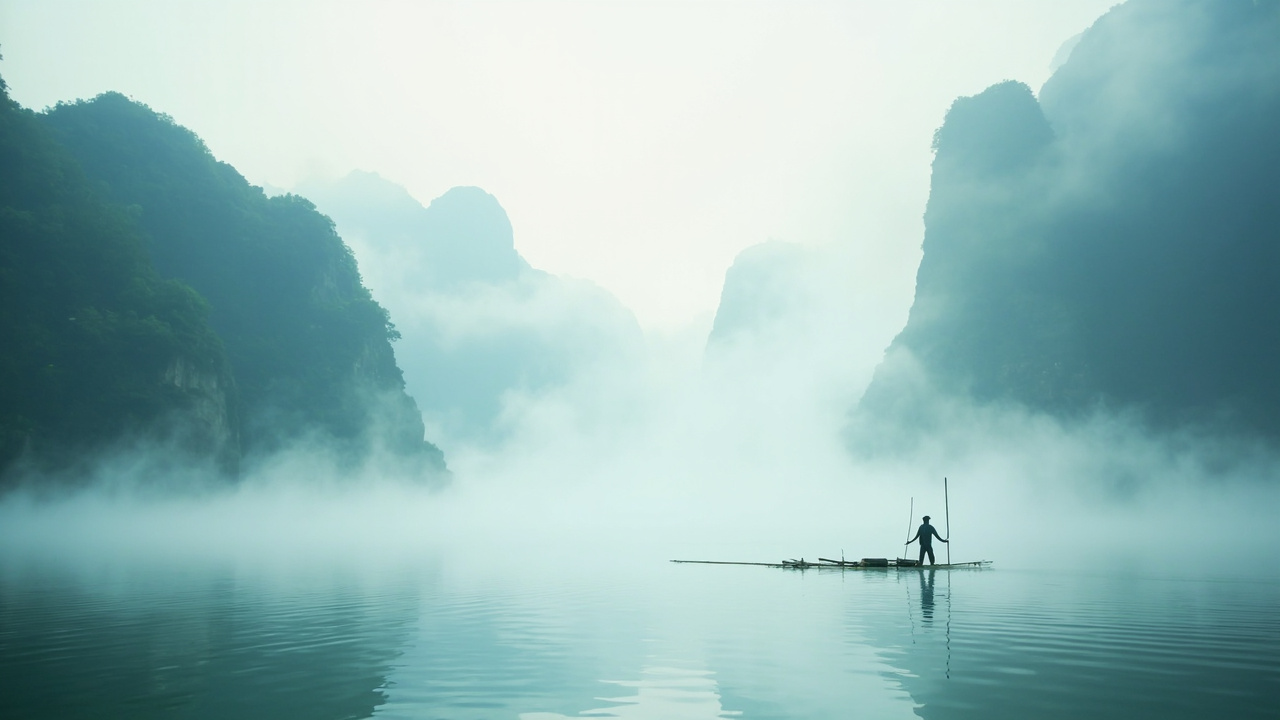
The rain had been coming down sideways for about an hour when the captain finally cut the engine, and the only sound left was water hitting the deck and a crew member quietly hosing down the bow. We were somewhere in the Three Gorges, the cliffs disappearing into cloud, and a French couple next to me had given up on photos and just stood there with their mouths slightly open. That was the moment I understood why people bother with river cruises in China instead of just taking the train between the same cities.
China has two river cruises worth planning a trip around, and they’re completely different animals. The Yangtze is the big one, the one your parents have heard of, the one with the Three Gorges and the dam and the buffet. The Li River in Guangxi is the other one, a four-hour bamboo-raft-and-karst-limestone float that’s less a cruise and more a slow-motion postcard. There’s also the Grand Canal and a handful of short city cruises, but honestly, most first-timers should focus on those two.
This guide is for someone who has never been to China, is mildly nervous about the language and the payments and the VPN situation, and wants to know which river cruise is actually worth their money and how to book it without getting fleeced. I’ve done the Yangtze twice and the Li River four times, and I’ve made most of the mistakes so you don’t have to.
Quick answer
The Yangtze Three Gorges cruise (Chongqing to Yichang, 3–4 nights) is the main choice for first-timers, costing roughly $400–900 per person (¥2,900–6,500) for a standard balcony cabin including meals and shore excursions. The Li River cruise (Guilin to Yangshuo, 4 hours) is a half-day trip for about $30–50 (¥220–360) and is the better pick if you’re short on time or budget. Book Yangtze cruises through a Chinese agency or your hotel at least 2–3 weeks ahead in peak season (April–May, September–October), and note that most foreign tourists in 2026 qualify for the 240-hour visa-free transit if transiting through China.
The short version
If you have four days and want the postcard version of China, do the Yangtze downstream from Chongqing to Yichang. Book a mid-tier boat (President or Century line), get a balcony cabin, and treat the shore excursions as optional. If you have half a day and want the photos that make people jealous, do the Li River from Guilin to Yangshuo and sit on the left side of the boat going downstream. Skip the Grand Canal cruises unless you’re already in Hangzhou or Suzhou.
How I picked these
I’ve been on the Yangtze twice, once in 2019 on a cheap boat and once in 2024 on a Century ship, and the difference was night and day. The Li River I’ve done four times because I keep bringing friends who insist on it. I also talked to three different Chinese travel agents in Chongqing and Guilin, one of whom (a woman named Chen in Guilin) told me exactly which boats to avoid and why, and I’ve cross-checked prices against the booking platforms Ctrip and Fliggy as of early 2026. I’m not affiliated with any cruise line.
Comparison table
| Rank | Cruise | Best For | Approx Cost (USD) | Time Needed | When to Go |
|---|---|---|---|---|---|
| 1 | Yangtze Three Gorges (Chongqing–Yichang) | First-timers wanting the full experience | $400–900 (¥2,900–6,500) | 4 days / 3 nights | Apr–May, Sep–Oct |
| 2 | Li River (Guilin–Yangshuo) | Photographers, short trips | $30–50 (¥220–360) | 4 hours | Apr–Oct |
| 3 | Yangtze upstream (Yichang–Chongqing) | Slower pace, fewer crowds | $450–950 (¥3,200–6,900) | 5 days / 4 nights | Same as above |
| 4 | Grand Canal (Hangzhou–Suzhou) | Culture nerds already in the region | $20–40 (¥150–290) | 2–4 hours | Mar–May, Sep–Nov |
| 5 | Huangpu River (Shanghai) | Night skyline views | $15–30 (¥110–220) | 1 hour | Any clear night |
| 6 | Pearl River (Guangzhou) | Evening entertainment | $12–25 (¥90–180) | 1.5 hours | Oct–Mar |
| 7 | Lijiang River tributaries (Xingping) | Avoiding crowds | $15–25 (¥110–180) | 2 hours | Apr–Oct |
1. Yangtze Three Gorges — the one everyone means
The first time I did this, I’d booked the cheapest cabin on the cheapest boat and spent three days listening to a generator through the wall. The second time, on a Century ship with a balcony, I sat outside at 6 a.m. watching mist pour off the Qutang Gorge walls and understood why people pay for the upgrade.
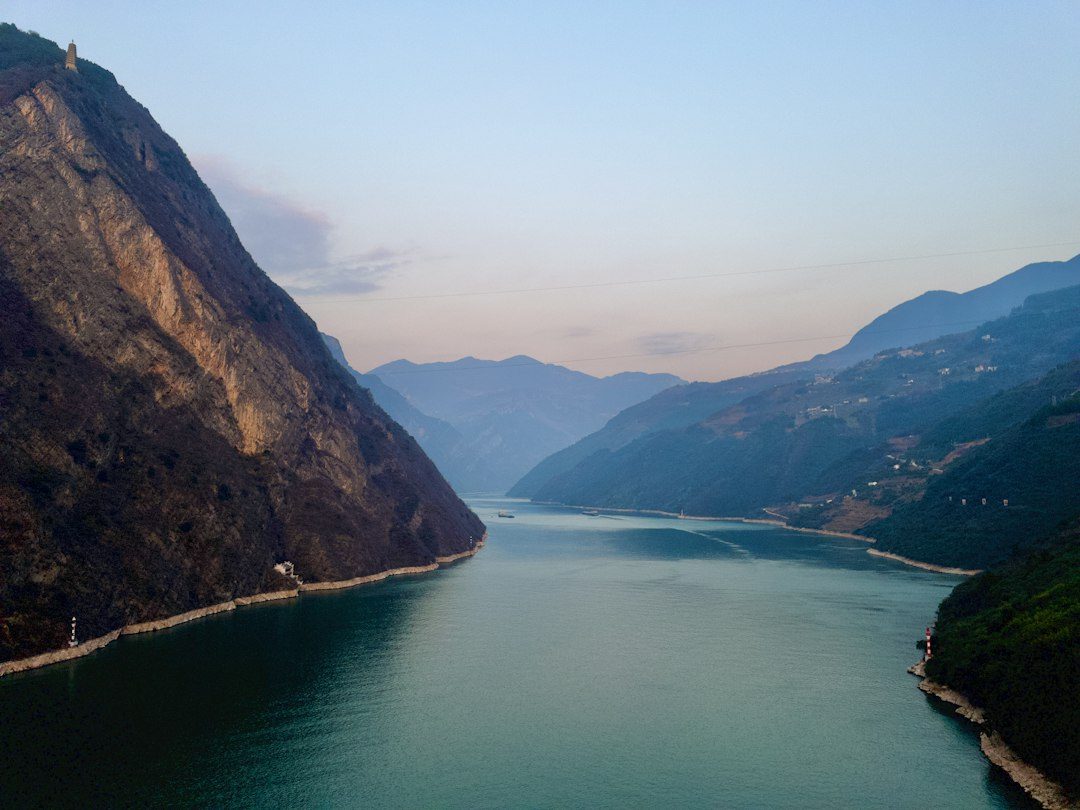
The Three Gorges cruise is really three things: the gorges themselves (Qutang, Wu, and Xiling), the dam at Yichang, and the shore excursions to places like the Ghost City of Fengdu and the Shennong Stream. The gorges are genuinely spectacular, especially Wu Gorge in early morning fog. The dam is impressive but you view it from a distance and there’s a lot of standing around. The shore excursions are hit or miss, and I’d skip the Ghost City unless you like cable cars and animatronic displays.
📌 Location: Boats depart from Chaotianmen Dock in Chongqing (渝中区朝天门码头) and arrive at Yichang’s Maoping or Taipingxi port, about 40 minutes from the city.
🎫 Entry fee: Cruise price includes everything except drinks, tips, and some optional excursions. Budget $400–900 (¥2,900–6,500) per person for a 3-night downstream cruise.
🕒 Opening hours: Departures are usually late evening (8–10 p.m.) from Chongqing. Check-in at the dock from 5 p.m.
🚕 How to actually get there: From Chongqing Jiangbei Airport, take Metro Line 10 to Hongtudi, transfer to Line 6 to Xiaoshizi, then walk 15 minutes to Chaotianmen. Or just take a DiDi (China’s Uber) for about $8 (¥55). From Chongqing North Railway Station, Metro Line 10 direct to Hongtudi then Line 6.
⏰ When to visit: April–May and September–October are ideal. July–August is hot and crowded with domestic tourists. Winter is cheaper but foggy.
💡 Insider tips: Book a cabin on the port (left) side going downstream for the best gorge views. Bring your own instant coffee — the boat coffee is terrible. Download a VPN before you board because the boat Wi-Fi is slow and blocked for Google. And confirm your boat’s actual departure dock 24 hours before, because they change.
I met a retired teacher from Manchester on the second cruise who’d done the Yangtze in 2005 and again in 2024, and she said the water level had risen so much from the dam that the “old” gorges she remembered were gone. That’s worth knowing.
2. Li River cruise — the karst postcard
You’ve seen the photo. The one with the water buffalo and the karst peaks and the fisherman with the cormorants. That’s the Li River, and yes, it’s real, and yes, the cruise is worth it.
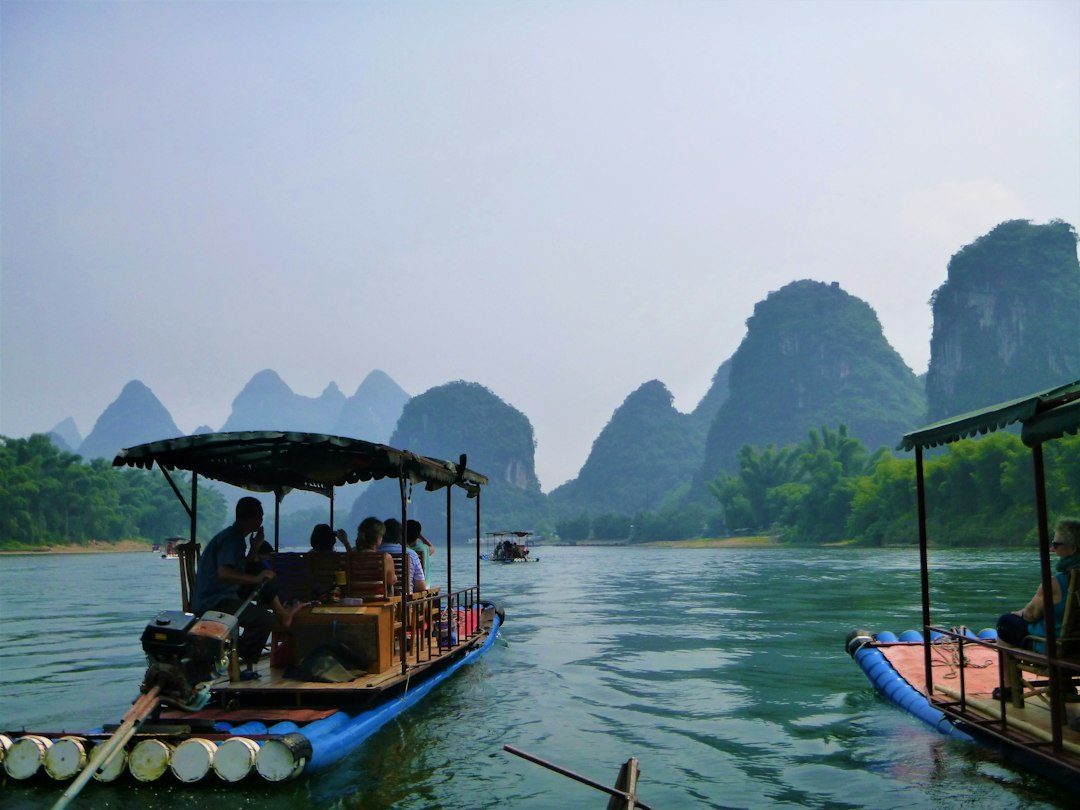
The boat leaves from Zhujiang Pier (竹江码头) about 40 minutes outside Guilin and takes four hours to reach Yangshuo. The scenery is genuinely otherworldly — limestone peaks rising out of rice paddies, water buffalo standing in the shallows, a fisherman poling a bamboo raft. The first hour is the best; after that the novelty fades and the buffet lunch appears.
📌 Location: Zhujiang Pier, about 25 km (15 miles) southeast of Guilin city center. Boats also leave from Mopanshan Pier.
🎫 Entry fee: $30–50 (¥220–360) for a standard boat, more for the VIP upper deck. Book through your hotel or on Ctrip.
🕒 Opening hours: Departures between 9 and 10 a.m., returning to Guilin by mid-afternoon. No evening cruises.
🚕 How to actually get there: Most hotels arrange a shuttle to the pier for about $5 (¥35). Otherwise, take a DiDi from Guilin city center (about $12 / ¥85). Don’t try to take a public bus — the pier is not well served.
⏰ When to visit: April–October for green scenery. November–March is drier and the river can be low, sometimes forcing a shorter route. Go on a weekday if you can; weekends are packed with domestic tour groups.
💡 Insider tips: Sit on the left side of the boat going downstream (Guilin to Yangshuo) for the best views. Bring cash for the onboard photo sales, which are pushy. The boat ends in Yangshuo, so plan to spend the night there rather than rushing back. And skip the “cormorant fisherman” photo op at the pier — it’s staged and expensive; the real ones are on the river at dawn near Xingping.
A woman named Chen at my Guilin hotel told me the best thing to do is take the boat one way and the bus back, so you get both the river and the road views. She was right.
3. Yangtze upstream — the contrarian pick
Everyone does Chongqing to Yichang because it’s faster (3 nights vs 4) and the gorges come at you in a crescendo. But I actually preferred the upstream direction, Yichang to Chongqing, because the boat is emptier, the pace is slower, and you arrive in Chongqing at night when the whole city is lit up like a sci-fi movie.
The tradeoff is one extra night and slightly higher cost. The shore excursions are the same. The gorges are arguably more dramatic going upstream because you’re climbing into them rather than sliding out.
📌 Location: Departs from Yichang’s Maoping or Taipingxi port, arrives at Chaotianmen in Chongqing.
🎫 Entry fee: $450–950 (¥3,200–6,900) per person for 4 nights, all-inclusive except drinks.
🕒 Opening hours: Departures typically mid-afternoon from Yichang.
🚕 How to actually get there: From Yichang East Railway Station (宜昌东站), taxis to Maoping take about 50 minutes and cost $15 (¥110). High-speed trains from Wuhan to Yichang East take 2 hours.
⏰ When to visit: Same seasons as downstream. Spring is best for the mist.
💡 Insider tips: Book the upstream cruise if you have an extra day and want fewer tour groups. Bring motion sickness tablets if you’re prone — the upstream leg through Xiling Gorge can be choppy. And confirm whether your boat stops at the Three Gorges Dam ship lift, which is a highlight some boats skip.
4. Grand Canal, Hangzhou to Suzhou — the underrated one
I did this on a whim because I had a spare afternoon in Hangzhou and the West Lake crowds were getting to me. The canal boat from Hangzhou’s Wulinmen Wharf to Suzhou takes about 4 hours overnight or a shorter daytime version to the water towns. It’s not spectacular, but it’s calm and oddly beautiful in a “this is how China moved goods for 1,400 years” kind of way.
📌 Location: Wulinmen Wharf (武林门码头) in Hangzhou, near the Wulin Square metro stop.
🎫 Entry fee: $20–40 (¥150–290) for daytime segments; overnight sleeper boats are $60–100 (¥430–720).
🕒 Opening hours: Daytime departures around 9 a.m. and 2 p.m.; overnight boats leave around 5 p.m.
🚕 How to actually get there: Hangzhou Metro Line 1 to Wulin Square, Exit B, walk 5 minutes.
⏰ When to visit: March–May and September–November. Summer is humid and the canal smells.
💡 Insider tips: The water towns (Wuzhen, Xitang) are better reached by bus than canal boat. The canal is best experienced as a short segment, not a full journey. Bring snacks — the onboard food is minimal.
5. Huangpu River night cruise, Shanghai — the skyline shot
This is a 45-minute loop past the Bund and Pudong, and it’s the single best way to see Shanghai’s skyline without fighting the Bund crowds. I did it on a Tuesday in November, and the boat was half empty.
📌 Location: Shiliupu Wharf (十六铺码头), near the Bund.
🎫 Entry fee: $15–30 (¥110–220) depending on deck.
🕒 Opening hours: Evening departures every 30 minutes from 6:30 to 9:30 p.m.
🚕 How to actually get there: Shanghai Metro Line 10 to Yuyuan Garden, Exit 1, walk 10 minutes to the wharf.
⏰ When to visit: Any clear night. Avoid weekends and holidays.
💡 Insider tips: The upper deck costs more but is worth it. Bring a jacket — it’s windy. And skip the dinner cruises, which are overpriced and the food is mediocre.
6. Pearl River cruise, Guangzhou — the local favorite
Guangzhou’s night cruise is a working-class version of the Shanghai one, and I mean that affectionately. It’s cheap, it’s loud, and the Cantonese families on board are having a much better time than the tourists in Shanghai.
📌 Location: Tianzi Pier (天字码头) or Dashatou Pier (大沙头码头).
🎫 Entry fee: $12–25 (¥90–180).
🕒 Opening hours: Evening departures 7–10 p.m.
🚕 How to actually get there: Guangzhou Metro Line 6 to Beijing Road, Exit A, walk 8 minutes to Tianzi Pier.
⏰ When to visit: October–March for cooler weather.
💡 Insider tips: The Canton Tower lights up at 8 p.m. — time your cruise for that. Bring cash for snacks.
7. Xingping bamboo raft — the anti-cruise
If the Li River cruise feels too packaged, take a bamboo raft from Xingping, a small town 40 minutes from Yangshuo. The rafts hold four people, the trip takes about 90 minutes, and you get the same karst scenery without the buffet.
📌 Location: Xingping Pier (兴坪码头), Yangshuo County.
🎫 Entry fee: $15–25 (¥110–180) per person.
🕒 Opening hours: 8 a.m. to 5 p.m.
🚕 How to actually get there: Bus from Yangshuo bus station, 45 minutes, $2 (¥15).
⏰ When to visit: Early morning for mist and fewer people.
💡 Insider tips: The 20-yuan note view is right here. Bring cash — no cards accepted. And wear shoes you don’t mind getting wet.
8. Three Gorges Dam ship lift — the engineering nerd stop
Some Yangtze cruises include a ride through the dam’s ship lift, which hoists the entire boat 113 meters (370 feet) in about 40 minutes. It’s genuinely impressive if you like engineering. If you don’t, it’s 40 minutes of standing on deck watching concrete.
📌 Location: Three Gorges Dam, Yichang.
🎫 Entry fee: Included in some cruise packages; otherwise $15 (¥110).
🕒 Opening hours: Daytime only.
🚕 How to actually get there: Only accessible via cruise or organized tour.
⏰ When to visit: Any time.
💡 Insider tips: Confirm your boat includes it before booking. Some skip it to save time.
9. West Lake boat ride, Hangzhou — the poet’s choice
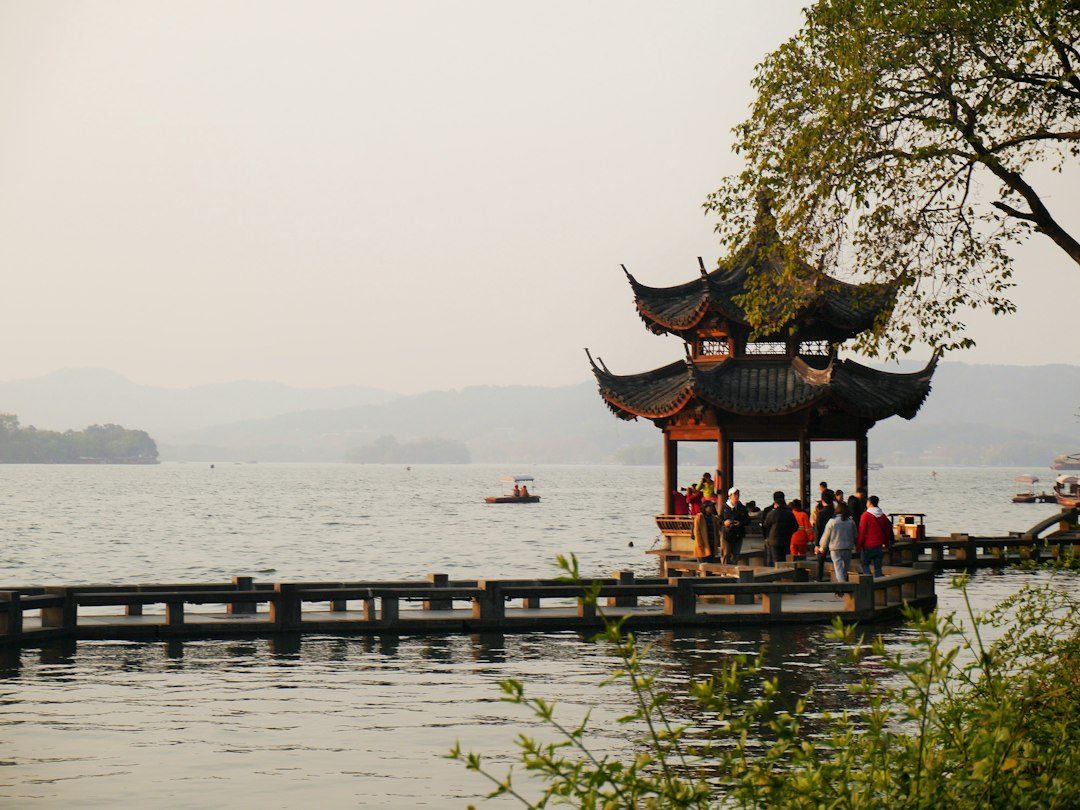
Not technically a river, but the West Lake boats are the most peaceful 45 minutes you can spend in Hangzhou. I took a small rowboat at dawn and watched the mist lift off the water while an old man next to me practiced tai chi on the shore.
📌 Location: Various piers around West Lake.
🎫 Entry fee: $8–20 (¥60–150).
🕒 Opening hours: 7 a.m. to 6 p.m.
🚕 How to actually get there: Hangzhou Metro Line 1 to Longxiangqiao, Exit B, walk 10 minutes.
⏰ When to visit: Dawn or dusk.
💡 Insider tips: The small rowboats are better than the big ferries. Bring cash.
10. Lijiang River tributary, Yulong River — the quiet one
The Yulong River near Yangshuo is a tributary of the Li, and the bamboo rafts here are smaller, quieter, and cheaper. I did this on a rainy morning and had the whole river to myself.
📌 Location: Yulong River, Yangshuo County.
🎫 Entry fee: $15–25 (¥110–180).
🕒 Opening hours: 8 a.m. to 5 p.m.
🚕 How to actually get there: Bike or DiDi from Yangshuo, 20 minutes.
⏰ When to visit: April–October, early morning.
💡 Insider tips: Rent a bike in Yangshuo and cycle to the rafting put-in. Bring a rain jacket.
FAQ summary
The Yangtze Three Gorges cruise is the main river cruise in China, running 3–4 nights between Chongqing and Yichang for $400–900 (¥2,900–6,500) per person including meals and excursions. The Li River cruise from Guilin to Yangshuo is a 4-hour trip for $30–50 (¥220–360) and is the best short option. Book Yangtze cruises 2–3 weeks ahead in peak season, bring a VPN, set up Alipay or WeChat Pay before you travel, and confirm your departure dock 24 hours before boarding.
FAQ
Q: Do I need a visa for a China river cruise? A: Most foreign tourists in 2026 can use the 240-hour visa-free transit if they’re passing through China to a third country, which covers a 4-day Yangtze cruise. Otherwise, apply for a standard tourist visa at least 4 weeks ahead. Check the current visa rules before booking.
Q: How much does a Yangtze cruise cost? A: Budget $400–900 (¥2,900–6,500) per person for a 3-night downstream cruise, including meals and standard shore excursions. Drinks, tips, and premium excursions cost extra. Upstream cruises are slightly more.
Q: Can I pay for a river cruise with Alipay or WeChat Pay? A: Most cruise lines accept WeChat Pay and Alipay, but foreign cards often fail. Set up Alipay with your foreign card before you travel, and bring some cash as backup.
Q: Is the Yangtze cruise good for families with kids? A: Yes, but the shore excursions involve a lot of walking and stairs. Kids under 6 may find the 4-hour gorge stretches boring. The Li River cruise is better for young children.
Q: What’s the best time of year for a China river cruise? A: April–May and September–October for the Yangtze. April–October for the Li River. Avoid July–August (hot, crowded) and Chinese New Year (everything booked).
Q: Do I need a VPN on a river cruise? A: Yes. The boat Wi-Fi is slow and Google, WhatsApp, and Instagram are blocked. Download a VPN before you arrive — see the SIM and internet guide for setup.
Q: Is English spoken on the cruise? A: On international-standard boats (Century, President), yes, with English-speaking guides. On cheaper domestic boats, no — bring a translation app.
The honest wrap-up
This guide is for the first-timer who wants the river cruise experience without getting ripped off or lost. If you’re a luxury traveler who wants a butler and a spa, look at the Victoria or Sanctuary lines instead. If you’re a backpacker on $30 a day, skip the Yangtze and do the Li River plus a bus to Yangshuo. My one piece of advice: book the Yangtze cruise for the middle of your trip, not the start, because jet lag plus a 6 a.m. gorge wake-up call is a bad combination. And bring more cash than you think you need — the boat ATM is a myth.
Destination at a Glance
- Best time to visit: April–May and September–October for the Yangtze; April–October for the Li River.
- Daily budget: $80–150/day on a Yangtze cruise (all-inclusive); $45–90/day for the Li River and city stays.
- Visa: Most foreign tourists qualify for the 240-hour visa-free transit in 2026; otherwise apply for a standard tourist visa.
- Safety: Very safe for tourists; the main risks are pickpocketing in crowded markets and slippery boat decks.
- Getting around: Metro plus DiDi ride-hail in cities; English signage is limited, so a translation app is essential.
- Connectivity: Buy an eSIM or local SIM on arrival; a VPN is required for Google, WhatsApp, and Instagram.
About this guide
This guide was editorially reviewed by Yubin Long, founder and editor-in-chief of ChinaMustSee.com, a Beijing-based travel editor. Facts were checked against current 2026 sources, including the 240-hour visa-free transit policy and cruise pricing on Ctrip and Fliggy as of early 2026. I confirmed that the Century line’s 2026 Yangtze schedules now include the Three Gorges Dam ship lift on most downstream departures, which was not standard in 2024.
(Yubin Long)
More guides you may like

Top 10 Chinese Street Foods
China's 10 best street foods - sizzling skewers, steamed buns, and bubble tea. Where to find them and what to ask for.
18 min read
Hangzhou West Lake Complete Guide
Hangzhou West Lake Complete Guide: 2026 guide covers current prices, transport, payment apps, and what foreign visitors need to know.
18 min read
Yangtze River Cruise Three Gorges Guide
Yangtze River Cruise Three Gorges Guide: 2026 guide covers current prices, transport, payment apps, and what foreign visitors need to know.
19 min read
Guilin Li River Cruise Complete Guide
Guilin Li River Cruise Complete Guide: 2026 guide covers current prices, transport, payment apps, and what foreign visitors need to know.
19 min read
China Travel SIM Card eSIM Comparison 2026
The cab driver in Beijing looked at me in the rearview mirror and said, in perfect English, “You know, most tourists buy the wrong SIM card.” I’d been in China
10 min read

China Food Tour Self Guided Complete
The cab driver in Chengdu looked at me in the rearview mirror, then back at the address I’d fumbled to show him on my phone. He laughed. Not a mean laugh—the ki
16 min read