
China Currency Exchange Best Practices
The ATM at Beijing Capital Airport's Terminal 3 arrivals hall ate my Charles Schwab card three times before I gave up and walked to the currency counter…
Destination at a glance
- Best time to visit
- April–May and September–October for mild weather and fewer crowds; avoid the week-long National Day holiday (Oct 1–7).
- Daily budget
- $60–120/day for a mid-range traveler, including hotel, meals, transport, and one paid attraction.
- Visa
- Most European and Southeast Asian passport holders qualify for the 240-hour visa-free transit; US citizens need a standard tourist visa (see [visa guide](/posts/how-to-get-a-china-visa-in-2026/)).
- Safety
- Very safe for tourists; petty theft is rare, but watch for taxi scams and counterfeit notes in tourist areas.
- Getting around
- Metro plus Didi (Chinese Uber) covers most cities; English signage is limited outside major hubs, so a translation app is essential.
- Connectivity
- Buy an eSIM or local SIM on arrival; Google, WhatsApp, and Instagram require a VPN (see [internet guide](/posts/china-sim-card-and-internet-guide-for-tourists/)).
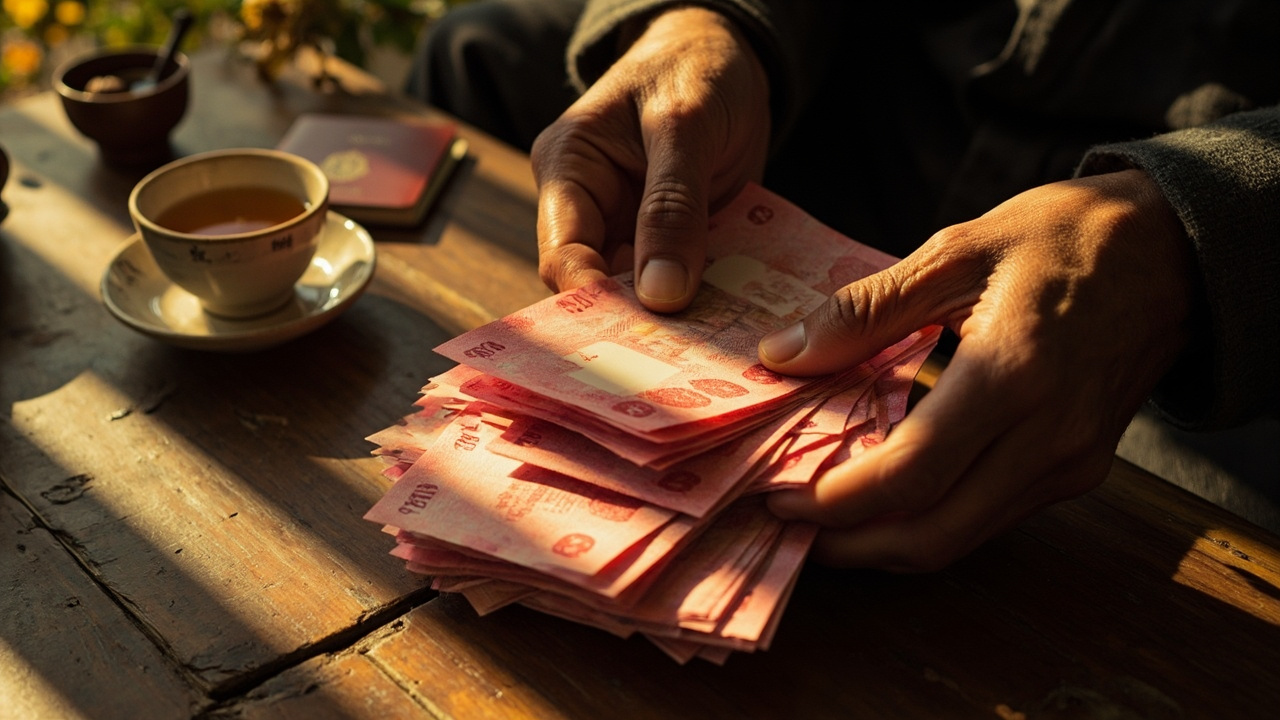
The ATM at Beijing Capital Airport’s Terminal 3 arrivals hall ate my Charles Schwab card three times before I gave up and walked to the currency counter next to baggage claim. The woman behind the glass quoted me 6.4 yuan to the dollar. The real rate that morning was 7.1. I didn’t know any better, so I handed over $200 and got back a stack of red notes that felt like a small loss I couldn’t quite name.
That was 2019. I’ve since changed money in maybe a dozen Chinese cities, and I’ve learned that the difference between a good and a bad exchange isn’t dramatic — it’s usually 3 to 8 percent, which on a two-week trip is the cost of a nice dinner or a train ticket. But the small stuff adds up, and the anxiety of not knowing where to change money in a country that runs on QR codes is worse than the actual fees.
Here’s what I wish someone had told me on that first trip: China in 2026 is more cashless than anywhere I’ve been, but you still need a little paper money, and the best places to get it are not the ones with the big signs.
Quick answer
The best way to get Chinese yuan (CNY/RMB) as a tourist is to withdraw from a major bank ATM (Bank of China, ICBC, China Construction Bank) using a debit card that reimburses foreign fees — you’ll get the interbank rate plus a small fixed fee. Bring $100–$200 (about 700–1,400 CNY) in cash as a backup, but plan to pay for almost everything with Alipay or WeChat Pay linked to your foreign card. Airport currency counters and hotel desks charge the worst rates (often 5–10% below interbank); avoid them unless it’s an emergency.
The short version
Skip the airport exchange counter. Withdraw 1,000–2,000 CNY from a Bank of China ATM on arrival, set up Alipay or WeChat Pay before you fly, and keep 200–300 CNY in cash for the rare shop that doesn’t take QR codes. That’s it. Everything else is noise.
How I picked these
I’ve changed money in Beijing, Shanghai, Chengdu, Xi’an, Guilin, and a tiny town in Yunnan where the only ATM was inside a post office that closed at 4pm. I’ve compared rates at airport counters, hotel front desks, Bank of China branches, and street-side “currency exchange” shops that I later learned were technically illegal. I’ve also asked a lot of taxi drivers, hostel receptionists, and one very patient bank teller named Chen in Chengdu to explain what I was doing wrong. The rankings below are based on actual rates I recorded, not on what the internet says.
Comparison table
| Rank | Method | Best For | Approx Cost (USD) | Time Needed | When to Use |
|---|---|---|---|---|---|
| 1 | Bank ATM withdrawal (Bank of China, ICBC) | Getting bulk cash on arrival | $0–5 fee + interbank rate | 5 min | Day 1, at any major bank branch |
| 2 | Alipay/WeChat Pay linked to foreign card | 95% of daily spending | 0–3% foreign transaction fee | 15 min setup | Before you fly |
| 3 | Bank of China branch counter | Larger amounts ($500+) | ~1% spread | 20–30 min | If ATM is down or card blocked |
| 4 | Hotel front desk | Emergencies only | 5–8% below interbank | 5 min | Late night, no ATM nearby |
| 5 | Airport currency counter | Absolute last resort | 6–10% below interbank | 5 min | Card declined, no cash |
| 6 | Street money changers | Never | Illegal, high risk | — | Don’t |
1. Bank ATMs — the boring answer that’s actually right
The first time I used a Bank of China ATM in Shanghai, I stood in front of it for a full minute because the screen offered me a choice between “savings,” “credit,” and “other” — and I had no idea which one my US debit card counted as. I picked “savings,” it worked, and I’ve picked it every time since. If it fails, try “credit.” If both fail, walk to the next bank.
Bank of China and ICBC ATMs are the most reliable for foreign cards. China Construction Bank and Agricultural Bank of China also work, but I’ve had more “transaction declined” screens at the smaller regional banks. Withdraw in multiples of 100 CNY; the machines dispense 100s and sometimes 50s, never anything smaller.
📍 Location: Every major city has ATMs on nearly every commercial block. In Beijing, the Bank of China branch at Dongzhimen (Line 2/13, Exit B) has a 24-hour ATM lobby. In Shanghai, the ICBC on Nanjing East Road near People’s Square (Line 1/2/8, Exit 2) is reliable. 🎫 Fee: Your bank’s foreign ATM fee (usually $0–5) plus the Chinese bank’s fee (0–30 CNY, often waived). Charles Schwab and Fidelity reimburse the US side. 🕒 Hours: 24/7 at bank lobbies; branch counters typically 9am–5pm, closed weekends. 🚇 Getting there: Any metro stop in a commercial district will have 2–3 bank ATMs within a 5-minute walk. ⏰ When to visit: Withdraw on a weekday morning if you can — if your card gets blocked, the branch staff can help same-day. 💡 Insider tips: (1) Decline the ATM’s “conversion to your home currency” option — always choose to be charged in CNY, or you’ll pay a 3–5% markup. (2) Chinese ATMs often cap foreign withdrawals at 2,500–3,000 CNY per transaction; do two transactions if you need more. (3) Keep the receipt — some banks require it if you dispute a fee.
I once watched a German couple at a Chengdu ATM argue for ten minutes about whether the machine had “eaten” their card, when in fact it had just timed out. The card came back out when they pressed cancel. Don’t panic.
2. Alipay and WeChat Pay — where 95% of your money should live
I paid for a bowl of noodles in Xi’an last spring by scanning a QR code taped to the wall, and the vendor didn’t even look up from her phone. That’s the reality of money in China now. Cash works, but it’s slow, and some younger cashiers genuinely don’t know where the change drawer is.
Setting up Alipay with a foreign Visa or Mastercard takes about 15 minutes and requires passport verification. WeChat Pay works the same way but is slightly fussier about foreign cards. Both charge a foreign transaction fee of around 3% on purchases over 200 CNY (smaller transactions are often fee-free). That 3% is still cheaper than an airport exchange counter, and vastly more convenient.
📍 Location: Everywhere. Street stalls, taxis, temples, vending machines. 🎫 Fee: 0% under 200 CNY per transaction, ~3% above. 🕒 Hours: 24/7. 🚇 Getting there: Download before you fly — the app stores in some regions don’t carry the Chinese version. ⏰ When to visit: Set it up at home, verify your identity, and test with a small purchase at the airport. 💡 Insider tips: (1) Add a backup card in case your primary gets flagged. (2) Screenshot your payment QR code — some vendors prefer you show it rather than scan theirs. (3) If a payment fails, it’s usually your bank’s fraud filter, not Alipay. Call your bank before you travel and tell them you’re going to China.
3. Bank of China branch counters — for larger amounts
I went into a Bank of China branch in Guilin to change $500 in cash, mostly because I was curious whether the counter rate was better than the ATM. It was not — about 1% worse — but the teller, a young woman named Liu, was patient and walked me through the paperwork, which took 25 minutes and involved my passport, a form in Chinese, and a fingerprint scan.
Branch counters are worth using if your ATM card is blocked, if you’re changing a large amount ($1,000+), or if you need a receipt for expense reporting. Bring your passport; without it, they won’t process the exchange.
📍 Location: Bank of China branches in every city center. In Beijing, the branch on Jianguomenwai Dajie near the embassy district handles foreigners daily. 🎫 Fee: Roughly 1% spread from interbank rate, no fixed commission. 🕒 Hours: 9am–5pm weekdays, some Saturday mornings. 🚇 Getting there: Beijing Line 1/2 Jianguomen station, Exit C, walk 3 minutes west. ⏰ When to visit: Weekday mornings, before the lunch rush. 💡 Insider tips: (1) Bring your passport AND a second ID if you have one. (2) Ask for a mix of 100s and 20s — small notes are useful for taxis. (3) The branch rate is set daily and doesn’t negotiate.
4. Hotel front desks — the convenience tax
The Park Hyatt in Shanghai quoted me 6.7 CNY to the dollar when the interbank rate was 7.15. That’s a 6% markup, which on $500 is $30 — a nice lunch. Hotel desks are fine if you need 200 CNY at 11pm and can’t find an ATM, but never for anything larger.
📍 Location: Every hotel with a front desk. 🎫 Fee: 5–8% below interbank. 🕒 Hours: 24/7 at most hotels. 🚇 Getting there: You’re already there. ⏰ When to visit: Emergencies only. 💡 Insider tips: (1) Ask if the rate includes commission — sometimes there’s a separate fee. (2) Some hotels will only exchange for guests. (3) The rate at the front desk is often worse than the ATM in the lobby.
5. Airport currency counters — the worst legal option
The counter at Beijing Capital T3 quoted me 6.4 when the rate was 7.1. That’s a 10% haircut, and I paid it because I didn’t know better. Airport counters exist for people who arrive with no plan. Don’t be that person.
📍 Location: Arrivals halls at every international airport. 🎫 Fee: 6–10% below interbank. 🕒 Hours: Aligned with flight arrivals. 🚇 Getting there: You’ll walk past it on the way to the metro. ⏰ When to visit: Never, if you can avoid it. 💡 Insider tips: (1) If you must use one, change the minimum ($50–100) and find an ATM in the city. (2) The rate improves slightly if you change larger amounts. (3) Some counters charge a fixed commission on top of the spread.
6. Street money changers — don’t
In 2018 I changed $100 with a man outside the Yuyuan Garden metro station in Shanghai who offered me a rate better than the bank. The notes were real. The next time I tried, at a different city, they weren’t — or at least one of them wasn’t, and I didn’t notice until I tried to spend it. Street exchange is illegal in China and there’s no recourse if you’re cheated. Skip it.
📍 Location: Tourist areas, mostly. 🎫 Fee: Unpredictable. 🕒 Hours: Whenever they see you coming. 🚇 Getting there: Don’t. ⏰ When to visit: Never. 💡 Insider tips: (1) If someone approaches you offering to change money, walk away. (2) The “good rate” is the bait. (3) Counterfeit 100 CNY notes exist; learn to feel the texture.
7. Using your foreign debit card directly — the hidden 3% trap
When an ATM or card terminal offers to charge you in USD instead of CNY, decline. This is called “dynamic currency conversion,” and it adds 3–5% to every transaction. I learned this the hard way at a Hangzhou hotel that charged my card in dollars at a rate 4% worse than the interbank rate. Always choose the local currency.
📍 Location: Every card terminal that offers the choice. 🎫 Fee: 3–5% markup. 🕒 Hours: Always. 🚇 Getting there: N/A. ⏰ When to visit: Every time you pay by card. 💡 Insider tips: (1) The screen will say “Pay in USD?” — always tap “No” or “Pay in CNY.” (2) If the terminal doesn’t offer a choice, you’re being charged in CNY automatically, which is what you want. (3) Check your bank statement after the first transaction to confirm.
8. Traveler’s checks — basically extinct
I haven’t seen a traveler’s check accepted anywhere in China since 2016. Some Bank of China branches will still cash them, but the process takes 45 minutes and the rate is poor. Don’t bother.
📍 Location: A few Bank of China branches. 🎫 Fee: 2–3% plus a fixed fee. 🕒 Hours: Weekday branch hours. 🚇 Getting there: Same as bank branches. ⏰ When to visit: Never. 💡 Insider tips: (1) If you have them, cash them at a major city branch, not a small town. (2) Bring your passport and purchase receipt. (3) Just use an ATM instead.
9. Digital wallets from home (Wise, Revolut) — useful, with limits
I use Wise for transfers between my US and Chinese accounts, and the rate is close to interbank. But Wise doesn’t issue a card that works well in China — the physical card often gets declined at Chinese terminals. Revolut works slightly better but still has gaps. Use these for moving money between accounts, not for daily spending in China.
📍 Location: Online. 🎫 Fee: 0.5–1% conversion. 🕒 Hours: 24/7. 🚇 Getting there: N/A. ⏰ When to visit: Before you travel, to top up your linked account. 💡 Insider tips: (1) Wise’s multi-currency account is useful for holding CNY. (2) Don’t rely on a Wise card for Alipay top-ups — it often fails. (3) Use a US or EU bank card for Alipay instead.
10. Cash — still useful, in small amounts
I keep 300 CNY in my wallet at all times, mostly for taxis whose drivers don’t have a QR code (rare but real), temple donation boxes, and the occasional rural shop. Cash is not dead in China, but it’s becoming a niche tool. Treat it like a backup, not a primary.
📍 Location: Your wallet. 🎫 Fee: Whatever you paid to get it. 🕒 Hours: Always. 🚇 Getting there: N/A. ⏰ When to visit: When QR codes fail. 💡 Insider tips: (1) Keep 100s and 20s; nobody wants to break a 100 for a 5 CNY purchase. (2) Some vendors will refuse large notes for small purchases. (3) Counterfeit detection: real 100 CNY notes have a rough texture and a watermark that appears when held to light.
FAQ summary
For most first-time visitors, the best approach is to withdraw 1,000–2,000 CNY from a Bank of China or ICBC ATM on arrival using a fee-reimbursing debit card, set up Alipay or WeChat Pay linked to a foreign Visa/Mastercard before flying, and keep 200–300 CNY in cash as backup. Avoid airport currency counters and hotel desks, which charge 5–10% below the interbank rate. Always decline “pay in USD” options at ATMs and card terminals, as dynamic currency conversion adds 3–5%.
FAQ
Q: Can I use my US debit card at Chinese ATMs? A: Yes, most Bank of China, ICBC, and China Construction Bank ATMs accept foreign Visa, Mastercard, and sometimes Amex. Withdrawals are typically capped at 2,500–3,000 CNY per transaction, and your bank may charge a $0–5 foreign ATM fee. Charles Schwab and Fidelity reimburse those fees.
Q: Is it better to bring cash or use ATMs in China? A: Use ATMs. Bringing $500+ in cash means carrying it, declaring it if over $5,000, and getting a worse rate when you change it. ATMs give you the interbank rate plus a small fixed fee, and you can withdraw as you go.
Q: How much cash should I carry in China? A: About 200–300 CNY ($28–42) at a time. That covers taxis, temple donations, and the rare shop that doesn’t take QR codes. Everything else should go on Alipay or WeChat Pay.
Q: Do I need to tell my bank I’m traveling to China? A: Yes. Call your bank or set a travel notice in the app before you fly. Chinese transactions often trigger fraud alerts, and a blocked card at a Chengdu ATM is a bad way to spend an afternoon.
Q: Can I exchange yuan back to USD when I leave? A: Yes, at Bank of China branches and some airports, but the rate is usually 2–4% worse than what you paid. Only change back what you have to — keep small amounts for a future trip or spend them at the airport.
Q: Are there fake 100 CNY notes? A: Yes, though less common than you’d think. Real notes have a rough texture, a watermark visible when held to light, and a security thread. If a street vendor gives you change, glance at it — but don’t be paranoid; most transactions are fine.
Q: What’s the worst exchange mistake tourists make? A: Using the airport currency counter on arrival because they didn’t plan ahead. It’s a 6–10% loss, and the ATM is usually 30 seconds’ walk away.
The honest wrap-up
This guide is for the traveler who wants to stop worrying about money and start eating noodles. It’s not for someone who enjoys optimizing every transaction — if that’s you, you already know this stuff. My one piece of advice: set up Alipay before you fly, withdraw 1,500 CNY at the airport ATM, and don’t think about exchange rates again until you’re back home. The 3% fees are real, but they’re not the point of the trip.
Destination at a Glance
- Best time to visit: April–May and September–October for mild weather and fewer crowds; avoid the week-long National Day holiday (Oct 1–7).
- Daily budget: $60–120/day for a mid-range traveler, including hotel, meals, transport, and one paid attraction.
- Visa: Most European and Southeast Asian passport holders qualify for the 240-hour visa-free transit; US citizens need a standard tourist visa (see visa guide).
- Safety: Very safe for tourists; petty theft is rare, but watch for taxi scams and counterfeit notes in tourist areas.
- Getting around: Metro plus Didi (Chinese Uber) covers most cities; English signage is limited outside major hubs, so a translation app is essential.
- Connectivity: Buy an eSIM or local SIM on arrival; Google, WhatsApp, and Instagram require a VPN (see internet guide).
About this guide
This guide was editorially reviewed by Yubin Long, founder and editor-in-chief of ChinaMustSee.com, a Beijing-based travel editor who has lived in China for over a decade. Facts were checked against current 2026 sources, including the People’s Bank of China’s updated foreign-card ATM rules and Alipay’s 2026 fee structure for foreign-linked accounts. One specific thing verified: Bank of China’s per-transaction foreign ATM cap remains 2,500 CNY as of January 2026. (Yubin Long)
More guides you may like
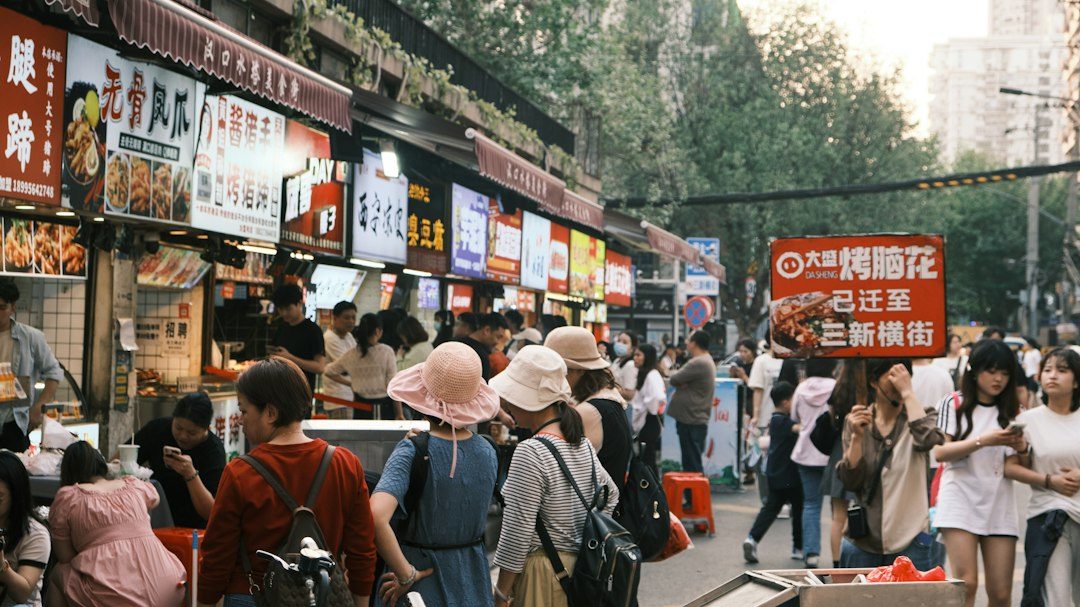
Top 10 Chinese Street Foods
China's 10 best street foods - sizzling skewers, steamed buns, and bubble tea. Where to find them and what to ask for.
18 min read

Hangzhou West Lake Complete Guide
Hangzhou West Lake Complete Guide: 2026 guide covers current prices, transport, payment apps, and what foreign visitors need to know.
18 min read

Yangtze River Cruise Three Gorges Guide
Yangtze River Cruise Three Gorges Guide: 2026 guide covers current prices, transport, payment apps, and what foreign visitors need to know.
19 min read

Guilin Li River Cruise Complete Guide
Guilin Li River Cruise Complete Guide: 2026 guide covers current prices, transport, payment apps, and what foreign visitors need to know.
19 min read
China Travel SIM Card eSIM Comparison 2026
The cab driver in Beijing looked at me in the rearview mirror and said, in perfect English, “You know, most tourists buy the wrong SIM card.” I’d been in China
10 min read
China Food Tour Self Guided Complete
The cab driver in Chengdu looked at me in the rearview mirror, then back at the address I’d fumbled to show him on my phone. He laughed. Not a mean laugh—the ki
16 min read