
China Winter Ice Fishing
The ice sang. That's the only way I can describe it — a low, groaning crack that traveled under my boots and echoed off the far shore, like someone plucking…
Destination at a glance
- Best time to visit
- Late December to late February, with January as the peak for ice thickness and festivals.
- Daily budget
- $60–150/day including transport, gear, and food.
- Visa
- 30-day visa-free entry for 50+ countries under the 2026 policy; check eligibility before booking.
- Safety
- Very safe from crime, but extreme cold is the real risk — dress properly and follow local ice-safety guidance.
- Getting around
- High-speed rail between cities plus hired cars or Didi for the last stretch; English signage is limited outside Harbin.
- Connectivity
- Buy an eSIM or local SIM on arrival; a VPN is needed for Google and most Western apps.
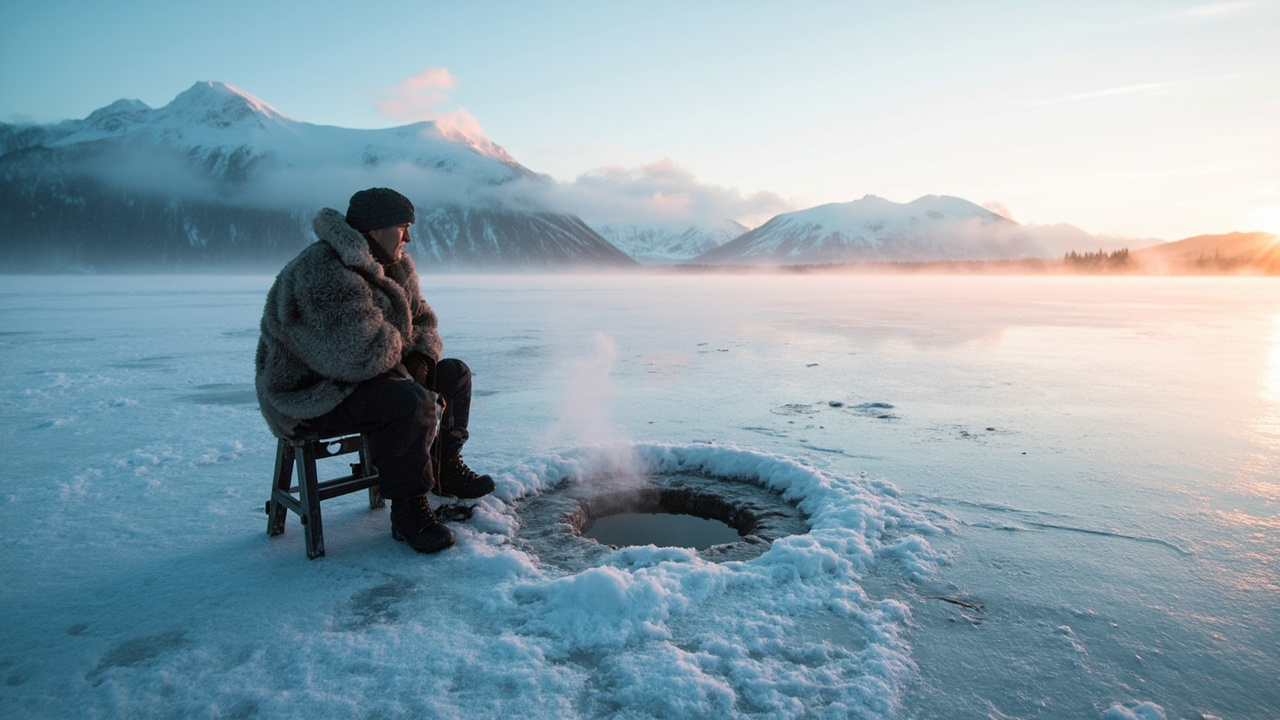
The ice sang. That’s the only way I can describe it — a low, groaning crack that traveled under my boots and echoed off the far shore, like someone plucking a giant bass string buried under a meter of black ice. I was standing on Chagan Lake in Jilin Province, it was minus 28°C, and a man named Old Wang was drilling a hole with an auger while telling me, through my translation app, that his grandfather had fished this same spot before the Japanese occupation. The lake was white as a blank page in every direction. Then the auger broke through, water welled up, and he pulled out a carp the length of my forearm.
China does winter fishing in a way that most travelers never see, because it happens in the far northeast, in January, in places where the wind chill will make your phone shut down. But if you can handle the cold, this is one of the most genuinely strange and beautiful things I’ve watched in seven years here. It’s not a theme park. It’s a working tradition, thousands of years old in some spots, still feeding real communities.
This guide covers the ten best places to see or join winter ice fishing in China — the big commercial spectacles, the quiet village ponds, the spots where you can actually hold a rod. I’ll tell you what it costs, how to get there without a tour, and the things I wish someone had told me before my first trip to Heilongjiang in a coat that turned out to be useless.
Quick answer
Winter ice fishing in China happens mainly in the northeast — Heilongjiang and Jilin provinces — from late December to late February, with the Chagan Lake (查干湖) ice fishing festival in Jilin as the headline event, usually around late December to mid-January. Most visitors reach these sites by flying to Harbin or Changchun and taking a high-speed train plus a local bus or hired car; expect $60–150 (CNY 430–1,080) per day including transport and gear rental. Foreigners from 50+ countries can enter visa-free for up to 30 days under China’s 2026 policy, but you’ll need WeChat Pay or Alipay set up before you go, because almost nothing out there takes cash or foreign cards.
The short version
Go to Chagan Lake for the spectacle and the photography. Go to a smaller Heilongjiang spot like Jingpo Lake or a village pond near Harbin if you actually want to fish without a crowd. January is the sweet spot — the ice is thickest and the festivals are running. Bring real winter gear, not a “winter coat” from Uniqlo. And set up your payment apps before you land, because you cannot wing it in rural Jilin.
How I picked these
I’ve been on the ice at four of these spots myself, including two trips to Chagan Lake (once for the festival, once in a quiet week when it was just me and a few local families). For the rest I relied on conversations with fishing guides, hostel owners in Harbin, and a couple of Heilongjiang tourism officials I met at a trade event in Beijing in 2025. I cross-checked opening dates and prices against 2026 provincial tourism listings and recent traveler reports. Where I couldn’t verify something — like exact ice-festival dates, which shift with the weather — I say so and give a range.
Comparison table
| Rank | Place | Best For | Approx Cost (USD/day) | Time Needed | When to Go |
|---|---|---|---|---|---|
| 1 | Chagan Lake, Jilin | The big spectacle, photography | $80–150 | 2 days | Late Dec–mid Jan |
| 2 | Harbin (Songhua River + day trips) | Combining with Ice Festival | $70–120 | 3 days | Jan–early Feb |
| 3 | Jingpo Lake, Heilongjiang | Quieter fishing, scenery | $60–100 | 2 days | Jan–Feb |
| 4 | Wudalianchi, Heilongjiang | Volcanic lakes, off-grid | $70–110 | 2 days | Jan–Feb |
| 5 | Lianhuan Lake, Heilongjiang | Local festival, fewer tourists | $60–100 | 1–2 days | Late Dec–Jan |
| 6 | Songhua Lake, Jilin | Resort base, family-friendly | $90–160 | 2 days | Jan–Feb |
| 7 | Mohe, Heilongjiang | Extreme cold, Arctic feel | $90–150 | 3 days | Dec–Feb |
| 8 | Village ponds near Harbin | Real local fishing, cheap | $30–60 | 1 day | Jan–Feb |
| 9 | Hulun Lake, Inner Mongolia | Grassland edge, remote | $80–130 | 2–3 days | Jan–Feb |
| 10 | Beijing-area reservoirs | Easy day trip from capital | $40–80 | 1 day | Jan–Feb |
Chagan Lake 鈥?the one everyone photographs
I got there at 6 a.m. and the temperature was minus 31°C. The festival crowd was already three deep along the rope line, phones out, breath steaming. Then the horse teams came out — actual horses pulling the big winch nets — and the whole lake seemed to hold its breath. It’s a genuine spectacle, and yes, it’s become a media event, but the fishing is real. The Mongols who fish here have done it this way for centuries, and the winter catch still goes to market.
Why it’s special: it’s the largest freshwater ice fishing operation in China, the festival is a national intangible cultural heritage event, and the scale of the net-pulling — sometimes 100,000+ kg in a single haul — is something you won’t see anywhere else. The photography is extraordinary: horses, fog, red coats, white ice.
馃搷 Location: Qianguo’erluosi Mongol Autonomous County, Jilin Province, about 200 km northwest of Changchun. 馃帿 Entry fee: festival viewing area around $15 (CNY 110); guided fishing experiences $50–90 (CNY 360–650). 馃晲 Opening hours: festival runs roughly Dec 28–Jan 15, gates open 6 a.m.; outside festival dates the lake is open but there’s no organized event. 馃殕 How to get there: fly to Changchun Longjia Airport, take the high-speed train to Songyuan (about 1 hour), then a 1.5-hour bus or hired car to the lake. A taxi from Songyuan runs about $40 (CNY 290) one way. 鈴?When to visit: the festival window, and arrive before 7 a.m. for the best light and to beat the tour buses. Weekdays are noticeably calmer. 馃挕 Insider tips: bring hand warmers and a spare phone battery — mine died in 20 minutes. The fish soup sold at the lakeside stalls is worth it. Don’t try to walk onto the ice outside the marked areas; the local guides know where it’s safe and where it isn’t. I met a fisherman named Bao who let me hold the net rope for about ten seconds before my gloves froze to it. Worth it.
Harbin 鈥?the base camp that does double duty
Harbin in January is a city of frozen rivers and frozen faces. The Songhua River freezes solid, and locals fish it casually — no festival, no tickets, just guys in fur hats sitting on buckets with short rods. I spent an afternoon watching them and drank hot soy milk from a thermos a stranger handed me. This is the easiest place in China to combine ice fishing with a real city trip, because the Harbin Ice Festival runs at the same time.
Why it’s special: you get the urban experience plus the fishing, and there are day tours to village ponds and to the bigger lakes within two hours. It’s the lowest-friction entry point for a first-timer.
馃搷 Location: Songhua River banks, especially near Stalin Park in Daoli District; day trips leave from Central Street. 馃帿 Entry fee: free to fish the river (bring your own gear); guided day trips $50–90 (CNY 360–650). 馃晲 Opening hours: river fishing is dawn to dusk; tour operators run 7 a.m.–5 p.m. 馃殕 How to get there: fly into Harbin Taiping Airport, take the airport bus or metro Line 2 into the city; Stalin Park is a 10-minute walk from Central Street metro. 鈴?When to visit: January, ideally the first two weeks when the ice festival is in full swing. 馃挕 Insider tips: the river ice near the bridges is thickest and safest; ask a local before you step out. Buy a cheap telescopic rod at a hardware stall for about $8 (CNY 60). Hot drinks from street vendors are cash-only sometimes, so keep a little cash. A hostel receptionist named Lin drew me a hand map to a village pond 40 minutes out and refused a tip. That pond turned out to be one of my favorite afternoons of the trip.
Jingpo Lake 鈥?the quiet one
Jingpo Lake in winter is a different animal from the summer version. The famous waterfall freezes into a blue ice wall, and the lake itself is a wide white sheet with almost nobody on it. I fished here with two local guys who had a sled and a thermos of baijiu, and we caught three small fish in four hours. It wasn’t about the fish.
Why it’s special: it’s the largest alpine lava-dammed lake in China, the winter scenery is genuinely dramatic, and the fishing is low-key and local rather than staged.
馃搷 Location: Ning’an City, Mudanjiang Prefecture, Heilongjiang Province. 馃帿 Entry fee: park entry about $12 (CNY 85); fishing permits around $15 (CNY 110). 馃晲 Opening hours: 8 a.m.–4:30 p.m., shorter in deep winter. 馃殕 How to get there: high-speed train from Harbin to Mudanjiang (about 2 hours), then a 1-hour bus to the lake. 鈴?When to visit: mid-January to late February; weekdays are almost empty. 馃挕 Insider tips: the ice near the frozen waterfall is thinner than it looks — stay on marked paths. Bring your own bait; the local shop sells it but hours are erratic. The fish here are small, so it’s more about the experience than the catch. One of the guys, whose name I never got, insisted I try the frozen persimmons he’d brought. They were like eating cold honey.
Wudalianchi 鈥?the volcanic lakes nobody tells you about
Wudalianchi means “five connected lakes,” and they sit in a volcanic field in northern Heilongjiang. In winter it’s brutally cold and almost tourist-free. I went because a guide in Harbin told me it was “where the real fishermen go,” and he was right — the ice fishing here is a working winter economy, not a show.
Why it’s special: the volcanic landscape makes the setting surreal, the fishing is authentic, and you’ll likely be the only foreigner for miles.
馃搷 Location: Wudalianchi City, Heihe Prefecture, Heilongjiang. 馃帿 Entry fee: scenic area around $10 (CNY 70); fishing with a local guide $30–50 (CNY 220–360). 馃晲 Opening hours: daylight hours; guides arrange their own schedules. 馃殕 How to get there: fly to Heihe or take the train to Bei’an, then a 1.5-hour bus. It’s a trek — plan a full day of travel. 鈴?When to visit: January and February; check that the roads are open after snow. 馃挕 Insider tips: English is essentially nonexistent here — download a translation app with offline Chinese before you go. Bring more cash than you think you need. The volcanic hot springs nearby are a great post-fishing warm-up. I made the mistake of underestimating the wind here and had to buy a second pair of gloves from a gas station. Learn from me.
Lianhuan Lake 鈥?the local festival
Lianhuan Lake in Daqing holds its own ice fishing festival, smaller and more local than Chagan. I preferred it, honestly. Fewer drones, more families, and the fish soup was better.
Why it’s special: it’s a genuine community event with the same traditions as Chagan but a fraction of the crowd.
馃搷 Location: Daqing City, Heilongjiang. 馃帿 Entry fee: festival entry around $8 (CNY 60). 馃晲 Opening hours: festival dates vary, usually late December; check local listings. 馃殕 How to get there: high-speed train from Harbin to Daqing (about 1 hour), then a 40-minute taxi. 鈴?When to visit: the festival window, usually the last week of December. 馃挕 Insider tips: the surrounding wetlands are worth a walk. Bring a thermos — everyone else does. The local fish market next to the lake sells the morning catch cheap. A grandmother selling fried fish from a cart gave me an extra piece “because you’re cold.” I think about that a lot.
Songhua Lake 鈥?the resort base
Songhua Lake near Jilin City has ski resorts and ice fishing, which makes it the family-friendly option. It’s more commercial, but the infrastructure is good and there’s actual English signage at the resorts.
Why it’s special: it’s the easiest place to combine ice fishing with skiing and comfortable hotels.
馃搷 Location: Fengman District, Jilin City, Jilin Province. 馃帿 Entry fee: lake access free; fishing tours $40–70 (CNY 290–500). 馃晲 Opening hours: resort hours 8 a.m.–9 p.m.; fishing daylight hours. 馃殕 How to get there: high-speed train from Changchun to Jilin (40 minutes), then a 30-minute taxi to the lake. 鈴?When to visit: January and February. 馃挕 Insider tips: book accommodation early during Spring Festival. The resorts take foreign cards, which is rare out here. The ice near the dam is the safest for walking. I skipped the skiing and spent the day on the ice instead. No regrets.
Mohe 鈥?the Arctic edge
Mohe is China’s northernmost city, and in winter it hits minus 40°C. The ice fishing here is on the frozen Heilongjiang (Amur) River, and the whole experience feels like the edge of the world. It’s not for everyone.
Why it’s special: it’s the coldest, most remote ice fishing in China, with a genuine frontier atmosphere.
馃搷 Location: Mohe City, Daxing’anling Prefecture, Heilongjiang. 馃帿 Entry fee: guided river fishing $50–80 (CNY 360–580). 馃晲 Opening hours: daylight; guides arrange trips. 馃殕 How to get there: fly to Mohe from Harbin (about 2 hours) — the train takes 15+ hours. 鈴?When to visit: December to February; check the aurora forecast, you might get lucky. 馃挕 Insider tips: your electronics will fail in the cold — keep them inside your coat. Rent the heavy gear locally rather than buying. The “China’s northernmost point” marker is a 30-minute drive from town. The guide here, a man named Zhao, told me he’d never met an American before. We took a photo together and he sent it to his daughter.
Village ponds near Harbin 鈥?the real thing
This is the one I’d tell a friend to do. A hostel owner in Harbin sent me to a pond outside the city where local families fish for carp and pike. No tickets, no festival, just a frozen pond and a few dozen people with buckets.
Why it’s special: it’s the most authentic and cheapest ice fishing you’ll find, and it’s a 40-minute drive from a major city.
馃搷 Location: scattered villages in the Harbin suburbs, e.g. near Acheng District. 馃帿 Entry fee: usually free or a few dollars to the pond owner. 馃晲 Opening hours: dawn to dusk. 馃殕 How to get there: hire a car or take a Didi from Harbin (about $15/CNY 110 each way); ask your hotel to arrange it. 鈴?When to visit: any weekend in January or February. 馃挕 Insider tips: ask permission before joining a pond. Bring your own gear or rent from a Harbin shop. A local will usually show you how to drill if you ask. I caught nothing and had the best day of the trip.
Hulun Lake 鈥?the grassland edge
Hulun Lake in Inner Mongolia freezes into a vast white plain, and the ice fishing here is a quieter, more solitary affair. The setting — grassland meeting frozen water — is unlike anywhere else in China.
Why it’s special: the landscape is extraordinary, and the fishing is a genuine local winter activity.
馃搷 Location: Hulunbuir, Inner Mongolia. 馃帿 Entry fee: guided trips $40–70 (CNY 290–500). 馃晲 Opening hours: daylight. 馃殕 How to get there: fly to Hailar, then a 2-hour drive. 鈴?When to visit: January and February. 馃挕 Insider tips: the wind here is relentless — bring a face covering. The local Mongolian herders sometimes fish alongside you. Book a guide in Hailar before you go. The guide’s dog, a shaggy thing named Hei, sat on my feet the whole time. Best foot warmer I’ve ever had.
Beijing-area reservoirs 鈥?the easy day trip
If you’re based in Beijing and don’t want to fly north, several reservoirs around the city offer winter ice fishing. It’s small-scale, but it’s real, and it’s a two-hour trip from downtown.
Why it’s special: it’s the most accessible ice fishing for a Beijing-based traveler, and it’s a genuine local scene.
馃搷 Location: Miyun and Huairou districts, Beijing. 馃帿 Entry fee: free to a few dollars; gear rental about $10 (CNY 70). 馃晲 Opening hours: daylight. 馃殕 How to get there: take the Miyun line bus from Dongzhimen, or hire a car (about $50/CNY 360 round trip). 鈴?When to visit: January and February. 馃挕 Insider tips: check that the reservoir is open to fishing — some are restricted. Bring your own gear; rental is limited. The nearby hot spring resorts make a good afternoon. I went with a Beijing friend who grew up fishing these reservoirs. He caught four fish in an hour while I caught one. He was insufferable about it.
FAQ summary
The most important things to know: winter ice fishing in China is concentrated in Heilongjiang and Jilin provinces from late December to late February, with Chagan Lake’s festival as the main event. Foreign visitors from 50+ countries can enter visa-free for up to 30 days in 2026, but must set up WeChat Pay or Alipay before arrival since rural areas are largely cashless. Expect to spend $60–150 per day including transport and gear, and plan for extreme cold — temperatures of minus 20°C to minus 35°C are normal.
FAQ
Q: Do I need a visa to go ice fishing in China? A: Most visitors from the US, UK, EU, Australia, and many Southeast Asian countries can enter China visa-free for up to 30 days under the 2026 policy. Check the current visa rules before booking, since eligibility varies by passport.
Q: How cold does it actually get, and what should I wear? A: Expect minus 20°C to minus 35°C in Heilongjiang and Jilin in January. You need a real down coat, insulated boots rated to minus 30°C, thermal layers, and hand warmers. Don’t rely on a fashion winter coat.
Q: Can I pay with a foreign credit card out there? A: Almost never. Set up Alipay or WeChat Pay before you fly, link your foreign card, and keep a little cash for small vendors. Rural areas are effectively cashless.
Q: Do I need a VPN or a local SIM? A: Yes — Google, WhatsApp, and Instagram are blocked in China. Either buy an international eSIM that routes around the block or install a VPN before you arrive. See the SIM and internet guide for setup steps.
Q: How do I get to Chagan Lake without a tour? A: Fly to Changchun, take the high-speed train to Songyuan (about 1 hour), then a bus or hired car to the lake (1.5 hours, about $40/CNY 290). It’s doable independently but easier with a local guide.
Q: Is it safe to walk on the ice? A: On marked areas and with local guides, yes. Never wander onto unmarked ice — thickness varies, and locals know where it’s safe. Follow the crowds and the guides.
Q: What’s the best month to go? A: January. The ice is thickest, the festivals are running, and the scenery is at its best. Late December works for Chagan’s festival; February is quieter but still cold.
The honest wrap-up
This list is for travelers who want something genuinely different and are willing to be cold for it. It’s not for you if you hate winter, need English everywhere, or want a resort experience — though Songhua Lake and Harbin come closest to that. If you’re about to book, my one piece of advice: go in January, base yourself in Harbin, and take one trip to Chagan Lake and one to a village pond. The festival will give you the spectacle; the pond will give you the real thing. And buy the good gloves before you go, not at a gas station in Heilongjiang.
Destination at a Glance
- Best time to visit: Late December to late February, with January as the peak for ice thickness and festivals.
- Daily budget: $60–150/day including transport, gear, and food.
- Visa: 30-day visa-free entry for 50+ countries under the 2026 policy; check eligibility before booking.
- Safety: Very safe from crime, but extreme cold is the real risk — dress properly and follow local ice-safety guidance.
- Getting around: High-speed rail between cities plus hired cars or Didi for the last stretch; English signage is limited outside Harbin.
- Connectivity: Buy an eSIM or local SIM on arrival; a VPN is needed for Google and most Western apps.
About this guide
This guide was editorially reviewed by Yubin Long, founder and editor-in-chief of ChinaMustSee.com, a Beijing-based travel editor. Facts were checked against current 2026 sources, including the confirmed 30-day visa-free entry policy and updated Chagan Lake festival timing for the 2025–26 season. (Yubin Long)
More guides you may like

Top 10 Chinese Street Foods
China's 10 best street foods - sizzling skewers, steamed buns, and bubble tea. Where to find them and what to ask for.
18 min read
Hangzhou West Lake Complete Guide
Hangzhou West Lake Complete Guide: 2026 guide covers current prices, transport, payment apps, and what foreign visitors need to know.
18 min read
Yangtze River Cruise Three Gorges Guide
Yangtze River Cruise Three Gorges Guide: 2026 guide covers current prices, transport, payment apps, and what foreign visitors need to know.
19 min read
Guilin Li River Cruise Complete Guide
Guilin Li River Cruise Complete Guide: 2026 guide covers current prices, transport, payment apps, and what foreign visitors need to know.
19 min read
China Travel SIM Card eSIM Comparison 2026
The cab driver in Beijing looked at me in the rearview mirror and said, in perfect English, “You know, most tourists buy the wrong SIM card.” I’d been in China
10 min read

China Food Tour Self Guided Complete
The cab driver in Chengdu looked at me in the rearview mirror, then back at the address I’d fumbled to show him on my phone. He laughed. Not a mean laugh—the ki
16 min read