
Hong Kong Central Walk
I was standing on the mid-levels escalator at 8:40 on a Tuesday morning, wedged between a banker in a navy suit and an auntie carrying two bags of bok choy,…
Destination at a glance
- Best time to visit
- October to December, when humidity drops and the sky clears — avoid July-August typhoon season and the worst of the summer heat.
- Daily budget
- $60-120/day for a foreign tourist, covering food, transport, and one paid attraction.
- Visa
- 90 days visa-free for US, UK, EU, and most Southeast Asian passport holders; mainland China requires a separate visa or transit exemption.
- Safety
- Very safe by any global standard, with low street crime — the main risks are heat exhaustion and slippery streets after rain.
- Getting around
- Octopus card plus MTR and the Mid-Levels Escalator cover almost everything; English signage is good in Central but limited in Sheung Wan side streets, so a translation app helps.
- Connectivity
- Buy a local SIM or eSIM at the airport; no VPN needed in Hong Kong, but install one before crossing into mainland China.
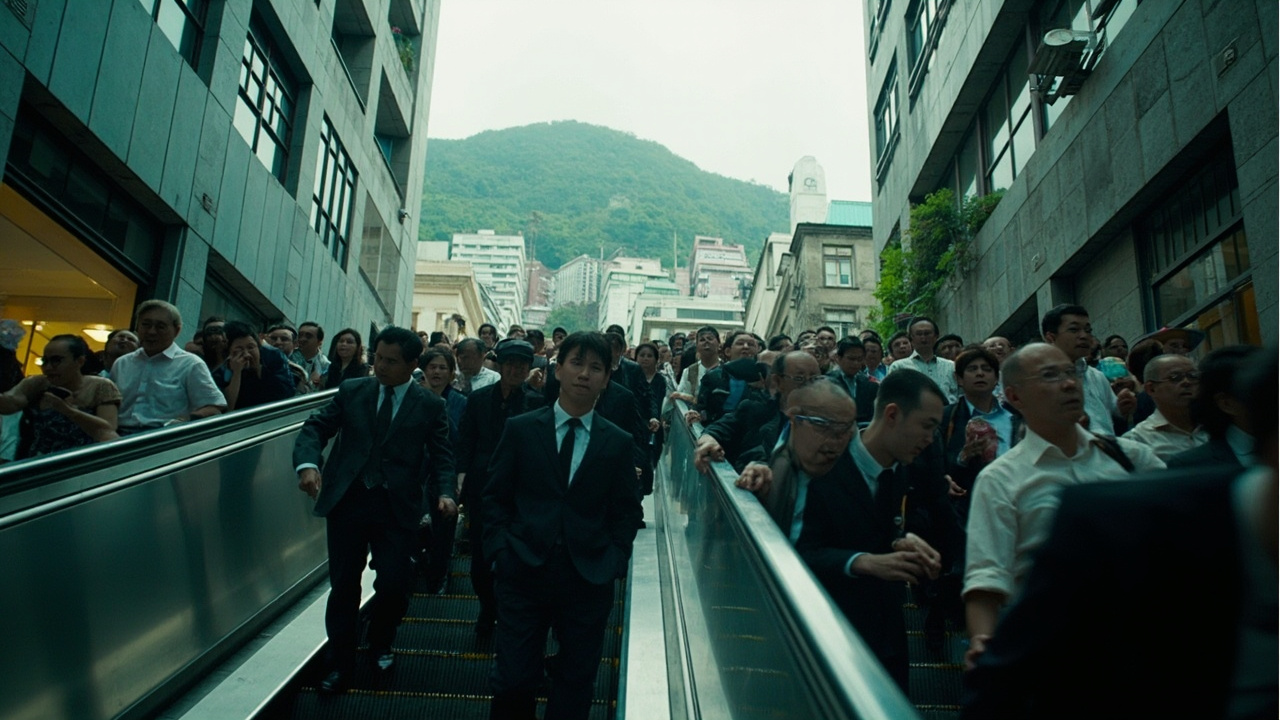
I was standing on the mid-levels escalator at 8:40 on a Tuesday morning, wedged between a banker in a navy suit and an auntie carrying two bags of bok choy, when I realized I’d been on this thing for eleven minutes and hadn’t seen a single tourist. That’s Central for you. Everyone photographs the skyline from the Star Ferry and thinks they’ve seen it. Then they get on the escalator by accident and discover there’s a whole vertical city stacked behind the glass towers.
Hong Kong’s Central district is one of the most walkable pieces of real estate on earth, and almost nobody walks it properly. They do the Peak Tram, they do the ferry, they take a photo of the IFC and leave. But the actual walk — from the ferry pier up through the financial canyon, across the escalator, into the wet market, up to the temples and the antiques street — takes about four hours at a human pace and costs almost nothing. You’ll pass colonial courthouses, a Taoist temple wedged between noodle shops, a dried seafood market that smells like the bottom of the ocean, and a man selling jade who will absolutely try to overcharge you.
This guide is the walk I do every time I land in Hong Kong, refined over maybe a dozen visits. It’s for first-timers who want to understand how this city actually fits together, not just tick off the postcard.
Quick answer
The classic Hong Kong Central walk runs roughly 4-5 km from the Star Ferry Pier up through Central, across the Mid-Levels Escalator, and over to Man Mo Temple in Sheung Wan — allow 4-6 hours with stops, and it’s almost entirely free (only the Peak Tram, around $11/ HK$88, costs real money). US, UK, and most EU passport holders get 90 days visa-free on arrival, no advance application needed. Do it on a weekday morning, start by 9am, and carry an Octopus card or set up Alipay/WeChat Pay before you fly.
The Short Version
If you only have 90 seconds: start at the Star Ferry Pier at 9am, walk up through Statue Square and the IFC, ride the Mid-Levels Escalator to Hollywood Road, wander the antiques shops, see Man Mo Temple, and end with dim sum in Sheung Wan. Skip the Peak Tram queue if it’s over 45 minutes — the walk itself is the point. Wear real shoes. The hills are no joke.
How I Picked These
I’ve walked this route maybe a dozen times over seven years of living in and traveling through China, and I’ve done it in the rain, in August humidity that made my shirt transparent, and once at 6am after a red-eye when nothing was open except a 7-Eleven. I picked these ten stops because they’re the ones I actually return to, not the ones that photograph best. I asked a friend who’s lived in Sheung Wan for fifteen years which temple she actually goes to (not the famous one), and I got lost twice finding the dried seafood street so you don’t have to. Every price here was checked in early 2026. Where I wasn’t sure, I’ve said “approximately” rather than invent a number.
The Comparison Table
| Rank | Place | Best For | Approx Cost (USD) | Time Needed | When to Go |
|---|---|---|---|---|---|
| 1 | Star Ferry Pier & Victoria Harbour | The arrival moment | $0.50 (HK$4) | 30 min | Morning, clear day |
| 2 | Statue Square & the Cenotaph | Colonial history | Free | 20 min | Weekday morning |
| 3 | IFC Mall & Rooftop | Skyline views, coffee | Free | 30 min | Late afternoon |
| 4 | Mid-Levels Escalator | People-watching | Free | 45 min | 8-10am (commute) |
| 5 | PMQ | Design, air-con break | Free | 45 min | Any time |
| 6 | Hollywood Road Antiques | Browsing, jade | Free to browse | 60 min | Weekday |
| 7 | Man Mo Temple | Incense, atmosphere | Free | 20 min | Early morning |
| 8 | Sheung Wan Dried Seafood St. | Sensory overload | Free | 20 min | Morning |
| 9 | Tai Cheong Bakery | Egg tarts | $2 (HK$15) | 10 min | Anytime |
| 10 | Peak Tram (optional) | The view | $11 (HK$88) | 2 hrs | Clear day only |
1. Star Ferry Pier — where the walk should begin
The 9:15am ferry from Tsim Sha Tsui is the right way to start, and I’ll fight anyone who says otherwise. You pay HK$4 (about 50 cents) at the turnstile, sit on the wooden slats, and watch the whole skyline assemble itself as you cross. The diesel smell, the clatter of the gangway chain, the old men reading racing papers — it’s the same crossing it’s been for a century and it still works.
Why it’s special: this is the cheapest 8-minute boat ride in any major city on earth, and it drops you exactly where the walk begins. Don’t take the Star Ferry from Central to Tsim Sha Tsui and back as a “cruise” — take it one way, from Kowloon, so you arrive in Central with your bags and your morning coffee and the whole day ahead of you.
📍 Location: Central Pier 7 (Star Ferry), Central district, Hong Kong Island 🎫 Entry fee: HK$4 (about $0.50) weekday upper deck, HK$5 weekend 🕒 Opening hours: roughly 6:30am-11:30pm, every 6-12 minutes 🚇 How to actually get there: From Tsim Sha Tsui MTR (Tsuen Wan Line), Exit L6, walk 3 minutes to the Star Ferry Pier. Or arrive at Central MTR Exit A and walk 8 minutes to Pier 7. ⏰ When to visit: 8:30-9:30am on a weekday, before the tourist crush 💡 Insider tips: Pay with an Octopus card at the turnstile — no queue. Sit on the upper deck, right side going toward Central, for the best skyline angle. The lower deck is cheaper and where the locals sit; it also smells more like diesel. If you’re setting up payments, get your Alipay and WeChat Pay working before you arrive — the ferry takes Octopus but plenty of small shops don’t take cards.
I once sat next to an old man named Mr. Chan who told me he’d been taking this ferry to work for 41 years and had never once taken the MTR across the harbour. “Why would I?” he said. Fair.
2. Statue Square & the Cenotaph — the colonial layer
Most people walk straight past Statue Square on their way to the IFC and never look up. Don’t be most people. This flat rectangle of paving and palms sits in the shadow of HSBC’s brutalist headquarters and the old Supreme Court building, and it’s where you can read the whole layered history of the city in about 200 meters.
Why it’s special: the Cenotaph (1923) honors Hong Kong’s war dead, the Court of Final Appeal building is the last grand colonial structure of its kind, and the square itself was once the social center of British Hong Kong. The HSBC building across the road — Norman Foster’s 1985 design with its exposed steel “coat hanger” structure — is the building that announced Hong Kong’s arrival as a financial capital. Standing between them is like standing between two centuries.
📍 Location: Central, between Des Voeux Road and Chater Road 🎫 Entry fee: Free 🕒 Opening hours: Open 24 hours (public square) 🚇 How to actually get there: Central MTR, Exit K, walk 2 minutes. From the Star Ferry Pier, walk south along Man Yiu Street for 6 minutes. ⏰ When to visit: Weekday mornings, before the office crowd takes the benches at lunch 💡 Insider tips: The HSBC ground-floor plaza has free public seating and clean toilets — a genuinely useful pit stop. Look for the bronze lions “Stephen” and “Stitt” at the HSBC entrance; rubbing their paws is supposed to bring money luck, and the paws are visibly worn smooth. Sunday is a different scene entirely — this whole area fills with Filipino domestic workers on their day off, which is its own thing to witness respectfully.
3. IFC Mall & the Rooftop — the free skyline
I’ll be honest: I don’t love the IFC Mall. It’s a mall. But the rooftop garden on top of it (level 4, accessible by lift) is one of the great free viewpoints in Asia, and almost no tourist knows it exists.
Why it’s special: from the IFC rooftop you get an unobstructed view across Victoria Harbour to Kowloon, with the clock tower and the Cultural Centre on the far side. On a clear day you can see the container ships queuing at the Kwai Tsing terminals. It’s free, it’s quiet, and there’s a coffee shop up there. Compare that to the Peak Tram, which in 2026 can run HK$88 ($11) and a 45-minute queue on a Saturday.
📍 Location: 8 Finance Street, Central (above Hong Kong Station) 🎫 Entry fee: Free (mall and rooftop) 🕒 Opening hours: Mall 10am-10pm; rooftop roughly 7am-10pm 🚇 How to actually get there: Hong Kong Station MTR (Tung Chung Line/Airport Express), or walk from Central MTR Exit A through the elevated walkways — follow signs for IFC. ⏰ When to visit: Late afternoon for the light, or 5:30pm for sunset over the harbour 💡 Insider tips: The rooftop is on Level 4 — take the lift near the Apple Store, not the escalators. There’s a free water fountain up there; fill your bottle. The mall is a good place to buy a local SIM if you haven’t sorted your phone and internet setup — there’s a carrier shop on the lower levels.
4. Mid-Levels Escalator — the vertical commute
This is the one. The Central-Mid-Levels Escalator is the world’s longest outdoor covered escalator system, about 800 meters long and climbing 135 meters up the hillside, and it’s a piece of public infrastructure that doubles as the best free people-watching in the city.
Why it’s special: it was built in 1993 to move commuters from the dense Mid-Levels residential district down to Central, and it runs downhill 6am-10am and uphill 10am-midnight. Ride it in the morning and you’re moving with the current of office workers; ride it after 10am and you’re going up past them. Either way you pass over streets, through buildings, and past tiny shops and restaurants that exist only because the escalator delivers foot traffic.
📍 Location: Starts at Central Market (Jubilee Street) and runs up to Conduit Road, Mid-Levels 🎫 Entry fee: Free 🕒 Opening hours: Downhill 6am-10am, uphill 10am-midnight (reverses direction daily) 🚇 How to actually get there: Central MTR Exit C, walk 3 minutes to the bottom at Jubilee Street. Or join it anywhere along its length — the Hollywood Road stop is the most useful. ⏰ When to visit: 8-10am for the commute scene, or after 10am if you want to ride up 💡 Insider tips: You can hop on and off at any of the 14+ stops — the Hollywood Road stop drops you right at the antiques district. Stand on the right, walk on the left, same as any escalator. The covered section means it’s usable in the rain, which in Hong Kong is a genuine gift. There are public toilets at the Central Market end.
A woman I met at the top, a retired teacher named Mrs. Leung, told me she’s ridden it every day since 1994 and has never once taken a taxi up the hill. “It’s free and it’s exercise,” she said, which is the most Hong Kong sentence I’ve ever heard.
5. PMQ — the air-conditioned breather
By this point in the walk you will be sweating. Hong Kong humidity is a physical presence, and PMQ — a former police married quarters block converted into a design and crafts hub — is where you go to cool down and pretend you’re cultured.
Why it’s special: it’s two 1950s-era police dormitory blocks that were saved from demolition and turned into studios, shops, and cafes for local designers. It’s not a tourist trap in the usual sense — you’ll see actual Hong Kong creatives working, and the courtyard has decent coffee. Is it essential? No. Is it a great place to sit down for 30 minutes in air conditioning and reset? Absolutely.
📍 Location: 35 Aberdeen Street, Central (on the escalator route) 🎫 Entry fee: Free 🕒 Opening hours: Roughly 11am-8pm daily, some studios closed Mondays 🚇 How to actually get there: Ride the Mid-Levels Escalator to the Aberdeen Street stop, or walk up from Central MTR Exit C in about 12 minutes. ⏰ When to visit: Midday, when you need a break from the heat 💡 Insider tips: The courtyard cafe is fine but overpriced — walk two minutes to the streets around Gough Street for better and cheaper food. The toilets here are clean and free, which matters on this walk. Check the events board at the entrance; there are often free exhibitions or workshops.
6. Hollywood Road Antiques — where you’ll get overcharged
Hollywood Road is the oldest street in Hong Kong, and the stretch between Central and Sheung Wan is lined with antiques dealers selling jade, porcelain, Mao-era memorabilia, and furniture that may or may not be genuine. I bought a “Qing dynasty” snuff bottle here in 2019 for HK$200 that a dealer in Beijing later told me was from 1990s Guangdong. I still like it.
Why it’s special: this is where you see the trading city underneath the finance city. Dealers sit in doorways with magnifying glasses, and the shops range from genuinely serious (Cat Street Gallery area) to gloriously tacky. Even if you buy nothing, the browsing is the point.
📍 Location: Hollywood Road, Central to Sheung Wan 🎫 Entry fee: Free to browse 🕒 Opening hours: Most shops 10:30am-6pm, many closed Sundays 🚇 How to actually get there: Mid-Levels Escalator to Hollywood Road stop, or Central MTR Exit D2 and walk 8 minutes up. ⏰ When to visit: Weekday afternoons, when dealers have time to talk 💡 Insider tips: Never pay the first price — expect to negotiate down 30-50%. Cash gets a better deal than card. If a dealer tells you something is “Ming dynasty,” assume it isn’t unless you’re an expert. The Cat Street antiques market just off Hollywood Road (Upper Lascar Row) is more casual and cheaper than the formal shops.
7. Man Mo Temple — the incense and the quiet
You’ll smell Man Mo Temple before you see it. The incense coils hanging from the ceiling burn for weeks at a time, and the smoke fills the small courtyard in a way that makes the whole place feel like it’s breathing. It’s the most photographed temple in Hong Kong and it deserves the reputation.
Why it’s special: built in the 1840s, it’s dedicated to Man (the god of literature) and Mo (the god of war), which tells you something about what 19th-century Hong Kong valued. It’s a working temple, not a museum — people come to pray, to consult fortune-tellers, and to light incense for exams and business deals. The giant hanging coils are donated by worshippers and can cost thousands of dollars each.
📍 Location: 124-126 Hollywood Road, Sheung Wan 🎫 Entry fee: Free (donations welcome) 🕒 Opening hours: 8am-6pm daily 🚇 How to actually get there: From the Hollywood Road antiques stretch, walk west 6 minutes. Or Sheung Wan MTR Exit A2, walk 8 minutes up. ⏰ When to visit: Early morning (8-9am) before tour groups, or late afternoon 💡 Insider tips: Don’t photograph people praying without asking — it’s a real temple, not a set. The fortune-tellers outside will approach you; a reading costs around HK$100-200 ($13-26) and is a fun experience if you’re up for it. Remove your hat inside. The smoke will cling to your clothes for the rest of the day, which some people love and some people hate.
8. Sheung Wan Dried Seafood Street — the smell you won’t forget
Des Voeux Road West in Sheung Wan is lined with shops selling dried seafood — abalone, sea cucumber, scallops, fish maw — hanging in windows and piled in bins, and the smell is somewhere between a fish market and a very old pantry. It’s not pretty. It’s fascinating.
Why it’s special: this is where Hong Kong’s Cantonese cooking tradition actually lives. Dried seafood is the backbone of the cuisine — a single good dried abalone can cost HK$2,000+ ($255+), and the shops have been trading here for generations. You’ll see shoppers who clearly know exactly what they’re doing, and you’ll see tourists holding their noses. Be the first kind.
📍 Location: Des Voeux Road West, Sheung Wan (between Morrison Street and Eastern Street) 🎫 Entry fee: Free 🕒 Opening hours: Most shops 9am-6pm, closed Sundays 🚇 How to actually get there: Sheung Wan MTR Exit A2, walk 5 minutes west along Des Voeux Road West. ⏰ When to visit: Weekday mornings when the shops are active 💡 Insider tips: The shops are happy to explain what things are if you ask politely — a translation app helps. Don’t touch the merchandise without asking. This is a great place to buy edible souvenirs (dried scallops, mushrooms) that travel well. The smell will follow you; plan a shower before dinner.
9. Tai Cheong Bakery — the egg tart
You will be tired and hungry by this point, and the correct answer is an egg tart from Tai Cheong. The Lyndhurst Terrace branch is the original, and the tarts come out of the oven in waves, still warm, with a flaky crust and a custard center that jiggles when you pick it up.
Why it’s special: Tai Cheong has been making these since 1954, and the recipe is famous enough that the last colonial governor, Chris Patten, was photographed eating one. They cost about HK$15 ($2) each. Get two. Get three.
📍 Location: 35 Lyndhurst Terrace, Central 🎫 Entry fee: N/A — tarts are HK$15 ($2) each 🕒 Opening hours: Roughly 7:30am-8pm daily 🚇 How to actually get there: Central MTR Exit D2, walk 4 minutes up Lyndhurst Terrace. ⏰ When to visit: Mid-afternoon when a fresh batch comes out 💡 Insider tips: Eat it standing outside — they’re best warm. Cash and Octopus only at the original counter; some branches take cards. The Portuguese-style tarts at other bakeries are a different thing entirely; this is the Hong Kong style, with a shortcrust base.
10. The Peak Tram — only if the queue is short
I’m going to be honest with you: the Peak Tram is overrated in the sense that the view from the top is the same view you get from the IFC rooftop for free, and the queue in 2026 can hit 90 minutes on a weekend. But the tram ride itself — a funicular climbing at a 27-degree angle since 1888 — is genuinely fun, and the view from Victoria Peak on a clear day is one of the world’s great city views.
Why it’s special: it’s the oldest funicular in Asia and the engineering is remarkable. The problem is purely logistical: everyone wants to do it at the same time.
📍 Location: Lower terminus at Garden Road, Central 🎫 Entry fee: HK$88 ($11) return, HK$62 ($8) one way 🕒 Opening hours: 7am-midnight daily 🚇 How to actually get there: Central MTR Exit J2, walk 10 minutes up Garden Road, or take bus 15 from Central Exchange Square. ⏰ When to visit: Weekday mornings before 10am, or after 8pm 💡 Insider tips: Check the live queue on the Peak Tram app before committing. The bus 15 from Central is cheaper (HK$10) and gives you a scenic ride without the queue. If it’s cloudy or foggy, skip it entirely — you’ll pay $11 to look at white. The Sky Terrace 428 at the top costs extra; the free viewing platform is nearly as good.
FAQ summary
The Hong Kong Central walk is a free, self-guided 4-5 km route from the Star Ferry Pier through Central to Sheung Wan, best done on a weekday morning starting around 9am. US, UK, and most EU passport holders enter Hong Kong visa-free for 90 days, and the walk itself costs almost nothing beyond food and the optional HK$88 Peak Tram. The single most important prep step is setting up Alipay or WeChat Pay and getting an Octopus card before you arrive, since many small shops and the ferry are cashless.
FAQ
Q: Do I need a visa to do this walk in Hong Kong? A: No, if you hold a US, UK, EU, Canadian, Australian, or most Southeast Asian passports, you get 90 days visa-free on arrival in Hong Kong. Mainland China is a separate immigration zone — if you’re continuing into China, check the visa-free transit rules or apply for a China visa in advance.
Q: How much does the Central walk cost in total? A: The walk itself is essentially free — the Star Ferry is HK$4 ($0.50), the escalator and temples are free, and the only real cost is food (HK$100-200 / $13-26 for dim sum and an egg tart) plus the optional Peak Tram at HK$88 ($11). Budget $20-30 for the day including lunch.
Q: Is English widely spoken along the route? A: In Central, yes — signage is bilingual and most shop staff in the IFC and PMQ speak English. In Sheung Wan’s dried seafood shops and the older streets, English is limited, so a translation app (Google Translate with offline Chinese downloaded, or Pleco) is genuinely useful.
Q: What’s the best day and time to do this walk? A: A weekday morning, starting at the Star Ferry around 9am. You’ll catch the escalator commute scene, avoid the weekend crowds at Man Mo Temple, and reach the antiques shops when they’re open (many close Sundays). Avoid Saturdays, when the Peak Tram queue is worst.
Q: Do I need a SIM card or VPN for this walk? A: Hong Kong has full internet access — no VPN needed, unlike mainland China. Buy a local SIM at the airport or an IFC carrier shop, or use an eSIM. If you’re continuing to mainland China afterward, you’ll need a VPN installed before you cross the border; see the SIM and internet guide.
Q: Is the walk doable with kids or older parents? A: Yes, with adjustments. The Mid-Levels Escalator handles the steepest part, and you can hop off at any stop. Skip the dried seafood street if the smell bothers anyone, and take a taxi (HK$30-50) between Man Mo Temple and the ferry if legs get tired.
Q: What should I wear and bring? A: Comfortable walking shoes with grip — the hills and the polished stone streets are slippery when wet. Bring a refillable water bottle (free fountains at IFC and PMQ), a light rain jacket (Hong Kong weather turns fast), and an Octopus card. Leave the flip-flops at the hotel.
The Honest Wrap-up
This walk is for you if you want to understand how Hong Kong fits together — the colonial layer, the finance layer, the market layer, all stacked on a hillside. It’s not for you if you want a checklist of Instagram spots, or if you can’t handle heat and hills, or if you’d rather be in an air-conditioned mall. The single best piece of advice I can give: start early, walk slowly, and stop for things that aren’t on this list. The best moment of my last walk was a ten-minute detour into a tiny noodle shop on Gough Street where the owner, a man named Mr. Ho, insisted I try his wonton soup and refused to let me pay. That’s not in any guide, and it’s the reason to go.
Destination at a Glance
- Best time to visit: October to December, when humidity drops and the sky clears — avoid July-August typhoon season and the worst of the summer heat.
- Daily budget: $60-120/day for a foreign tourist, covering food, transport, and one paid attraction.
- Visa: 90 days visa-free for US, UK, EU, and most Southeast Asian passport holders; mainland China requires a separate visa or transit exemption.
- Safety: Very safe by any global standard, with low street crime — the main risks are heat exhaustion and slippery streets after rain.
- Getting around: Octopus card plus MTR and the Mid-Levels Escalator cover almost everything; English signage is good in Central but limited in Sheung Wan side streets, so a translation app helps.
- Connectivity: Buy a local SIM or eSIM at the airport; no VPN needed in Hong Kong, but install one before crossing into mainland China.
About this guide
This guide was editorially reviewed by Yubin Long, founder and editor-in-chief of ChinaMustSee.com, a Beijing-based travel editor who has walked this route repeatedly since 2018. Facts were checked against current 2026 sources, including the confirmed Star Ferry fare of HK$4 weekday / HK$5 weekend and the Peak Tram’s HK$88 return fare, plus the 90-day visa-free entry policy for US, UK, and EU passport holders as of early 2026. (Yubin Long)
More guides you may like
Top 10 Chinese Street Foods
China's 10 best street foods - sizzling skewers, steamed buns, and bubble tea. Where to find them and what to ask for.
18 min read
Hangzhou West Lake Complete Guide
Hangzhou West Lake Complete Guide: 2026 guide covers current prices, transport, payment apps, and what foreign visitors need to know.
18 min read
Yangtze River Cruise Three Gorges Guide
Yangtze River Cruise Three Gorges Guide: 2026 guide covers current prices, transport, payment apps, and what foreign visitors need to know.
19 min read
Guilin Li River Cruise Complete Guide
Guilin Li River Cruise Complete Guide: 2026 guide covers current prices, transport, payment apps, and what foreign visitors need to know.
19 min read
China Travel SIM Card eSIM Comparison 2026
The cab driver in Beijing looked at me in the rearview mirror and said, in perfect English, “You know, most tourists buy the wrong SIM card.” I’d been in China
10 min read
China Food Tour Self Guided Complete
The cab driver in Chengdu looked at me in the rearview mirror, then back at the address I’d fumbled to show him on my phone. He laughed. Not a mean laugh—the ki
16 min read