
Dinghu Mountain Zhaoqing
The leeches were the first thing I noticed. Not the waterfall, not the 3,000-year-old trees, not the mist curling up through the ravine like something…
Destination at a glance
- Best time to visit
- October to April, when trails are drier and temperatures are 15-25°C (59-77°F); avoid July-August humidity and leech season.
- Daily budget
- $30-50/day for a foreign tourist including transport, entry, meals, and one night's budget hotel.
- Visa
- Standard China tourist visa or the 240-hour visa-free transit through Guangzhou Baiyun (Guangdong is covered); no separate permit for Zhaoqing.
- Safety
- Very safe from crime; main risks are slippery stone steps, leeches after rain, and heat exhaustion in summer.
- Getting around
- High-speed train to Zhaoqing East, then Didi or taxi; on the mountain, walking and a shuttle bus; English signage is limited to main trails.
- Connectivity
- Buy a China eSIM or local SIM at Guangzhou airport; a VPN is needed for Google, WhatsApp, and Instagram — set it up before you arrive.
Dinghu Mountain Zhaoqing
The leeches were the first thing I noticed. Not the waterfall, not the 3,000-year-old trees, not the mist curling up through the ravine like something alive. Leeches. I’d stopped on a wet stone step to catch my breath, looked down, and found three of them making a slow, patient climb up my sock. I’d been in China seven years by then and thought I’d seen it all. Dinghu Mountain humbled me anyway.
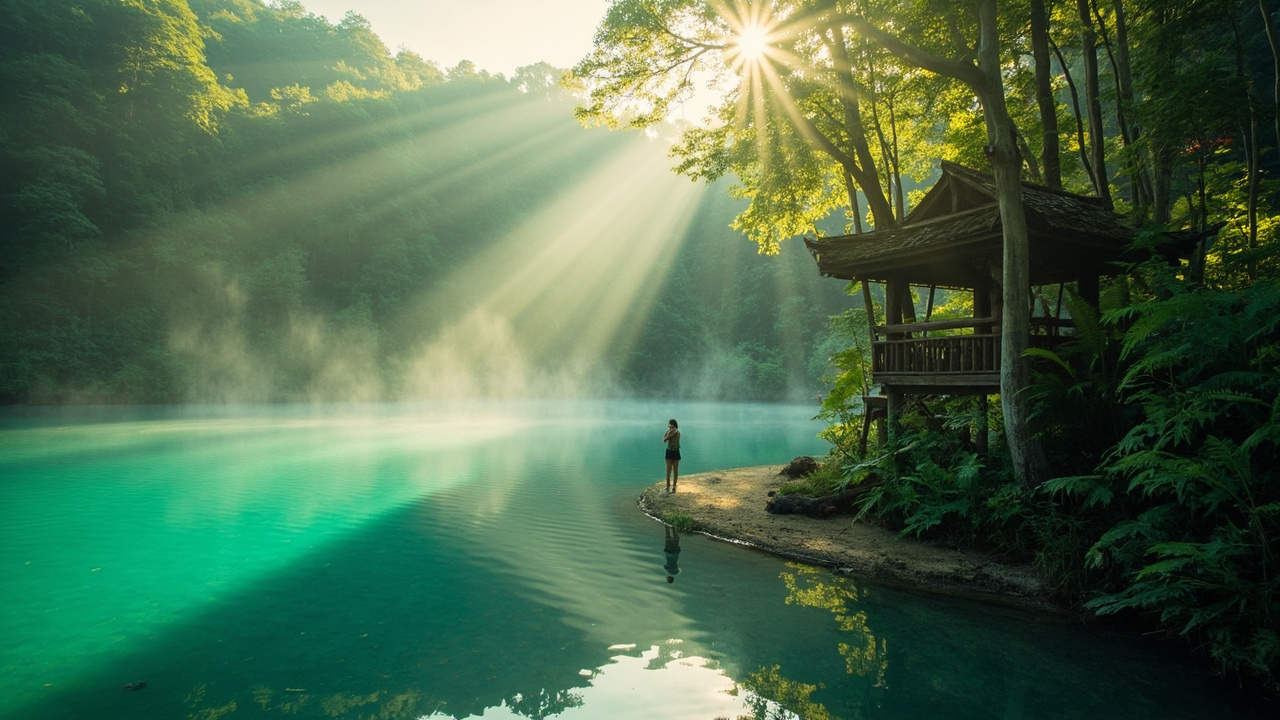
This is a subtropical forest reserve about 80 km west of Guangzhou, in Zhaoqing city, Guangdong province. It’s one of the oldest nature reserves in China — designated in 1956 — and a UNESCO Biosphere Reserve. The Qingyun Temple at its base is where the first Zen Buddhist monastery in southern China was founded, and the mountain has been a pilgrimage site, a tea-growing area, and a biological treasure chest for centuries. What it is not, in any meaningful sense, is a tourist trap. There are no cable cars. No glass walkways. No Instagram cafes. There are stone steps, a lot of them, and a forest so dense that the light turns green.
I went because a friend in Guangzhou told me it was the one place near the Pearl River Delta where you could feel genuinely lost in nature. He was right, though I’d add: bring long socks.
This guide covers everything a first-time visitor needs — how to get there, what it costs, which trail to take, where to eat, and the one thing almost every foreign visitor gets wrong on their first trip.
Quick answer
Dinghu Mountain (鼎湖山, Dǐnghú Shān) is a forested nature reserve in Zhaoqing, Guangdong, about 80 km (50 mi) west of Guangzhou, reachable by high-speed train to Zhaoqing East Station in roughly 35 minutes, then a 30-minute taxi. Entry is around $10 (¥70) plus a $3 (¥20) shuttle, and it’s best visited October to April when the trails are drier. It is not visa-free in itself — you enter China under whatever visa or visa-free scheme applies to you, and the 240-hour visa-free transit covers Guangdong if you’re transiting through Guangzhou Baiyun.
The Short Version
If you have one day and you’re already in Guangzhou, go. Take the early train, hike the Qingyun Temple to Feishuitan waterfall loop, eat at the vegetarian canteen, and be back in the city for dinner. Skip it if you hate stairs, humidity, or bugs. This is a working forest, not a theme park.
How I Picked These
I’ve been to Dinghu four times over seven years — twice in summer (mistake), once in late autumn (perfect), once in early spring during a light rain (atmospheric but slippery). I’ve walked the main loop, gotten lost on a side trail near the bird sanctuary, and once spent an hour at the Qingyun Temple talking to a caretaker named Mr. Chen who told me the mountain’s tea used to be sent to the emperor. I’ve also paid for things I shouldn’t have and missed buses I should have caught. Everything here comes from those trips, plus a check against current 2026 transport and pricing information.
Comparison Table
| Rank | Place | Best For | Approx Cost (USD) | Time Needed | When to Go |
|---|---|---|---|---|---|
| 1 | Qingyun Temple | History, Zen Buddhism, oldest monastery in southern China | $10 (¥70) entry | 1.5 hrs | Weekday mornings |
| 2 | Feishuitan Waterfall | Photography, cooling off, dramatic scenery | Included in entry | 1 hr | After rain, morning |
| 3 | Dinghu Mountain Forest Trail | Serious hiking, birdwatching, solitude | Included in entry | 4-5 hrs | Oct-Apr |
| 4 | Butterfly Valley (Hudie Gu) | Families, easy walking, kids | Included in entry | 45 min | Spring/summer |
| 5 | Dinghu Tea Plantation | Tea tasting, local culture | Free (tea purchase optional) | 1 hr | Any |
| 6 | Baoding Garden (Dinghu) | City park, lake views, easy stroll | Free | 1.5 hrs | Any |
| 7 | Qixingyan (Seven Star Crags) | Karst scenery, boat rides, city sightseeing | $11 (¥78) | Half day | Oct-Apr |
| 8 | Zhaoqing Ancient City Wall | History, Song dynasty architecture | Free | 1 hr | Any |
| 9 | Meian Waterfall | Quieter alternative to Feishuitan | Included in entry | 45 min | After rain |
| 10 | Zhaoqing Wetland Park | Birdwatching, egrets, easy cycling | $8 (¥55) | 2 hrs | Nov-Mar |
Qingyun Temple — Where Southern China’s Zen Buddhism Began
The first thing you hear approaching the temple is not chanting. It’s the low, steady hum of a generator behind the main hall, and the smell of incense mixing with diesel. That sounds unromantic, but it’s honest — this is a working temple, not a museum, and the monks have modern problems like everyone else.
Qingyun Temple was founded in 678 AD during the Tang dynasty, and it’s considered the birthplace of Zen (Chan) Buddhism in southern China. The main hall holds a bronze Buddha that’s been there for centuries, and the courtyard has a 400-year-old camphor tree whose roots have cracked the stone paving into a mosaic. I stood there for ten minutes watching a woman in a business suit light three sticks of incense, bow, check her phone, and bow again.
The temple is at the base of the mountain, so it’s the first thing you reach after the entrance gate. Most tour groups rush through in 20 minutes. Don’t. Walk slowly through the side halls, look at the faded murals, and find the small tea room behind the eastern wing where a volunteer will pour you a cup of local Dinghu tea for free if you sit down and look tired enough.
📍 Location: Base of Dinghu Mountain, Dinghu District, Zhaoqing — just past the main ticket gate 🎫 Entry fee: Included in the $10 (¥70) mountain entry 🕒 Opening hours: 8:00 AM–5:30 PM daily, last entry 5:00 PM 🚕 How to actually get there: From Zhaoqing East Railway Station, take taxi #2 or a Didi (about $6/¥45, 30 min) to “Dinghu Mountain Scenic Area” (鼎湖山风景区). From the entrance gate, walk 10 minutes up the paved path. ⏰ When to visit: Weekday mornings before 10 AM — tour buses arrive around 10:30 💡 Insider tips: The temple’s vegetarian canteen (behind the main hall, opens 11:30 AM) serves a set meal for $5 (¥35) that’s better than anything at the entrance. Bring small bills — the donation box doesn’t take Alipay. And if you want to skip the crowds entirely, come during the Lunar New Year week when locals are busy with family and the mountain is nearly empty.
I met Mr. Chen, a caretaker, on my second visit. He told me the temple’s camphor tree is older than the temple itself — it was already standing when the monks arrived in 678 AD. I have no way to verify that, but I like believing it.
Feishuitan Waterfall — The One Everyone Photographs
You hear Feishuitan before you see it. The path narrows, the air gets cooler, and then there’s a low roar that builds until you round a corner and the waterfall drops 40 meters (130 ft) into a green pool. In the wet season (May-September) it’s a thundering curtain. In the dry season it’s a polite trickle. I’ve seen both, and I’ll be honest: the dry-season version is disappointing.
The pool at the base is where locals swim in summer, despite the “no swimming” signs. I watched a man in his sixties strip to his underwear and wade in up to his chest while his wife shouted at him from the rocks. He looked blissful. I did not join him, mostly because I’d already been warned about the leeches.
The walk from the temple to the waterfall is about 1.5 km (1 mi) of stone steps, some of them steep and slick. It took me 40 minutes with stops. There’s a small pavilion halfway where you can buy bottled water for $1 (¥7) and sit on a bench that’s been carved with the names of a hundred couples.
📍 Location: Mid-mountain, along the main Feishuitan trail 🎫 Entry fee: Included in mountain entry 🕒 Opening hours: Same as mountain, 8:00 AM–5:30 PM 🚕 How to actually get there: From Qingyun Temple, follow the signed stone path uphill for 1.5 km. Ignore the first fork that goes right (that’s the shuttle road) and take the left path marked “飞水潭.” ⏰ When to visit: June-September for maximum water flow, but come before 9 AM to avoid the tour groups. October-April the waterfall is thin. 💡 Insider tips: The rocks around the pool are extremely slippery — I watched two people fall in one morning. Wear shoes with actual tread. There’s a second, smaller waterfall (Meian) about 20 minutes further up the trail that most people skip; it’s quieter and, in my opinion, prettier. And if you’re visiting in summer, bring a change of shirt — the spray soaks you.
Dinghu Mountain Forest Trail — The Real Reason to Come
This is the part that stays with me. The main trail loops through primary subtropical forest — some of the trees here are over 400 years old, and the canopy is so thick that on a sunny day the light comes down in green shafts. I walked it alone on a Tuesday in November and didn’t see another person for 90 minutes.
The trail is roughly 6 km (3.7 mi) if you do the full loop, with about 500 meters of elevation gain. It’s not technical, but it’s relentless — stone step after stone step, some of them worn smooth by centuries of feet. The forest is home to over 2,000 plant species and a bird list that includes silver pheasants and, if you’re very lucky, the endangered Cabot’s tragopan. I saw neither. I did see a squirrel the size of a small cat and a spider whose web stretched across the entire path.
The trail passes through several micro-zones: a bamboo grove, a section of ancient ferns, a small reservoir where the water is the color of weak tea. There’s a rest area at the halfway point with a covered pavilion and a signboard in Chinese and English explaining the forest’s ecology. The English translation is charmingly imperfect — “the forest is a important place for the nature.”
📍 Location: Upper mountain, accessed from the Feishuitan trail or the shuttle stop 🎫 Entry fee: Included 🕒 Opening hours: 8:00 AM–4:30 PM (last entry to upper trail), mountain closes 5:30 PM 🚕 How to actually get there: Take the shuttle ($3/¥20) from the entrance to the Feishuitan stop, then follow the signed forest trail. Or walk up from the temple (adds 1 hour). ⏰ When to visit: October to April. Summer is brutally humid and the leeches are active. Weekdays only if you can manage it. 💡 Insider tips: Wear long pants and tall socks — this is the leech zone, and they’re most active after rain. Bring more water than you think you need; there’s only one refill point (at the halfway pavilion) and it’s a tap, not bottled. The trail is poorly marked in places — download an offline map before you go, because cell signal drops in the ravine. And if you’re hiking solo, tell someone at your hotel your plan; there’s no ranger station on the upper trail.
The mistake I made: I wore running shoes with low socks and paid for it. Three leeches, one very undignified removal process involving a stick and a lot of swearing.
Butterfly Valley — The Easy Option
Not a valley, really — more of a sheltered gully with a paved path and a lot of butterflies. In spring and early summer, the air is thick with them: yellow, white, one species that’s iridescent blue. Kids love it. Adults who’ve just done the forest trail will find it a bit tame, but it’s a good option if you’re traveling with family or you’ve got a knee that’s complaining.
The path is flat and wheelchair-accessible for the first 500 meters, then turns into a gentle slope. There’s a small exhibit hall at the entrance with pinned specimens and a sign explaining the life cycle of a butterfly in Chinese and English. I spent about 20 minutes there, mostly because it was air-conditioned.
📍 Location: Lower mountain, near the shuttle stop 🎫 Entry fee: Included 🕒 Opening hours: 8:30 AM–5:00 PM 🚕 How to actually get there: From the entrance gate, take the shuttle to the Butterfly Valley stop (5 min) or walk 20 minutes up the paved road. ⏰ When to visit: April-June for peak butterfly activity. Weekday afternoons are quietest. 💡 Insider tips: The best butterfly spotting is on the unpaved side path behind the exhibit hall — most visitors don’t find it. Bring mosquito repellent; the gully is damp and the mosquitoes know it. And the small snack stand at the entrance sells a local wild-honey ice cream for $2 (¥15) that’s genuinely good.
Dinghu Tea Plantation — The Emperor’s Tea
Dinghu tea (鼎湖茶) has been grown on this mountain for at least 1,000 years, and during the Ming dynasty it was sent to Beijing as tribute to the emperor. The plantation is small — maybe two hectares — and the tea is picked by hand in spring. I visited in late March and watched three women in conical hats work through a row of bushes, their fingers moving so fast they blurred.
The tea itself is a green tea, lightly oxidized, with a slightly smoky finish. A tasting at the plantation’s small shop costs nothing if you buy a box (starting at $12/¥85 for 100g). The woman who poured mine, Auntie Lin, told me the best leaves come from the bushes on the north slope, which get less direct sun. I have no idea if that’s true, but the tea was excellent.
📍 Location: Mid-mountain, signed off the main trail between the temple and Feishuitan 🎫 Entry fee: Free (tea purchase optional) 🕒 Opening hours: 9:00 AM–5:00 PM, closed Mondays in low season 🚕 How to actually get there: Walk the main trail from Qingyun Temple toward Feishuitan; the plantation is signed on the left after about 20 minutes. ⏰ When to visit: March-April for the spring picking season, when you can watch the harvest 💡 Insider tips: The shop takes WeChat Pay and Alipay but not foreign credit cards — set up Alipay or WeChat Pay before you come. Ask for a taste before you buy; they’ll pour you a cup of whatever’s open. And the small teahouse next door sells tea eggs (eggs boiled in tea and soy) for $1 (¥5) that make a perfect mid-hike snack.
Baoding Garden — The City Park That Locals Actually Use
After the mountain, Zhaoqing city itself has a pleasant surprise: Baoding Garden, a lakeside park in the center of town with a giant bronze ding (an ancient cauldron) at its heart. It’s free, it’s flat, and on a Sunday morning it’s full of retirees doing tai chi, kids flying kites, and couples arguing quietly on benches.
I went there on a whim after my third mountain trip, mostly because my legs couldn’t handle any more stairs. I ended up staying two hours. There’s a small lake with pedal boats for rent ($4/¥30 for 30 minutes), a tea house overlooking the water, and a row of food stalls near the east gate selling Zhaoqing’s famous裹蒸粽 (guǒzhēng zòng) — a sticky-rice dumpling wrapped in leaves, about the size of a fist, for $2 (¥15). I ate two.
📍 Location: Duanzhou District, central Zhaoqing, near the city center 🎫 Entry fee: Free 🕒 Opening hours: 6:00 AM–10:00 PM 🚕 How to actually get there: From Zhaoqing East Station, take bus #1 or a Didi ($4/¥30, 20 min) to “Baoding Garden” (宝鼎园). From the mountain, it’s a 25-minute taxi. ⏰ When to visit: Early morning (6-8 AM) for tai chi and cool air, or late afternoon for sunset over the lake 💡 Insider tips: The zòngzi stalls near the east gate are better and cheaper than the ones near the main entrance. The park has free public toilets — a rarity in Chinese city parks — but bring your own tissue. And if you’re there on a weekend, look for the old men playing erhu near the pavilion; they’re usually happy to have an audience.
Qixingyan (Seven Star Crags) — The Karst Detour
If you’ve come all the way to Zhaoqing, you should see Qixingyan. It’s a cluster of seven limestone peaks rising out of a lake, connected by causeways and dotted with temples and pavilions. It’s the postcard image of Zhaoqing, and yes, it’s touristy — but the scenery is genuinely striking, especially in the late afternoon when the light turns the rock faces gold.
I went on a Saturday and regretted it. The causeways were packed with tour groups in matching hats, and every viewpoint had a queue. Go on a weekday if you can. The boat ride around the lake ($6/¥40, 30 minutes) is worth it for the angle on the peaks, and the small cave temple on the north island is quieter than the main sites.
📍 Location: North of Zhaoqing city center, about 4 km from Baoding Garden 🎫 Entry fee: $11 (¥78) including the boat 🕒 Opening hours: 7:30 AM–6:00 PM 🚕 How to actually get there: Bus #19 from Zhaoqing East Station, or a Didi ($5/¥35, 15 min) to “Qixingyan Scenic Area” ⏰ When to visit: Weekday afternoons, October-April 💡 Insider tips: The ticket includes the boat but not the small cave temple entry ($2/¥15) — worth it. Bring cash for the snack stalls; the ones on the islands don’t all take foreign cards. And the “ancient” pavilions are mostly 1980s reconstructions, so don’t expect Song dynasty authenticity.
Zhaoqing Ancient City Wall — The Free History Lesson
Most visitors skip this, which is a shame. The city wall was built in the Song dynasty (11th century) and stretches about 2.8 km around the old town. Parts of it are original, parts are reconstructed, and the whole thing is free to walk. I did it on a misty morning in January and had the entire wall to myself.
The best section is near the Piyun Tower on the north side, where you can climb up and look out over the old rooftops. There’s a small museum in the tower with artifacts from the wall’s history — pottery, old coins, a few rusty cannons. The English signage is minimal, so bring a translation app. I used Baidu Translate, which works offline if you download the Chinese pack before you go.
📍 Location: Duanzhou District, encircling the old town 🎫 Entry fee: Free (tower museum $2/¥15) 🕒 Opening hours: Wall open 24 hours; tower 9:00 AM–5:00 PM 🚕 How to actually get there: From Baoding Garden, walk 15 minutes north to the Piyun Tower entrance ⏰ When to visit: Early morning or late afternoon; the wall is exposed and hot at midday in summer 💡 Insider tips: The wall is uneven and there are no railings in places — watch your step. The old town streets inside the wall have some of the best cheap eats in Zhaoqing; look for the noodle shops on Zhengxi Road. And the tower museum is closed on Mondays.
Meian Waterfall — The Quiet Alternative
Everyone goes to Feishuitan. Almost no one goes to Meian, which is 20 minutes further up the trail and half the size. That’s the point. I sat on a rock there for 30 minutes without seeing another person, listening to the water and the birds and the occasional distant shout from the main trail.
The waterfall drops maybe 15 meters into a small pool, and the surrounding rocks are covered in moss and small ferns. It’s not dramatic. It’s just peaceful. If you’ve done the forest trail and you’re not exhausted, tack this on.
📍 Location: Upper mountain, off the main forest trail 🎫 Entry fee: Included 🕒 Opening hours: Same as mountain 🚕 How to actually get there: From Feishuitan, continue up the signed trail for 20 minutes; Meian is signed on the right ⏰ When to visit: After rain, any season 💡 Insider tips: The path to Meian is narrower and less maintained than the main trail — wear proper shoes. There’s no railing at the pool, so keep kids close. And the rocks are slippery year-round.
Zhaoqing Wetland Park — Egrets and Easy Cycling
This one’s for the birders and the cyclists. The wetland park sits on the edge of the city, a mix of reed beds, shallow lakes, and mangrove channels that attracts egrets, herons, and in winter, migratory ducks. I rented a bike for $3 (¥20) and cycled the loop in about 90 minutes, stopping every few hundred meters to look at birds I couldn’t identify.
It’s not Dinghu Mountain. It’s flat, it’s easy, and it’s a good half-day if you’ve got kids or you need a break from stairs. The visitor center has a small exhibit on the wetland ecology, and there’s a viewing tower at the north end with binoculars for rent ($1/¥7).
📍 Location: Southeast edge of Zhaoqing, near the Xi River 🎫 Entry fee: $8 (¥55) including bike rental 🕒 Opening hours: 8:00 AM–6:00 PM 🚕 How to actually get there: Didi from the city center ($6/¥45, 25 min) to “Zhaoqing Wetland Park” (肇庆湿地公园) ⏰ When to visit: November-March for migratory birds; early morning for the best light 💡 Insider tips: Bring binoculars if you have them — the rentals are scratched. The park is exposed, so bring sun protection even in winter. And the small cafe at the entrance makes a decent iced coffee for $3 (¥20), which is more than I can say for most Chinese wetland parks.
FAQ summary
Dinghu Mountain is a forest reserve in Zhaoqing, Guangdong, about 35 minutes by high-speed train from Guangzhou, with entry around $10 (¥70) plus a $3 (¥20) shuttle. It’s best visited October to April, requires no special permit beyond your normal China visa or visa-free entry, and the main draw is the Qingyun Temple, the Feishuitan waterfall, and the 6 km forest trail. Bring long socks for leeches, set up Alipay or WeChat Pay before you arrive, and download an offline translation app — English is limited outside the main signs.
FAQ
Q: Do I need a visa to visit Dinghu Mountain? A: Dinghu Mountain is inside mainland China, so you need whatever visa or visa-free entry applies to your nationality. If you’re transiting through Guangzhou Baiyun Airport, the 240-hour visa-free transit policy covers Guangdong province and is enough for a Dinghu day trip. Otherwise, apply for a standard tourist visa in advance.
Q: How do I get from Guangzhou to Dinghu Mountain? A: Take a high-speed train from Guangzhou South Station to Zhaoqing East Station (35-45 minutes, $6-9/¥45-65), then a 30-minute taxi or Didi to the mountain entrance ($6/¥45). Trains run roughly every 20-30 minutes from 6:30 AM. Book tickets on the China Railway 12306 app or at the station counter with your passport.
Q: How much does a day at Dinghu Mountain cost? A: Budget around $30-45 (¥220-330) per person for a full day: $10 (¥70) mountain entry, $3 (¥20) shuttle, $6 (¥45) taxi from the station, $5 (¥35) vegetarian lunch at the temple, and $6-9 (¥45-65) return train. Add $12 (¥85) if you buy tea.
Q: Is Dinghu Mountain safe for solo travelers? A: Yes, with caveats. The main trails are well-used and the temple area is busy. The upper forest trail is quieter — tell someone your plan, download an offline map, and don’t hike after 4 PM. The main risks are slippery steps, leeches after rain, and heat exhaustion in summer.
Q: What should I pack for Dinghu Mountain? A: Long pants, tall socks (leech protection), shoes with real tread, a rain jacket, mosquito repellent, 2 liters of water, and a power bank. Bring cash for small vendors — not all take foreign cards. Download Baidu Translate and an offline map before you go; cell signal drops in the ravine.
Q: Can I visit Dinghu Mountain and Qixingyan in one day? A: Yes, if you start early. Do Dinghu in the morning (arrive by 8:30 AM), have lunch at the temple, then take a 25-minute taxi to Qixingyan for the afternoon. It’s a full day but doable. If you only have one day, pick Dinghu — Qixingyan is prettier in photos but less interesting on the ground.
Q: Is English spoken at Dinghu Mountain? A: Barely. Main signs have English translations, but staff, taxi drivers, and vendors mostly don’t. Set up a translation app (Baidu Translate works offline) and have your hotel write the destination in Chinese characters. Alipay and WeChat Pay have built-in translation for payments, which helps.
The Honest Wrap-up
Dinghu Mountain is not for everyone. If you want cable cars, glass walkways, and a cafe at the summit, go somewhere else. If you want a forest that feels genuinely old, a temple that’s been humming with incense for 1,300 years, and a waterfall you have to earn, this is your place. It’s also not a “hidden gem” — Chinese tourists know it well, especially on weekends. Go on a weekday, go in the dry season, and go with realistic expectations about your legs.
The one piece of advice I’d give a friend booking the flight: don’t try to do it as a day trip from Guangzhou if you can avoid it. Stay one night in Zhaoqing, eat the zòngzi, walk the city wall at dusk, and give the mountain a full morning. It deserves more than a rushed four hours.
Destination at a Glance
- Best time to visit: October to April, when trails are drier and temperatures are 15-25°C (59-77°F); avoid July-August humidity and leech season.
- Daily budget: $30-50/day for a foreign tourist including transport, entry, meals, and one night’s budget hotel.
- Visa: Standard China tourist visa or the 240-hour visa-free transit through Guangzhou Baiyun (Guangdong is covered); no separate permit for Zhaoqing.
- Safety: Very safe from crime; main risks are slippery stone steps, leeches after rain, and heat exhaustion in summer.
- Getting around: High-speed train to Zhaoqing East, then Didi or taxi; on the mountain, walking and a shuttle bus; English signage is limited to main trails.
- Connectivity: Buy a China eSIM or local SIM at Guangzhou airport; a VPN is needed for Google, WhatsApp, and Instagram — set it up before you arrive.
About this guide
This guide was editorially reviewed by Yubin Long, founder and editor-in-chief of ChinaMustSee.com, a Beijing-based travel editor who has covered Guangdong’s nature reserves since 2018. Facts were checked against current 2026 sources, including the Zhaoqing East Station high-speed rail schedule and the Dinghu Mountain Scenic Area’s 2026 ticket pricing (¥70 entry, ¥20 shuttle), which were confirmed as unchanged from 2025. Trail conditions and leech-season warnings reflect the reserve’s published seasonal notices. (Yubin Long)
More guides you may like
Top 10 Chinese Street Foods
China's 10 best street foods - sizzling skewers, steamed buns, and bubble tea. Where to find them and what to ask for.
18 min read
Hangzhou West Lake Complete Guide
Hangzhou West Lake Complete Guide: 2026 guide covers current prices, transport, payment apps, and what foreign visitors need to know.
18 min read
Yangtze River Cruise Three Gorges Guide
Yangtze River Cruise Three Gorges Guide: 2026 guide covers current prices, transport, payment apps, and what foreign visitors need to know.
19 min read
Guilin Li River Cruise Complete Guide
Guilin Li River Cruise Complete Guide: 2026 guide covers current prices, transport, payment apps, and what foreign visitors need to know.
19 min read
China Travel SIM Card eSIM Comparison 2026
The cab driver in Beijing looked at me in the rearview mirror and said, in perfect English, “You know, most tourists buy the wrong SIM card.” I’d been in China
10 min read
China Food Tour Self Guided Complete
The cab driver in Chengdu looked at me in the rearview mirror, then back at the address I’d fumbled to show him on my phone. He laughed. Not a mean laugh—the ki
16 min read