
Chinese Hotpot Types Explained
The first time I ate hotpot in Chongqing, I made the mistake of fishing a piece of tripe out of the bubbling red oil and popping it straight into my mouth.…
Destination at a glance
- Best time to visit
- October–March for northern styles (Beijing, Dongbei), year-round for Sichuan and Cantonese.
- Daily budget
- $45–90/day for a foreign tourist, including one hotpot meal.
- Visa
- Most European and Southeast Asian passport holders qualify for the 240-hour visa-free transit; check our [visa guide](/posts/china-visa-free-transit-144-hour-240-hour/) for your nationality.
- Safety
- Very safe; the main risk is burning your mouth on a chili.
- Getting around
- Metro plus Didi ride-hail; English signage is limited outside major stations.
- Connectivity
- Buy a local SIM or eSIM on arrival; a VPN is needed for Google and WhatsApp.
Chinese Hotpot Types Explained
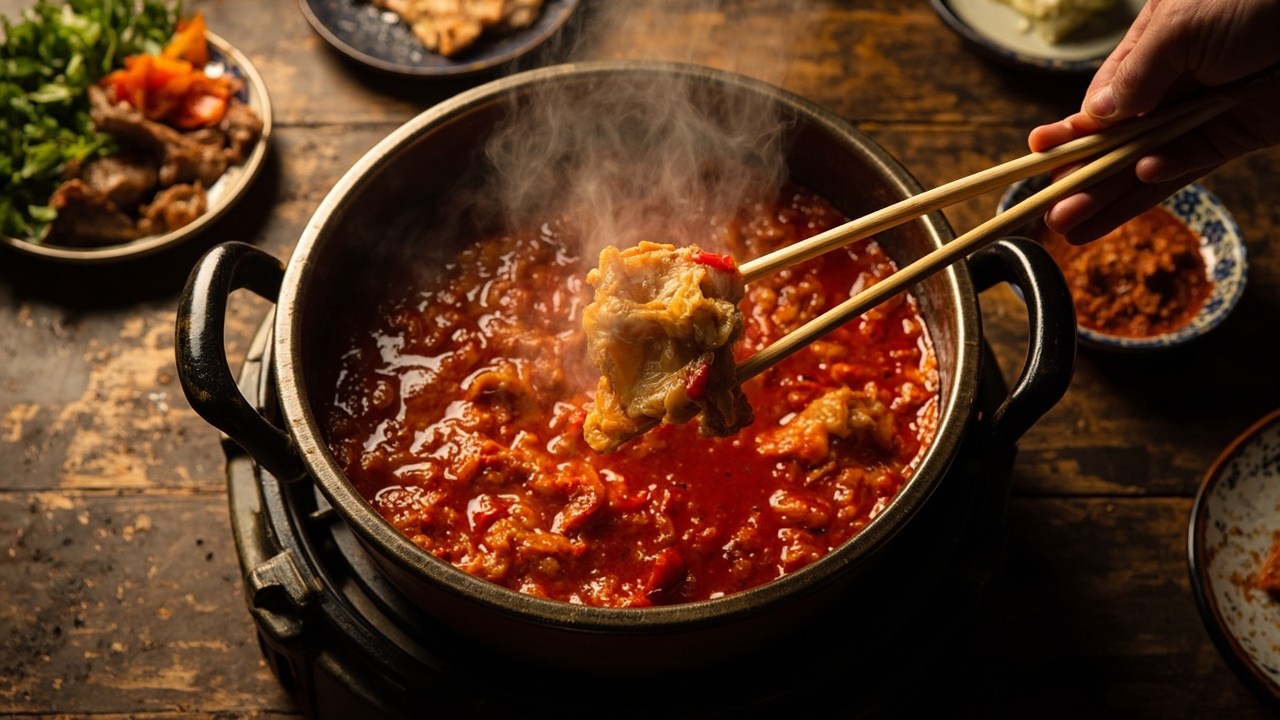
The first time I ate hotpot in Chongqing, I made the mistake of fishing a piece of tripe out of the bubbling red oil and popping it straight into my mouth. My friend Liu—a taxi driver who’d adopted me for the evening—watched my face turn the color of the broth and slid a small dish of sesame oil and garlic toward me without a word. “You need the oil,” he said. “It cools it down. And it tastes better.” He was right. That little bowl of sesame oil is the difference between a pleasant meal and a three-hour endorphin rush you’ll be talking about for weeks.
Hotpot is not one dish. It’s a whole family of them, and the differences between a Chongqing beef-oil hotpot and a Beijing copper-pot mutton hotpot are as big as the difference between Texas barbecue and Carolina pulled pork. If you’re planning your first trip to China and want to eat well, knowing which style you’re walking into saves you from ordering the wrong thing, overpaying, or—worst case—leaving hungry because you didn’t understand the menu.
This guide covers the ten main regional hotpot styles you’ll encounter, what to order at each, how much it costs, and the small things locals know that no English menu will tell you.
Quick answer
Chinese hotpot splits into roughly ten regional styles, but the two you’ll meet first are Chongqing/Sichuan mala hotpot (numbing-spicy beef tallow broth) and Beijing copper-pot mutton hotpot (clean, mild, dipped in sesame sauce). A typical meal costs $15–30 (¥110–220) per person including drinks, and you order by ticking boxes on a paper menu rather than speaking to a waiter. Most hotpot restaurants are open from 11am to 2am, and you’ll need Alipay or WeChat Pay set up because very few take foreign cards.
The short version
If you eat one hotpot, make it Chongqing mala—it’s the most intense and the most fun. If you hate spicy food, go straight to Beijing copper-pot mutton or Chaoshan beef hotpot, both of which are mild and let the ingredients speak. Skip the tourist-trap chains in major shopping malls; the good stuff is on side streets with plastic stools and a queue of locals. Budget $20 per person and don’t fill up on the free snacks.
How I picked these
I’ve eaten hotpot in about a dozen Chinese cities over seven years, mostly because it’s the cheapest way to feed a group and the most social way to eat alone. For this guide I focused on styles that are (a) widespread enough that you’ll actually encounter them on a normal trip, and (b) distinct enough that ordering at one teaches you nothing about the others. I cross-checked prices with local friends in Chengdu, Beijing, and Guangzhou in early 2026, and I’ve flagged where costs vary wildly by city. I left out a few hyper-regional styles (like Guizhou sour-soup hotpot) that you’d only find if you went looking.
Comparison table
| Rank | Style | Best For | Approx Cost (USD/person) | Time Needed | When to Go |
|---|---|---|---|---|---|
| 1 | Chongqing mala | Spice lovers, groups | $18–30 (¥130–220) | 2 hrs | Dinner, any night |
| 2 | Beijing copper-pot mutton | First-timers, winter | $20–35 (¥145–255) | 1.5 hrs | Oct–Mar |
| 3 | Sichuan (Chengdu) | Balanced spice | $15–25 (¥110–180) | 2 hrs | Dinner |
| 4 | Chaoshan beef | Beef purists | $25–40 (¥180–290) | 1.5 hrs | Lunch or dinner |
| 5 | Yunnan mushroom | Vegetarians, mild | $20–35 (¥145–255) | 2 hrs | Autumn |
| 6 | Cantonese seafood | Seafood fans | $30–50 (¥220–360) | 2 hrs | Dinner |
| 7 | Northeast (Dongbei) | Big appetites | $15–25 (¥110–180) | 1.5 hrs | Winter |
| 8 | Guizhou sour soup | Adventurous eaters | $15–25 (¥110–180) | 2 hrs | Any |
| 9 | Hainan coconut | Mild, tropical | $20–30 (¥145–220) | 1.5 hrs | Any |
| 10 | Taiwanese shabu-shabu | Solo diners | $15–25 (¥110–180) | 1 hr | Lunch |
1. Chongqing mala hotpot — the one that bites back
I still remember the smell before I saw the restaurant: beef tallow and chili oil hitting a hot wok, so thick in the air that my eyes watered from the doorway. The pot arrived with a solid block of red fat that melted into a rolling boil within minutes. This is the real thing.
Chongqing hotpot is the loudest, greasiest, most joyful version of the dish. The broth is beef tallow (牛油) rather than water, which is why it clings to everything and tastes so rich. Order the “nine-grid” pot (九宫格) if you want to cook different things at different heats—the center boils hardest, the corners are gentler. Must-orders: tripe (毛肚), duck intestine (鸭肠), and beef aorta (黄喉). Dip everything in a bowl of sesame oil, garlic, and cilantro, not the broth itself.
📍 Location: Everywhere, but the best cluster is around Jiefangbei and the older streets of Yuzhong district. 🎫 Entry fee: Free to enter; you pay per dish. 🕒 Opening hours: Most run 11am–2am, some 24 hours. 🚇 How to get there: Take Metro Line 2 to Linjiangmen (临江门), Exit A, and walk into the alleys behind the station—that’s where the good ones are. ⏰ When to visit: Dinner, after 7pm, when the locals come out. Avoid weekends if you hate queues. 💡 Insider tips: Ask for wei la (微辣, mild) if you’re nervous—it’s still spicy. Order a side of suan nai (yogurt drink) to cool your mouth. Don’t wear anything you love; the smell lingers. And never drink the broth.
I watched Liu eat a whole plate of tripe in under five minutes and then order a second. “This is normal,” he said, seeing my face.
2. Beijing copper-pot mutton — the quiet classic
My first Beijing hotpot was in a courtyard restaurant near Houhai in January, snow on the ground, and the copper pot in the middle of the table was the only warm thing in the room. The broth was clear—just water, ginger, and a few scallions—and the lamb came sliced paper-thin, frozen so it held its shape.
This is the opposite of Chongqing: mild, elegant, and built around the quality of the meat. You dip the cooked lamb in a thick sesame paste (麻酱) mixed with fermented tofu and chive flower sauce. Order hand-cut lamb (手切羊肉) over the machine-sliced stuff if you can; the texture is completely different. Add a plate of frozen tofu and some shaobing (sesame flatbread) to soak up the sauce.
📍 Location: Dongcheng and Xicheng districts have the best old-school spots, especially around Gulou and Nanluoguxiang. 🎫 Entry fee: Free. 🕒 Opening hours: 11am–10pm, some close on Mondays. 🚇 How to get there: Metro Line 8 to Shichahai (什刹海), Exit A2, then walk 10 minutes north into the hutongs. ⏰ When to visit: Winter, obviously. Lunch is quieter than dinner. 💡 Insider tips: The copper pot is charcoal-fired—don’t touch the chimney. Ask for qing tang (清汤, clear broth) if you don’t want the optional spicy side. The sesame dip is thick; thin it with a spoonful of broth. And don’t order the “premium” lamb platter unless you’re with a local—it’s usually the same meat at triple the price.
3. Sichuan (Chengdu) hotpot — the balanced middle
Chengdu hotpot is what most foreigners picture when they hear “Sichuan hotpot,” and it’s a fair introduction. The broth is chili-and-peppercorn based, often with a beef-tallow base but lighter than Chongqing’s. The numbing mala sensation is more pronounced here—the Sichuan peppercorns are fresher and more floral.
I ate at a place near Kuanzhai Alley with a friend who insisted we order the “medium” spice level. It was still the hottest thing I’d eaten in a year. Chengdu hotpot is also where you’ll find the best vegetarian options: lotus root, potato slices, enoki mushrooms, and tofu skin all hold up well in the broth. Order a bowl of bingfen (冰粉, ice jelly) for dessert—it’s the local antidote to the spice.
📍 Location: Wuhou and Jinjiang districts, especially around Yulin and Kuanzhai Alley. 🎫 Entry fee: Free. 🕒 Opening hours: 11am–midnight. 🚇 How to get there: Metro Line 4 to Kuanzhai Alley (宽窄巷子), Exit B, then walk 5 minutes into the side streets. ⏰ When to visit: Any evening; Chengdu eats late. 💡 Insider tips: Ask for yuan yang guo (鸳鸯锅, yin-yang pot) if half your group can’t handle spice. The free snacks (peanuts, pickles) are there to be eaten while you wait. And don’t be shy about asking the server to adjust the spice—they will.
4. Chaoshan beef hotpot — the beef purist’s choice
This is the one I’d fly back for. Chaoshan (潮汕) hotpot, from the Guangdong coast, is a study in beef. The broth is a light, clear beef bone stock, sometimes with a few herbs, and the meat is sliced to order from specific cuts—brisket, flank, tendon, tongue—each with a recommended cooking time measured in seconds.
The first time I tried it, in Shenzhen, the server brought a laminated card showing which cut was which and how long to dip it. I ignored the card and overcooked a piece of brisket. The server, without a word, brought me another plate and pointed at the “8 seconds” line. That’s the level of care here.
📍 Location: Guangzhou, Shenzhen, and Shantou have the best; in Guangzhou, look around Tianhe district. 🎫 Entry fee: Free. 🕒 Opening hours: 11am–10pm. 🚇 How to get there: In Guangzhou, Metro Line 3 to Tianhe Sports Center (天河体育中心), Exit D, then walk 5 minutes. ⏰ When to visit: Lunch is cheaper and quieter; the beef is fresher in the morning. 💡 Insider tips: Order the beef balls (牛肉丸) last—they take longest to cook. The dipping sauce is usually a light soy with garlic and chili; don’t drown the meat. And ask for the “chef’s selection” if you’re unsure—it’s usually the best value.
5. Yunnan mushroom hotpot — the mild, earthy one
I ate this in Kunming in October, when the wild mushrooms were in season, and the broth was so fragrant I could smell it from the street. Yunnan hotpot is built around wild mushrooms—porcini, chanterelles, and dozens of local varieties—simmered in a chicken or vegetable stock. It’s mild, deeply savory, and the best option for vegetarians or anyone who can’t handle chili.
The ritual matters: the mushrooms go in first, then the vegetables, then the meat (if you’re eating meat). The broth at the end is the prize—drink it with a spoon. Order a plate of rushan (乳扇, dried milk fan) if you see it; it’s a Yunnan specialty that melts into the soup.
📍 Location: Kunming’s Guandu district and the streets around Green Lake (翠湖). 🎫 Entry fee: Free. 🕒 Opening hours: 11am–10pm. 🚇 How to get there: Metro Line 2 to Green Lake (翠湖), Exit C, then walk 5 minutes. ⏰ When to visit: Autumn (September–November) for the best mushrooms. 💡 Insider tips: Never eat a mushroom you don’t recognize—some are toxic. The server will tell you which ones need longer cooking. And don’t skip the broth at the end; it’s the whole point.
6. Cantonese seafood hotpot — the fancy one
Cantonese hotpot is the most expensive style on this list, and the most delicate. The broth is usually a clear chicken or seafood stock, and the ingredients are fresh seafood—prawns, scallops, fish slices, crab—plus tofu and vegetables. It’s popular in Hong Kong and Guangzhou, and it’s the style most likely to appeal to someone who doesn’t like spicy food.
I ate this in Guangzhou with a group of colleagues who ordered a whole crab and a plate of live prawns that were still moving when they hit the pot. It was a little unsettling and completely delicious.
📍 Location: Guangzhou’s Haizhu and Tianhe districts; also common in Shenzhen. 🎫 Entry fee: Free. 🕒 Opening hours: 11am–11pm. 🚇 How to get there: Metro Line 2 to Jiangnanxi (江南西), Exit A, then walk 5 minutes. ⏰ When to visit: Dinner, especially on weekends. 💡 Insider tips: Ask for the “seasonal” seafood—it’s fresher and cheaper. The dipping sauce is usually light soy with ginger and scallion; don’t add chili unless you want to ruin the seafood. And don’t order the lobster unless you’re prepared to pay for it.
7. Northeast (Dongbei) hotpot — the hearty one
Dongbei hotpot, from China’s northeast, is the winter comfort food of the north. The broth is usually a pork or chicken stock, sometimes with pickled cabbage (酸菜), and the ingredients are hearty—pork slices, blood sausage, frozen tofu, and wide sweet potato noodles. It’s cheap, filling, and designed for cold weather.
I ate this in Harbin in January, when it was -20°C outside, and the pot was the only reason I stayed conscious. The pickled cabbage cuts through the richness of the pork, and the frozen tofu soaks up the broth like a sponge.
📍 Location: Harbin’s Daoli district and Shenyang’s Heping district. 🎫 Entry fee: Free. 🕒 Opening hours: 11am–10pm. 🚇 How to get there: In Harbin, Metro Line 1 to Museum (博物馆), Exit 3, then walk 5 minutes. ⏰ When to visit: Winter, obviously. 💡 Insider tips: Order the pickled cabbage (酸菜) as a side—it’s the local favorite. The blood sausage (血肠) is an acquired taste; try a small piece first. And don’t be surprised if the broth is saltier than you expect—that’s normal here.
8. Guizhou sour-soup hotpot — the adventurous one
Guizhou hotpot is built on a fermented tomato and chili base called suan tang (酸汤), which is sour, spicy, and completely different from anything else on this list. It’s popular in Guiyang and the surrounding province, and it’s the style I’d recommend to anyone who thinks they’ve “had Sichuan hotpot” and wants something new.
The sourness comes from fermented tomatoes and rice water, and it’s balanced with fresh chili and herbs. Order the fish—Guiyang is famous for its sour-soup fish hotpot—and dip it in a chili-soy sauce.
📍 Location: Guiyang’s Yunyan district. 🎫 Entry fee: Free. 🕒 Opening hours: 11am–10pm. 🚇 How to get there: Metro Line 1 to Beijing Road (北京路), Exit B, then walk 10 minutes. ⏰ When to visit: Any time; it’s a year-round dish. 💡 Insider tips: The sourness is intense—ask for a milder version if you’re not sure. The fish is usually served whole; ask the server to debone it for you. And try the local rice wine (米酒) with it—it’s the traditional pairing.
9. Hainan coconut hotpot — the tropical one
Hainan coconut hotpot is a newer style, popular in Sanya and Haikou, where the broth is made from fresh coconut water and chicken. It’s mild, slightly sweet, and the lightest hotpot on this list. It’s also the most photogenic—the pot arrives with a whole coconut sometimes.
I ate this in Sanya after a day at the beach, and it was exactly what I wanted: light, refreshing, and not too filling. The chicken is poached in the coconut broth, and the dipping sauce is a ginger-scallion oil.
📍 Location: Sanya’s Dadonghai area and Haikou’s Meilan district. 🎫 Entry fee: Free. 🕒 Opening hours: 11am–10pm. 🚇 How to get there: In Sanya, take bus 8 to Dadonghai (大东海) and walk 5 minutes. ⏰ When to visit: Any time; it’s a beach-town dish. 💡 Insider tips: The coconut broth is sweet—don’t add chili unless you want to ruin it. Order the fresh coconut water to drink. And don’t expect it to be cheap—coconut is imported in some parts of the island.
10. Taiwanese shabu-shabu — the solo-friendly one
Taiwanese hotpot, often called shabu-shabu (from the Japanese), is the most solo-friendly style on this list. It’s usually served in individual pots, with a light kombu or chicken broth, and a set menu of meat, vegetables, and a dipping sauce. It’s popular in Taipei and increasingly in mainland cities with Taiwanese communities.
I ate this alone in Shanghai on a rainy Tuesday, and it was the least awkward solo meal I’ve had in China. The set menu made ordering easy, and the individual pot meant I didn’t have to share.
📍 Location: Shanghai’s Gubei area (Taiwanese expat hub) and Taipei’s Da’an district. 🎫 Entry fee: Free. 🕒 Opening hours: 11am–10pm. 🚇 How to get there: In Shanghai, Metro Line 10 to Yili Road (伊犁路), Exit 2, then walk 5 minutes. ⏰ When to visit: Lunch, when the set menus are cheaper. 💡 Insider tips: The set menu is the best value—don’t order à la carte. Ask for the “mild” broth if you’re not sure. And the dipping sauce is usually a sesame-soy mix; add garlic and chili to taste.
FAQ summary
The most important things to know: Chongqing and Sichuan hotpot are the spiciest and most intense, Beijing copper-pot and Chaoshan beef are the mildest and most ingredient-focused, and a typical meal costs $15–30 (¥110–220) per person. You order by ticking boxes on a paper menu, you’ll need Alipay or WeChat Pay, and the sesame-oil dip is not optional if you want to survive the spice. Most restaurants are open late, and the best ones are on side streets, not in shopping malls.
FAQ
Q: Is hotpot safe to eat for foreigners with sensitive stomachs? A: Generally yes, but the spice level can upset your stomach if you’re not used to it. Start with a mild style like Beijing copper-pot or Chaoshan beef, and ask for wei la (微辣, mild) if you’re trying Sichuan or Chongqing. Avoid drinking the broth—it’s very rich.
Q: How do I order if I don’t speak Chinese? A: Most hotpot restaurants have picture menus or a paper checklist with English translations. Point at what you want, or use a translation app like Pleco or Google Translate (with a VPN if needed). The staff are used to foreigners and will usually help.
Q: How much does a hotpot meal cost? A: Expect $15–30 (¥110–220) per person including drinks, depending on the city and style. Beijing and Shanghai are more expensive; Chengdu and Chongqing are cheaper. Seafood hotpot can run $40–50 (¥290–360) per person.
Q: Do I need to tip at a hotpot restaurant? A: No. Tipping is not customary in China and can be awkward. The price on the menu is what you pay.
Q: Can I eat hotpot if I’m vegetarian? A: Yes—Yunnan mushroom hotpot and Hainan coconut hotpot are the best options, and most restaurants have a vegetable section on the menu. Ask for a vegetable broth (素汤) if you want to avoid meat stock.
Q: What’s the best hotpot for a first-timer? A: Beijing copper-pot mutton or Chaoshan beef hotpot. Both are mild, the ingredients are high-quality, and the ordering process is straightforward. Save Chongqing mala for your second or third meal, once you’ve got the hang of it.
Q: How do I pay at a hotpot restaurant? A: Almost all accept WeChat Pay or Alipay, which you should set up before you arrive—see our payment guide. Very few take foreign credit cards, so don’t rely on your Visa.
The honest wrap-up
This guide is for anyone who wants to eat hotpot in China without feeling lost. It’s not for people who hate spicy food and refuse to try anything new—if that’s you, stick to Beijing copper-pot and you’ll be fine. My one piece of advice: don’t overthink it. Walk into a restaurant with a queue of locals, point at what looks good, and order a beer. The worst that happens is you eat something you don’t love. The best is you find your new favorite meal. And if you’re planning a bigger trip, our top destinations guide has the rest of your itinerary covered.
Destination at a Glance
- Best time to visit: October–March for northern styles (Beijing, Dongbei), year-round for Sichuan and Cantonese.
- Daily budget: $45–90/day for a foreign tourist, including one hotpot meal.
- Visa: Most European and Southeast Asian passport holders qualify for the 240-hour visa-free transit; check our visa guide for your nationality.
- Safety: Very safe; the main risk is burning your mouth on a chili.
- Getting around: Metro plus Didi ride-hail; English signage is limited outside major stations.
- Connectivity: Buy a local SIM or eSIM on arrival; a VPN is needed for Google and WhatsApp.
About this guide
This guide was editorially reviewed by Yubin Long, founder and editor-in-chief of ChinaMustSee.com, a Beijing-based travel editor. Facts were checked against current 2026 sources, including the 240-hour visa-free transit policy and typical hotpot pricing in Chengdu and Beijing as of early 2026. (Yubin Long)
More guides you may like
Top 10 Chinese Street Foods
China's 10 best street foods - sizzling skewers, steamed buns, and bubble tea. Where to find them and what to ask for.
18 min read

Hangzhou West Lake Complete Guide
Hangzhou West Lake Complete Guide: 2026 guide covers current prices, transport, payment apps, and what foreign visitors need to know.
18 min read

Yangtze River Cruise Three Gorges Guide
Yangtze River Cruise Three Gorges Guide: 2026 guide covers current prices, transport, payment apps, and what foreign visitors need to know.
19 min read

Guilin Li River Cruise Complete Guide
Guilin Li River Cruise Complete Guide: 2026 guide covers current prices, transport, payment apps, and what foreign visitors need to know.
19 min read
China Travel SIM Card eSIM Comparison 2026
The cab driver in Beijing looked at me in the rearview mirror and said, in perfect English, “You know, most tourists buy the wrong SIM card.” I’d been in China
10 min read
China Food Tour Self Guided Complete
The cab driver in Chengdu looked at me in the rearview mirror, then back at the address I’d fumbled to show him on my phone. He laughed. Not a mean laugh—the ki
16 min read