
Shengsi Islands Zhoushan
The ferry from Shanghai's Shenjiawan pier took four hours, and for most of it I stood at the rail watching the East China Sea turn from shipping-lane gray…
Destination at a glance
- Best time to visit
- May to October, with September and October ideal for warm water and fewer crowds.
- Daily budget
- $60–110/day (¥430–790) including ferry, guesthouse, and seafood meals.
- Visa
- Most visitors can use China's 240-hour visa-free transit if connecting through Shanghai; otherwise a standard tourist visa is required.
- Safety
- Very safe for tourists; main risks are slippery cliffs, sunburn, and cancelled ferries during typhoon season.
- Getting around
- Ferries between islands, taxis, and rented scooters; English signage is almost nonexistent, so bring a translation app.
- Connectivity
- Buy a local SIM or eSIM on arrival; a VPN is essential for Google and WhatsApp.
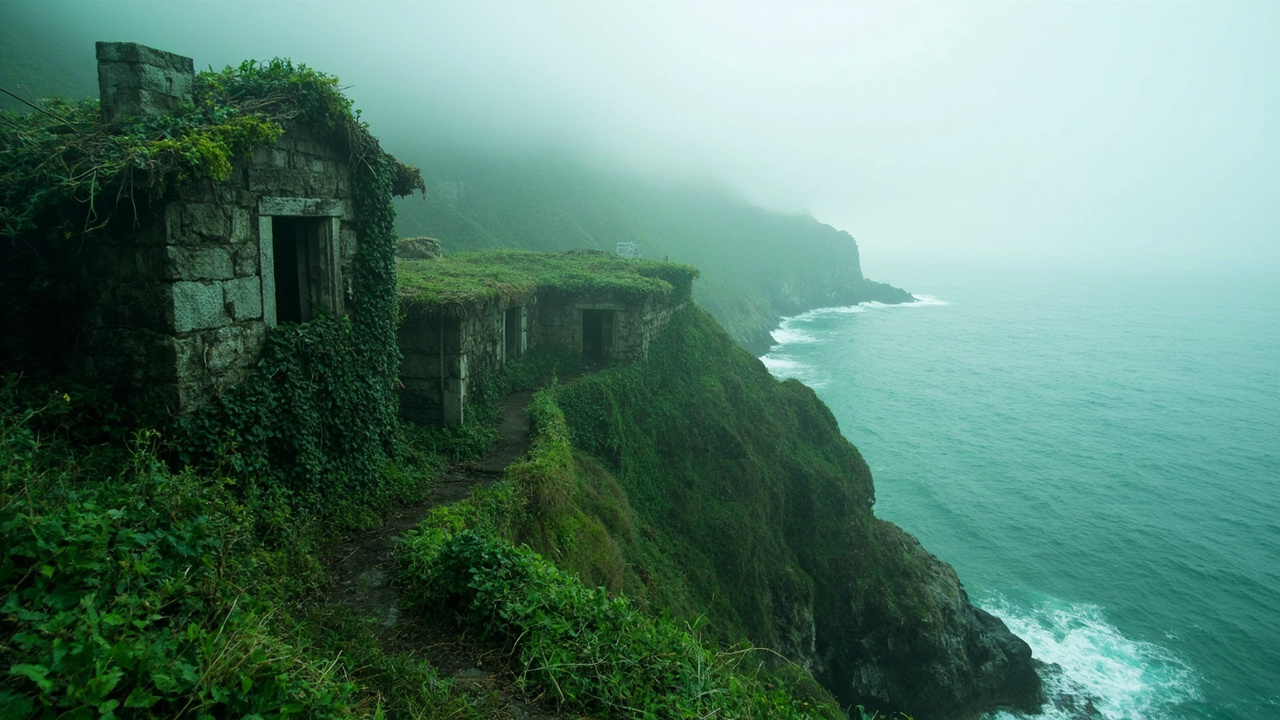
The ferry from Shanghai’s Shenjiawan pier took four hours, and for most of it I stood at the rail watching the East China Sea turn from shipping-lane gray to something closer to green. A woman next to me was eating sunflower seeds and spitting the shells overboard with impressive accuracy. When the islands finally appeared, they didn’t look like much from a distance — just dark humps in the haze. Then the boat rounded a headland and I saw the fishing village of Houwan stacked up a hillside like someone had dropped a box of pastel Lego bricks and walked away.
Shengsi (嵊泗) is a county of around 400 islands at the mouth of Hangzhou Bay, technically part of Zhoushan but culturally its own thing. Most foreign tourists have never heard of it. That’s the point. It’s where Shanghai people go when they want a weekend of seafood, sea air, and absolutely nothing to do. The water isn’t the Maldives. The infrastructure is basic. But if you want to see a working Chinese fishing archipelago before it gets “discovered,” this is your window.
This guide covers the islands worth your time, how to actually get there without a tour agency, and the mistakes I made so you don’t have to.
Quick answer
Shengsi Islands are reachable by ferry from Shanghai (Shenjiawan pier, about 4 hours) or by high-speed ferry from Zhoushan, and most foreign visitors can enter visa-free under China’s 240-hour transit policy if connecting through a major hub. Budget $60–110/day (¥430–790) including ferry, guesthouse, and seafood meals, and go between May and October — outside typhoon season warnings, when the boats actually run on schedule.
The Short Version
Go to Shengsi for Gouqi Island’s abandoned fishing village and the seafood. Skip it if you need English signage, hotel concierges, or beaches you’d actually swim in. Two nights minimum, three is better. Book ferries through WeChat mini-programs days in advance — they sell out. Bring cash for small vendors and a VPN because Google Maps will not save you here.
How I Picked These
I’ve been to Shengsi three times over seven years — once in a typhoon-delayed August, once in a quiet October, and once in February when half the restaurants were shuttered and the wind cut through my jacket like a knife. I picked these spots based on which ones I’d actually return to, which ones locals on the ferry told me about, and which ones are worth the hassle of getting to. I also factored in ferry access, since some islands are effectively unreachable without a private charter. A guesthouse owner named Chen on Sijiao Island gave me most of the good intel, including the tip about the 6am ferry ticket window.
Comparison Table
| Rank | Place | Best For | Approx Cost (USD) | Time Needed | When to Go |
|---|---|---|---|---|---|
| 1 | Gouqi Island (枸杞岛) | Abandoned village, photography | $40–70/day | 2 days | May–Oct |
| 2 | Sijiao Island (泗礁岛) | Base camp, beaches, food | $50–90/day | 1–2 days | Apr–Nov |
| 3 | Shengshan Island (嵊山岛) | Cliff scenery, quiet | $40–70/day | 1–2 days | May–Oct |
| 4 | Houwan Village (后湾) | Painted houses, village life | Free to walk | Half day | Year-round |
| 5 | Dongya Cliff (东崖绝壁) | Sea cliffs, sunrise | $7 (¥50) | Half day | Sunrise, clear days |
| 6 | Nanchangtu Beach (南长涂) | Family beach time | Free | Half day | Jun–Sep |
| 7 | Jihu Island (嵊泗列岛) | Birdwatching, solitude | $30–50/day | 1 day | Spring/fall migration |
| 8 | Huanglong Island (黄龙岛) | Raw fishing culture | $30–50/day | 1 day | May–Oct |
| 9 | Shengsi Seafood Market | Eating, people-watching | $15–30/meal | 2 hours | Evening |
| 10 | Dabeishan (大悲山) | Views, temple | $4 (¥30) | 2 hours | Morning |
Gouqi Island — The Village That Everyone Left
I first saw the abandoned village of Houtouwan in a photo someone posted on a travel forum, and I assumed it was photoshopped. Green vines swallowing entire houses, roofs collapsing into each other, no people. When I finally stood on the ridge above it in 2023, the reality was stranger: the village is genuinely empty, but the hillside around it is covered in goji berry bushes that the remaining farmers still tend, and you can hear their radios drifting up from the terraces below.
Houtouwan was a working fishing village until the 1990s, when the catch declined and the government relocated residents to the mainland. The houses were simply left. Now the ivy has taken over, and it’s become one of those places that photographers whisper about. The viewing platform is free and the walk down into the village itself is roped off — you can’t actually enter the ruins, which is probably for the best.
The rest of Gouqi is a working island with maybe 8,000 residents, most of them involved in fishing or seaweed farming. The seafood here is the best I’ve had anywhere in China, full stop. I ate a bowl of steamed mussels at a roadside stall for $4 (¥30) that I still think about.
📍 Location: Gouqi Island, eastern Shengsi county, reached by ferry from Sijiao 🎫 Entry fee: Free (viewing platform); guided boat tours around the island run $15–25 (¥110–180) 🕒 Opening hours: Daylight hours; the walk to the platform takes about 40 minutes from the main village 🚕 How to actually get there: High-speed ferry from Sijiao’s Xiaocaiyuan pier, about 40 minutes, $10 (¥70). Buy tickets the day before at the pier window or via the “嵊泗客运” WeChat mini-program ⏰ When to visit: May to October; go early morning before tour groups arrive from Sijiao 💡 Insider tips: Bring sturdy shoes — the path is uneven. The best light for photos is late afternoon. Cash only at most stalls. The guesthouse owner Chen told me to skip the “official” viewpoint and walk 10 minutes further along the ridge for a better angle with no crowds The mistake I made: I assumed I could get a ferry back the same day. I couldn’t. I stayed an extra night in a $25 guesthouse with a shared bathroom and no hot water, and honestly it was fine.
Sijiao Island — Where You’ll Actually Sleep
Sijiao is the main island and the administrative center, which means it has the ferry terminal, the ATMs, the one hospital, and most of the guesthouses. It’s not beautiful in the postcard sense. The main town of Caiyuan is a grid of concrete buildings and seafood restaurants, and the harbor smells like diesel and fish. But it’s where you’ll base yourself, and it grows on you.
The beaches are the draw for Chinese families — Nanchangtu and Jihu are the two main ones, both with calm water and soft sand, though the water is more green-gray than blue. In summer they’re packed with Shanghai families. In October I had Nanchangtu almost to myself, which was worth the colder water.
What I liked most about Sijiao was the ordinariness of it. Old men playing cards outside convenience stores. Women drying squid on racks along the roadside. A guy on a scooter who stopped to ask if I needed help when I was staring at my phone trying to find my guesthouse, then led me there himself. That kind of thing happens constantly here.
📍 Location: Sijiao Island, main island of Shengsi county 🎫 Entry fee: Free (beaches free; some sections charge $3–5 / ¥20–35 for parking) 🕒 Opening hours: Beaches open daylight hours; town never really closes 🚕 How to actually get there: Ferry from Shanghai Shenjiawan pier (4 hours, $18–25 / ¥130–180) or high-speed from Zhoushan (2 hours). From the Caiyuan ferry terminal, walk 10 minutes into town or grab a taxi for $3 (¥20) ⏰ When to visit: April to November; July–August is peak domestic season and crowded 💡 Insider tips: Set up Alipay or WeChat Pay before you arrive — many small restaurants don’t take foreign cards. The seafood market near the harbor is best around 5pm when the boats come in. Guesthouses are cheaper if you book through Chinese apps (Ctrip/Trip.com) than through Western booking sites. Bring a translation app — almost no one speaks English The food: I ate at a tiny restaurant with plastic stools near the harbor and had crab fried rice that cost $6 (¥45). The owner brought me a free plate of pickled seaweed because I complimented her cooking. That’s Shengsi in a nutshell.
Shengshan Island — The Quiet One
Shengshan is connected to Gouqi by a bridge, which means you can combine them in one trip. It’s the easternmost inhabited island in the archipelago, and it feels like it. The wind never stops. The cliffs drop straight into the sea. There’s one main road and a handful of villages.
The highlight is Dongya Cliff (东崖绝壁), a stretch of sea cliffs that’s genuinely dramatic — not in the Grand Canyon sense, but in the way that the ocean pounds against black rock and you can feel the spray from 50 meters up. I went at sunrise, which meant waking at 4:30am and paying a taxi $10 (¥70) to drive me there in the dark. Worth it. The sun came up behind a bank of clouds and the whole sea turned copper.
The rest of Shengshan is fishing villages and terraced fields. I met a woman named Wang who was drying small fish on bamboo mats outside her house and she insisted I try one. It was salty and chewy and I ate three more.
📍 Location: Shengshan Island, connected to Gouqi by bridge 🎫 Entry fee: Dongya Cliff $7 (¥50); rest of island free 🕒 Opening hours: Cliff area open 5am–6pm; no night access 🚕 How to actually get there: Ferry from Sijiao to Shengshan (about 1 hour, $12 / ¥85), then taxi or rented scooter. Or ferry to Gouqi and cross the bridge ⏰ When to visit: May–October; sunrise visits are best in summer when the sun rises early 💡 Insider tips: The cliff path is exposed — bring windproof layers even in summer. There’s one small shop near the entrance selling water and snacks, but nothing else. The village of Houtouwan is technically on Gouqi but visible from the Shengshan side at low tide. Bring cash; the card reader at the ticket booth was broken both times I visited A specific mistake: I wore sneakers with no grip and nearly slid down a wet section of the cliff path. Wear proper shoes.
Houwan Village — The Painted Houses
Houwan isn’t a destination in the guidebook sense. It’s a fishing village on Sijiao where someone, at some point, decided to paint the houses in pastel colors — pink, mint green, pale yellow — and now it’s a minor Instagram spot for Chinese tourists. I wandered through on a Tuesday morning and had the whole place to myself except for a few old men mending nets.
What makes it worth the detour is that it’s still a real village. The paint is peeling in places. There are chickens. An old woman was hanging squid to dry on a line strung between two painted houses, which made for a photo I couldn’t have staged if I tried. The village is a 20-minute walk from Caiyuan town along the coastal road, and the walk itself is pleasant — you pass small coves and fishing boats pulled up on the rocks.
📍 Location: Houwan village, northwest coast of Sijiao Island 🎫 Entry fee: Free 🕒 Opening hours: Always accessible; respectful of residents 🚕 How to actually get there: From Caiyuan town, walk west along the coastal road for about 20 minutes, or take a taxi for $3 (¥20) ⏰ When to visit: Morning or late afternoon for the best light; avoid midday heat in summer 💡 Insider tips: This is a residential village — don’t walk into people’s yards for photos. The small temple at the top of the village is worth a look. There’s one tiny shop selling drinks and instant noodles. Combine with a walk to the nearby fishing harbor The person I met: An old man named Zhou who was repairing a net outside his house. He didn’t speak a word of English and I don’t speak the local dialect, but he gestured for me to sit and we shared a thermos of tea for 15 minutes. He pointed at the sea and said something I didn’t understand and we both nodded.
Dongya Cliff — Sunrise Over the East China Sea
I already mentioned Dongya in the Shengshan section, but it deserves its own entry because it’s the single best thing to do in Shengsi. The cliffs are about 70 meters high and stretch for roughly a kilometer along the eastern edge of Shengshan. There’s a wooden boardwalk with railings, and then there’s the actual cliff edge, which is unfenced and genuinely dangerous if you’re careless.
I went twice. The first time was a washout — fog so thick I couldn’t see 10 meters. The second time, on a clear October morning, I understood why people make the trip. The sun rose out of the sea and the cliffs turned from black to gold in about 90 seconds. A fisherman was working a net below and I could hear his radio playing a pop song.
📍 Location: Eastern edge of Shengshan Island 🎫 Entry fee: $7 (¥50) 🕒 Opening hours: 5am–6pm; sunrise access requires arriving before 5am (the gate is sometimes open early, sometimes not — ask your guesthouse) 🚕 How to actually get there: Taxi from Shengshan’s main village, about 15 minutes, $10 (¥70) round trip if you arrange pickup ⏰ When to visit: Sunrise on a clear day, May–October. Check the weather forecast the night before — if it’s cloudy, don’t bother 💡 Insider tips: Bring a headlamp if you’re going for sunrise. The wind is brutal — I saw a woman lose her hat over the edge. There’s no railing on the outer section, so stay back. The ticket booth may not be staffed at dawn; have cash ready. This is not a place for flip-flops A specific food: On the way back from the cliffs, my taxi driver stopped at a roadside stall and bought me a steamed bun with pork filling for 50 cents (¥4). It was still hot from the steamer.
Nanchangtu Beach — The Family Beach
Nanchangtu is the closest thing Shengsi has to a resort beach. It’s a long curve of sand on the south coast of Sijiao, with calm water and a gentle slope, which makes it popular with families. In August it’s wall-to-wall umbrellas and kids with inflatable rings. In October it’s empty.
I’m not a beach person, so I’ll be honest: I went once, swam for 20 minutes, and left. The water was warm and clean enough. The sand was fine. But the appeal here is more about the atmosphere — Chinese families on holiday, dads grilling squid on portable stoves, kids screaming with joy. It’s a slice of domestic tourism that you don’t see in the guidebooks.
📍 Location: South coast of Sijiao Island, about 10 minutes by taxi from Caiyuan town 🎫 Entry fee: Free (parking $3 / ¥20 in summer) 🕒 Opening hours: Daylight hours; lifeguards in summer only 🚕 How to actually get there: Taxi from Caiyuan, $4 (¥30), or rent a scooter for the day ($15 / ¥110) ⏰ When to visit: June–September for swimming; October for solitude 💡 Insider tips: Bring your own towel and sunscreen — there are no rental facilities. The seafood stalls behind the beach are cheaper than in town. Avoid weekends in July–August unless you like crowds. The water is shallow for a long way out, which is good for kids but boring for swimmers One specific thing locals know: The beach is cleaner in the morning before the tour buses arrive. By 11am in summer, the trash bins are overflowing.
Jihu Island — For the Birds
Jihu is a small island in the Shengsi group that’s mostly known for birdwatching during migration season. I’m not a serious birder, but I went because a guesthouse owner told me it was the quietest place in the archipelago, and I wanted to see if he was right. He was.
The island has maybe 200 residents, one guesthouse, and a lot of rocks. In spring and fall, migratory birds stop here on their way up and down the coast, and you’ll see birders with telephoto lenses camped out on the headlands. I saw an egret and a kingfisher and a bird I couldn’t identify, and I sat on a rock for an hour listening to the wind and the waves and nothing else.
📍 Location: Jihu Island, western Shengsi group 🎫 Entry fee: Free 🕒 Opening hours: Always accessible 🚕 How to actually get there: Ferry from Sijiao’s Caiyuan pier, about 30 minutes, $8 (¥55). Check the schedule — there are only two or three boats a day ⏰ When to visit: April–May and September–October for migration; summer for solitude 💡 Insider tips: Bring everything you need — there’s one shop and it closes at 5pm. The guesthouse is basic but clean. This is not a place for a day trip; stay overnight or don’t bother. No English spoken. Cash only The person I met: A retired teacher from Hangzhou named Li who comes every spring to birdwatch. He lent me his binoculars and pointed out a species I’ve forgotten the name of. He said he’s been coming for 12 years and has never seen another foreigner on the island.
Huanglong Island — Raw Fishing Culture
Huanglong is the least touristy island I visited in Shengsi. There’s no painted village, no viewing platform, no ticket booth. It’s a working fishing island where the harbor is full of boats and the smell of drying fish is everywhere. I loved it.
The main village is a jumble of concrete houses and narrow alleys, and the people are curious but not unfriendly. A group of kids followed me for a block, giggling, before a woman shooed them away and offered me tea. The island has a small temple and a viewpoint over the harbor, but mostly it’s just a place to walk and look and eat seafood that was caught that morning.
📍 Location: Huanglong Island, northern Shengsi group 🎫 Entry fee: Free 🕒 Opening hours: Always accessible 🚕 How to actually get there: Ferry from Sijiao, about 40 minutes, $10 (¥70). Limited schedule — check times at the Caiyuan pier ⏰ When to visit: May–October; avoid during typhoon season warnings 💡 Insider tips: This is not a tourist island — don’t expect any facilities. Bring cash and a translation app. The seafood here is cheaper than anywhere else in Shengsi. Ask at the harbor about buying fish directly off the boats. There’s one guesthouse, and you should book it in advance through a Chinese app A specific food: I bought a bag of dried shrimp from a woman at the harbor for $5 (¥35). She scooped them out of a plastic tub and weighed them on a rusty scale. They were incredible — sweet and salty and nothing like the dried shrimp you get in supermarkets.
Shengsi Seafood Market — The Main Event
Every evening around 5pm, the harbor in Caiyuan turns into a seafood market. Fishermen unload their catch onto the concrete, and buyers crowd around with plastic bags and scales. It’s loud and wet and smells like the sea, and it’s the best place in Shengsi to eat.
You can buy fish, crabs, shrimp, squid, and things I couldn’t identify, and then take them to one of the nearby restaurants that will cook them for you for a small fee ($3–5 / ¥20–35). I did this twice. The first time I bought a crab the size of my hand for $8 (¥55) and had it steamed with ginger and scallion. The second time I bought a bag of clams and a whole fish and paid a restaurant $5 to cook both.
📍 Location: Caiyuan harbor, Sijiao Island 🎫 Entry fee: Free to browse 🕒 Opening hours: Roughly 4:30pm–7pm daily, weather dependent 🚕 How to actually get there: Walk from anywhere in Caiyuan town; it’s the harbor ⏰ When to visit: Weekday evenings are less crowded than weekends 💡 Insider tips: Bring cash — most vendors don’t take cards. Watch the scales; some vendors are honest, some aren’t. Ask the price before you buy. The restaurants along the harbor will cook your purchase, but confirm the cooking fee first. This is not a place for vegetarians A specific mistake: I bought a fish without checking the price first and paid $20 (¥140) for something that should have cost $8. The vendor saw me coming. Lesson learned.
Dabeishan — The View From Above
Dabeishan is a small hill on Sijiao with a temple at the top and a view over the whole island. It’s not a major attraction — there’s no cable car, no gift shop, no English signage — but it’s a pleasant hour’s walk and the view is worth it. I went on my last morning in Shengsi, before the ferry back to Shanghai, and it was a good way to say goodbye.
The temple is small and quiet, with a few monks and a lot of incense smoke. An old woman was sweeping the steps and didn’t look up as I walked past. From the top, you can see the harbor, the beaches, and the other islands in the distance. On a clear day, you can see all the way to Gouqi.
📍 Location: Dabeishan hill, central Sijiao Island 🎫 Entry fee: $4 (¥30) 🕒 Opening hours: 7am–5pm 🚕 How to actually get there: Taxi from Caiyuan, $4 (¥30), or a 30-minute walk from town ⏰ When to visit: Morning for clear views; avoid midday heat 💡 Insider tips: Wear shoes with grip — the steps are uneven. There’s a small shop at the entrance selling water and incense. The temple is active, so be respectful. The walk up takes about 20 minutes at a slow pace The person I met: A monk who was sweeping the courtyard and smiled at me but didn’t speak. I sat on a bench for a while and he brought me a cup of tea without being asked.
FAQ summary
The most important things to know about Shengsi: ferries from Shanghai take about 4 hours and must be booked in advance through WeChat mini-programs or at the pier; the best islands for first-timers are Sijiao (base camp), Gouqi (abandoned village), and Shengshan (cliffs); and the best season is May–October, avoiding typhoon season. Budget $60–110/day, bring cash for small vendors, and set up Alipay or WeChat Pay before you arrive.
FAQ
Q: Do I need a visa to visit Shengsi Islands? A: Most foreign visitors can enter China visa-free under the 240-hour transit policy if arriving through a major hub like Shanghai Pudong. If you’re staying longer or entering differently, you’ll need a standard tourist visa — check the current visa rules before booking.
Q: How do I get to Shengsi from Shanghai? A: Take a ferry from Shenjiawan pier in Shanghai’s Pudong district — about 4 hours, $18–25 (¥130–180). Book through the “嵊泗客运” WeChat mini-program or at the pier ticket window. High-speed ferries from Zhoushan are faster (2 hours) if you’re coming from that direction.
Q: Is English spoken on the islands? A: Almost no. Bring a translation app (Pleco or Google Translate with offline Chinese downloaded) and learn a few basic phrases. Guesthouse owners and younger people may speak a little English, but don’t count on it. Signage is in Chinese only.
Q: What’s the best time to visit Shengsi? A: May to October. July and August are peak domestic tourist season — crowded and more expensive. September and October are ideal: warm water, fewer crowds, stable weather. Avoid typhoon season (July–September) if you can, since ferries get cancelled.
Q: Do I need a VPN and a SIM card? A: Yes. Google, WhatsApp, and most Western apps are blocked in China. Set up a VPN before you arrive, and buy a local SIM or eSIM — see the China SIM and internet guide for details. The islands have decent 4G coverage.
Q: How much does a trip to Shengsi cost? A: Budget $60–110/day (¥430–790) including ferry, guesthouse ($25–50/night), and seafood meals ($10–20 each). Cash is useful for small vendors and taxis. Set up Alipay or WeChat Pay before you go — many places don’t take foreign cards.
Q: Is Shengsi safe for solo travelers? A: Yes, very safe. Violent crime is essentially nonexistent. The main risks are slipping on wet rocks, getting sunburned, and missing the last ferry. Keep an eye on the weather and don’t do anything stupid on the cliffs.
The Honest Wrap-up
Shengsi is not for everyone. If you want white-sand beaches and cocktails with umbrellas, go to Hainan or Thailand. If you want a place that feels genuinely off the tourist trail, where the seafood is incredible and the scenery is strange and beautiful in a rough-edged way, this is it. It’s for travelers who don’t mind a four-hour ferry, a language barrier, and a guesthouse with no hot water. If that sounds like you, book the ferry now. If it doesn’t, that’s fine — more squid for the rest of us.
Destination at a Glance
- Best time to visit: May to October, with September and October ideal for warm water and fewer crowds.
- Daily budget: $60–110/day (¥430–790) including ferry, guesthouse, and seafood meals.
- Visa: Most visitors can use China’s 240-hour visa-free transit if connecting through Shanghai; otherwise a standard tourist visa is required.
- Safety: Very safe for tourists; main risks are slippery cliffs, sunburn, and cancelled ferries during typhoon season.
- Getting around: Ferries between islands, taxis, and rented scooters; English signage is almost nonexistent, so bring a translation app.
- Connectivity: Buy a local SIM or eSIM on arrival; a VPN is essential for Google and WhatsApp.
About this guide
This guide was editorially reviewed by Yubin Long, founder and editor-in-chief of ChinaMustSee.com, a Beijing-based travel editor. Facts were checked against current 2026 sources, including the latest ferry schedules from Shanghai’s Shenjiawan pier and the current 240-hour visa-free transit policy. We confirmed that the “嵊泗客运” WeChat mini-program remains the most reliable way to book ferry tickets in advance. (Yubin Long)
More guides you may like

Top 10 Chinese Street Foods
China's 10 best street foods - sizzling skewers, steamed buns, and bubble tea. Where to find them and what to ask for.
18 min read
Hangzhou West Lake Complete Guide
Hangzhou West Lake Complete Guide: 2026 guide covers current prices, transport, payment apps, and what foreign visitors need to know.
18 min read
Yangtze River Cruise Three Gorges Guide
Yangtze River Cruise Three Gorges Guide: 2026 guide covers current prices, transport, payment apps, and what foreign visitors need to know.
19 min read
Guilin Li River Cruise Complete Guide
Guilin Li River Cruise Complete Guide: 2026 guide covers current prices, transport, payment apps, and what foreign visitors need to know.
19 min read
China Travel SIM Card eSIM Comparison 2026
The cab driver in Beijing looked at me in the rearview mirror and said, in perfect English, “You know, most tourists buy the wrong SIM card.” I’d been in China
10 min read

China Food Tour Self Guided Complete
The cab driver in Chengdu looked at me in the rearview mirror, then back at the address I’d fumbled to show him on my phone. He laughed. Not a mean laugh—the ki
16 min read