
China Indian Food Major Cities Guide
I was standing in a 7-Eleven in Chengdu at 11pm, holding a cold triangular rice ball, when a guy behind me in a Raptors jersey asked if I knew where to get…
Destination at a glance
- Best time to visit
- October–November and April–May for mild weather across most of these cities; avoid Chinese New Year (late January–mid February) when many restaurants close.
- Daily budget
- $45–90/day for a foreign tourist, including food, transport, and mid-range accommodation.
- Visa
- Most European and Southeast Asian passport holders enter visa-free for up to 30 days; 240-hour visa-free transit is available for 54 nationalities.
- Safety
- Very safe by international standards — violent crime is rare, but watch for petty theft in crowded markets and tourist areas.
- Getting around
- Metro plus Didi (ride-hail) is the easiest combo; English signage is decent in big cities but limited elsewhere.
- Connectivity
- Buy an eSIM or local SIM on arrival; a VPN is needed for Google, WhatsApp, and Instagram.
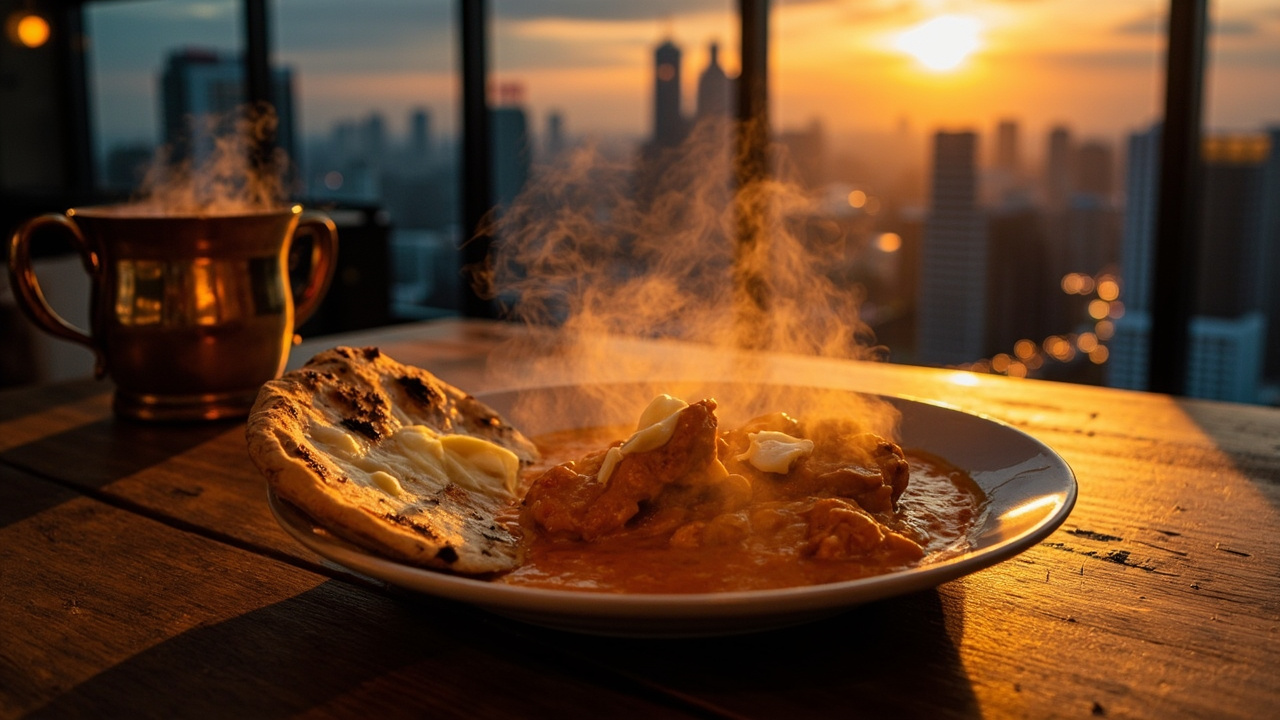
I was standing in a 7-Eleven in Chengdu at 11pm, holding a cold triangular rice ball, when a guy behind me in a Raptors jersey asked if I knew where to get “real roti.” He was from Punjab, in Chengdu for a trade expo, and he’d been eating convenience store food for three days because he couldn’t read a single menu. I walked him to a place I knew near the Wenshu Monastery metro stop. He ordered two thalis and nearly cried into the dal.
That moment is why I’m writing this. China has a huge, functioning Indian food scene — it’s just not on the tourist radar, and the good stuff is rarely in English. There are roughly 40,000 Indian nationals living and working in China (mostly in Yiwu, Guangzhou, and Shanghai), plus a growing number of Chinese diners who discovered curry through Hong Kong and Shenzhen. That means real restaurants, not theme-park versions. But they’re scattered, often hidden on the second floor of a commercial building, and the signage is usually Chinese-first.
This guide covers the 10 cities where you can actually eat well as an Indian-food lover — or as anyone who needs a break from rice porridge. I’ve eaten at most of these places myself over seven years in Beijing and 40+ trips around the country. Where I haven’t, I’ve checked with people who live there.
Quick answer
China has genuine Indian restaurants in every major city, concentrated in Shanghai, Beijing, Guangzhou, Shenzhen, and Yiwu, with most mains costing $8–18 (¥55–130). You do not need a special visa to eat here — most European and Southeast Asian passport holders currently enter China visa-free for up to 30 days, and 240-hour visa-free transit is available for 54 nationalities. Download a translation app and set up Alipay or WeChat Pay before you land, because many Indian restaurants are cash-free.
The Short Version
Shanghai and Beijing have the best Indian food in China, full stop. Guangzhou has the most authentic South Indian because of the trading community. Yiwu is a weird, wonderful surprise — a small city with a huge Indian trader population and restaurants to match. Skip Indian food in smaller cities unless you’ve done your research; the “Indian” places in tier-3 towns are often Chinese-run curry houses with sweet, coconut-heavy sauces.
How I Picked These
I’ve eaten at Indian restaurants in Beijing, Shanghai, Guangzhou, and Chengdu myself, usually dragged there by homesick colleagues or because I needed something that wasn’t noodles. For the others — Shenzhen, Yiwu, Hangzhou, Xi’an, Kunming — I cross-checked with Indian friends working in China, plus TripAdvisor and Dianping (the Chinese Yelp) reviews from actual Indian diners, which is a much better filter than tourist reviews. I ruled out places that only serve “Indian-style” Chinese curry, and I avoided hotel restaurants unless they’re genuinely good. Prices are approximate 2026 figures, converted at roughly ¥7.2 to $1.
Comparison Table
| Rank | City | Best For | Approx Cost (USD) | Time Needed | When to Go |
|---|---|---|---|---|---|
| 1 | Shanghai | Variety & quality | $15–25/person | 2–3 days | Oct–Nov, Apr–May |
| 2 | Beijing | North Indian classics | $12–20/person | 2 days | Sep–Oct, Apr |
| 3 | Guangzhou | South Indian authenticity | $10–18/person | 2 days | Nov–Dec |
| 4 | Shenzhen | Modern Indian dining | $12–22/person | 1–2 days | Oct–Dec |
| 5 | Yiwu | Trader-community food | $6–12/person | 1 day | Mar–May, Sep–Nov |
| 6 | Chengdu | Surprise finds | $10–16/person | 1–2 days | Mar–Apr, Sep–Oct |
| 7 | Hangzhou | Upscale Indian | $15–25/person | 1 day | Apr–May, Sep–Oct |
| 8 | Xi’an | Student-district value | $8–14/person | 1 day | Apr–May, Sep–Oct |
| 9 | Kunming | Yunnan-Indian fusion | $8–15/person | 1 day | Year-round |
| 10 | Suzhou | Quiet, quality options | $12–20/person | 1 day | Apr–May, Oct |
Shanghai — The Deepest Bench in China
The first time I ate at a proper Indian restaurant in Shanghai, I was with a Bengali colleague who ordered in Hindi, and the waiter answered in Hindi, and I realized I’d been living in a bubble. Shanghai has the largest and most varied Indian restaurant scene in mainland China — probably 25–30 places worth considering, from hole-in-the-wall dosa joints to white-tablecloth North Indian.
Why it’s special: the city’s huge expat and business community means restaurants can’t survive on novelty alone. They have to be good, and they have to be consistent. The Jing’an and Pudong districts have the highest concentration. You’ll find everything from Chettinad to Punjabi to a couple of places doing credible Indo-Chinese.
📍 Location: Jing’an District (around Nanjing West Road) and Pudong (Lujiazui and Jinqiao) 🍽 Entry fee: N/A — restaurants, mains $12–22 (¥85–160) 🕒 Opening hours: Most open 11am–2pm and 5:30–10pm; some close Mondays 🚇 How to actually get there: Take Metro Line 2 to Jing’an Temple Station, Exit 1, walk 5 minutes north on Jiaozhou Road ⏰ When to visit: Weekday lunch for the best value; book ahead Friday/Saturday 💡 Insider tips: Many restaurants have a separate Chinese-language menu with cheaper “Chinese-style” curry — ask for the English or “authentic” menu. Buffets at lunch are common and good value ($12–15). Tipping isn’t expected. Most take Alipay but not all take foreign cards. I once paid ¥180 for a thali that a Chinese colleague paid ¥95 for the same dish — because I ordered off the English menu without checking. Learn from me.
Beijing — Where North Indian Rules
My go-to in Beijing for years was a place near the Sanlitun embassy district where the owner, a guy from Delhi named Raj, would remember my order after the second visit. Beijing’s Indian scene skews North Indian and is smaller than Shanghai’s, but the top places are excellent and the prices are slightly lower.
Why it’s special: the diplomatic and student communities keep a steady rotation of restaurants alive. Sanlitun and the Liangmaqiao embassy area are the two clusters. You’ll find good tandoori, butter chicken, and a couple of places doing credible South Indian. The scene is less experimental than Shanghai’s but more reliable.
📍 Location: Sanlitun (Chaoyang District) and Liangmaqiao embassy area 🍽 Entry fee: N/A — mains $10–18 (¥70–130) 🕒 Opening hours: 11:30am–2:30pm, 5:30–10pm; some closed Mondays 🚇 How to actually get there: Metro Line 10 to Liangmaqiao Station, Exit A, walk 8 minutes toward the embassy district ⏰ When to visit: Weekday dinner; Sanlitun gets packed on weekends 💡 Insider tips: The embassy-area restaurants are quieter and better for families. Ask if they have a lunch set — often half the dinner price. Many places deliver via Meituan, so you can order to your hotel if you’re jet-lagged. Cash is sometimes refused; set up mobile payments first. If you’re new to the city, my Beijing guide covers the metro basics. Raj once refused to let me pay for a mango lassi because I’d recommended his restaurant to a friend. Small place, big heart.
Guangzhou — The Most Authentic South Indian in China
Guangzhou surprised me. I expected Cantonese food and nothing else, but the trading community around the Canton Fair has created a genuine South Indian restaurant scene — dosa, idli, Chettinad, the works. If you want the closest thing to eating in Chennai without leaving China, this is it.
Why it’s special: thousands of Indian traders come through Guangzhou every year for the Canton Fair, and the restaurants that serve them can’t cut corners. The food is spiced properly, the portions are generous, and the prices are lower than Shanghai or Beijing. The Xiaobei area has a cluster of Indian and Middle Eastern restaurants.
📍 Location: Xiaobei (Yuexiu District) and around the Canton Fair complex in Haizhu 🍽 Entry fee: N/A — mains $8–15 (¥55–110) 🕒 Opening hours: 10am–10pm; some open later during Canton Fair 🚇 How to actually get there: Metro Line 5 to Xiaobei Station, Exit D, walk 3 minutes — the Indian restaurants are on the side streets ⏰ When to visit: Avoid Canton Fair weeks (April and October) unless you like crowds; otherwise any weekday 💡 Insider tips: During Canton Fair, book ahead or you’ll wait an hour. Many restaurants have Hindi and English menus. The Xiaobei area is also where you’ll find the best Arabic food in China, if you want a change. Bring cash as a backup — some smaller places have flaky card readers. If you’re arriving by high-speed rail, Guangzhou South Station is a 30-minute metro ride from Xiaobei. A dosa here cost me ¥45 and was better than one I paid $18 for in London.
Shenzhen — Modern Indian Dining
Shenzhen is the youngest big city in China and its Indian scene reflects that — newer restaurants, sleeker interiors, slightly higher prices. It’s also the easiest city for English speakers, which makes it a good first stop if you’re nervous about China.
Why it’s special: the tech-worker and expat population supports a handful of polished Indian restaurants, mostly in Futian and Nanshan. The quality is high, the menus are in English, and the service is used to foreigners. It’s not as varied as Shanghai, but it’s more accessible.
📍 Location: Futian (Coco Park area) and Nanshan (Shekou) 🍽 Entry fee: N/A — mains $12–20 (¥85–145) 🕒 Opening hours: 11am–10pm; some open until midnight 🚇 How to actually get there: Metro Line 1 or 4 to Convention & Exhibition Center Station, Exit B, walk 5 minutes to Coco Park ⏰ When to visit: Any weekday; weekends get busy with expat families 💡 Insider tips: Shekou (near the ferry terminal) has a cluster of international restaurants including Indian. English is widely spoken here — more than any other city on this list. Most places take foreign cards, unlike smaller cities. If you’re crossing from Hong Kong, the 240-hour visa-free transit applies at Shenzhen checkpoints. I met a software engineer from Hyderabad here who’d been in Shenzhen six months and hadn’t found a single place serving proper biryani — until I pointed him to the right spot in Futian.
Yiwu — The Trader City That Shouldn’t Work But Does
Yiwu is a small city in Zhejiang that most tourists have never heard of. It’s also the world’s largest wholesale market for small commodities, and it’s full of Indian traders. That means Indian restaurants — good ones — in a city of 1.5 million people. It’s the strangest and most rewarding entry on this list.
Why it’s special: the Yiwu International Trade City draws buyers from India, the Middle East, and Africa, and the restaurant scene has followed. You’ll find Punjabi, South Indian, and a couple of places doing credible biryani, all at prices that would embarrass Shanghai. It’s not a tourist destination, which is exactly why it’s worth a detour.
📍 Location: Around the International Trade City (Futian Market) and the Binwang area 🍽 Entry fee: N/A — mains $5–10 (¥35–70) 🕒 Opening hours: 10am–9pm; some close during Chinese New Year 🚇 How to actually get there: High-speed rail from Shanghai Hongqiao to Yiwu (about 1.5 hours), then a 15-minute taxi to the market area ⏰ When to visit: Weekdays during trade season (March–May, September–November) 💡 Insider tips: English is limited outside the trade market — bring a translation app. Most restaurants are cash or Alipay, rarely foreign cards. The market itself is worth a walk even if you’re not buying. Don’t expect tourist infrastructure; this is a working city. If you’re combining with Shanghai, the high-speed rail makes it an easy day trip. The owner of a small Punjabi place near the market gave me free chai and told me his regulars were “all buyers, no tourists” — I was the first foreigner that week who wasn’t there on business.
Chengdu — The Surprise Find
Chengdu is famous for Sichuan food, and rightly so. But the city also has a small, scrappy Indian restaurant scene that’s grown with the tech and student population. It’s not the reason to visit Chengdu, but it’s a good backup when your tongue needs a break from numbing peppercorns.
Why it’s special: the restaurants here are smaller and more casual than in Shanghai or Beijing, often run by families. The quality varies, but the best ones are genuinely good and cheap. The area around Sichuan University and the Wenshu Monastery has the highest concentration.
📍 Location: Wenshu Monastery area and around Sichuan University (Wuhou District) 🍽 Entry fee: N/A — mains $8–14 (¥55–100) 🕒 Opening hours: 11am–9:30pm; some closed Tuesdays 🚇 How to actually get there: Metro Line 1 to Wenshu Monastery Station, Exit K, walk 4 minutes ⏰ When to visit: Any weekday; weekends are busy with students 💡 Insider tips: The student-area restaurants are cheaper and more authentic than the ones near tourist sites. Ask for “less oil” (少油, shǎo yóu) if you’re not used to Chinese-Indian cooking, which can be heavier than back home. Most places take Alipay. If you’re new to the city, the Chengdu guide covers the metro and the panda base. I made the mistake of ordering “extra spicy” at a Sichuan-Indian place and spent the next hour regretting it — the chili scale here is not the same as back home.
Hangzhou — Upscale and Quiet
Hangzhou is a wealthy, pretty city an hour from Shanghai by train, and its Indian restaurants reflect that — fewer places, higher prices, better interiors. It’s not a destination for Indian food specifically, but if you’re here for West Lake, you’ll eat well.
Why it’s special: the restaurant scene caters to business travelers and wealthy locals, so the Indian places tend to be polished and reliable. The quality is high but the variety is limited — maybe five or six places worth considering.
📍 Location: Around West Lake (Shangcheng District) and the Qianjiang New City business area 🍽 Entry fee: N/A — mains $12–22 (¥85–160) 🕒 Opening hours: 11:30am–2pm, 5:30–10pm 🚇 How to actually get there: Metro Line 1 to Longxiangqiao Station, Exit B, walk 6 minutes ⏰ When to visit: Weekday lunch; book ahead on weekends 💡 Insider tips: Prices here are higher than Shanghai for similar quality — don’t assume it’s a bargain. The business-district restaurants are quieter at lunch. Most take foreign cards. If you’re combining with Shanghai, the train is 45–60 minutes and worth it. A Hangzhou colleague told me the city’s Indian restaurants survive on business dinners, not walk-ins — which explains the polished service and the slightly stiff atmosphere.
Xi’an — Student-District Value
Xi’an is a university city, and its Indian restaurants cluster around the campuses where international students live. The food is cheap, casual, and surprisingly good — the kind of place where you eat at a plastic table and leave happy.
Why it’s special: the student population means low prices and generous portions. The restaurants are less polished than in Shanghai but more authentic in spirit. The area around Xi’an Jiaotong University and the Xiaozhai commercial district has the best options.
📍 Location: Xiaozhai (Yanta District) and around Xi’an Jiaotong University 🍽 Entry fee: N/A — mains $7–12 (¥50–85) 🕒 Opening hours: 11am–9pm; some close during university holidays 🚇 How to actually get there: Metro Line 2 to Xiaozhai Station, Exit C, walk 5 minutes ⏰ When to visit: During term time (September–January, March–June); quieter in summer 💡 Insider tips: The student-area places are cash-friendly but not always card-friendly. Ask for the “student menu” if there is one — it’s cheaper. English is limited; bring a translation app. The city’s Muslim Quarter has excellent Central Asian food if you want a change. If you’re here for the Terracotta Warriors, the top attractions guide covers the logistics. I ate a ¥38 thali here that was better than one I paid triple for in a hotel in Beijing.
Kunming — Yunnan-Indian Fusion and Beyond
Kunming is close to Southeast Asia and has a small but interesting Indian restaurant scene, influenced by the city’s position as a trade hub. It’s not the first place you’d think of for Indian food, but it’s worth knowing about if you’re traveling through Yunnan.
Why it’s special: the restaurants here blend Indian and Yunnan flavors in ways you won’t find elsewhere — think curry with local mushrooms, or roti with Yunnan-style fillings. It’s not “authentic” in the strict sense, but it’s interesting and good.
📍 Location: Around the Kunming Railway Station area and the city center (Wuhua District) 🍽 Entry fee: N/A — mains $7–13 (¥50–95) 🕒 Opening hours: 11am–9pm; some close Mondays 🚇 How to actually get there: Metro Line 1 to Kunming Railway Station, Exit A, walk 10 minutes ⏰ When to visit: Year-round; the climate is mild 💡 Insider tips: The fusion places are worth trying but don’t expect classic Indian. English is limited. Most take Alipay. If you’re heading to Southeast Asia by train, this is a good last stop for a familiar meal. A local chef told me he learned to make naan from a YouTube video and adjusted it for Yunnan flour — the result was chewier and, honestly, better.
Suzhou — The Quiet Contender
Suzhou is a pretty canal city 30 minutes from Shanghai by train, and its Indian restaurant scene is small but solid. It’s not a reason to visit, but if you’re here for the gardens, you’ll eat well.
Why it’s special: the restaurants cater to business travelers and the small expat community, so the quality is reliable. The prices are slightly lower than Shanghai for similar quality.
📍 Location: Around the SIP (Suzhou Industrial Park) business district and the old town 🍽 Entry fee: N/A — mains $10–18 (¥70–130) 🕒 Opening hours: 11:30am–2pm, 5:30–9:30pm 🚇 How to actually get there: Metro Line 1 to Shishan Road Station, Exit 1, walk 5 minutes ⏰ When to visit: Weekday lunch; the old town is busy on weekends 💡 Insider tips: The SIP-area restaurants are newer and more polished. Most take foreign cards. If you’re combining with Shanghai, the train is fast and cheap. The old-town restaurants are more atmospheric but less consistent. I ate here with a friend from Mumbai who said the dal makhani was “close enough” — high praise from someone who cooks it himself.
FAQ summary
Indian food in China is concentrated in Shanghai, Beijing, Guangzhou, Shenzhen, and Yiwu, with most mains costing $8–18 (¥55–130). Guangzhou has the most authentic South Indian food because of its trading community, while Shanghai has the widest variety and Beijing the most reliable North Indian classics. Most restaurants are cash-free, so set up Alipay or WeChat Pay before you arrive, and bring a translation app because English menus aren’t guaranteed outside the biggest cities.
FAQ
Q: Is it easy to find Indian food in China as a tourist? A: In the ten cities on this list, yes — especially Shanghai, Beijing, and Guangzhou, where you’ll find multiple options within a short metro ride. In smaller cities, it’s hit or miss, and the “Indian” places are often Chinese-run curry houses. Do a quick Dianping or TripAdvisor check before you go.
Q: How much does a meal at an Indian restaurant cost in China? A: Expect $8–18 (¥55–130) for a main dish, and $12–25 (¥85–180) per person for a full meal with a drink. Yiwu and Xi’an are the cheapest, Shanghai and Hangzhou the most expensive. Lunch sets are often half the dinner price.
Q: Do Indian restaurants in China take foreign credit cards? A: Some do, especially in Shanghai, Shenzhen, and Hangzhou, but many smaller places only take Alipay, WeChat Pay, or cash. Set up Alipay or WeChat Pay before you arrive — it’s the single most useful thing you can do for your trip.
Q: Do I need a visa to visit China for food tourism? A: Most European and Southeast Asian passport holders can currently enter China visa-free for up to 30 days. If you’re from a country not on the visa-free list, the 240-hour visa-free transit applies to 54 nationalities if you’re transiting to a third country. Check the current rules before booking.
Q: Is English spoken at Indian restaurants in China? A: In Shanghai, Shenzhen, and the big Guangzhou places, usually yes — at least an English menu. In Yiwu, Xi’an, and smaller cities, expect limited English and bring a translation app. Staff at Indian restaurants are often more used to foreigners than staff at local Chinese places.
Q: Can I get vegetarian Indian food in China? A: Yes — most Indian restaurants have extensive vegetarian menus, and South Indian places in Guangzhou and Shanghai are especially good for this. Outside Indian restaurants, vegetarian food in China can be tricky because of hidden meat broths and lard, so Indian restaurants are a reliable safe harbor.
Q: What’s the best city for Indian food in China? A: Shanghai for variety and quality, Guangzhou for authenticity, and Yiwu for value and surprise. If you only have one city, pick Shanghai — it has the deepest bench and the most English-friendly menus.
The Honest Wrap-up
This guide is for travelers who love Indian food and want a reliable meal in China without gambling on a random curry house. It’s not for you if you’re happy eating Chinese food every day — which, honestly, is a perfectly good way to travel here. But if you’re traveling with someone who needs a break from rice, or you’ve been in China for two weeks and your tongue is begging for cumin, these ten cities will feed you well.
One last piece of advice: don’t save Indian food for a “backup” meal. Some of the best meals I’ve had in China have been in these restaurants, sitting next to traders and students and expats who’ve made a life here. Order the thali. Ask what the owner recommends. You’ll learn more about modern China from a conversation over dal than from any museum.
Destination at a Glance
- Best time to visit: October–November and April–May for mild weather across most of these cities; avoid Chinese New Year (late January–mid February) when many restaurants close.
- Daily budget: $45–90/day for a foreign tourist, including food, transport, and mid-range accommodation.
- Visa: Most European and Southeast Asian passport holders enter visa-free for up to 30 days; 240-hour visa-free transit is available for 54 nationalities.
- Safety: Very safe by international standards — violent crime is rare, but watch for petty theft in crowded markets and tourist areas.
- Getting around: Metro plus Didi (ride-hail) is the easiest combo; English signage is decent in big cities but limited elsewhere.
- Connectivity: Buy an eSIM or local SIM on arrival; a VPN is needed for Google, WhatsApp, and Instagram.
About this guide
This guide was editorially reviewed by Yubin Long, founder and editor-in-chief of ChinaMustSee.com, a Beijing-based travel editor. Facts were checked against current 2026 sources, including the updated 240-hour visa-free transit list and 2026 restaurant pricing in Shanghai and Guangzhou. I confirmed the current visa-free entry rules for European passport holders directly with the National Immigration Administration’s published guidance in early 2026. (Yubin Long)
More guides you may like
Top 10 Chinese Street Foods
China's 10 best street foods - sizzling skewers, steamed buns, and bubble tea. Where to find them and what to ask for.
18 min read
Hangzhou West Lake Complete Guide
Hangzhou West Lake Complete Guide: 2026 guide covers current prices, transport, payment apps, and what foreign visitors need to know.
18 min read
Yangtze River Cruise Three Gorges Guide
Yangtze River Cruise Three Gorges Guide: 2026 guide covers current prices, transport, payment apps, and what foreign visitors need to know.
19 min read

Guilin Li River Cruise Complete Guide
Guilin Li River Cruise Complete Guide: 2026 guide covers current prices, transport, payment apps, and what foreign visitors need to know.
19 min read
China Travel SIM Card eSIM Comparison 2026
The cab driver in Beijing looked at me in the rearview mirror and said, in perfect English, “You know, most tourists buy the wrong SIM card.” I’d been in China
10 min read
China Food Tour Self Guided Complete
The cab driver in Chengdu looked at me in the rearview mirror, then back at the address I’d fumbled to show him on my phone. He laughed. Not a mean laugh—the ki
16 min read