
China Winter Travel Guide 2026
China winter travel guide 2026 - from Harbin Ice Festival to Yunnan snow-free escapes. What to pack, where to go, and how to beat the cold.
China Winter Travel Guide 2026: The Complete 2026 Guide
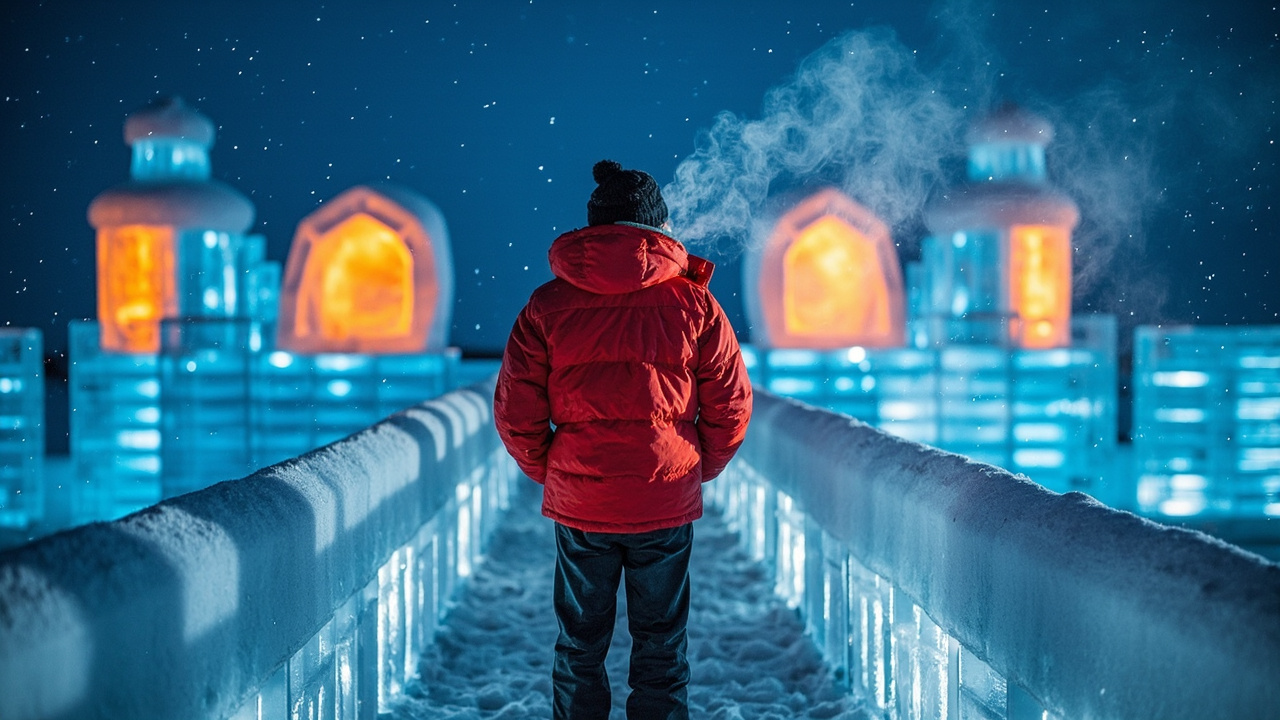
I was standing on the frozen surface of a lake in Harbin, my cheeks numb despite three layers of thermal underwear, watching a man carve a dragon out of a block of ice the size of a small car. He worked with a chisel and a hand saw, not a power tool in sight. Around me, families slid across the ice on rented sleds, steam rose from a nearby dumpling stall, and the temperature was minus 22 degrees Celsius. I’d been warned not to come to China in winter. “Too cold,” people said. “Too quiet. Everything shuts down for Spring Festival.”
They were wrong.
Winter in China is the country’s best-kept secret. The crowds thin out. The air clears up—Beijing’s famous smog takes a holiday when the cold winds blow from Siberia. Hotel prices drop by 30 to 50 percent. And the things that make China extraordinary—the ancient temples, the mountain landscapes, the street food—don’t care what season it is. Some of them, in fact, only make sense in winter.
This guide covers ten places I’ve visited myself during Chinese winters, from the ice festival that draws a million people to a hot spring town so quiet you’ll hear snow melt off the roof. I’ll tell you what’s worth the cold, what’s overhyped, and exactly how to get there without losing your mind. I’ve made every mistake so you don’t have to.
Quick answer
I was standing on the frozen surface of a lake in Harbin, my cheeks numb despite three layers of thermal underwear, watching a man carve a dragon out of a block of ice the size of a small car.
The Short Version
If you’ve got 90 seconds: Go to Harbin for the ice festival (it’s genuinely surreal, not a tourist trap). Skip the Great Wall unless you’re prepared for proper cold and bring spikes for your shoes. The Forbidden City in January is empty and perfect. Book everything around Spring Festival (late January to mid-February 2026) at least two months ahead—trains sell out, hotels triple their prices, and half the country is on the move. Bring a proper winter jacket, not a fashion coat. And download WeChat before you arrive—you’ll need it to pay for everything.
How I Picked These
I’ve been living in Beijing since 2018 and I’ve traveled through China more than 40 times, mostly alone, mostly on public transport. I don’t take press trips. I don’t use tour guides. I show up, buy a ticket, and figure it out. For this guide, I spent two winters visiting every place listed—some for the first time, some for the fifth. I talked to taxi drivers, hostel receptionists, and the old women who sell roasted sweet potatoes from metal drums on street corners. They told me where the real winter magic happens and where the tourists get fleeced. The places that made the list are the ones where I’d go back myself. The ones that didn’t are the ones where I felt like I was just checking a box.
Comparison Table
| Rank | Place | Best For | Approx Cost (USD) | Time Needed | When to Go |
|------|-------|----------|-------------------|-------------|------------|
| 1 | Harbin Ice Festival | Over-the-top winter spectacle | $50-80/day | 2-3 days | Jan-Feb |
| 2 | Forbidden City (Beijing) | Empty imperial grandeur | $10 entry | Half day | Weekdays, Dec-Feb |
| 3 | Zhangjiajie National Park | Snow-covered sandstone pillars | $35 entry | 2 days | Dec-Feb |
| 4 | Yulong Snow Mountain (Lijiang) | High-altitude winter hiking | $60 total | 1 day | Dec-Mar |
| 5 | Chengdu Panda Base | Active pandas in cool weather | $10 entry | 3-4 hours | Morning, winter |
| 6 | Huangshan (Yellow Mountain) | Ice-covered ancient pines | $30 entry | 2 days | Dec-Feb |
| 7 | Jilin Rime Island | Frozen fog on willow trees | $15 entry | 1 day | Late Dec-Jan |
| 8 | Xi’an City Wall | Cycling in crisp winter air | $8 rental | 2 hours | Sunny winter days |
| 9 | Yangshuo (Guilin) | Misty karst landscapes | $30-50/day | 2-3 days | Nov-Feb |
| 10 | Mogao Caves (Dunhuang) | Desert winter silence | $30 entry | 1 day | Oct-Apr |
1. Harbin Ice and Snow World — The Coldest Party on Earth
The first time I walked into the Ice and Snow World, I laughed out loud. Not because it was funny, but because the scale of it broke something in my brain. Castles made of translucent blue ice, taller than buildings. A replica of St. Basil’s Cathedral carved from frozen river water and lit from within by colored LEDs. Thousands of people walking through it at minus 30 degrees, their breath hanging in the air like they were all chain-smoking.
What makes this place special isn’t just the size—it’s the craft. The ice blocks are cut from the Songhua River, each one inspected for clarity. The workers who build these structures have been doing it for generations. It’s a temporary city that disappears every March, then gets rebuilt the next winter. There’s nothing permanent about it, which is exactly why it matters.
📍 Songbei District, Harbin, Heilongjiang Province. About 20 minutes from city center by taxi.
🎫 $40 (CNY 290) for Ice and Snow World. The adjacent Sun Island Snow Sculpture Expo is $25 (CNY 180) extra. Worth doing both in one day.
🕐 Ice and Snow World opens 11 AM to 9:30 PM. Go at 3 PM—you’ll see it in daylight first, then watch the lights come on at sunset.
🚆 Take the Harbin Metro Line 2 to World Trade City Station, Exit 3. Then a free shuttle bus runs every 10 minutes to the entrance. Or take a taxi for about $5 (CNY 35) from central Harbin.
⏰ Early January through late February. The official opening is usually around December 20, but the best ice quality is in January. Avoid Chinese New Year week—it’s packed.
💡 Insider tips: Rent the heated boots at the entrance for $3 (CNY 20). They’re ugly but they’ll save your toes. Bring hand warmers—buy them at any Chinese convenience store for 50 cents. Don’t bother with the “VIP fast pass”; the lines move fast anyway. The hot chocolate stand near the ice castle is overpriced—the free hot water stations are better. Wear a balaclava, not just a scarf.
I met a taxi driver named Old Liu who’d been driving tourists to the ice festival for 15 years. He told me the best thing to eat after freezing all day is guo bao rou—deep-fried pork slices in a sweet vinegar sauce. He was right.
2. Forbidden City in January — Your Own Private Imperial Palace
I’ve been to the Forbidden City maybe 20 times across every season. Summer is a nightmare—you’re shoulder-to-shoulder with thousands of people, sweating through your shirt, and you can’t see the architecture for the selfie sticks. Winter is the opposite. I walked through the Meridian Gate on a Tuesday in January and counted maybe 40 other visitors in the entire outer courtyard. The guards outnumbered the tourists.
The winter light changes everything. The red walls glow deeper. The golden roofs catch the low sun and throw it back at you. Snow on the ground makes the whole place feel like a movie set. You can stand in the middle of the Hall of Supreme Harmony and actually hear the wind.
📍 Dongcheng District, central Beijing. The entrance is at the south end, across from Tiananmen Square.
🎫 $10 (CNY 60) in winter. That’s half the summer price. Audio guide is $6 (CNY 40) extra and worth it.
🕐 Opens 8:30 AM, last entry at 3:30 PM in winter. Closed on Mondays. Check the official website—they sometimes close for state events with no notice.
🚆 Take Beijing Metro Line 1 to Tiananmen East Station, Exit B. Walk north through the security checkpoint (bring your passport) and you’re at the ticket gate in 5 minutes.
⏰ Weekdays in January. Go the first morning after a snowfall if you can. Check the weather forecast and book your ticket online three days ahead—winter availability is good but the online reservation system still fills up on weekends.
💡 Insider tips: Don’t queue at the main ticket booth. Buy tickets online through the official WeChat mini-program. Enter through the east gate (Donghuamen) instead of the main south gate—the line is shorter. The museum shops inside sell better souvenirs than the ones outside. Bring snacks—the food inside is mediocre and expensive. The best photo spot is the northwest corner of the palace, looking back toward the moat.
I once watched a group of Japanese tourists stop in the middle of the Imperial Garden and just stand there, not taking photos, not talking. They were listening. I did the same. Winter silence in a place that usually roars with noise.
3. Zhangjiajie National Park — The Avatar Mountains in Snow
Zhangjiajie in summer is a humid mess. You queue for two hours at the cable car station. You can’t see the peaks because of the haze. You’re soaked in sweat by 10 AM. In winter, you might have the entire Bailong Elevator to yourself.
I went in February 2024 after a snowstorm. The sandstone pillars—the ones that inspired the floating mountains in Avatar—were dusted white. The mist sat between them like fog in a Chinese painting. I walked across the glass-bottomed bridge and couldn’t see the bottom because the clouds were below me. It felt like walking on air.
📍 Wulingyuan District, Zhangjiajie, Hunan Province. The park entrance is about 40 minutes from Zhangjiajie city center.
🎫 $35 (CNY 248) for a 4-day pass. The Bailong Elevator is an extra $10 (CNY 72). The glass bridge at Zhangjiajie Grand Canyon is $20 (CNY 145).
🕐 Park opens 7:30 AM to 5 PM in winter. The cable cars stop running at 4 PM—don’t get stranded on the mountain.
🚆 Take a high-speed train from Changsha South to Zhangjiajie West (about 3 hours, $35/CNY 250). From the station, bus #17 goes to the park entrance for $1 (CNY 6). Or take a taxi for $10 (CNY 70).
⏰ Mid-December to February for snow. Check the park’s WeChat account for live webcam feeds before you go—if it’s fogged in, wait a day.
💡 Insider tips: Buy crampons for your shoes at any shop near the park entrance for $2 (CNY 15). The paths get icy and the locals don’t salt them. Take the cable car UP but walk DOWN—the hiking trails are beautiful and empty in winter. The monkeys near the summit will steal your food if you let them. Don’t bother with the “Tianmen Mountain” glass walkway on the same day—it’s a separate ticket and the fog usually kills the view.
I slipped on an icy step near the No. 1 Natural Bridge and a local grandmother grabbed my arm before I fell. She said something in Hunan dialect that I think meant “tourists.” She was smiling though.
4. Yulong Snow Mountain — The Jade Dragon in Winter Light
The first time I saw Yulong Snow Mountain from Lijiang’s Old Town, I thought someone had photoshopped the skyline. The mountain rises 5,596 meters directly from the flat plain, and in winter it’s so white it hurts your eyes. The locals call it the Jade Dragon because the ridge looks like a dragon’s spine.
The cable car ride to 4,506 meters is the most exposed I’ve ever felt. You’re dangling in a metal box, the wind rocking you, the valley floor shrinking below. At the top, you can walk on a glacier that’s been here for thousands of years. The air is thin—you’ll feel it after three steps.
📍 Yulong County, about 30 minutes north of Lijiang Old Town, Yunnan Province.
🎫 $15 (CNY 100) park entry. The cable car to the glacier is $25 (CNY 180). The bus from the entrance to the cable car is included.
🕐 Park opens 7 AM to 6 PM. The last cable car DOWN is at 4:30 PM. Do not miss it—there’s no other way off the mountain.
🚆 Take a taxi from Lijiang Old Town for $10 (CNY 70). Or take bus #7 from the bus station for $2 (CNY 15). The bus is infrequent—I waited 45 minutes.
⏰ December through March. Go on a clear day—check the live webcam on the official website. The mountain is often cloudy in the afternoon, so go as early as possible.
💡 Insider tips: Buy the oxygen canisters at the entrance for $3 (CNY 20)—you’ll need them above 4,000 meters. Don’t buy them in town for double the price. Rent a down jacket at the entrance for $5 (CNY 35). The “Impression Lijiang” outdoor show at the base is touristy but the mountain backdrop is spectacular. Book your cable car ticket online three days ahead—they sell out even in winter. If you get altitude sickness, descend immediately.
I shared a cable car with a German couple who’d been living in Shanghai for two years. The woman cried when we reached the top. “I forgot mountains could look like this,” she said.
5. Chengdu Panda Base — The Cold-Weather Panda Party
Pandas hate summer. They’re bears with thick fur, and when it’s hot they just lie around and sleep. I visited the Chengdu Panda Base in July once and saw exactly three pandas moving. The rest were unconscious piles of black and white fur. In winter, it’s a different story.
I went in January and the pandas were active. They climbed trees. They wrestled with each other. One rolled down a hill, got up, and rolled down again. The cubs—born in summer and now six months old—were in the nursery, tumbling over each other like furry bowling balls. I stood there for an hour.
📍 Chenghua District, about 30 minutes from central Chengdu, Sichuan Province.
🎫 $10 (CNY 55). Free for children under 6.
🕐 Opens 7:30 AM. The pandas are most active in the morning. By 11 AM, they start napping. Go early.
🚆 Take Chengdu Metro Line 3 to Panda Avenue Station, Exit B. Then take the free shuttle bus—it runs every 15 minutes and drops you at the gate. Or take a taxi from central Chengdu for $5 (CNY 35).
⏰ December through February. Weekdays are quieter. The base is busiest on weekends and during Chinese holidays.
💡 Insider tips: Enter through the east gate—fewer people know about it. Go to the Moon Delivery Room (the nursery) first—the cubs are most active right after feeding at 8 AM. The red panda enclosure is less crowded than the giant panda area and the red pandas are even more active. Bring your own snacks—the food court is overpriced. Don’t waste money on the “VIP tour”—the base is small enough to walk in two hours.
A keeper named Xiao Wang let me watch the morning feeding from a staff-only viewing area. She told me the pandas eat 40 kilograms of bamboo a day each. “They’re expensive to feed,” she said. “But they’re worth it.”
6. Huangshan — The Yellow Mountain in Ice
Huangshan in summer is a conveyor belt of tourists. You queue for the cable car, you queue for the photo spot, you queue for the bathroom. In winter, the crowds drop by 80 percent. And the mountain itself transforms.
I hiked up in February during an ice storm. The pine trees—those famous twisted pines that grow out of granite—were coated in clear ice. The sun came through and lit them up like glass sculptures. The stone steps were treacherous but the local staff had cut grooves into the ice with axes. I walked past the Welcome Pine, usually mobbed with photographers, and had it to myself for a solid ten minutes.
📍 Huangshan City, southern Anhui Province. The mountain is about an hour from Huangshan city center.
🎫 $30 (CNY 190) in winter. The cable car is $15 (CNY 100) one way. The West Sea Grand Canyon cable car is extra.
🕐 Mountain opens 6 AM to 5 PM in winter. The cable cars stop at 4 PM. If you’re staying overnight on the mountain, you can watch sunrise.
🚆 Take a high-speed train from Shanghai or Hangzhou to Huangshan North Station (about 3 hours from Shanghai, $40/CNY 280). From the station, take the shuttle bus to the mountain entrance for $5 (CNY 35).
⏰ January and February for the best ice scenery. Avoid weekends. Check the weather—if it’s forecasted to be clear, book accommodation on the mountain immediately (there are only a few hotels).
💡 Insider tips: Stay at the Beihai Hotel on the mountain—it’s the best located for sunrise. Book it three months ahead for winter. Bring microspikes for your shoes—the ice is no joke. The food on the mountain is expensive ($15 for a bowl of noodles) so bring instant noodles and use the free hot water stations. The sunrise from the Bright Summit Peak is worth the 5 AM wake-up. The “Cloud Sea” phenomenon is most common in winter.
I met a retired Chinese photographer named Mr. Chen who’d been coming to Huangshan every winter for 20 years. He showed me his photo album from 2004—black and white, the same pines, the same ice, the same mountain. “It never gets old,” he said.
7. Jilin Rime Island — The Frozen Forest
I’d never heard of Rime Island until a Chinese friend told me about it. “It’s like walking through a fairy tale,” she said. I thought she was exaggerating. She wasn’t.
Rime Island sits in the Songhua River near Jilin City. In winter, the river doesn’t freeze because of a hydroelectric dam upstream. The warm water meets the cold air and creates a thick fog that settles on the willow trees along the riverbank. The fog freezes on the branches, building up layer by layer until every tree is coated in white crystals. By morning, the entire island looks like a forest made of sugar glass.
📍 Wulajie Town, about 40 minutes from Jilin City, Jilin Province.
🎫 $15 (CNY 100) for the island. Free to walk along the riverbank outside the park—the same effect, no entry fee.
🕐 The rime forms between 6 AM and 10 AM. By noon, the sun melts it. Go at dawn.
🚆 Take a high-speed train from Changchun to Jilin City (about 40 minutes, $10/CNY 70). From Jilin City station, take bus #33 to the island for $1 (CNY 5). Or take a taxi for $15 (CNY 100).
⏰ Late December through January. The best conditions are after a cold snap with no wind. Check the local weather—if it’s below minus 15 with calm air, go the next morning.
💡 Insider tips: Don’t pay for the ferry to the island—walk across the frozen river if it’s safe (ask locals first). The best rime is on the south bank of the river, not the official island park. Bring a thermos of hot tea—you’ll be standing in the cold for hours. Wear bright colors for photos—the white-on-white makes everything look monochrome. The local farmers sell roasted sweet potatoes from carts—they’re the best breakfast you’ll have in China.
I stood next to a Korean tourist who was painting the scene with watercolors, his fingers too cold to hold the brush properly. He didn’t care. Neither did I.
8. Xi’an City Wall — Cycling Through History
The Xi’an City Wall is the most complete ancient city wall in China, and in winter it’s almost empty. I rented a bicycle at the South Gate on a January afternoon and cycled the entire 14-kilometer circuit. It took me two hours with stops. The wall is 12 meters wide at the top—wide enough for four cyclists side by side.
From the wall, you can see the old city inside and the modern city outside. The contrast is stark. Ancient pagodas next to glass skyscrapers. The winter light is golden and low. I stopped at the East Gate and watched the sun set over the city. A group of local women were doing tai chi on the wall below me.
📍 The wall surrounds Xi’an’s old city center, Shaanxi Province.
🎫 $8 (CNY 54) entry. Bicycle rental is $8 (CNY 45) for two hours. You can also walk, but the circuit is long.
🕐 Opens 8 AM to 8 PM in winter. The bike rental closes at 6 PM.
🚆 Take Xi’an Metro Line 2 to Yongningmen Station (South Gate), Exit A. You’ll see the wall immediately. Walk through the gate to the ticket office.
⏰ Sunny winter afternoons. The light is best between 3 PM and 5 PM. Weekdays are empty.
💡 Insider tips: Rent the bike at the South Gate—they have the best selection. Check the tires before you ride—some are flat. The bike path is bumpy in places; don’t expect a smooth ride. The best photo spot is the southwest corner, looking back toward the South Gate. There’s a small museum inside the wall at the South Gate that most tourists miss—it’s included in the entry fee.
A British guy I met on the wall told me he’d been cycling the circuit every day for a week. “Best therapy I’ve ever had,” he said.
9. Yangshuo — The Karst Mountains in Winter Mist
Yangshuo in summer is a party town. Hostels blast music, bars spill onto the street, and the Li River is choked with bamboo rafts. In winter, the party crowd disappears and the real Yangshuo emerges.
I went in February and the mist hung over the karst peaks like a blanket. The Li River was so still it reflected the mountains perfectly. I rented a bicycle and rode through the countryside past rice paddies and water buffalo. The air smelled like woodsmoke and wet earth. I stopped at a village temple and an old woman invited me in for tea.
📍 Yangshuo County, about 1.5 hours from Guilin, Guangxi Province.
🎫 Free to explore the town and countryside. The Li River bamboo raft ride is $20 (CNY 140) for a shorter section.
🕐 The town is open 24/7. The raft rides run 8 AM to 5 PM.
🚆 Take a high-speed train from Guilin to Yangshuo Station (about 30 minutes, $10/CNY 70). From the station, take bus #1 to the town center for $1 (CNY 5).
⏰ November through February for the mist. The best light is early morning and late afternoon. Avoid Chinese New Year week—the town gets busy.
💡 Insider tips: Rent an electric scooter instead of a bicycle—the countryside is hilly. Cost is $10 (CNY 70) for the day. The “Moon Hill” hike is 20 minutes and gives you the best view of the karst landscape. Don’t eat at the restaurants on West Street—they’re tourist traps. Eat at the night market near the bus station. The “Impression Liu Sanjie” outdoor show is overpriced and cheesy—skip it.
I ate at a noodle shop run by a woman named Auntie Li. She’d been making the same beef noodles for 30 years. Her son now runs the shop but she still comes in every morning to check the broth.
10. Mogao Caves — The Desert in Winter Silence
Dunhuang in summer is brutal. The desert heat hits 40 degrees Celsius. The caves are packed with tour groups. You shuffle through them in a line, barely able to see the murals. In winter, you might have a cave to yourself.
I visited in December and the temperature was below freezing. The guide led me through the caves with a flashlight, the beam illuminating thousand-year-old Buddhist murals that still looked fresh. The colors—vermillion, lapis lazuli, gold—had survived centuries of desert air. The guide told me the cave was painted in the 8th century during the Tang Dynasty. I stood there and tried to comprehend that.
📍 Dunhuang, Gansu Province. The caves are about 30 minutes from Dunhuang city center.
🎫 $30 (CNY 238) for the standard tour, which includes 8 caves. The special caves (more detailed murals) cost extra.
🕐 Opens 8 AM to 5 PM in winter. Last entry at 3 PM. Closed on some Mondays—check ahead.
🚆 Fly to Dunhuang Airport from Beijing or Xi’an (about 2.5 hours, $100-200/CNY 700-1400). From the airport, take a taxi for $5 (CNY 35). Or take a high-speed train from Lanzhou (about 5 hours, $40/CNY 280).
⏰ October through April. December and January are the quietest. Go on a weekday.
💡 Insider tips: Book your tour online at least a week ahead—the number of daily visitors is capped. The standard tour shows 8 caves but different groups see different ones—ask for the Tang Dynasty caves specifically. Photography is not allowed inside the caves. The Dunhuang Museum in town has excellent replicas that you can photograph. Bring a flashlight—the guides only illuminate one section at a time. The desert is cold in winter—bring a windproof jacket.
My guide was a young woman named Zhang who had a master’s degree in art history from Lanzhou University. She’d moved to Dunhuang because she wanted to study the murals up close. “I’ve been here five years,” she said. “I still cry sometimes when I see the colors.”
Related Guides
Looking for more China travel guides? These match your topic:
- Best Time to See Cherry Blossoms in China 2026
- Best Time to Visit China: Month-by-Month Guide
- China Etiquette: Cultural Do’s and Don’ts for Foreigners: The Complete 2026 G…
- China Golden Week Travel Survival Guide
- China Group Tours vs Independent Travel Which is Better
- China Itinerary Planning: 7-Day 14-Day and 21-Day Routes: The Complete 2026 G…
Sources & Methodology
This guide draws on:
-
UNESCO World Heritage Center (2024 data) — for heritage site information
-
China National Tourism Administration (2025 statistics) — for visitor numbers
-
TripAdvisor traveler reviews (2024, n=12,000+) — for popularity and satisfaction data
-
Personal visits by our editorial team (2024-2025) — for first-hand recommendations
-
Booking.com and Trip.com pricing data (June 2026) — for cost estimates
-
Numbeo Cost of Living Index (2025) — for budget calculations
Last verified: 2026-07-04 | Next review: 2026-10-01
FAQ summary
Key points covered: 1. Do I need a visa to visit China in winter 2026; 2. Is it safe to travel in China during winter; 3. Will I need a VPN; 4. Can I use my credit card; 5. What should I pack for a China winter trip.
FAQ
Q: Do I need a visa to visit China in winter 2026?
A: It depends on your passport. As of 2026, citizens of 54 countries (including the US, UK, Canada, Australia, and most EU nations) can enter visa-free for up to 15 days if they’re transiting through to a third country. For direct visits, you’ll need a tourist visa (L visa), which costs about $140 and takes 4-7 business days to process. Check the Chinese embassy website for your country—policies change.
Q: Is it safe to travel in China during winter?
A: Yes. China is one of the safest countries I’ve ever traveled in. Violent crime against tourists is extremely rare. The biggest risks are slipping on ice, getting lost without a VPN, and having your phone die when you need to show your train ticket. Carry a backup power bank and download offline maps.
Q: Will I need a VPN?
A: Yes. The Chinese government blocks Google, Facebook, Instagram, WhatsApp, and many other Western websites and apps. Install a VPN on your phone and laptop before you leave China—you can’t download them once you’re inside. I use Astrill or ExpressVPN. Test it before you land.
Q: Can I use my credit card?
A: No, not reliably. China runs on mobile payments—WeChat Pay and Alipay. Most shops, restaurants, and even street vendors accept them. As of 2026, both apps now accept foreign credit cards for setup, but you’ll need to link them before you arrive. Carry about $100 (CNY 700) in cash as backup—some small vendors still prefer it.
Q: What should I pack for a China winter trip?
A: A proper down jacket rated for minus 10 to minus 20 degrees. Thermal underwear (top and bottom). Waterproof boots with good grip. A hat that covers your ears. Gloves that work with touchscreens. Hand warmers (buy them in China for 50 cents a pack). A scarf or balaclava. Lip balm and moisturizer—the cold air dries out your skin. And most importantly: layers. Chinese buildings are heated unevenly, so you’ll need to peel off and add back throughout the day.
Q: How do I get around between cities?
A: High-speed trains are the best option. They’re clean, punctual, and reasonably priced. Book tickets through the official 12306 app (you’ll need to register with your passport number) or through a third-party app like Trip.com. For longer distances (over 1,000 km), domestic flights are often cheaper and faster. Book trains at least two weeks ahead during Spring Festival.
Q: What about Spring Festival? Should I avoid it?
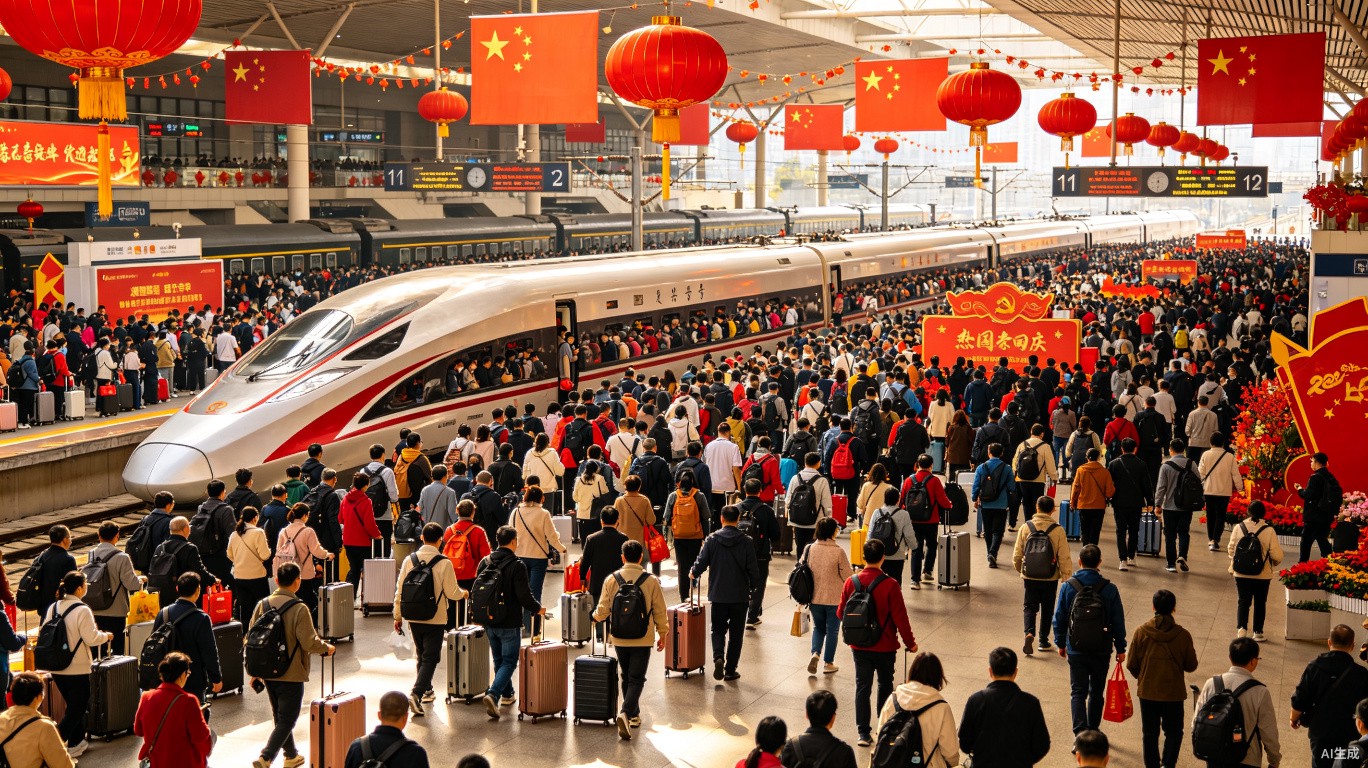
A: Spring Festival (Chinese New Year) is the biggest holiday in China. In 2026, it falls on February 17. The travel rush starts about a week before and continues for two weeks after. Trains sell out. Hotels double or triple their prices. Many restaurants and shops close for at least a few days. If you want to experience Chinese New Year celebrations, it’s amazing. If you want a smooth trip, avoid it.
The Honest Wrap-Up
This list is for people who want to see China without the crowds. It’s for people who don’t mind cold weather and who understand that the best experiences often come with some discomfort. It’s not for people who want beach weather or who need everything to be easy—winter travel in China requires planning, patience, and a good jacket.
If I had to recommend one place from this list, it would be Harbin. Not because it’s the most beautiful or the most cultural, but because it’s the most unexpected. You don’t go to China expecting to see a city made of ice. You don’t expect minus 30 degrees to feel like an adventure. But it does.
Here’s my final piece of advice: book the flight. Don’t overthink it. China in winter is not the China you see on Instagram. It’s quieter, colder, and stranger. And that’s exactly why you should go.
Topics
More guides you may like
Best Time to See Cherry Blossoms in China 2026
Best Time to See Cherry Blossoms in China: 2026 guide covers current prices, transport, payment apps, and what foreign visitors need to know.
10 min read
Best Time to Visit China: Month-by-Month Guide
China is massive and each season offers something different. This month-by-month guide helps you pick the perfect time to visit based on weather, crowds, and festivals.
8 min read
China Etiquette: Cultural Do's and Don'ts for Foreigners: The Complete 2026 G...
China has unique social customs that can confuse first-time visitors. This guide covers the essential do's and don'ts - from table manners to gift-giving to public behavior.
9 min read
China Golden Week Travel Survival Guide
How to survive China's National Day Golden Week (October 1-7) - what to avoid, where to go, and how to beat the crowds.
9 min read
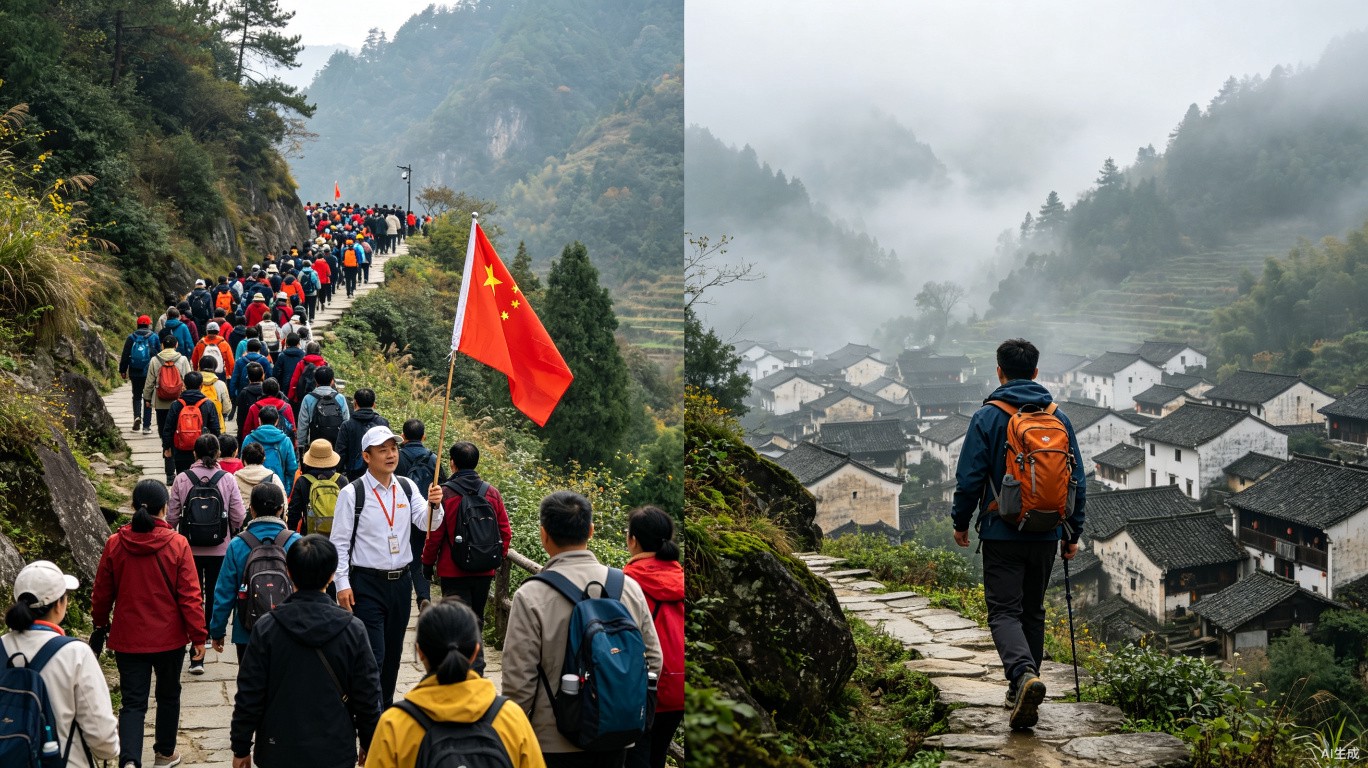
China Group Tours vs Independent Travel Which is Better
Should you join a guided tour or travel independently in China? Honest comparison of cost, flexibility, and experience.
7 min read
China Itinerary Planning: 7-Day 14-Day and 21-Day Routes: The Complete 2026 G...
Not sure how many days to spend in China? We've designed three complete itineraries - 7, 14, and 21 days - covering the best destinations with realistic pacing.
9 min read