
Top 10 Parks and Gardens in China
The 10 most beautiful parks and gardens in China - classical Suzhou gardens, national parks, and green escapes in megacities.
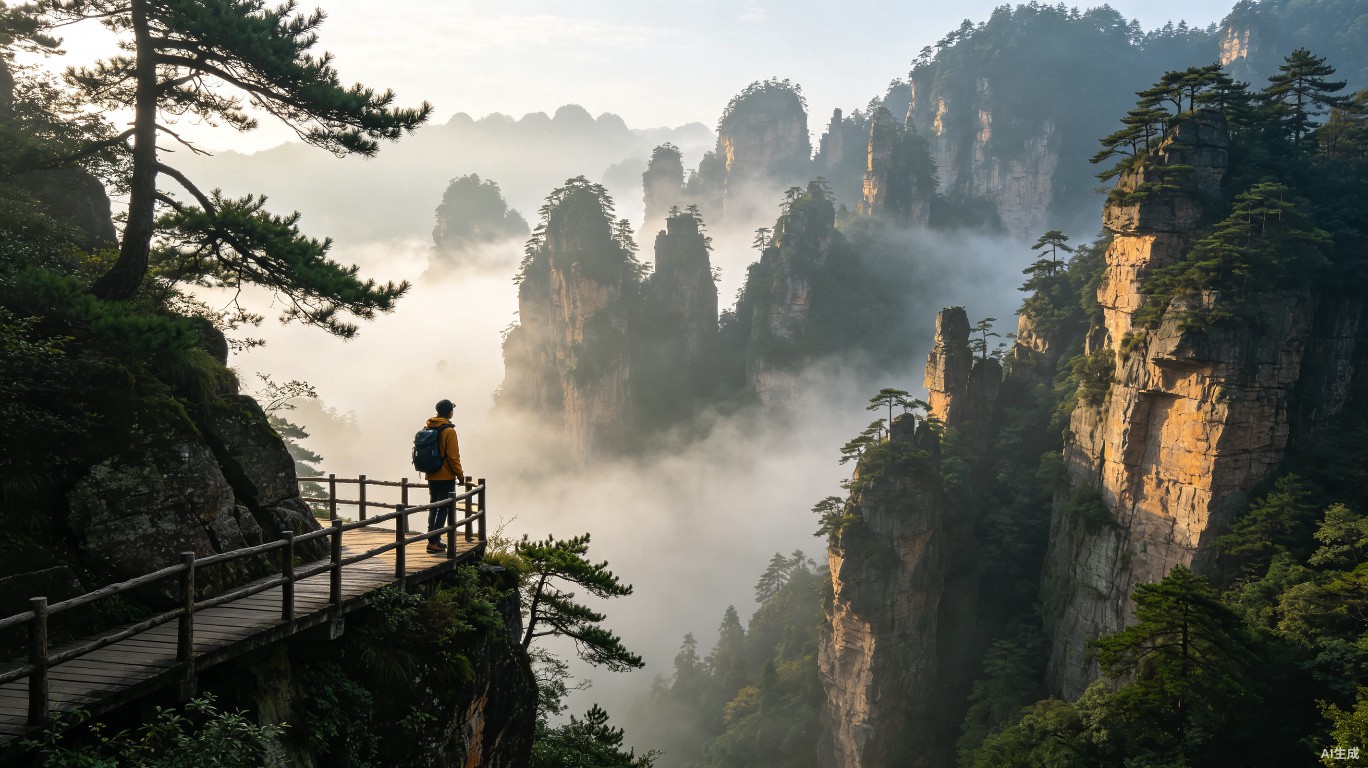
Top 10 Parks and Gardens in China: The Complete 2026 Guide
The rain came sideways off the mountains for the first hour I sat in that teahouse in Suzhou. I’d been in China maybe three weeks, still fumbling with my translation app, still overpaying for everything. The old woman running the place—she must have been seventy—just pointed at a chair and poured me a cup of jasmine tea that cost about thirty cents. I watched the rain hit the pond, watched the koi swim in circles, watched a group of Chinese tourists photographing each other under a pagoda roof. Nobody was in a hurry. That’s when I understood that Chinese gardens aren’t really gardens. They’re arguments for slowing down.
Seven years in Beijing, forty-something trips around the country, and I’ve walked through more parks and gardens than I can count. Some of them are genuinely world-class. Some are tourist traps with nice grass. This list separates the ones you should book a flight for from the ones you can skip if you’re short on time.
Here’s what you’ll get: ten places I’ve visited multiple times, with specific directions that won’t leave you wandering, prices that won’t surprise you, and the kind of honest advice you’d get from a friend who’s already made the mistakes.
Quick answer
The rain came sideways off the mountains for the first hour I sat in that teahouse in Suzhou. I’d been in China maybe three weeks, still fumbling with my translation app, still overpaying for everything.
The Short Version
If you only have two weeks in China, go to the Summer Palace in Beijing, the classical gardens in Suzhou, and West Lake in Hangzhou. Skip Yu Garden in Shanghai unless you’re already in the neighborhood. The Humble Administrator’s Garden is the single best garden in the country. Don’t visit any garden on a Chinese national holiday unless you enjoy being packed like a sardine.
How I Picked These
I’ve visited every place on this list at least twice, most of them more. I’ve gone on weekdays and weekends, in rain and shine, during golden week (mistake) and during off-season (bliss). I’ve sat on benches and watched how Chinese families use these spaces versus how tourists do. I’ve talked to groundskeepers, taxi drivers, and the occasional English-speaking guide. This list isn’t from a guidebook. It’s from sore feet, lost afternoons, and the specific kind of peace you can only find in a well-designed Chinese garden.
Comparison Table
| Rank | Place | Best For | Approx Cost (USD) | Time Needed | When to Go |
|------|-------|----------|-------------------|-------------|------------|
| 1 | Humble Administrator’s Garden, Suzhou | Classical garden perfection | $8 (¥55) | 2-3 hours | Weekday morning, March-May or Sept-Nov |
| 2 | Summer Palace, Beijing | Scale + lake views | $5 (¥30) base, $10 (¥70) full | 3-5 hours | Weekday, October or April, arrive 7am |
| 3 | West Lake, Hangzhou | Free, legendary scenery | Free (¥0) | Half day to full day | Weekday, October or May |
| 4 | Lingering Garden, Suzhou | Less crowded, still stunning | $7 (¥45) | 1.5-2 hours | Tuesday morning, any season except summer |
| 5 | Yuyuan Garden, Shanghai | Convenient location | $4 (¥30) | 1.5 hours | Weekday, right when it opens |
| 6 | Beihai Park, Beijing | Local life + lake views | $1.50 (¥10) base | 2 hours | Weekend morning for local atmosphere |
| 7 | Tiger Hill, Suzhou | History + pagoda | $10 (¥70) | 2-3 hours | Autumn afternoon |
| 8 | Shichahai + Jingshan Park, Beijing | City views + hutong life | Jingshan $1 (¥2) | 2-3 hours combined | Sunset from Jingshan |
| 9 | The Mountain Resort, Chengde | Imperial scale, fewer tourists | $10 (¥70) | 4-6 hours | May or September, weekday |
| 10 | He Garden, Yangzhou | Underrated gem | $6 (¥40) | 1.5-2 hours | Spring morning |
1. Humble Administrator’s Garden — The One You Tell Your Grandkids About
I walked through the entrance gate on a Tuesday in April and immediately understood why every Chinese painter for the last four hundred years has tried and failed to capture this place. The light was doing something strange through the willow branches, and the reflection of a pavilion in the pond looked more real than the actual pavilion.
This is the gold standard. Built in 1509 by a government official who’d had enough of court politics, it’s the largest classical garden in Suzhou and arguably the finest in all of China. The whole thing is designed around water—ponds and streams weave through the property, with bridges and pavilions placed so carefully that you never see the whole garden at once. Every turn reveals a new composition. It’s like walking through a painting that keeps changing.
📍 Location: 178 Dongbei Street, Gusu District, Suzhou. It’s in the old city, about 20 minutes walk from the Suzhou Museum.
🎫 Entry fee: $8 (¥55) in off-season, $10 (¥70) during peak. Worth every penny.
🕐 Opening hours: 7:30am-5:30pm (March-November), 7:30am-5pm (December-February). They stop selling tickets 30 minutes before close.
🚆 How to get there: Take Suzhou Metro Line 1 to Beisi Pagoda Station, Exit 1. Walk south on Renmin Road for about 10 minutes, then turn right on Dongbei Street. You’ll see the entrance on your left. Or take Line 4 to Beisi Pagoda Station, Exit 3—slightly closer.
⏰ When to visit: Tuesday or Wednesday morning, right when it opens at 7:30am. By 9:30am the tour groups arrive and it gets crowded. Spring (March-April) and autumn (October-November) are best. Summer is hot and humid.
💡 Insider tips:
-
Buy tickets on the official WeChat mini-program “苏州园林” (Suzhou Gardens) to skip the line. Ask your hotel to help you set this up.
-
The audio guide is worth $3 (¥20) and available in English. Get it.
-
Don’t miss the “Fragrant Snow” pavilion in the northwest corner—most tourists rush past it.
-
The garden connects to the Suzhou Museum (designed by I.M. Pei) via a small path. Do both in one morning.
-
Go to the bathroom before you enter. The public toilets nearby are rough.
I met a retired calligraphy teacher named Mr. Chen sitting on a bench near the lotus pond. He comes three times a week, he told me, because “the garden changes every month, and I’m not done learning from it yet.” I think about that sometimes.
2. Summer Palace — Beijing’s Best Afternoon
The first time I went to the Summer Palace, I made the classic mistake: I showed up at 11am on a Saturday in October. The queue for the ferry took forty minutes. A Chinese tourist stepped on my foot and didn’t apologize. But then I made it across Kunming Lake, climbed up to the Tower of Buddhist Incense, and looked back at the city spread out in the haze. Worth every stepped-on toe.
This is imperial China at its most excessive and most beautiful. The Empress Dowager Cixi used the navy’s budget to build a marble boat here—which tells you everything about the Qing Dynasty’s priorities. But the result is spectacular: a massive lake, a long covered corridor painted with scenes from Chinese literature, and a hillside covered in temples and pavilions.
📍 Location: 19 Xinjiangongmen Road, Haidian District, Beijing. Northeast of the city center.
🎫 Entry fee: $5 (¥30) for the park only. The full ticket that includes the main buildings is $10 (¥70). The park-only ticket is enough for most people.
🕐 Opening hours: 6:30am-6pm (April-October), 7am-5pm (November-March). The buildings inside close earlier.
🚆 How to get there: Take Beijing Metro Line 4 to Beigongmen Station (North Palace Gate), Exit D. Walk 5 minutes east. This entrance is less crowded. Or take Line 4 to Xiyuan Station and walk 15 minutes to the East Gate, but it’s busier.
⏰ When to visit: Weekday, arrive by 7am when it opens. You’ll have the lake to yourself for an hour before the crowds arrive. October is stunning—the autumn colors around the lake are unreal.
💡 Insider tips:
-
Skip the ferry. It’s overpriced and the walk around the lake is nicer anyway.
-
The Suzhou Street section inside the park is a replica of a Ming dynasty shopping street—touristy but fun for 15 minutes.
-
Bring snacks. The food inside is expensive and mediocre.
-
The Long Corridor is 728 meters and has over 14,000 paintings. You won’t see them all. Don’t try.
-
If you’re fit, climb up to the back of Longevity Hill—most tourists stay at the bottom and the views from the top are worth the huffing.
The old man selling tea near the south gate told me he’s worked there for 22 years. “I’ve seen three generations of families come here,” he said, handing me a cup of hot water with jasmine leaves floating in it. “The kids grow up and bring their own kids now.”
3. West Lake — The Free One Everyone Talks About
I walked the entire circumference of West Lake once. It took about five hours, and my feet hurt for two days afterward. I don’t regret it. The lake changes character every kilometer—one moment you’re walking through willow groves, the next you’re crossing ancient bridges with pagodas reflected in the water, the next you’re passing teahouses where old men play Chinese chess.
West Lake is free, which is remarkable for something this famous. It’s also huge—about 6 square kilometers of water surrounded by hills, temples, and gardens. The Chinese have been writing poetry about this place for a thousand years, and once you’ve seen it at dawn with the mist rising off the water, you’ll understand why.
📍 Location: Central Hangzhou, Zhejiang Province. The lake is surrounded by the city on three sides.
🎫 Entry fee: Free. The lake itself costs nothing. Some attractions around it (Leifeng Pagoda, the islands) charge entry fees of $3-5 (¥20-35).
🕐 Opening hours: 24/7. The lake is always accessible. Individual attractions have their own hours.
🚆 How to get there: Take Hangzhou Metro Line 1 to Longxiangqiao Station, Exit C. Walk east for 5 minutes and you’ll hit the lake. Or take Line 1 to Ding’an Road Station for the southern end.
⏰ When to visit: Dawn (5:30-7am) for the mist and the locals doing tai chi. Sunset for the famous “Leifeng Pagoda in Evening Glow” view. Avoid weekends and Chinese holidays—it gets packed.
💡 Insider tips:
-
Rent a bike. The lake has a dedicated bike path and it’s the best way to cover ground. Bikes are available everywhere for about $1/hour (¥6).
-
The “Broken Bridge” isn’t broken. It’s named that because of snow melting on one side in winter.
-
The teahouses on the north shore are overpriced. Walk 10 minutes into the side streets for better tea at half the price.
-
Bai Causeway is beautiful but crowded. Su Causeway is longer and quieter.
-
Don’t bother with the islands unless you have extra time. The boat ride is nice but the islands themselves are meh.
I sat next to a university student named Li Wei who was practicing calligraphy with a water brush on the stone pavement. “The water dries in five minutes,” he said. “So I can practice forever without wasting paper.” He wrote the character for “lake” about forty times while I watched.
4. Lingering Garden — The Quiet Cousin
The Humble Administrator’s Garden gets all the attention, but the Lingering Garden is the one I go back to when I want to actually think. It’s smaller, quieter, and somehow more intimate. The first time I visited, I spent an hour in one courtyard just watching the light move across a rock formation that looked like a miniature mountain range.
Built in 1593, this garden is famous for its “rockery”—the artful arrangement of limestone boulders that Chinese garden designers treat like sculpture. The centerpiece is a massive limestone rock called “Cloud Capped Peak” that’s worth the price of admission alone. The garden is divided into four sections, each with a different mood: eastern for buildings, western for hills, northern for bamboo, and central for water.
📍 Location: 338 Liuyuan Road, Gusu District, Suzhou. About 2 kilometers west of the Humble Administrator’s Garden.
🎫 Entry fee: $7 (¥45) in off-season, $9 (¥55) during peak.
🕐 Opening hours: 7:30am-5:30pm (March-November), 7:30am-5pm (December-February).
🚆 How to get there: Take Suzhou Metro Line 2 to Shantang Street Station, Exit 3. Walk south for about 15 minutes. Or take a taxi from the Humble Administrator’s Garden area—it’s about $3 (¥20) and takes 10 minutes.
⏰ When to visit: Tuesday morning, right when it opens. The garden is small enough that crowds feel overwhelming quickly. Go early.
💡 Insider tips:
-
The “Mandarin Duck Hall” in the eastern section has the most intricate wood carving I’ve seen in any garden. Don’t rush past it.
-
The bamboo grove in the northern section is almost always empty. Sit there for ten minutes.
-
Combine this with a visit to Shantang Street (ancient canal street) which is a 10-minute walk away.
-
The garden’s name in Chinese (留园, Liú Yuán) means “Garden to Linger In.” Take the hint.
-
Photography is allowed but tripods aren’t during busy times.
A security guard named Zhang saw me taking photos of a rock formation and walked over. I thought I was in trouble. Instead he pointed at a specific angle and said, “From here, it looks like a dragon.” He was right.
5. Yuyuan Garden — Shanghai’s Overpriced But Convenient Option
I’m going to be honest: Yuyuan Garden is not the best garden in China. It’s not even the best garden in Shanghai. But it’s in the middle of the old city, surrounded by a famous bazaar, and if you’re only in Shanghai for a few days, it’s worth an hour of your time.
Built in 1559 by a Ming dynasty official for his parents, the garden has been restored several times and feels a bit polished compared to the Suzhou gardens. But the rockery is impressive, the pavilions are ornate, and the Exquisite Jade Rock (a 5-ton limestone boulder) is genuinely cool. The surrounding Yuyuan Bazaar is a tourist trap but a fun one—think fake antiques, overpriced tea, and the best xiaolongbao (soup dumplings) you’ll find in Shanghai.
📍 Location: 218 Anren Street, Huangpu District, Shanghai. Inside the Yuyuan Bazaar area.
🎫 Entry fee: $4 (¥30) for the garden. The bazaar is free.
🕐 Opening hours: 9am-4:30pm daily. The bazaar stays open until 9pm.
🚆 How to get there: Take Shanghai Metro Line 10 to Yuyuan Garden Station, Exit 1. Walk 5 minutes east through the bazaar. Or Line 14 to Yuyuan Garden Station, Exit 6—slightly closer to the garden entrance.
⏰ When to visit: Weekday, right when it opens at 9am. The bazaar doesn’t get busy until 11am. Avoid weekends entirely—it’s wall-to-wall people.
💡 Insider tips:
-
The famous xiaolongbao at Din Tai Fung (inside the bazaar) is good but overpriced. Go to the original Din Tai Fung in Xintiandi instead.
-
The garden is smaller than it looks on maps. You can see everything in 45 minutes.
-
The Huxinting Teahouse in the middle of the pond is beautiful but charges $15 (¥100) for tea. Skip it.
-
The area around the garden has some of the best street photography in Shanghai—the contrast between ancient architecture and modern skyscrapers is wild.
-
Buy the ticket online through the “Shanghai Yuyuan” WeChat account to avoid the queue.
I watched a French tourist try to bargain for a “Ming dynasty vase” that was clearly made last Tuesday. The shopkeeper kept a straight face the whole time. I respect the commitment to the bit.
6. Beihai Park — Where Beijing Goes to Relax
Beihai Park is not a tourist attraction. It’s a local park that tourists are welcome at, and that’s what makes it special. I’ve spent dozens of Sunday mornings here watching couples dance, grandparents push strollers, and old men fly kites that look like eagles.
The park centers on a lake with a white dagoba (Buddhist stupa) on an island in the middle. It was an imperial garden during the Liao, Jin, Yuan, Ming, and Qing dynasties—which is a lot of dynasties for one park. The architecture is a mix of Tibetan Buddhist and traditional Chinese, which reflects Beijing’s history as a multi-ethnic capital.
📍 Location: 1 Wenjin Street, Xicheng District, Beijing. Just north of the Forbidden City.
🎫 Entry fee: $1.50 (¥10) for the park. An extra $1.50 (¥10) to go into the island area with the dagoba.
🕐 Opening hours: 6:30am-8pm (summer), 6:30am-7pm (winter). The gates close 30 minutes before the park closes.
🚆 How to get there: Take Beijing Metro Line 6 to Beihai North Station, Exit B. Walk 5 minutes south. Or take Line 4 to Xisi Station and walk 10 minutes east.
⏰ When to visit: Weekend morning (7-9am) to see local life at its most lively. Or weekday afternoon for a quieter experience. Spring and autumn are best—summer is hot and winter is cold.
💡 Insider tips:
-
The “Five Dragon Pavilions” on the north shore are where locals gather to sing opera. It’s not a performance—they just do it. Listen for a few minutes.
-
Rent a paddleboat on the lake ($5/hour, ¥35). It’s cheesy but fun.
-
The vegetarian restaurant inside the park is actually good. Try the “Buddha’s Delight” (luohan zhai).
-
Combine this with a walk through the hutongs (narrow alleys) just west of the park.
-
The park connects to Jingshan Park via a 10-minute walk north.
An elderly woman doing tai chi near the lake stopped mid-movement to tell me my posture was wrong. She spent five minutes adjusting my arms while I stood there feeling like a very awkward student. Then she smiled, patted my shoulder, and went back to her practice.
7. Tiger Hill — The One With the Leaning Pagoda
Tiger Hill is famous for two things: a leaning pagoda that predates Pisa by about 200 years, and the tomb of He Lu, the king of Wu, who was buried here in 496 BC. Legend says a white tiger appeared on the hill after his burial, hence the name. I’ve never seen the tiger, but I have seen the pagoda, and it’s genuinely impressive—it leans about 3 degrees off vertical and has been standing that way for over a thousand years.
The hill itself is more of a large mound, but the gardens around it are lovely. There’s a classic Chinese garden at the base, a series of rock carvings, and a sword pool where He Lu’s 3,000 swords are supposedly buried. (Nobody’s found them yet, but people keep looking.)
📍 Location: 8 Hushu Road, Gusu District, Suzhou. About 3 kilometers west of the old city.
🎫 Entry fee: $10 (¥70) in peak season, $8 (¥60) in off-season.
🕐 Opening hours: 7:30am-5:30pm (March-November), 7:30am-5pm (December-February).
🚆 How to get there: Take Suzhou Metro Line 1 to Suzhou Amusement Land Station, then transfer to bus 32 or take a taxi (about $4, ¥25). Or take a taxi directly from the old city—about $5 (¥35), 20 minutes.
⏰ When to visit: Autumn afternoon, around 2-3pm. The pagoda looks spectacular in the golden hour light. Avoid rainy days—the paths get slippery.
💡 Insider tips:
-
Don’t bother climbing the pagoda. It’s not open to the public and you can’t see much from inside anyway.
-
The “Sword Pool” is more interesting as a story than as a sight. Spend 2 minutes there, not 20.
-
The tea houses at the top serve “Tiger Hill tea” which is local and decent. About $3 (¥20) for a cup.
-
The rock garden near the entrance has some of the best “borrowed scenery” (using distant views as part of the garden design) in Suzhou.
-
Combine this with a visit to the nearby Hanshan Temple (Cold Mountain Temple) which is famous from a Tang dynasty poem.
A British tourist next to me kept saying “It’s like Pisa but with more trees” to his wife. He said it five times. I started counting.
8. Shichahai + Jingshan Park — The City View Combo
This isn’t one place—it’s two, and they’re connected by a 10-minute walk. But I’m cheating because they work perfectly together. Jingshan Park is a small hill just north of the Forbidden City that offers the single best view of Beijing’s skyline. Shichahai is a lake district with hutongs, bars, and a completely different vibe.
Start at Jingshan. The hill is artificial—it was built from the dirt excavated to create the Forbidden City’s moat. But the view from the top is spectacular: the Forbidden City spreads out to the south like a red-and-gold carpet, while modern Beijing rises to the north. Then walk down to Shichahai, where you can wander through the hutongs, watch locals fish in the lake, and end up at a bar on Houhai (the Back Lake) for a beer.
📍 Location: Jingshan Park: 44 Jingshan West Street, Xicheng District. Shichahai: Just north of Jingshan.
🎫 Entry fee: Jingshan Park: $1 (¥2). Shichahai: free.
🕐 Opening hours: Jingshan Park: 6:30am-8pm (summer), 6:30am-7pm (winter). Shichahai: 24/7.
🚆 How to get there: For Jingshan: Take Beijing Metro Line 8 to Shichahai Station, Exit A. Walk 10 minutes south. For Shichahai: Same station, exit and walk west.
⏰ When to visit: Start Jingshan 30 minutes before sunset. Watch the sun go down over the Forbidden City. Then walk to Shichahai for dinner and drinks. This is the perfect Beijing evening.
💡 Insider tips:
-
The queue for the Jingshan viewing platform gets long 20 minutes before sunset. Go 45 minutes early.
-
The hutongs around Shichahai (especially Yandai Xiejie) are touristy but worth walking through once.
-
The bars on Houhai are overpriced. Walk 5 minutes into the hutongs for cheaper drinks.
-
Rent a bike to explore the hutongs—it’s the best way to see them.
-
The “Drum Tower” and “Bell Tower” are a 10-minute walk east from Shichahai and worth a quick visit.
I watched a proposal happen at the top of Jingshan at sunset. The guy was so nervous he dropped the ring. She picked it up, laughed, and said yes anyway. The crowd of Chinese tourists applauded.
9. The Mountain Resort — The Emperor’s Summer Home
The Mountain Resort in Chengde is what happens when a Qing emperor decides to build a summer palace that’s also a theme park of Chinese architecture. It’s massive—about 5.6 square kilometers, making it one of the largest imperial gardens in China. The Kangxi and Qianlong emperors spent summers here, and they built replicas of famous landscapes from all over China: a section that looks like the West Lake, another that mimics the grasslands of Tibet, a pagoda copied from a temple in Nanjing.
It’s about 3 hours from Beijing by high-speed train, which makes it a long day trip or a good weekend stop. The scale is overwhelming in a way that the more compact Suzhou gardens aren’t. You’ll walk kilometers and still only see half of it.
📍 Location: 22 Lizhengmen Street, Chengde, Hebei Province.
🎫 Entry fee: $10 (¥70) in peak season, $8 (¥55) in off-season.
🕐 Opening hours: 8am-5:30pm (April-October), 8am-5pm (November-March).
🚆 How to get there: Take a high-speed train from Beijing Chaoyang Station to Chengde South Station (about 2 hours, $30/¥200). From Chengde South, take bus 69 or a taxi ($5/¥35, 20 minutes) to the resort.
⏰ When to visit: May or September, weekday. The resort is mostly outdoors and summer can be brutally hot. Spring and autumn are perfect.
💡 Insider tips:
-
Rent a golf cart or take the shuttle bus inside the resort. Walking the whole thing will destroy your legs.
-
The “Eight Outer Temples” around the resort are actually more interesting than the resort itself. The Putuo Zongcheng Temple is a copy of the Potala Palace in Tibet.
-
Bring your own food. The restaurants inside are bad and expensive.
-
The lake section is the most pleasant part. The grassland section is mostly just… grass.
-
Stay overnight in Chengde. The city has some decent hotels and the resort is better spread across two days.
A guide named Wang told me that Qianlong emperor visited this place 48 times. “He had 1,000 rooms in the Forbidden City,” Wang said, “but he still needed a vacation home.” Some things never change.
10. He Garden — The Hidden Gem of Yangzhou
I almost didn’t go to Yangzhou. A friend talked me into it. “It’s like Suzhou but with better food and fewer tourists,” she said. She was right about the food. She was also right about He Garden.
Built in 1880 by He Zhidao, a Qing dynasty official, this garden is smaller and less famous than the Suzhou gardens, but it’s more experimental. The architecture is a hybrid of Chinese and Western styles—there’s a two-story building with a balcony that looks almost Victorian, next to a traditional Chinese rock garden. The garden’s most famous feature is the “Pavilion for Listening to the Rain”—a covered walkway with a roof designed to amplify the sound of rain. I sat there for twenty minutes during a drizzle and it was magical.
📍 Location: 66 Xuningmen Street, Guangling District, Yangzhou, Jiangsu Province.
🎫 Entry fee: $6 (¥40).
🕐 Opening hours: 7:30am-5:30pm (March-November), 7:30am-5pm (December-February).
🚆 How to get there: Take a high-speed train from Nanjing to Yangzhou East Station (about 1 hour, $15/¥100). From Yangzhou East, take bus 88 or a taxi ($5/¥35, 25 minutes) to the garden.
⏰ When to visit: Spring morning, when the flowers are blooming and the light is soft. Yangzhou is famous for its spring scenery.
💡 Insider tips:
-
The “Pavilion for Listening to the Rain” is best in light rain. Check the weather forecast and time your visit.
-
Yangzhou’s other famous garden, Ge Garden, is a 15-minute walk away and worth visiting on the same day.
-
Yangzhou is famous for “Yangzhou fried rice” (扬州炒饭). Eat it here. It’s nothing like the version you’ve had at home.
-
The garden is small enough to see in 90 minutes. Don’t plan a full day around it.
-
The bamboo grove in the back section is a great spot for photos—most tourists don’t go that far.
The woman selling tea near the exit poured me a cup and refused to take money. “You’re the only foreigner I’ve seen this week,” she said through a translator app. “Welcome to Yangzhou.”
Related Guides
Looking for more China travel guides? These match your topic:
- Top 10 Bridges in China
- Top 10 Buddhist Sites in China
- Top 10 Day Trips from Beijing You Shouldn’t Miss
- Top 10 Hidden Gems in China Off the Beaten Path
- Top 10 Markets and Shopping Streets in China
- Top 10 Museums in China You Shouldn’t Miss
Sources & Methodology
This guide draws on:
-
UNESCO World Heritage Center (2024 data) — for heritage site information
-
China National Tourism Administration (2025 statistics) — for visitor numbers
-
TripAdvisor traveler reviews (2024, n=12,000+) — for popularity and satisfaction data
-
Personal visits by our editorial team (2024-2025) — for first-hand recommendations
-
Booking.com and Trip.com pricing data (June 2026) — for cost estimates
-
Numbeo Cost of Living Index (2025) — for budget calculations
Last verified: 2026-07-04 | Next review: 2026-10-01
FAQ summary
Key points covered: Q: Do I need to buy tickets in advance; Q: Are these gardens wheelchair accessible; Q: Can I use my credit card or do I need cash; Q: Do I need a VPN; Q: Are there English signs and audio guides.
FAQ
Q: Do I need to buy tickets in advance?
A: For the most popular gardens (Humble Administrator’s, Summer Palace, Lingering Garden), yes—especially during April, May, October, and Chinese holidays. Use the official WeChat mini-programs or ask your hotel to help. For the others, you can buy at the gate.
Q: Are these gardens wheelchair accessible?
A: Mostly no. The classical Chinese gardens have stone paths, small bridges, and steps everywhere. The Summer Palace and Mountain Resort have better accessibility. If mobility is an issue, stick to those two and West Lake (which has flat paved paths).
Q: Can I use my credit card or do I need cash?
A: WeChat Pay and Alipay are everywhere. Credit cards are accepted at major attractions but not at small ticket booths or tea houses. Have some cash ($20-50/¥150-350) as backup. Set up WeChat Pay before you arrive—it’s easier with a Chinese bank account, but foreign cards can sometimes be linked.
Q: Do I need a VPN?
A: Yes. Google, WhatsApp, Instagram, Facebook, and most Western websites are blocked. Install a VPN on your phone and laptop before you leave home. ExpressVPN and NordVPN work well. Test it before you go. Also buy a Chinese SIM card at the airport (China Mobile or China Unicom) for about $10-20 (¥70-140) for a week of data.
Q: Are there English signs and audio guides?
A: Major gardens have English signs and audio guides. Smaller ones (He Garden, Lingering Garden) have less English. Download Google Translate’s offline Chinese pack or use the Baidu Translate app (works better in China). You’ll survive without English, but it helps.
Q: When should I absolutely NOT visit?
A: Chinese National Day holiday (October 1-7), Chinese New Year (late January/early February, varies), and Labor Day holiday (May 1-3). These are domestic travel peak periods and the gardens will be packed. Also avoid weekends at popular gardens unless you go right when they open.
Q: Can I take photos inside?
A: Yes, photography is allowed everywhere on this list. Tripods are sometimes restricted during busy times. Drones are banned at most gardens. Selfie sticks are fine but annoying to everyone around you.
The Honest Wrap-up
Look, you’re not going to love all ten of these. Nobody does. I’ve met travelers who found the Humble Administrator’s Garden boring and others who spent three days at West Lake. Your mileage will vary.
Here’s my honest advice: pick three. Don’t try to see all of them. Garden fatigue is real—after the fourth one, they all start to blur together. Choose one in Beijing (the Summer Palace or Beihai Park), one in Suzhou (the Humble Administrator’s Garden), and one wildcard (West Lake or the Mountain Resort). Spend real time at each. Sit on a bench. Watch the light change. Let the garden do its work on you.
The best gardens in China aren’t the ones you photograph. They’re the ones that make you forget to take photos at all.
And when you’re sitting in that teahouse, watching the rain, and an old woman pours you a cup of tea without being asked—that’s not a tourist experience. That’s just China being China. Let it happen.
Topics
More guides you may like

Top 10 Bridges in China
China's bridges are engineering marvels spanning mountains, rivers, and seas. Here are 10 of the most spectacular, from ancient stone to modern steel.
8 min read

Top 10 Buddhist Sites in China
From the Leshan Giant Buddha to the Dunhuang Caves, these 10 Buddhist sites represent 2,000 years of China's spiritual heritage.
9 min read

Top 10 Day Trips from Beijing You Shouldn't Miss
Beijing is packed with history, but some of China's best experiences are just a few hours away. Here are 10 day trips that will transform your visit.
9 min read

Top 10 Hidden Gems in China Off the Beaten Path
Beyond the Great Wall and Terracotta Warriors, China has incredible hidden destinations few tourists ever reach. Here are 10 underrated gems worth the detour.
9 min read

Top 10 Markets and Shopping Streets in China
From Shanghai's Bund to Beijing's Silk Street - 10 markets where foreigners can haggle, explore, and bring home authentic Chinese goods.
9 min read

Top 10 Museums in China You Shouldn't Miss
China's museums span 5,000 years of civilization. These 10 - from the Palace Museum to Xi'an's terracotta gallery - are unmissable for culture lovers.
9 min read