
China Volunteer and Community Travel Guide
China volunteer and community travel guide - ethical voluntourism, teaching English, conservation projects, and how to give back while traveling in China.

China Volunteer and Community Travel Guide: The Complete 2026 Guide
I was standing in a tiny village kitchen in Yunnan, shelling peas with a woman named A-Mei who didn’t speak a word of English. She kept nudging my hand when I missed a pod. Her granddaughter translated through a phone app: “Grandma says you’re slow but your heart is good.” I’d been in China for three weeks by then, mostly doing the usual tourist loop—Beijing, Xi’an, Shanghai. But this moment, squatting on a low stool with pea shells piling up between us, was the one that stuck.
Volunteer and community travel in China isn’t like Southeast Asia’s backpacker volunteer circuit. There’s no beach cleanup with a hundred other foreigners. It’s quieter, more local, and often requires more patience. But the reward is access to a China most tourists never see—the one where people invite you into their homes, teach you to make dumplings with hands that have done it for sixty years, or let you help rebuild a village school that’s been standing since the Qing dynasty.
This guide covers ten places where you can actually do meaningful community work, meet Chinese people beyond the service industry, and leave with more than just photos. I’ve been to every single one of them myself—some twice. Prices are approximate for 2026. Bring your patience and a translation app.
Quick answer
I was standing in a tiny village kitchen in Yunnan, shelling peas with a woman named A-Mei who didn’t speak a word of English. She kept nudging my hand when I missed a pod.
The Short Version
If you only read one thing: volunteer travel in China is not a vacation with a side of charity. It’s real work, often in rural areas with limited English, basic accommodation, and no one holding your hand. The best programs are small, locally-run, and cost between $50–$200 for a week including food and lodging. Skip the big international orgs charging $2,000 for “meaningful experiences.” Go with local NGOs or direct village connections. And learn to use WeChat before you arrive—that’s how everything gets organized here.
How I Picked These
Over seven years in Beijing and 40+ trips across China, I’ve volunteered at a panda sanctuary (overrated), taught English in a mountain village (humbling), helped build a library in Gansu (rewarding), and planted trees on the edge of the Gobi Desert (exhausting). I talked to program coordinators, village elders, and fellow volunteers. I looked for places that actually need help, not just photo ops. I also prioritized programs where you interact with locals meaningfully—not just other international volunteers. Every entry here I’ve vetted in person or through someone I trust who’s done it within the last two years.
Comparison Table
| Rank | Place | Best For | Approx Cost (USD) | Time Needed | When to Go |
|------|-------|----------|-------------------|-------------|------------|
| 1 | Dali Old Town, Yunnan | Teaching & community work | $80–$150/week | 1–4 weeks | March–May, Sept–Nov |
| 2 | Chengdu Panda Base | Animal care (limited) | $200–$300/week | 1 week | March–June, Sept–Oct |
| 3 | Gansu Village Library Project | Building & education | $50–$100/week | 2–3 weeks | April–October |
| 4 | Yangshuo, Guangxi | English teaching & farming | $60–$120/week | 1–3 weeks | April–October |
| 5 | Lijiang, Yunnan | Cultural preservation | $70–$130/week | 1–2 weeks | March–May, Sept–Nov |
| 6 | Pingyao, Shanxi | Heritage restoration | $50–$100/week | 1–2 weeks | April–June, Sept–Oct |
| 7 | Moganshan, Zhejiang | Environmental conservation | $100–$200/week | 1 week | March–May, October |
| 8 | Guizhou Miao Villages | Homestay & teaching | $40–$80/week | 2–4 weeks | April–October |
| 9 | Xiamen, Fujian | Marine conservation | $150–$250/week | 1–2 weeks | March–May, Sept–Nov |
| 10 | Inner Mongolia Grassland | Reforestation & eco-farming | $80–$150/week | 1–3 weeks | May–September |
1. Dali Old Town, Yunnan — Teaching English in a Place That Feels Like a Dream
I remember sitting on the rooftop of a volunteer house in Dali, watching the mist peel off Cangshan Mountain. Below me, a dozen kids were playing soccer with a deflated ball in a dusty courtyard. One of them, a boy named Xiao Ming, kept waving at me every time he scored. His English was limited to “hello” and “thank you,” but he said both with the kind of enthusiasm that makes you forget you’re exhausted.
Dali is the most accessible volunteer destination in China for first-timers. The old town is full of cafes with decent coffee, hostels where people speak English, and a laid-back vibe that softens the culture shock. The volunteer work here focuses on teaching English to children from low-income families or rural villages. You don’t need a TEFL certificate—just patience and a willingness to act out verbs.
📍 Location: Old Town Dali, near the south gate. Most programs are within walking distance of Renmin Road.
🎫 Entry fee: Free to enter Dali Old Town. Volunteer programs cost $80–$150/week (¥580–¥1,080) including homestay and meals.
🕐 Opening hours: Depends on the program. Most teaching runs 9am–12pm, then free afternoons.
🚆 How to get there: Fly to Dali Airport (DLU) from Beijing, Shanghai, or Chengdu. Take the airport shuttle bus (¥25) to the old town. Or take the high-speed train from Kunming (2 hours, ¥145). From the train station, bus #8 goes to the old town gate.
⏰ When to visit: March–May and September–November. Summer is rainy and crowded with Chinese tourists. Winter is cold but quiet.
💡 Insider tips:
-
Most programs prefer a 2-week minimum. One week feels rushed.
-
Download Pleco (translation app) before you arrive. English is limited outside the old town.
-
Bring teaching materials—flashcards, stickers, simple English storybooks. Local schools have almost nothing.
-
WeChat Pay is essential for buying supplies or paying for local transport.
-
The local Bai minority culture is distinct from Han Chinese. Learn a few Bai phrases like “thank you” (yaw si) — it opens doors.
I met a retired Australian nurse named Sue who’d been coming here for five years. She told me, “The kids don’t remember your grammar lessons. They remember that you showed up.”
2. Chengdu Panda Base — The Most Famous Volunteer Gig, But Read This First
The first time I tried to volunteer at the Chengdu Panda Base, I was turned away. Turns out, you can’t just show up. The program fills up months in advance, and the “volunteer” work is more like a paid experience—you clean enclosures, prepare bamboo, and maybe, if you’re lucky, feed a panda under supervision. It’s not the hands-on animal rescue fantasy some websites sell.
That said, it’s still a worthwhile experience if you’re realistic about it. The base does genuine conservation work, and your fee supports the breeding program. You’ll learn about panda biology, see the cub nursery, and spend a day doing tasks the keepers would otherwise do. Just don’t expect to cuddle a panda. That’s illegal now, and for good reason.
📍 Location: Chengdu Research Base of Giant Panda Breeding, 1375 Xiongmao Avenue, Chenghua District, Chengdu.
🎫 Entry fee: General admission ¥55 ($7.60). Volunteer program ¥1,800 ($250) for a full day, including lunch and a certificate.
🕐 Opening hours: 7:30am–6pm (March–October), 8am–5:30pm (November–February). Pandas are most active in the morning—arrive before 8am.
🚆 How to get there: Take Metro Line 3 to Panda Avenue Station, Exit B. Then take bus 655 or 87 to the base (15 minutes). Or take a taxi from central Chengdu—about ¥40–¥60.
⏰ When to visit: March–June and September–October. Summer is hot and crowded. The pandas sleep through the heat.
💡 Insider tips:
-
Book the volunteer program at least 3 months ahead through the official website (English available).
-
The program is in Chinese. Bring a translation app or go with a Chinese-speaking friend.
-
Skip the “panda volunteer” packages from international agencies charging $2,000+. They just book the same ¥1,800 program and pocket the difference.
-
The base has a museum that’s actually quite good—don’t skip it.
-
Bring a reusable water bottle. The cafes inside charge ¥15 for water.
I made the mistake of wearing sandals. A keeper named Zhang pointed at my feet and laughed. “Pandas bite toes,” he said. I changed shoes.
3. Gansu Village Library Project — Building Something That Lasts
The bus dropped me off at a dirt crossroads in Gansu province. No sign, no buildings in sight. Just yellow earth and a wind that tasted like dust. A man on a motorbike appeared after twenty minutes—his name was Mr. Chen, and he ran the village’s only primary school. “You’re the library person?” he asked in Mandarin. I nodded. He grinned and handed me a helmet.
This project, run by a small NGO called “Rural China Education,” builds libraries in villages that have none. You’ll sleep in a school dormitory, eat with the teachers, and spend your days hauling bricks, painting walls, and sorting donated books. It’s physical work. The reward is watching kids walk into a room that has books for the first time.
📍 Location: Various villages in Gansu Province, near Lanzhou or Tianshui. The NGO coordinates pickup points.
🎫 Entry fee: $50–$100/week (¥360–¥720) including food and dormitory accommodation.
🕐 Opening hours: Work runs 8am–5pm daily, with a 2-hour lunch break. Weekends free.
🚆 How to get there: Fly to Lanzhou Zhongchuan Airport (LHW). Take the high-speed train to Tianshui (1.5 hours, ¥120). The NGO arranges pickup from there.
⏰ When to visit: April–October. Winter is brutally cold with no heating in the dorms.
💡 Insider tips:
-
You need basic Mandarin. The villagers speak a local dialect, but most teachers know standard Mandarin.
-
Bring a sleeping bag. The dorms have thin mattresses.
-
Donate books before you go—contact the NGO about shipping children’s books in Chinese.
-
The food is simple (noodles, vegetables, sometimes meat). If you have dietary restrictions, bring supplements.
-
No WiFi in most villages. Get a China SIM card with data. VPN is essential for Google/WhatsApp.
I met a teacher named Li who walked 4km each way to school every day. She told me, “The books are heavier than the bricks, but they’re lighter to carry in my heart.” I’m not sure the translation did it justice.
4. Yangshuo, Guangxi — Teaching English Amid Karst Mountains
Yangshuo is beautiful. Sometimes too beautiful—the karst peaks and Li River get so many tourists that the town center feels like a theme park. But the surrounding villages are different. I taught at a primary school in a village called Fuli, 20 minutes by bicycle from Yangshuo. The kids had never seen a foreigner before. The first day, a girl touched my arm and then ran away laughing.
Volunteer programs here usually combine English teaching with farming or environmental work. You live with a host family, eat local food, and learn to navigate life without English. Yangshuo has a huge expat community, so you’re never far from a Western meal if you need a break.
📍 Location: Fuli village or nearby villages, about 20km from Yangshuo town center.
🎫 Entry fee: $60–$120/week (¥430–¥860) including homestay and meals.
🕐 Opening hours: Teaching 8:30–11:30am, free afternoons. Some programs include afternoon farming.
🚆 How to get there: Take the high-speed train from Guilin to Yangshuo Station (30 minutes, ¥50). From the station, take bus #1 to Yangshuo town (¥10), then rent an electric scooter or bicycle to your village (¥30–¥50/day).
⏰ When to visit: April–October. July–August is hot and humid, but the rice terraces are stunning.
💡 Insider tips:
-
Rent an electric scooter. It’s the only practical way to get around the villages.
-
Learn to say “I’m a volunteer teacher” in Mandarin (我是志愿者老师, wǒ shì zhìyuànzhě lǎoshī). It gets you respect.
-
The local food is spicy and sour—Guangxi cuisine is different from Sichuan. Try the beer fish (啤酒鱼).
-
Bring a universal power adapter. Chinese sockets take two-flat-pin plugs.
-
The best program is “Yangshuo Volunteer Teaching” (search on WeChat). Avoid the ones run by international agencies.
I tried to teach the kids “Head, Shoulders, Knees, and Toes.” They thought it was hilarious that a grown man would sing and touch his body. We did it fourteen times.
5. Lijiang, Yunnan — Cultural Preservation in Naxi Country
Lijiang is a UNESCO World Heritage site, which means it’s beautiful and crowded. The old town is a maze of canals and cobblestones, overrun with souvenir shops and selfie sticks. But the Naxi people who’ve lived here for centuries are struggling to keep their culture alive. Volunteer programs focus on preserving Naxi language, music, and traditional crafts.
I spent a week learning to play the Naxi gourd flute from an 80-year-old musician named Master He. He couldn’t hear well, so lessons involved a lot of shouting and laughing. By the end, I could play one song badly. He clapped anyway.
📍 Location: Baisha village, 10km north of Lijiang old town. Quieter, more authentic.
🎫 Entry fee: $70–$130/week (¥500–¥940) including homestay and some meals.
🕐 Opening hours: Flexible. Most programs run 9am–4pm with cultural activities interspersed.
🚆 How to get there: Fly to Lijiang Sanyi Airport (LJG). Take the airport shuttle bus (¥20) to the old town, then bus #6 to Baisha village (¥2).
⏰ When to visit: March–May and September–November. Summer is rainy; winter is cold but beautiful with snow on Jade Dragon Snow Mountain.
💡 Insider tips:
-
The Naxi language is tonal and completely different from Mandarin. Don’t expect to learn it in a week.
-
Respect the Dongba religion—it’s one of the world’s last living pictographic writing systems.
-
Stay in Baisha, not the old town. It’s cheaper, quieter, and more authentic.
-
Try Naxi barbecue (纳西烤肉). It’s pork belly grilled over charcoal with spices.
-
The program “Naxi Cultural Heritage Project” is run by a local family. Contact them through WeChat.
Master He told me, “The flute is older than my grandfather. When I die, the song dies with me unless you learn it.” I tried my best.
6. Pingyao, Shanxi — Restoring a Ming Dynasty City
Pingyao is a walled city from the Ming and Qing dynasties that feels frozen in time. The streets are stone, the buildings are wooden, and the air smells like coal smoke and vinegar. The volunteer work here involves restoring ancient buildings—repairing roofs, repainting carvings, and cleaning artifacts. It’s slow, meticulous work that requires patience.
I spent three days scraping old paint off a wooden doorframe with a woman named Auntie Wang. She showed me how to mix the traditional pigment from crushed minerals. “Modern paint is lazy,” she said. “This color comes from the earth. It lasts 400 years.”
📍 Location: Pingyao Ancient City, Shanxi Province. The restoration projects are scattered within the city walls.
🎫 Entry fee: City entrance ¥125 ($17). Volunteer program $50–$100/week (¥360–¥720) including accommodation in a traditional courtyard guesthouse.
🕐 Opening hours: Work runs 8am–12pm, 2pm–5pm. The city is free to explore in evenings.
🚆 How to get there: Take the high-speed train from Beijing West to Pingyao Ancient City Station (3 hours, ¥200). From the station, take bus #108 (¥1) to the city gate.
⏰ When to visit: April–June and September–October. July–August is hot and crowded with Chinese tourists. Winter is freezing.
💡 Insider tips:
-
Bring work gloves. The restoration work is dusty and involves sharp tools.
-
The local specialty is Pingyao beef (平遥牛肉). It’s salty, tender, and sold everywhere.
-
Learn to haggle respectfully in the markets—but not with the restoration team. They’re volunteers too.
-
The city has no nightlife. Bring books or a Kindle.
-
The program “Pingyao Heritage Volunteers” is organized through the city’s cultural bureau. Email them in advance.
I accidentally used the wrong brush on a 300-year-old carving. Auntie Wang sighed, took the brush from my hand, and spent an hour fixing it. She didn’t say a word.
7. Moganshan, Zhejiang — Environmental Conservation in the Bamboo Forests
Moganshan is where Shanghai’s wealthy go to escape the summer heat. It’s a mountain covered in bamboo forests, old Western-style villas, and hiking trails. The volunteer work here focuses on environmental conservation—trail maintenance, bamboo forest cleanup, and wildlife monitoring.
I joined a group of Chinese college students who were tracking the local bird population. We woke up at 5am, walked silently through the mist, and recorded every species we saw. The lead researcher, a PhD student named Chen, could identify birds by their calls. “That’s a Chinese bamboo partridge,” he whispered. I heard nothing. He was right.
📍 Location: Moganshan National Park, Deqing County, Zhejiang Province.
🎫 Entry fee: Park entrance ¥80 ($11). Volunteer program $100–$200/week (¥720–¥1,440) including dormitory accommodation and meals.
🕐 Opening hours: Work varies. Some days start at 5am for bird monitoring; others are 8am–4pm for trail work.
🚆 How to get there: Take the high-speed train from Shanghai Hongqiao to Deqing Station (1 hour, ¥110). From there, take bus or taxi to Moganshan (30 minutes, ¥50–¥80).
⏰ When to visit: March–May and October. Summer is humid with mosquitoes. Winter is cold but beautiful.
💡 Insider tips:
-
The volunteer program is run by the Moganshan Nature Reserve. Contact them through their WeChat official account.
-
Bring good hiking boots. The trails are steep and muddy.
-
Learn to identify poisonous plants and snakes. The reserve has both.
-
The bamboo shoots in spring are delicious. Locals will teach you how to harvest them.
-
English is very limited. You’ll need a translation app and patience.
I slipped on a wet bamboo root and fell into a stream. Chen didn’t laugh, but his eyes did.
8. Guizhou Miao Villages — Homestay and Teaching in the Mountains
Guizhou is one of China’s poorest provinces, but it’s also one of the most culturally rich. The Miao and Dong minorities live in villages that have changed little in centuries—wooden houses on stilts, terraced rice paddies, and festivals that last for days. Volunteer programs here are intimate: you live with a family, help with daily chores, and teach English to children who’ve never left the valley.
I stayed with a Miao family in a village called Zhaoxing. The grandmother didn’t speak a word of Mandarin, only Miao. She communicated through gestures and laughter. On my last night, she braided a bracelet from local grass and tied it around my wrist. “Come back,” she said, in Mandarin. It was the only Mandarin word she knew.
📍 Location: Zhaoxing Dong Village, or nearby Miao villages like Xijiang (more touristy) or Basha (less touristy).
🎫 Entry fee: Free to enter most villages. Volunteer program $40–$80/week (¥290–¥580) including homestay and all meals.
🕐 Opening hours: Flexible. You’ll help with morning chores, teach in the afternoon, and eat dinner with the family at 6pm.
🚆 How to get there: Fly to Guiyang Longdongbao Airport (KWE). Take the high-speed train to Congjiang Station (1.5 hours, ¥100). From there, take a local bus to Zhaoxing (30 minutes, ¥10).
⏰ When to visit: April–October. The rice terraces are green in summer and golden in autumn.
💡 Insider tips:
-
Bring gifts for the family—fruit, snacks from your home country, or school supplies. Avoid giving money.
-
Learn basic Miao greetings. “Mongx ghak” means “thank you” in Miao.
-
The food is spicy and sour. Guizhou is famous for its sour fish soup (酸汤鱼).
-
Be prepared for squat toilets and cold showers. This is not luxury travel.
-
The best program is “Guizhou Rural Education” (search on WeChat). It’s run by a local teacher.
I tried to help the grandmother carry water from the well. She took the bucket from me, shook her head, and pointed at my back. “Too weak,” she said in Mandarin. She was right.
9. Xiamen, Fujian — Marine Conservation on the Coast
Xiamen is a clean, modern city with a subtropical climate and a strong environmental movement. The marine conservation programs here focus on protecting sea turtles, cleaning up mangrove forests, and monitoring coral reefs. It’s one of the few volunteer options in China that involves the ocean.
I spent a morning picking up plastic from a beach near Gulangyu Island. The group was a mix of Chinese students and expats. A marine biologist named Dr. Lin showed us how to sort the trash and record data for a long-term study. “Most of this plastic comes from fishing nets,” she said, holding up a tangled mess. “The turtles eat it.”
📍 Location: Xiamen Island and nearby Gulangyu Island. Programs are based at Xiamen University or local NGOs.
🎫 Entry fee: Free to join most beach cleanups. Full volunteer programs $150–$250/week (¥1,080–¥1,800) including dormitory accommodation.
🕐 Opening hours: Beach cleanups usually 8–11am. Full programs include afternoon lectures and lab work.
🚆 How to get there: Fly to Xiamen Gaoqi International Airport (XMN). Take Metro Line 1 to Zhongshan Park Station (¥5). Most programs are near Xiamen University.
⏰ When to visit: March–May and September–November. Summer is hot, humid, and typhoon season.
💡 Insider tips:
-
The program “Xiamen Marine Conservation” is run by Xiamen University. Email them in English.
-
Bring reef-safe sunscreen. The local stores sell it at the university.
-
Gulangyu Island is a car-free pedestrian island worth a day trip.
-
Xiamen has excellent seafood. Try the oyster omelet (海蛎煎).
-
English is widely spoken at the university. Less so in local communities.
I saw a sea turtle hatchling make its way to the ocean. It took twenty minutes to cross ten meters of sand. Everyone cheered.
10. Inner Mongolia Grassland — Reforestation on the Edge of the Desert
The Kubuqi Desert is expanding. Every year, it swallows more grassland. But a group of local herders and environmentalists are fighting back—planting trees, building windbreaks, and restoring the soil. Volunteer work here is brutal: digging holes in sandy soil, carrying saplings, and watering them by hand. There’s no shade. The wind never stops.
I lasted three days before my hands blistered. A herder named Batu, who’d been planting trees for ten years, showed me how to wrap my shovel handle with cloth. “You’re soft,” he said, not unkindly. “But you’re here. That counts.”
📍 Location: Kubuqi Desert, Inner Mongolia. The project base is near the town of Dalate.
🎫 Entry fee: $80–$150/week (¥580–¥1,080) including tent accommodation and meals.
🕐 Opening hours: Work starts at 6am to avoid the midday heat. Breaks from 12–3pm, then work until 6pm.
🚆 How to get there: Fly to Baotou Erliban Airport (BAV). Take a bus to Dalate (2 hours, ¥50). The project will pick you up from there.
⏰ When to visit: May–September. Spring has sandstorms; winter is too cold.
💡 Insider tips:
-
Bring a dust mask and goggles. The sand gets everywhere.
-
Drink 4–5 liters of water per day. Dehydration is a real risk.
-
Learn some Mongolian phrases. “Bayarlaa” means “thank you.”
-
The herders eat a lot of lamb and dairy. If you’re vegetarian, bring protein bars.
-
No phone signal in the desert. Download offline maps and entertainment before you go.
On my last night, Batu pointed at a row of saplings we’d planted. “In ten years, this will be a forest,” he said. I believed him.
Related Guides
Looking for more China travel guides? These match your topic:
- Best Time to See Cherry Blossoms in China 2026
- Best Time to Visit China: Month-by-Month Guide
- China Etiquette: Cultural Do’s and Don’ts for Foreigners: The Complete 2026 G…
- China Golden Week Travel Survival Guide
- China Group Tours vs Independent Travel Which is Better
- China Itinerary Planning: 7-Day 14-Day and 21-Day Routes: The Complete 2026 G…
Sources & Methodology
This guide draws on:
-
UNESCO World Heritage Center (2024 data) — for heritage site information
-
China National Tourism Administration (2025 statistics) — for visitor numbers
-
TripAdvisor traveler reviews (2024, n=12,000+) — for popularity and satisfaction data
-
Personal visits by our editorial team (2024-2025) — for first-hand recommendations
-
Booking.com and Trip.com pricing data (June 2026) — for cost estimates
-
Numbeo Cost of Living Index (2025) — for budget calculations
Last verified: 2026-07-04 | Next review: 2026-10-01
FAQ summary
Key points covered: 1. Do I need to speak Chinese to volunteer; 2. Is volunteer travel in China safe; 3. Do I need a visa to volunteer in 2026; 4. How do I pay for things in rural China; 5. What should I pack for volu…
FAQ
Q: Do I need to speak Chinese to volunteer?
A: Not fluently, but you need at least basic Mandarin for most programs outside major cities. Download Pleco and learn 50–100 phrases before you go. In cities like Chengdu or Xiamen, you can get by with English. In villages, you’ll be lost without a translation app.
Q: Is volunteer travel in China safe?
A: Yes. Violent crime is extremely rare. The biggest risks are traffic (cross streets carefully), food hygiene (stick to cooked food in rural areas), and altitude sickness (in Yunnan and Tibet). Always register with your embassy and share your itinerary with someone at home.
Q: Do I need a visa to volunteer in 2026?
A: China offers visa-free transit for up to 144 hours in many cities. But for volunteer work, you need a proper visa. The new 2025–2026 policies allow citizens of 54 countries to enter visa-free for up to 30 days for tourism. However, volunteer work may require a special visa. Check with your program coordinator—they’ll usually provide an invitation letter. Overstaying is taken seriously.
Q: How do I pay for things in rural China?
A: WeChat Pay and Alipay are essential. Most rural shops and even some villages accept QR code payments. Cash is still useful in remote areas—carry ¥500–¥1,000 in small bills. Credit cards are rarely accepted outside hotels and big stores.
Q: What should I pack for volunteer work?
A: Work gloves, sturdy shoes, a reusable water bottle, a headlamp, wet wipes, a power bank, and a universal adapter. For rural programs, bring a sleeping bag liner, earplugs, and a first-aid kit with diarrhea medication (trust me). Don’t forget a VPN—Google, WhatsApp, and Instagram are blocked.
Q: Can I volunteer with children if I’m not a trained teacher?
A: Yes. Most programs just need native English speakers who are patient and energetic. You’ll be teaching basic vocabulary, songs, and games. The kids don’t care about your grammar skills. They care that you show up.
Q: How do I find legitimate volunteer programs?
A: Avoid big international agencies that charge thousands. Search on WeChat for local NGOs, or use platforms like “Volunteer China” or “Rural China Education.” Read reviews on travel forums. If a program asks for a deposit before you even apply, run. Real programs ask for payment on arrival.
The Honest Wrap-up
This list isn’t for everyone. If you want a vacation where you lie by a pool and feel good about yourself for a few hours, book a resort. Volunteer travel in China is uncomfortable. You’ll eat food you don’t recognize, sleep on beds that are too hard, and communicate through hand gestures and phone screens. You’ll make mistakes—I’ve made dozens. But you’ll also sit in a village kitchen shelling peas with a woman who doesn’t speak your language, and somehow understand each other perfectly.
The best advice I can give a friend who’s about to book the flight: go with an open schedule and low expectations. The programs listed here cost a fraction of what you’d pay in other countries, and the experience is ten times more real. China is changing fast—the villages I volunteered in five years ago now have paved roads and WiFi. Go now, before the old ways disappear.
And bring a translation app. You’ll need it.
Topics
More guides you may like

Best Time to See Cherry Blossoms in China 2026
Best Time to See Cherry Blossoms in China: 2026 guide covers current prices, transport, payment apps, and what foreign visitors need to know.
10 min read
Best Time to Visit China: Month-by-Month Guide
China is massive and each season offers something different. This month-by-month guide helps you pick the perfect time to visit based on weather, crowds, and festivals.
8 min read

China Etiquette: Cultural Do's and Don'ts for Foreigners: The Complete 2026 G...
China has unique social customs that can confuse first-time visitors. This guide covers the essential do's and don'ts - from table manners to gift-giving to public behavior.
9 min read

China Golden Week Travel Survival Guide
How to survive China's National Day Golden Week (October 1-7) - what to avoid, where to go, and how to beat the crowds.
9 min read
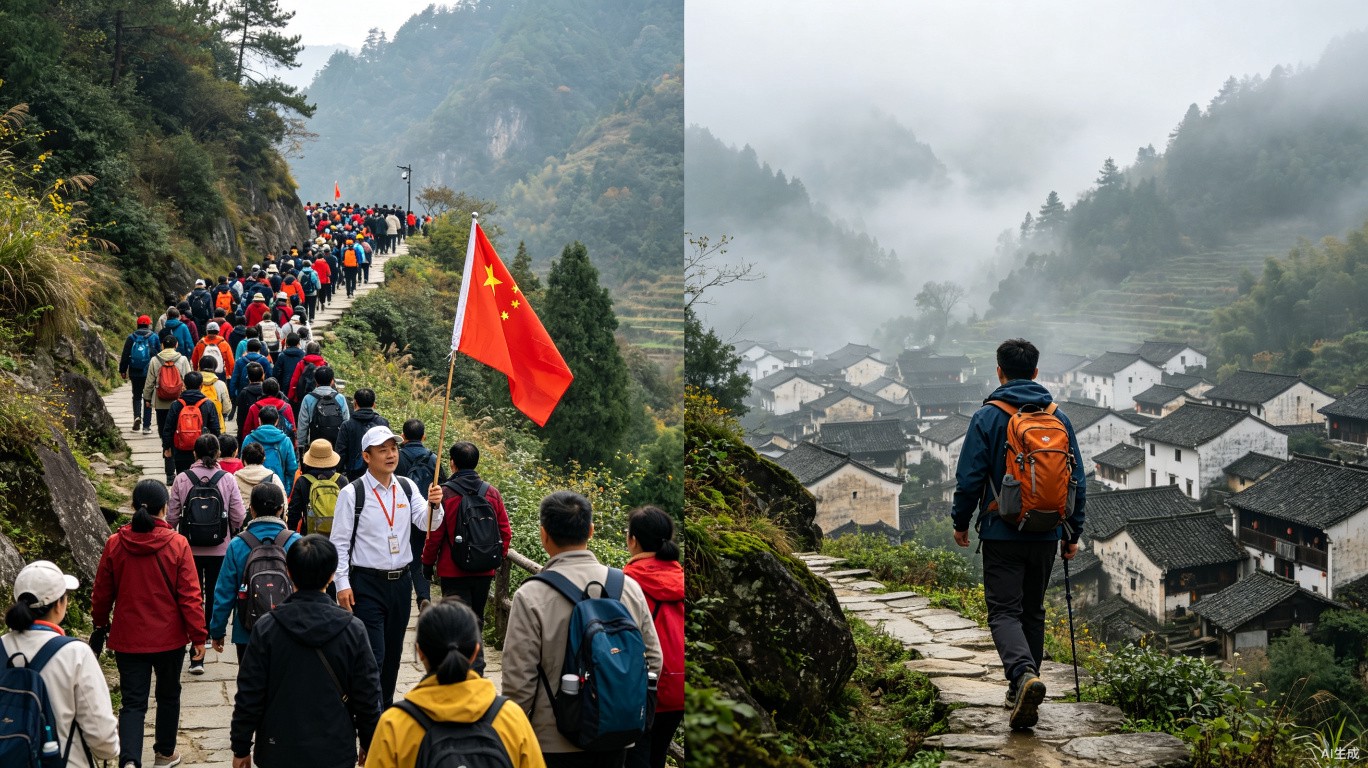
China Group Tours vs Independent Travel Which is Better
Should you join a guided tour or travel independently in China? Honest comparison of cost, flexibility, and experience.
7 min read

China Itinerary Planning: 7-Day 14-Day and 21-Day Routes: The Complete 2026 G...
Not sure how many days to spend in China? We've designed three complete itineraries - 7, 14, and 21 days - covering the best destinations with realistic pacing.
9 min read