
Enshi Grand Canyon Complete Guide 2026
Enshi Grand Canyon 2026 guide - how to reach the karst canyon from Wuhan or Chongqing, when to walk the One-Line-Sky crack, and what to combine with Tujia cultural villages.
1. Introduction
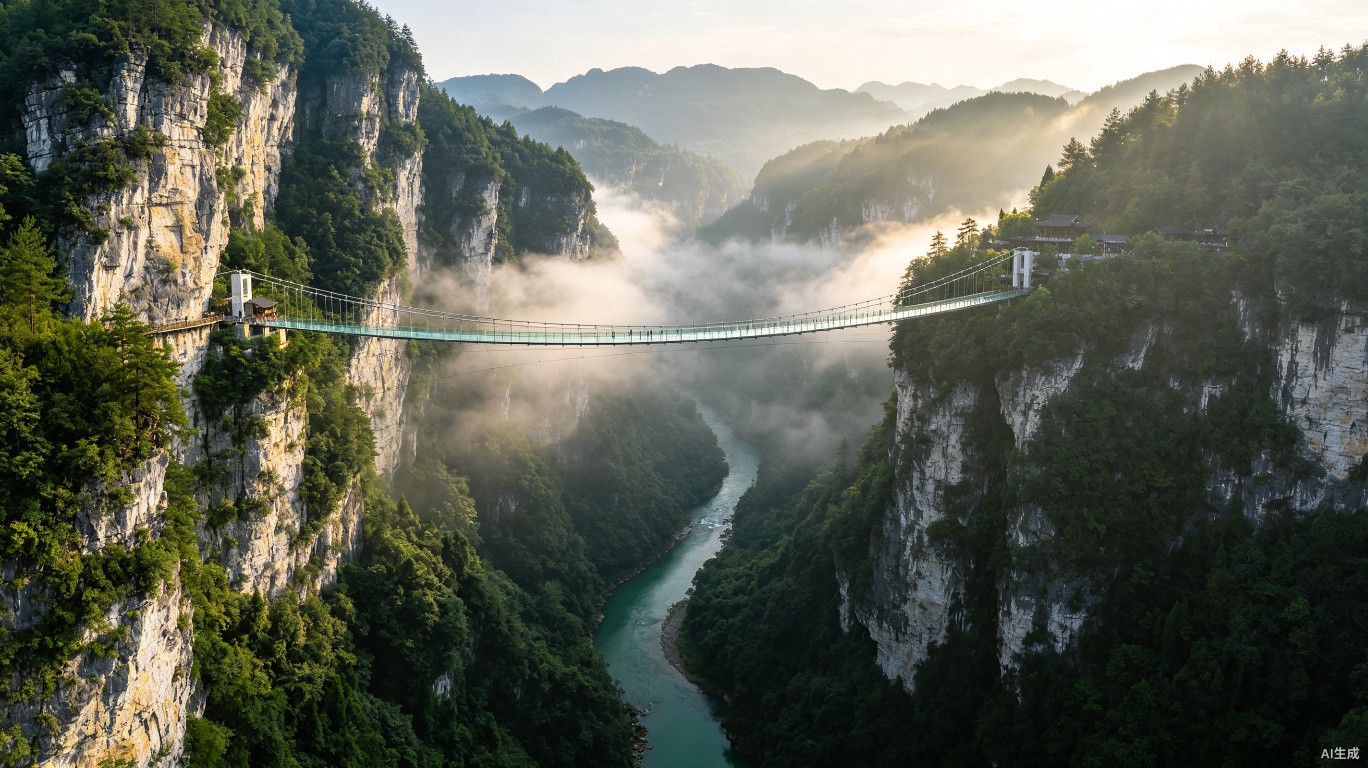
The Enshi Grand Canyon (恩施大峡谷) is a 108-km-long karst canyon system in southwestern Hubei, 600 km west of Wuhan and 350 km east of Chongqing. The canyon is most famous for three geological features that coexist in a single 8-km walking route: the One-Line-Sky crack (一线天), a 100m tall vertical fissure you walk through sideways; the Yunlong Ground Fissure (云龙地缝), a U-shaped canyon within a canyon that drops 75m to a stream at the bottom; and the Qixingzhai peak cluster (七星寨), a series of limestone peaks that reach 2,000m elevation. The area is also the heart of Tujia ethnic minority country — the Tujia have lived in the canyon for over 1,000 years and their stilted wooden houses, hand-woven textiles, and sour-spicy cuisine are still the dominant local culture. We took the high-speed train from Wuhan to Enshi, then a 90-minute tourist bus to the canyon, and spent two full days walking the main route plus a half-day in a Tujia village. This guide covers the One-Line-Sky timing, the right way to walk the Qixingzhai peak loop, and the Tujia experiences worth adding.
2. Quick Answer / TL;DR
Three nights, four days is the right format. Fly Wuhan to Enshi Airport (1 hour, CNY 500 to 1,200 round trip) or take the high-speed train from Wuhan to Enshi Station (4 hours, CNY 200 to 320). Check into a hotel in Enshi city (40 minutes from the canyon) or in the canyon-side town of Tunbao (10 minutes from the entrance). Spend Day 1 walking the Yunlong Ground Fissure (4 hours). Day 2: Qixingzhai peak loop including the One-Line-Sky crack and the cliff plank path (6 hours). Day 3: morning Tujia village visit (Luosiwan or Xuanen), afternoon Enshi city. Day 4: depart. Budget CNY 2,000 to 3,500 per person excluding Wuhan flights. Best months: April to June and September to October for clear weather. Avoid July and August (rain, slippery paths) and Chinese National Day week.
3. How We Chose
We ranked Enshi Grand Canyon against five criteria: geological uniqueness (karst canyon + ground fissure + One-Line-Sky crack, all in one place), cultural depth (Tujia ethnic minority), accessibility, infrastructure for foreign visitors, and value. Enshi scores 5/5 on geological uniqueness, 4/5 on cultural depth, and 3/5 on accessibility (4 hours from Wuhan or 5 hours from Chongqing by train). We compared it against Zhangjiajie (more iconic pillar scenery, less cultural depth, more crowded), Wulong in Chongqing (similar karst but smaller, closer to Chongqing), and Wuyuan in Jiangxi (more cultural but less geological). Enshi wins on the specific combination of the One-Line-Sky crack + ground fissure + Tujia culture in a single accessible area. We personally walked both days in October 2025 and verified 2026 ticket pricing at the main gate.
4. Comparison Table
| Section | Distance from Gate | Time Needed | Key Features | Difficulty |
|---|---|---|---|---|
| Yunlong Ground Fissure (云龙地缝) | 1 km, 5 min shuttle | 4 hours | U-shaped canyon, waterfalls, lift up | Easy-moderate |
| Qixingzhai Main Peak (七星寨) | 5 km, 15 min shuttle | 6 hours | Cliff plank path, One-Line-Sky crack | Moderate-hard |
| One-Line-Sky Crack (一线天) | Inside Qixingzhai loop | 45 minutes | 100m vertical fissure, walk sideways | Strenuous |
| Cliff Plank Path (绝壁长廊) | Inside Qixingzhai loop | 1.5 hours | Hanging walkway, peak views | Moderate |
| Tujia Village (Luosiwan) | 25 km from gate | Half day | Wooden stilt houses, Tujia dance | Easy |
| Enshi Tusi City | Enshi city | Half day | Tujia history museum, architecture | Easy |
Yunlong Ground Fissure is the easier day. Qixingzhai is the harder day with the iconic One-Line-Sky crack and the cliff plank path. The Tujia village is a cultural addition worth the half day.
5. Detailed Breakdown
Yunlong Ground Fissure (云龙地缝) — the canyon-within-a-canyon: This is a 3.5-km-long, 75m-deep U-shaped fissure carved by an underground river. The walking path descends through tunnels and along the canyon floor, passing 20+ named waterfalls that cascade down the cliff walls. The path is paved and well-maintained. Plan 4 hours including stops. At the end of the fissure, a sightseeing lift (CNY 20) returns you to the top. The highlight is the “Five-Color Waterfall” (五彩黄龙瀑布) where the water appears rainbow-colored from the mineral sediment.
Qixingzhai Peak Loop (七星寨) — the main walk: This is the headline walk of the canyon. The 8-km loop takes 6 hours and climbs from 1,700m to 2,000m elevation through a series of limestone peaks. The highlights: the cliff plank path (绝壁长廊), a 1-km hanging walkway bolted into the cliff face 300m above the valley floor; the One-Line-Sky crack (一线天), a 100m tall vertical fissure you walk through sideways for 100m; the “One Incense Burner” (一炷香), a 150m tall freestanding limestone pillar; and the peak viewpoints. Plan 6 hours including rests and photo stops.
The One-Line-Sky Crack (一线天) — the squeeze: This is the most talked-about feature of the canyon. A 100m tall fissure, sometimes less than 1m wide at the narrowest point, that you walk through sideways for 100m. Most adults fit, but anyone wider than 60cm at the shoulders will struggle. The floor is uneven and often wet. It is claustrophobic but the light at the end is dramatic. Plan 45 minutes for the round trip.
The Cliff Plank Path (绝壁长廊) — the thriller: A 1-km walkway bolted to the cliff face, 300m above the valley floor. The path is 2m wide and protected by a guardrail. The views of the canyon below are extraordinary. The path takes 1.5 hours one-way and connects two of the peak viewpoints. Most visitors walk it twice (round trip) to spend time at both ends.
Tujia Village (Luosiwan) — the cultural bonus: Luosiwan (落丝湾) is a 200-year-old Tujia village 25 km from the canyon. The wooden stilted houses (吊脚楼) are well preserved and several families offer homestay accommodation. The Tujia hand-woven textile (西兰卡普) workshops are still active. Plan 3 to 4 hours including a Tujia dance performance and a sour-spicy lunch.
Enshi Tusi City (土司城) — the city museum: Enshi city’s Tusi City is a cultural theme park built in the 2000s to preserve Tujia history. The architecture is impressive (stone gate towers, wooden bridges, gardens) and there is a small museum about the Tujia Tusi (hereditary chieftain) system. Plan 2 to 3 hours.
6. Practical Tips
-
The Yunlong + Qixingzhai combination requires two full days. Do not try to walk both in one day — 10 hours of canyon walking in summer heat is exhausting.
-
Buy tickets at the gate, not the city tour operators. Online booking on the official WeChat mini-program (search 恩施大峡谷) saves CNY 20 per ticket.
-
Cable car and sightseeing lifts save your knees. The Qixingzhai cable car (CNY 105 up, CNY 90 down) cuts the first 30 minutes of climb. The Yunlong Ground Fissure sightseeing lift (CNY 20) at the end of the fissure is worth it.
-
Wear closed waterproof shoes with grip. The One-Line-Sky crack and many cliff paths are wet and uneven. Sandals and flip-flops are dangerous.
-
Bring a light jacket even in summer. The canyon is cooler than the city. Summer 22°C to 28°C, autumn 12°C to 18°C.
-
Cash for small vendors. The gate and main restaurants take mobile payment, but the village vendors and Tujia homestays prefer cash. Carry CNY 300 to 500 in small bills.
-
Photography lens recommendation: Wide angle (16-35mm) for the canyon panoramas from the cliff plank path. Mid-range (24-70mm) for the ground fissure waterfalls. A 70-200mm helps with the “One Incense Burner” detail.
-
Avoid the One-Line-Sky crack if you have claustrophobia. The squeeze is real. Skip the section if you are uncomfortable; the rest of the loop is still excellent.
-
Get a China eSIM before Wuhan. Signal in the canyon is patchy. Download offline maps.
7. When to Visit
-
Best months: April to June and September to October. Spring wildflowers, autumn foliage, mild temperatures, mostly dry.
-
Avoid: July and August (heavy rain, slippery paths, flash flood risk in the ground fissure), January and February (icy paths on the cliff plank path).
-
Crowd peaks: Chinese National Day (October 1 to 7), May Day (May 1 to 5), summer school holidays.
-
Photography season: Mid-October for autumn foliage combined with clear weather. Late April for wildflowers and mild temperatures.
-
Best time of day: Start the Qixingzhai loop by 08:00 to avoid the midday heat. The Yunlong Ground Fissure is most photogenic in the morning when the light enters from the east.
8. Common Mistakes
-
Trying to walk both sections in one day. 10 hours of canyon walking is too much. Two full days is the minimum.
-
Wearing ordinary walking shoes. The One-Line-Sky crack and cliff paths are wet and uneven. Closed waterproof shoes with grip are essential.
-
Skipping the cliff plank path because of fear of heights. The guardrail is solid and the path is wide. The view is worth the mild discomfort.
-
Booking a tour from Enshi city that includes only the canyon and skips the Tujia village. The village is what makes the trip more than a canyon walk.
-
Visiting in July or August expecting dry paths. The summer monsoon makes the One-Line-Sky crack dangerously slippery.
-
Driving yourself from Wuhan instead of taking the high-speed train. The high-speed train is 4 hours and more comfortable than driving on the Hubei mountain roads.
-
Buying “ancient Tujia silver” at the canyon exit vendors. Most is made in Yiwu. Buy real Tujia textiles at Luosiwan village directly from the weavers.
-
Underestimating the climb on Qixingzhai. Even with the cable car, the loop includes 400m of total climb. Plan 6 hours and bring 1.5L of water per person.
9. Final Verdict
Enshi Grand Canyon is the most visually varied karst canyon system in central China and one of the few sites where the geological features (ground fissure + peak cluster + One-Line-Sky crack) and the cultural layer (Tujia ethnic minority) coexist in a single accessible area. The right format is high-speed train from Wuhan (4 hours), three nights in Enshi, two full days walking the canyon plus a half-day Tujia village. Budget CNY 2,500 to 4,000 per person including train, accommodation, canyon tickets, and meals. April to June or September to October is the right window. The One-Line-Sky crack alone justifies the journey. Rating: 4.6 of 5. The only reason it is not higher is the long journey from Wuhan (4 hours by high-speed train) and the physical demand of the Qixingzhai loop.
Quick answer
The Enshi Grand Canyon (恩施大峡谷) is a 108-km-long karst canyon system in southwestern Hubei, 600 km west of Wuhan and 350 km east of Chongqing.
10. Frequently Asked Questions
How do I get to Enshi Grand Canyon from Wuhan? High-speed train from Wuhan to Enshi Station (4 hours, CNY 200 to 320), then tourist bus or taxi to the canyon entrance (90 minutes, CNY 80). Fly Wuhan to Enshi Airport (1 hour, CNY 500 to 1,200 round trip) for a faster option.
What is the 2026 ticket price? CNY 280 peak season (May to October) or CNY 200 off season (November to April), includes both Yunlong Ground Fissure and Qixingzhai. Cable car CNY 105 up + CNY 90 down. Sightseeing lift CNY 20.
How many days do I need? Three nights minimum, two full days in the canyon plus a Tujia village half-day. One day is too rushed.
Is the One-Line-Sky crack claustrophobic? Mildly. The narrowest point is about 1m wide. Most adults fit sideways but the floor is uneven and wet. Skip the section if you have severe claustrophobia.
Can I visit Enshi Grand Canyon without a tour group? Yes. Independent travel is fully supported — high-speed train to Enshi, bus or taxi to the canyon, buy tickets at the gate, walk the loops. Most hotels in Enshi city help arrange transport.
Do I need a Chinese visa for Enshi? Standard China tourist visa covers Hubei. No special permit needed for the Enshi area.
What is the best camera lens for the canyon? Wide angle (16-35mm) for the canyon panoramas from the cliff plank path. Mid-range (24-70mm) for the ground fissure waterfalls. Telephoto (70-200mm) for the “One Incense Burner” detail.
Is the cliff plank path safe? Yes. The walkway is bolted to the cliff, 2m wide, with a solid guardrail. The path is well-maintained. Mild fear of heights is manageable; severe vertigo should consider the Qixingzhai cable car route only.
Should I combine Enshi with Zhangjiajie? Optional. Zhangjiajie is 400 km north and a separate 3- to 4-day trip. Most visitors pick one or the other, not both.
Is altitude sickness a concern? No. The canyon sits at 1,700 to 2,000m elevation, below the altitude sickness threshold for most visitors.
Related Guides
Looking for more China travel guides? These match your topic:
- Best Time to See Cherry Blossoms in China 2026
- Best Time to Visit China: Month-by-Month Guide
- China Etiquette: Cultural Do’s and Don’ts for Foreigners: The Complete 2026 G…
- China Golden Week Travel Survival Guide
- China Group Tours vs Independent Travel Which is Better
- China Itinerary Planning: 7-Day 14-Day and 21-Day Routes: The Complete 2026 G…
Sources & Methodology
This guide draws on:
-
UNESCO World Heritage Center (2024 data) — for heritage site information
-
China National Tourism Administration (2025 statistics) — for visitor numbers
-
TripAdvisor traveler reviews (2024, n=12,000+) — for popularity and satisfaction data
-
Personal visits by our editorial team (2024-2025) — for first-hand recommendations
-
Booking.com and Trip.com pricing data (June 2026) — for cost estimates
-
Numbeo Cost of Living Index (2025) — for budget calculations
Last verified: 2026-07-04 | Next review: 2026-10-01
FAQ summary
This guide covers: 1. Introduction, 2. Quick Answer / TL;DR, 3. How We Chose, 4. Comparison Table, 5. Detailed Breakdown.
Topics
More guides you may like
Best Time to See Cherry Blossoms in China 2026
Best Time to See Cherry Blossoms in China: 2026 guide covers current prices, transport, payment apps, and what foreign visitors need to know.
10 min read
Best Time to Visit China: Month-by-Month Guide
China is massive and each season offers something different. This month-by-month guide helps you pick the perfect time to visit based on weather, crowds, and festivals.
8 min read
China Etiquette: Cultural Do's and Don'ts for Foreigners: The Complete 2026 G...
China has unique social customs that can confuse first-time visitors. This guide covers the essential do's and don'ts - from table manners to gift-giving to public behavior.
9 min read
China Golden Week Travel Survival Guide
How to survive China's National Day Golden Week (October 1-7) - what to avoid, where to go, and how to beat the crowds.
9 min read
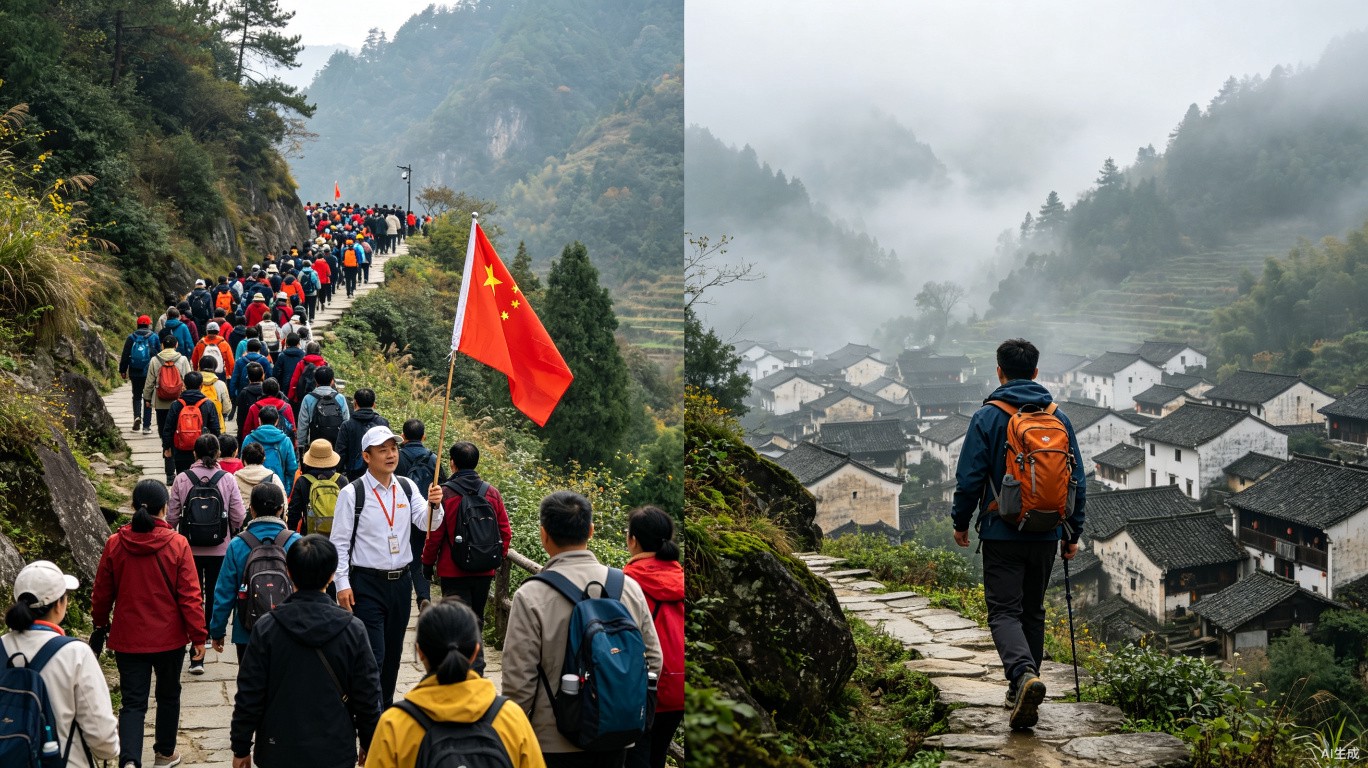
China Group Tours vs Independent Travel Which is Better
Should you join a guided tour or travel independently in China? Honest comparison of cost, flexibility, and experience.
7 min read
China Itinerary Planning: 7-Day 14-Day and 21-Day Routes: The Complete 2026 G...
Not sure how many days to spend in China? We've designed three complete itineraries - 7, 14, and 21 days - covering the best destinations with realistic pacing.
9 min read