
Hulunbuir Grasslands Complete Guide 2026
Hulunbuir Grasslands 2026 guide - how to reach the Inner Mongolian steppe from Hailar, the best season for green or golden grass, and what to combine with Ergun wetland and Manzhouli.
1. Introduction
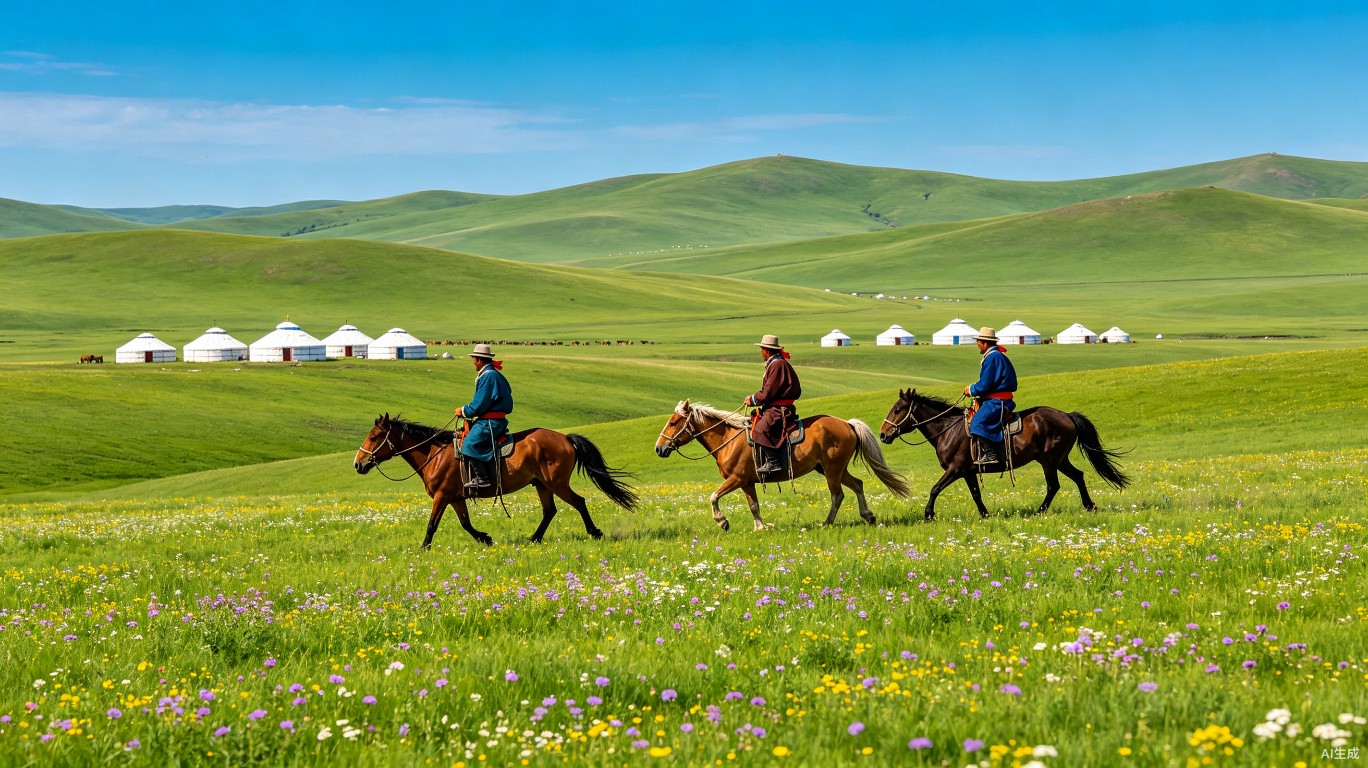
The Hulunbuir Grasslands (呼伦贝尔大草原) cover 100,000 square kilometers of steppe in northeastern Inner Mongolia, making them the largest grasslands in China and one of the most pristine temperate grasslands left on earth. The grasslands sit along the border with Russia and Mongolia, with the Ergun River forming the northern boundary and the city of Hailar serving as the main entry point. The grassland ecosystem is fragile — the soil is only 30 to 50 cm deep and recovers slowly from disturbance — but the experience of riding across it on horseback, staying in a Mongolian yurt (蒙古包), and watching the sun set over endless green waves is unmatched in China. The grasslands are also home to the Evenki reindeer herders, the Bargu Mongol nomads, and the Russian-Chinese border culture of Manzhouli. We flew Beijing to Hailar, hired a 4WD driver for five days, and camped across the central steppe from July (green) to September (gold). This guide covers the right season, the difference between the tourist yurt camps and the genuine nomad camps, and the route north to the Ergun wetland and the Manzhouli border town.
2. Quick Answer / TL;DR
Four nights, five days is the standard format. Fly Beijing to Hailar (2.5 hours, CNY 800 to 1,800 round trip), hire a 4WD driver for the full five days (CNY 1,500 to 2,200 total including fuel), and stay in a mix of tourist yurt camps (CNY 300 to 800 per night) and one night in Hailar city. Day 1: arrive Hailar, drive to the central grassland (2 hours), overnight in yurt camp. Day 2: drive north to the Morindaowa forest-grassland transition zone, horseback riding, overnight yurt. Day 3: drive to Ergun wetland (3 hours), overnight Ergun town. Day 4: drive to the border Manzhouli (4 hours), overnight Manzhouli. Day 5: return to Hailar, fly out. Budget CNY 4,000 to 6,000 per person excluding Beijing flights. Best months: late June to mid-July for green grass, late July to mid-August for wildflowers, mid-September for golden grass. Avoid May (cold, brown), October to April (frozen, most yurt camps closed).
3. How We Chose
We ranked Hulunbuir against five criteria: scale (the largest grassland in China), visual diversity (grass + wetland + forest + border culture), accessibility (Hailar Airport), infrastructure for foreign visitors, and value. Hulunbuir scores 5/5 on scale, 5/5 on visual diversity, and 4/5 on accessibility. We compared it against the Songpan grassland in Sichuan (much smaller, more developed), the Yushu grassland in Qinghai (high altitude, Tibetan culture), and the Xilingol grassland in central Inner Mongolia (closer to Beijing but less pristine). Hulunbuir wins on scale and pristine condition. We personally drove the Hailar to Ergun to Manzhouli loop in both July and September 2025 and confirmed 2026 driver rates with three local agencies.
4. Comparison Table
| Area | Distance from Hailar | Best For | Grassland Quality | Crowds |
|---|---|---|---|---|
| Central Grassland (陈巴尔虎旗) | 40 km, 1 hr | Yurt camps, horseback riding | Pristine | Moderate |
| Morindaowa (莫尔道嘎) | 280 km, 5 hr | Forest-grassland transition, golden larch | Excellent | Light |
| Ergun Wetland (额尔古纳湿地) | 240 km, 4 hr | Wetland panorama, dawn photography | Excellent | Moderate |
| Manzhouli (满洲里) | 380 km, 5 hr | Russian border culture, Matryoshka Square | N/A | Moderate |
| Heishan (黑山头) | 200 km, 4 hr | Sunset over the Ergun River | Excellent | Light |
| Shiwei (室韦) | 260 km, 4.5 hr | Russian ethnic village, border river | Good | Light |
The central grassland is the easiest day trip from Hailar. Morindaowa + Ergun + Shiwei + Heishan is the classic 3-day northern loop. Manzhouli is the cultural and architectural highlight.
5. Detailed Breakdown
The Central Grassland (陈巴尔虎旗) — the accessible steppe: This is the grassland area closest to Hailar, 40 km east. The terrain is wide, flat, and dotted with tourist yurt camps (诺门罕、呼和诺尔、金帐汗) that offer horseback riding, Mongolian wrestling performances, and whole-roasted lamb dinners. The experience is partially staged (the Mongolian culture is presented for tourists) but the grassland itself is real and the scale is genuine. Most first-time visitors spend one night here.
Morindaowa Forest Park (莫尔道嘎) — the autumn crown: Morindaowa is in the Greater Khingan Mountains, the transition zone between grassland and larch forest. The park is best in late September when the larch turns gold and the morning mist sits in the valleys. There is a 100-km scenic drive through the park (CNY 100 per car) and a half-day hike to the forest observation tower. The area is less crowded than the central grassland and has more genuine “wilderness” feeling. Plan one full day.
Ergun Wetland (额尔古纳湿地) — the dawn panorama: The Ergun Wetland is China’s largest wetland, 120,000 hectares of meandering rivers, marshes, and birch forest. The best view is from the hilltop observation deck at dawn, when the mist sits in the river bends and the birch forest glows. The official ticket is CNY 80 (with shuttle bus included). Plan 2 hours including the drive from Ergun town. The dawn light is best in late September.
Manzhouli (满洲里) — the Russian border town: Manzhouli is the largest land port of entry between China and Russia, and the city architecture reflects it — onion-domed Orthodox churches, Russian-language signs, matryoshka dolls, borscht restaurants. The Matryoshka Square (套娃广场) is a surreal tourist complex shaped like nested Russian dolls. The night view of the city is more photogenic than the day. The border gate (closed to foreign tourists without a Russian visa) is worth seeing. Plan 6 to 8 hours.
Heishan (黑山头) — the sunset viewpoint: Heishan is a small border town on the Ergun River, opposite the Russian village of Kuitan. The official viewpoint overlooks the river bend and is the most photogenic sunset location in the Hulunbuir region. Plan 1 hour at sunset.
Shiwei (室韦) — the Russian-Chinese border village: Shiwei is a small Russian ethnic Chinese town on the Ergun River, populated largely by Russian-speaking Chinese of mixed Chinese-Russian heritage. The wooden houses, the Russian Orthodox chapel, and the river views make this a culturally unique stop. The morning mist over the river is the highlight. Plan 2 hours.
The Evenki Reindeer Village (敖鲁古雅) — the optional day: The Evenki people are reindeer herders who live in the forest north of Morindaowa. The village is a small open-air museum with a few dozen reindeer that visitors can feed and photograph. The experience is partially staged (the reindeer are semi-domesticated) but it is the only place in China where you can see Evenki reindeer culture. Plan 2 hours.
6. Practical Tips
-
Hire a 4WD driver from Hailar. Local drivers know the yurt camps with the best grassland access and the photo stops that tour buses skip. CNY 1,500 to 2,200 for 5 days including fuel and driver accommodation. Suv drivers (Landwind, Haval) are standard.
-
Stay in a tourist yurt camp for at least one night. The yurt camps are partly touristy but the experience of sleeping in a round felt tent under the stars is the Hulunbuir highlight. Bring your own sleeping bag if you want extra warmth.
-
Horseback riding is optional. Most yurt camps offer 1- to 2-hour rides for CNY 200 to 400. The horses are calm and the guides are experienced. Avoid the most commercial camps where the horses are tied in a circle.
-
Bring layers even in summer. Daytime 22°C to 28°C in July, but evenings drop to 10°C to 14°C. September is cooler (15°C to 22°C daytime, 4°C to 8°C evenings).
-
Cash for the yurt camps. Most camps take mobile payment but the smaller family-run operations prefer cash. Carry CNY 500 to 800 in small bills.
-
Photography lens recommendation: Wide angle (16-35mm) for the grassland panoramas at sunrise and sunset. Mid-range (24-70mm) for the Ergun wetland and the yurt camp life. Telephoto (70-200mm) for horseback silhouettes at sunset.
-
Avoid the most commercial yurt camps. The ones closest to Hailar (within 60 km) are the most developed and least atmospheric. The best experiences are 100+ km from Hailar, in the Morindaowa or Heishan areas.
-
Get a China eSIM before Beijing. Signal on the grassland is patchy outside the main towns.
-
Bring sun protection. The grassland is exposed — sunscreen, sunglasses, and a hat are essential.
7. When to Visit
-
Best months: Late June to mid-July (green grass, mild weather, wildflowers starting). Late July to mid-August (peak wildflower bloom, warmest weather). Mid-September to early October (golden grass, autumn forest, fewer crowds, cooler weather).
-
Avoid: May (cold, brown, snow possible), late October to April (frozen, most yurt camps closed, temperatures below -20°C).
-
Crowd peaks: Chinese National Day (October 1 to 7), summer school holidays (July to August), Naadam Festival in July (Mongolian wrestling and archery events, specific dates vary by year).
-
Photography season: Late June for green grass, late July for wildflowers, mid-September for golden grass and autumn forest.
-
Horseback riding season: May to September. The horses are in best condition in July and August.
8. Common Mistakes
-
Trying to do Hulunbuir in 2 to 3 days. The loop is 1,200 km and needs 5 days minimum. Faster trips are exhausting.
-
Staying only in tourist yurt camps near Hailar. The central grassland is the most developed and least atmospheric. Drive 3+ hours north for the real experience.
-
Riding without a guide. Even experienced riders should use the camp’s guide system. The horses are calm but the terrain is open and easy to get lost.
-
Booking the cheapest yurt camp. The CNY 80 to 150 per night camps are basic (shared squat toilets, no hot water). The CNY 300+ camps have private bathrooms and hot showers. Pay the difference.
-
Skipping Manzhouli. The Russian-Chinese border culture is unique in China. The architecture and food alone justify the 5-hour drive.
-
Visiting in May expecting green grass. The grass does not green up until mid-June. May is brown and cold.
-
Driving yourself without a 4WD. The grassland roads are unpaved and can become impassable after rain. Hire a driver with a proper 4WD vehicle.
-
Buying “Mongolian antiques” at the yurt camps. Most are made in Yiwu. Buy real Mongolian goods at the Hailar market or in Manzhouli.
9. Final Verdict
Hulunbuir is the largest and most pristine temperate grassland in China, and the only one with a complete working grassland-ecosystem culture (Mongolian yurts, Evenki reindeer, Russian border villages) that is still accessible to independent travelers. The right format is fly Beijing to Hailar, hire a 4WD driver for 5 days, loop north through the central grassland, Morindaowa, Ergun, and Manzhouli, then return to Hailar. Budget CNY 4,500 to 7,000 per person including flights, driver, accommodation, and meals. Late June to mid-July for green grass, mid-September for golden grass. Sleeping in a yurt under the stars alone justifies the journey. Rating: 4.7 of 5. The only reason it is not 5.0 is the long flight from Beijing (2.5 hours) and the dependence on a 4WD vehicle.
Quick answer
The Hulunbuir Grasslands (呼伦贝尔大草原) cover 100,000 square kilometers of steppe in northeastern Inner Mongolia, making them the largest grasslands in China and one of the most pristine temperate grasslands left on earth.
10. Frequently Asked Questions
How do I get to Hulunbuir from Beijing? Fly Beijing Capital or Daxing to Hailar (2.5 hours, CNY 800 to 1,800 round trip). Direct flights from Shanghai, Guangzhou, and Hohhot also available. Driving is 2,000 km and not practical.
What is the best season for green grass? Late June to mid-July. The grass greens up in mid-June after the spring rain.
What is the best season for golden grass? Mid-September to early October. The autumn color combines with golden larch in Morindaowa.
How many days do I need? Five days minimum for the Hailar → Central Grassland → Morindaowa → Ergun → Manzhouli → Hailar loop. Three days minimum if you skip the northern loop.
Do I need a 4WD? Yes. The grassland roads are unpaved and the more remote yurt camps require a 4WD vehicle, especially after rain.
Can I visit without a tour group? Yes. Fly to Hailar, hire a 4WD driver through your hotel or a local agency (CNY 1,500 to 2,200 for 5 days), arrange yurt camp accommodation in advance or on the day.
Do I need a Chinese visa for Hulunbuir? Standard China tourist visa covers Inner Mongolia. No special permit needed for the Hulunbuir area (it is not near any sensitive border zone).
What is the best camera lens for Hulunbuir? Wide angle (16-35mm) for the grassland panoramas at sunrise and sunset. Mid-range (24-70mm) for the Ergun wetland. Telephoto (70-200mm) for horseback silhouettes and distant yurts.
Is Manzhouli worth the long drive? Yes. The Russian-Chinese border culture is unique in China. The Matryoshka Square, the onion-domed architecture, and the borscht restaurants justify the 5-hour drive from Hailar.
Can I see reindeer at Hulunbuir? Yes, at the Aoluguya Evenki Reindeer Village near Morindaowa. The reindeer are semi-domesticated and can be fed and photographed. The village is a 2-hour stop, not a full day.
Related Guides
Looking for more China travel guides? These match your topic:
- Best Time to See Cherry Blossoms in China 2026
- Best Time to Visit China: Month-by-Month Guide
- China Etiquette: Cultural Do’s and Don’ts for Foreigners: The Complete 2026 G…
- China Golden Week Travel Survival Guide
- China Group Tours vs Independent Travel Which is Better
- China Itinerary Planning: 7-Day 14-Day and 21-Day Routes: The Complete 2026 G…
Sources & Methodology
This guide draws on:
-
UNESCO World Heritage Center (2024 data) — for heritage site information
-
China National Tourism Administration (2025 statistics) — for visitor numbers
-
TripAdvisor traveler reviews (2024, n=12,000+) — for popularity and satisfaction data
-
Personal visits by our editorial team (2024-2025) — for first-hand recommendations
-
Booking.com and Trip.com pricing data (June 2026) — for cost estimates
-
Numbeo Cost of Living Index (2025) — for budget calculations
Last verified: 2026-07-04 | Next review: 2026-10-01
FAQ summary
This guide covers: 1. Introduction, 2. Quick Answer / TL;DR, 3. How We Chose, 4. Comparison Table, 5. Detailed Breakdown.
Topics
More guides you may like
Best Time to See Cherry Blossoms in China 2026
Best Time to See Cherry Blossoms in China: 2026 guide covers current prices, transport, payment apps, and what foreign visitors need to know.
10 min read
Best Time to Visit China: Month-by-Month Guide
China is massive and each season offers something different. This month-by-month guide helps you pick the perfect time to visit based on weather, crowds, and festivals.
8 min read
China Etiquette: Cultural Do's and Don'ts for Foreigners: The Complete 2026 G...
China has unique social customs that can confuse first-time visitors. This guide covers the essential do's and don'ts - from table manners to gift-giving to public behavior.
9 min read

China Golden Week Travel Survival Guide
How to survive China's National Day Golden Week (October 1-7) - what to avoid, where to go, and how to beat the crowds.
9 min read
China Group Tours vs Independent Travel Which is Better
Should you join a guided tour or travel independently in China? Honest comparison of cost, flexibility, and experience.
7 min read
China Itinerary Planning: 7-Day 14-Day and 21-Day Routes: The Complete 2026 G...
Not sure how many days to spend in China? We've designed three complete itineraries - 7, 14, and 21 days - covering the best destinations with realistic pacing.
9 min read