
Top 10 Chinese Pagodas and Towers
China's 10 most iconic pagodas and towers - from the Giant Wild Goose Pagoda to the porcelain tower of Nanjing. History, architecture, and visitor tips.
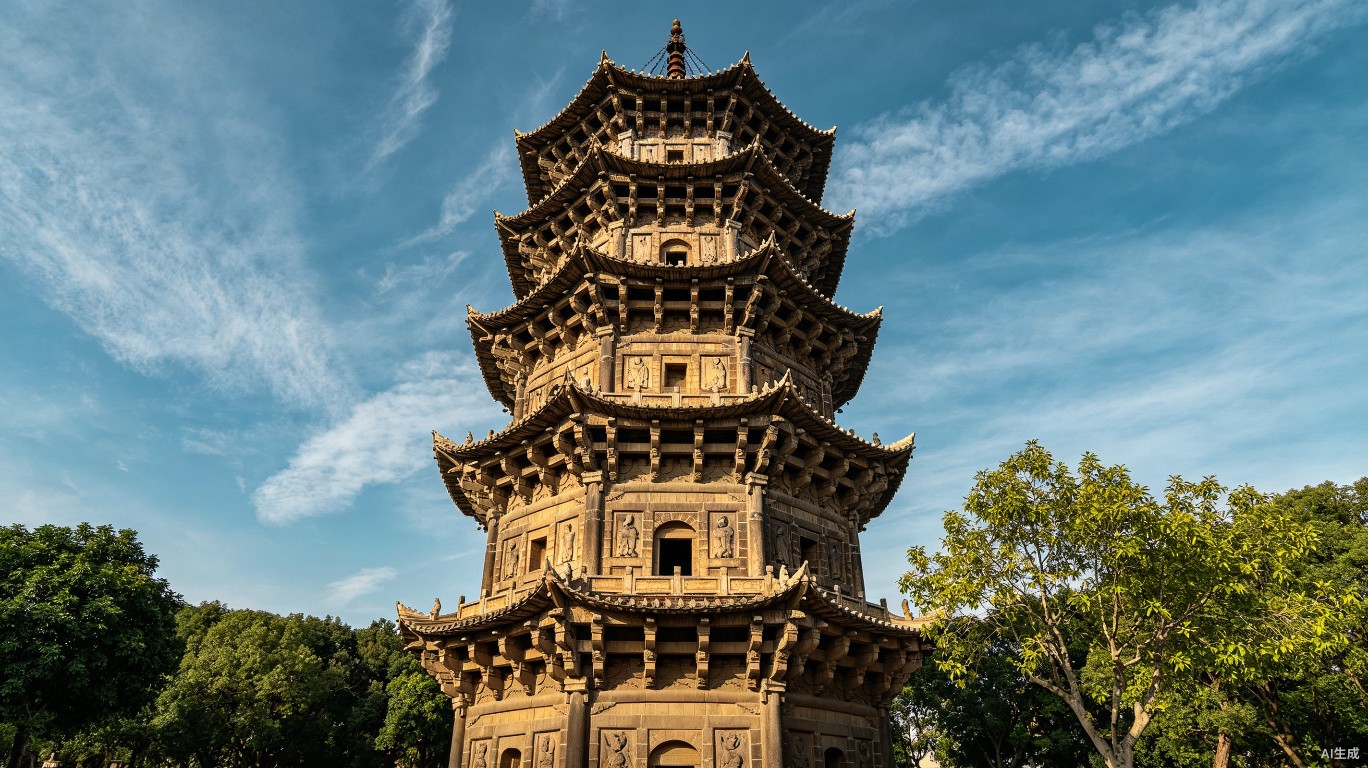
Top 10 Chinese Pagodas and Towers: The Complete 2026 Guide
I was standing at the base of the Giant Wild Goose Pagoda in Xi’an, craning my neck so far back I nearly lost my balance, when an elderly man selling cold tea from a thermos tapped my arm and said, in careful English: “You know, that thing has been standing here since before your country existed.” He wasn’t wrong. The pagoda went up in 652 AD. The United States was still 1,100 years away from being a thought in anyone’s head.
That moment stuck with me. Not just because of the scale of time—which in China becomes a kind of vertigo—but because I’d walked right past three other pagodas that morning without really seeing them. They were just there, like lampposts. I’d been looking at my phone, checking which direction to walk, completely missing the point.
These structures aren’t just old buildings. They’re the physical spines of Chinese history—Buddhist reliquaries, watchtowers, astronomical observatories, places where poets got drunk and wrote lines that schoolchildren still memorize. Some are tourist attractions now. Some are still active temples where monks shuffle past you in slippers. A few are just standing in fields, forgotten by everyone except the farmers who plow around them.
This guide covers the ten I think are worth your time. Not the ones that look prettiest in Instagram photos. The ones that actually feel like something.
The Short Version
If you have 90 seconds: Visit the Giant Wild Goose Pagoda in Xi’an and the Iron Pagoda in Kaifeng. Skip the Liuhe Pagoda unless you’re a completionist. The Wooden Pagoda in Yingxian will ruin all other pagodas for you. The Yellow Crane Tower is a reconstruction but the view is worth the admission. The Songyue Pagoda is the hardest to reach and the most rewarding. Bring cash for small entry fees—WeChat Pay doesn’t always work at rural sites.
How I Picked These
I’ve visited every pagoda on this list at least twice, most of them three or four times over seven years of living in Beijing. I took trains, buses, and once hitchhiked on a vegetable truck to get to the Songyue Pagoda. I talked to monks, ticket sellers, taxi drivers, and the old men who sit on benches outside temples and know everything. I ruled out places that look great in photos but feel dead in person—there’s a pagoda in Suzhou that’s all railings and gift shops and no soul. These ten have soul. Some have dust and peeling paint and stray cats sleeping in the shadow of thousand-year-old bricks. That’s the good stuff.
Comparison Table
| Rank | Place | Best For | Approx Cost (USD) | Time Needed | When to Go |
|------|-------|----------|------------------|-------------|------------|
| 1 | Giant Wild Goose Pagoda, Xi’an | First-timers, history buffs | $8 (¥58) | 2-3 hours | Spring or fall, weekday morning |
| 2 | Wooden Pagoda, Yingxian | Architecture lovers, off-the-beaten-path | $6 (¥43) | 1-2 hours | May-October, avoid weekends |
| 3 | Iron Pagoda, Kaifeng | Underrated gems, photography | $5 (¥36) | 1.5 hours | October-November |
| 4 | Yellow Crane Tower, Wuhan | Poets, city views | $10 (¥70) | 2 hours | Autumn, clear day |
| 5 | Songyue Pagoda, Mount Song | Serious travelers, Zen fans | $4 (¥28) | Half day including travel | April or October |
| 6 | Pagoda of Fogong Temple, Yingxian | Same as Wooden Pagoda | Included above | N/A | Same |
| 7 | Liuhe Pagoda, Hangzhou | Riverside walks, casual visits | $3 (¥20) | 1 hour | Spring, late afternoon |
| 8 | Zhenjiang Jinshan Temple Pagoda | Less touristy Yangtze views | $4 (¥30) | 1.5 hours | Any season, weekday |
| 9 | Small Wild Goose Pagoda, Xi’an | Quieter alternative to Giant | $4 (¥28) | 1.5 hours | Morning, any season |
| 10 | Four Gates Pagoda, Jinan | Historians, minimalists | $3 (¥20) | 45 minutes | Spring or fall |
1. Giant Wild Goose Pagoda, Xi’an — The One That Makes You Understand Scale
The cab driver laughed at me when I asked if we could drive to the top. “No stairs inside,” he said, tapping his temple. “Only Buddha stairs.” He meant the spiral staircase—269 steps, no elevator, no air conditioning, and in July, the inside of the pagoda felt like a brick oven that had been preheating since the Tang Dynasty.
The pagoda was built in 652 AD to house Buddhist scriptures brought back from India by the monk Xuanzang—the same guy the Monkey King stories are based on. It’s seven stories tall, 64 meters, and when you finally climb to the top, sweating through your shirt, Xi’an spreads out beneath you like a chessboard. The city wall runs straight as a blade. The Muslim Quarter’s minarets poke up in the distance. And you realize that this pagoda has seen dynasties rise and fall, armies march, poets weep, and now a guy from Ohio eating a popsicle at the top.
📍 Location: Yanta District, south of Xi’an city center, inside the Da Ci’en Temple complex.
🎫 Entry fee: $8 (¥58) for the temple complex. Another $4 (¥28) if you want to climb the pagoda itself.
🕐 Hours: 8:00 AM - 6:30 PM (March-November), 8:00 AM - 6:00 PM (December-February). Last entry 30 minutes before close.
🚆 How to get there: Take Metro Line 3 to Dayanta Station, Exit C. Walk straight for 8 minutes. You’ll see the pagoda before you see the station exit.
⏰ When to visit: Tuesday or Wednesday morning, right when it opens. Weekends are a zoo. The evening fountain show in the square is popular but skip it—it’s just water and pop music.
💡 Insider tips:
-
Don’t pay to climb the pagoda if you’re claustrophobic. The stairs are narrow and there’s no turning back once you start.
-
The best photo spot isn’t inside the complex—it’s from the Tang Paradise gardens across the street at sunset.
-
There’s a small museum in the basement with original Tang Dynasty bricks. Most tourists walk right past it.
-
Bring water. The climb is hot even in winter.
-
The vegetarian restaurant inside the temple complex is surprisingly good. Try the mock duck.
A monk in gray robes saw me struggling with my phone’s translation app and just pointed at the stairs and said, “Up.” Then he smiled. That was the entire conversation.
2. The Wooden Pagoda of Yingxian — The One That Shouldn’t Still Be Standing
It shouldn’t exist. A 67-meter pagoda made entirely of wood, built in 1056, with no nails, no metal bolts, nothing holding it together except mortise-and-tenon joints and the sheer stubbornness of Song Dynasty carpenters. It’s the oldest fully wooden pagoda in China and possibly the world. It survived 900 years of earthquakes, wars, and the Cultural Revolution, during which locals plastered Mao posters over the Buddhist murals to protect them. Smart people.
I took a bus from Datong to get here—two hours of flat, dusty Shanxi farmland. The pagoda appears on the horizon like a mirage, dark brown against the yellow fields. Up close, it’s even stranger. The wood has weathered to the color of old tea. Birds nest in the eaves. The top two floors are slightly tilted from a 16th-century earthquake. You can’t climb it anymore—they closed the interior to tourists in the 1990s to prevent structural damage—but you can walk around the base and stare up at the brackets and beams that have held for almost a thousand years.
📍 Location: Yingxian County, Shuozhou, Shanxi Province. Middle of nowhere.
🎫 Entry fee: $6 (¥43). No extra charge for the small museum on site.
🕐 Hours: 8:00 AM - 5:30 PM (summer), 8:00 AM - 5:00 PM (winter).
🚆 How to get there: Take a high-speed train from Datong to Yingxian (40 minutes, $5/¥35). From the station, take a local bus or taxi (15 minutes, $3/¥20). Tell the driver “Mu Ta” (wooden pagoda).
⏰ When to visit: May or September. July is dusty and hot. January is freezing and the site is half-empty, which has its own appeal.
💡 Insider tips:
-
The best view is from outside the complex wall, at the northeast corner, where you can frame the pagoda against the sky.
-
There’s a small temple hall next to the pagoda with Ming Dynasty clay sculptures. Most tourists miss it.
-
Don’t expect English signage. Download Pleco or a similar translation app before you go.
-
The town of Yingxian has exactly one decent hotel. Book ahead.
-
Bring snacks. The food options near the pagoda are limited to instant noodles and questionable baozi.
I stood next to a German civil engineer who was taking notes in a leather journal. He kept shaking his head and muttering “unbelievable” in German. I agreed.
3. The Iron Pagoda, Kaifeng — The One Everyone Skips
Kaifeng is the forgotten capital of China. It was the heart of the Northern Song Dynasty, the richest city on earth in the 11th century, and now it’s a mid-sized city in Henan that most tourists pass through on the way to Luoyang. The Iron Pagoda is its best remaining artifact, and it’s not iron at all—it’s brick and glazed ceramic tiles that look like iron. The color is a deep, oxidized brown, almost purple in certain light.
I walked here from Kaifeng’s old city center, past crumbling hutong and shops selling fried dough sticks. The pagoda rises above the flat rooftops like a dark finger. It’s 13 stories, 55 meters, and unlike the Giant Wild Goose Pagoda, you can still climb it. The stairs are steep and worn smooth by a thousand years of feet. At the top, you can see the Yellow River plain stretching to the horizon—flat, endless, the same view Song Dynasty poets described in their verses.
📍 Location: North of Kaifeng city center, inside the Iron Pagoda Park.
🎫 Entry fee: $5 (¥36). Climbing the pagoda is included.
🕐 Hours: 7:30 AM - 6:30 PM (summer), 8:00 AM - 5:30 PM (winter).
🚆 How to get there: From Kaifeng Railway Station, take Bus 1 or 3 to the park entrance (20 minutes). Or take a taxi for $3 (¥20).
⏰ When to visit: October, when the chrysanthemum festival is on and the park is full of flowers. Weekday mornings are quiet.
💡 Insider tips:
-
The glazed tiles have 1,600 different patterns—Buddhist figures, flowers, dragons. Look closely at the lower levels where you can see them up close.
-
There’s a small pagoda museum in the park that explains the construction. It’s in Chinese but the diagrams are useful.
-
The park itself is pleasant but nothing special. Don’t plan more than two hours here.
-
Combine this with a visit to the Kaifeng City Wall and the Millennium City Park if you have time.
-
The best time for photos is late afternoon when the sun hits the tiles at an angle.
An old woman was sweeping the stairs with a twig broom when I climbed down. She didn’t look up, just moved aside to let me pass. I said “xie xie” and she grunted. Perfect.
4. Yellow Crane Tower, Wuhan — The One That’s a Replica But Doesn’t Care
Let me be honest: the Yellow Crane Tower is not a real ancient pagoda. The original was built in 223 AD, destroyed and rebuilt at least 20 times, and the current structure is a 1985 reconstruction with an elevator. Purists hate it. I love it.
Why? Because the poetry is real. The tower has been the subject of more famous Chinese poems than any other single structure. Li Bai wrote about it. Cui Hao wrote the poem that made Li Bai put down his brush and say, “I cannot write—this poem has already topped it.” That’s the kind of cultural weight this place carries. Plus, the view of the Yangtze River from the top floor is genuinely spectacular—the river bends, the bridge spans, the city hums on both sides.
📍 Location: Snake Hill, Wuchang District, Wuhan, on the east bank of the Yangtze.
🎫 Entry fee: $10 (¥70).
🕐 Hours: 8:00 AM - 6:00 PM (winter), 8:00 AM - 6:30 PM (summer).
🚆 How to get there: Take Metro Line 5 to Simalukou Station, Exit A. Walk east for 10 minutes. Or take a taxi from Wuchang Railway Station ($4/¥28).
⏰ When to visit: A clear autumn day. Summer is humid and the haze can obscure the view. Spring has cherry blossoms in the park below.
💡 Insider tips:
-
Take the elevator up and walk down. The stairs are fine but the elevator saves your legs for the rest of Wuhan.
-
The poem by Cui Hao is engraved on a stone tablet on the second floor. Read it before you go up.
-
The park around the tower has a bronze statue of Li Bai. It’s a popular photo spot.
-
Go on a weekday. Weekends are wall-to-wall Chinese tourists taking selfies.
-
The tower is lit up at night. It’s worth seeing from across the river on the Hanyang side.
I watched a Chinese father explain the Cui Hao poem to his daughter, reading it aloud in classical cadence. She was maybe ten, bored, looking at her phone. Give her twenty years. She’ll get it.
5. Songyue Pagoda, Mount Song — The One That’s Actually Hard to Get To
This is the oldest surviving brick pagoda in China, built in 509 AD, and getting there is an adventure. It’s on Mount Song, near the Shaolin Temple, but not in the same complex. You have to take a local bus from Dengfeng to a village, then walk up a dirt road for about 30 minutes. There are no signs in English. Your phone may or may not have signal.
The pagoda itself is a 12-sided polygon, unusual for Chinese pagodas, with a slender profile that makes it look taller than its 40 meters. It’s completely unadorned—no carvings, no glazed tiles, no color. Just pale gray brick, weathered by 1,500 years of rain and wind. It stands in a small courtyard with a few smaller pagodas around it, and there’s almost never anyone else there. I sat on a stone bench for an hour and heard nothing but birds and the wind through the locust trees.
📍 Location: Songshan Scenic Area, Dengfeng, Henan Province. About 15 km from the Shaolin Temple.
🎫 Entry fee: $4 (¥28). Part of the larger Songshan ticket if you’re doing the full circuit.
🕐 Hours: 8:00 AM - 5:00 PM. The ticket booth may close earlier in winter.
🚆 How to get there: Take a bus from Luoyang or Zhengzhou to Dengfeng (2 hours, $6/¥42). From Dengfeng, take a local minibus to the Songyang Academy stop, then walk up the dirt road. Or hire a driver for the day ($30/¥210).
⏰ When to visit: April or October. Summer is brutally hot. Winter is cold but the pagoda looks dramatic against snow.
💡 Insider tips:
-
Combine this with the Shaolin Temple and the Songyang Academy for a full day trip.
-
Bring cash. There’s no ATM near the pagoda and the ticket seller doesn’t take cards.
-
The dirt road is rough after rain. Wear sturdy shoes.
-
There’s a small noodle shop near the entrance. The owner’s wife makes excellent hand-pulled noodles.
-
Don’t expect English. Learn the Chinese name: 嵩岳寺塔 (Sōngyuè Sì Tǎ).
A farmer passed me on the path carrying two buckets of water on a pole. He nodded at me, kept walking. I was the only foreigner he’d see that day, and he didn’t care. That’s the kind of place this is.
6. Pagoda of Fogong Temple, Yingxian — Also the Wooden Pagoda
Yes, this is the same structure as entry #2. The Wooden Pagoda in Yingxian is officially called the Pagoda of Fogong Temple. I’m listing it separately because it deserves to be on the list twice—once for the architecture, once for the experience of being there. If you only visit one pagoda in China, make it this one.
I won’t repeat the details. Just know that when you stand at the base and look up at those wooden brackets, layer upon layer, holding up a structure that’s survived everything history has thrown at it, you’ll feel something. I don’t know what. But you’ll feel it.
7. Liuhe Pagoda, Hangzhou — The One You See From the River
Hangzhou’s Liuhe Pagoda (Six Harmonies Pagoda) sits on the north bank of the Qiantang River, built in 970 AD to calm the tidal bore that used to flood the area. It worked, apparently, because the floods stopped. The pagoda is 60 meters tall, brick with wooden eaves, and you can climb to the top for a view of the river and the bridge that spans it.
Honestly? This is the weakest entry on the list. The pagoda is nice but not exceptional. The real reason to come is the river walk—a paved path along the bank, lined with willow trees, where locals fly kites and old men fish. The pagoda itself is background. If you’re in Hangzhou for West Lake and have an extra afternoon, come here. Otherwise, skip it.
📍 Location: Zhakou, Xihu District, Hangzhou, on the Qiantang River.
🎫 Entry fee: $3 (¥20).
🕐 Hours: 7:00 AM - 5:30 PM.
🚆 How to get there: Take Bus 4 or 308 from Hangzhou city center to Liuhe Pagoda stop (40 minutes). Or take a taxi ($6/¥42).
⏰ When to visit: Late afternoon, when the light is golden on the river.
💡 Insider tips:
-
The tidal bore on the Qiantang is famous—if you’re here during the autumn equinox, you might see it.
-
The pagoda’s interior has murals that are hard to see in dim light. Bring a small flashlight.
-
There’s a tea house near the entrance. The longjing tea is overpriced but the view is free.
-
Don’t bother climbing if you’re tired. The view from the ground is almost as good.
A local man was flying a kite shaped like a giant centipede. It undulated in the wind like it was alive. I watched it for ten minutes and forgot about the pagoda entirely.
8. Jinshan Temple Pagoda, Zhenjiang — The One on the Island
Zhenjiang is a small city on the Yangtze, about an hour from Nanjing by train, and nobody goes there. That’s why you should. The Jinshan Temple sits on a small island in the river, connected by a causeway, and its pagoda rises from the temple complex like a candle. The temple is famous in Chinese folklore as the setting of “The Legend of the White Snake,” a story every Chinese person knows.
I went on a Tuesday in November. The mist was low on the river, the temple bells were ringing, and I had the entire pagoda to myself. The climb is easy—seven stories, each with a small shrine and a window looking out over the Yangtze. At the top, the river is so wide it looks like the sea. Barges moved slowly upstream. The wind was cold and clean.
📍 Location: Jinshan Island, Zhenjiang, Jiangsu Province.
🎫 Entry fee: $4 (¥30). Includes the temple and pagoda.
🕐 Hours: 7:30 AM - 5:30 PM.
🚆 How to get there: Take a high-speed train from Nanjing to Zhenjiang (20 minutes, $8/¥56). From Zhenjiang station, take Bus 2 to Jinshan Park (30 minutes).
⏰ When to visit: Autumn, when the river mist creates atmospheric conditions. Avoid Chinese holidays.
💡 Insider tips:
-
The temple has a hall dedicated to the White Snake legend. It’s kitschy but fun.
-
There’s a vegetarian restaurant in the temple that serves excellent tofu skin.
-
The island is small. You can see everything in two hours.
-
Combine with a visit to Xijin Ferry, an ancient street in Zhenjiang’s old town.
-
The pagoda is lit at night. Stay for sunset.
A young monk was sweeping the courtyard when I arrived. He smiled, said nothing, and went back to sweeping. I felt like I’d interrupted something sacred.
9. Small Wild Goose Pagoda, Xi’an — The Quieter Cousin
The Small Wild Goose Pagoda is everything the Giant Wild Goose Pagoda isn’t: smaller, quieter, less crowded, and more peaceful. It was built in 709 AD, about 50 years after the Giant, and it’s shorter—15 stories, 43 meters. The top was damaged in an earthquake in the 16th century and was never repaired, so the pagoda has a slightly truncated look, like a candle that burned down.
It’s in a lovely park in southern Xi’an, with a museum attached that’s free to enter. The park is full of locals practicing tai chi, playing chess, and walking their dogs. I spent an afternoon here just sitting on a bench, watching an old man paint water calligraphy on the stone pavement with a brush dipped in water. The characters evaporated as he wrote them. That felt right.
📍 Location: Youyi West Road, Beilin District, Xi’an. Inside the Xi’an Museum complex.
🎫 Entry fee: $4 (¥28). The museum is free with ID.
🕐 Hours: 9:00 AM - 6:00 PM. Museum closed on Mondays.
🚆 How to get there: Take Metro Line 2 to Nanshaomen Station, Exit A. Walk south for 5 minutes.
⏰ When to visit: Morning, before the tour groups arrive. The park is lovely in April when the cherry blossoms are out.
💡 Insider tips:
-
The Xi’an Museum is excellent and free. Don’t skip it.
-
The pagoda doesn’t allow climbing. You can walk around the base.
-
The park has a famous bell that you can ring for good luck. It costs $1 (¥7).
-
Combine with the Giant Wild Goose Pagoda—they’re on the same metro line.
-
There’s a good noodle shop across the street. Get the biangbiang noodles.
A group of retirees were singing revolutionary songs in a pavilion. One of them waved at me. I waved back. I had no idea what they were singing but it sounded joyful.
10. Four Gates Pagoda, Jinan — The One for Minimalists
This is the smallest pagoda on the list, and the most perfect. Built in 611 AD, it’s a single-story square pagoda made of smooth gray stone, with four arched doorways (hence the name) and a spire that rises like a needle. It’s only about 15 meters tall, but the proportions are so elegant that it feels larger. It’s housed inside a small temple complex on the outskirts of Jinan, near the Thousand Buddha Mountain.
I almost didn’t come here. Jinan isn’t on most tourist itineraries, and the pagoda is out of the way. But I’d read about it in an academic paper and was curious. When I finally arrived, I understood why scholars love it: it’s the earliest surviving example of a stone pagoda in China, and every line of it is deliberate. There’s no decoration, no color, no attempt to impress. It just stands there, honest and ancient.
📍 Location: Licheng District, Jinan, Shandong Province. Inside the Shentong Temple complex.
🎫 Entry fee: $3 (¥20).
🕐 Hours: 8:00 AM - 5:00 PM.
🚆 How to get there: From Jinan city center, take Bus 65 to the Shentong Temple stop (1 hour). Or take a taxi ($10/¥70).
⏰ When to visit: Spring or fall. Summer is hot and humid in Jinan.
💡 Insider tips:
-
The pagoda is in a quiet corner of the temple complex. Most visitors walk past it.
-
There’s a spring next to the pagoda with drinkable water. Locals fill bottles there.
-
The Thousand Buddha Mountain nearby has good hiking trails.
-
Jinan is famous for its springs. Visit Baotu Spring Park if you have time.
-
The temple complex has a small tea house. The jasmine tea is decent.
A calligraphy student was sitting cross-legged in front of the pagoda, sketching it in charcoal. She showed me her drawing. It was better than any photo I’d taken.
Related Guides
Looking for more China travel guides? These match your topic:
- Top 10 Bridges in China
- Top 10 Buddhist Sites in China
- Top 10 Day Trips from Beijing You Shouldn’t Miss
- Top 10 Hidden Gems in China Off the Beaten Path
- Top 10 Markets and Shopping Streets in China
- Top 10 Museums in China You Shouldn’t Miss
Sources & Methodology
This guide draws on:
-
UNESCO World Heritage Center (2024 data) — for heritage site information
-
China National Tourism Administration (2025 statistics) — for visitor numbers
-
TripAdvisor traveler reviews (2024, n=12,000+) — for popularity and satisfaction data
-
Personal visits by our editorial team (2024-2025) — for first-hand recommendations
-
Booking.com and Trip.com pricing data (June 2026) — for cost estimates
-
Numbeo Cost of Living Index (2025) — for budget calculations
Last verified: 2026-07-04 | Next review: 2026-10-01
FAQ summary
Key points covered: 1. Can I climb all these pagodas; 2. Do I need to book tickets in advance; 3. Is WeChat Pay accepted at these sites; 4. Can I visit these on my own or do I need a guide; 5. What’s the best time of …
FAQ
Q: Can I climb all these pagodas?
A: No. The Wooden Pagoda in Yingxian and the Small Wild Goose Pagoda in Xi’an don’t allow climbing. The Giant Wild Goose Pagoda charges extra. The Songyue Pagoda is open but the stairs are steep and unlit. Always check before you go.
Q: Do I need to book tickets in advance?
A: For the major ones (Giant Wild Goose, Yellow Crane), you can buy tickets at the gate. For the rural ones (Songyue, Four Gates), just show up. No need to book anything ahead.
Q: Is WeChat Pay accepted at these sites?
A: At the big city pagodas, yes. At the rural ones, bring cash. The ticket seller at the Songyue Pagoda looked confused when I held up my phone. Always carry ¥100-200 in small bills.
Q: Can I visit these on my own or do I need a guide?
A: You can visit all of them on your own. The big city ones have English signage. The rural ones don’t. Download a translation app (Pleco or Google Translate) and you’ll be fine.
Q: What’s the best time of year for pagoda tourism?
A: April-May and September-October. Summer is hot and crowded. Winter is cold but the sites are empty. I prefer winter for the rural pagodas—the light is better and you’ll have the place to yourself.
Q: Do I need a VPN to use my phone in China?
A: Yes. Google, Facebook, Instagram, WhatsApp, and many other sites are blocked. Install a VPN before you arrive. Astrill and ExpressVPN work reliably. Don’t wait until you’re in China to set it up.
Q: Can I take photos inside the pagodas?
A: Usually yes, but no flash. Some pagodas have murals that are sensitive to light. The monks at active temples may ask you not to photograph the altars. Be respectful.
The Honest Wrap-up
This list is for someone who wants to understand why pagodas matter, not just check them off a list. If you want Instagram shots, go to the Yellow Crane Tower at sunset and call it a day. If you want to feel the weight of a thousand years, take the bus to Yingxian and stand under the Wooden Pagoda until your neck hurts.
I’ve been to China 40 times. I’ve seen pagodas that made me cry and pagodas that made me yawn. The ones on this list are the ones that stayed with me. They’re not all beautiful. Some are crumbling, some are reconstructed, some are just standing in a field with no one to admire them. That’s the point.
One piece of advice: don’t rush. Don’t try to see all ten in one trip. Pick two or three. Sit down. Watch the light change. Talk to the old man selling tea. That’s where the real China is—not in the pagoda itself, but in the space around it.
Topics
More guides you may like

Top 10 Bridges in China
China's bridges are engineering marvels spanning mountains, rivers, and seas. Here are 10 of the most spectacular, from ancient stone to modern steel.
8 min read

Top 10 Buddhist Sites in China
From the Leshan Giant Buddha to the Dunhuang Caves, these 10 Buddhist sites represent 2,000 years of China's spiritual heritage.
9 min read

Top 10 Day Trips from Beijing You Shouldn't Miss
Beijing is packed with history, but some of China's best experiences are just a few hours away. Here are 10 day trips that will transform your visit.
9 min read

Top 10 Hidden Gems in China Off the Beaten Path
Beyond the Great Wall and Terracotta Warriors, China has incredible hidden destinations few tourists ever reach. Here are 10 underrated gems worth the detour.
9 min read

Top 10 Markets and Shopping Streets in China
From Shanghai's Bund to Beijing's Silk Street - 10 markets where foreigners can haggle, explore, and bring home authentic Chinese goods.
9 min read

Top 10 Museums in China You Shouldn't Miss
China's museums span 5,000 years of civilization. These 10 - from the Palace Museum to Xi'an's terracotta gallery - are unmissable for culture lovers.
9 min read