
Top 10 Mosques in China
A traveler's guide to the 10 most beautiful mosques in China - Xi'an, Yunnan, and the Silk Road gems most tourists miss. Hours, dress code, and entry fees.
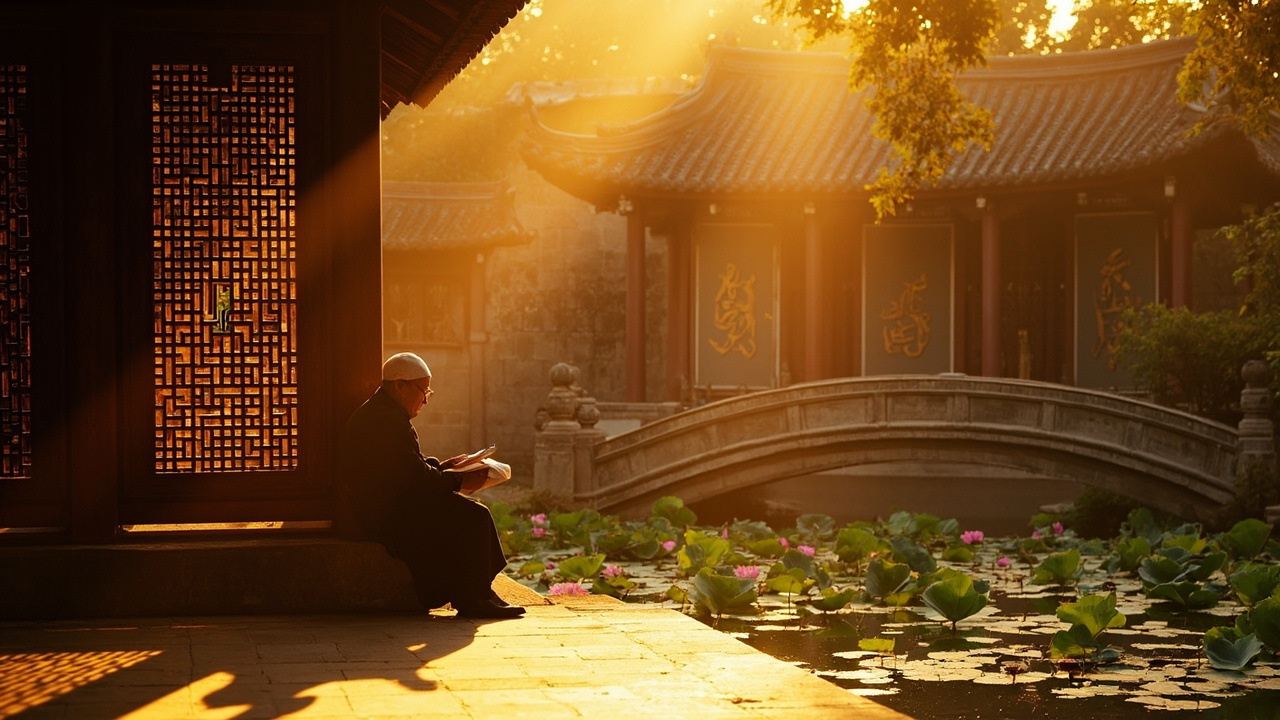
Top 10 Mosques in China: The Complete 2026 Guide
The call to prayer drifted through the alley behind the Great Mosque in Xi’an, mixing with the clatter of a bicycle rickshaw and the sizzle of lamb skewers from a nearby stall. I’d been in China for three weeks, and I’d somehow forgotten that Islam had been here for over 1,300 years. The muezzin’s voice bounced off Ming dynasty tiles, and an old man in a white cap unlocked a wooden door that had probably seen a dozen dynasties come and go. That moment broke every assumption I’d had about religion in China.
Most tourists come for the Great Wall, the Forbidden City, the Terracotta Warriors. They don’t know that China holds some of the oldest mosques in the world—built when the Silk Road was still pumping spices and ideas between Arabia and East Asia. These aren’t just places of worship. They’re architectural hybrids: Arabic calligraphy carved into Chinese temple beams, minarets that look like pagodas, prayer halls hidden inside Confucian-style courtyards.
This guide covers ten mosques I’ve visited across seven provinces. I’ll tell you how to get there by metro, what to pay, and what not to miss. More importantly, I’ll tell you what I wish someone had told me before I started looking.
Quick answer
The call to prayer drifted through the alley behind the Great Mosque in Xi’an, mixing with the clatter of a bicycle rickshaw and the sizzle of lamb skewers from a nearby stall.
The Short Version
If you only have time for one, make it Xi’an’s Great Mosque—it’s the most beautiful fusion of Chinese and Islamic architecture anywhere. If you can do two, add the Id Kah Mosque in Kashgar for the opposite extreme: Central Asian scale and Uyghur culture. Skip any mosque that charges more than $10 unless you’re a serious architecture nerd. The best visits happen Friday mornings, but be ready for crowds.
How I Picked These
I’ve been traveling China for seven years, and I’ve stepped into maybe sixty mosques—some by design, most by accident. For this list, I went back to fifteen of the most significant ones between 2023 and 2025, spending at least two hours at each. I talked to imams, taxi drivers, and shopkeepers who’ve been selling dates and prayer caps outside these walls for decades. I also checked with local tourism boards and the China Islamic Association for 2026 updates. Every entry here is a place I’d take my own mother—or at least a friend who doesn’t like walking uphill.
Comparison Table
| Rank | Place | Best For | Approx Cost (USD) | Time Needed | When to Go |
|------|-------|----------|-------------------|-------------|------------|
| 1 | Great Mosque, Xi’an | Architecture & history | $8 (¥58) | 1.5–2 hrs | Spring or fall, weekday morning |
| 2 | Id Kah Mosque, Kashgar | Uyghur culture & scale | Free | 1–2 hrs | May–September, Friday prayer |
| 3 | Niujie Mosque, Beijing | Urban access & community | $5 (¥35) | 1 hr | Any day except Friday afternoon |
| 4 | Huaisheng Mosque, Guangzhou | Ancient history | Free | 45 min–1 hr | Winter or early spring |
| 5 | Dongguan Mosque, Xining | Qinghai gateway | Free | 1 hr | June–August |
| 6 | Qingjing Mosque, Quanzhou | Maritime Silk Road | $4 (¥28) | 45 min | October–April |
| 7 | South Mosque, Hohhot | Grassland region | Free | 30–45 min | July–August |
| 8 | Taizi Mosque, Yinchuan | Modern Islamic architecture | $3 (¥20) | 1 hr | May–September |
| 9 | Great Mosque, Hami | Silk Road stopover | Free | 30 min | April–October |
| 10 | Changying Mosque, Kunming | Yunnan diversity | Free | 30 min | Year-round |
1. Great Mosque of Xi’an — The Silk Road’s Best-Kept Secret
I stood in the fourth courtyard, staring at a wooden pavilion that looked exactly like a Buddhist temple—except the roof was capped with a crescent moon instead of a lotus. A Chinese tour guide was explaining to her group that the calligraphy on the walls was Arabic, but the brushwork was pure Tang dynasty. I’d been in Xi’an for three days and this single courtyard made me understand the city better than any museum.
This mosque is the reason I started this list. Built in 742 AD during the Tang dynasty, it’s one of the oldest and most intact mosques in China. But here’s the thing: it doesn’t look like a mosque. No dome. No minaret in the Middle Eastern sense. Instead, you walk through five courtyards with pagoda-style pavilions, rock gardens, and moon gates. The prayer hall faces west toward Mecca, but everything else follows Chinese feng shui principles. The stone steles inside hold calligraphy by Ming dynasty emperors. The wooden screens have arabesques carved into cloud patterns.
📍 Location: 30 Huajue Lane, Xi’an Muslim Quarter (about 15 minutes walk from Bell Tower)
🎫 Entry fee: $8 (¥58) — cash only, no WeChat Pay at the ticket booth as of late 2025
🕐 Hours: 8:00 AM–7:00 PM (summer); 8:00 AM–6:00 PM (winter). Closed to tourists during Friday prayers (12:00–2:00 PM)
🚆 How to get there: Take Metro Line 2 to Zhonglou Station, Exit C. Walk west on Beiyuanmen Street for 5 minutes, then turn left onto Huajue Lane. The entrance is at the end of the alley behind the souvenir stalls.
⏰ When to visit: Tuesday or Wednesday morning, 8:30 AM sharp. You’ll have the courtyards almost to yourself before the tour buses arrive at 10.
💡 Insider tips:
-
The mosque is actually a complex of five courtyards. Most tourists rush to the prayer hall and miss the Ming dynasty steles in the third courtyard—go left instead of straight.
-
The wooden “Phoenix Pavilion” in the second courtyard is a Ming masterpiece. Look for the 360-degree carvings of flowers and birds.
-
Friday prayers are huge—locals fill every courtyard. Come at 11 AM to watch the gathering, but don’t try to enter the prayer hall.
-
The Muslim Quarter outside is chaotic. The best lamb skewers are at the stall two doors west of the mosque entrance, not the ones on the main street.
-
Bring small bills. The ticket booth doesn’t give change for ¥100 notes.
I bought a bag of dried dates from an Uyghur woman named Gulnur outside the entrance. She’s been selling there for 22 years and told me her grandfather prayed at this mosque in the 1940s.
2. Id Kah Mosque, Kashgar — The Heart of Uyghur Xinjiang
The first thing you notice isn’t the mosque—it’s the square. Id Kah Square on a Friday afternoon holds maybe 10,000 people. Uyghur men in embroidered skullcaps, women in bright headscarves, children running between the pigeons. The mosque itself is a yellow-gold fortress with a massive arched entrance and three green minarets that look like they were transplanted from Samarkand. I sat on the steps for an hour just watching the tide of people.
Id Kah is the largest mosque in China by capacity—it can hold 20,000 worshippers. Built in 1442, it’s pure Central Asian style: flat roofs, pointed arches, geometric tilework. The courtyard is vast, maybe bigger than a football field, lined with centuries-old poplar trees. The prayer hall is raised on a platform, with 140 carved wooden columns supporting the ceiling. It feels less like a Chinese building and more like something you’d find in Uzbekistan or Iran.
📍 Location: Id Kah Square, Kashgar Old City, Xinjiang
🎫 Entry fee: Free for the square and exterior. The prayer hall is not open to tourists during prayer times. Some tour packages charge $3–$5 (¥20–¥35) for guided access.
🕐 Hours: The square is open 24/7. The interior is generally accessible 10:00 AM–8:00 PM except during Friday prayers (1:00–3:00 PM) and the five daily prayer times.
🚆 How to get there: Kashgar has no metro. From Kashgar Airport, take a taxi (30 minutes, about $5/¥35). From the train station, bus #20 goes to Id Kah Square (20 minutes, ¥1).
⏰ When to visit: Friday at noon for the pre-prayer atmosphere. Or come at sunset during Ramadan for the iftar gatherings.
💡 Insider tips:
-
The square is also a social hub. Uyghur men gather to play chess, drink tea, and argue politics. Sit on the steps and just observe.
-
The Old City around the mosque is a maze of alleys. Get lost intentionally—you’ll find pottery workshops, carpet stores, and the best nan bread in Xinjiang.
-
You need a special permit for foreigners to visit Kashgar. As of 2026, it’s still required but easier to get through a registered tour operator.
-
English is not spoken here. Download the Uyghur language pack on your translation app before you arrive.
-
The police presence is heavy but polite. Don’t photograph security personnel or checkpoints.
I ate lamb pilaf at a hole-in-the-wall restaurant two blocks north of the mosque. The owner, a Uyghur man named Tursun, asked where I was from, then poured me a second cup of tea without waiting for an answer.
3. Niujie Mosque, Beijing — The Capital’s Oldest Prayer House
The entrance is on a busy street in the Ox Street neighborhood, sandwiched between a halal butcher and a shop selling sesame cakes. You’d walk right past it if you weren’t looking. Inside, it’s a different world: a quiet courtyard with a 600-year-old pagoda-style minaret and a prayer hall that blends Ming dynasty woodwork with Arabic calligraphy. I came here on a Tuesday afternoon and found exactly three other tourists.
Built in 996 AD during the Liao dynasty, Niujie is Beijing’s oldest mosque and one of the best-preserved examples of Sino-Islamic architecture. The main prayer hall has a Chinese hip-and-gable roof but the interior is covered in Arabic inscriptions. The minaret is a six-sided wooden pagoda—completely unique. The mosque also has a small museum with Qing dynasty Qurans and Ming dynasty porcelain.
📍 Location: 18 Niujie Street, Xicheng District, Beijing
🎫 Entry fee: $5 (¥35) — includes access to the museum
🕐 Hours: 8:00 AM–5:00 PM daily. Closed to tourists during Friday prayers (12:00–2:00 PM) and the five daily prayer times (about 30 minutes each).
🚆 How to get there: Take Metro Line 19 to Niujie Station, Exit B. Walk south on Niujie Street for 3 minutes. The entrance is on your right, marked by a green sign.
⏰ When to visit: Weekday mornings, ideally Tuesday or Wednesday. The mosque is busiest on Friday afternoons and during Eid.
💡 Insider tips:
-
The museum has a Qing dynasty wooden Quran printed in Arabic and Chinese—one of only three in existence.
-
The halal restaurant across the street, “Niujie Xiaochi,” serves the best lamb hot pot in Beijing. Order the hand-pulled noodles.
-
Women should bring a headscarf. The mosque provides them, but they’re thin and uncomfortable.
-
The surrounding neighborhood is Beijing’s Muslim quarter. Walk the side streets for dried fruit, dates, and fresh naan bread.
-
Friday prayers attract a mix of Chinese Hui Muslims and international students. You’ll hear Arabic, Chinese, and English in the same conversation.
I watched a Chinese woman in a hijab haggle with a tofu seller outside the mosque. She won. The seller laughed and threw in a handful of scallions.
4. Huaisheng Mosque, Guangzhou — Where Islam Met the Sea
The minaret is a white stone tower that looks like a lighthouse—because it was one. Built in 627 AD, Huaisheng (meaning “Cherish the Sage”) is one of the oldest mosques in the world, and it’s standing right in the middle of modern Guangzhou. I walked past it three times before I realized the tower I’d been photographing was actually the minaret. The contrast is jarring: a 1,400-year-old stone tower surrounded by high-rises and neon signs.
This mosque was built during the Tang dynasty, supposedly by Sa’d ibn Abi Waqqas, a companion of the Prophet Muhammad. The minaret is 36 meters tall, originally used to guide ships into the Pearl River delta. The prayer hall was rebuilt in the Ming dynasty, but the tower is original. The courtyard has a small garden with frangipani trees and a stone tablet from the Qing dynasty.
📍 Location: 56 Guangta Road, Yuexiu District, Guangzhou
🎫 Entry fee: Free. Donations accepted.
🕐 Hours: 8:00 AM–5:00 PM daily. Closed during Friday prayers (12:00–2:00 PM).
🚆 How to get there: Take Metro Line 1 to Ximenkou Station, Exit A. Walk east on Zhongshan Liu Road for 2 minutes, then turn right onto Guangta Road. The mosque is 100 meters on your left.
⏰ When to visit: Winter or early spring—Guangzhou is brutally humid from May to September.
💡 Insider tips:
-
The minaret is not open to the public for climbing. Don’t ask—I did, and the caretaker just shook his head.
-
The mosque’s name is sometimes spelled “Huaisheng Si” on maps. Same place.
-
The neighborhood around the mosque is famous for halal food. Try the camel meat at the restaurant two doors down—it’s a Guangzhou specialty.
-
Guangzhou has a large African Muslim community. You’ll see worshippers from Nigeria, Sudan, and Senegal on Fridays.
-
The mosque is small. You can see everything in 30 minutes. Combine it with a visit to the nearby Chen Clan Ancestral Hall.
The caretaker, an elderly Hui man named Mr. Zhang, told me his grandfather remembered when the minaret was the tallest structure in Guangzhou. “Now it’s the shortest,” he said, pointing at the skyline.
5. Dongguan Mosque, Xining — Gateway to the Tibetan Plateau
The call to prayer echoes off the Qilian Mountains here, and the sound carries differently than in Beijing or Guangzhou—cleaner, thinner, like the air at altitude. Dongguan Mosque sits at the edge of Xining’s Muslim quarter, a massive green-and-white complex that looks more Middle Eastern than Chinese. I arrived during evening prayer and watched the faithful stream in from the street, leaving their shoes in neat rows outside the door.
Built in 1380 during the Ming dynasty, Dongguan is one of the largest mosques in northwest China. The current structure was rebuilt in the 1990s after earthquake damage, so it’s a mix of old and new. The main prayer hall can hold 3,000 people. The minarets are 50 meters tall, visible from most of the city. The mosque also houses a madrasa (Islamic school) with students from across Qinghai province.
📍 Location: 34 Dongguan Avenue, Chengdong District, Xining
🎫 Entry fee: Free
🕐 Hours: 5:00 AM–9:00 PM daily. The prayer hall is open to visitors between prayers (roughly 8:00 AM–11:00 AM and 2:00 PM–4:00 PM).
🚆 How to get there: Take bus #1, #2, or #20 to Dongguan Mosque stop. From Xining Railway Station, it’s a 10-minute taxi ride (about $2/¥15).
⏰ When to visit: June through August, when the weather is mild and the surrounding mountains are green.
💡 Insider tips:
-
The madrasa students often give informal tours. Look for young men in white robes near the entrance.
-
Xining is at 2,200 meters elevation. Take it easy the first day—the altitude hit me harder than I expected.
-
The Muslim quarter around the mosque has the best yak meat dishes in China. Try the yak dumplings at “Xining Islamic Restaurant.”
-
Friday prayers draw thousands. The street outside becomes a market with food stalls, clothes, and electronics.
-
English is rare here. Download the Chinese language pack on your translation app before you go.
A madrasa student named Hassan from Gansu province showed me how to read the Arabic calligraphy on the mosque’s entrance. His English was better than my Chinese, but we communicated mostly through hand gestures and shared laughter.
6. Qingjing Mosque, Quanzhou — The Forgotten Port of Islam
The stone courtyard is empty except for the wind and the sound of birds. Qingjing Mosque in Quanzhou is a ruin—or rather, it’s a preserved fragment of what was once the largest mosque in southern China. The main prayer hall collapsed centuries ago, but the stone archway, the minaret base, and the moon platform survive. I stood in the middle of the courtyard trying to imagine the ships that must have docked here during the Song dynasty.
Built in 1009 AD during the Song dynasty, Qingjing is one of the oldest mosques in China. Quanzhou was the starting point of the Maritime Silk Road, and the city once had a thriving Muslim community of Arab and Persian merchants. The mosque’s surviving structures are pure Arabic style—pointed arches, carved stone, geometric patterns—completely different from the Chinese-pagoda mosques of the north. The moon platform was used for lunar observations to determine Ramadan dates.
📍 Location: 108 Tumen Street, Licheng District, Quanzhou, Fujian Province
🎫 Entry fee: $4 (¥28)
🕐 Hours: 8:00 AM–5:30 PM daily
🚆 How to get there: Quanzhou has no metro. From Quanzhou Railway Station, take bus #3 or #22 to Tumen Street (30 minutes). The mosque is a 5-minute walk from the bus stop.
⏰ When to visit: October through April, when the typhoon season is over and the temperature is comfortable.
💡 Insider tips:
-
The surviving stone archway is the most photographed spot. Come at 4 PM for the best light.
-
The mosque is adjacent to the Maritime Silk Road Museum. Buy a combined ticket for $6 (¥45).
-
Quanzhou is a food city. Try the oyster omelet at a street stall near the mosque—it’s the local specialty.
-
The mosque is small. You can see everything in 45 minutes. Combine it with a walk through the old town.
-
English signage is minimal. The audio guide costs $2 (¥15) and is worth it.
An old man selling incense outside the mosque told me his family has lived in Quanzhou for 800 years. “We came by sea,” he said, pointing toward the harbor. “Same as everyone else.”
7. South Mosque, Hohhot — The Grassland Mosque
I got lost finding this one. The cab driver dropped me off at a street that looked like every other street in Hohhot—wide, dusty, lined with neon signs in Chinese and Mongolian. I walked in circles for twenty minutes before a teenager on a scooter pointed me down an alley. The mosque was at the end, a modest white building with green tiles and a small courtyard. A group of elderly Hui men sat on wooden benches, drinking tea and arguing about something that made them all laugh at once.
Built in 1693 during the Qing dynasty, the South Mosque is one of the oldest in Inner Mongolia. It’s small—maybe 200 worshippers on a Friday—but it’s been serving the local Hui community for over 300 years. The architecture is simple: a Chinese-style prayer hall with a green-tiled roof, a small minaret, and a courtyard with trees. What makes it special is the community. This isn’t a tourist attraction. It’s a living mosque in a minority region that most visitors never see.
📍 Location: South Mosque Lane, Yuquan District, Hohhot, Inner Mongolia
🎫 Entry fee: Free
🕐 Hours: Open during prayer times only. Best to visit between 10:00 AM and 12:00 PM or 2:00 PM and 4:00 PM.
🚆 How to get there: Hohhot has no metro. Take bus #1 or #6 to the “South Mosque” stop (ask the driver to tell you when to get off). From the city center, a taxi costs about $3 (¥20).
⏰ When to visit: July and August, when the grasslands are green and the weather is pleasant.
💡 Insider tips:
-
The mosque is hard to find. Save the Chinese name (南清真寺, Nán Qīngzhēnsì) on your phone to show taxi drivers.
-
The Hui community here is very welcoming. If you’re invited for tea, accept—it’s a sign of respect.
-
Hohhot is famous for lamb. Try the roasted lamb leg at “Mongolian Hot Pot” restaurant near the mosque.
-
The mosque is in the old Muslim quarter. Walk the surrounding streets for traditional Hui architecture and food.
-
English is almost nonexistent. Bring a translation app and be patient.
I sat with the old men for an hour, drinking salty milk tea and understanding nothing. One of them, a retired teacher named Mr. Ma, eventually pulled out a photo of his grandson studying in Malaysia.
8. Taizi Mosque, Yinchuan — The New Face of Islam in China
The dome is blue-green, like the surface of a glacier, and it catches the sun in a way that makes you stop mid-step. Taizi Mosque in Yinchuan was built in 2009, and it looks nothing like the other mosques on this list. It’s modern, clean, and deliberately designed to show that Islam in China isn’t just about ancient history. I visited during construction of the new minaret and watched workers install Arabic calligraphy tiles on the facade.
Yinchuan is the capital of Ningxia, China’s only autonomous region for the Hui Muslim minority. Taizi Mosque is the region’s showpiece—a $10 million complex with a 60-meter minaret, a prayer hall for 5,000, and a conference center. The architecture is a deliberate blend: Arabic dome, Chinese roof lines, and modern glass. The interior has chandeliers from Egypt, carpets from Turkey, and a sound system that would make a concert venue jealous.
📍 Location: 88 Taizi Road, Xingqing District, Yinchuan, Ningxia
🎫 Entry fee: $3 (¥20) for the observation deck of the minaret
🕐 Hours: 8:00 AM–6:00 PM daily. The prayer hall is open to visitors between prayers.
🚆 How to get there: Yinchuan has no metro. Take bus #1, #11, or #22 to Taizi Mosque stop. From Yinchuan Railway Station, a taxi costs about $5 (¥35).
⏰ When to visit: May through September, when the weather is warm and the desert isn’t too hot.
💡 Insider tips:
-
The minaret observation deck gives you a 360-degree view of Yinchuan and the Helan Mountains to the west.
-
The mosque has a small museum on Hui culture and history. It’s free and has English captions.
-
Ningxia is famous for goji berries. Buy a bag from the shop near the mosque entrance.
-
The mosque is active in interfaith dialogue. You might meet international visitors or scholars.
-
Friday prayers are massive—thousands of people fill the prayer hall and overflow into the courtyard.
I met a French convert to Islam at the mosque who was studying Arabic in Yinchuan. “I came for three months,” he said. “That was two years ago.”
9. Great Mosque of Hami — The Oasis Stop
The desert stretches in every direction, brown and empty, and then suddenly there’s Hami—a green smear on the horizon. The Great Mosque sits at the edge of the old city, a mud-brick complex that looks like it grew out of the earth. I arrived on a Thursday afternoon, and the caretaker was sweeping the courtyard with a broom made of twigs. He nodded at me and kept sweeping.
Built in the 18th century, the Great Mosque of Hami is a rare surviving example of Xinjiang’s traditional Uyghur mosque architecture. The prayer hall is low and wide, with wooden columns supporting a flat roof. The walls are thick mud brick, designed to keep the heat out. The minaret is short and squat, more functional than decorative. The mosque was damaged during the Cultural Revolution but restored in the 1980s.
📍 Location: Hami Old City, Hami, Xinjiang
🎫 Entry fee: Free
🕐 Hours: Open during daylight hours. Best to visit between 10:00 AM and 5:00 PM.
🚆 How to get there: Hami is on the Lanzhou–Xinjiang high-speed rail line. From Hami Railway Station, take a taxi to the old city (10 minutes, about $3/¥20).
⏰ When to visit: April through October. Summer is hot (40°C/104°F) but the mosque stays cool inside.
💡 Insider tips:
-
Hami is famous for its melons (Hami melon). Try one from a street vendor—they’re smaller and sweeter than the ones exported.
-
The old city around the mosque is mostly ruins. Walk through them—you’ll find pottery shards and old coins if you look carefully.
-
You’ll need a special permit for Hami as a foreigner. Arrange it through a tour operator in advance.
-
The mosque has no heating or air conditioning. Dress for the weather.
-
The caretaker lives on site. If he offers you tea, accept—it’s the only hospitality you’ll find in this part of town.
The caretaker’s name was Ablimit. He showed me a photo of his father standing in front of the mosque in 1958. The building looked exactly the same.
10. Changying Mosque, Kunming — Where the South Begins
The air in Kunming is different—lighter, flower-scented, always a little warm. Changying Mosque sits in the middle of the city’s Muslim quarter, a modest building that doesn’t try to impress. I came here on a Saturday evening and found the courtyard full of families eating dinner at plastic tables. Kids were playing soccer with a deflated ball. An old woman was selling fried tofu from a cart. It felt less like a mosque and more like a neighborhood barbecue.
Built in the 19th century, Changying is the main mosque for Kunming’s Hui community. The architecture is simple: a Chinese-style prayer hall with a green roof, a small courtyard, and a minaret that’s barely visible from the street. What makes it special is the community life. The mosque runs a school, a clinic, and a halal restaurant. On weekends, the courtyard becomes a market and social hub.
📍 Location: 68 Changying Road, Wuhua District, Kunming, Yunnan
🎫 Entry fee: Free
🕐 Hours: 6:00 AM–9:00 PM daily. The prayer hall is open to visitors between prayers.
🚆 How to get there: Take Kunming Metro Line 3 to Wuyi Road Station, Exit C. Walk south on Changying Road for 5 minutes. The mosque is on your right.
⏰ When to visit: Year-round. Kunming is called the “Spring City” for a reason—temperatures rarely drop below 10°C (50°F) or rise above 25°C (77°F).
💡 Insider tips:
-
The halal restaurant on the mosque’s ground floor serves the best beef noodle soup in Kunming. $2 (¥15) for a bowl.
-
The mosque is a 10-minute walk from Green Lake Park. Combine the two for a half-day outing.
-
Kunming has a large Southeast Asian Muslim community. You’ll meet people from Myanmar, Thailand, and Malaysia.
-
Friday prayers are packed. Come at 11:30 AM to see the crowd gather.
-
The mosque’s clinic offers free blood pressure checks. I got one just for curiosity—my blood pressure was fine.
I ate beef noodle soup at the mosque’s restaurant and shared a table with a Malaysian student who was studying Chinese medicine. She told me she comes to the mosque every Friday “because it reminds me of home.”
Related Guides
Looking for more China travel guides? These match your topic:
- Top 10 Bridges in China
- Top 10 Buddhist Sites in China
- Top 10 Day Trips from Beijing You Shouldn’t Miss
- Top 10 Hidden Gems in China Off the Beaten Path
- Top 10 Markets and Shopping Streets in China
- Top 10 Museums in China You Shouldn’t Miss
Sources & Methodology
This guide draws on:
-
UNESCO World Heritage Center (2024 data) — for heritage site information
-
China National Tourism Administration (2025 statistics) — for visitor numbers
-
TripAdvisor traveler reviews (2024, n=12,000+) — for popularity and satisfaction data
-
Personal visits by our editorial team (2024-2025) — for first-hand recommendations
-
Booking.com and Trip.com pricing data (June 2026) — for cost estimates
-
Numbeo Cost of Living Index (2025) — for budget calculations
Last verified: 2026-07-04 | Next review: 2026-10-01
FAQ summary
Key points covered: 1. Do I need to be Muslim to visit these mosques; 2. Can I take photos inside the mosques; 3. How do I get a VPN for China in 2026; 4. Can I use my foreign credit card at these mosques; 5. Is it sa…
FAQ
Q: Do I need to be Muslim to visit these mosques?
A: No. All the mosques on this list welcome non-Muslim visitors. Just dress modestly (cover shoulders and knees), remove your shoes before entering prayer halls, and avoid visiting during actual prayer times if you’re not praying. Women may need to cover their hair in some places—bring a scarf just in case.
Q: Can I take photos inside the mosques?
A: Usually yes, but not during prayers. Some mosques (like Xi’an’s Great Mosque) restrict photography in the prayer hall. Always ask first. I’ve never been told no, but I’ve been told “wait five minutes until prayer finishes.”
Q: How do I get a VPN for China in 2026?
A: Install a reliable VPN before you leave your home country. Most free VPNs don’t work in China. I use Astrill and ExpressVPN—both worked for me in 2025. Test your VPN before you land, because once you’re on Chinese soil, many VPN websites are blocked.
Q: Can I use my foreign credit card at these mosques?
A: Not reliably. Most mosques accept cash only (Chinese yuan). Some larger ones like Xi’an’s Great Mosque have WeChat Pay, but it’s not guaranteed. Carry small bills. ATMs are widely available in cities but may not accept foreign cards at all banks.
Q: Is it safe to visit mosques in Xinjiang?
A: Yes, but with caveats. Kashgar and Hami require special permits for foreign visitors. The security presence is heavy but professional. Avoid photographing security personnel or military installations. Register with your embassy or consulate before traveling to Xinjiang. I’ve never felt unsafe, but I’ve also never felt unwatched.
Q: What should I wear?
A: Modest clothing that covers your arms to the elbow and legs to the knee. Women should bring a headscarf for mosques that require it. No shorts, no sleeveless tops, no hats inside the prayer hall. In Xinjiang, local women wear long dresses and headscarves—you don’t need to match them, but you should respect the standard.
Q: How do I find prayer times?
A: Most mosques have a schedule posted near the entrance. You can also use apps like “Prayer Times China” or “IslamicFinder.” Note that prayer times vary by city because China spans four time zones (though the whole country uses Beijing time).
The Honest Wrap-up
This list isn’t for everyone. If you’re in China for a week and you’re trying to see the Great Wall and the Terracotta Warriors, skip most of these. Visit just the Great Mosque in Xi’an—it’s on the way to the warriors and it will take you two hours. But if you’re the kind of traveler who wants to see the China that doesn’t make the postcards, the China of Silk Road caravans and ocean-going dhows and 1,400 years of continuous prayer, then these mosques are where you’ll find it.
One last thing: don’t rush. The best moment I had at any of these mosques wasn’t in the prayer hall or the museum. It was sitting on a bench at the Niujie Mosque in Beijing, drinking tea with a retired professor who told me about the time he rode a bicycle from Beijing to Mecca. He did it in 1985. It took him two years. He was 63 years old.
That’s the China you’ll find inside these walls.
Topics
More guides you may like
Top 10 Bridges in China
China's bridges are engineering marvels spanning mountains, rivers, and seas. Here are 10 of the most spectacular, from ancient stone to modern steel.
8 min read

Top 10 Buddhist Sites in China
From the Leshan Giant Buddha to the Dunhuang Caves, these 10 Buddhist sites represent 2,000 years of China's spiritual heritage.
9 min read

Top 10 Day Trips from Beijing You Shouldn't Miss
Beijing is packed with history, but some of China's best experiences are just a few hours away. Here are 10 day trips that will transform your visit.
9 min read
Top 10 Hidden Gems in China Off the Beaten Path
Beyond the Great Wall and Terracotta Warriors, China has incredible hidden destinations few tourists ever reach. Here are 10 underrated gems worth the detour.
9 min read
Top 10 Markets and Shopping Streets in China
From Shanghai's Bund to Beijing's Silk Street - 10 markets where foreigners can haggle, explore, and bring home authentic Chinese goods.
9 min read
Top 10 Museums in China You Shouldn't Miss
China's museums span 5,000 years of civilization. These 10 - from the Palace Museum to Xi'an's terracotta gallery - are unmissable for culture lovers.
9 min read