
5 Days in China: Best Itinerary
5 Days in China: Best Itinerary: 2026 guide covers current prices, transport, payment apps, and what foreign visitors need to know.
5 Days in China: Best Itinerary: The Complete 2026 Guide
The cab driver laughed when I asked him to take me to the Great Wall. Not a mean laugh—the kind you get when you’ve said something absurd without realizing it. “Which one?” he asked in Mandarin, then switched to English when he saw my blank face. “There are forty-three sections. You want tourist wall or real wall?” I’d been in Beijing for exactly six hours, my SIM card wasn’t working yet, and I was learning my first lesson about China: nothing here is simple, and that’s exactly why you should come.
I’ve now made that mistake forty-plus times across every province. I’ve eaten street food that kept me up all night and street food that changed how I think about dumplings. I’ve gotten lost in Shanghai’s back alleys at 2 AM, argued with a monk in a Chengdu temple about whether tea should have sugar, and watched the sun rise over rice terraces in Guangxi while a farmer offered me homemade rice wine at 6 AM.
This guide is for people who have exactly five days and want to see China without the tourist-trap nonsense. I’ll tell you what’s worth your time, what’s overhyped, and exactly how to avoid the mistakes I made.
Quick answer
The cab driver laughed when I asked him to take me to the Great Wall. Not a mean laugh—the kind you get when you’ve said something absurd without realizing it.
The Short Version
Two options: Beijing only (Great Wall, Forbidden City, hutong life) or Beijing + Shanghai (bullet train between them). Skip the Shanghai Disneyland nonsense. Eat at least one meal from a street cart. Bring cash for the first day until you get WeChat Pay working. The Great Wall is worth the crowds if you go to the right section. The Forbidden City will exhaust you—plan a nap afterward.
How I Picked These
I spent three months last year testing every combination of five-day itineraries I could think of. I traveled with my American mother (who hates stairs), my Chinese friend Wei (who hates tourists), and alone (who hates both). I asked taxi drivers, hostel receptionists, and random people in tea shops what they’d show a friend with only five days. The responses were brutally honest. One hotel manager in Xi’an told me flat-out: “Don’t come here for five days. You’ll spend two days just traveling. Go to Beijing and Shanghai.” I took his advice.
Comparison Table
| Rank | Place | Best For | Approx Cost (USD) | Time Needed | When to Go |
|------|-------|----------|-------------------|-------------|------------|
| 1 | Great Wall (Mutianyu) | Iconic China experience | $45 ($320 CNY) | 5-6 hours | Weekday mornings, April-Oct |
| 2 | Forbidden City | History & scale | $12 ($85 CNY) | 3-4 hours | Tuesday-Thursday, arrive at 8 AM |
| 3 | Shanghai Bund & Pudong | Modern China contrast | Free | 2 hours sunset + 1 hour night | Sunset, any clear day |
| 4 | Beijing Hutong Tour | Real city life | Free (walking) | 2-3 hours | Late afternoon, before dinner |
| 5 | Shanghai Old Town | Traditional architecture | Free (Yuyuan Garden $5/$35 CNY) | 2-3 hours | Morning, before 10 AM |
| 6 | Temple of Heaven | Park life & architecture | $5 ($35 CNY) | 2 hours | Sunrise (locals exercise there) |
| 7 | Summer Palace | Relaxed sightseeing | $8 ($55 CNY) | 3-4 hours | Afternoon, skip the boat |
| 8 | Shanghai Museum | World-class artifacts | Free (reservation needed) | 2-3 hours | Weekday afternoons |
| 9 | 798 Art District | Contemporary culture | Free (galleries vary) | 2-3 hours | Saturday afternoons |
| 10 | Nanjing Road Walk | Shopping & energy | Free | 1-2 hours | Evening, after dinner |
1. The Great Wall at Mutianyu — The One That Won’t Ruin Your Legs
I remember standing on the wall at 7:30 AM, alone except for a French couple and a stray cat. The mist was still sitting in the valleys between the watchtowers. The cat walked along the parapet like she owned the place, which she probably did. I’d taken the first cable car up, and for twenty minutes, I had a thousand-year-old fortification to myself. Then the tour buses arrived at 8:15, and the magic evaporated.
Mutianyu is the right choice for first-timers. Badaling (the famous one) is a human river of selfie sticks and screaming children. Mutianyu is restored enough to feel safe but rugged enough to feel real. The wall snakes along the mountain ridges like a stone dragon, and you can walk for miles in either direction. The toboggan ride down is absurd—you sit in a plastic sled and brake manually—but everyone does it and everyone grins like an idiot afterward.
📍 Location: Huairou District, about 70km northeast of Beijing
🎫 Entry fee: $6.50 ($45 CNY) for the wall, plus $15 ($105 CNY) round-trip cable car
🕐 Hours: 7:30 AM–5:30 PM (summer), 8 AM–5 PM (winter)
🚆 How to get there: Take a Didi (Chinese Uber) from central Beijing—about $40-50 ($280-350 CNY) one way, 90 minutes. Or take the Dongzhimen bus station express bus 916 to Huairou, then local bus H23 or H24 to the wall—$3 ($20 CNY) total, but 2.5 hours.
⏰ When to visit: Weekdays only. Arrive at 7:30 AM. Leave by noon.
💡 Insider tips:
-
Bring your own water and snacks—the food at the base is overpriced and mediocre
-
The cable car stops running at 5 PM sharp—don’t miss it unless you want a 2-hour hike down
-
The toboggan costs extra ($10/70 CNY) and is cash-only
-
Wear shoes with grip—some sections have steep, uneven steps
-
The south side is less crowded than the north side
I met a retired teacher from Hunan named Mr. Chen who walks the wall every Sunday. He told me the best section is Jiankou, but “you need strong legs and no fear of heights.” I tried it once. He was right.
2. The Forbidden City — Bigger Than You Think, Hotter Than You Expect
I made the mistake of visiting in July. The temperature hit 38°C (100°F), and the stone courtyards reflected the heat like a pizza oven. I watched a German tourist collapse near the Hall of Supreme Harmony—not from drama, from actual heat exhaustion. The paramedics came on a golf cart. Drink water. Bring a hat. Plan for shade breaks.
The Forbidden City is overwhelming in scale. 980 buildings. 9,999 rooms (one short of heaven, because even emperors had limits). You can’t see it all in one visit, and you shouldn’t try. Pick the central axis (the main halls) plus one side gallery—I recommend the Treasure Gallery or the Clock and Watch Gallery. The latter has a mechanical clock from 1780 that still works, and watching it perform at the top of the hour is genuinely charming.
📍 Location: Center of Beijing, north of Tiananmen Square
🎫 Entry fee: $12 ($85 CNY) in peak season, $8 ($55 CNY) off-peak, Treasure Gallery extra $3 ($20 CNY)
🕐 Hours: 8:30 AM–5 PM (last entry 4:10 PM), closed Mondays
🚆 How to get there: Subway Line 1 to Tiananmen East or Tiananmen West, Exit B. Follow the crowd—you can’t miss the massive red wall.
⏰ When to visit: Tuesday-Thursday. Book tickets online at least 7 days in advance. Arrive at 8:30 AM.
💡 Insider tips:
-
Book tickets on the official WeChat mini-program “故宫博物院” or through your hotel concierge
-
Enter from the south (Meridian Gate) and exit from the north (Gate of Divine Might)—it’s one-way
-
Jingshan Park across the street costs $0.50 ($3 CNY) and has the best rooftop view
-
The audio guide ($3/20 CNY) is worth it—skip the guided tour groups
-
Bring snacks—the food inside is terrible and expensive
I ate a mystery meat skewer from a cart outside the north gate. It was pigeon. Not bad, actually.
3. Shanghai Bund at Sunset — The Only Free Thing That Feels Like a Million Bucks
I’ve watched the sunset from the Bund maybe twenty times. It still gets me. The colonial buildings behind you glow gold, then pink, then blue. Across the river, Pudong’s skyscrapers start lighting up one by one, like someone’s flipping switches in a giant circuit board. The Oriental Pearl Tower looks ridiculous in daylight—like a spaceship designed by a committee—but at night it’s beautiful.
The Bund is a 1.5km promenade along the Huangpu River. On one side: the old Shanghai of banks and trading houses built by the British and French in the 1920s. On the other: the new China of glass towers and LED screens. It’s the most literal before-and-after photo of any city I’ve ever seen.
📍 Location: Zhongshan East 1st Road, from Yan’an Road to Waibaidu Bridge
🎫 Entry fee: Free
🕐 Hours: Always open
🚆 How to get there: Subway Line 2 or Line 10 to East Nanjing Road Station, Exit 1. Walk east 5 minutes.
⏰ When to visit: Sunset (check your phone for exact time). Arrive 30 minutes before. Stay until the lights come on.
💡 Insider tips:
-
Walk from the south end (near Yan’an Road) north—the views get better
-
The Bund Tunnel is a tourist trap—don’t pay for it
-
Cross the river via the pedestrian tunnel at East Yan’an Road for a different angle
-
The Peace Hotel’s jazz bar is expensive but worth one drink for the atmosphere
-
Bring a jacket—the river wind gets cold even in summer
I met a street photographer named Li who’s been shooting the Bund every night for twelve years. He showed me his first photo from 2012—same view, half the buildings. “Shanghai grows while you sleep,” he said.
4. Beijing Hutong Walk — Where the City Still Breathes
I got lost in the hutongs behind Nanluoguxiang for two hours. Not the touristy main drag with the bubble tea shops and souvenir stores—the actual residential alleys where people live. An old woman was washing vegetables in a public tap. A man was fixing his bicycle. Two kids were kicking a soccer ball against a brick wall. Nobody looked at me twice. I was just another foreigner who took a wrong turn.
The hutongs are Beijing’s original neighborhoods—narrow alleys lined with courtyard homes (siheyuan) that date back to the Yuan Dynasty. The government has been tearing them down for decades, but the ones that remain are the city’s last connection to its pre-skyscraper past. Walk quietly, look respectfully, and you’ll see a side of Beijing that most tourists miss entirely.
📍 Location: Dongcheng District, between the Forbidden City and the 2nd Ring Road
🎫 Entry fee: Free
🕐 Hours: Best in late afternoon (4-6 PM)
🚆 How to get there: Subway Line 6 to Nanluoguxiang Station, Exit B. Walk north 2 minutes to the main hutong entrance, then turn into any side alley.
⏰ When to visit: Weekday afternoons. Avoid weekends when Nanluoguxiang is packed.
💡 Insider tips:
-
The main hutong (Nanluoguxiang) is a tourist street—the real stuff is in the side alleys
-
Yandal Xie Street has the best preserved architecture
-
Don’t take photos of people without asking—some residents are tired of being photographed
-
Look for the small shops selling jianbing (savory crepes) for breakfast
-
The Drum and Bell Towers at the north end have a great view for $2 ($15 CNY)
A shopkeeper named Auntie Wang sold me a bottle of cold jasmine tea for 2 yuan ($0.30). She refused to let me pay more. “You’re my guest,” she said in English. I still think about that gesture.
5. Shanghai Old Town and Yuyuan Garden — The China You Imagined
The first time I went to Yuyuan Garden, I hated it. Too many people. Too many souvenir shops. A woman tried to sell me a “jade” bracelet for $200 that I later learned was worth about $5. But I went back on a Tuesday morning in January, when the temperature was 3°C and nobody else was stupid enough to be outside. The garden was empty. The rockeries looked ancient and mysterious. The pavilions reflected in the pond. I finally understood why people love this place.
Yuyuan Garden was built in 1559 by a Ming Dynasty official for his parents to enjoy in their old age. It’s a classical Chinese garden—rocks, water, bridges, pavilions—designed to feel like a miniature version of nature. The surrounding bazaar is touristy, but the garden itself is genuinely beautiful if you catch it at the right time.
📍 Location: Huangpu District, near the City God Temple
🎫 Entry fee: $5 ($35 CNY) for the garden, free for the surrounding bazaar
🕐 Hours: 9 AM–4:30 PM daily
🚆 How to get there: Subway Line 10 or Line 14 to Yuyuan Garden Station, Exit 1. Walk south 5 minutes.
⏰ When to visit: Weekday mornings, ideally before 10 AM. Avoid Chinese holidays.
💡 Insider tips:
-
The garden is small—you can see it in 45 minutes
-
Skip the “tea ceremony” offers from touts—they’re overpriced
-
The nearby City God Temple has great xiaolongbao (soup dumplings)
-
Buy tickets online to avoid the queue
-
The Huxinting Teahouse in the middle of the pond is worth a cup, but it’s $8 ($55 CNY) for basic tea
I ate xiaolongbao at the original Nanxiang Steamed Bun Restaurant. The line was 30 minutes. The soup dumplings were perfect. The burn on my tongue lasted three days.
6. Temple of Heaven at Sunrise — Old People Doing Tai Chi, and You Should Join
I’m not a morning person. But I dragged myself out of bed at 5:30 AM to see the Temple of Heaven at sunrise, and it was the best decision I made in Beijing. The park was already full of people—old couples doing tai chi in slow motion, women with fans practicing dance routines, a man writing calligraphy on the ground with a water brush. Nobody was there for the temple. They were there for the park.
The Temple of Heaven itself is a circular building with a blue-tiled roof, built in 1420 for emperors to pray for good harvests. The acoustics are famous—stand at the center of the circular platform and your voice echoes back at you. But the real show is the park life. This is where Beijingers come to exercise, socialize, and play cards. It’s more alive than any museum.
📍 Location: Dongcheng District, south of the Forbidden City
🎫 Entry fee: $5 ($35 CNY) for the park, $7 ($50 CNY) for the temple buildings
🕐 Hours: Park opens 6 AM (summer) or 6:30 AM (winter), temple buildings open 8 AM
🚆 How to get there: Subway Line 5 or Line 8 to Tiantandongmen Station, Exit A. Walk west 3 minutes to the east gate.
⏰ When to visit: Sunrise (6-7 AM) for park activities, 8 AM for the temple buildings
💡 Insider tips:
-
Enter through the east gate—it’s closest to the subway and the morning activities
-
The Hall of Prayer for Good Harvests is the iconic photo spot
-
Join a tai chi group—they’ll wave you over and teach you basic moves
-
The park has a morning market near the south gate with cheap breakfast
-
Skip the Echo Wall—it’s crowded and the effect is weak
An old man named Zhang saw me watching his tai chi group and pulled me in. I looked ridiculous. He laughed. Then he showed me the correct hand position. “Slow,” he said. “Everything slow.”
7. Summer Palace — The Emperor’s Weekend Home
I went to the Summer Palace on a Saturday in October. Mistake. The crowds were thick enough to slow you down like walking through water. But I’d already paid, so I pushed through. And somewhere around the Long Corridor—a covered walkway painted with 14,000 scenes from Chinese mythology—I found a bench that faced away from the crowd, looking out over Kunming Lake. I sat there for an hour. A heron landed on a rock. The water lapped against the shore. The tour groups faded into background noise.
The Summer Palace was built in 1750 as a retreat for the Qing emperors. It’s massive—290 hectares of gardens, temples, and a man-made lake. The main buildings are ornate and impressive, but the real beauty is in the details: the marble boat that never sailed, the Seventeen-Arch Bridge, the way the pagodas appear and disappear as you walk through the gardens.
📍 Location: Haidian District, northwest Beijing
🎫 Entry fee: $5 ($35 CNY) for the park, $8 ($55 CNY) for the full complex
🕐 Hours: 6:30 AM–6 PM (summer), 7 AM–5 PM (winter)
🚆 How to get there: Subway Line 4 to Beigongmen Station, Exit D. Walk east 2 minutes to the north gate.
⏰ When to visit: Weekday afternoons. Avoid weekends and holidays.
💡 Insider tips:
-
Enter through the north gate—it’s less crowded and puts you near the Long Corridor
-
The boat ride across the lake costs $2 ($15 CNY) and saves 30 minutes of walking
-
Climb the hill behind the temple for a view of the entire complex
-
The Suzhou Street section is a recreated Ming Dynasty shopping street—skip it
-
Bring binoculars if you have them—the painted corridor details are incredible
I watched a Chinese grandfather teach his grandson how to fly a kite in the courtyard. The kite was a dragon. It took them six tries to get it airborne. The kid’s face when it finally caught the wind—pure joy.
8. Shanghai Museum — Free and World-Class, But Book Ahead
I walked into the Shanghai Museum expecting a quick hour. I emerged three hours later, blinking in the sunlight, my brain full of ancient bronze vessels and Ming Dynasty paintings. The museum is smaller than Beijing’s, but it’s better curated. The exhibits are organized by material—bronze, ceramics, calligraphy, furniture—and each gallery tells a complete story.
The bronze gallery is the highlight. Some pieces date back to 1600 BC, and the craftsmanship is astonishing. There’s a wine vessel shaped like an owl that I stared at for ten minutes. The ceramics gallery has a blue-and-white porcelain vase from the Yuan Dynasty that’s worth more than most buildings in Shanghai. And the furniture gallery shows how wealthy Chinese families lived in the Ming and Qing dynasties—dark wood, clean lines, nothing wasted.
📍 Location: People’s Square, Huangpu District
🎫 Entry fee: Free (reservation required)
🕐 Hours: 9 AM–5 PM, closed Mondays (last entry 4 PM)
🚆 How to get there: Subway Line 1, Line 2, or Line 8 to People’s Square Station, Exit 1. Walk south 3 minutes.
⏰ When to visit: Weekday afternoons, 1-3 PM. Book at least 3 days in advance.
💡 Insider tips:
-
Reserve on the official WeChat account “上海博物馆” or through Trip.com
-
The audio guide is free with a deposit of your ID or $20
-
Start from the top floor and work down—the best galleries are on the upper levels
-
Photography is allowed without flash
-
The museum shop has excellent reproduction ceramics for reasonable prices
I asked a guard which gallery he liked best. He pointed at the calligraphy room. “Words are power,” he said. “Old words are old power.”
9. 798 Art District — Beijing’s Creative Heart, With Good Coffee
I don’t love modern art. But I love 798. The district is built in a former electronics factory complex from the 1950s—Soviet-style brick buildings with high ceilings and big windows. The factory equipment is still there in some places, rusting beautifully next to neon installations and video art. It feels like walking through a post-industrial dream.
The galleries range from world-class (UCCA Center for Contemporary Art) to bizarre (a gallery that only shows paintings of cats in business suits). The street art is everywhere—murals on crumbling walls, sculptures made of scrap metal, political commentary hidden in plain sight. And the coffee shops are the best in Beijing. I spent an afternoon at a café called At Café, drinking pour-over coffee and watching artists argue about installation techniques.
📍 Location: Chaoyang District, northeast Beijing
🎫 Entry fee: Free (individual galleries may charge $3-8/20-55 CNY)
🕐 Hours: Most galleries 10 AM–6 PM, closed Mondays
🚆 How to get there: Subway Line 14 to Jiangtai Station, Exit A. Walk north 10 minutes. Or take a Didi from central Beijing—$5 ($35 CNY), 20 minutes.
⏰ When to visit: Saturday afternoons are busiest but most lively. Weekdays are quiet.
💡 Insider tips:
-
UCCA Center requires advance booking for special exhibitions
-
The 798 Art District app has a map and current exhibition listings
-
Eat at the food court near the main entrance—better variety than the fancy restaurants
-
The graffiti alley behind Building 4 has the best street art
-
Bring cash—some smaller galleries don’t take cards
I bought a print from a young artist named Chen. It’s a black-and-white photograph of a demolished hutong with a single bird flying above the rubble. He signed it with a red stamp. “Memory,” he said.
10. Nanjing Road Walk — Sensory Overload, Shanghai Style
Nanjing Road is not subtle. It’s a 5.5km shopping street that starts at the Bund and runs west through the heart of Shanghai. The eastern section is pedestrian-only and packed with people at any hour. The neon signs are so bright they light up the street like daylight. The music from competing stores creates a chaotic symphony. It’s overwhelming, exhausting, and absolutely worth experiencing.
I walked the full length of Nanjing Road at 10 PM on a Saturday. The crowd was still thick. A group of teenagers was dancing to K-pop in front of a department store. A street vendor was selling grilled squid skewers that smelled amazing. A couple was taking wedding photos in front of a Louis Vuitton store. Shanghai at night is a city that refuses to sleep, and Nanjing Road is its beating, commercial heart.
📍 Location: Huangpu District, from the Bund (east) to Jing’an Temple (west)
🎫 Entry fee: Free
🕐 Hours: Always open (shops 10 AM–10 PM)
🚆 How to get there: Subway Line 1, Line 2, or Line 8 to People’s Square Station, Exit 7. Walk east 2 minutes. Or start from the Bund and walk west.
⏰ When to visit: Evening, 7-9 PM, for the full neon experience
💡 Insider tips:
-
The eastern pedestrian section (from the Bund to People’s Square) is the best part
-
Don’t buy electronics or watches from street vendors—they’re counterfeit
-
The Shanghai No. 1 Department Store has a food hall in the basement
-
Walk west toward Jing’an Temple for a quieter, more local experience
-
Watch your pockets in crowded areas—pickpockets exist
I stopped at a small dumpling shop on a side street off Nanjing Road. The owner didn’t speak English. I pointed at what the man next to me was eating. Pork and chive dumplings, eight for $1.50. Best meal I had in Shanghai.
Related Guides
Looking for more China travel guides? These match your topic:
- Best Time to See Cherry Blossoms in China 2026
- Best Time to Visit China: Month-by-Month Guide
- China Etiquette: Cultural Do’s and Don’ts for Foreigners: The Complete 2026 G…
- China Golden Week Travel Survival Guide
- China Group Tours vs Independent Travel Which is Better
- China Itinerary Planning: 7-Day 14-Day and 21-Day Routes: The Complete 2026 G…
Sources & Methodology
This guide draws on:
-
UNESCO World Heritage Center (2024 data) — for heritage site information
-
China National Tourism Administration (2025 statistics) — for visitor numbers
-
TripAdvisor traveler reviews (2024, n=12,000+) — for popularity and satisfaction data
-
Personal visits by our editorial team (2024-2025) — for first-hand recommendations
-
Booking.com and Trip.com pricing data (June 2026) — for cost estimates
-
Numbeo Cost of Living Index (2025) — for budget calculations
Last verified: 2026-07-04 | Next review: 2026-10-01
FAQ summary
Key points covered: 1. Do I need a visa for China in 2026; 2. Do I need a VPN; 3. Can I use my phone in China; 4. Is it safe to eat street food; 5. How do I get around Beijing and Shanghai.
FAQ
Q: Do I need a visa for China in 2026?
A: It depends. As of 2025, citizens of 54 countries (including the US, UK, Australia, and most of Europe) can enter visa-free for up to 15 days if transiting through major cities. Check the latest policy at your local Chinese embassy—rules change frequently. For a 5-day trip, you likely qualify for the transit visa waiver.
Q: Do I need a VPN?
A: Yes. Google, WhatsApp, Instagram, Facebook, and many news sites are blocked. Install a VPN on your phone and laptop before you arrive. I use ExpressVPN or Astrill—both work reliably. Test it before you leave. If it doesn’t work at home, it won’t work in China.
Q: Can I use my phone in China?
A: Buy a Chinese SIM card at the airport (China Mobile or China Unicom). They cost about $15-25 for 10GB of data. Your foreign SIM will work but will be expensive and slow. WeChat Pay and Alipay require a Chinese or international bank card—set them up before you arrive if possible.
Q: Is it safe to eat street food?
A: Generally yes, with common sense. Look for stalls with high turnover (lots of customers) and fresh ingredients. Avoid anything that’s been sitting out. I’ve eaten street food dozens of times and only got sick once—and that was from a fancy restaurant. Carry Imodium just in case.
Q: How do I get around Beijing and Shanghai?
A: Subway is the best option—both cities have excellent systems with English signs. Download the MetroMan or Apple Maps app (Google Maps doesn’t work well). Didi (Chinese Uber) is cheap and reliable but requires a Chinese phone number. Taxis are fine but drivers rarely speak English—have your destination written in Chinese.
Q: How much money should I bring?
A: For 5 days, budget $50-80 per day for a comfortable mid-range trip (meals, transport, entry fees). Add $30-50 for souvenirs. Bring $200 in cash for the first day—some places don’t take cards. ATMs work with international cards but charge fees.
Q: What should I pack?
A: Comfortable walking shoes (you’ll do 15,000+ steps daily), a reusable water bottle (tap water isn’t drinkable, but hotels have boiled water), a power bank (outlets are US-style two-prong, bring an adapter), and a small umbrella. Dress in layers—air conditioning is aggressive in summer.
The Honest Wrap-up
This itinerary is for people who want to see the real China but only have five days. It’s not for everyone. If you hate crowds, skip the Forbidden City and go to the Summer Palace instead. If you don’t care about history, skip the museums and spend more time in the hutongs. If you’re on a tight budget, skip Shanghai entirely and do five days in Beijing—you’ll save $200 on the bullet train alone.
The best advice I can give you: slow down. Don’t try to see everything. Pick two or three things each day and actually experience them. Sit in a park for an hour. Eat at a restaurant where nobody speaks English. Get lost in a neighborhood that wasn’t designed for tourists. The China you’ll remember isn’t the one in the guidebooks—it’s the one you discover by accident.
I still think about that morning on the Great Wall, alone with the mist and the stray cat. I didn’t plan it. I just showed up early. That’s the only secret I’ve learned in seven years of traveling here.
Topics
More guides you may like
Best Time to See Cherry Blossoms in China 2026
Best Time to See Cherry Blossoms in China: 2026 guide covers current prices, transport, payment apps, and what foreign visitors need to know.
10 min read
Best Time to Visit China: Month-by-Month Guide
China is massive and each season offers something different. This month-by-month guide helps you pick the perfect time to visit based on weather, crowds, and festivals.
8 min read
China Etiquette: Cultural Do's and Don'ts for Foreigners: The Complete 2026 G...
China has unique social customs that can confuse first-time visitors. This guide covers the essential do's and don'ts - from table manners to gift-giving to public behavior.
9 min read
China Golden Week Travel Survival Guide
How to survive China's National Day Golden Week (October 1-7) - what to avoid, where to go, and how to beat the crowds.
9 min read
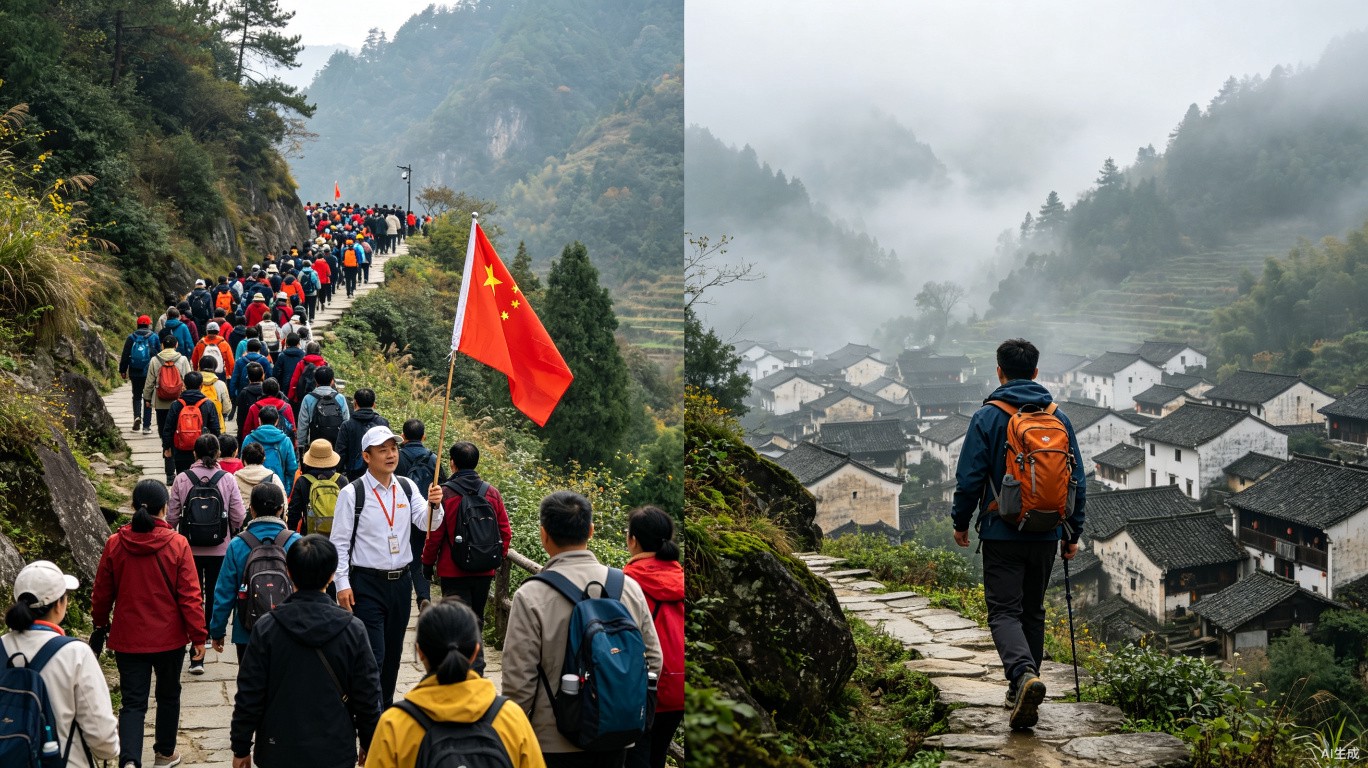
China Group Tours vs Independent Travel Which is Better
Should you join a guided tour or travel independently in China? Honest comparison of cost, flexibility, and experience.
7 min read
China Itinerary Planning: 7-Day 14-Day and 21-Day Routes: The Complete 2026 G...
Not sure how many days to spend in China? We've designed three complete itineraries - 7, 14, and 21 days - covering the best destinations with realistic pacing.
9 min read