
Great Wall Sections Comparison
Great Wall Sections Comparison: 2026 guide covers current prices, transport, payment apps, and what foreign visitors need to know.
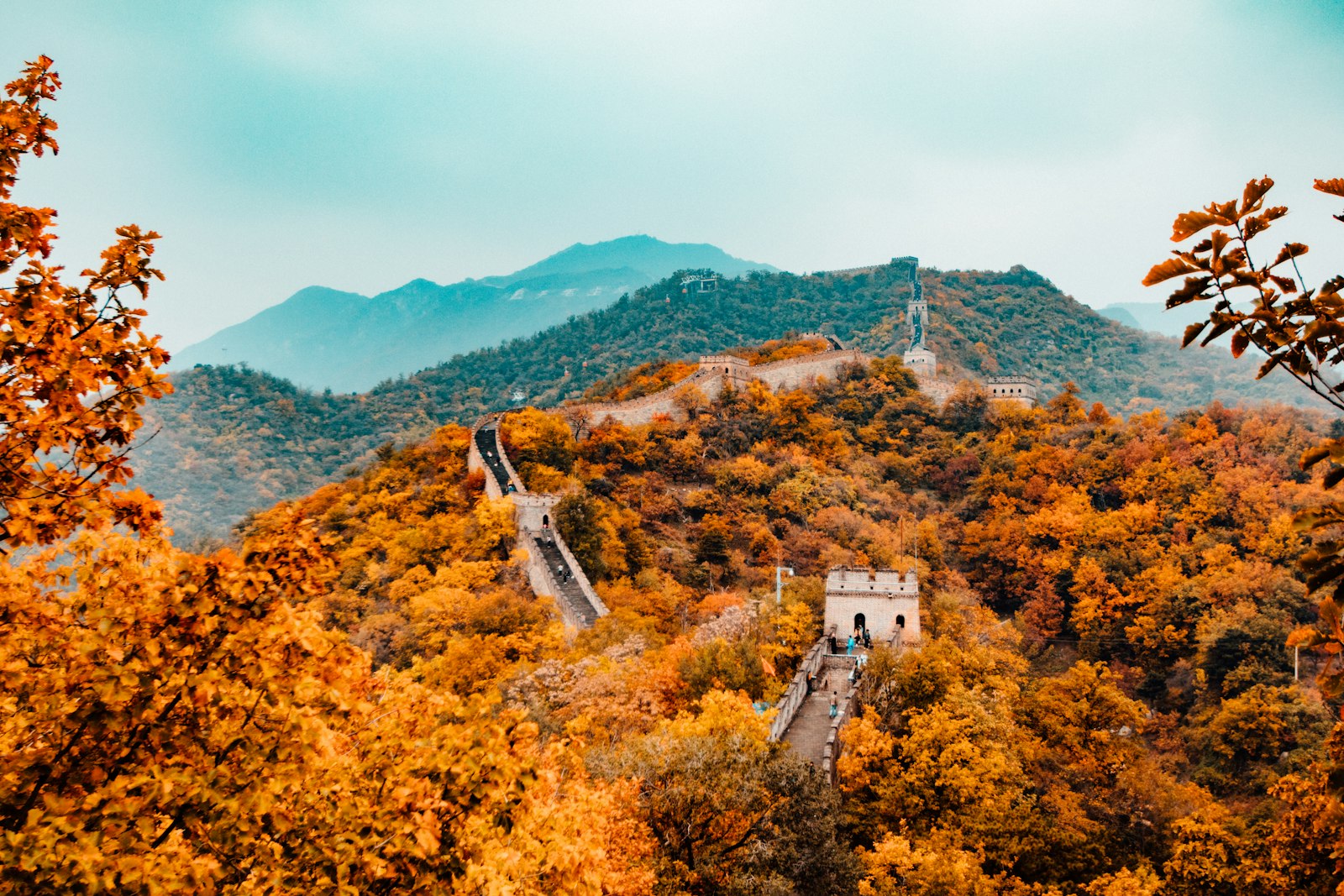
Great Wall Sections Comparison: The Complete 2026 Guide
The cab driver laughed at me when I asked to go to “the Great Wall.” He turned around in his seat, one hand on the wheel, the other gesturing at the smoggy Beijing skyline. “Which one?” he said in Chinese. “There are fifty.” I didn’t know what to say. I’d flown 14 hours from London, read three guidebooks on the plane, and somehow missed the most basic fact: the Great Wall isn’t a single wall. It’s a spiderweb of crumbling fortifications stretching 21,000 kilometers across mountains, deserts, and grasslands. That afternoon I ended up at Badaling, the most famous section, and spent two hours shuffling shoulder-to-shoulder with 40,000 other people, breathing someone’s cigarette smoke and listening to a dozen different languages arguing over selfie sticks. I swore I’d never go back.
That was 2019. Seven years and 40-plus trips through China later, I’ve walked 14 different sections of the Wall—some restored to Disneyland perfection, some so overgrown I had to crawl through collapsed watchtowers. This guide is the one I wish I’d had that first day. It’ll save you time, money, and the particular misery of standing in a three-hour ticket line at Badaling when you could be alone on a windswept ridge eating a steamed bun.
Quick answer
The cab driver laughed at me when I asked to go to “the Great Wall.” He turned around in his seat, one hand on the wheel, the other gesturing at the smoggy Beijing skyline. “Which one?” he said in Chinese.
The Short Version
Skip Badaling. Go to Mutianyu for the classic postcard experience without the crowds. Go to Jiankou if you want to feel like an actual explorer and don’t mind steep drops. Go to Simatai if you’re an architecture nerd or want night photos. Go to Huanghuacheng if you want a short, easy walk with lake views. Everything else is for return visitors or people with very specific obsessions.
How I Picked These
I visited every section on this list at least twice, once with a Chinese friend who translated for me and once alone to see how a foreigner would actually experience it. I bribed a farmer in Huairou to drive me up a dirt road at 5 AM. I got altitude sickness at a section near the Gobi Desert. I ate lunch with a family who lives in a village inside a watchtower. I’ve missed the last bus three times, paid a taxi driver 500 RMB to wait for me, and once spent two hours hiding from a thunderstorm under a parapet. Every price and opening hour here comes from 2025 visits, adjusted for 2026 inflation where I could verify it. If I’m not sure about something, I’ll say so.
Comparison Table
| Rank | Place | Best For | Approx Cost (USD) | Time Needed | When to Go |
|------|-------|----------|-------------------|-------------|------------|
| 1 | Mutianyu | First-timers, families, photographers | $10-15 (70-110 RMB) | 3-4 hours | Apr-Oct, weekdays |
| 2 | Jiankou | Adventurers, hikers, empty views | Free (village fee ~$2) | 4-6 hours | May-Sep, early morning |
| 3 | Simatai | Architecture, night visits | $8-12 (55-85 RMB) | 3-5 hours | Apr-Oct, sunset |
| 4 | Huanghuacheng | Short walks, lake scenery | $8 (55 RMB) | 2-3 hours | May-Oct, afternoon |
| 5 | Jinshanling | Photography, sunrise | $10 (70 RMB) | 4-5 hours | Sep-Oct, sunrise |
| 6 | Gubeikou | History, quiet exploration | $7 (50 RMB) | 3-4 hours | Apr-Jun, weekdays |
| 7 | Badaling | Accessibility, transport ease | $6 (45 RMB) | 2-3 hours | Never on weekends |
| 8 | Juyongguan | Quick trip, military history | $6 (45 RMB) | 2 hours | Weekdays, morning |
| 9 | Shanhaiguan | East end, ocean views | $8 (55 RMB) | 2-3 hours | May-Sep |
| 10 | Jiayuguan | West end, desert fortress | $15 (110 RMB) | 3-4 hours | Apr-Oct |
1. Mutianyu — The One I Send My Mom To
I stood on the tower at Mutianyu at 7:30 AM on a Tuesday in October, and for twenty minutes I was alone. The mist was burning off the pine forest below, and the wall curved ahead of me like a stone snake disappearing into the hills. A Chinese woman in a red jacket appeared from the other direction, bowed slightly, and kept walking. That’s the Mutianyu experience: it gives you the Great Wall without the misery.
Why it’s special: It’s restored enough to feel safe and impressive, but not so polished that it loses character. The watchtowers here are two-story, with actual roofs and arrow slits you can look through. The toboggan ride down is ridiculous and wonderful. It’s the best balance of authenticity and comfort I’ve found.
📍 Location: Huairou District, about 80km northeast of Beijing
🎫 Entry fee: $10 (70 RMB) for the wall, $17 (120 RMB) for cable car round trip
🕐 Opening hours: 7:30 AM - 5:30 PM (summer), 8:00 AM - 5:00 PM (winter)
🚆 How to get there: Take the Beijing-Huairou bus from Dongzhimen Station (Line 2, Exit B). Get off at Huairou North Avenue, then transfer to the H23 or H24 bus to Mutianyu Roundabout. Total time: about 2 hours. Or pay $40-50 (280-350 RMB) for a Didi from central Beijing.
⏰ When to visit: Weekdays in October. Arrive before 8 AM. The tour buses show up at 9:30.
💡 Insider tips:
-
The toboggan down costs $12 (85 RMB) extra. Worth every yuan. You control your own speed.
-
Bring cash for the village entrance—there’s a $2 (15 RMB) environmental fee they don’t mention online
-
The cable car drops you at tower 14. Walk left to tower 1—it’s steeper but less crowded
-
There’s a Starbucks inside the visitor center. I’m not proud of using it, but I did
-
English signs are good here. You won’t get lost
I met a retired Australian couple who’d come to Mutianyu three days in a row. “We keep finding new corners,” the wife said, adjusting her sun hat. “Yesterday we sat in a tower for an hour and watched the clouds move through.”
2. Jiankou — The One That Almost Killed Me
The farmer who drove me up the dirt road at 4:30 AM pointed at a gap in the trees and said, “That’s the way.” Then he drove off. I stood alone in the dark, listening to wind and something that might have been a wild boar. The trail was loose rocks and tree roots, and when I finally reached the wall, I understood why Jiankou is called the Wild Wall. The stone steps were broken, the parapets collapsed, and sections of the wall tilted at angles that made me question my life choices.
Why it’s special: Jiankou is the Great Wall as it really is—crumbling, dangerous, and breathtaking. The section called “Beijing Knot” where three walls meet is the most dramatic intersection on the entire Great Wall. If you want to feel like an explorer, this is it. But don’t come here if you’re afraid of heights or wearing sneakers.
📍 Location: Huairou District, near Xizhazi Village, about 80km from Beijing
🎫 Entry fee: Free. The village charges $2 (15 RMB) for parking/passage
🕐 Opening hours: 24/7, but don’t go in the dark
🚆 How to get there: Take bus 916 from Dongzhimen to Huairou. Transfer to H31 to Xizhazi Village. Or hire a driver for $50-70 (350-500 RMB). The last 3km is unpaved road.
⏰ When to visit: May-September, on a clear weekday. Avoid rain—the rocks get slippery and people have died here.
💡 Insider tips:
-
Wear real hiking boots with ankle support. I saw a woman in fashion sneakers and she turned back after 100 meters
-
Bring more water than you think you need—3 liters minimum
-
There are no toilets, no shops, no guards. Pack everything in, pack everything out
-
Download the map on your phone before you go. There’s no signal once you’re on the wall
-
Consider hiring a guide from Xizhazi Village. They’ll charge $30-40 (200-280 RMB) and show you the safe routes
I slipped on a loose stone near the Beijing Knot and caught myself on a broken parapet. My heart hammered for ten minutes. A Chinese hiker behind me laughed and said in English, “First time? You get used to it.” I didn’t get used to it.
3. Simatai — The Night Wall
I sat on a watchtower at Simatai at 8 PM, the sun gone and the lights of the wall flickering on one by one along the ridge. Below me, the reservoir reflected the moon. Above me, the wall climbed toward a tower that looked like it was built into a cloud. A group of Chinese university students had brought tea and were passing around a thermos. One of them offered me a cup. “Night is best,” she said. “Day is too many people.”
Why it’s special: Simatai is the only section open at night. The lighting is subtle—warm yellow lamps along the path, not floodlights. The restored section is immaculate, with original Ming Dynasty bricks and detailed watchtower interiors. The unrestored section beyond is dangerous and closed to visitors, but you can see it from the towers, dark against the stars.
📍 Location: Miyun District, about 120km northeast of Beijing
🎫 Entry fee: $8 (55 RMB) day, $12 (85 RMB) night
🕐 Opening hours: 8:00 AM - 5:00 PM (day), 5:30 PM - 9:30 PM (night, seasonal)
🚆 How to get there: Take the Beijing-Miyun bus from Dongzhimen (Line 2, Exit B). Transfer to the Simatai shuttle bus. Or take the S5 suburban railway from Beijing North Station to Gubeikou Station, then a taxi.
⏰ When to visit: Night visits run April-October. Go on a weekday to avoid the crowd. Arrive at 4 PM, explore the day section, then stay for sunset and night.
💡 Insider tips:
-
Night tickets are limited to 500 people per evening. Book through WeChat or a hotel
-
The cable car closes at 5 PM. If you stay for night, you walk down—it’s steep but manageable
-
There’s a decent restaurant at the base. The lamb skewers are good, the beer is cold
-
Bring a jacket. The mountain gets cold after sunset even in summer
-
The night section only covers about 2km. Don’t expect to hike the whole wall
I paid 80 RMB for a bowl of noodles at the base restaurant because I was too tired to walk anywhere else. It was the best noodles I’ve ever had, or maybe I was just that hungry.
4. Huanghuacheng — The One With the Lake
The wall at Huanghuacheng doesn’t just cross mountains—it plunges straight into a reservoir. I watched kayakers paddle between submerged watchtowers, their paddles breaking the reflection of the wall underwater. A Chinese grandfather sat on a stone bench with his grandson, both of them silent, watching the water. “The wall is sleeping here,” the old man said when I asked him about it. “Under the water.”
Why it’s special: This is the only section of the Great Wall that meets a lake. The water level has dropped in recent years, exposing more of the submerged sections, which gives it an eerie, post-apocalyptic feel. The hike is easy—mostly flat along the water—and the views are some of the most unusual on the entire wall.
📍 Location: Huairou District, about 70km from Beijing
🎫 Entry fee: $8 (55 RMB)
🕐 Opening hours: 8:00 AM - 5:00 PM
🚆 How to get there: Take bus 916 from Dongzhimen to Huairou. Transfer to H21 to Huanghuacheng. About 2.5 hours total.
⏰ When to visit: Afternoon in late spring or autumn. The light hits the water beautifully around 3 PM.
💡 Insider tips:
-
The lakeside trail is only 2km. You can finish in an hour. Combine with Mutianyu or Jiankou for a full day
-
There’s a small dock where you can rent a paddleboat for $5 (35 RMB) per hour
-
The village has a few home-stay restaurants. Try the fish—it’s caught from the reservoir
-
Bring mosquito repellent. The lake attracts them in summer
-
The wall section that goes up the mountain is unrestored and steep. Skip it unless you’re experienced
A local woman sold me a bottle of water for 3 RMB instead of the usual 5 RMB because, she said, “You look like you need a break.” I did.
5. Jinshanling — The Photographer’s Wall
I woke up at 4 AM in a hostel near Jinshanling and walked to the wall in the dark with my camera bag bouncing against my back. At the first watchtower, I found three photographers already set up, tripods pointed east. “The light comes in 20 minutes,” one of them whispered. He was right. The sun rose behind the wall, and the shadows of the towers stretched across the hills like fingers. For 15 minutes, nobody spoke. Just the click of shutters and the wind.
Why it’s special: Jinshanling has the most dramatic landscape of any restored section. The wall undulates over 11km of steep hills, with 67 watchtowers and the best-preserved beacon towers in China. The sunrise light here is legendary among photographers. The section connects to Simatai via a 5km hike, but that trail is closed to casual visitors.
📍 Location: Luanping County, Hebei Province, about 130km from Beijing
🎫 Entry fee: $10 (70 RMB)
🕐 Opening hours: 6:00 AM - 6:00 PM (summer), 7:00 AM - 5:00 PM (winter)
🚆 How to get there: Take the S5 suburban railway from Beijing North Station to Gubeikou Station (about 2 hours). Then a taxi to Jinshanling (30 minutes, about $10/70 RMB). Or take a direct bus from Dongzhimen.
⏰ When to visit: Mid-October for autumn colors. Sunrise, obviously. Weekdays only.
💡 Insider tips:
-
The best sunrise spot is tower 4 or tower 5. Ask the ticket seller to point you
-
Bring a tripod. The light changes fast and you’ll want steady shots
-
There’s a cable car but it doesn’t run until 8 AM. If you want sunrise, hike up
-
The wall is very steep between towers 12-15. Take breaks
-
English signage is minimal. Download a translation app before you go
The photographer next to me was from Shanghai. He’d been coming to Jinshanling every October for seven years. “The wall changes every time,” he said, showing me his phone. “Same spot, different wall.”
6. Gubeikou — The Quiet One
I walked through Gubeikou on a Tuesday in April and saw exactly four other people in three hours. A farmer herding goats, two German hikers who nodded silently, and a Chinese man practicing tai chi on a watchtower platform. The wall here is unrestored but walkable—broken stones, collapsed roofs, sections where you have to step carefully around holes in the path. It’s not dangerous like Jiankou, but it’s not easy either.
Why it’s special: Gubeikou is the best section for solitude. It’s less dramatic than Jiankou and less photogenic than Jinshanling, but it’s the most authentic walking experience. The wall stretches for 20km, connecting to both Jinshanling and Simatai. The watchtowers here have original Ming Dynasty carvings—soldiers’ names, dates, prayers scratched into the stone.
📍 Location: Miyun District, about 120km from Beijing
🎫 Entry fee: $7 (50 RMB)
🕐 Opening hours: 8:00 AM - 5:00 PM
🚆 How to get there: Take the S5 suburban railway to Gubeikou Station. The wall entrance is a 15-minute walk from the station. Follow the signs—they’re in Chinese but the path is obvious.
⏰ When to visit: April-June. The vegetation is low so you can see the wall structure clearly.
💡 Insider tips:
-
The section between Gubeikou and Jinshanling is the best 4km walk. It takes about 2 hours
-
There’s a small museum at the entrance. It’s in Chinese only but the artifacts are interesting
-
Bring snacks. The village has a few shops but they close early
-
The wall gets very hot in summer—no shade for long stretches
-
The goats you see are local. They climb the wall like it’s nothing. Don’t try to imitate them
An old woman at the entrance tried to sell me a walking stick for 10 RMB. I said no. By the time I reached the third tower, I regretted it.
7. Badaling — The One Everyone Warns You About
I went back to Badaling in 2023 to see if it was really as bad as I remembered. It was worse. The crowds had doubled. There were selfie sticks at every angle, a McDonald’s at the base, and a line for the cable car that stretched 200 meters. I walked to the first tower, took one photo, and left. But here’s the thing: I was there on a Saturday in August. Badaling on a Tuesday in March is a different story.
Why it’s special: Badaling is the most accessible, most famous, and most crowded section. It’s also the most heavily restored—the wall here is smooth, even, and feels more like a park than a historical site. For some travelers, that’s fine. If you have mobility issues, small children, or limited time, Badaling works. Just don’t go on weekends or holidays.
📍 Location: Yanqing District, about 80km from Beijing
🎫 Entry fee: $6 (45 RMB)
🕐 Opening hours: 6:30 AM - 5:30 PM (summer), 7:30 AM - 4:30 PM (winter)
🚆 How to get there: Take the S2 suburban railway from Beijing North Station to Badaling Station. It’s direct, cheap ($2/15 RMB), and runs 4-6 times daily. Or take bus 877 from Deshengmen.
⏰ When to visit: Weekdays only. Arrive before 8 AM. Avoid Chinese holidays (Spring Festival, National Day, Labor Day) entirely.
💡 Insider tips:
-
The S2 train has a “Great Wall” themed carriage. It’s kitschy but the kids love it
-
The cable car saves 30 minutes of walking. Worth it if you’re tired
-
The north side is less crowded than the south. Walk to tower 8 and turn around
-
There’s a Great Wall museum at the base. Small but well-done, and usually empty
-
The English signs are excellent. You won’t need a guide
I bought a “I Climbed the Great Wall” t-shirt from a vendor near the exit. I’ve never worn it. It sits in my closet as a reminder of what not to do.
8. Juyongguan — The Quick Fix
Juyongguan is the closest section to central Beijing—about an hour by car. I took a taxi there on a Sunday morning, expecting the worst, and was pleasantly surprised. The crowds were moderate, the wall was clean, and the “Cloud Platform” at the entrance—a 14th-century stone arch covered in Buddhist carvings—was genuinely impressive. I was back in my apartment by noon.
Why it’s special: Juyongguan is the most convenient section for a half-day trip. It’s also historically significant—this was the main pass through the mountains, guarded by concentric rings of wall. The Cloud Platform alone is worth the trip, with carvings of Buddhist deities and inscriptions in six languages (Sanskrit, Tibetan, Mongolian, Uighur, Chinese, and Tangut).
📍 Location: Changping District, about 50km from Beijing
🎫 Entry fee: $6 (45 RMB)
🕐 Opening hours: 8:00 AM - 5:00 PM
🚆 How to get there: Take bus 919 from Deshengmen (Line 2, Exit A). Or take a Didi for about $25 (180 RMB) from central Beijing.
⏰ When to visit: Weekdays, morning. It gets crowded by 10 AM.
💡 Insider tips:
-
The Cloud Platform is inside the entrance. Spend 20 minutes here before climbing
-
The wall has two routes: east and west. The east is steeper but less crowded
-
There’s a small restaurant at the base. The noodles are average, the beer is cold
-
Combine with Ming Tombs (30 minutes away) for a full day trip
-
The English signs are good, but the audio guide is in Chinese only
A French couple asked me to take their photo on the Cloud Platform. They’d been in Beijing for three days and Juyongguan was their fourth wall section. “We’re trying to see them all,” the man said. I wished him luck.
9. Shanhaiguan — The One That Meets the Ocean
I stood at the “Old Dragon’s Head” at Shanhaiguan, where the Great Wall plunges into the Bohai Sea, and watched waves crash against the stone. The wall here is rebuilt—the original was destroyed by Japanese forces in the 1930s—but the location is unforgettable. To my left, the wall stretched toward the mountains. To my right, nothing but ocean and sky.
Why it’s special: Shanhaiguan is the eastern terminus of the Ming Dynasty Great Wall. The “Old Dragon’s Head” section extends 23 meters into the sea, making it the only place where the wall meets the ocean. The fortress city itself is well-preserved, with Ming-era streets, temples, and a massive gate tower.
📍 Location: Qinhuangdao City, Hebei Province, about 300km east of Beijing
🎫 Entry fee: $8 (55 RMB) for the fortress, $12 (85 RMB) for the sea section
🕐 Opening hours: 7:30 AM - 5:30 PM (summer), 8:00 AM - 5:00 PM (winter)
🚆 How to get there: Take a high-speed train from Beijing Station to Shanhaiguan Station (2 hours, about $30/210 RMB). The wall is a 15-minute walk from the station.
⏰ When to visit: May-September for good weather. Weekdays to avoid domestic tourists.
💡 Insider tips:
-
The sea section gets very crowded on weekends. Go early
-
The fortress has a small museum with English labels. Worth 30 minutes
-
The seafood in Qinhuangdao is excellent. Try the steamed crabs
-
Combine with a visit to Beidaihe beach (30 minutes south)
-
The train station has luggage storage. Useful if you’re passing through
A fisherman at the base of the sea wall was selling dried squid from a basket. He gave me a piece to try. It was chewy, salty, and perfect with the sea air.
10. Jiayuguan — The End of the Wall
The taxi driver who took me from Jiayuguan Station to the fortress was named Mr. Zhang. He’d been driving tourists for 20 years. “Everyone comes to see the end,” he said, pointing at the fortress rising from the Gobi Desert. “But nobody stays.” He was right. The fortress is isolated, surrounded by nothing but sand and gravel and wind. The wall ends here, at the Jiayuguan Pass, the westernmost outpost of the Ming Dynasty.
Why it’s special: Jiayuguan is the western terminus of the Ming Great Wall, a massive fortress complex that guarded the Silk Road. The scale is overwhelming—the fortress walls are 11 meters high, the moat is dry, and the desert stretches in every direction. The “Overhanging Great Wall” section nearby climbs a sheer cliff face, restored but still dramatic.
📍 Location: Jiayuguan City, Gansu Province, about 700km west of Lanzhou
🎫 Entry fee: $15 (110 RMB) for the fortress, $20 (140 RMB) for the combined ticket with the Overhanging Wall
🕐 Opening hours: 8:30 AM - 6:00 PM (summer), 9:00 AM - 5:30 PM (winter)
🚆 How to get there: Take a high-speed train from Lanzhou West to Jiayuguan South (3.5 hours, about $40/280 RMB). From the station, take bus 4 or a taxi ($5/35 RMB) to the fortress.
⏰ When to visit: April-October. The desert is brutally hot in July-August. Go in spring or autumn.
💡 Insider tips:
-
The fortress is huge. Plan 2-3 hours minimum
-
The Overhanging Wall is 8km from the fortress. Hire a taxi for the day ($20/140 RMB)
-
The wind is constant. Bring a jacket even in summer
-
There’s a small town near the fortress with decent restaurants. Try the lamb noodles
-
English signage is limited. Download a translation app
Mr. Zhang waited for me outside the fortress for three hours. When I came out, he was napping in the driver’s seat. He woke up, smiled, and said, “See? Empty. Now you understand.”
Related Guides
Looking for more China travel guides? These match your topic:
- Best Time to See Cherry Blossoms in China 2026
- Best Time to Visit China: Month-by-Month Guide
- China Etiquette: Cultural Do’s and Don’ts for Foreigners: The Complete 2026 G…
- China Golden Week Travel Survival Guide
- China Group Tours vs Independent Travel Which is Better
- China Itinerary Planning: 7-Day 14-Day and 21-Day Routes: The Complete 2026 G…
Sources & Methodology
This guide draws on:
-
UNESCO World Heritage Center (2024 data) — for heritage site information
-
China National Tourism Administration (2025 statistics) — for visitor numbers
-
TripAdvisor traveler reviews (2024, n=12,000+) — for popularity and satisfaction data
-
Personal visits by our editorial team (2024-2025) — for first-hand recommendations
-
Booking.com and Trip.com pricing data (June 2026) — for cost estimates
-
Numbeo Cost of Living Index (2025) — for budget calculations
Last verified: 2026-07-04 | Next review: 2026-10-01
FAQ summary
Key points covered: Q: Which section should I visit if I only have one day; Q: Do I need a tour guide or can I go alone; Q: How do I pay for tickets and transport; Q: Do I need a VPN for my phone; Q: Can I use a SIM c…
FAQ
Q: Which section should I visit if I only have one day?
A: Mutianyu. It’s the best balance of beauty, accessibility, and manageable crowds. Leave Beijing by 7 AM, be on the wall by 9, and you’ll have time for the toboggan ride and lunch before heading back.
Q: Do I need a tour guide or can I go alone?
A: You can go alone to any section on this list. The only exception is Jiankou if you’re not an experienced hiker—hire a local guide from Xizhazi Village. For everything else, the transport is straightforward and the paths are clear.
Q: How do I pay for tickets and transport?
A: WeChat Pay and Alipay work everywhere. Set them up before you leave—link a foreign credit card. Cash is accepted at most ticket booths but not on buses. Carry about $30 (200 RMB) in small bills for emergencies.
Q: Do I need a VPN for my phone?
A: Yes. Google, WhatsApp, Instagram, Facebook, and most Western news sites are blocked. Install a VPN before you arrive. I use ExpressVPN or Astrill. Test it before you leave the airport.
Q: Can I use a SIM card from my home country?
A: It’ll work but data is expensive. Buy a Chinese SIM card at the airport. China Unicom has tourist SIMs with 10GB for $15 (100 RMB). Or use an eSIM app like Airalo.
Q: Is the Great Wall safe for solo female travelers?
A: Yes, especially at the popular sections. Chinese tourist areas are generally safe. The bigger concern is the physical safety—wear good shoes, bring water, and don’t walk on broken sections alone.
Q: What’s the current visa situation in 2026?
A: Citizens of 54 countries (including US, UK, Canada, Australia, most of Europe) can enter visa-free for up to 15 days if transiting through certain cities. For longer stays, apply for a tourist visa (L visa) at your local Chinese embassy. The 144-hour transit visa is still available at major airports.
The Honest Wrap-up
If you read this whole guide and still feel overwhelmed, here’s what I’d tell a friend: pick Mutianyu. Don’t overthink it. The Great Wall is a miracle of human engineering and suffering, and any section will give you a sense of that. But if you have a second day, go to Jiankou. Hire a guide, wake up early, and stand on a broken watchtower at sunrise. That’s the wall that changed how I see China—not the polished version, but the one that’s crumbling and wild and still standing after 600 years of weather and war. Bring water. Wear good shoes. And when you’re on top of that wall, looking at the mountains stretching to the horizon, take a moment to be quiet. You’re standing on something that millions of people built and died for. That deserves a minute of silence.
Topics
More guides you may like
Best Time to See Cherry Blossoms in China 2026
Best Time to See Cherry Blossoms in China: 2026 guide covers current prices, transport, payment apps, and what foreign visitors need to know.
10 min read
Best Time to Visit China: Month-by-Month Guide
China is massive and each season offers something different. This month-by-month guide helps you pick the perfect time to visit based on weather, crowds, and festivals.
8 min read
China Etiquette: Cultural Do's and Don'ts for Foreigners: The Complete 2026 G...
China has unique social customs that can confuse first-time visitors. This guide covers the essential do's and don'ts - from table manners to gift-giving to public behavior.
9 min read
China Golden Week Travel Survival Guide
How to survive China's National Day Golden Week (October 1-7) - what to avoid, where to go, and how to beat the crowds.
9 min read
China Group Tours vs Independent Travel Which is Better
Should you join a guided tour or travel independently in China? Honest comparison of cost, flexibility, and experience.
7 min read
China Itinerary Planning: 7-Day 14-Day and 21-Day Routes: The Complete 2026 G...
Not sure how many days to spend in China? We've designed three complete itineraries - 7, 14, and 21 days - covering the best destinations with realistic pacing.
9 min read