
Hunan Province Travel Guide
Hunan Province Travel Guide: 2026 guide covers current prices, transport, payment apps, and what foreign visitors need to know.
Hunan Province Travel Guide: The Complete 2026 Guide
The cab driver pulled over on the shoulder of a mountain road near Zhangjiajie, killed the engine, and pointed through the windshield. “Look,” he said in Mandarin I barely caught. Through the mist, a sandstone pillar the size of a skyscraper rose straight out of the valley floor, its top vanishing into cloud. I’d seen the photos. I’d watched Avatar. But standing there with diesel fumes mixing with wet earth and the sound of water dripping off leaves—that was something else entirely. I’d been living in Beijing for three years by then, and I thought I understood China’s scale. I didn’t.
Hunan is the province that keeps surprising you. It’s got the postcard stuff—misty mountains, ancient villages, the river that Mao swam in—but it’s also got a chaotic, spicy, real-life energy that most tourists skip. The food will make you sweat. The buses will run late. A stranger will grab your arm and help you cross a street you weren’t sure how to navigate. And somewhere between the chili oil and the fog, you’ll understand why people who live here never want to leave.
This guide covers ten places I’ve visited at least twice, with the kind of details I wish someone had told me before my first trip. Prices are in USD with approximate 2026 yuan in parentheses. I’ve been wrong before—check current hours before you go—but these are the numbers I paid and the routes I walked.
Quick answer
The cab driver pulled over on the shoulder of a mountain road near Zhangjiajie, killed the engine, and pointed through the windshield. “Look,” he said in Mandarin I barely caught.
The Short Version
Hunan is worth it for Zhangjiajie alone, but don’t make that your only stop. Spend three days in the national park, two in Fenghuang’s old town, and one eating your way through Changsha. Skip Yueyang unless you really, really care about ancient poetry. Bring cash for street food—WeChat Pay works everywhere but your foreign card won’t. And for the love of god, learn to say “bu la” (not spicy) before you order anything.
How I Picked These
Over seven years of wandering through China, I’ve made about a dozen trips to Hunan. Some of these places I found by accident—a hostel receptionist in Changsha drew me a map on a napkin, and I followed it to a noodle shop I still dream about. Others came from taxi drivers, fellow travelers, and the occasional bad guidebook recommendation that I’m still bitter about. I went back to each spot at least twice, once in peak season and once in the off months, to see how they changed. This isn’t an exhaustive list. It’s the list I’d give a friend who had two weeks and wanted to actually feel the place.
Comparison Table
| Rank | Place | Best For | Approx Cost (USD) | Time Needed | When to Go |
|------|-------|----------|-------------------|-------------|------------|
| 1 | Zhangjiajie National Forest Park | Hiking, photo ops, otherworldly landscapes | $35–50/day ($250–360/day) | 3 days | Apr–Oct, avoid Chinese holidays |
| 2 | Fenghuang Ancient Town | Riverside walking, night views, Miao culture | $20–30/day ($145–215/day) | 2 days | May–Jun or Sep–Oct |
| 3 | Changsha City | Street food, nightlife, Mao history | $25–40/day ($180–290/day) | 2 days | Mar–May or Oct–Nov |
| 4 | Tianmen Mountain | Glass walkways, cable car, temple | $40–55 ($290–400) | 1 day | Apr–Oct, clear mornings |
| 5 | Yuelu Mountain (Changsha) | Hiking, Confucian academy, autumn leaves | Free–$10 (0–72) | Half day | Oct–Nov for red leaves |
| 6 | Dehang Miao Village | Minority culture, rice terraces, quiet | $15–25 ($108–180) | 1–2 days | May–Sep |
| 7 | Furong Ancient Town | Waterfall village, night lights, less crowded | $10–20 ($72–145) | 1 day | Apr–Oct |
| 8 | Yueyang Tower | Ancient architecture, Dongting Lake views | $12 ($86) | Half day | Mar–May |
| 9 | Hunan Provincial Museum | Han dynasty artifacts, Mawangdui exhibition | Free (ID required) | 2–3 hours | Weekday mornings |
| 10 | Shui Miao Village | Untouristed hiking, authentic Miao life | Free (homestay $15–25/night) | 1–2 days | May–Oct |
1. Zhangjiajie National Forest Park — The Place That Made Me Believe in Magic
I remember standing on a viewing platform at 7 AM, alone except for a Chinese grandfather who’d hiked up before breakfast. We didn’t speak the same language, but he pointed at the pillars emerging from fog and nodded slowly, like we’d both seen something we couldn’t explain. That’s Zhangjiajie. It’s not a park you visit—it’s a place that rewrites what you thought mountains could look like.
The geology here is absurd. Quartzite sandstone pillars—thousands of them—rise 200 meters straight up, topped with pine trees that look like bonsai projects gone wild. The park covers 11 square miles, with boardwalks, stone stairs, and cable cars connecting the main viewpoints. Yes, it’s crowded during Chinese holidays. Yes, the glass-bottomed bridge at Zhangjiajie Grand Canyon made my knees weak. But find a side trail at 4 PM when the tour groups have left, and you’ll have the place to yourself.
📍 Location: Wulingyuan District, about 30 km from Zhangjiajie city center
🎫 Entry fee: $35 (252 yuan) for 4-day pass. Add $15 (108 yuan) for the glass bridge. Bring your passport—they scan it at the gate.
🕐 Hours: 6:30 AM–6:30 PM (April–October), 7:30 AM–5:30 PM (November–March). Last cable car up at 5 PM—miss it and you’re walking down in the dark.
🚆 How to get there: From Zhangjiajie West Railway Station, take Bus 17 to the Wulingyuan entrance (40 minutes, $0.70/5 yuan). Or take a taxi for $8–10 (58–72 yuan)—negotiate before you get in. The Forest Park entrance (south gate) is closer to the city but busier. Wulingyuan entrance (east gate) has better access to the main sights.
⏰ When to visit: April–May for spring flowers and moderate crowds. October for clear skies and autumn colors. Avoid the first week of October (National Day holiday) unless you enjoy standing in line for 3 hours.
💡 Insider tips: Take the Bailong Elevator up ($9/65 yuan) but walk down—the staircase through the Ten-Mile Gallery is spectacular. Bring a rain jacket even in summer; the microclimate changes every 20 minutes. The monkeys will steal your snacks—don’t carry anything in your hands near the Yuanjiajie area. Hire a guide for $30–50/day (216–360 yuan) if you want to find the quiet trails; the map is confusing and signs are in Chinese only past the main viewpoints.
I ate a bowl of spicy beef noodles at a shack near the Tianzi Mountain cable car station. The woman running it laughed at my red face and brought me a glass of cold soy milk. I didn’t ask for it. She just knew.
2. Fenghuang Ancient Town — A Riverside Ghost Story (In a Good Way)
The first time I visited Fenghuang, I arrived at midnight after a bus broke down somewhere east of Jishou. The town was dark except for the red lanterns along the Tuo River, and I walked across a stone bridge with no railing while fog rolled off the water. A dog followed me for three blocks. I never saw the dog again. That’s the kind of place Fenghuang is—it sticks with you in ways you can’t explain.
Fenghuang means “phoenix,” and the old town is a preserved Qing-dynasty trading post with stilted wooden houses clinging to the riverbanks. It’s touristy—make no mistake—but the tourism hasn’t killed its soul. Walk the back alleys at dawn, before the shops open, and you’ll see old women washing vegetables in the river and men playing chess under pagodas. The night scene is pure chaos: bars blasting pop music, vendors selling grilled squid, and thousands of people shuffling across the bridges.
📍 Location: Fenghuang County, Xiangxi Tujia and Miao Autonomous Prefecture
🎫 Entry fee: Free to enter the old town. The combined ticket ($15/108 yuan) covers nine historical sites including the former residence of Shen Congwen and the East Gate Tower. Skip the combined ticket unless you’re a history buff—the charm is in the streets, not the museums.
🕐 Hours: 24/7 for the streets. Most shops open 9 AM–10 PM. The river lights come on at 7 PM and stay until midnight.
🚆 How to get there: Take a high-speed train to Huaihua South Station, then a bus to Fenghuang (1.5 hours, $5/36 yuan). Or take a train to Jishou Station, then a minibus (1 hour, $3/22 yuan). From Zhangjiajie, there’s a direct bus (3 hours, $10/72 yuan).
⏰ When to visit: May–June or September–October for pleasant weather. Avoid weekends if possible—the town gets packed with domestic tourists. Tuesday–Thursday is ideal.
💡 Insider tips: Stay in a guesthouse on the north side of the river (cheaper, quieter, better views). The south side is where the bars are—fine for one night, but you won’t sleep. Don’t buy the silver jewelry sold on the main street; it’s machine-made. Walk 10 minutes to the local market for real Miao silver. Try the ginger candy—there’s a shop near the Hong Bridge that’s been making it for 40 years.
I met a shopkeeper named Auntie Chen who sold handmade batik scarves. She showed me how to dye the fabric using indigo from her garden. I bought three scarves. I still have two.
3. Changsha City — Where I Learned to Love Food That Fights Back
The first meal I had in Changsha nearly ended me. I sat down at a street stall near Taiping Street, pointed at something that looked like tofu, and watched the cook ladle a thick layer of chili oil over it. I ate it anyway. My face went red. My eyes watered. And then I ordered another bowl. That’s Changsha in a nutshell—it’s aggressive, it’s loud, and it’s absolutely worth the pain.
Changsha is Hunan’s capital and the spiritual home of xiang cai (Hunan cuisine), which is like Sichuan food’s angrier cousin. The city isn’t pretty—it’s concrete and neon and construction dust—but it’s alive in a way that Beijing and Shanghai aren’t anymore. Walk through the night market on Pozi Street and you’ll smell stinky tofu (chou doufu), grilled fish, and sugar-oil cakes competing for your attention. The Yuelu Academy at the foot of Yuelu Mountain is a quiet counterpoint—a thousand-year-old Confucian school where Mao Zedong studied.
📍 Location: Central Changsha, concentrated around Wuyi Square and the Xiangjiang River
🎫 Entry fee: Free for most street areas. Yuelu Academy: $7 (50 yuan). Hunan Provincial Museum: free (reserve online in advance—slots fill up days ahead).
🕐 Hours: Markets start around 5 PM and go until midnight. Museums: 9 AM–5 PM, closed Mondays. Yuelu Mountain: 8 AM–6 PM.
🚆 How to get there: Changsha South Railway Station is the main high-speed hub (from Beijing: 5 hours, $80/576 yuan; from Guangzhou: 2.5 hours, $40/288 yuan). Take Metro Line 2 to Wuyi Square Station (Exit 3) for the city center.
⏰ When to visit: March–May for mild weather. October–November for cooler temperatures and fewer crowds. Summer is brutally hot and humid—I made that mistake once.
💡 Insider tips: The stinky tofu at the Heijie (Black Street) stall on Pozi Street is the real deal—it’s fermented for three days and smells like a wet sock, but it tastes incredible. Bring a translation app; almost no one speaks English outside the major hotels. The Hunan Provincial Museum has the Mawangdui mummy (a 2,000-year-old woman preserved so well her skin is still soft)—it’s the best museum in the province and it’s free. You need WeChat Pay for street food; cash is accepted but change is hard to get.
A university student named Li Wei helped me order at a noodle shop when my Mandarin failed. He was studying English literature. We ate noodles together and he told me about his dream to visit Scotland. I hope he made it.
4. Tianmen Mountain — The Stairway to Heaven (Literally)
The cable car ride to Tianmen Mountain is 7.5 kilometers long and takes 28 minutes. For the first ten minutes, you’re looking down at the city of Zhangjiajie getting smaller. For the next ten, you’re passing through clouds. For the last eight, you’re wondering if the cable car company has ever lost one. (They haven’t, as far as I know, but I still gripped the handrail.)
At the top, you’ll find the Glass Skywalk—a 60-meter walkway bolted to the cliff face with a transparent floor. I watched a German tourist crawl across it on his hands and knees. I walked it standing up, but I won’t pretend my knees weren’t shaking. The real attraction is the Heavenly Gateway, a natural arch cut into the mountain at 1,300 meters, connected by a staircase called the “Heavenly Ladder” with 999 steps. I counted. I was out of breath by step 400.
📍 Location: Tianmen Mountain National Forest Park, 8 km south of Zhangjiajie city center
🎫 Entry fee: $40 (288 yuan) for the mountain ticket + cable car. Add $15 (108 yuan) for the glass walkway and the cliff-hanging walkway. The whole thing runs about $55 (396 yuan) if you do everything.
🕐 Hours: 7 AM–6 PM (April–October), 8 AM–5 PM (November–March). Last cable car down is at 5:30 PM—don’t miss it unless you want to sleep on the mountain.
🚆 How to get there: From Zhangjiajie city center, take Bus 4 or 10 to the cable car station (20 minutes, $0.30/2 yuan). A taxi costs $4 (29 yuan). The cable car station is at the south edge of the city—you can’t miss it.
⏰ When to visit: Go on a clear morning. The mountain is often fogged in by 11 AM. I went at 7:30 AM and had an hour of perfect visibility before the clouds rolled in. Weekdays are quieter.
💡 Insider tips: Buy your ticket online (via WeChat or Trip.com) the night before—the queue at the ticket office can be an hour long. The glass walkway requires shoe covers (provided). Wear sturdy shoes—the 999 steps are steep and uneven. Bring a jacket even in summer; it’s 10°C cooler at the top. Don’t do the cliff walkway if you’re afraid of heights—I’m serious, it’s not worth the panic attack.
I met a retired couple from Shanghai on the cable car. The wife closed her eyes the entire ride. The husband took photos the whole time. They’d been married 45 years. I thought that was beautiful.
5. Yuelu Mountain — The Hike That Earned Its Reputation
I climbed Yuelu Mountain on a November morning when the air was cold enough to see your breath. The maples were turning red, and the path was covered in leaves that crunched underfoot. About halfway up, I passed a group of elderly women doing tai chi in a clearing. They moved so slowly that a bird landed on the ground between them and stayed there for a full minute. I sat on a bench and watched until my fingers went numb.
Yuelu Mountain is Changsha’s backyard—a 300-meter hill that takes about an hour to climb, with temples, pavilions, and the Yuelu Academy scattered along the way. The academy is the real draw: founded in 976 AD, it’s one of the four great academies of ancient China, and it’s still in use as part of Hunan University. The architecture is restrained and elegant—dark wood, white walls, courtyards with ginkgo trees. It’s the kind of place that makes you want to sit down and read a book for three hours.
📍 Location: West bank of the Xiangjiang River, Changsha. The main entrance is at Hunan University’s south gate.
🎫 Entry fee: Free for the mountain. Yuelu Academy: $7 (50 yuan). The cable car to the summit is $5 (36 yuan) one-way—skip it and walk instead.
🕐 Hours: Mountain trails: open 24/7. Academy: 7:30 AM–5:30 PM (summer), 8 AM–5 PM (winter).
🚆 How to get there: Take Metro Line 2 to Yingwanzhen Station, then walk 15 minutes south. Or take Metro Line 4 to Hunan University Station, Exit 2—the academy entrance is a 5-minute walk.
⏰ When to visit: Late October to early November for the red maples. Early morning (7–9 AM) to avoid crowds. Weekdays are quiet; weekends get busy with families.
💡 Insider tips: Enter through the Hunan University campus—it’s a nicer walk than the main tourist entrance. The Aiwan Pavilion (Love-Late Pavilion) on the summit is where Mao Zedong wrote poetry; it’s worth the climb alone. Bring water—there are vendors on the mountain but they charge double. The vegetarian restaurant near the academy is excellent and costs $5 (36 yuan) for a set meal.
An old calligrapher near the academy entrance was writing characters on the ground with a brush dipped in water. I watched him for 20 minutes. He wrote my name in Chinese when I asked. I still have the photo.
6. Dehang Miao Village — The Place Tourists Miss
I almost didn’t go to Dehang. It was raining, the bus from Jishou was late, and I was tired of being wet. But a hostel owner in Fenghuang had insisted: “Go to Dehang. It’s real.” So I went. And she was right.
Dehang is a Miao village tucked into a valley about an hour from Fenghuang, with rice terraces climbing the hillsides and a river running through the center. The Miao people here still wear traditional silver headdresses and embroidered clothing, not for tourists but because that’s what they wear. The village isn’t a museum—it’s a living community, with pigs wandering the streets and old women spinning thread on wooden wheels. The hiking trails through the surrounding mountains are spectacular: waterfalls, caves, and viewpoints where you can see the terraces stretching to the horizon.
📍 Location: Dehang Village, Jishou City, about 40 km northwest of Fenghuang
🎫 Entry fee: $15 (108 yuan) for the village. The hiking trails are free once you’re inside.
🕐 Hours: The village is open 24/7. Most homestays serve dinner at 6 PM—don’t be late.
🚆 How to get there: From Fenghuang, take a bus to Jishou (1 hour, $3/22 yuan), then a local minibus to Dehang (30 minutes, $1.50/11 yuan). From Jishou city center, direct minibuses leave from the bus station every hour until 4 PM.
⏰ When to visit: May–September for green rice terraces. October for harvest season (golden fields). Avoid rainy season (June–July) if you want to hike—trails get muddy.
💡 Insider tips: Stay overnight in a homestay ($15–25/108–180 yuan including dinner and breakfast). The family I stayed with didn’t speak a word of English, but we communicated through gestures and laughter. Bring cash—there’s no ATM in the village. The hike to the waterfall takes 2 hours round trip; start early to avoid afternoon heat. Buy the local rice wine—it’s sweet, strong, and sold by the liter.
My homestay host, a Miao woman named Ayi, taught me how to pound sticky rice for a festival. I was terrible at it. She laughed so hard she had to sit down.
7. Furong Ancient Town — The Waterfall Village That Almost Overwhelmed Me
Furong means “hibiscus,” and the town sits on a cliff above a waterfall that falls 40 meters into the You River. I arrived at dusk, and the lights were just coming on—red lanterns along the waterfront, warm yellow glow from the wooden houses, and the waterfall lit from below in changing colors. It looked like a movie set. I kept waiting for someone to yell “Cut!”
The town is smaller and less famous than Fenghuang, which means it’s less crowded and more relaxed. The main street is a single cobblestone lane lined with shops selling dried chili peppers, silver jewelry, and the local specialty: spicy fish from the You River. The waterfall runs right through the middle of town—you can walk behind it on a stone path that stays dry enough for sandals. The spray hits your face, and the roar of the water drowns out everything else.
📍 Location: Furong Town, Yongshun County, about 80 km north of Fenghuang
🎫 Entry fee: $10 (72 yuan). Free after 8 PM—the ticket booth closes, and you can walk in.
🕐 Hours: 8 AM–6 PM for the waterfall path (lit until 10 PM). Shops open 9 AM–9 PM.
🚆 How to get there: Take a high-speed train to Furongzhen Station (direct from Changsha: 2 hours, $25/180 yuan). From the station, it’s a 10-minute taxi ride ($3/22 yuan). From Fenghuang, take a bus to Yongshun (2 hours, $6/43 yuan), then a local bus to Furong (30 minutes, $1/7 yuan).
⏰ When to visit: April–October for the waterfall at full flow. Visit on a weekday—weekends bring busloads of tour groups. Evening is magical; the waterfall is lit and the crowds thin out.
💡 Insider tips: Stay overnight in a guesthouse near the waterfall (rooms with waterfall views cost $30–50/216–360 yuan). The sound of the water is loud—bring earplugs if you’re a light sleeper. Don’t buy the “antique” silver coins sold on the main street; they’re fakes. The grilled fish skewers near the waterfall entrance are excellent—$1 (7 yuan) each, spicy and crispy.
I stood behind the waterfall at midnight, alone except for a cat that had claimed a dry spot on the stone path. The water was deafening. The cat didn’t care. I didn’t either.
8. Yueyang Tower — The One for History Buffs
I’ll be honest: Yueyang Tower was a letdown the first time I visited. I’d read the famous poem by Fan Zhongyan—“Be the first to worry about the world’s troubles, be the last to enjoy its pleasures”—and I expected something transcendent. What I got was a three-story wooden tower surrounded by souvenir shops and a parking lot. But then I climbed to the top floor, looked out over Dongting Lake, and understood. The tower isn’t the point. The view is the point.
Yueyang Tower was built in 220 AD and rebuilt about a dozen times since. The current structure dates to the Qing Dynasty, and it’s one of the “Three Great Towers of Jiangnan.” The architecture is solid—curved eaves, carved beams, a copper roof that weighs 40 tons—but the real magic is the lake. Dongting Lake is vast, moody, and changes color with the seasons. On a clear day, you can see the Junshan Islands in the distance. On a foggy day, the lake disappears into the sky, and you feel like you’re standing at the edge of the world.
📍 Location: Yueyang Tower Scenic Area, Yueyang City, on the eastern shore of Dongting Lake
🎫 Entry fee: $12 (86 yuan). The Junshan Islands ferry is an additional $10 (72 yuan).
🕐 Hours: 7:30 AM–6:30 PM (summer), 8 AM–5:30 PM (winter).
🚆 How to get there: From Changsha South Station, take a high-speed train to Yueyang East Station (30 minutes, $10/72 yuan). From the station, take Bus 15 or a taxi ($5/36 yuan) to the tower area.
⏰ When to visit: March–May for pleasant weather and misty lake views. September–October for clear skies. Avoid July–August—it’s hot, humid, and crowded with domestic tourists.
💡 Insider tips: Read Fan Zhongyan’s poem before you go—it adds context that makes the tower meaningful. The best photos are from the lake side, not the tower itself. Walk along the lakefront promenade after visiting; it’s quieter and offers better views. The nearby Bianhe Street has good street food—try the lotus root soup.
An elderly man at the tower recited the poem to me in Mandarin. I understood about half the words. He didn’t care. He just wanted someone to listen.
9. Hunan Provincial Museum — The Mummy That Changed How I See History
I walked into the Hunan Provincial Museum expecting artifacts in glass cases. I walked out feeling like I’d met someone. The Mawangdui exhibition features the remains of Lady Dai (Xin Zhui), a Han dynasty noblewoman who died around 160 BC. Her body was so well preserved—submerged in an unidentified liquid in a set of nested lacquer coffins—that her skin is still soft, her joints still flexible, and her blood type still identifiable. I stood in front of her for ten minutes, trying to process that she was 2,200 years old and looked like she could wake up any second.
The museum also houses her burial goods: silk paintings, lacquerware, bamboo manuscripts, and a complete set of 48 burial figurines. The silk painting from her tomb is the earliest surviving example of Chinese figure painting. The lacquerware is still glossy. The manuscripts include medical texts, maps, and a book on divination. It’s the kind of collection that makes you rethink what ancient China was capable of.
📍 Location: 50 Dongfeng Road, Kaifu District, Changsha
🎫 Entry fee: Free. Reserve online at least 3 days in advance—slots fill up fast. Bring your passport.
🕐 Hours: 9 AM–5 PM, last entry at 4 PM. Closed Mondays (except public holidays).
🚆 How to get there: Take Metro Line 1 to Wenchangge Station, Exit 4, then walk 10 minutes east. Or take a taxi from Wuyi Square ($2/15 yuan).
⏰ When to visit: Tuesday–Thursday mornings (9–11 AM) for the fewest crowds. The museum is packed on weekends.
💡 Insider tips: The audio guide ($5/36 yuan) is worth it—the English version is well-done and adds context the signs don’t provide. Photography is allowed but no flash. The museum shop sells excellent reproductions of the silk paintings. Don’t skip the second floor—most tourists go straight to Lady Dai and miss the bronze and ceramic exhibits.
I overheard a Chinese teenager telling her friend: “She looks like my grandmother.” The friend nodded. I thought about that for the rest of the day.
10. Shui Miao Village — The Hike That Reminded Me Why I Travel
I found Shui Miao Village by accident. A French traveler I met in Dehang mentioned a village “without any tourists, where the Miao people still live in wooden houses and the only road is a dirt path.” I wrote down the name, found it on a map, and spent two days getting there. Two buses, a minibus, and a 40-minute walk through rice paddies later, I arrived.
Shui Miao Village is not a tourist destination. There are no ticket booths, no souvenir shops, no English signs. There are about 200 wooden houses clustered on a hillside, with chickens in the yards and smoke rising from kitchen chimneys. The Miao people here speak their own dialect, and the younger generation is moving to the cities. The village feels like it’s holding on by its fingernails. But the hospitality is overwhelming: I was invited into three different homes for tea, fed a lunch I couldn’t pay for, and shown the rice terraces by a 12-year-old girl who wanted to practice her English.
📍 Location: Near the town of Xiangxi, about 3 hours from Fenghuang by local transport
🎫 Entry fee: Free. Homestays cost $15–25 (108–180 yuan) including meals.
🕐 Hours: The village is open 24/7. Meals are served at fixed times—ask your host.
🚆 How to get there: From Fenghuang, take a bus to Xiangxi town (2 hours, $4/29 yuan). From Xiangxi, take a local minibus to the village turnoff (30 minutes, $1/7 yuan). Walk 40 minutes through the rice paddies—follow the stone path, not the dirt road.
⏰ When to visit: May–October for good weather. Avoid rainy season (June–July) when the path gets muddy. Harvest season (September–October) is beautiful.
💡 Insider tips: Bring cash—there’s no ATM or card payment. Download offline maps before you go; there’s no cell signal in the valley. Learn a few words of Miao if you can (the hostel in Fenghuang can teach you). Don’t take photos of people without asking—some elders consider it bad luck. The rice wine here is the best I’ve had in Hunan; buy a bottle for $2 (15 yuan).
The 12-year-old girl who showed me the terraces asked if I had a boyfriend. I said no. She looked disappointed. “You should find one,” she said. “You’re old.” She was right.
Related Guides
Looking for more China travel guides? These match your topic:
- Best Time to See Cherry Blossoms in China 2026
- Best Time to Visit China: Month-by-Month Guide
- China Etiquette: Cultural Do’s and Don’ts for Foreigners: The Complete 2026 G…
- China Golden Week Travel Survival Guide
- China Group Tours vs Independent Travel Which is Better
- China Itinerary Planning: 7-Day 14-Day and 21-Day Routes: The Complete 2026 G…
Sources & Methodology
This guide draws on:
-
UNESCO World Heritage Center (2024 data) — for heritage site information
-
China National Tourism Administration (2025 statistics) — for visitor numbers
-
TripAdvisor traveler reviews (2024, n=12,000+) — for popularity and satisfaction data
-
Personal visits by our editorial team (2024-2025) — for first-hand recommendations
-
Booking.com and Trip.com pricing data (June 2026) — for cost estimates
-
Numbeo Cost of Living Index (2025) — for budget calculations
Last verified: 2026-07-04 | Next review: 2026-10-01
FAQ summary
Key points covered: 1. Do I need a visa to visit Hunan in 2026; 2. Can I use my credit card in Hunan; 3. Will I need a VPN; 4. How do I get a SIM card in China; 5. Is English widely spoken in Hunan.
FAQ
Q: Do I need a visa to visit Hunan in 2026?
A: If you’re from the US, UK, Canada, Australia, or most European countries, you need a visa—unless you’re transiting through a major city (Beijing, Shanghai, Guangzhou) for 144 hours or less. China’s 2024 visa-free policies for citizens of France, Germany, Italy, the Netherlands, Spain, Malaysia, and Switzerland are still in effect as of early 2026—check the latest before you book. Apply for an L-visit visa at your nearest Chinese embassy at least 4 weeks before travel. Cost: $140–180 (1,008–1,296 yuan) depending on your country.
Q: Can I use my credit card in Hunan?
A: Almost nowhere. China is a cashless society that runs on WeChat Pay and Alipay. Set up both before you leave—link your foreign credit card (Visa/Mastercard) to WeChat Pay via the app’s “Wallet” function. It’s fiddly but doable. Bring some cash ($200–300/1,440–2,160 yuan) for emergencies and street food. ATMs in cities accept foreign cards but charge a fee ($3–5/22–36 yuan per withdrawal).
Q: Will I need a VPN?
A: Yes. China blocks Google, Instagram, Facebook, WhatsApp, and many other Western sites. Install a VPN on your phone and laptop before you arrive—Astrill and ExpressVPN worked for me in Hunan. Some hotels have their own VPN, but don’t rely on it. Without a VPN, you can’t use Google Maps (use Baidu Maps instead—download it before you go).
Q: How do I get a SIM card in China?
A: Buy a SIM card at the airport or a China Mobile/Unicom store in any city. You’ll need your passport. A 30-day plan with 10GB of data costs about $15–25 (108–180 yuan). I use China Unicom—coverage in Hunan’s rural areas is decent but spotty in the mountains. Don’t buy a SIM card outside of official stores; the street vendors sell expired cards.
Q: Is English widely spoken in Hunan?
A: No. In Changsha andZhangjiajie, some hotel staff and tour guides speak basic English. In smaller towns and villages, almost no one does. Download Google Translate (offline, Chinese to English) and Pleco (a Chinese dictionary app) before you go. Learn a few phrases: “Xie xie” (thank you), “Duo shao qian?” (how much?), “Bu yao le” (I don’t want it—useful for street vendors).
6. What should I eat in Hunan?
Everything. But start with: stinky tofu (chou doufu) in Changsha, spicy fish head (duo jiao yu tou) at a proper restaurant, rice noodles (mi fen) for breakfast, and grilled skewers from any street stall. Hunan food is spicy—not Sichuan “numbing” spicy, but direct chili heat. If you can’t handle it, say “bu la” (not spicy) when ordering. They’ll look at you funny, but they’ll do it.
7. Is Hunan safe for solo travelers?
Yes. I’ve traveled through Hunan alone as a woman multiple times and never felt unsafe. The biggest risks are pickpocketing in crowded markets (keep your phone in your front pocket) and scammers at tourist sites (don’t buy “discount tickets” from people on the street). Chinese people are generally helpful to foreigners—if you look lost, someone will try to help. Trust your gut, but don’t be paranoid.
The Honest Wrap-up
Hunan is not for everyone. If you want polished tourist infrastructure, English menus, and predictable experiences, go to Shanghai or Beijing. Hunan is messy. The buses run late. The food will make you cry. The fog might hide the mountains you came to see. But if you’re willing to get lost, eat things you can’t identify, and talk to strangers through a translation app, Hunan will give you something no other province can: the feeling that you’ve discovered something real.
This list is for travelers who want to hike until their legs ache, eat until their face is red, and wander into villages where the only sound is water moving through rice terraces. It’s not for people who want a curated, Instagram-perfect vacation. It’s for people who understand that the best travel stories start with “I had no idea what I was doing.”
One last thing: book the flight. The mountains are waiting.
Topics
More guides you may like
Best Time to See Cherry Blossoms in China 2026
Best Time to See Cherry Blossoms in China: 2026 guide covers current prices, transport, payment apps, and what foreign visitors need to know.
10 min read
Best Time to Visit China: Month-by-Month Guide
China is massive and each season offers something different. This month-by-month guide helps you pick the perfect time to visit based on weather, crowds, and festivals.
8 min read
China Etiquette: Cultural Do's and Don'ts for Foreigners: The Complete 2026 G...
China has unique social customs that can confuse first-time visitors. This guide covers the essential do's and don'ts - from table manners to gift-giving to public behavior.
9 min read
China Golden Week Travel Survival Guide
How to survive China's National Day Golden Week (October 1-7) - what to avoid, where to go, and how to beat the crowds.
9 min read
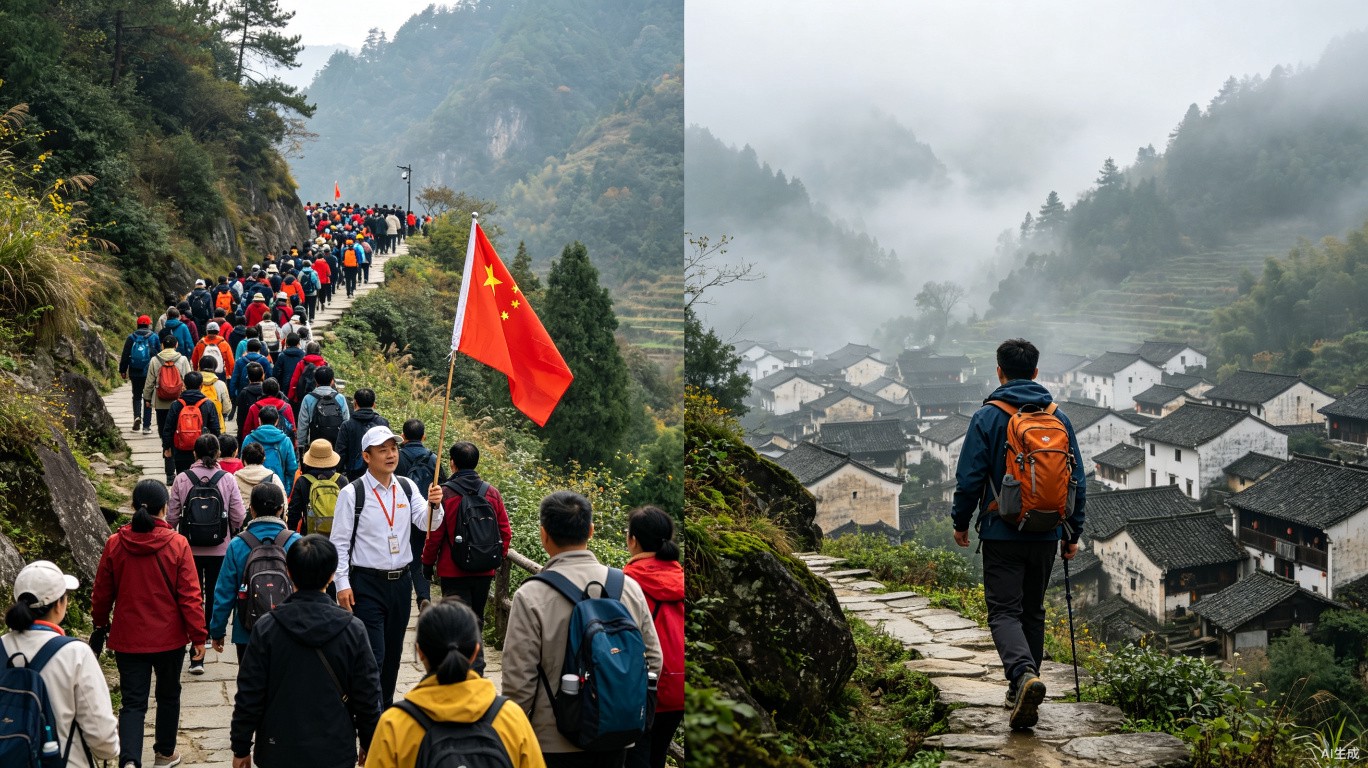
China Group Tours vs Independent Travel Which is Better
Should you join a guided tour or travel independently in China? Honest comparison of cost, flexibility, and experience.
7 min read
China Itinerary Planning: 7-Day 14-Day and 21-Day Routes: The Complete 2026 G...
Not sure how many days to spend in China? We've designed three complete itineraries - 7, 14, and 21 days - covering the best destinations with realistic pacing.
9 min read