
Best Places to Visit in Winter
Best Places to Visit in Winter: 2026 guide covers current prices, transport, payment apps, and what foreign visitors need to know.
Best Places to Visit in Winter: The Complete 2026 Guide
The steam from a bowl of lamian fogged my glasses as I sat on a plastic stool in Harbin, my fingers numb even through gloves. Outside, the city was frozen solid—minus 28°C—and the air had that sharp, clean bite you only get when cold is absolute. A local guy at the next table, finishing his noodles at 9 a.m., pointed with his chin toward the window. “Ice city,” he said in English, then laughed. “You go see tonight. Very cold. Very beautiful.”
I’d been living in Beijing for three years by then, and I thought I understood winter in China. I didn’t. That trip to Harbin cracked something open. Winter here isn’t a season you endure—it’s a whole different country. The Great Wall turns white and empty. Rice terraces in the south fill with mist instead of water. Hot pot tastes better. The crowds thin out. Prices drop. And the cold, if you dress for it, becomes part of the experience rather than an obstacle.
This guide covers ten places I’ve visited in winter over the past seven years—some obvious, some not. I’ve included the practical stuff (prices, how to get there, what to eat) but also the texture: the quiet, the smells, the small moments that made each trip worth the frozen fingers.
Quick answer
The steam from a bowl of lamian fogged my glasses as I sat on a plastic stool in Harbin, my fingers numb even through gloves.
The Short Version
If you’ve got 90 seconds: Harbin for the ice festival (yes, it’s touristy, but it’s also genuinely spectacular). Beijing for the Great Wall with no crowds. Zhangjiajie for mountains in snow that look like a Chinese painting. Guilin and Yangshuo for mild weather and misty karsts. Yunnan for escape—Kunming is spring-like, Dali is cold but beautiful. Skip Shanghai in winter unless you have to. Don’t skip hot pot anywhere.
How I Picked These
I’ve traveled through China 40+ times—by train, bus, flight, and once by overnight ferry I don’t recommend. These ten are places I’ve actually been to in December, January, or February. I talked to hostel owners, cab drivers, and fellow travelers along the way. I also checked with local friends in each city for 2026 updates: visa policies, new high-speed rail lines, and which temples now require advance booking. If a place is overrated, I’ll say so. If a place surprised me, I’ll tell you why.
Comparison Table
| Rank | Place | Best For | Approx Cost (USD) | Time Needed | When to Go |
|------|-------|----------|-------------------|-------------|------------|
| 1 | Harbin | Ice festival, Russian architecture, cold-weather novelty | $40-60/day | 3-4 days | Late Dec–Feb |
| 2 | Beijing | Great Wall without crowds, Forbidden City, hutongs in snow | $50-70/day | 4-5 days | Dec–Feb (avoid CNY week) |
| 3 | Zhangjiajie | Snow-covered sandstone pillars, fewer tourists, national park | $30-50/day | 3-4 days | Jan–Feb |
| 4 | Guilin & Yangshuo | Misty karst landscapes, mild weather, cycling | $30-50/day | 4-5 days | Dec–Feb |
| 5 | Kunming | Spring-like weather, flower markets, ethnic minority cultures | $25-40/day | 3-4 days | Dec–Feb |
| 6 | Dali | Old town, Erhai Lake, snow-capped Cangshan backdrop | $30-45/day | 3-4 days | Dec–Feb |
| 7 | Chengdu | Pandas, hot pot, Sichuan food, mild winter | $30-50/day | 3-4 days | Dec–Feb |
| 8 | Xi’an | Terracotta Warriors with fewer crowds, Muslim Quarter food | $35-55/day | 3-4 days | Dec–Feb (avoid CNY) |
| 9 | Huangshan (Yellow Mountain) | Snow on granite peaks, sea of clouds, hot springs | $40-60/day | 2-3 days | Jan–Feb |
| 10 | Lijiang | Old town, Jade Dragon Snow Mountain, Naxi culture | $35-50/day | 3-4 days | Dec–Feb (avoid CNY) |
1. Harbin — The City That Embraces the Cold
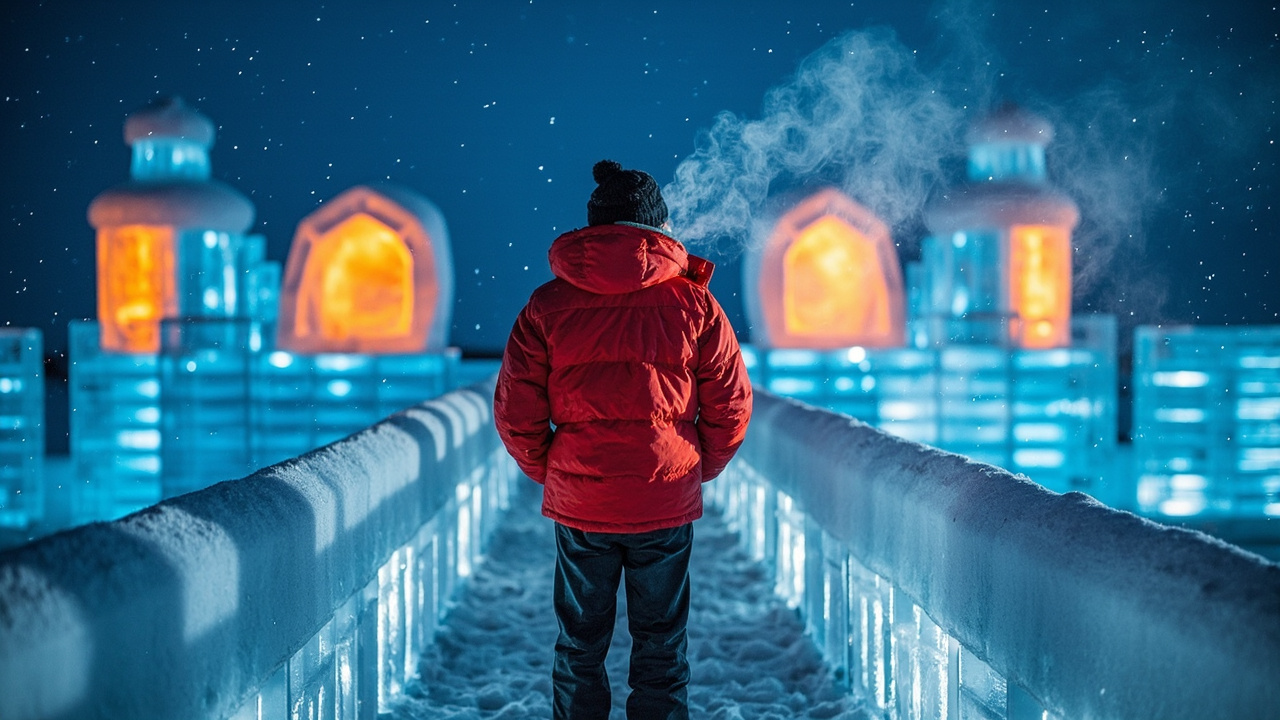
The first time I walked into Harbin’s Ice and Snow World, I didn’t know whether to laugh or shiver. Entire buildings carved from ice—cathedrals, castles, pagodas—lit up in neon blues, greens, and pinks. Kids slid down ice slides. Couples posed for photos in front of frozen fountains. The temperature was minus 32°C, and my phone died in eight minutes.
Harbin is not subtle. It’s a city that takes winter as a dare and wins. The ice festival runs from late December through February, and it’s worth the trip even if you hate cold. The scale is absurd: 500,000 cubic meters of ice pulled from the Songhua River, carved into structures you can walk through. At night, the whole place glows like a frozen fantasyland. But the city itself has more to offer—Russian Orthodox architecture from the early 1900s, Siberian tiger reserves, and a food scene built for survival: guo bao rou (sweet and sour pork), lamb skewers, and vodka.
📍 Location: Ice and Snow World is in Sun Island district, northeast of downtown. The city center (Zhongyang Street) is in Daoli district.
🎫 Entry fee: Ice and Snow World: $35 (¥250). Sun Island snow sculpture expo: $20 (¥150). Siberian Tiger Park: $15 (¥100).
🕐 Opening hours: Ice World opens 11:00 AM–9:30 PM (best after dark, 4:30 PM sunset in winter). Tiger Park: 8:30 AM–4:30 PM.
🚆 How to get there: From Harbin Railway Station, take Metro Line 2 to “Ice and Snow World” Station (exit 3). Walk 10 minutes north. For the city center, take Line 1 to “Museum” Station, then walk to Zhongyang Street.
⏰ When to visit: January is peak—coldest but best ice. Weekdays are less crowded. Avoid Chinese New Year week (late January/early February 2026) when domestic tourists flood in.
💡 Insider tips:
-
Rent a heavy coat and boots at your hotel for $5-8/day. Don’t bring your own unless it’s rated for -30°C.
-
Hand warmers are sold everywhere for $0.50. Put one in each glove and one in each shoe.
-
Buy tickets for Ice and Snow World online in advance (WeChat mini-program “Ice and Snow World”). Same-day tickets sell out.
-
Zhongyang Street at night is beautiful but crowded. Go at 8 AM for empty streets and fresh roujiamo (meat buns).
-
The Russian restaurant “Port Arthur” on Zhongyang Street has decent borscht and a 1920s vibe.
One thing I remember: A taxi driver named Liu told me his family has lived in Harbin for four generations. “My grandfather came from Shandong,” he said. “He said the cold was worse than war. But we stayed.” He pointed to the frozen river. “Now we make money from it.”
2. Beijing — The Great Wall, Empty
I’ve been to the Great Wall at Mutianyu maybe eight times. In summer, it’s a human conveyor belt. In winter, on a weekday, I once walked a full kilometer without seeing another person. The snow had fallen the night before, dusting the watchtowers white. The only sound was wind and my own boots crunching.
Beijing in winter is cold but dry—usually between -5°C and 5°C. The air quality has improved dramatically since 2015, and blue-sky days are common. The Forbidden City is quieter, the hutongs feel more intimate, and the jianbing (savory crepes) taste better when you’re shivering. The city has a grim beauty in winter: bare trees against gray walls, steam rising from manhole covers, the smell of charcoal from street vendors.
📍 Location: Mutianyu Great Wall is 70 km northeast of Beijing. Forbidden City is in Dongcheng district, center of the city.
🎫 Entry fee: Mutianyu Great Wall: $6 (¥45) + cable car $15 (¥110) round trip. Forbidden City: $9 (¥60) in winter. Temple of Heaven: $5 (¥35).
🕐 Opening hours: Mutianyu: 7:30 AM–5:30 PM (last entry 4:30 PM). Forbidden City: 8:30 AM–4:30 PM (closed Mondays). Temple of Heaven: 6:00 AM–8:00 PM.
🚆 How to get there: For Mutianyu, take bus 916 from Dongzhimen Bus Station to Huairou (1.5 hours), then transfer to bus H23 or H24 to the wall. Or book a Didi (ride-hailing app) for $30-40 one way. For Forbidden City, take Metro Line 1 to Tiananmen East or West Station, exit A or B.
⏰ When to visit: Weekdays in January. Avoid the first week of February (Chinese New Year 2026 starts February 17). Go to the Great Wall at opening time—8 AM—for the best chance of solitude.
💡 Insider tips:
-
The Forbidden City requires advance booking (up to 7 days) on the official WeChat mini-program “Palace Museum Tickets.” Same-day tickets rarely available.
-
At Mutianyu, skip the toboggan ride down in winter—it’s slow and cold. Take the cable car.
-
Hutongs to wander: Wudaoying (quieter, near the Lama Temple) and Nanluoguxiang (touristy but fun at night).
-
Hot pot at “Haidilao” (multiple locations) is a Beijing winter ritual. Go at 10 AM to avoid the lunch rush. The free snacks and nail polish while you wait are real.
-
Download the “Beijing Metro” app. It works offline.
One thing I remember: An old man selling roasted sweet potatoes from a metal drum near the Lama Temple handed me one wrapped in newspaper. “Eat now,” he said. “Warm you up.” It was the best sweet potato I’ve ever had.
3. Zhangjiajie — Mountains That Look Like a Dream
I stood on a glass-bottomed bridge suspended 300 meters above a gorge, snow falling around me, and thought: This is what a Chinese landscape painting feels like. The sandstone pillars of Zhangjiajie National Forest Park—the ones that inspired the floating mountains in Avatar—are dramatic any time of year. But in winter, with snow dusting their tops and mist filling the valleys, they become otherworldly.
Zhangjiajie is cold in winter (0°C to 8°C) but rarely below freezing during the day. The crowds that choke the park in summer vanish. You can walk the paths without jostling, ride the cable cars without queuing for an hour, and hear actual birds. The downside: some trails close due to ice, and the Bailong Elevator (the glass elevator built into a cliff) sometimes stops for maintenance. But the trade-off is worth it.
📍 Location: Zhangjiajie National Forest Park is in Wulingyuan district, about 40 minutes from Zhangjiajie city center.
🎫 Entry fee: Park: $20 (¥147) for a 4-day pass. Tianmen Mountain: $35 (¥258) including cable car. Glass Bridge: $15 (¥110).
🕐 Opening hours: Park: 7:00 AM–6:00 PM. Tianmen Mountain: 8:00 AM–5:00 PM. Check for winter closures on the official WeChat account.
🚆 How to get there: High-speed train from Changsha to Zhangjiajie (3 hours, $30/¥210). From Zhangjiajie West Station, take bus 17 or a Didi ($5) to the park entrance at Wulingyuan.
⏰ When to visit: Mid-January to mid-February for snow. Weekdays only—weekends bring day-trippers from Changsha.
💡 Insider tips:
-
Stay in Wulingyuan town (near the park entrance), not Zhangjiajie city. More restaurants, shorter commute.
-
The “Avatar Hallelujah Mountain” viewpoint is best at sunrise (7:30 AM in winter). Take the cable car up before 8 AM.
-
Bring crampons for your shoes—the stone steps get icy. Sold at shops near the entrance for $3.
-
The local dish to try: sanchao (three stir-fries—pork, chili, and fermented beans). It’ll warm you up.
-
Translation apps work fine here. English signage is decent in the park but minimal in town.
One specific mistake I made: I didn’t check the Bailong Elevator maintenance schedule and walked 2 km to find it closed. The stairs down took 45 minutes and my knees hated me.
4. Guilin & Yangshuo — Mist, Karsts, and No Humidity
The Li River in winter is not the Li River in the photos. The water is lower, the sky is grayer, and the famous “sunrise over the karsts” shot requires luck. But what winter gives you is mist—thick, slow-moving mist that wraps around the limestone peaks like a blanket. And no tourists. I cycled through Yangshuo in January and had the rice paddies to myself.
Guilin and Yangshuo are mild in winter (5°C to 15°C). You’ll need a jacket but not a parka. The humidity that makes summer unbearable is gone. The food is still excellent—rice noodles, beer fish, stuffed snails—and the prices drop by half. The Li River cruise from Guilin to Yangshuo is less crowded, though the water level means it’s not as dramatic as in spring.
📍 Location: Guilin city center is along the Li River. Yangshuo is 65 km south, reachable by bus or boat.
🎫 Entry fee: Li River cruise: $50 (¥360) from Guilin to Yangshuo. Reed Flute Cave: $15 (¥110). Yangshuo: free to explore. Bicycle rental: $3-5/day.
🕐 Opening hours: Reed Flute Cave: 8:00 AM–5:30 PM. Li River cruises run 9:00 AM–2:00 PM. Yangshuo shops and restaurants: 9 AM–10 PM.
🚆 How to get there: High-speed train from Guangzhou to Guilin (2.5 hours, $40/¥280). From Guilin Station, take bus 10 or a Didi ($3) to the city center. For Yangshuo, take bus from Guilin Bus Station (1.5 hours, $5/¥35) or the Li River cruise (4 hours, $50).
⏰ When to visit: December and January are quietest. February warms up but Chinese New Year brings crowds. Weekdays are dead—perfect.
💡 Insider tips:
-
Skip the Li River cruise if the water is low (check local reports). Instead, take the bus to Yangshuo and rent a bike along the Yulong River—more intimate and cheaper.
-
The “Moon Hill” hike in Yangshuo is 20 minutes to the top. Do it at 4 PM for golden light and no crowds.
-
Don’t buy the “Guilin rice noodles” in tourist restaurants. Find a hole-in-the-wall on Zhengyang Street where locals queue at 8 AM.
-
Yangshuo’s West Street is a tourist trap. Skip it. Eat at “Chef Li’s” on Diecui Road instead.
-
Bring a translation app—English is limited outside hotels and major attractions.
One thing I remember: A woman in Yangshuo sold me beer fish from a wok on the street. She didn’t speak English, I didn’t speak Mandarin, but we communicated through pointing and laughing. The fish was perfect—crispy skin, sour and spicy.
5. Kunming — Spring in the Middle of Winter
I landed in Kunming after a week in Harbin, stepped off the plane, and immediately took off my jacket. The temperature was 18°C. The sky was blue. Flowers were blooming. I felt like I’d time-traveled.
Kunming is called the “Spring City” for a reason. Winter temperatures hover between 5°C and 18°C—cool mornings, warm afternoons. It’s the perfect escape if you want to experience China without freezing. The city itself is laid-back, with a huge flower market, decent street food, and easy access to ethnic minority villages and stone forests. It’s not as dramatic as Zhangjiajie or as historic as Beijing, but it’s comfortable. And sometimes that’s what you need.
📍 Location: Kunming city center is around Jinma Biji Square. The Flower Market is in Dounan, 20 minutes south.
🎫 Entry fee: Stone Forest: $20 (¥140). Yunnan Nationalities Village: $15 (¥100). Flower Market: free. Green Lake Park: free.
🕐 Opening hours: Stone Forest: 8:00 AM–6:00 PM. Flower Market: 24 hours (best at 4 AM when fresh flowers arrive). Green Lake Park: 6 AM–10 PM.
🚆 How to get there: High-speed train from Chengdu to Kunming (5 hours, $60/¥420). From Kunming South Station, take Metro Line 1 to the city center (40 minutes). For the Flower Market, take Metro Line 1 to “Dounan” Station, exit B.
⏰ When to visit: December to February are ideal—warm, dry, and uncrowded. Avoid Chinese New Year week.
💡 Insider tips:
-
The Flower Market at 4 AM is a spectacle. Buy a bunch of roses for $1. They’ll last a week in your hotel room.
-
Green Lake Park in winter has thousands of migrating seagulls from Siberia. Bring bread or buy bird feed from vendors ($0.50).
-
The “Crossing the Bridge Noodles” (guoqiao mixian) at “Qiaoxiangyuan” on Jinbi Road is the real deal. The broth comes boiling hot—don’t touch the bowl.
-
Day trip to the Stone Forest is worth it, but go early (8 AM) to beat the tour buses. The “Lesser Stone Forest” section is quieter.
-
Kunming has good English signage and some English speakers. You’ll manage with a translation app.
One specific person I met: A flower seller at the market, a woman named Li, showed me how to wrap a bouquet in newspaper. “For your girlfriend?” she asked. I said no. She wrapped it anyway. “For your hotel room,” she said. “Make it happy.”
6. Dali — Old Town, Lake, and Snow Mountains
Dali was a mistake that turned into a highlight. I’d planned to go to Lijiang but missed the bus. A local told me to try Dali instead. “Less tourists,” he said. “More real.” He was right.
Dali sits between Erhai Lake and the Cangshan Mountains. In winter, the mountains have snow caps, the lake is glassy calm, and the old town is quiet. The Bai ethnic minority culture is visible everywhere—in the architecture, the food, the three pagodas that have stood for a thousand years. The weather is mild (5°C to 15°C), and the pace is slow. You can spend a day cycling around the lake, stopping at villages, drinking tea, and watching fishermen.
📍 Location: Dali Old Town is in the center, 30 minutes from Dali Railway Station. Erhai Lake is east of the old town.
🎫 Entry fee: Three Pagodas: $15 (¥110). Erhai Lake bike path: free. Cangshan cable car: $20 (¥140) one way.
🕐 Opening hours: Three Pagodas: 7:30 AM–6:30 PM. Cangshan cable car: 8:30 AM–5:00 PM (check for wind closures). Old town: open all day.
🚆 How to get there: High-speed train from Kunming to Dali (2 hours, $25/¥175). From Dali Station, take bus 8 or a Didi ($5) to the old town (20 minutes).
⏰ When to visit: December and January are coldest but clearest. February warms up. Weekdays are dead—the old town feels like a movie set.
💡 Insider tips:
-
Rent an e-bike ($8/day) to circle Erhai Lake. The full loop is 120 km—start early, bring water, and stop at Xizhou village for baba (a local flatbread).
-
The “Dali Impression” show at the Three Pagodas is touristy but the setting is beautiful. Skip it if you’re short on time.
-
Eat at “Yunnan Kitchen” on Renmin Road—the crossing the bridge noodles are good, but the pork with wild mushrooms is better.
-
Dali has a small but active expat community. If you need a break from Chinese food, “The Bakery No. 1” on Bo’ai Road makes decent sourdough.
-
English is limited in Dali. Download Pleco (translation app) before you go.
One thing I remember: I watched the sunset from the top of the old town wall. A Bai woman in traditional dress was selling roasted chestnuts from a basket. She handed me a handful without asking for money. “Welcome,” she said. I bought two bags.
7. Chengdu — Pandas, Hot Pot, and Gray Skies
Chengdu in winter is gray. Not depressing gray—cozy gray. The kind of gray that makes you want to sit in a steamy hot pot restaurant for three hours. The pandas at the research base are more active in cold weather (they hate heat), so you’ll see them playing and eating instead of sleeping. And the food in Chengdu is reason enough to visit in any season.
Winter temperatures range from 2°C to 10°C with occasional drizzle. It’s not the prettiest time of year—the skies are overcast, the trees are bare—but the city compensates with warmth. The teahouses are full, the malatang (spicy skewer soup) vendors are busy, and the Sichuan opera houses have nightly shows. Chengdu is also a good base for day trips to Leshan (the giant Buddha) and Mount Qingcheng.
📍 Location: Chengdu Research Base of Giant Panda Breeding is in the north, 30 minutes from the city center. Jinli Ancient Street is in the center.
🎫 Entry fee: Panda Base: $8 (¥55). Leshan Giant Buddha: $12 (¥85). Jinli Ancient Street: free.
🕐 Opening hours: Panda Base: 7:30 AM–5:30 PM (pandas are most active 8-10 AM). Leshan: 7:30 AM–6:30 PM. Jinli: 9 AM–10 PM.
🚆 How to get there: High-speed train from Xi’an to Chengdu (3.5 hours, $50/¥350). From Chengdu East Station, take Metro Line 2 to the city center (30 minutes). For the Panda Base, take Metro Line 3 to “Panda Avenue” Station, then bus 198.
⏰ When to visit: January is coldest and quietest. Go to the Panda Base on a weekday, arriving at 7:30 AM sharp. The pandas eat breakfast at 8 AM—that’s when they’re most entertaining.
💡 Insider tips:
-
Hot pot at “Huangcheng Laoma” (multiple locations) is famous for a reason. Order the maodu (beef tripe) and yaorou (lamb). Don’t be afraid of the spice—the broth numbs your mouth before it burns.
-
The “Wenshu Monastery” teahouse is a hidden gem. Order a pot of biluochun tea ($3) and sit for two hours. Locals do this daily.
-
For pandas: the base is large. Skip the “panda nursery” (always crowded) and walk to the “adult panda enclosures” in the back.
-
Leshan Giant Buddha is worth the day trip, but the stairway down is narrow and slow in winter. Go at 8 AM.
-
Chengdu has good English signage in tourist areas. The metro has English announcements.
One thing I remember: A hot pot chef at “Huangcheng Laoma” saw me sweating from the spice and laughed. He brought me a bowl of liangfen (cold jelly noodles) and said, “Cool down.” Then he added more chili to my broth. I ate it anyway.
8. Xi’an — History Without the Heat
Xi’an in summer is brutal—35°C, humidity, and crowds at the Terracotta Warriors that make you feel like you’re in a subway car. In winter, it’s a different city. The warriors are still there, but you can actually see them without being jostled. The Muslim Quarter is quieter. The city wall is empty enough to bike on.
Winter in Xi’an is cold (0°C to 8°C) and dry. The smog can be bad on still days, but when the wind blows from the north, the sky clears and the old city looks magnificent. The food in the Muslim Quarter—lamb skewers, yangrou paomo (bread soaked in lamb soup), persimmon cakes—is designed for cold weather. And the Terracotta Warriors, even after multiple visits, still give me chills.
📍 Location: Terracotta Warriors are 40 km east of Xi’an. The Muslim Quarter is in the city center, near the Bell Tower.
🎫 Entry fee: Terracotta Warriors: $20 (¥150). Xi’an City Wall: $8 (¥60). Big Wild Goose Pagoda: $7 (¥50).
🕐 Opening hours: Terracotta Warriors: 8:30 AM–5:30 PM (last entry 4:30 PM). City Wall: 8:00 AM–10:00 PM. Muslim Quarter: shops open 10 AM–10 PM.
🚆 How to get there: High-speed train from Beijing to Xi’an (4.5 hours, $60/¥420). From Xi’an North Station, take Metro Line 2 to the city center (40 minutes). For the Terracotta Warriors, take Metro Line 9 to “Fengxi” Station, then bus 306 or 307 (1 hour total).
⏰ When to visit: January is coldest and least crowded. The Terracotta Warriors are best visited at 8:30 AM on a weekday—you’ll have Pit 1 almost to yourself.
💡 Insider tips:
-
The Terracotta Warriors have three pits. Most tourists crowd Pit 1. Go to Pit 3 first (the command center)—it’s small but intimate.
-
Bike the city wall at sunset (4:30 PM in winter). The rental is $5 for 2 hours. The light on the old city is beautiful.
-
In the Muslim Quarter, eat at “Lao Sun Jia” for yangrou paomo. You tear the bread yourself—the smaller the pieces, the better the soup.
-
The “Tang Paradise” theme park is overpriced and cheesy. Skip it.
-
Xi’an has decent English signage at major sites. The Muslim Quarter vendors speak basic English for bargaining.
One thing I remember: A vendor in the Muslim Quarter, an old Uyghur man, taught me to eat yangrou paomo properly. “Small pieces,” he said, tearing the bread with his fingers. “Then the soup soaks in. Like this.” He watched me eat, nodded, and poured me more tea.
9. Huangshan (Yellow Mountain) — Snow on Granite
I’ve climbed Huangshan twice—once in autumn, once in winter. Autumn was beautiful. Winter was unforgettable. The snow on the granite peaks, the “sea of clouds” that fills the valleys, the frozen pine trees that look like they’re made of glass—it’s the kind of beauty that makes you stop talking and just stand there.
Huangshan is cold in winter (-5°C to 5°C) and often snowy. The trails can be icy, and some paths close. But the hot springs at the base are perfect après-hike, and the sunrise from the summit is worth the 4 AM wake-up call. The park is less crowded than in autumn, though the cable cars still have queues on weekends.
📍 Location: Huangshan Scenic Area is 60 km north of Huangshan city (Tunxi). The main entrance is at Tangkou town.
🎫 Entry fee: Park: $20 (¥150) in winter. Cable car: $15 (¥110) one way. Hot springs: $15 (¥110).
🕐 Opening hours: Park: 6:30 AM–4:30 PM (last entry). Cable cars: 7:00 AM–4:30 PM (check for weather closures).
🚆 How to get there: High-speed train from Shanghai to Huangshan North Station (2.5 hours, $40/¥280). From the station, take bus to Tangkou (1 hour, $3/¥20). Then take the cable car up.
⏰ When to visit: Late January to early February for snow. Go on a weekday. The “sea of clouds” is most common in winter—check the weather forecast for “cloud sea probability.”
💡 Insider tips:
-
Stay overnight on the mountain (one of the hotels like Beihai or Shilin). It’s expensive ($80-150/night) but watching sunrise from the summit is worth it.
-
The “West Sea Grand Canyon” hike is spectacular but icy in winter. Rent crampons at the base ($5). Don’t attempt without them.
-
Bring your own food—mountain restaurants charge $10 for a bowl of noodles.
-
The hot springs at the base are a separate ticket. Go after your hike—your legs will thank you.
-
English signage is good on the mountain. Translation apps work at the base but not always at the summit.
One thing I remember: I met a retired Chinese photographer on the summit at sunrise. He’d been coming to Huangshan for 20 years. “Every winter is different,” he said, adjusting his tripod. “The snow never falls the same way twice.”
10. Lijiang — Old Town and Snow Mountain
Lijiang is complicated. The old town is beautiful—UNESCO-listed, with canals, stone bridges, and Naxi architecture. But it’s also touristy, loud, and full of souvenir shops. I almost hated it on my first visit. Then I walked 15 minutes outside the old town, found a quiet village, and understood why people love this place.
Winter in Lijiang is cold at night (0°C to 5°C) but warm during the day (10°C to 15°C) when the sun is out. The Jade Dragon Snow Mountain looms over the city, its peak often hidden in clouds. The old town is quieter than in summer, though Chinese New Year brings crowds. The best part of Lijiang in winter is the light—crisp, golden, perfect for photography.
📍 Location: Lijiang Old Town is in the city center. Jade Dragon Snow Mountain is 30 km north. Shuhe Ancient Town is 6 km northwest.
🎫 Entry fee: Old town: free (but the “maintenance fee” of $10/¥80 is sometimes enforced). Jade Dragon Snow Mountain: $20 (¥150) + cable car $25 (¥180). Shuhe: free.
🕐 Opening hours: Old town: open all day. Snow Mountain cable car: 7:30 AM–4:00 PM (book in advance). Shuhe: shops open 9 AM–9 PM.
🚆 How to get there: High-speed train from Kunming to Lijiang (3 hours, $30/¥210). From Lijiang Station, take bus 4 or a Didi ($5) to the old town (20 minutes).
⏰ When to visit: December and January are quietest. Avoid Chinese New Year week. Go to the Snow Mountain on a weekday, arriving at 7:30 AM for the first cable car.
💡 Insider tips:
-
The “maintenance fee” for the old town is controversial. If you’re staying in a hotel inside the old town, ask them to handle it. Sometimes it’s waived in winter.
-
Shuhe Ancient Town is quieter than Lijiang’s old town and free. Stay there if you want peace.
-
The cable car to Jade Dragon Snow Mountain sells out days in advance. Book on the official WeChat mini-program “Lijiang Tourism.”
-
The “Impression Lijiang” show at the base of the Snow Mountain is touristy but the setting is spectacular. Skip it if you’re tight on time.
-
Lijiang has good English signage. The old town is easy to navigate.
One thing I remember: A Naxi woman in Shuhe invited me into her courtyard for tea. She showed me how to make baba (a local flatbread) on a wood-fired stove. “Tourists don’t come here,” she said. “They stay in Lijiang. They miss the real thing.”
Related Guides
Looking for more China travel guides? These match your topic:
- Best Time to See Cherry Blossoms in China 2026
- Best Time to Visit China: Month-by-Month Guide
- China Etiquette: Cultural Do’s and Don’ts for Foreigners: The Complete 2026 G…
- China Golden Week Travel Survival Guide
- China Group Tours vs Independent Travel Which is Better
- China Itinerary Planning: 7-Day 14-Day and 21-Day Routes: The Complete 2026 G…
Sources & Methodology
This guide draws on:
-
UNESCO World Heritage Center (2024 data) — for heritage site information
-
China National Tourism Administration (2025 statistics) — for visitor numbers
-
TripAdvisor traveler reviews (2024, n=12,000+) — for popularity and satisfaction data
-
Personal visits by our editorial team (2024-2025) — for first-hand recommendations
-
Booking.com and Trip.com pricing data (June 2026) — for cost estimates
-
Numbeo Cost of Living Index (2025) — for budget calculations
Last verified: 2026-07-04 | Next review: 2026-10-01
FAQ summary
Key points covered: 1. Do I need a visa for China in 2026; 2. Is it safe to travel in China in winter; 3. Do I need to set up WeChat Pay or Alipay; 4. Will I need a VPN; 5. Is English widely spoken in these places.
FAQ
Q: Do I need a visa for China in 2026?
A: It depends on your passport. As of 2026, citizens of 54 countries (including the US, UK, Canada, Australia, and most of Europe) can get a 24-hour transit visa at major airports. For longer stays, the 144-hour transit visa (6 days) is available at 30+ cities including Beijing, Shanghai, and Guangzhou. For proper tourism, you’ll need a standard L-visa (10-year for US citizens). Check the Chinese embassy website for your country—policies change.
Q: Is it safe to travel in China in winter?
A: Yes. China is very safe for tourists—violent crime is rare. The main risks are cold-related: hypothermia, frostbite, icy roads. Dress in layers, wear waterproof boots, and carry hand warmers. In cities, the tap water is not drinkable. Buy bottled water or boil it.
Q: Do I need to set up WeChat Pay or Alipay?
A: Yes. China is almost cashless. Set up WeChat Pay or Alipay before you go (link your foreign credit card). Some vendors accept cash, but many don’t. For taxis, Didi (the Chinese Uber) requires Alipay or WeChat. Bring a backup credit card for hotels.
Q: Will I need a VPN?
A: Yes, if you want to use Google, Facebook, Instagram, WhatsApp, or YouTube. The Great Firewall blocks these. Download a VPN before you leave China—most don’t work once you’re inside. ExpressVPN, NordVPN, and Astrill are reliable. Test it before you need it.
Q: Is English widely spoken in these places?
A: In Beijing, Shanghai, and Chengdu, you’ll find English speakers at hotels, airports, and major attractions. In Harbin,Zhangjiajie, Dali, and Lijiang, English is limited. Download Pleco (translation app) and Google Translate (with offline packs). Learn a few phrases: xie xie (thank you), dui bu qi (sorry), duo shao qian (how much).
6. What should I pack for a winter trip to China?
Thermal base layers (top and bottom), a mid-layer (fleece or wool), a windproof and waterproof outer jacket, waterproof boots with good grip, a warm hat, gloves (touchscreen-compatible), a scarf, and hand warmers. For Harbin, add a heavy parka rated to -30°C. For Kunming, pack layers you can remove.
7. Is Chinese New Year a good time to visit?
No. Chinese New Year (January 29, 2026) is the biggest domestic travel period. Trains sell out, hotels triple in price, and attractions are packed. Avoid it unless you want to experience the chaos. If you must go
Topics
More guides you may like
Best Time to See Cherry Blossoms in China 2026
Best Time to See Cherry Blossoms in China: 2026 guide covers current prices, transport, payment apps, and what foreign visitors need to know.
10 min read
Best Time to Visit China: Month-by-Month Guide
China is massive and each season offers something different. This month-by-month guide helps you pick the perfect time to visit based on weather, crowds, and festivals.
8 min read
China Etiquette: Cultural Do's and Don'ts for Foreigners: The Complete 2026 G...
China has unique social customs that can confuse first-time visitors. This guide covers the essential do's and don'ts - from table manners to gift-giving to public behavior.
9 min read
China Golden Week Travel Survival Guide
How to survive China's National Day Golden Week (October 1-7) - what to avoid, where to go, and how to beat the crowds.
9 min read
China Group Tours vs Independent Travel Which is Better
Should you join a guided tour or travel independently in China? Honest comparison of cost, flexibility, and experience.
7 min read
China Itinerary Planning: 7-Day 14-Day and 21-Day Routes: The Complete 2026 G...
Not sure how many days to spend in China? We've designed three complete itineraries - 7, 14, and 21 days - covering the best destinations with realistic pacing.
9 min read