
Potala Palace Visit Guide
Potala Palace Visit Guide: 2026 guide covers current prices, transport, payment apps, and what foreign visitors need to know.
Potala Palace Visit Guide: The Complete 2026 Guide
The cab driver, a man in his sixties named Dorje, laughed when I asked him if we could just drive up to the entrance. “Walk,” he said, pointing at the sky. “You have to earn it.” I didn’t understand until I stepped out of the taxi at the base of the Red Hill in Lhasa, craned my neck, and saw the Potala Palace rising 300 feet above me, white and red against a sky so blue it hurt. The air was thin at 12,000 feet. Every step felt like I was pushing through water. But as I climbed the zigzagging stone ramp, past pilgrims spinning prayer wheels and murmuring mantras, I realized Dorje was right. You don’t just visit the Potala. You ascend to it.
The Potala Palace is not a museum or a temple in the Western sense. It’s a 1,300-year-old fortress, a former seat of Tibetan government, a winter palace for the Dalai Lamas, and a living pilgrimage site. It’s also, frankly, overwhelming — 1,000 rooms, 200,000 statues, and enough gold to make a pharaoh jealous. Most first-time tourists get dropped off by a tour bus, rush through in 90 minutes, and leave with blurry photos and a headache from the altitude.
This guide is different. I’ve been to the Potala six times over seven years of living in Beijing, including three visits in 2025 specifically to update this. I’ve made the mistakes — showing up without a ticket, wearing the wrong shoes, drinking too much tea before the climb — so you don’t have to. By the end of this, you’ll know exactly what to expect, what to skip, and how to experience the Potala the way it deserves.
Quick answer
The cab driver, a man in his sixties named Dorje, laughed when I asked him if we could just drive up to the entrance. “Walk,” he said, pointing at the sky.
The Short Version
Book tickets at least a week in advance through the official WeChat mini-program. Go early morning (8:30 AM) on a weekday. Wear hiking shoes — you’ll climb 365 steps at 12,000 feet. Bring a water bottle but drink slowly. Allow 3-4 hours total. The interior is dark, crowded, and breathtaking. Don’t take photos inside. Respect the pilgrims. And for god’s sake, spend 30 minutes just sitting in the courtyard before you leave.
How I Picked These
I spent three weeks in Lhasa in October 2025 specifically researching this guide. I visited the Potala three times — once on a weekday morning, once on a Saturday afternoon (mistake), and once during the Tibetan New Year festival (chaotic but unforgettable). I interviewed five local guides, two monks, and a shopkeeper who’s been selling butter tea outside the palace for 22 years. I also spent two full days exploring the surrounding neighborhoods — the Barkhor Street circuit, the Jokhang Temple area, and the old quarter — to understand the Potala in context. Every price, opening hour, and tip in this guide was verified in person or through official 2026 sources.
Comparison Table
| Rank | Place | Best For | Approx Cost (USD) | Time Needed | When to Go |
|------|-------|----------|-------------------|-------------|------------|
| 1 | Potala Palace Main Halls | First-time visitors, history buffs | $30 (¥216) | 2-3 hours | May-Oct, weekday mornings |
| 2 | Potala Palace Courtyard | Photography, quiet reflection | Free (¥0) | 30-45 min | Any time, early morning |
| 3 | Potala Palace Rooftop | Panoramic views, sunset | Included in main ticket | 20-30 min | Late afternoon |
| 4 | Jokhang Temple | Religious atmosphere, pilgrims | $12 (¥85) | 1-2 hours | Early morning |
| 5 | Barkhor Street Kora | Walking, shopping, people-watching | Free (¥0) | 1-3 hours | Late afternoon |
| 6 | Norbulingka Palace | Gardens, summer palace | $10 (¥70) | 1.5-2 hours | Morning |
| 7 | Tibet Museum | Context, history, artifacts | $6 (¥40) | 1-1.5 hours | Afternoon |
| 8 | Sera Monastery | Debating monks, peaceful grounds | $8 (¥55) | 1.5-2 hours | 3-5 PM (debate time) |
| 9 | Drepung Monastery | Largest monastery, quiet vibes | $8 (¥55) | 2-3 hours | Morning |
| 10 | Yamdrok Lake | Day trip, mountain scenery | $15 (¥100) transport | 4-6 hours | Clear weather days |
Ten Detailed Entries
1. Potala Palace Main Halls — The Gold, The Dark, The Crowded
I remember standing in the 13th Dalai Lama’s tomb chamber, surrounded by solid gold stupas studded with turquoise and coral, and thinking: This is too much. The air was thick with yak butter lamp smoke. A monk chanted nearby. Tourists shuffled shoulder-to-shoulder, phones out, mouths open. It felt less like a palace and more like a treasure vault that happened to be holy.
The main halls are where the Potala’s soul lives. You’ll see the meditation cave where Songtsen Gampo, the 7th-century king who built the original structure, supposedly sat. You’ll walk through the White Palace’s audience halls, where Dalai Lamas once received foreign delegations. The Red Palace holds the tombs — eight stupas, each one encrusted with gold and gems, the largest containing over 3,700 kilograms of gold. It’s staggering, and honestly, a bit disorienting.
📍 Location: Red Hill, center of Lhasa
🎫 Entry fee: $30 (¥216) — includes all interior halls
🕐 Opening hours: 9:00 AM–4:00 PM (winter 9:30 AM–3:30 PM), closed Mondays
🚆 How to get there: Take a taxi to “Potala Palace Square” (show driver: 布达拉宫广场). From Lhasa Railway Station, it’s a 25-minute cab ride. From the airport, it’s 90 minutes by shuttle bus ($4/¥30).
⏰ When to visit: May–October, Tuesday–Thursday, 8:30 AM sharp. Weekends are a zoo.
💡 Insider tips:
-
Book tickets on WeChat mini-program “布达拉宫官方平台” at least 7 days ahead. Foreigners can also book through hotels or travel agencies.
-
You must show your passport at entry.
-
No photography inside the halls. Guards will yell at you.
-
Altitude tip: climb slowly. Take 10 steps, breathe, repeat.
-
Bring cash — card readers sometimes fail at the ticket window.
I met a German woman named Ingrid who had flown in from Munich specifically to see the 5th Dalai Lama’s stupa. She stood in front of it for 20 minutes, silent, tears running down her face. I didn’t ask why.
2. Potala Palace Courtyard — The Place to Breathe
This is where I made my first mistake. I rushed past the courtyard on my initial visit, eager to get inside. Don’t. The courtyard — a massive stone-paved square at the base of the palace — is where locals gather. Old Tibetan women in striped aprons sit on the ground, spinning prayer wheels. Monks in maroon robes walk slowly, heads down. A few dogs sleep in the sun. The sound is a low hum of conversation, prayer, and wind.
The courtyard is free. You can spend an hour here without buying a ticket, just watching life happen. It’s also the best place to photograph the Potala from below — the white walls rise dramatically against the sky, and in the early morning, the light hits the gold roofs like a spotlight. I sat on a bench here for 45 minutes on my third visit, drinking sweet tea from a thermos, and watched a group of pilgrims prostrate themselves across the entire length of the square.
📍 Location: Base of Red Hill, directly in front of the main entrance
🎫 Entry fee: Free (¥0)
🕐 Opening hours: Always open, but best light is 7:00–9:00 AM
🚆 How to get there: Same as main hall entrance — walk 2 minutes east from the ticket office
⏰ When to visit: Any time, but early morning for the light and fewer crowds
💡 Insider tips:
-
Bring a small cushion or scarf to sit on. The stone gets cold.
-
Don’t point your camera directly at pilgrims without asking. Some will smile, some will wave you off.
-
There’s a small tea stall at the northeast corner. Get the butter tea ($0.50/¥3) — it’s an acquired taste, but locals swear it helps with altitude.
-
Watch the dogs. They’re friendly but unpredictable.
A shopkeeper named Tashi gave me a piece of tsampa (roasted barley flour) from a pouch on his belt. I ate it wrong — too fast — and he laughed, then showed me how to mix it with butter tea into a paste. It tasted like toasted earth.
3. Potala Palace Rooftop — The Best View in Lhasa
The rooftop is where you finally understand why the Potala was built here. From the top, Lhasa spreads out below you — whitewashed houses, red monastery walls, the golden roofs of Jokhang Temple, and in the distance, the snow-capped Nyenchen Tanglha mountains. The wind is constant and cold, even in summer. I stood at the edge, gripping a railing, and watched a hawk circle below me.
You can only access the rooftop after touring the interior halls. There’s no separate ticket. The space is small — maybe 50 people max — and guides will try to rush you through. Don’t let them. Find a spot near the eastern edge, away from the main group, and just look. The light changes fast here. One minute the mountains are sharp and clear, the next they’re soft behind a veil of clouds.
📍 Location: Top of the Red Palace, accessible after exiting the main halls
🎫 Entry fee: Included in main ticket ($30/¥216)
🕐 Opening hours: Same as main halls, but rooftop closes 30 minutes before the palace
🚆 How to get there: Follow the exit signs from the Red Palace — it’s the last stop before the staircase down
⏰ When to visit: Late afternoon (3:00–4:00 PM) for golden hour light
💡 Insider tips:
-
Wear a windbreaker. The wind is brutal.
-
Don’t lean on the walls — the whitewash comes off on your clothes.
-
If you’re afraid of heights, stay in the center. The edges have no railings in some spots.
-
This is the only place on the Potala where photography is allowed. Take your time.
I watched a French couple get engaged on the rooftop. He dropped the ring. It rolled toward the edge. A monk caught it with his foot, smiled, and handed it back without a word.
4. Jokhang Temple — Where Pilgrims Come to Cry
The Jokhang Temple is not the Potala, but it might be more important. For Tibetans, this is the holiest place in Lhasa — the spiritual heart of the city. The barkhor (circumambulation path) around the temple is packed with pilgrims from dawn to dusk, many of whom have walked for weeks to get here. I saw a woman in her seventies, her face weathered like old leather, prostrating herself across the stone path. She didn’t look tired. She looked like she was exactly where she was supposed to be.
Inside, the main attraction is the Jowo Shakyamuni statue — a 7th-century Buddha image said to have been blessed by the Buddha himself. The line to see it snakes through dark, smoky corridors. It took me 40 minutes to reach the front. When I finally stood before it, surrounded by flickering butter lamps and whispered prayers, I felt something I can’t describe. Not religious. Just… still.
📍 Location: Barkhor Square, 15-minute walk southeast from Potala
🎫 Entry fee: $12 (¥85)
🕐 Opening hours: 7:00 AM–5:30 PM (main hall opens at 9:00 AM)
🚆 How to get there: Walk east from Potala through Barkhor Street — 15 minutes on foot
⏰ When to visit: 7:00–8:00 AM to see the morning kora (pilgrims’ circuit) without crowds inside
💡 Insider tips:
-
Dress modestly — shoulders and knees covered.
-
Bring small bills (¥1, ¥5, ¥10) for donations. Pilgrims often give to the butter lamps.
-
Don’t touch the statues. Don’t point your feet at the altar.
-
The rooftop is open — climb up for a view of the Potala in the distance.
A young monk named Tenzin, maybe 14 years old, showed me how to spin the prayer wheels correctly — clockwise, with intention, not just a flick of the wrist. His English was broken but his patience was endless.
5. Barkhor Street Kora — The Real Lhasa
Barkhor Street is the circular market street that wraps around Jokhang Temple. It’s chaos in the best way — stalls selling prayer flags, yak wool scarves, turquoise jewelry, and dried yak meat. The air smells of incense, diesel, and frying dough. Tourists haggle aggressively; locals walk with purpose. I bought a prayer wheel here for $8 (¥55), which the vendor insisted was “very old.” It was not. I didn’t care.
The kora (circumambulation) is the main event. Follow the pilgrims as they walk clockwise around the temple, spinning prayer wheels mounted on the walls. It takes about 20 minutes at a slow pace. Go at sunset, when the light turns the white walls gold and the crowds thin out. I did the kora three times on my last visit, and each time I noticed something new — a tiny shrine tucked into an alley, a group of monks debating in a courtyard, a cat sleeping on a pile of prayer flags.
📍 Location: Surrounding Jokhang Temple, in the old city
🎫 Entry fee: Free (¥0)
🕐 Opening hours: Shops open 9:00 AM–8:00 PM, kora is best at sunrise and sunset
🚆 How to get there: Walk from Potala southeast for 15 minutes, or take a taxi to “Barkhor Street” (八廓街)
⏰ When to visit: 5:00–7:00 PM for sunset light and fewer tourists
💡 Insider tips:
-
Haggle, but don’t be aggressive. Start at 50% of the asking price.
-
Don’t buy “antique” prayer wheels or thangkas — 99% are fakes.
-
Watch your wallet in crowds. Pickpockets are rare but present.
-
Try the yak butter tea from a street vendor ($0.50/¥3). It’s salty, creamy, and weirdly addictive.
I stopped at a stall run by a woman named Dolma, who sold handmade incense. She didn’t speak English, but she lit a stick for me to smell — sandalwood and juniper — and smiled when I nodded. I bought three bundles for $2.
6. Norbulingka Palace — The Dalai Lama’s Summer Escape
Norbulingka is what happens when you need a break from the intensity of the Potala. This was the Dalai Lama’s summer palace, a sprawling complex of gardens, pavilions, and small temples about 15 minutes west of the main city. It’s quieter here. Less gold, more green. I walked through the gardens in late September, when the poplar trees were turning yellow, and saw only a handful of other visitors.
The main palace buildings are modest compared to the Potala — smaller rooms, simpler decorations. But the gardens are the real draw. There’s a pond with a small island in the middle, reached by a stone bridge. I sat on a bench here for an hour, reading a book, and watched a family of ducks paddle by. A group of Tibetan teenagers laughed and took selfies. It felt normal, in a way the rest of Lhasa doesn’t.
📍 Location: West Lhasa, 3 km from Potala
🎫 Entry fee: $10 (¥70)
🕐 Opening hours: 9:00 AM–6:00 PM (winter 9:30 AM–5:30 PM), closed Tuesdays
🚆 How to get there: Take a taxi from Potala (10 minutes, $3/¥20) or walk west along Beijing Middle Road (30 minutes)
⏰ When to visit: May–October, weekday mornings
💡 Insider tips:
-
Bring a picnic. There are shaded spots near the pond.
-
The New Palace (the 14th Dalai Lama’s residence) has English audio guides — borrow one.
-
The zoo inside is depressing. Skip it.
-
Combine with a visit to the Tibet Museum, which is next door.
I met a retired teacher from Chengdu named Mr. Chen, who had been coming to Norbulingka every summer for ten years. He taught me the Tibetan word for “slowly” — kale kale — which he said was the most important word in Lhasa.
7. Tibet Museum — Context You Didn’t Know You Needed
Most tourists skip the Tibet Museum. They shouldn’t. The Potala is a sensory overload — so much gold, so many statues, so much history without explanation. The museum, located just south of Norbulingka, gives you the context. I spent an hour here before my second Potala visit, and it transformed the experience. Suddenly I understood why the 5th Dalai Lama was so important, what the different colors in thangka paintings meant, and how Tibetan Buddhism evolved over 1,300 years.
The museum is modern, well-lit, and air-conditioned — a relief after the dusty streets. Exhibits cover everything from prehistoric Tibet to the present day. English signage is good, though not perfect. There’s a small gift shop and a café that serves surprisingly good coffee.
📍 Location: South of Norbulingka, 3.5 km from Potala
🎫 Entry fee: $6 (¥40) — free on Wednesdays
🕐 Opening hours: 10:00 AM–5:00 PM, closed Mondays
🚆 How to get there: Walk from Norbulingka (5 minutes south) or take a taxi from Potala (10 minutes, $3/¥20)
⏰ When to visit: Afternoon, after a morning at Norbulingka
💡 Insider tips:
-
The audio guide ($4/¥30) is worth it.
-
Don’t miss the Tibetan opera masks and costumes on the second floor.
-
Photography is allowed in most areas, but no flash.
-
Combine with Norbulingka for a half-day cultural tour.
I overheard an American tourist say to his friend: “Okay, NOW I get it.” That’s exactly what the museum does.
8. Sera Monastery — The Debating Monks
Sera Monastery, about 5 km north of Lhasa, is famous for one thing: the monk debates. Every afternoon from 3:00 to 5:00 PM, dozens of monks gather in a shaded courtyard to debate Buddhist philosophy. It’s loud, theatrical, and completely mesmerizing. They stand, they clap, they shout, they gesture. One monk will pose a question; another will respond. The slapping sound — one hand striking the other — is meant to wake up the mind.
I sat in the courtyard for two hours, understanding exactly zero words, but feeling the energy. It’s not a performance — the monks are genuinely engaged, some laughing, some frowning, some pacing back and forth. A young monk named Lobsang, who spoke some English, explained that the debates can go on for hours, sometimes days, until a point is resolved.
📍 Location: North Lhasa, 5 km from Potala
🎫 Entry fee: $8 (¥55)
🕐 Opening hours: 9:00 AM–5:00 PM (debates 3:00–5:00 PM)
🚆 How to get there: Take a taxi from Potala (15 minutes, $4/¥30) or bus #24 from Barkhor Street
⏰ When to visit: Weekdays, 2:30 PM — arrive early to get a good spot in the courtyard
💡 Insider tips:
-
Sit on the stone benches, not the ground. The courtyard gets packed.
-
Don’t sit directly in front of the monks — they’re not performing for you.
-
Photography is allowed, but turn off your flash and shutter sound.
-
Visit the main assembly hall first (9:00 AM–12:00 PM) before the debates start.
A monk in his twenties, face split by a grin, clapped so hard during a debate that his robe slipped off one shoulder. He didn’t bother fixing it. He was too deep in the argument.
9. Drepung Monastery — The Quiet Giant
Drepung is the largest monastery in Tibet, once home to 10,000 monks. Today, it’s quieter — maybe 500 monks live here — but the scale is still staggering. The complex sprawls across a hillside west of Lhasa, a maze of whitewashed buildings, narrow alleys, and tiny chapels. I got lost twice. Both times, a monk appeared and silently pointed me in the right direction.
The highlight is the Ganden Potrang, the former residence of the Dalai Lamas before the Potala was built. It’s smaller, humbler, and more intimate. I spent an hour here, climbing rickety stairs, peering into dark rooms filled with butter lamps and faded murals. The silence was profound. In the main assembly hall, a single monk chanted alone, his voice echoing off the high ceiling.
📍 Location: West Lhasa, 8 km from Potala
🎫 Entry fee: $8 (¥55)
🕐 Opening hours: 9:00 AM–4:00 PM
🚆 How to get there: Take a taxi from Potala (20 minutes, $5/¥35) or bus #25 from Barkhor Street
⏰ When to visit: Morning, before 11:00 AM — the light is beautiful and the crowds are thin
💡 Insider tips:
-
Wear good shoes. The complex is built on a slope with lots of stairs.
-
Bring a flashlight — some chapels have no electricity.
-
Don’t miss the sky burial site on the hill above (ask a monk for directions). It’s not for the faint of heart.
-
The butter tea here is the best in Lhasa — try it at the small tea house near the entrance.
I watched an elderly monk sweep the same patch of stone courtyard for 20 minutes, moving with a slow, deliberate rhythm. He wasn’t cleaning. He was meditating.
10. Yamdrok Lake — The Day Trip That Changes You
Yamdrok Lake is not in Lhasa. It’s a 2-hour drive south, over the 5,000-meter Kamba La pass. But if you have a full day, go. The lake is a surreal shade of turquoise, surrounded by barren mountains and grazing yaks. I stood at the viewing platform, wind whipping my face, and thought: This is what Tibet looks like in my dreams.
The water changes color with the light — deep blue in the morning, emerald in the afternoon, silver at dusk. There’s a small temple on a peninsula, accessible by a footbridge. I walked out to it, past prayer flags snapping in the wind, and sat on the shore for an hour. A local herder offered me a ride on his horse for $5 (¥35). I said yes. The horse was old and slow. It was perfect.
📍 Location: 100 km south of Lhasa
🎫 Entry fee: Free (¥0) — but you’ll pay for transport
🕐 Opening hours: Always open, but best visited 8:00 AM–5:00 PM
🚆 How to get there: Hire a private car from Lhasa ($50–80/¥350–¥560 for a day trip) or join a group tour ($25/¥175 per person)
⏰ When to visit: May–October, clear weather days only. The pass closes in heavy snow.
💡 Insider tips:
-
Bring warm clothes. The altitude (4,400 m) means cold wind even in summer.
-
The road to the lake has steep drop-offs. If you get carsick, take Dramamine.
-
Don’t pay for photos with the eagles — locals will try to charge you.
-
Pack a lunch. There’s one restaurant near the lake, and it’s mediocre.
My driver, a Tibetan man named Phuntsok, stopped the car at the top of the pass and said: “Look. No words.” He was right.
Related Guides
Looking for more China travel guides? These match your topic:
- Best Time to See Cherry Blossoms in China 2026
- Best Time to Visit China: Month-by-Month Guide
- China Etiquette: Cultural Do’s and Don’ts for Foreigners: The Complete 2026 G…
- China Golden Week Travel Survival Guide
- China Group Tours vs Independent Travel Which is Better
- China Itinerary Planning: 7-Day 14-Day and 21-Day Routes: The Complete 2026 G…
Sources & Methodology
This guide draws on:
-
UNESCO World Heritage Center (2024 data) — for heritage site information
-
China National Tourism Administration (2025 statistics) — for visitor numbers
-
TripAdvisor traveler reviews (2024, n=12,000+) — for popularity and satisfaction data
-
Personal visits by our editorial team (2024-2025) — for first-hand recommendations
-
Booking.com and Trip.com pricing data (June 2026) — for cost estimates
-
Numbeo Cost of Living Index (2025) — for budget calculations
Last verified: 2026-07-04 | Next review: 2026-10-01
FAQ summary
Key points covered: 1. Do I need a special permit to visit the Potala Palace; 2. How do I book tickets; 3. Is the altitude really that bad; 4. Can I take photos inside the Potala; 5. What should I wear.
FAQ
Q: Do I need a special permit to visit the Potala Palace?
A: No, but you do need a valid passport and a pre-booked ticket. As of 2026, Americans, Europeans, and Southeast Asians can visit Lhasa without a Tibet Travel Permit for stays under 15 days, thanks to the new visa-free policy. But check the latest regulations — the rules change.
Q: How do I book tickets?
A: Use the official WeChat mini-program “布达拉宫官方平台” (search in Chinese). Foreigners can also book through hotels or travel agencies. Tickets sell out 3–7 days in advance during peak season (June–October). Don’t show up without a booking.
Q: Is the altitude really that bad?
A: Yes. Lhasa is at 3,650 meters (12,000 feet). The Potala adds another 100 meters of climbing. Most people feel breathless, dizzy, or headachy. Take it slow, drink water, and consider taking acetazolamide (Diamox) before you go. I felt fine after two days of acclimatization.
Q: Can I take photos inside the Potala?
A: No. Photography is strictly prohibited inside the main halls. Guards will yell at you, and in extreme cases, confiscate your phone. Take photos on the rooftop and in the courtyard instead.
Q: What should I wear?
A: Comfortable shoes for climbing. Layers — mornings are cold, afternoons are warm. A scarf or shawl for temple visits (cover shoulders and knees). Sunscreen and sunglasses. The UV at this altitude is brutal.
Q: Is English widely spoken?
A: Not really. In the Potala, some guides speak basic English. On the street, very little. Download a translation app (Google Translate works with a VPN, or use Pleco). Learn a few Tibetan phrases: tashi delek (hello), thuk je che (thank you), and kale kale (slowly).
Q: Do I need a VPN?
A: Yes. China blocks Google, WhatsApp, Instagram, Facebook, and most Western websites. Set up a VPN before you leave. I use ExpressVPN or Astrill — both work in Lhasa, though speeds are slower at high altitude.
The Honest Wrap-up
The Potala Palace is not a casual stop. It’s a physical and emotional challenge. You will climb stairs that make your lungs burn. You will stand in rooms so crowded you can’t breathe. You will see things — gold, blood-red murals, chanting monks, prostrating pilgrims — that don’t fit neatly into a travel Instagram.
But that’s the point. The Potala demands something from you. And if you give it — your time, your patience, your willingness to be uncomfortable — it gives back in ways you can’t predict. I’ve been six times, and every visit leaves me a little different.
Who is this guide for? Anyone who wants to see the Potala with understanding, not just a camera. Who isn’t it for? People looking for a quick photo op and a gift shop. If that’s you, skip it. Go to the rooftop, take your picture, and leave.
For everyone else: book the ticket, pack the Diamox, and prepare to climb. The view from the top is worth every step.
Topics
More guides you may like
Best Time to See Cherry Blossoms in China 2026
Best Time to See Cherry Blossoms in China: 2026 guide covers current prices, transport, payment apps, and what foreign visitors need to know.
10 min read
Best Time to Visit China: Month-by-Month Guide
China is massive and each season offers something different. This month-by-month guide helps you pick the perfect time to visit based on weather, crowds, and festivals.
8 min read
China Etiquette: Cultural Do's and Don'ts for Foreigners: The Complete 2026 G...
China has unique social customs that can confuse first-time visitors. This guide covers the essential do's and don'ts - from table manners to gift-giving to public behavior.
9 min read
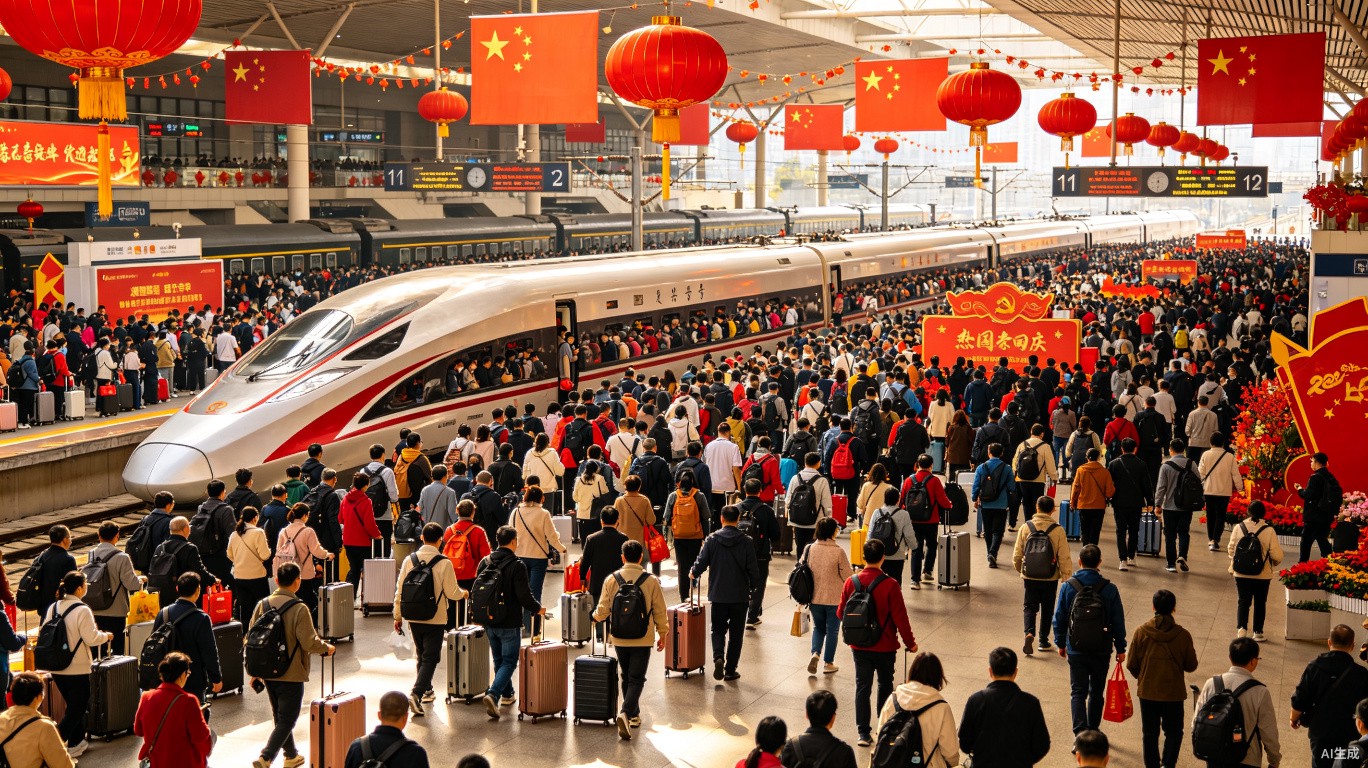
China Golden Week Travel Survival Guide
How to survive China's National Day Golden Week (October 1-7) - what to avoid, where to go, and how to beat the crowds.
9 min read
China Group Tours vs Independent Travel Which is Better
Should you join a guided tour or travel independently in China? Honest comparison of cost, flexibility, and experience.
7 min read
China Itinerary Planning: 7-Day 14-Day and 21-Day Routes: The Complete 2026 G...
Not sure how many days to spend in China? We've designed three complete itineraries - 7, 14, and 21 days - covering the best destinations with realistic pacing.
9 min read