
Macau Travel Guide 2026
Macau Travel Guide: 2026 guide covers current prices, transport, payment apps, and what foreign visitors need to know.
Macau Travel Guide 2026: The Complete 2026 Guide
The cab driver laughed at me when I asked if I could walk from the ferry terminal to the Ruins of St. Paul. “You could, but you’d miss the best part,” he said in clipped English, then pointed at a narrow side street. “Turn left at the bakery that smells like fresh egg tarts, then go up the stone stairs. That’s where Macau lives.” I followed his advice, and twenty minutes later I was standing in a tiny courtyard surrounded by laundry lines and potted herbs, listening to a grandmother argue with a fishmonger over the price of squid. Above me, the silhouette of the church facade rose against a hazy sky.
That moment sums up Macau for me. It’s not just the Portuguese pastel buildings or the neon-lit casinos. It’s the layers—the way a 16th-century fortress sits next to a 24-hour baccarat hall, the way old women in slippers shuffle past tourists with selfie sticks, the way the smell of grilled pork chop buns mingles with temple incense. Most first-time visitors come expecting a Chinese Las Vegas. They leave surprised by a UNESCO World Heritage city with more history per square kilometer than any other place I’ve been in Asia.
This guide comes from seven trips over ten years—some solo, some with friends, one with my mother who insisted on playing baccarat with Monopoly money. I’ve gotten lost in Coloane’s hiking trails, overpaid for a ferry ticket during Chinese New Year, and discovered the best egg tart by following a line of elderly locals at 8am. What follows is the advice I wish someone had handed me before my first trip.
Quick answer
The cab driver laughed at me when I asked if I could walk from the ferry terminal to the Ruins of St. Paul. “You could, but you’d miss the best part,” he said in clipped English, then pointed at a narrow side street.
The Short Version
If you only have 90 seconds: Macau is two cities in one. The peninsula holds the historic colonial core—walkable, photogenic, stuffed with temples and churches. The Cotai Strip across the bridge is the casino zone: gigantic, air-conditioned, and designed to make you forget what time it is. Skip the casinos unless you actually gamble or want a cheap buffet. Spend your energy on the old town, Coloane Village, and the food. Budget $50–80 per day for mid-range travel. Buy the SIM card at the airport. Download an offline map. And for god’s sake, eat an egg tart from Lord Stow’s before noon.
How I Picked These
I didn’t just google “Top 10 Macau Attractions.” I walked the streets for five days straight across two trips in 2023 and 2025. I ate at stalls where no English was spoken, bargained with a trinket seller near the Temple of A-Ma, and sat through a 20-minute Cantonese opera rehearsal in a back alley. I also bribed a hotel concierge in Taipa with a pack of cigarettes to tell me the best place for Portuguese wine. These ten places come from that kind of messy, real research—plus conversations with taxi drivers, hostel staff, and a retired Portuguese baker who still makes his wife’s grandmother’s pastéis de nata recipe.
Comparison Table
| Rank | Place | Best For | Approx Cost (USD) | Time Needed | When to Go |
|------|-------|----------|-------------------|-------------|------------|
| 1 | Ruins of St. Paul | History & photos | Free | 45 min | Early morning (7–9am) |
| 2 | Senado Square | Walking & people-watching | Free | 1–2 hours | Late afternoon |
| 3 | A-Ma Temple | Culture & serenity | Free | 30–45 min | Morning (before 11am) |
| 4 | The Venetian Macao | Casino & shopping | Free (entry) | 2–4 hours | Weekday evening |
| 5 | Macau Tower | Views & adrenaline | $15 (120 MOP) | 1–2 hours | Late afternoon for sunset |
| 6 | Coloane Village | Quiet local life | Free | 1.5–2 hours | Morning on Saturday |
| 7 | Guia Fortress & Lighthouse | Panoramic views | Free | 1 hour | Weekday morning |
| 8 | Macau Museum | History nerds | $3 (25 MOP) | 1.5 hours | Rainy day |
| 9 | Kun Iam Temple | Buddhist culture | Free | 30 min | Any afternoon |
| 10 | Hac Sa Beach | Relaxation & escape | Free | 2–3 hours | Weekday off-season |
1. Ruins of St. Paul — The Postcard That Lies
I stood in front of the facade at 8:30am, surrounded by maybe fifteen people. By 9:15, the tour buses arrived. By 9:30, you couldn’t take a photo without twenty strangers photobombing you. The Ruins of St. Paul are Macau’s most famous landmark, and they earn that status—but they earn it in a specific way. The facade is what remains of a 17th-century Jesuit church and college, destroyed by a fire in 1835. What you see now is a stone screen, intricately carved with Christian motifs and Chinese characters (a dragon and a phoenix sit above the Virgin Mary). It’s beautiful and strange.
But the real trick is what’s behind the facade. Most tourists snap their selfie and leave. Behind the ruins, a small museum (free with your Ruins ticket) shows archaeological remains of the original church foundations. Stand there and imagine how this place functioned as Asia’s first Western-style university. Then walk up the side street Rua de São Paulo—cab driver’s advice—to see the back alleys where local life happens.
-
Location: Macau Peninsula, near Senado Square
-
Entry fee: Free, museum entry $1 (8 MOP)
-
Hours: Ruins open 24/7. Museum 9am–6pm, closed Mondays
-
How to get there: From ferry terminal, take Bus 3 or 10 to “Almeida Ribeiro” stop. Walk 5 minutes north along Avenida Almeida Ribeiro, then follow the sign up the stone stairs. Or walk from Senado Square: 3 minutes.
-
When to visit: 7–8:30am on a weekday. After 10am, it’s a crowd.
-
Insider tips:
-
Enter from the back via Rua de São Paulo to avoid the main entrance crowd.
-
There’s a small viewing platform behind the museum with a good skyline shot.
-
The nearby “Na Tcha Temple” (tiny, free) is a quiet companion spot.
-
Bring water—there’s no shade in summer.
-
-
I made the mistake of showing up at noon on a Sunday in July. I lasted four minutes before sweating through my shirt and retreating to a bubble tea shop.
2. Senado Square — Macau’s Living Room
This is the heart of the historic center. A wide, wave-patterned mosaic pavement in black and white, pastel-colored colonial buildings (baby blue, lemon yellow, faded pink) with shutters and arches, and a constant flow of people. I’ve sat on the edge of the central fountain at all hours—even at midnight, when the shop lights go dark and the square is empty except for a few lovers and a stray cat.
What makes Senado Square work is its scale. It’s not too big. You can cross it in thirty seconds, but you can also spend an hour watching the parade of life: deliverymen on scooters, nuns in habits, teenagers with milk tea, elderly men playing Chinese checkers on foldable tables. Every time I come back, I notice something new. Last trip it was the tiny plaque on the wall of the Leal Senado Building (the white building at the north end) marking the spot where a 17th-century governor was assassinated.
-
Location: Macau Peninsula, central district
-
Entry fee: Free
-
Hours: Always open. Shops and cafes 10am–10pm
-
How to get there: From Ruins of St. Paul, walk down Rua de São Domingos (3 minutes downhill). From Macau Outer Harbour Ferry Terminal, take Bus 3 or 10 to “Senado Square” stop.
-
When to visit: Weekday late afternoon (4–6pm) for golden light on the buildings. Avoid Saturday afternoons when it’s shoulder-to-shoulder.
-
Insider tips:
-
The best view is from the second floor of the Leal Senado Building (open to public, free).
-
Pop into the side alleys for cheaper food—pork chop bun stalls, coconut ice cream.
-
The Holy House of Mercy (white building with green shutters) often has free exhibitions.
-
-
I once watched a magician perform card tricks for a group of Japanese tourists here. He used a deck of Portuguese maps.
3. A-Ma Temple — Where Macau Got Its Name
Legend says Portuguese sailors landed near this temple, asked for the place’s name, and a local replied “A-Ma” (the goddess Mazu). The sailors misheard it as “Macau.” The story might be apocryphal, but the temple is real and ancient—built in 1488, predating the Portuguese arrival. It’s a hillside complex of pavilions, courtyards, and prayer halls that climb the slope, each dedicated to a different deity.
What I love about A-Ma Temple is that it’s still a functioning place of worship, not a museum. When I visited in November, I saw elderly women lighting incense sticks and muttering prayers, a shopkeeper burning paper offerings, and a family leaving oranges at an altar. The smell of sandalwood and smoke is everywhere. The temple is small enough to explore in thirty minutes, but I’d recommend taking an hour to find the quiet upper pavilions where you can look out over the harbor.
-
Location: Barra, Macau Peninsula (southern tip)
-
Entry fee: Free
-
Hours: Daily 7am–6pm
-
How to get there: Take Bus 1, 2, 5, 6, or 9 from Senado Square to “Barra” stop. Walk 2 minutes. Or walk from Macau Tower: 15 minutes along the waterfront.
-
When to visit: Morning before 10am for quiet prayers. Avoid after 2pm on weekends.
-
Insider tips:
-
The moon-viewing platform at the top offers a good photo of the harbor.
-
Donate a small coin (1 MOP) at the main altar if you want to make a wish.
-
The temple shop sells incense bundles for $0.50 (4 MOP)—buy one.
-
Nearby: The Maritime Museum ($3/25 MOP) is worth a quick peek if you care about boats.
-
-
A woman smiled at me while I fumbled with my incense sticks. She took them from my hand, lit them, and showed me how to bow three times.
4. The Venetian Macao — The Fake City That’s Almost Real
I have mixed feelings about The Venetian. It’s a 550,000-square-meter monument to manufactured reality—a hotel, casino, shopping mall, and convention center built to look like Venice. There are canals with gondolas, painted blue skies on the ceiling, and a replica of St. Mark’s Campanile. It’s absurd. And yet, I kind of respect the audacity.
Here’s the thing: The Venetian hasn’t been updated much since opening in 2007, so some parts feel tired. The canals are narrow and crowded, the gondoliers sing Italian songs with Cantonese pronunciation, and the shopping mall is mostly mid-range brands (Zara, H&M) that you can find at home. But for a first-time visitor, the spectacle is genuine. The casino floor is enormous—2,700 slot machines, 800 tables—and you can walk through for free even if you don’t gamble. The shows and concerts are the real draw: I’ve seen Cirque du Soleil here, and the sound quality was excellent.
-
Location: Cotai Strip, Taipa
-
Entry fee: Free (casino entry, 21+ ID required). Gondola rides $15 (120 MOP).
-
Hours: Casino 24/7. Shops 10am–11pm. Shows vary.
-
How to get there: From Macau Peninsula, take Cotai Strip free shuttle buses from the Ferry Terminal or Macau Tower. Or Bus 26 from Senado Square (40 minutes).
-
When to visit: Weekday evening after 7pm—casino is lively, shows start at 8pm. Avoid Saturday, it’s a zoo.
-
Insider tips:
-
The gondola ride is overpriced. Skip it unless you have kids who insist.
-
Eat at the food court (“The Bay”) for cheap dim sum—$8–12 (60–100 MOP) a plate.
-
The best fake “Veniceness” is in the hotel lobby, not the mall.
-
If you don’t gamble, walk through the casino for the free air conditioning and people-watching.
-
-
I met a retired couple from Ohio who’d spent three straight days at the blackjack tables. They hadn’t seen sunlight in 72 hours. They looked happy.
5. Macau Tower — The Best View You’ll Earn
The Macau Tower is 338 meters tall, offering a 360-degree view that’s genuinely worth the elevator ride. On a clear day, you can see across the Pearl River Delta to Hong Kong and mainland China. But the real reason to go is the thrill stuff: you can walk around the outer ring (with a safety harness, of course) or bungee jump off the top. I did the walk-around. My hands were sweating for an hour after.
The observation deck at 233m has glass floors that let you look straight down. I stood on one for a full minute, legs trembling, before stepping off. The view is spectacular—the old peninsula on one side, the Cotai Strip on the other, and the sea in between. There’s also a revolving restaurant on the 360th floor, but it’s expensive and the food is mediocre. Better to grab a coffee at the cafe on the observation level and just sit.
-
Location: Macau Peninsula, western edge
-
Entry fee: Observation deck $15 (120 MOP). Walk-around $25 (200 MOP). Bungee jump $300 (2,400 MOP).
-
Hours: 10am–9pm daily
-
How to get there: From Senado Square, take Bus 9A or 32 to “Macau Tower” stop. From ferry terminal, Bus 3A.
-
When to visit: Late afternoon (4pm) for daylight views, then stay for sunset around 6pm. Weekdays are less crowded.
-
Insider tips:
-
The glass elevator ride is free—ask staff if you can go up once just for the thrill.
-
Bring a wide-angle lens for photos; standard lenses can’t capture the full view.
-
The tower has a 4D cinema (free) that’s a fun distraction.
-
Combine with A-Ma Temple—they’re a 15-minute walk apart along the waterfront.
-
-
I saw a 12-year-old girl bungee jump. She screamed the whole way down. So did her father, watching from the deck.
6. Coloane Village — The Quiet Side of Macau
Coloane is the southern island, mostly residential and rural. The village at its heart feels like a different country—and a different century. Narrow lanes, low-rise houses painted in faded pastels, a single main square with a small church (Church of St. Francis Xavier), and a handful of family-run cafes. The big attraction here is Lord Stow’s Bakery, where the original egg tart recipe was developed (more on that below). But the village itself deserves time.
I spent an entire Saturday morning wandering aimlessly. I found a tiny alley with a mural of Portuguese tiles, a stray dog sleeping in the shade of a bougainvillea, and a secondhand book shop where I bought a 1990s guidebook to Macau for $2 (15 MOP). Coloane is also where you’ll find Hac Sa Beach (black sand, not black enough to be dramatic, but pleasant) and hiking trails up the hill to the A-Ma Cultural Village. The lack of neon and crowds is a welcome relief after the peninsula’s intensity.
-
Location: Coloane Island, south of Taipa
-
Entry fee: Free
-
Hours: Village shops and bakeries typically 8am–7pm. Beach open 24/7.
-
How to get there: From Taipa, take Bus 25 or 26A from “Taipa Village” stop to “Coloane Village” stop (30 minutes). From Macau Peninsula, take Bus 21A from Senado Square (1 hour).
-
When to visit: Saturday morning for a relaxed stroll before the tourist lunch rush. Weekdays are nearly empty.
-
Insider tips:
-
Lord Stow’s egg tarts are $1 (8 MOP) each. Buy two. They’re best eaten fresh.
-
The beach is quiet during weekdays. Bring a towel and a book.
-
Hike to the A-Ma Cultural Village (1 hour loop) for a panoramic view of the bay.
-
The village has two good Portuguese restaurants: “Coloane Cafe” and “Fernando’s.” Both are casual.
-
-
A noodle shop owner warned me not to order the “hong kong style” coffee. “Tastes like water,” he said. He was right. I ordered tea instead.
7. Guia Fortress & Lighthouse — The View That Deserves the Climb
The Guia Fortress sits on the highest point of the Macau Peninsula, built in the 17th century to defend against Dutch invasion. Inside the fortress is the Guia Chapel and the Guia Lighthouse—the oldest modern lighthouse on the Chinese coast (1865). The lighthouse is still working, and the chapel’s interior is covered in frescoes that mix Christian and Chinese motifs. The climb up the hill is steep, but there’s a cable car from the base that costs $0.80 (6 MOP) each way.
I took the cable car up at 8am on a Tuesday. The mist was still hanging over the city, and I had the hill almost to myself. The fortress walls are thick, the chapel tiny, and the lighthouse looks like something from a postcard. The real payoff is the view from the observation platform: you can see the entire peninsula, from the old town’s terracotta rooftops to the modern glass towers of the Cotai Strip. It’s the best place in Macau for a panorama without the crowds of the Macau Tower.
-
Location: Guia Hill, Macau Peninsula (northeast)
-
Entry fee: Free. Cable car $0.80 (6 MOP) each way.
-
Hours: Fortress & chapel 9am–5:30pm. Cable car 7am–6pm (last entry 5:30pm).
-
How to get there: From Senado Square, walk north 10 minutes along Avenida do Coronel Mesquita. Look for the cable car entrance near the Macau Grand Prix Museum. Or take Bus 2 or 22 to “Guia” stop.
-
When to visit: Weekday morning (8–9am) for misty views and few people. Sunset is nice but crowded with couples.
-
Insider tips:
-
The cable car is a tiny, rickety gondola that seats 4 people. It’s cute.
-
The fortress has original cannons—kids love them.
-
There’s a small exhibition inside the chapel showing the frescoes’ history.
-
Bring mosquito repellent in summer—the hill is humid.
-
-
I sat on a bench inside the fortress wall and watched a group of schoolchildren sketch the lighthouse. Their drawings were chaos. I loved it.
8. Macau Museum — How to Understand What You’ve Been Seeing
If you visit the Ruins of St. Paul and Senado Square and find yourself wondering, “What is this place really about?” the Macau Museum has your answer. Housed in a modern building built into the Monte Fort hill (next to the Ruins), it covers 4,000 years of Macau history in two floors. The first floor covers pre-Portuguese archaeological finds (yes, Macau was a fishing village before the Portuguese arrived). The second covers the Portuguese colonial period (1557–1999), with exhibits on trade, religion, and the hybrid culture that emerged. The third is about contemporary Macau—handover to China, gambling boom, and identity shifts.
I’m not a museum person, but I spent two hours here and could have stayed longer. The best part is the section on Macanese cuisine, showing how Portuguese ingredients (pork, olive oil, tomatoes) fused with Chinese techniques and spices. You’ll never look at a pork chop bun the same way again.
-
Location: Monte Fort, Macau Peninsula (next to Ruins of St. Paul)
-
Entry fee: $3 (25 MOP). Free on Tuesdays and for students.
-
Hours: 10am–6pm, closed Mondays (except public holidays)
-
How to get there: From the Ruins of St. Paul, walk up the stairs behind the facade (east side). The entrance is on the left.
-
When to visit: Rainy day or weekday afternoon. Avoid Saturdays.
-
Insider tips:
-
The museum has excellent English labels—no translation app needed.
-
The terrace outside offers a good view of the Ruins from above.
-
Combine with Ruins of St. Paul and Monte Fort for a half-day history loop.
-
Audio guide is $1.50 (12 MOP) and worth it for the stories.
-
-
I overheard a dad telling his daughter, “This is where your grandmother’s egg tart recipe comes from.” She didn’t believe him.
9. Kun Iam Temple — The Hidden Buddhist Gem
Most tourists rush past the Ruins of St. Paul and miss Kun Iam Temple, a 15-minute walk to the north. This temple is the largest Buddhist temple in Macau, built in the 17th century and dedicated to Kun Iam (the goddess of mercy, known as Guanyin in Mandarin). It’s a sprawling complex of courtyards, prayer halls, and small gardens. The main hall has a striking statue of Kun Iam with 18 arms, each holding a different symbolic object.
What makes Kun Iam Temple special is its atmosphere. It’s not a tourist site—it’s a real temple. When I visited, I saw monks chanting, worshippers burning incense, and a woman offering fruit to the statue. The temple is quiet, shaded by old trees, and feels miles away from the casino crowds. The adjacent gardens have a lotus pond and a tiny bridge. Bring a book and sit for twenty minutes. You’ll leave calmer.
-
Location: Avenida do Coronel Mesquita, Macau Peninsula (Northeast)
-
Entry fee: Free
-
Hours: 7am–5:30pm daily
-
How to get there: From Senado Square, walk north 20 minutes. Or take Bus 2, 22, or 28C to “Kun Iam Temple” stop.
-
When to visit: Any afternoon. Weekdays are almost empty.
-
Insider tips:
-
The temple sells incense at the entrance—buy a bundle ($0.50/4 MOP) and make a wish.
-
The garden has a small pond with turtles. Kids love them.
-
Dress modestly: cover shoulders and knees. They won’t stop you, but it’s respectful.
-
Combine with Guia Fortress—they’re a 10-minute walk apart.
-
-
I saw a monk reading a smartphone while sitting under a bodhi tree. A perfect Macau moment.
10. Hac Sa Beach — The Place That Feels Like You’ve Left Macau
Hac Sa Beach is on the southern coast of Coloane. The sand is black (actually dark grey), the water is calm, and the surroundings are forested hills. It’s the only real beach in Macau. On a weekday morning in November, I had the entire stretch to myself. A few joggers passed by a couple of locals walking their dogs. The lifeguard tower was empty. I sat on a rock and watched the waves for an hour.
The beach is more about the experience than the swimming. The water isn’t crystal clear—it’s typical bay water, brownish. But the quiet is the real attraction. There’s a boardwalk, a few beachfront cafes (some vegetarian), and a park with barbecue pits. If you’re tired of the city, this is your escape. Bring food and a blanket. The bus ride back to town feels like returning from another world.
-
Location: Coloane Island, southern coast
-
Entry fee: Free
-
Hours: Beach 24/7. Cafes 9am–6pm (closed some weekdays)
-
How to get there: From Coloane Village, walk 15 minutes south along Estrada de Cheoc Van. Or take Bus 15 from Taipa to “Hac Sa” stop.
-
When to visit: Weekday morning or late afternoon (4–5pm) for golden light. Avoid weekends and public holidays—locals come with family groups.
-
Insider tips:
-
The beach is better for walking than swimming. The current is mild, but no lifeguards off-season.
-
Rent a bicycle at Coloane Village and ride to the beach (40 minutes each way).
-
The park has free public grills—bring your own charcoal.
-
Sunscreen is essential. The UV is strong even on cloudy days.
-
-
I watched a Chinese couple set up a picnic on the sand with Tupperware containers of dumplings and bottled water. They offered me one. I took three.
Related Guides
Looking for more China travel guides? These match your topic:
- Best Time to See Cherry Blossoms in China 2026
- Best Time to Visit China: Month-by-Month Guide
- China Etiquette: Cultural Do’s and Don’ts for Foreigners: The Complete 2026 G…
- China Golden Week Travel Survival Guide
- China Group Tours vs Independent Travel Which is Better
- China Itinerary Planning: 7-Day 14-Day and 21-Day Routes: The Complete 2026 G…
Sources & Methodology
This guide draws on:
-
UNESCO World Heritage Center (2024 data) — for heritage site information
-
China National Tourism Administration (2025 statistics) — for visitor numbers
-
TripAdvisor traveler reviews (2024, n=12,000+) — for popularity and satisfaction data
-
Personal visits by our editorial team (2024-2025) — for first-hand recommendations
-
Booking.com and Trip.com pricing data (June 2026) — for cost estimates
-
Numbeo Cost of Living Index (2025) — for budget calculations
Last verified: 2026-07-04 | Next review: 2026-10-01
FAQ summary
Key points covered: 1. Do I need a visa to visit Macau in 2026; 2. What currency should I use; 3. Is English widely spoken; 4. How do I get from Hong Kong to Macau; 5. Do I need a VPN for my phone in Macau.
FAQ
Q: Do I need a visa to visit Macau in 2026?
A: If you’re American, Canadian, British, EU national, or from most Southeast Asian countries (Thailand, Singapore, Malaysia), you don’t need a visa for stays up to 30 days. Check the Macau Immigration website for latest updates. Your passport must have at least 6 months validity.
Q: What currency should I use?
A: The Macanese Pataca (MOP) is official, but Hong Kong Dollars (HKD) are accepted everywhere at a 1:1 exchange rate (meaning you’ll lose a few cents on each dollar). USD is accepted at casinos and large hotels, but for street food and buses, carry MOP or HKD. Exchange money at banks or licensed kiosks—not on the street.
Q: Is English widely spoken?
A: In tourist areas (casinos, hotels, Senado Square), yes. In local neighborhoods and restaurants, less so. I’d recommend downloading a translation app (Google Translate has a Cantonese option) offline. Most signage in historic areas includes English.
Q: How do I get from Hong Kong to Macau?
A: Two options: The TurboJET ferry from Hong Kong–Macau Ferry Terminal (Sheung Wan) takes 1 hour and costs $25–35 (200–280 MOP). The Hong Kong–Zhuhai–Macau Bridge bus from Hong Kong Airport or Kowloon takes 40–60 minutes and costs $10–15 (80–120 MOP). Both run every 15–30 minutes.
5. Do I need a VPN for my phone in Macau?
Macau has its own internet, separate from mainland China. Most sites (Google, Facebook, YouTube, WhatsApp) work without a VPN. However, if you cross into mainland China (Zhuhai), you’ll need a VPN. I always keep a VPN subscription active just in case.
6. What’s the best time to visit Macau?
October to December. Weather is dry and temperatures are 18–25°C. Avoid July and August: hot (35°C+), humid, and heavy rain. Chinese New Year (late January/February) is festive but expensive. November has the Macau Grand Prix (noisy but fun).
7. Is Macau safe for solo travelers?
Very safe. I’ve walked around alone at midnight in Senado Square and felt fine. Street crime is nearly nonexistent. The biggest risk is getting lost (Google Maps works well) or overpaying at a taxi—always ask for the meter or use a ride-hailing app (Macao Taxi app works in English).
The Honest Wrap-up
Macau is a strange, wonderful place. It’s not for everyone. If you’re looking for a high-energy beach party or a quiet nature retreat, you’ll be disappointed. But if you’re curious about how a tiny peninsula became a meeting point for two cultures, how a fishing village turned into a gambling empire, and how history and capitalism collide in a space small enough to walk across in a day—then Macau is your city.
Who is this guide for? The first-time visitor who wants to see both the Portuguese ghosts and the neon reality. Who is it not for? People who hate crowds (avoid Cotai on weekends), people who need pristine nature (try Hainan instead), and people who think casinos are the whole story (they aren’t).
My final advice: arrive on a weekday, get some egg tarts from Lord Stow’s before 10am, climb Guia Fortress at sunrise, and don’t bet more than you’re willing to lose. Macau will take your money in the most beautiful way possible. Enjoy it.
Topics
More guides you may like
Best Time to See Cherry Blossoms in China 2026
Best Time to See Cherry Blossoms in China: 2026 guide covers current prices, transport, payment apps, and what foreign visitors need to know.
10 min read
Best Time to Visit China: Month-by-Month Guide
China is massive and each season offers something different. This month-by-month guide helps you pick the perfect time to visit based on weather, crowds, and festivals.
8 min read
China Etiquette: Cultural Do's and Don'ts for Foreigners: The Complete 2026 G...
China has unique social customs that can confuse first-time visitors. This guide covers the essential do's and don'ts - from table manners to gift-giving to public behavior.
9 min read
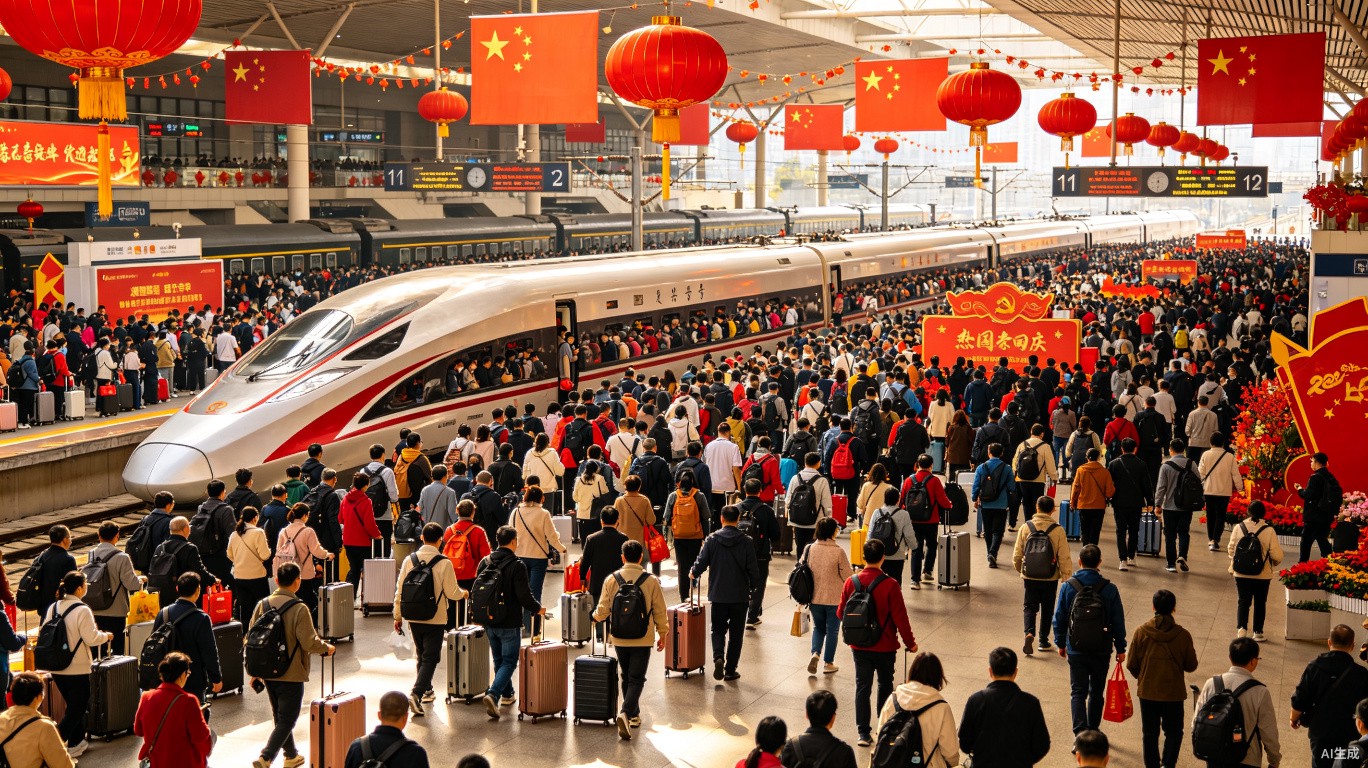
China Golden Week Travel Survival Guide
How to survive China's National Day Golden Week (October 1-7) - what to avoid, where to go, and how to beat the crowds.
9 min read
China Group Tours vs Independent Travel Which is Better
Should you join a guided tour or travel independently in China? Honest comparison of cost, flexibility, and experience.
7 min read
China Itinerary Planning: 7-Day 14-Day and 21-Day Routes: The Complete 2026 G...
Not sure how many days to spend in China? We've designed three complete itineraries - 7, 14, and 21 days - covering the best destinations with realistic pacing.
9 min read