
China Southern Cuisine Complete Travel Guide
The cab driver looked at me in his rearview mirror and said, in perfect English, \"You are going to eat until your belt breaks.\" I had just told him I was on a s
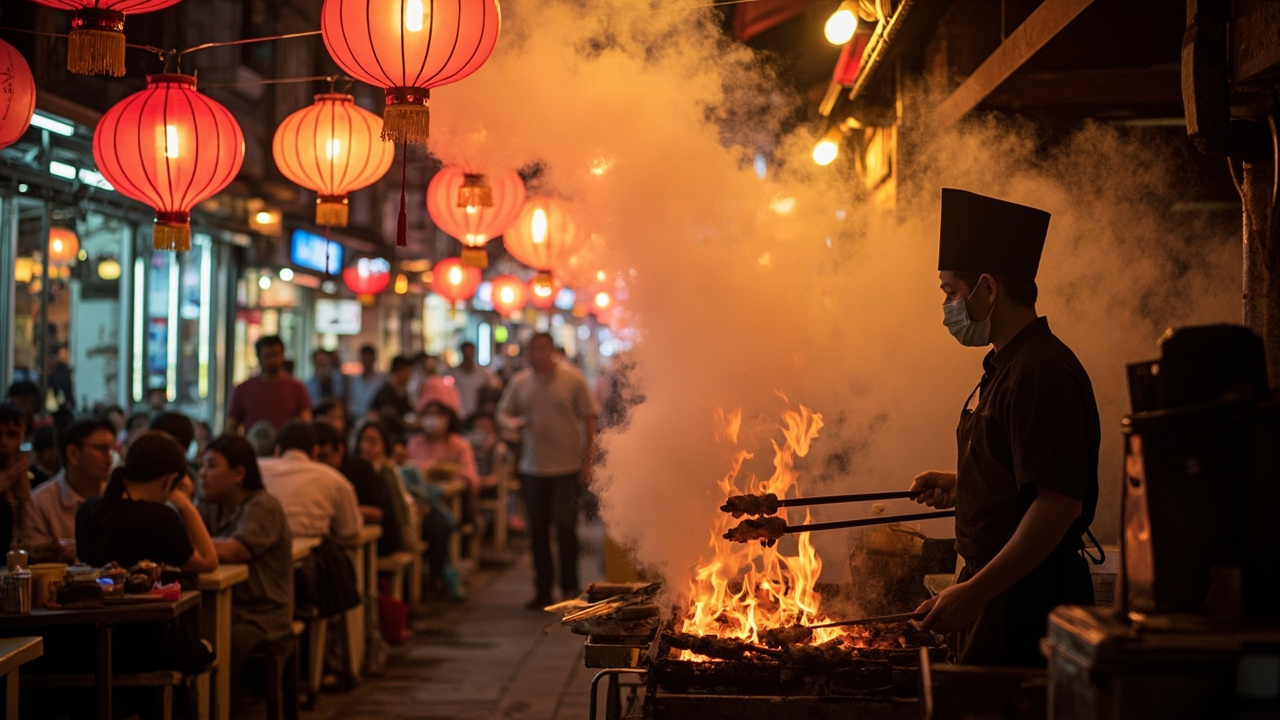
The cab driver looked at me in his rearview mirror and said, in perfect English, “You are going to eat until your belt breaks.” I had just told him I was on a six-month mission to eat my way through southern China. He wasn’t wrong. Eighteen hours later, I was in a back-alley noodle shop in Guangzhou, sweating through my shirt, slurping a bowl of beef brisket noodles so good I actually laughed out loud. The broth had been simmering since before I was born. The owner, a tiny woman named Auntie Chen, saw my empty bowl and just nodded once. That nod meant everything.
Southern China isn’t a monolith. It’s a dozen distinct culinary galaxies, each with its own language, its own chili tolerance, and its own idea of what constitutes a proper breakfast. From the charcoal-grilled seafood of Zhanjiang to the silk-textured rice noodles of Changsha, from the morning tea houses of Guangzhou to the night markets of Nanning, this guide is built for the first-time visitor who wants to eat well without getting scammed, lost, or sick.
This guide covers ten destinations across Guangdong, Guangxi, Hunan, Yunnan, and Fujian provinces. I’ve visited each one, usually more than once. I’ve made mistakes so you don’t have to. I’ve eaten things I can’t name and things I wish I could forget. Here’s what actually matters.
Quick answer
If you have two weeks for a southern China food trip, start in Guangzhou for Cantonese dim sum and roast goose, then take the high-speed train to Changsha for fiery Hunan cuisine, and finish in Kunming for Yunnan’s cross-bridge noodles and wild mushrooms. The entire trip costs roughly $800–$1,200 per person including transport, mid-range hotels, and three meals a day. No visa is needed for citizens of 54 countries if you’re transiting through Beijing, Shanghai, Guangzhou, or Chengdu for up to 144 hours, but for a proper food tour you’ll want a standard tourist visa (L-visa) which costs about $140 and takes 4–5 business days to process.
The Short Version
Skip the tourist-trap “food streets” with English menus and inflated prices. Go where the locals queue. Guangzhou’s dim sum is the best in the world. Changsha will destroy your tolerance for mild food permanently. Kunming’s mushroom season (June–September) is worth planning your entire trip around. Don’t bother with “Cantonese” food outside Guangdong—it’s never the same. Bring Imodium. Bring a translation app. Bring an empty stomach.
How I Picked These
I lived in Beijing for seven years and spent every vacation eating my way south. I’ve taken the high-speed train from Guangzhou to Shenzhen more times than I can count. I’ve gotten food poisoning in a Guilin alley (worth it). I’ve sat through three-hour dim sum sessions with retired uncles who argued about which tea shop had the best shui xian oolong. I’ve walked through wet markets at 5 AM and night markets at 1 AM. I cross-referenced my own notes with recommendations from local food writers, taxi drivers, and random strangers who saw me looking lost and took pity. These ten places are the ones I’d send my own mother to.
Comparison Table
| Rank | Place | Best For | Approx Cost (USD) | Time Needed | When to Go |
|------|-------|----------|-------------------|-------------|------------|
| 1 | Guangzhou | Dim sum, roast goose, congee | $30–50/day | 3–4 days | Oct–Dec, Mar–May |
| 2 | Changsha | Spicy stir-fry, stinky tofu, rice noodles | $20–35/day | 2–3 days | Sep–Nov |
| 3 | Kunming | Cross-bridge noodles, wild mushrooms, Yunnan ham | $25–40/day | 3–4 days | Jun–Sep (mushroom season) |
| 4 | Chengdu | Mapo tofu, hot pot, dan dan noodles | $20–35/day | 2–3 days | Mar–Jun, Sep–Nov |
| 5 | Shunde | Cantonese home cooking, milk desserts, seafood | $25–40/day | 1–2 days | Oct–Dec |
| 6 | Guilin | Rice noodles, beer fish, street snacks | $15–25/day | 2–3 days | Apr–Oct |
| 7 | Xiamen | Seafood, oyster omelets, satay noodles | $20–35/day | 2–3 days | Oct–Apr |
| 8 | Nanning | Rice noodles (various), tropical fruits, night markets | $15–25/day | 2 days | Oct–Mar |
| 9 | Foshan | Cantonese clay pot rice, dim sum, braised dishes | $20–30/day | 1–2 days | Oct–Dec |
| 10 | Zhanjiang | Fresh seafood, oysters, grilled fish | $15–25/day | 1–2 days | Sep–Nov |
Guangzhou – Where the Cantonese Food Religion Begins
I watched a man in a suit eat a chicken foot at 8 AM with the same reverence I’d give a steak dinner. That’s Guangzhou for you. The city runs on yum cha (drinking tea) and the endless parade of bamboo steamers that comes with it. I spent three mornings at Tao Tao Ju on Dishifu Road, an old-school tea house where the waiters push carts of har gow (shrimp dumplings) and siu mai (pork dumplings) through a room that hasn’t changed decor since 1985. The floor is sticky. The tea is strong. The dumplings are perfect.
Why it’s special: Cantonese cuisine is the benchmark. Every other regional Chinese food is measured against it. The philosophy is simple: let the ingredient speak. A Guangzhou chef will spend hours sourcing the perfect free-range chicken, then steam it with minimal seasoning. If the chicken isn’t good, the dish fails. There’s nowhere to hide.
📍 Location: Liwan District, especially around Dishifu Road and Shangxiajiu Pedestrian Street. The old town is where the real food is.
🎫 Entry fee: Free to walk around. Dim sum at a mid-range tea house: $15–25 (CNY 100–180) per person for a full meal.
🕒 Opening hours: Tea houses open 7 AM–11 AM for dim sum. Dinner service starts 5 PM. Many places close between 2 PM and 5 PM.
🚇 How to get there: Take Metro Line 1 to Changshou Lu Station, Exit B. Walk 5 minutes east to Dishifu Road. Or take Line 8 to Cultural Park Station, Exit D.
⏰When to visit: October to December, when the weather is dry and cool. Avoid July–August unless you enjoy 95% humidity.
💡 Insider tips: Go to a tea house before 8 AM to avoid the queue. Bring cash—some old places don’t take WeChat. Order cheung fun (rice noodle rolls) with shrimp, not just the plain version. Don’t ask for soy sauce on everything—the chef already seasoned it. If you see a queue of old people outside a shop, join it.
I once asked a waiter for chili oil at a dim sum place. He looked at me like I’d insulted his grandmother. I never made that mistake again.
Changsha – Where Spice Is a Personality Trait
The first bite of la zi ji ding (spicy diced chicken) in Changsha felt like someone had set my mouth on fire and then laughed about it. The second bite was better. By the third bite, I understood why locals eat this stuff for breakfast. Changsha doesn’t do subtle. The city’s signature dish is stinky tofu (chou doufu), which smells like a wet sock that’s been left in a gym bag for a week, but tastes like crispy, savory heaven. I ate it from a street cart on Pozi Street at 11 PM, standing next to a teenager who was eating three skewers at once.
Why it’s special: Hunan cuisine is the original spicy Chinese food—Sichuan gets all the attention, but Hunan uses fresh chilies, not just chili oil. The heat is sharper, more direct. It hits you in the face and asks if you want more. The city’s night market culture is also incredible. Pozi Street and Taiping Street are chaotic, loud, and wonderful.
📍 Location: Pozi Street (near Wuyi Square) and Taiping Street (a 10-minute walk north).
🎫 Entry fee: Free. Stinky tofu: $1 (CNY 7–10) per serving. A full meal at a restaurant: $10–15 (CNY 70–110) per person.
🕒 Opening hours: Street food from 6 PM to midnight. Restaurants open 11 AM–9 PM.
🚇 How to get there: Take Metro Line 2 to Wuyi Square Station, Exit 3. Pozi Street is a 3-minute walk east.
⏰When to visit: September to November, when the summer heat breaks. Avoid January–February—it’s cold and wet.
💡 Insider tips: Start with mild dishes and work up. Drink cold soy milk, not water, to cool your mouth. The stinky tofu at the stall called “Black Classic” on Pozi Street is the real deal. Don’t touch your eyes after eating chili. Learn the phrase bu yao la (no spice) if you’re a coward.
I watched a local woman finish a bowl of changsha mi fen (rice noodles) in three minutes flat, sweat dripping down her face, smiling the whole time.
Kunming – The Mushroom Capital of the World
I walked into a market in Kunming and saw mushrooms I didn’t know existed. Purple ones. Neon orange ones. Ones that looked like coral. The vendor, an old woman with hands like tree roots, pointed at a basket of song rong (pine mushrooms) and said something I didn’t understand, but the price was written on a cardboard sign: 180 yuan per kilo. I bought half a kilo. I sautéed them in butter that night in my hostel kitchen. I have never tasted anything like it since.
Why it’s special: Yunnan province has more edible mushroom species than anywhere else in China. The cuisine is also heavily influenced by the province’s ethnic minorities—Dai, Yi, Bai, Naxi—which means you’ll find flavors you won’t get anywhere else: lemongrass, wild pepper, fermented soybean paste. The cross-bridge noodles (guo qiao mi xian) are a ritual: you get a bowl of boiling broth and add raw ingredients yourself.
📍 Location: The mushroom market is at Zhuangtang Mushroom Market (near Dianchi Road). Cross-bridge noodles: Mr. Yang’s on Jinbi Road.
🎫 Entry fee: Free. Cross-bridge noodles: $5–8 (CNY 35–60) per bowl. Mushroom hot pot: $15–25 (CNY 100–180) per person.
🕒 Opening hours: Mushroom market: 6 AM–2 PM. Restaurants: 11 AM–9 PM.
🚇 How to get there: Take Bus 44 or 73 to Zhuangtang Intersection. For Mr. Yang’s, take Metro Line 3 to Wuyi Road Station, Exit B.
⏰When to visit: June to September for fresh wild mushrooms. The rest of the year is still good, but you’ll get dried or frozen mushrooms.
💡 Insider tips: Never eat wild mushrooms raw—some are toxic until cooked. Go to the market early (7 AM) for the best selection. Bring a translation app—English is rare in markets. Try er kuai (rice cakes) grilled with honey. Don’t buy mushrooms from street vendors who can’t tell you what they are.
I asked a mushroom vendor if a certain purple mushroom was poisonous. She laughed, picked one up, and ate it raw. I bought a kilo.
Chengdu – The City That Lives for Hot Pot
The hot pot arrived at our table in a copper cauldron divided by a metal divider: one side clear broth, one side a deep red oil slicked with dried chilies and Sichuan peppercorns. My friend from Chengdu grabbed a skewer of beef and dropped it into the red side. “Count to thirty,” she said. I did. The beef came out glistening, coated in oil and chili flakes. My lips went numb after the first bite. My tongue tingled. I kept eating.
Why it’s special: Chengdu is the capital of Sichuan cuisine, which is not just spicy—it’s ma la (numbing and spicy). The Sichuan peppercorn creates a buzzing, electric sensation on your tongue that’s completely unique. The city also does incredible street food: dan dan noodles, fuqi feipian (beef offal salad), and long chaoshou (dumplings in chili oil). The food culture here is obsessive.
📍 Location: Hot pot street: Kuanzhai Alley area. Best street food: Jinli Ancient Street and Wenshu Monastery area.
🎫 Entry fee: Free. Hot pot: $10–20 (CNY 70–150) per person. Street snacks: $1–3 (CNY 7–20) each.
🕒 Opening hours: Hot pot restaurants open 11 AM–11 PM. Street food from 5 PM to midnight.
🚇 How to get there: Take Metro Line 2 to People’s Park Station, Exit D. Walk 10 minutes north to Kuanzhai Alley.
⏰When to visit: March to June and September to November. Summer is too hot for hot pot.
💡 Insider tips: Order the mao du (beef tripe)—it’s a local favorite. Dip everything in the gan die (dry spice mix) before eating. Don’t drink cold beer with hot pot—it makes the oil congeal in your stomach. Learn to say wei la (mild spicy) if you’re not ready for full heat.
I spent an hour in a hot pot restaurant trying to explain to the waiter that I wanted “less numbing.” He brought me more Sichuan peppercorn.
Shunde – The Unassuming Capital of Cantonese Home Cooking
Shunde doesn’t look like a food destination. It’s a small city in the Pearl River Delta, full of factories and apartment blocks. But the food here is so good that the Chinese government has officially recognized it as a “World Gastronomy City.” I went there skeptical. I left convinced that the best Cantonese food isn’t in Guangzhou—it’s here. I ate a bowl of da liang fried milk (a savory custard that’s crispy on the outside, molten on the inside) and nearly cried.
Why it’s special: Shunde cuisine is Cantonese cooking stripped of pretense. No fancy plating. No fusion experiments. Just perfect technique applied to perfect ingredients. The city is famous for its freshwater fish (cooked a dozen different ways), its milk desserts (double-skin milk, ginger milk curd), and its clay pot rice. Every dish tastes like someone’s grandmother spent three days on it.
📍 Location: Daliang District, especially around Huagai Road and Qinghui Road.
🎫 Entry fee: Free. A full meal: $15–25 (CNY 100–180) per person.
🕒 Opening hours: Restaurants open 11 AM–2 PM and 5 PM–9 PM.
🚇 How to get there: Take a high-speed train from Guangzhou South Station to Shunde Station (20 minutes, $5/CNY 35). Then take a taxi to Daliang District (15 minutes, $4/CNY 25).
⏰When to visit: October to December, when the fish are fattest.
💡 Insider tips: Order the shun de yu sheng (raw fish salad) if you trust the restaurant’s hygiene. Try the shuang pi nai (double-skin milk) at Minxin—it’s the original. Don’t skip the bao yu (abalone) clay pot rice. Bring cash—many old restaurants don’t take cards.
I asked a local chef why his fish was so good. He pointed at the river. “The fish swim against the current here. Makes the meat tight.”
Guilin – Rice Noodles and River Views
The Li River winds through karst mountains that look like they were painted by a drunk calligrapher. Guilin is famous for the scenery, but I came for the guilin mi fen (rice noodles). The version here is different from anywhere else: the noodles are thinner, the broth is lighter, and the toppings include pickled long beans, peanuts, and a spoonful of chili oil. I ate it every morning for a week from a shop called Laoyou Noodles near Zhengyang Pedestrian Street.
Why it’s special: Guilin’s rice noodles are the city’s soul. The broth is made from pork bones and spices, simmered overnight. The noodles are freshly made every morning. The combination of textures—soft noodles, crunchy peanuts, sour pickles—is addictive. The night market on Zhengyang Street also has excellent grilled fish and stuffed tofu.
📍 Location: Zhengyang Pedestrian Street and the area around Sun and Moon Pagodas.
🎫 Entry fee: Free. Rice noodles: $1.50–2.50 (CNY 10–18) per bowl.
🕒 Opening hours: Noodle shops open 6 AM–2 PM. Night market from 6 PM to midnight.
🚇 How to get there: Take a high-speed train from Guangzhou South Station to Guilin West Station (2.5 hours, $40/CNY 280). Then take Bus 1 to Zhengyang Road.
⏰When to visit: April to October, but avoid Chinese national holidays (May 1st week, October 1st week).
💡 Insider tips: Go to a noodle shop before 9 AM for the freshest broth. Don’t add too much chili—the locals use it sparingly. Try the beer fish (pi jiu yu) from Yangshuo, a town 1 hour south. Learn to say jia liao (add toppings) if you want extra pickles.
I watched a grandmother teach her grandson how to eat noodles properly: slurp loudly, don’t bite them in half, and drink the broth at the end.
Xiamen – Island Seafood and Southern Fujian Flavors
The ferry from Xiamen Island to Gulangyu Island takes five minutes, but it feels like stepping into another century. Gulangyu is car-free, full of colonial-era buildings and narrow alleys. I went there for the sha cha mian (satay noodles), a Fujian specialty that combines peanut-based sauce with seafood and thin noodles. The version at Lunjiao Seafood on Gulangyu was so rich I could only eat half the bowl. I took the rest to go and ate it on a bench overlooking the sea.
Why it’s special: Fujian cuisine is one of China’s eight great culinary traditions, but it’s often overlooked. It’s lighter than Cantonese, more seafood-focused, and uses a lot of fermented ingredients. Xiamen’s street food is excellent: oyster omelets (o a jian), peanut soup, and tu sun dong (a jelly made from a sea worm that sounds gross but tastes like a savory, briny Jell-O).
📍 Location: Zhongshan Road (main pedestrian street) and Gulangyu Island.
🎫 Entry fee: Free. Gulangyu ferry: $5 (CNY 35) round trip. Street food: $1–4 (CNY 7–30) per item.
🕒 Opening hours: Restaurants open 11 AM–9 PM. Night market on Zhongshan Road from 6 PM to midnight.
🚇 How to get there: Take a high-speed train from Guangzhou South Station to Xiamen North Station (4 hours, $60/CNY 420). Then take Metro Line 1 to Zhongshan Park Station.
⏰When to visit: October to April, when the weather is mild. Avoid July–September (typhoon season).
💡 Insider tips: Try the tu sun dong at Ah Jie on Zhongshan Road—it’s the most famous version. Don’t eat the oyster omelet from tourist stalls on Gulangyu—walk 10 minutes into the residential area. Bring a translation app—English is limited outside tourist zones.
I ate a sea worm jelly and spent the next 20 minutes trying to describe the taste to my friend. “Like the ocean,” I said. “But in jelly form.”
Nanning – The Gateway to Southeast Asian Flavors
Nanning feels different from the rest of China. It’s closer to Vietnam than to Beijing, and the food reflects that. The city’s signature dish is lao you fen (old friend noodles), a sour-spicy rice noodle soup made with pickled bamboo shoots, chili, and pork. I ate it at a hole-in-the-wall shop near Chaoyang Square, sitting on a plastic stool that was too small for my legs. The broth was sour, funky, and completely addictive.
Why it’s special: Nanning’s cuisine is a fusion of Chinese and Southeast Asian influences. You’ll find Vietnamese-style pho, Thai-inspired curries, and tropical fruits you’ve never heard of (jackfruit, dragon fruit, mangosteen). The night market at Zhongshan Road is one of the best in southern China, with hundreds of stalls selling everything from grilled oysters to sticky rice in bamboo tubes.
📍 Location: Zhongshan Road Night Market (near Chaoyang Square) and the area around Nanning Railway Station.
🎫 Entry fee: Free. Lao you fen: $1.50–2.50 (CNY 10–18) per bowl. Night market snacks: $1–3 (CNY 7–20) each.
🕒 Opening hours: Noodle shops open 7 AM–2 PM. Night market from 6 PM to 1 AM.
🚇 How to get there: Take a high-speed train from Guangzhou South Station to Nanning East Station (3 hours, $45/CNY 320). Then take Metro Line 1 to Chaoyang Square Station.
⏰When to visit: October to March, when the weather is dry. Summer is brutally hot and humid.
💡 Insider tips: Try the suan ye (sour bamboo shoots) as a side dish. Don’t skip the grilled oysters with garlic and chili. Bring mosquito repellent for the night market. Learn to say bu yao tang (no soup) if you want dry noodles.
I asked a stall owner what was in his lao you fen broth. He smiled and said, “Secret.” I believed him.
Foshan – The Home of Clay Pot Rice
Foshan is a 20-minute train ride from Guangzhou, but the food culture is distinct. The city is famous for its bao zai fan (clay pot rice), which is cooked in a traditional clay pot over a charcoal fire. The rice develops a crispy crust at the bottom, and the toppings—usually Chinese sausage, chicken, or pork—are steamed on top. I went to Huang Feihong Clay Pot Rice near the Ancestral Temple, ordered the Chinese sausage version, and watched the chef light the charcoal with a blowtorch.
Why it’s special: Foshan is also the birthplace of Cantonese dim sum, and the city has several old-school tea houses that rival anything in Guangzhou. The feng zhao (chicken feet) at Tian Tian Tea House are the best I’ve ever had—braised until the skin is almost liquid, then steamed with black bean sauce. The city is also known for its da liang fried milk (similar to Shunde’s version).
📍 Location: Chancheng District, near the Ancestral Temple (Zumiao).
🎫 Entry fee: Free. Clay pot rice: $4–6 (CNY 28–42) per pot. Dim sum: $10–15 (CNY 70–110) per person.
🕒 Opening hours: Clay pot rice shops open 11 AM–2 PM and 5 PM–8 PM. Tea houses open 7 AM–11 AM.
🚇 How to get there: Take a high-speed train from Guangzhou South Station to Foshan West Station (20 minutes, $3/CNY 20). Then take a taxi to the Ancestral Temple (10 minutes, $3/CNY 20).
⏰When to visit: October to December, same as Guangzhou.
💡 Insider tips: Order the la wei (cured meat) clay pot rice—it’s the classic. Pour soy sauce over the rice before eating, then mix it with the crispy bottom. Don’t eat the clay pot—it’s just the cooking vessel. Bring cash—small shops don’t take cards.
I burned my tongue on the clay pot rice because I was too impatient to wait. The chef laughed at me. I deserved it.
Zhanjiang – The Oyster Capital of China
Zhanjiang is at the southern tip of mainland China, a port city that most tourists skip. They’re missing out. The oysters here are famous across China—fat, briny, and cheap. I went to the night market on Xiashan Road, where a dozen grilled oysters cost me $3 (CNY 20). They were served on the half-shell, topped with garlic, chili, and vermicelli noodles, then grilled over charcoal until the edges curled. I ate three dozen. I regret nothing.
Why it’s special: Zhanjiang’s seafood is some of the freshest in China because it’s caught locally and eaten the same day. The city also has a unique bai qie (white-cut) chicken, which is poached and served cold with a ginger-scallion dipping sauce. The chicken is so good that Guangzhou restaurants claim their chicken is “Zhanjiang chicken” as a mark of quality.
📍 Location: Xiashan District, especially Xiashan Road Night Market and the fishing port area.
🎫 Entry fee: Free. Grilled oysters: $2–4 (CNY 15–30) per dozen. Full seafood meal: $10–20 (CNY 70–150) per person.
🕒 Opening hours: Night market from 6 PM to midnight. Seafood restaurants open 11 AM–9 PM.
🚇 How to get there: Take a high-speed train from Guangzhou South Station to Zhanjiang West Station (3 hours, $40/CNY 280). Then take Bus 11 to Xiashan Road.
⏰When to visit: September to November, when oysters are at their fattest. Avoid June–August (typhoon season).
💡 Insider tips: Ask for oysters with fen si (vermicelli noodles) on top—it absorbs the garlic oil. Don’t eat raw oysters here unless you trust the vendor—grilled is safer. Try the bai qie ji at Zhanjiang Chicken King on Haibin Road. Bring a translation app—English is rare.
I watched a local man eat 50 oysters in one sitting. He was 70 years old. He looked like he could do 50 more.
FAQ summary
For first-time visitors to southern China, the most important things to know are: you’ll need a tourist visa (L-visa) unless you qualify for the 144-hour transit policy; download WeChat and Alipay before you arrive because cash is rarely used; bring a VPN that works in China because Google, Facebook, and WhatsApp are blocked; and learn to use a translation app like Pleco or Google Translate (download the offline pack). The best time to visit is October to December, when the weather is dry and comfortable across most of southern China. Budget $30–50 per day for food, $20–40 for mid-range hotels, and $20–60 for high-speed train tickets between cities.
FAQ
Q: Do I need a visa to visit southern China?
A: Yes, most nationalities need a tourist visa (L-visa) unless you qualify for the 144-hour transit policy (available at Guangzhou, Chengdu, and other major airports). Apply at your local Chinese embassy 4–6 weeks before travel. Cost: about $140 (CNY 1,000). Processing time: 4–5 business days.
Q: Can I use my credit card in China?
A: No. China is a cashless society that runs on WeChat Pay and Alipay. You can link your foreign credit card to Alipay (the international version) before you arrive. Bring some cash (RMB) as backup—about $100 (CNY 700) for emergencies.
Q: Will I need a VPN?
A: Yes. Google, Facebook, Instagram, WhatsApp, and many news sites are blocked in China. Install a VPN on your phone and laptop before you leave. ExpressVPN, NordVPN, and Astrill work reliably. Test it before you land.
Q: Is the food safe to eat?
A: Yes, if you use common sense. Eat at busy places with high turnover. Avoid raw food from street vendors. Drink bottled water (not tap). Bring Imodium just in case. I’ve eaten street food hundreds of times and only got sick once (from a sketchy oyster in a tourist area).
Q: How do I get between cities?
A: High-speed trains are the best option. Book tickets on Trip.com or 12306.cn (the official site). Trains are clean, fast, and on time. A Guangzhou-to-Changsha train costs about $50 (CNY 350) and takes 2.5 hours. Book 1–2 weeks in advance during holidays.
Q: Do people speak English?
A: In major cities and tourist areas, some English is spoken. In smaller cities and markets, almost none. Download Pleco (a Chinese dictionary app) and Google Translate (offline pack). Learn basic phrases: xie xie (thank you), duo shao qian (how much), zhe ge (this one).
Q: What should I pack for a food trip?
A: Comfortable walking shoes, a portable charger (you’ll use your phone for everything), a reusable water bottle with a filter, Imodium, antacids, and an empty stomach. Leave your chopstick skills at home—you’ll learn fast.
The Honest Wrap-up
This list isn’t for everyone. If you want Western comfort food and air-conditioned malls, stick to Shanghai and Beijing. If you want to eat things you can’t pronounce, cooked by people who’ve been doing it for 40 years, in cities where the food is the main attraction—then southern China is waiting for you. You will get lost. You will eat something that makes you sweat. You will probably get food poisoning at least once. But you will also have meals that you remember for the rest of your life. The cab driver who told me I’d eat until my belt broke was right. I gained 10 pounds in six months. I’d do it again tomorrow.
Related Guides
Looking for more China travel guides? These match your topic:
Topics
More guides you may like

Top 10 Bridges in China
China's bridges are engineering marvels spanning mountains, rivers, and seas. Here are 10 of the most spectacular, from ancient stone to modern steel.
8 min read

Top 10 Buddhist Sites in China
From the Leshan Giant Buddha to the Dunhuang Caves, these 10 Buddhist sites represent 2,000 years of China's spiritual heritage.
9 min read

Top 10 Day Trips from Beijing You Shouldn't Miss
Beijing is packed with history, but some of China's best experiences are just a few hours away. Here are 10 day trips that will transform your visit.
9 min read

Top 10 Hidden Gems in China Off the Beaten Path
Beyond the Great Wall and Terracotta Warriors, China has incredible hidden destinations few tourists ever reach. Here are 10 underrated gems worth the detour.
9 min read

Top 10 Markets and Shopping Streets in China
From Shanghai's Bund to Beijing's Silk Street - 10 markets where foreigners can haggle, explore, and bring home authentic Chinese goods.
9 min read

Top 10 Museums in China You Shouldn't Miss
China's museums span 5,000 years of civilization. These 10 - from the Palace Museum to Xi'an's terracotta gallery - are unmissable for culture lovers.
9 min read