
Shaolin Temple Guide
The first thing I noticed wasn't the temple. It was the sound.
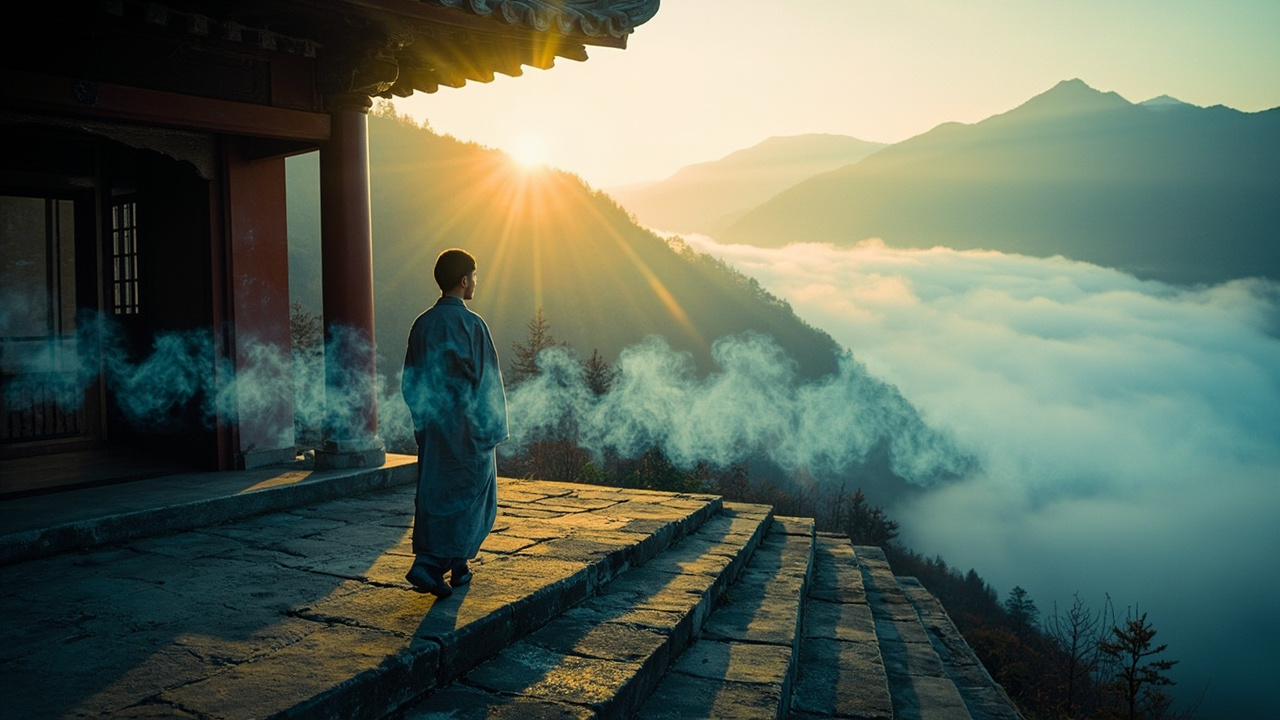
The first thing I noticed wasn’t the temple. It was the sound.
I’d taken the 6:47 a.m. train from Zhengzhou to Dengfeng, dozed through the flat wheat plains of Henan, and stepped off into a parking lot where a man in a tracksuit was already shouting into his phone. Then, behind the ticket gate, I heard it: a low, rhythmic hah — maybe forty voices, hitting the same beat, punctuated by the slap of bare feet on stone. It was 8:15 in the morning. The monks had been at it for over an hour.
I’d come to Shaolin expecting a museum. I got a working monastery with a martial arts school attached, a tourist circus on the edges, and a genuinely strange, beautiful core in the middle. I paid 80 yuan to get in, got scammed 50 more on a “master’s blessing,” and spent the rest of the day watching teenage monks do things with their bodies that shouldn’t be physically possible.
Shaolin Temple (少林寺, Shàolín Sì) sits in the Songshan mountains of Henan Province, about 90 minutes from Zhengzhou by train and bus. It’s the birthplace of Chan Buddhism and, more famously, of kung fu. It’s also one of China’s most-visited religious sites, which means you need to plan around the crowds, not through them. This guide covers exactly how to get there, what to skip, what to pay for, and the one thing almost every foreign visitor gets wrong on their first trip.
Quick answer
Shaolin Temple is in Dengfeng, Henan Province, about 90 minutes from Zhengzhou by high-speed rail plus a 30-minute bus or taxi. Entry is 80 yuan (about $11) for the main temple, plus 100 yuan ($14) for the separate Damo Cave and Sanhuangzhai cable car area. Most foreign visitors can now enter China visa-free for up to 30 days under the 2026 expanded policy — check your nationality on the visa-free transit guide before booking. Go on a weekday morning, arrive by 8 a.m., and budget a full day.
The Short Version
If you have 90 seconds: go on a Tuesday. Arrive at opening. Skip the “Shaolin kung fu show” at the entrance — it’s a 40-minute tourist trap. Pay the extra 100 yuan for the cable car up to Sanhuangzhai, because the view from the ridge is the actual reason to come. Bring cash for the small temples inside. Don’t buy the “blessing beads.” Wear shoes you can climb stairs in. And if you only have half a day, do the temple and the Pagoda Forest and leave.
How I Picked These
I’ve been to Shaolin four times over seven years — twice solo, once with my parents visiting from Ohio, once with a Chinese friend from Zhengzhou who grew up 40 minutes away and had never actually been inside. That last trip was the most useful, because she translated the arguments between the ticket scalpers and the official staff and told me which “monk” was actually a hired performer.
Everything below is based on those visits, plus conversations with a Dengfeng taxi driver named Liu who has driven the Zhengzhou–Shaolin route for 19 years, and a hostel receptionist in Zhengzhou who keeps a running list of which tour buses are worth it. Prices are 2026 estimates. Where I’m unsure, I say so.
Comparison Table
| Rank | Place | Best For | Approx Cost (USD) | Time Needed | When to Go |
|---|---|---|---|---|---|
| 1 | Shaolin Temple Main Complex | First-timers, history, monks | $11 (80 CNY) | 2–3 hrs | Weekday 8–10 a.m. |
| 2 | Pagoda Forest (Talin) | Photography, quiet | Included | 45 min | Early morning |
| 3 | Sanhuangzhai Ridge | Views, hiking | $14 (100 CNY) + cable car | 3–4 hrs | Clear days, spring/fall |
| 4 | Damo Cave | Pilgrims, legend-seekers | $14 (100 CNY) | 1.5 hrs | Weekday |
| 5 | Shaolin Wushu School Demo | Kung fu fans | Free–$7 (50 CNY) | 1 hr | 10:30 a.m. or 3 p.m. |
| 6 | Zhongyue Temple (Dengfeng) | Taoist architecture | $4 (30 CNY) | 1.5 hrs | Afternoon |
| 7 | Songyang Academy | History nerds | $4 (30 CNY) | 1 hr | Any |
| 8 | Gaocheng Observatory | Astronomy, offbeat | $4 (30 CNY) | 1 hr | Clear days |
| 9 | Dengfeng Old Town | Food, local life | Free | 2 hrs | Evening |
| 10 | Zhengzhou (base city) | Museums, transport hub | Varies | 1–2 days | Any |
Shaolin Temple Main Complex — Where the Monks Actually Live
The first time I walked through the main gate, I made the mistake of following the crowd to the right, toward the performance hall. Don’t. Turn left instead, past the incense burner, and you’ll find the actual working monastery — the Hall of Heavenly Kings, the Mahavira Hall, the meditation halls where monks still sit in silence for hours.
The main complex is where Chan Buddhism was founded by Bodhidharma in the 5th century, and where kung fu was developed as a form of moving meditation. That’s not marketing — you can watch it happen. On my second visit I stood in a side courtyard for 20 minutes watching four teenage monks practice a staff form, over and over, without a single word. No audience. No cameras. Just the sound of wood hitting stone.
The temple has been destroyed and rebuilt many times — most recently after the warlord Shi Yousan burned it in 1928. What you see now is largely Qing dynasty and later reconstruction, which disappoints some people. I think it’s more interesting: you’re watching a living institution that keeps rebuilding itself.
📍 Location: Shaolin Temple Scenic Area, Dengfeng, Zhengzhou, Henan
🎟️ Entry fee: 80 yuan ($11) for the main complex and Pagoda Forest. Separate 100 yuan ($14) ticket for Sanhuangzhai/Damo Cave area.
🕒 Opening hours: 8:00 a.m.–5:30 p.m. (winter until 5:00 p.m.). No closed days.
🚕 How to get there: High-speed train from Zhengzhou East Station to Dengfeng (about 45 min, 30–50 yuan), then taxi or bus 8 to the scenic area (30 min, 25 yuan taxi). Or direct tourist bus from Zhengzhou Central Station (2 hrs, 35 yuan).
⏰ When to visit: Weekday mornings. Avoid Chinese public holidays entirely — Golden Week turns this into a crush of 40,000 people a day.
💡 Insider tips: Buy your ticket online through the official WeChat mini-program to skip the queue. Bring small bills — the inner temples have donation boxes and no card readers. The “monks” selling blessings near the entrance are not monks. Set up Alipay or WeChat Pay before you arrive, because the ticket office takes cash but the food stalls mostly don’t.
🍜 I ate a bowl of vegetarian noodles at the temple canteen for 15 yuan — bland, but the only honest meal on the whole site.
Pagoda Forest (Talin) — The Quietest Place on the Mountain
Nobody warns you that the best part of Shaolin is a graveyard.
The Pagoda Forest sits about 300 meters west of the main temple, and it holds 240+ stone and brick pagodas built between the Tang and Qing dynasties as tombs for abbots and senior monks. Each one is different. Some are simple brick cylinders. Some are ornate multi-tiered towers with carved lions and lotus flowers. The oldest dates to 791 AD.
I went there on my third visit, on a rainy Tuesday in October, and had the entire forest to myself for 40 minutes. The rain made the brick darker and the moss greener, and I could hear water dripping off the eaves of a Tang pagoda into a stone basin. It’s the only place at Shaolin where I’ve felt something close to what pilgrims probably feel.
Most tour groups skip it because it’s a 10-minute walk and there’s no show. That’s exactly why you should go.
📍 Location: 300m west of the main temple, within the same ticket zone 🎟️ Entry fee: Included with the 80 yuan main ticket 🕒 Opening hours: Same as main temple, 8:00 a.m.–5:30 p.m. 🚕 How to get there: Walk west from the main temple exit, follow the signs. About 10 minutes on flat path. ⏰ When to visit: Right after the main temple, before lunch. Or late afternoon when the light comes through the pagodas sideways. 💡 Insider tips: The pagodas are not labeled in English. Download a translation app — I use Pleco — to read the inscriptions. Don’t touch the carvings; there’s a monk who watches and will yell. The best photos are from the low end of the slope looking up. 📷 I met a retired teacher from Kaifeng there who told me her grandfather had been a monk at Shaolin in the 1930s. She was crying quietly at one of the pagodas. I didn’t ask which one.
Sanhuangzhai Ridge — The Reason You Actually Came
Here’s my honest opinion: if you skip Sanhuangzhai, you’ve wasted the trip.
The main temple is interesting. The ridge is spectacular. Sanhuangzhai (三皇寨) is a 1,500-meter-high peak in the Songshan range, reached by a cable car (100 yuan round trip) and then a 2–3 hour cliff walk along a path bolted into the rock face. The path is narrow, sometimes only a meter wide, with a sheer drop on one side and a vertical wall on the other. There are chains to hold. There are also sections where you walk across a swaying suspension bridge over a 200-meter gorge.
I did this with my parents, who are in their late 60s, and they made it fine — slowly. But if you’re afraid of heights, this is not the hike for you. There are no railings in some sections, just a chain and a prayer.
The geology is the real draw. The Songshan range is one of China’s official “Geoparks,” and the rock formations here — tilted strata, vertical cliffs, deep gorges — are the reason Chinese geology textbooks use this area as a reference site. On a clear day you can see 40 kilometers.
📍 Location: Sanhuangzhai Scenic Area, accessed via cable car from the Shaolin complex 🎟️ Entry fee: 100 yuan (~$14) for the Sanhuangzhai/Damo Cave zone, plus 100 yuan cable car round trip 🕒 Opening hours: Cable car runs 8:30 a.m.–5:00 p.m. (last descent 5:30 p.m.) 🚕 How to get there: From the main Shaolin ticket gate, walk 15 minutes to the cable car station (signed in English). Or take the shuttle bus (10 yuan). ⏰ When to visit: Clear days only. Spring (April–May) and fall (September–October) are ideal. Summer is brutally hot and humid. Winter can be icy and the cable car sometimes closes. 💡 Insider tips: Bring at least 1.5 liters of water per person — there’s one small shop at the top and it charges 3x normal prices. Wear shoes with grip. The path is one-way in sections, so you can’t turn back easily. Start by 10 a.m. to avoid the afternoon tour groups. 🥾 I watched a man in leather dress shoes attempt the cliff path. He made it about 200 meters before turning around. Don’t be him.
Damo Cave — Where Bodhidharma Sat for Nine Years
The legend goes like this: Bodhidharma, the Indian monk who brought Chan Buddhism to China, sat facing a wall in a cave near Shaolin for nine years. His legs allegedly fell off from disuse. (They didn’t. But the story is the story.)
The cave itself is a small natural grotto on a hillside above the temple, about a 40-minute walk or a short cable car ride from the Sanhuangzhai station. Inside there’s a small shrine, a lot of incense smoke, and a rock that pilgrims touch for luck. It’s not spectacular. It is, however, the actual place where one of the most important figures in East Asian religious history supposedly sat.
I went on a weekday in March and shared the cave with three elderly women from Shandong who were doing a full pilgrimage circuit. One of them gave me a tangerine. That was better than the cave.
📍 Location: Hillside above Shaolin, accessible from the Sanhuangzhai cable car 🎟️ Entry fee: Included in the 100 yuan Sanhuangzhai ticket 🕒 Opening hours: 8:30 a.m.–4:30 p.m. 🚕 How to get there: Cable car from the main complex, then a 20-minute uphill walk ⏰ When to visit: Morning, before the incense smoke gets thick 💡 Insider tips: The path up is steep and uneven. If you have knee problems, skip it. There’s no English signage. Bring a small offering (fruit, flowers) if you want to participate respectfully. 🍊 The tangerine from the Shandong pilgrim was the best thing I ate all day.
The Kung Fu Demonstrations — What’s Real and What Isn’t
There are two kinds of kung fu shows at Shaolin. The first is the big one near the entrance — 40 minutes, 100 yuan, professional performers doing choreographed routines with fake weapons and a lot of dramatic music. It’s fine. It’s also basically a Chinese theme park show.
The second is the one you actually want: the daily training demonstrations at the Shaolin Wushu Tagou School and the smaller schools scattered around the scenic area. These are real students, aged 6 to 20, practicing real forms. Some are free to watch. Some charge 50 yuan. The 10:30 a.m. and 3:00 p.m. sessions at the main training yard are the most accessible.
I watched a 9-year-old do a backflip off a two-meter wall and land in a horse stance without a wobble. His instructor, a man in his 40s with a shaved head, watched without expression and then said one word. The kid did it again.
📍 Location: Multiple training yards around the Shaolin Scenic Area 🎟️ Entry fee: Free to 50 yuan (~$7) depending on the school 🕒 Opening hours: Training typically 6:30–8:00 a.m. and 3:00–5:00 p.m.; demos at 10:30 a.m. and 3:00 p.m. 🚕 How to get there: Ask your taxi driver for “Wushu Xuexiao” — they all know ⏰ When to visit: Morning training is the most impressive 💡 Insider tips: Don’t film children without asking. Ask the instructor first — most say yes. Don’t try to join in. 🥋 The 9-year-old’s name was Wei. He told me he’d been at the school for four years. He was nine.
Zhongyue Temple — The Taoist Counterpoint
Most people don’t know that 15 minutes from Shaolin, in Dengfeng town, there’s a Taoist temple that predates the Buddhist one and gets a fraction of the visitors.
Zhongyue Temple (中岳庙) was founded in the Qin dynasty and expanded under the Song. It’s dedicated to the god of the central sacred mountain, Songshan. The complex is huge — over 400 meters long, with four courtyards, 11 halls, and hundreds of ancient cypress trees. The oldest tree is said to be 3,000 years old.
I went on a Sunday afternoon and counted maybe 30 other visitors. The main hall has a painted ceiling that’s genuinely beautiful, and the courtyards smell like old wood and dust. There’s a small Taoist community still living there. One of them, a man in his 70s with a long white beard, was sweeping leaves and ignored me completely, which I respected.
📍 Location: Dengfeng town center, about 15 km from Shaolin 🎟️ Entry fee: 30 yuan (~$4) 🕒 Opening hours: 8:00 a.m.–5:30 p.m. 🚕 How to get there: Taxi from Shaolin (about 30 yuan) or bus 2 from Dengfeng bus station ⏰ When to visit: Any afternoon. It’s rarely crowded. 💡 Insider tips: The English signage is minimal. The cypress trees are the highlight — some are over 2,000 years old. There’s a small vegetarian restaurant inside the complex. 🌳 I sat under a 2,000-year-old cypress for 20 minutes and did nothing. Recommended.
Songyang Academy — Where China’s Confucian Elite Studied
Songyang Academy (嵩阳书院) is one of the four great Confucian academies of ancient China, founded in the Northern Wei dynasty and active for over 1,500 years. It’s a small, quiet complex of halls and courtyards at the foot of the mountain, and it’s where scholars prepared for the imperial exams that ran China for centuries.
I’m not going to pretend I found it thrilling. It’s a series of wooden buildings with plaques. But if you care about how Chinese education worked, it’s worth an hour. The two “general cypress” trees in the front courtyard are supposedly 4,000 years old, which is almost certainly an exaggeration, but they are very large and very old.
📍 Location: North of Dengfeng town, at the base of Songshan 🎟️ Entry fee: 30 yuan (~$4) 🕒 Opening hours: 8:00 a.m.–5:30 p.m. 🚕 How to get there: Taxi from Shaolin (about 35 yuan) or 20-minute walk from Zhongyue Temple ⏰ When to visit: Combine with Zhongyue Temple in one afternoon 💡 Insider tips: The calligraphy on the plaques is worth photographing. Bring a translation app. 📚 I met a Chinese graduate student there who was doing research on the imperial exam system. She explained more in 10 minutes than the signage did in an hour.
Gaocheng Observatory — The Offbeat One
If you like astronomy or just weird historical sites, Gaocheng Observatory (观星台) is a 13th-century astronomical observatory built by the Yuan dynasty astronomer Guo Shoujing. It’s essentially a giant stone sundial used to calculate the length of the solar year. It’s a UNESCO World Heritage site as part of the “Historic Monuments of Dengfeng.”
It’s small. It’s quiet. It’s about 20 minutes from Dengfeng town by taxi. There’s almost no English signage and almost no other foreign visitors.
📍 Location: Gaocheng town, 15 km southeast of Dengfeng 🎟️ Entry fee: 30 yuan (~$4) 🕒 Opening hours: 8:00 a.m.–5:00 p.m. 🚕 How to get there: Taxi from Dengfeng (about 40 yuan) ⏰ When to visit: Clear day, midday, when the shadow is most visible 💡 Insider tips: This is a niche stop. Skip it if you’re short on time. Go if you like science history. 🔭 I was the only visitor. The ticket lady seemed surprised to see me.
Dengfeng Old Town — Where to Actually Eat
Dengfeng is a small city, and its old town area has the best food in the region. Henan cuisine is not famous internationally, but it’s honest and cheap. Look for:
- Huimian (烩面) — thick hand-pulled noodles in lamb broth, 15–25 yuan
- Hulatang (胡辣汤) — spicy peppery soup, usually breakfast, 8–12 yuan
- Shaobing (烧饼) — sesame flatbread, 3–5 yuan
I ate dinner at a tiny shop with no English menu and no English name, pointed at what the man next to me was eating, and got a bowl of huimian that was better than anything I ate inside the scenic area. Total cost: 22 yuan.
📍 Location: Dengfeng old town, around Songshan Road 🎟️ Entry fee: Free 🕒 Opening hours: Most restaurants 10 a.m.–9 p.m. 🚕 How to get there: Taxi from Shaolin (30 yuan) or bus 1 or 2 from the scenic area ⏰ When to visit: Dinner, around 6–8 p.m. 💡 Insider tips: Bring a translation app. Most shops take WeChat Pay but not foreign cards. Carry cash as backup. 🍜 The man next to me was a bus driver named Zhang. He told me to order the huimian “extra spicy” and he was right.
Zhengzhou — Your Base City
Almost everyone flies into Zhengzhou (CGO) and takes the train to Dengfeng. Zhengzhou itself is often dismissed as a transit city, but it’s worth one night. The Henan Museum is genuinely excellent (free, but book online in advance), and the Erqi Square area has good street food.
If you’re coming from Beijing or Xi’an, the high-speed rail is fast and easy — see the China train travel guide for booking tips. If you’re combining this with other stops, the top 10 must-visit places in China list is a good place to plan the broader route.
📍 Location: Henan Province, central China 🎟️ Entry fee: Varies 🕒 Opening hours: N/A 🚕 How to get there: High-speed rail from Beijing (2.5 hrs), Xi’an (2 hrs), Shanghai (4 hrs) ⏰ When to visit: Any time as a transit stop 💡 Insider tips: Set up your SIM card and internet access before you arrive — Zhengzhou airport has SIM counters but they’re slow. Download a VPN before you land if you need Google, Instagram, or WhatsApp. 🚆 I once missed the last train back to Zhengzhou from Dengfeng and had to pay 180 yuan for a taxi. Don’t do that. The last train is around 8:30 p.m.
FAQ summary
Shaolin Temple is a full-day trip from Zhengzhou, costing roughly $25–40 per person including transport, entry, and cable car. Most foreign visitors can enter China visa-free for up to 30 days in 2026. Go on a weekday, arrive at opening, and prioritize the Pagoda Forest and Sanhuangzhai ridge over the entrance kung fu show. Bring cash, set up Alipay or WeChat Pay in advance, and download a translation app — English signage is limited.
FAQ
Q: Do I need a visa to visit Shaolin Temple in 2026? A: Most foreign visitors from the US, UK, EU, Australia, and much of Southeast Asia can enter China visa-free for up to 30 days under the 2026 expanded policy. Check your specific nationality on the visa-free transit guide before booking. If you’re not eligible, apply for a standard tourist visa at least 4 weeks in advance.
Q: How do I get to Shaolin Temple from Zhengzhou? A: Take the high-speed train from Zhengzhou East Station to Dengfeng (45 minutes, 30–50 yuan), then a taxi or bus 8 to the scenic area (30 minutes, 25 yuan). Alternatively, direct tourist buses run from Zhengzhou Central Station (2 hours, 35 yuan). The last train back to Zhengzhou leaves around 8:30 p.m.
Q: How much does a day at Shaolin Temple cost? A: Budget around $25–40 (180–290 yuan) per person: 80 yuan main temple entry, 100 yuan Sanhuangzhai ticket, 100 yuan cable car round trip, plus food and transport. You can do it for under $20 if you skip the cable car and eat at the temple canteen.
Q: Is Shaolin Temple worth visiting for non-martial-arts fans? A: Yes, but for different reasons. The Pagoda Forest, the Chan Buddhist history, and the Sanhuangzhai ridge hike are the highlights for most visitors. The kung fu shows are optional. If you only care about martial arts, the training schools are more interesting than the temple itself.
Q: What’s the best time of year to visit Shaolin Temple? A: April–May and September–October. Spring and fall have mild temperatures, clear skies for the ridge hike, and manageable crowds. Avoid Chinese public holidays (especially Golden Week in early October and Lunar New Year) when daily visitors can exceed 40,000.
Q: Do I need cash at Shaolin Temple? A: Yes, bring some. Ticket offices take cash and cards, but small temples, food stalls, and donation boxes often only take cash or WeChat Pay. Set up Alipay or WeChat Pay before you arrive, but keep 200–300 yuan in small bills as backup.
Q: Is English spoken at Shaolin Temple? A: Barely. Signage is in Chinese and English in the main areas, but staff, taxi drivers, and food vendors generally don’t speak English. Download a translation app like Pleco or Baidu Translate before you go. A VPN is also useful if you rely on Google Translate, which doesn’t work in China without one.
The Honest Wrap-up
This guide is for the traveler who wants to see Shaolin properly, not just check it off. If you’re looking for a quick photo stop between Zhengzhou and Luoyang, book a tour bus and be done in four hours. If you want to understand why this place matters — why monks still train here, why pilgrims still come, why the pagodas are worth more than the shows — give it a full day and go on a weekday.
The one piece of advice I’d give a friend booking the flight: don’t over-plan the day. The best moments at Shaolin aren’t on the schedule. They’re the 20 minutes you spend watching a kid practice a form, or the tangerine a stranger gives you in a cave. Leave room for that.
More guides you may like

Top 10 Bridges in China
China's bridges are engineering marvels spanning mountains, rivers, and seas. Here are 10 of the most spectacular, from ancient stone to modern steel.
8 min read

Top 10 Buddhist Sites in China
From the Leshan Giant Buddha to the Dunhuang Caves, these 10 Buddhist sites represent 2,000 years of China's spiritual heritage.
9 min read

Top 10 Day Trips from Beijing You Shouldn't Miss
Beijing is packed with history, but some of China's best experiences are just a few hours away. Here are 10 day trips that will transform your visit.
9 min read

Top 10 Hidden Gems in China Off the Beaten Path
Beyond the Great Wall and Terracotta Warriors, China has incredible hidden destinations few tourists ever reach. Here are 10 underrated gems worth the detour.
9 min read

Top 10 Markets and Shopping Streets in China
From Shanghai's Bund to Beijing's Silk Street - 10 markets where foreigners can haggle, explore, and bring home authentic Chinese goods.
9 min read

Top 10 Museums in China You Shouldn't Miss
China's museums span 5,000 years of civilization. These 10 - from the Palace Museum to Xi'an's terracotta gallery - are unmissable for culture lovers.
9 min read