
Mount Tai Sacred Peak: The Complete 2026 Guide
The night before I climbed Mount Tai, a shopkeeper in Tai'an looked at my hiking shoes and laughed.
The night before I climbed Mount Tai, a shopkeeper in Tai’an looked at my hiking shoes and laughed. “You think you need those?” she said in Chinese, gesturing at her own flat canvas sneakers. “The mountain decides if you make it, not the shoes.” She sold me a wooden walking stick anyway, the kind every vendor along the road sells for about $2 (¥15). That stick saved me more times than I want to admit over the next nine hours.
Mount Tai is the most climbed mountain in China, and it’s also the most sacred. For over 3,000 years, emperors climbed it to prove they had the Mandate of Heaven. Poets carved verses into its cliffs. Pilgrims still crawl up its 6,000+ stone steps on their knees. It’s not the tallest peak in China by a long shot, but it might be the one that matters most.
This guide covers everything a first-time visitor needs: how to get there, which of the three routes to take, what it costs, when to go, and the mistakes I made so you don’t have to.
Quick answer
Mount Tai (Taishan) is a 1,545-meter sacred peak in Shandong Province, about 2 hours from Beijing by high-speed train. A day trip costs roughly $50–80 (¥360–580) per person including transport, entry, and food. The most popular way to visit is an overnight hike to watch sunrise from the summit, but you can also take a cable car up and walk down. You don’t need a special permit, and the mountain is open year-round, though spring and autumn are the best seasons.
The Short Version
If you only have 90 seconds, here’s the deal. Go at night, hike the Red Gate route, watch sunrise from the top, then take the cable car down if your knees protest. Bring cash for the mountain vendors (some take WeChat Pay, but signal gets patchy). Book your summit hotel or hostel bed at least a week ahead in peak season. Skip the summer weekends unless you enjoy shuffling up stairs behind 10,000 other people. The mountain is worth the hype, but only if you time it right.
How I Picked These
I’ve climbed Mount Tai four times over seven years living in Beijing. Twice in spring, once in autumn, once in a miserable August rainstorm that I still have nightmares about. I’ve taken all three main routes, stayed in the summit hostels, eaten the instant noodles at 1,500 meters, and argued with a taxi driver about whether the cable car was actually running (it wasn’t). I’ve also talked with local guides, temple caretakers, and the elderly women who carry water bottles up the mountain for a living. The advice below comes from those trips and those conversations, not from a tourism brochure.
Comparison Table
| Rank | Place | Best For | Approx Cost (USD) | Time Needed | When to Go |
|---|---|---|---|---|---|
| 1 | Red Gate Route (Hongmen) | Classic full hike, history | $18 entry (¥130) | 5–7 hours up | Apr–Jun, Sep–Oct |
| 2 | Summit Sunrise (Riguang Peak) | The iconic experience | $30–80 (¥220–580) | Overnight | Any clear day |
| 3 | Mid-Heaven Gate Cable Car | Saving your knees | $14 one-way (¥100) | 15 minutes | Year-round |
| 4 | Tianjie (Heavenly Street) | Food, souvenirs, rest | Free (inside park) | 1–2 hours | Any time |
| 5 | Dai Temple (Daimiao) | History without hiking | $8 (¥60) | 2–3 hours | Morning |
| 6 | West Route (Tianwaicun) | Quiet, less crowded | $18 entry (¥130) | 4–6 hours up | Weekdays |
| 7 | East Route (Tianzhu Peak) | Hardcore hikers only | $18 entry (¥130) | 7–9 hours | Apr–Oct |
| 8 | Bixia Temple (Summit) | Pilgrimage site | Free (inside park) | 30–45 minutes | Early morning |
| 9 | Stone Carvings (Moya) | Ancient inscriptions | Free (inside park) | 30 minutes | Daytime |
| 10 | Taishan World Geopark | Geology, less crowded | $18 entry (¥130) | Half day | Spring/Autumn |
Red Gate Route (Hongmen) — The Classic Ascent
The first time I climbed Mount Tai, I made the mistake of looking up at the stairs from the base. It’s demoralizing. The Red Gate route starts at the Dai Temple area and climbs 7,200 stone steps to the summit, passing through three gates that historically marked the boundary between earth and heaven. The path winds through pine forests, past carved cliffs, and under archways that have stood for centuries.
What makes this route special is the history. You’re walking the same stones that emperors walked. The famous “Cloud Step Bridge” and the “18 Bends” (the final brutal 1,600 steps) are both on this path. The last section is genuinely hard, but every time you think you can’t go on, you pass an elderly pilgrim who’s been climbing since dawn and somehow feels shameful.
The route takes 5–7 hours depending on your fitness and how often you stop for water. I stopped too often. The vendors along the way sell water, fruit, and the best thing on the mountain: fresh cucumber slices with chili salt. Don’t skip those.
📍 Location: Starts at Hongmen Gate, Tai’an city center 🎫 Entry fee: $18 (¥130) for the mountain park; Dai Temple is separate at $8 (¥60) 🕒 Opening hours: Open 24 hours for hikers; the park office opens at 6:00 AM 🚕 How to get there: From Tai’an Station, take bus K3 to Hongmen Terminal (30 minutes). Or take a taxi for about $3 (¥20). If arriving by high-speed rail at Tai’an Station, the taxi is about $6 (¥40). 🕰 When to visit: Start at 9:00 AM for a daytime climb, or 10:00 PM for a sunrise summit arrival. Avoid summer weekends. 💡 Insider tips: Buy your walking stick at the base for $2 (¥15), not at the halfway point where it’s $5. Bring your own water bottle and refill at the vendor stalls. The “18 Bends” section is the hardest part, and there’s a rest area right before it. Don’t trust the weather forecast from the base; conditions change dramatically with elevation.
I met a retired teacher from Jinan on my first climb who told me she’d done this route 47 times. “Every time is different,” she said. “The mountain gives you what you need, not what you want.”
Summit Sunrise (Riguang Peak) — The Reason Everyone Comes
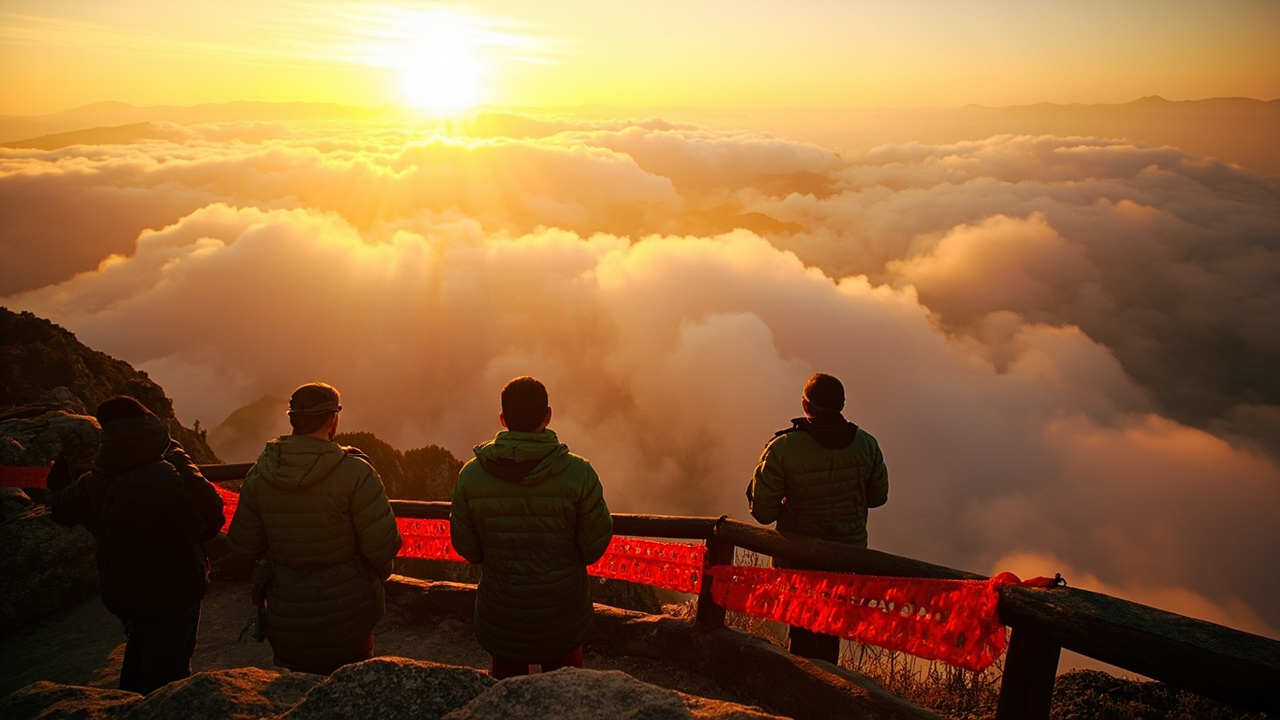
I’ve watched the sun rise from a lot of places. Mount Tai is the only one where I heard a crowd of hundreds go completely silent, then burst into applause when the first edge of the sun appeared over the clouds. It’s a moment that makes you understand why emperors made this pilgrimage for thousands of years.
The sunrise viewing spot is Riguang Peak, also called “Sun Viewing Peak.” On clear mornings, you can see the Yellow River to the west and, on exceptionally clear days, the sea to the east. The clouds below you look like a white ocean, and the peaks of lesser mountains poke through like islands.
Here’s the thing nobody tells you: the sunrise is not guaranteed. I’ve been up there three times and seen it twice. The third time, we got fog and rain. The locals say the mountain has about 200 clear days a year, mostly in autumn. If you go in summer, you’re gambling.
📍 Location: Riguang Peak, summit of Mount Tai 🎫 Entry fee: Included in the $18 (¥130) park entry 🕒 Opening hours: Open 24 hours; sunrise is around 5:00–5:30 AM in summer, 6:30–7:00 AM in winter 🚕 How to get there: Hike up overnight (5–7 hours) or take the cable car from Mid-Heaven Gate (last car around 5:00 PM, so you’d need to stay overnight at the summit) 🕰 When to visit: October has the highest chance of clear skies. Check the weather forecast for Tai’an, not the summit, and look for “clear” not “partly cloudy.” 💡 Insider tips: Rent a heavy coat at the summit for $4 (¥30) if you didn’t bring one. The summit is 15–20°F colder than the base. Arrive at the viewing platform at least 45 minutes before sunrise to get a good spot. The best views are actually from the eastern edge of the platform, not the center. Bring a headlamp for the final ascent in the dark.
The silence before the sun rose was the strangest thing. A thousand people, and you could hear the wind. Then the applause. I still get goosebumps thinking about it.
Mid-Heaven Gate Cable Car — The Easy Way Down (or Up)
After hiking up 7,200 steps, the cable car down from Mid-Heaven Gate (Zhongtianmen) feels like a gift from the gods. The ride takes about 15 minutes and gives you a completely different perspective on the mountain, with the stone steps and temples shrinking below you.
The cable car runs from Mid-Heaven Gate to the summit area (Tianjie), and it’s the only way to avoid the final, brutal 18 Bends section. If you’re not a hiker, you can take a bus from the base to Mid-Heaven Gate, then the cable car to the top. This is the “lazy route” and it’s totally legitimate.
One warning: the cable car closes in high winds and during thunderstorms. I once waited two hours at Mid-Heaven Gate for it to reopen, and it never did. The walk down took me three hours and my knees filed a formal complaint.
📍 Location: Mid-Heaven Gate, halfway up the mountain 🎫 Entry fee: $14 one-way (¥100), $28 round-trip (¥200) 🕒 Opening hours: 6:30 AM–5:30 PM (hours vary by season; check the day before) 🚕 How to get there: From the base, take the tourist bus from Tianwaicun to Mid-Heaven Gate ($8/¥60 round-trip), then the cable car. Or hike up the Red Gate route and take the cable car down. 🕰 When to visit: Go early morning (before 9:00 AM) to avoid the crowds. The line can be 1–2 hours in peak season. 💡 Insider tips: The cable car line is shortest right when it opens. If the wind is strong, check the official WeChat account for closure notices before you hike up. The last cable car down is earlier than you think, so don’t linger at the summit. Buy your return ticket before you go up; the ticket office at the summit gets chaotic.
I shared a cable car with a family from Guangzhou who had hiked up in two hours. The grandmother was 68 and hadn’t broken a sweat. I was 35 and needed both hands on the railing. The mountain humbles everyone.
Tianjie (Heavenly Street) — The Summit Village
The summit of Mount Tai isn’t just a peak; it’s a small town. Tianjie, which translates to “Heavenly Street,” is a pedestrian lane lined with restaurants, souvenir shops, and hotels. It’s where you’ll find food, warmth, and a place to sleep if you’re doing the overnight sunrise hike.
The food is surprisingly decent for a mountain top. There’s a noodle shop that serves a bowl of beef noodles for $5 (¥35) that tastes better than it has any right to at 1,500 meters. The instant noodle stalls are cheaper, around $2 (¥15), and come with a free cup of hot water. In winter, that hot water is worth more than gold.
The souvenir shops sell everything from jade pendants to wooden plaques with your name carved in Chinese. The prices are inflated, but not egregiously. A small Buddha statue that costs $3 at the base will be $8 up here. You’re paying for the altitude.
📍 Location: Summit of Mount Tai, near the cable car arrival point 🎫 Entry fee: Free (inside the park) 🕒 Opening hours: Shops open roughly 6:00 AM–10:00 PM, but some restaurants stay open later 🚕 How to get there: Walk from the cable car station or hike up any route to the summit 🕰 When to visit: Late afternoon if you’re staying overnight, or early morning after sunrise 💡 Insider tips: The hot water stations are free, so bring instant noodles and a cup. The toilets at the summit are surprisingly clean but have long lines in the morning. The hotel prices on Tianjie are negotiable if you book in person rather than online. Don’t buy the “authentic” Tai Shan jade here; it’s mostly glass.
I ate a bowl of noodles at a tiny shop on Tianjie at 4:00 AM, surrounded by hikers wrapped in rented green coats. A woman from Shanghai shared her table and her story of climbing with her 70-year-old father. “He’s been waiting 30 years for this,” she said. “I think I understand why now.”
Dai Temple (Daimiao) — The History Before the Hike
Most tourists skip the Dai Temple at the base of Mount Tai, and that’s a mistake. This is the largest and most well-preserved temple complex on the mountain’s “sacred path,” and it’s where emperors would prepare themselves before their ascent. It’s been here since the Han Dynasty, though most of what you see today dates from the Ming and Qing periods.
The temple is massive, covering about 96,000 square meters. The main hall, Tiankuang Hall, has walls covered in murals depicting the emperor’s procession to the mountain. The murals are over 600 years old and still vivid. There’s also a collection of stone tablets with inscriptions from various dynasties, some of which are over 1,000 years old.
What I love about the Dai Temple is that it’s calm. The crowds are on the mountain, not here. You can wander the courtyards, sit by the ancient cypress trees, and imagine what it was like to be an emperor standing where you’re standing.
📍 Location: Dai Temple, Tai’an city center, at the base of the Red Gate Route 🎫 Entry fee: $8 (¥60) 🕒 Opening hours: 8:00 AM–5:30 PM (last entry at 5:00 PM) 🚕 How to get there: From Tai’an Station, walk 15 minutes or take bus K3 to the Dai Temple stop. From Tai’an High-Speed Rail Station, take bus K37 or a taxi ($5/¥35). 🕰 When to visit: Weekday mornings are best. The temple gets busy with tour groups after 10:00 AM. 💡 Insider tips: The temple has a small museum with artifacts from the mountain, including ancient jade objects. The cypress trees in the courtyard are over 2,000 years old; the one near the main hall is said to have been planted by Emperor Wu of Han. Combine this with your mountain visit; the temple is the traditional starting point of the pilgrimage.
I watched a group of elderly women light incense and bow three times at the main hall, their movements precise and practiced. One of them caught me watching and smiled. “You go up tomorrow?” she asked. “The mountain will take care of you.”
West Route (Tianwaicun) — The Quiet Alternative
If the Red Gate Route is the crowded highway, the West Route is the back road. It starts at Tianwaicun, a village on the western side of the mountain, and climbs through a different landscape: fewer temples, more forest, and significantly fewer people. You’ll see wildflowers in spring, and the path is shadier, which makes it more comfortable in summer.
The West Route is also where the tourist bus runs. You can take a bus from the base to Mid-Heaven Gate, which is where the West Route connects with the main path. This makes it a good option if you want to hike partway but skip the hardest sections.
The downside is that you miss most of the historical sites. The Red Gate Route has all the famous inscriptions and temples. The West Route is more about the natural scenery. If you’re a hiker who cares more about the climb than the history, this is your route.
📍 Location: Starts at Tianwaicun, western base of Mount Tai 🎫 Entry fee: $18 (¥130) for the mountain park 🕒 Opening hours: Open 24 hours for hikers; bus runs 6:00 AM–6:00 PM 🚕 How to get there: From Tai’an Station, take bus K16 to Tianwaicun Terminal (40 minutes). Taxi is about $5 (¥35). 🕰 When to visit: Weekdays, especially in April–May when the wildflowers are blooming 💡 Insider tips: The bus to Mid-Heaven Gate is worth the $8 (¥60) round-trip if you’re short on time. The West Route has fewer water vendors, so carry more water than you think you need. The path is less steep than the Red Gate Route, but it’s longer. If you’re doing this route, start early; the last bus down from Mid-Heaven Gate leaves at 6:00 PM.
I met a French couple on the West Route who had been traveling in China for three months. They’d chosen this route because the guidebook said it was “less touristy.” “We have seen many tourists today,” the husband said dryly. “But fewer than yesterday, so it counts.”
East Route (Tianzhu Peak) — For the Hardcore Only
The East Route is not for everyone. It’s the longest, the steepest, and the least developed of the three main routes. It starts at Tianzhu Peak and climbs over 9,000 steps to the summit. There are no cable cars, no buses, and very few vendors. This is the route for people who want to earn the summit.
I’ve only done this route once, and it took me nearly eight hours. The scenery is raw and beautiful, with sections of the path carved directly into the cliff face. You’ll pass fewer temples and more untouched forest. The silence is remarkable; you can hear birds and wind and your own breathing.
The route is also historically significant. It was the path used by the Emperor of the Song Dynasty, and there are inscriptions along the way that date from that period. But don’t expect interpretive signage; this route is for people who already know what they’re looking for.
📍 Location: Starts at Tianzhu Peak, eastern base of Mount Tai 🎫 Entry fee: $18 (¥130) for the mountain park 🕒 Opening hours: Open 24 hours; no facilities after the base 🚕 How to get there: From Tai’an Station, take a taxi to Tianzhu Peak (about $8/¥60). There’s no direct bus. 🕰 When to visit: April–October only. The route is not maintained in winter and can be dangerous with ice. 💡 Insider tips: Carry at least 2 liters of water; there are almost no vendors. The route is poorly marked in sections, so download an offline map before you go. The last section joins the main path near the summit, so you can take the cable car down. Tell someone your plan; this route has no cell signal in parts.
I did this route alone and didn’t see another person for three hours. When I finally reached the summit, a vendor looked at me with surprise. “East route?” he asked. I nodded. He handed me a bottle of water and refused payment. “You earned this,” he said.
Bixia Temple (Summit) — The Pilgrim’s Destination
At the summit of Mount Tai, just past the Tianjie shopping area, sits Bixia Temple. This is the spiritual heart of the mountain, dedicated to Bixia Yuanjun, the Goddess of the Dawn. She’s the protector of women and children, and her temple is the reason many pilgrims make the climb.
The temple is smaller than the Dai Temple at the base, but it’s more intense. Pilgrims burn incense, tie red ribbons to the trees, and kneel in prayer. On festival days, the courtyard is packed. The atmosphere is thick with smoke and devotion, and even if you’re not religious, you can feel the weight of centuries of faith.
The temple was rebuilt in the Ming Dynasty and has been restored several times since. The current structure dates mostly from the Qing period. There’s a bell tower where visitors can ring the bell for good luck, and a small shop selling prayer flags and amulets.
📍 Location: Summit of Mount Tai, near Riguang Peak 🎫 Entry fee: Free (inside the park) 🕒 Opening hours: 6:00 AM–6:00 PM 🚕 How to get there: Walk from the summit cable car station or from Tianjie 🕰 When to visit: Early morning, before the crowds arrive. The temple is most atmospheric at dawn. 💡 Insider tips: The red ribbons tied to the trees are prayer wishes; don’t remove them. The amulets sold here are blessed by the temple and make meaningful souvenirs. If you’re not religious, still be respectful; this is an active place of worship. The temple has a small courtyard with a view of the sunrise, which is a quieter alternative to the main viewing platform.
I watched a young woman tie a red ribbon to a tree branch, her hands shaking slightly. She saw me watching and smiled. “For my mother,” she said. “She couldn’t make the climb. I’m doing it for her.”
Stone Carvings (Moya) — The Mountain as a Canvas
Mount Tai isn’t just a natural landmark; it’s also one of the largest outdoor calligraphy museums in the world. The cliffs are covered in inscriptions from every dynasty since the Qin, when the first emperor ordered a stone to be carved to commemorate his ascent. There are over 2,500 inscriptions scattered across the mountain.
The most famous is the “Diamond Sutra” carving, a massive Buddhist text carved into a rock face in the Tang Dynasty. It’s over 1,300 years old and still legible. There’s also the “Mount Tai” carving near the summit, two characters so large they can be seen from miles away.
The inscriptions are a mix of poetry, philosophy, and imperial decrees. Some are simple: a name and a date. Others are lengthy essays on the nature of heaven and earth. Even if you can’t read Chinese, the sheer scale of the carvings is impressive. These are words carved by emperors and poets who wanted to leave their mark on the most sacred mountain in China.
📍 Location: Scattered along all routes, most concentrated near the Red Gate Route and summit 🎫 Entry fee: Free (inside the park) 🕒 Opening hours: Always accessible 🚕 How to get there: Follow any of the main routes; the carvings are along the path 🕰 When to visit: Daytime, when the light is good for reading the inscriptions 💡 Insider tips: The most famous carvings are near the 18 Bends section of the Red Gate Route. The “Diamond Sutra” is on the West Route, about 30 minutes from the base. Some carvings have been damaged by weathering; the ones under rock overhangs are in the best condition. If you’re interested in the history, hire a guide at the base for about $30 (¥220) for a half-day tour.
I spent an hour at the “Diamond Sutra” carving, trying to decipher the characters with my phone’s translation app. A monk from the nearby temple saw me struggling and pointed to one character. “This one means ‘heart,’” he said. “The most important character in the whole text.”
Taishan World Geopark — The Mountain’s Deeper Story
Most visitors see Mount Tai as a cultural site, but it’s also a geological wonder. The rock that makes up the mountain is over 2.5 billion years old, some of the oldest exposed rock on Earth. The Taishan World Geopark, which overlaps with the main park, tells this story.
The geopark has several interpretive trails and exhibits that explain the mountain’s formation. You’ll learn about the granite and gneiss that make up the peak, the ancient sea that once covered the area, and the tectonic forces that pushed the mountain up over millions of years.
The most impressive geological feature is the “Sea of Clouds” phenomenon, where clouds fill the valleys below the summit, creating the illusion of an ocean. It’s caused by the mountain’s height and the local climate, and it’s one of the four famous sights of Mount Tai, along with the sunrise, the sunset, and the “Golden Belt” of the Yellow River.
📍 Location: Overlaps with the main Mount Tai park; visitor center at the base 🎫 Entry fee: Included in the $18 (¥130) park entry 🕒 Opening hours: Visitor center open 8:00 AM–5:00 PM 🚕 How to get there: The visitor center is at the Red Gate base, near the Dai Temple 🕰 When to visit: Any time, but the “Sea of Clouds” is most common in autumn 💡 Insider tips: The geopark visitor center has English signage, which is rare on the mountain. The “Sea of Clouds” is best viewed from the summit in the early morning. The geological exhibits are a good way to understand why this mountain was considered sacred; the ancient Chinese believed the mountain was the center of the world.
I stood at the summit during a “Sea of Clouds” event and watched the clouds roll in like a tide. A geology student from Beijing University stood next to me, explaining how the phenomenon works. “But the ancients thought it was the breath of dragons,” she said. “I think I prefer their explanation.”
FAQ summary
Mount Tai is accessible to all fitness levels, with options ranging from a full 5–7 hour hike to a bus-and-cable-car combination that takes about 2 hours. The entry fee is $18 (¥130) and the mountain is open 24 hours. The best time to visit is April–June or September–October, with October offering the clearest skies for sunrise. Overnight hikers should book summit accommodation in advance, and all visitors should bring cash, warm clothing, and a walking stick.
FAQ
How do I get to Mount Tai from Beijing? Take the high-speed train from Beijing South Station to Tai’an Station, which takes about 2 hours and costs $30–40 (¥220–290) one-way. From Tai’an Station, take bus K3 or a taxi to the mountain base. Alternatively, take a train to Jinan and transfer, but the direct train is easier.
Do I need a guide to climb Mount Tai? No, the main routes are well-marked and you’ll be surrounded by other hikers. A guide is only useful if you want detailed historical explanations of the inscriptions and temples. You can hire one at the base for about $30 (¥220) for a half-day.
Can I use credit cards or do I need cash? Bring cash. The mountain vendors and many small shops only accept cash or WeChat Pay. If you’re using Alipay or WeChat Pay, make sure your account is set up before you arrive, as cell signal is patchy on the mountain.
Is the sunrise worth the overnight hike? Yes, if the weather is clear. Check the forecast for Tai’an the day before; if it’s cloudy or raining, the sunrise will likely be obscured. The summit is also worth visiting at sunset, which is less crowded and equally beautiful.
What should I pack for the climb? Wear comfortable shoes with good grip, bring a light jacket (the summit is significantly colder), and carry at least 1 liter of water. A walking stick from the base costs $2 (¥15) and is worth it. In winter, bring warm layers and gloves; the summit can be below freezing.
Is Mount Tai accessible for people with limited mobility? Partially. You can take the bus from the base to Mid-Heaven Gate, then the cable car to the summit. This avoids most of the stairs, though there are still some steps at the summit. The Dai Temple at the base is fully accessible.
Do I need a special permit or visa to visit Mount Tai? No special permit is needed beyond the regular park entry fee. For international visitors, check the current visa-free transit policies if you’re planning a short trip. Most visitors will need a standard China tourist visa.
The Honest Wrap-up
Mount Tai is not the most beautiful mountain in China. Huangshan has more dramatic peaks, and Emei has more impressive temples. But Mount Tai has something the others don’t: a sense of accumulated human history. Every step you take is on stones worn smooth by millions of feet over thousands of years. Every inscription was carved by someone who wanted to say, “I was here, and this mattered.”
This guide is for the traveler who wants to understand China, not just see it. It’s for the person who’s willing to wake up at 3:00 AM and stand in the cold to watch the sun rise over a sea of clouds. It’s not for the person who wants a comfortable vacation; the mountain will make you sweat, and your knees will ache, and you might not see the sunrise at all.
But if you go, and you’re lucky, and the sky clears, you’ll understand why emperors climbed this mountain for 3,000 years. And you’ll probably start planning your next climb before you’ve even reached the bottom.
Topics
More guides you may like
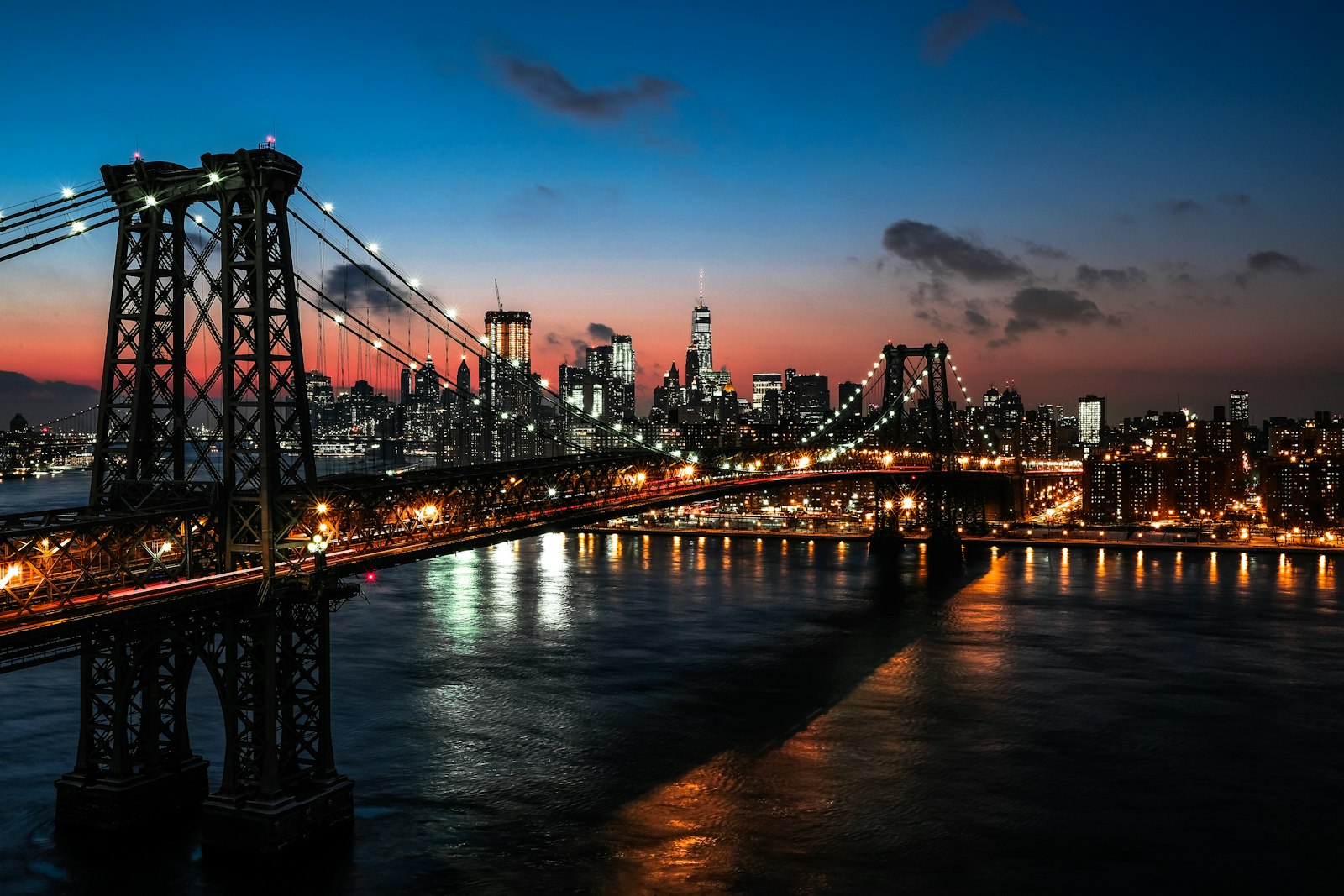
Top 10 Bridges in China
China's bridges are engineering marvels spanning mountains, rivers, and seas. Here are 10 of the most spectacular, from ancient stone to modern steel.
8 min read

Top 10 Buddhist Sites in China
From the Leshan Giant Buddha to the Dunhuang Caves, these 10 Buddhist sites represent 2,000 years of China's spiritual heritage.
9 min read
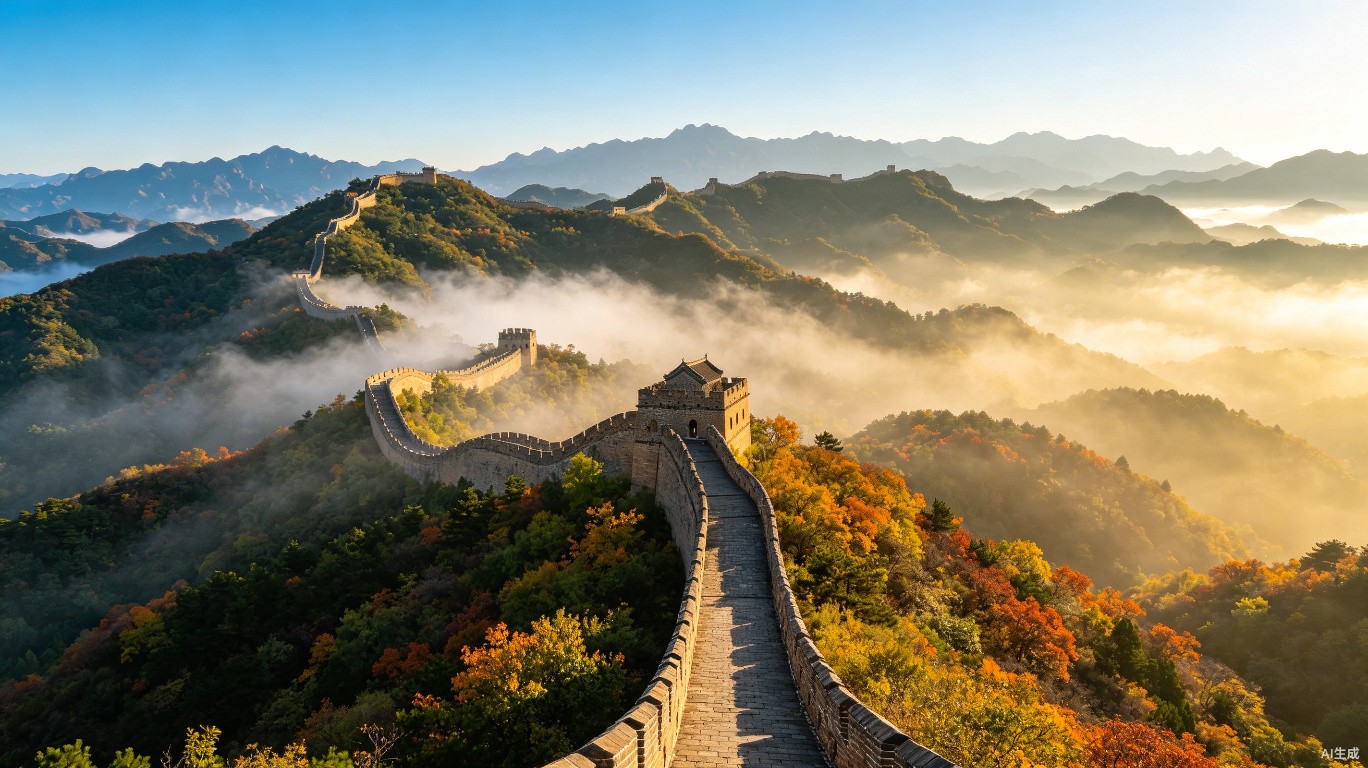
Top 10 Day Trips from Beijing You Shouldn't Miss
Beijing is packed with history, but some of China's best experiences are just a few hours away. Here are 10 day trips that will transform your visit.
9 min read
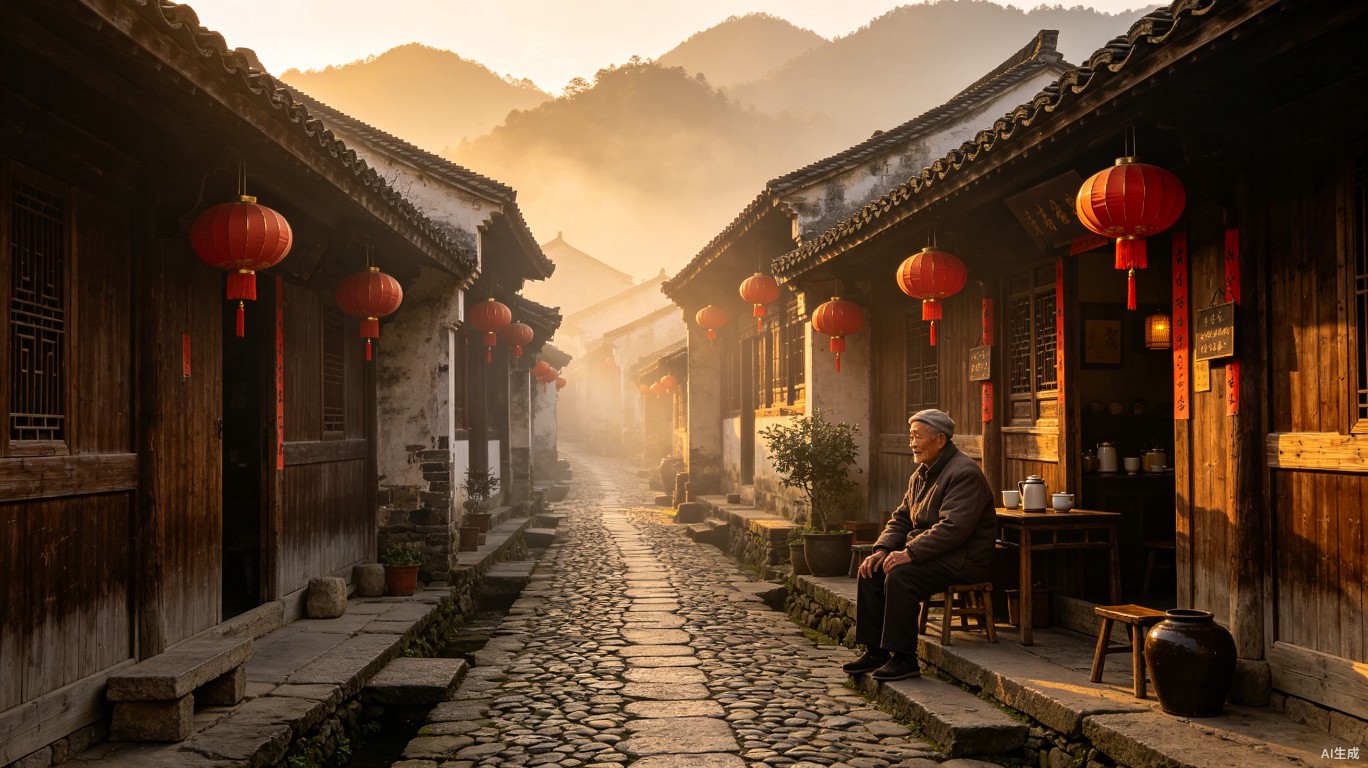
Top 10 Hidden Gems in China Off the Beaten Path
Beyond the Great Wall and Terracotta Warriors, China has incredible hidden destinations few tourists ever reach. Here are 10 underrated gems worth the detour.
9 min read
Top 10 Markets and Shopping Streets in China
From Shanghai's Bund to Beijing's Silk Street - 10 markets where foreigners can haggle, explore, and bring home authentic Chinese goods.
9 min read
Top 10 Museums in China You Shouldn't Miss
China's museums span 5,000 years of civilization. These 10 - from the Palace Museum to Xi'an's terracotta gallery - are unmissable for culture lovers.
9 min read