
Danba Watchtower Villages
The cab dropped me at the mouth of Suopo village, and I stood there for a full minute before I remembered to close my mouth.
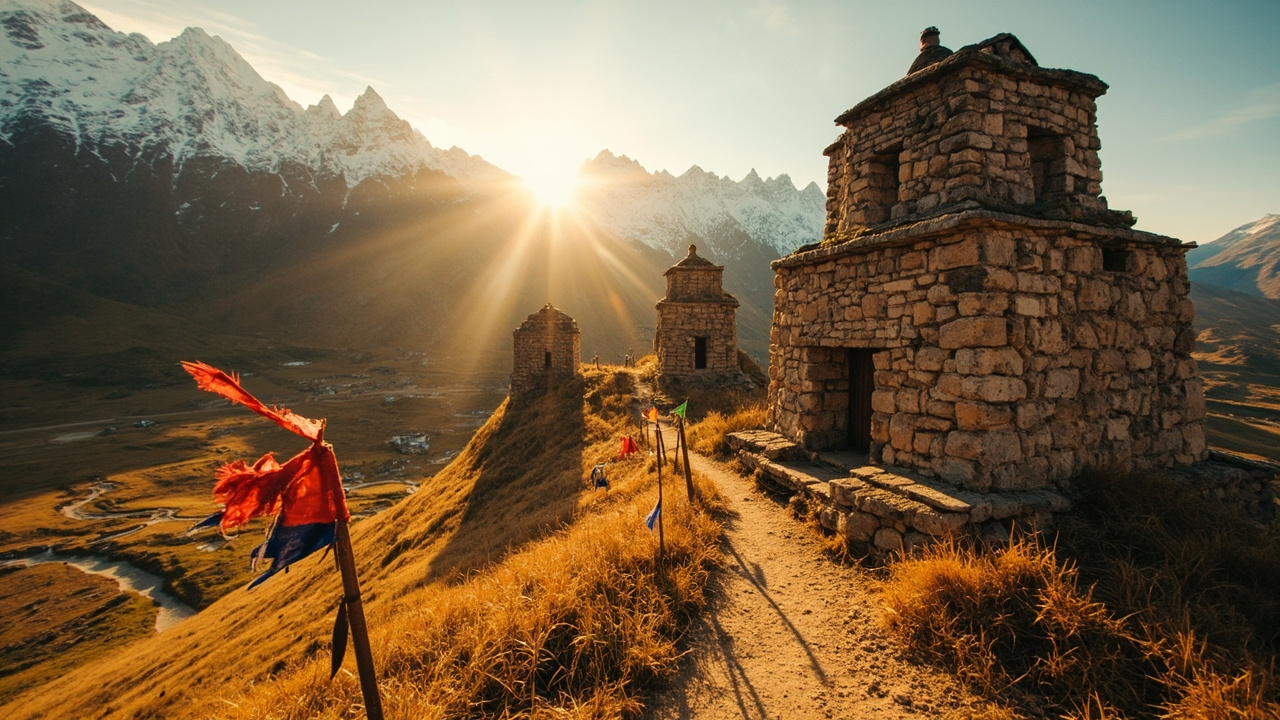
The cab dropped me at the mouth of Suopo village, and I stood there for a full minute before I remembered to close my mouth. Four square towers of dried mud and stone rose from the hillside like something out of a fever dream, their tops notched into strange horned shapes against a sky so blue it hurt. A woman in a purple headscarf walked past me carrying a basket of corn, nodded once, and kept going. I’d been in China for three weeks by then, and I thought I’d seen everything the country had to offer. I hadn’t seen anything yet.
The Danba watchtower villages sit in a river valley in western Sichuan, about six hours from Chengdu by road. The Qiang and Jiarong Tibetan people who live here have been building these towers for over a thousand years, and nobody really knows why. Defensive structures, signal beacons, status symbols, storehouses, astronomical observatories — every guidebook gives you a different theory, and every local gives you a different answer. The towers are UNESCO-listed, but that undersells the experience. You don’t visit these villages to check boxes. You visit them to stand in a place that feels genuinely untouched by the century you’re living in.
This guide covers the ten villages I actually visited across three trips, with real prices, real directions, and the kind of details you only get by missing the last bus and having to negotiate a ride home with a farmer named Dorje. I’ll tell you what’s worth the detour, what you can skip, and exactly how to get there without losing your mind.
Quick answer
Danba watchtower villages are a cluster of traditional Tibetan and Qiang settlements in western Sichuan, China, famous for thousand-year-old stone watchtowers and fortress houses. A typical visit costs $20–50 per day including transport, food, and accommodation, and the best season is March–April for blooming pear blossoms or October–November for golden autumn colors. The villages are not accessible by train — you’ll need a hired car or local bus from Chengdu, and most international visitors can enter China visa-free for up to 30 days under the 2024–2025 visa-free policies if they’re from eligible countries.
The Short Version
If you only have 90 seconds, here’s the deal. Danba is a remote valley in western Sichuan where you’ll find some of the best-preserved ancient watchtowers in China. Suopo village is the most famous and the most photographed, but Zhonglu is where I’d actually spend my time. Go in October for the autumn colors, hire a car from Chengdu (about $120 for the round trip with a driver), and don’t bother with a guide — the villages are small enough to explore on foot. Bring cash, because the smaller villages don’t take cards, and download an offline translation app before you go. English is essentially non-existent here.
How I Picked These
I’ve been to Danba three times: once in October 2019, once in April 2023, and again in November 2025. Each trip was different — the first was a rushed two-day visit where I only saw Suopo and Jiaju. The second I spent five days hiking between villages with a local guide named Tsering who grew up in Zhonglu. The third I drove myself with a rental car, which is an adventure I’ll tell you about later. I’ve eaten in family kitchens, slept in converted watchtower guesthouses, and spent an hour one evening trying to explain to a grandmother why I was so interested in her village’s grain storage. These ten villages are the ones I’d genuinely recommend to a friend, ranked by a combination of tower quality, village atmosphere, accessibility, and how well they’ve handled tourism — which ranges from “barely at all” to “a bit too much.”
Comparison Table
| Rank | Place | Best For | Approx Cost (USD) | Time Needed | When to Go |
|---|---|---|---|---|---|
| 1 | Suopo | Iconic views, photography | $10 entry | 2–3 hours | Oct–Nov |
| 2 | Zhonglu | Authentic village life | Free | Half day | Mar–Apr or Oct |
| 3 | Jiaju | Tibetan houses, orchards | $10 entry | Half day | Mar–Apr (blossoms) |
| 4 | Suopo Old Village | Less crowded towers | Free | 1–2 hours | Any time |
| 5 | Mopo | Hiking, solitude | Free | Full day | May–Oct |
| 6 | Bawang | Fortress houses | Free | 2 hours | Any time |
| 7 | Kanding | Riverside setting | Free | 1–2 hours | Any time |
| 8 | Niega | Off-the-beaten-path | Free | Half day | Any time |
| 9 | Pujiaoding | Panoramic views | Free | 2 hours | Oct–Nov |
| 10 | Dangling | Remote, adventurous | Free | Full day | May–Oct |
Suopo — The One Everyone Photographs
I arrived at Suopo at 8am on a Tuesday, and there were already three tour buses in the parking lot. I groaned, but honestly, I get it. The view from the main observation platform is the one you’ve seen on every China travel Instagram account — five towers clustered on a green hillside, the river glinting below, snow-capped peaks behind. It’s genuinely spectacular, and no amount of crowds can ruin that.
What surprised me was how much there is beyond the main viewpoint. The village itself is a maze of narrow stone lanes, and if you walk past the souvenir stalls (which are mercifully few), you’ll find families drying corn on their rooftops and old men playing cards in the shade. The towers here are the tallest in the region — some reach 60 meters — and you can climb inside a few of them via rickety wooden ladders. I made it up one and immediately regretted my life choices, but the view from the top was worth the trembling legs.
📍 Location: Suopo Village, Danba County, Garzê Tibetan Autonomous Prefecture 🎟️ Entry fee: $10 (¥70) for the scenic area, includes the observation platform 🕒 Opening hours: 8am–6pm daily, though the village itself is always accessible 🚕 How to get there: From Danba town, it’s a 30-minute drive. Shared minibuses run from the Danba bus station when full (about $2/¥15 per person), or hire a private car for $15–20 (¥100–150) round trip 📅 When to visit: October for autumn colors, or early morning before the tour buses arrive 💡 Insider tips: Skip the main platform and walk 10 minutes up the hill to the left — there’s a lesser-known spot with the same view and no crowds. The ticket office sometimes closes early in winter, so arrive before 4pm. Bring small bills for the shuttle bus inside the park.
I met a photographer from Guangzhou who’d been coming to Suopo every October for eight years. “The towers never change,” he told me. “That’s why I keep coming back.”
Zhonglu — Where I’d Actually Live
Zhonglu is the village I think about when I can’t sleep. It’s less famous than Suopo, which means fewer tourists, more chickens wandering the lanes, and a pace of life that feels like it’s from another century. The village sits on a ridge above the river, and the towers here are older than Suopo’s — some date back to the Tang Dynasty, which is roughly 1,300 years ago.
I stayed two nights in a family guesthouse run by a woman named Yangjin, who fed me yak butter tea and handmade noodles and refused to let me pay for the second dinner. Her family has lived in the same stone house for nine generations. The house itself is a miniature fortress, with thick walls, tiny windows, and a flat roof where they dry chili peppers and corn in the autumn sun. She showed me how the watchtowers were connected to the houses by underground tunnels, so families could retreat to the towers when bandits came.
📍 Location: Zhonglu Village, about 20km west of Danba town 🎟️ Entry fee: Free 🕒 Opening hours: Always open — it’s a living village 🚕 How to get there: Minibuses from Danba bus station run to Zhonglu when full (about $2/¥15). Otherwise, a taxi costs $15–20 (¥100–150) each way. The road is winding but paved 📅 When to visit: Late March for pear blossoms, or October for golden leaves. Weekdays are noticeably quieter 💡 Insider tips: Ask at the village guesthouse if you can climb one of the towers — some families charge a small fee ($2–3/¥15–20) and it’s worth every yuan. The village has no ATMs, so bring cash. Yangjin’s guesthouse doesn’t have a sign — just ask for “the house with the blue door.”
I made a mistake here that I’ll never repeat: I tried to pay Yangjin with a large bill, and she looked genuinely hurt. In these villages, you’re a guest first, a customer second.
Jiaju — The Postcard Village
Jiaju is what happens when a village becomes famous and handles it well. The Tibetan houses here are the prettiest in the region — white walls, red trim, intricate wooden balconies, and roofs decorated with prayer flags. The village is built into a hillside covered with pear and apple orchards, and in late March the blossoms turn the whole valley into a frothy white cloud. It’s the most photographed village in Danba for a reason.
The downside is that Jiaju knows it’s famous. There’s a proper ticket office, a shuttle bus, and a viewing platform that gets genuinely crowded on weekends in April. But here’s the thing — the crowds are mostly domestic tourists, and they’re all Chinese families having picnics and taking photos. Nobody’s trying to sell you anything, and the village itself remains completely functional. Farmers still work the orchards, grandmothers still sit on their doorsteps, and the towers still stand guard over it all.
📍 Location: Jiaju Village, 6km from Danba town 🎟️ Entry fee: $10 (¥70) 🕒 Opening hours: 8am–6pm 🚕 How to get there: 15 minutes from Danba town by taxi ($5–8/¥40–60) or the local shuttle bus 📅 When to visit: Late March to early April for blossoms, or late October for autumn. Avoid weekends in April if you hate crowds 💡 Insider tips: The shuttle bus drops you at the top of the village — walk down through the lanes instead of taking it back. You’ll see the houses up close and can stop at the family orchards where farmers will sometimes let you pick apples for a couple of yuan. The best photos are from the lower road, not the main platform.
I ate a pear here that was so good I bought a kilo from the farmer’s wife, who laughed at me for trying to bargain. “You’re already getting the local price,” she said through a translation app. “We don’t cheat guests.”
Suopo Old Village — The Quiet Sister
Most visitors to Suopo see the main village and leave, which means they miss Suopo Old Village, a 15-minute walk up the hill. This is where the original settlement was, before the road came and the village shifted downhill. The towers here are older and more weathered, and there are no ticket booths, no shuttle buses, and no crowds. Just crumbling stone houses, overgrown orchards, and a handful of families who never moved.
I spent an afternoon here with no particular plan, which turned out to be the right plan. I sat on a stone wall and watched a farmer plow his field with a pair of oxen, the same way his grandfather would have done it. A young woman came out of a house and offered me a cup of tea without any expectation of payment. We communicated through hand gestures and a translation app that kept mangling our sentences, and somehow that made the conversation better.
📍 Location: 15-minute walk uphill from Suopo village 🎟️ Entry fee: Free 🕒 Opening hours: Always open 🚕 How to get there: Walk from Suopo village — follow the paved road uphill past the last houses 📅 When to visit: Any time, but morning light is best for photography 💡 Insider tips: There’s a small temple at the top of the old village with a caretaker who’ll show you around for a small donation. The old watchtower at the edge of the village has a ladder inside — climb it if you’re brave. Don’t wander into fenced fields; the farmers are friendly but their dogs are not.
The tea that woman gave me was the best cup I had in all of Sichuan, and I’ll never be able to replicate it or find her again.
Mopo — For the Hikers
Mopo is the village you go to when you want to earn your views. It’s higher than the other villages, set on a steep hillside above the river, and the only way to get there is a winding dirt road that’s too rough for regular cars. I hired a local driver with a battered 4x4 who chain-smoked the entire way and pointed out every pothole with a grunt. The village itself is tiny — maybe 20 houses — but the towers here are some of the best-preserved in the region, and the views down the valley are worth the bumpy ride.
The hiking around Mopo is the real draw. There’s a trail that leads up to a ridge above the village, where you can see the entire Danba valley spread out below you. It took me about two hours to get up there, and I only passed two other people the whole time. At the top, a shepherd offered me a piece of dried yak meat and we sat in silence for ten minutes, just looking at the mountains. It was one of those moments that makes you understand why people travel.
📍 Location: Mopo Village, 40km from Danba town 🎟️ Entry fee: Free 🕒 Opening hours: Always open 🚕 How to get there: You’ll need a 4x4 from Danba town — expect to pay $30–40 (¥200–300) round trip. The road is rough and not suitable for regular cars 📅 When to visit: May–October when the trail is dry. Avoid after heavy rain 💡 Insider tips: Bring your own food and water — there’s no shop in the village. The trail to the ridge starts behind the village’s largest tower. If you’re not a confident hiker, the village itself is still worth the trip.
The shepherd’s name was Genden, and he told me through a translation app that he’d never left the valley. “Why would I?” he said. “Everything I need is here.”
Bawang — The Fortress Village
Bawang looks like a village designed by someone who was very worried about being attacked. The houses here are built like miniature castles, with thick stone walls, narrow slit windows, and watchtowers integrated directly into the living quarters. It’s the most defensively-minded village in the region, and historians think it was built this way because it sits at a strategic point where the river valley narrows.
The village is small and mostly empty — many of the younger people have moved to Danba town or Chengdu for work. But the old houses remain, and a few families still live in the fortress-like buildings, keeping the traditions alive. I spent an hour walking through the empty lanes, peering into courtyards where chickens scratched at the dirt and prayer flags fluttered in the breeze. It felt like walking through a museum that was still alive.
📍 Location: Bawang Village, 15km east of Danba town 🎟️ Entry fee: Free 🕒 Opening hours: Always open 🚕 How to get there: A taxi from Danba town costs about $10–15 (¥70–100) each way. The road is paved but narrow 📅 When to visit: Any time of year, but the village is quietest in winter 💡 Insider tips: Ask at the village committee office (the building with the flag) if you can see inside one of the fortress houses. The caretaker, an elderly man named Wang, will show you around for a small tip. The village has no restaurant, so bring snacks.
Wang told me he’d lived in his family’s fortress house for 70 years. “My grandfather built it,” he said. “My great-grandfather defended it. I just keep it clean.”
Kanding — The Riverside Stop
Kanding isn’t the most impressive village in Danba, but it’s the one you’ll pass through on your way to the others, and it’s worth stopping for. The village sits right on the river, with towers scattered along the bank and a suspension bridge that sways alarmingly when you cross it. The setting is beautiful, and the village has a more relaxed feel than the hillside settlements.
The main reason to stop in Kanding is the food. There’s a small restaurant near the bridge that serves the best handmade noodles I had in the entire region — thick, chewy, served in a rich broth with local vegetables and a generous spoonful of chili oil. The owner, a woman named Lhamo, doesn’t speak a word of English, but she’ll point at the menu and you’ll point back and somehow it all works out.
📍 Location: Kanding Village, on the road between Danba town and Suopo 🎟️ Entry fee: Free 🕒 Opening hours: Always open 🚕 How to get there: On the main road — any bus or taxi between Danba and Suopo passes through 📅 When to visit: Any time, but lunch is the best reason to stop 💡 Insider tips: The restaurant is the one with the blue awning near the bridge — there’s no sign in English, but you’ll smell it. Try the hand-pulled noodles with chili oil. The suspension bridge is safe but will make you regret eating a big meal before crossing.
Lhamo’s noodles cost $2 (¥15) and were the best value meal I had in all of Sichuan.
Niega — The Hidden One
Niega is the village that most guidebooks don’t mention, and I almost didn’t find it myself. It’s tucked away in a side valley off the main road, and the turnoff is so easy to miss that I drove past it twice before I spotted the small sign. The village is tiny — maybe 15 houses — but it has a charm that the more famous villages have lost.
The towers here are smaller and more weathered, but they’re also more authentic. There’s no ticket office, no souvenir stalls, no tour buses. Just a quiet village where farmers still use oxen to plow their fields and the only sound is the wind in the trees and the distant rush of the river. I sat on a stone wall for an hour and watched a family harvest corn, three generations working together in the golden afternoon light.
📍 Location: Niega Village, in a side valley 25km from Danba town 🎟️ Entry fee: Free 🕒 Opening hours: Always open 🚕 How to get there: The turnoff is on the road to Suopo, about 20km from Danba town. The road is rough but passable with a regular car if you drive slowly 📅 When to visit: Late afternoon for the best light on the towers 💡 Insider tips: The village has no facilities — bring water and snacks. There’s a small shrine at the edge of the village where locals leave offerings; it’s fine to look but don’t touch. If you’re lucky, you’ll meet the village elder, who loves telling stories about the towers’ history.
The elder’s name was Sonam, and he told me the towers were built to protect against “tigers and bandits and bad weather.” I’m still not sure which was the real threat.
Pujiaoding — The Viewpoint
Pujiaoding isn’t really a village — it’s a viewpoint on a ridge that overlooks the entire Danba valley. But it’s worth including because it gives you the best panoramic view of the watchtower region, and it’s the place where you can finally understand how these villages fit into the landscape. From up here, you can see the river winding through the valley, the terraced fields climbing the hillsides, and the towers scattered across the landscape like chess pieces.
The viewpoint is a 20-minute walk from the road, up a gentle slope that gets steeper as you go. At the top, there’s a small pavilion and a bench, which is where I sat for half an hour eating a packed lunch and watching the clouds cast shadows across the valley. It’s the kind of view that makes you want to cancel your return flight and stay forever.
📍 Location: Ridge above the Danba valley, accessible from the road to Zhonglu 🎟️ Entry fee: Free 🕒 Opening hours: Always open 🚕 How to get there: Drive or take a taxi to the parking area on the Zhonglu road, then walk 20 minutes uphill 📅 When to visit: Early morning for clear views, or late afternoon for golden light 💡 Insider tips: The walk is steeper than it looks — wear proper shoes. There’s no shade at the top, so bring water and a hat. The best photos are from the eastern edge of the platform, where you can include the river in the frame.
I met a couple from Germany here who were on their honeymoon and had rented a car in Chengdu. “We got lost three times,” the husband said. “Worth it.”
Dangling — The Remote One
Dangling is the village that most people never reach, and that’s exactly why I loved it. It’s the most remote settlement in the Danba region, sitting at the end of a valley that requires a 4x4 and a willingness to spend an hour on a road that’s more pothole than pavement. The village itself is tiny — maybe a dozen houses — and the towers here are the oldest in the region, some dating back over a thousand years.
The isolation means that Dangling has preserved its traditions better than any other village I visited. The houses are built in the traditional style, with flat roofs and whitewashed walls, and the villagers still wear traditional dress on a daily basis. I arrived in the late afternoon and was immediately invited to a neighbor’s house for butter tea and stories. Nobody spoke English, and my Mandarin wasn’t good enough for the local dialect, but we managed through a combination of gestures, laughter, and a translation app that kept crashing.
📍 Location: Dangling Village, at the end of a side valley 50km from Danba town 🎟️ Entry fee: Free 🕒 Opening hours: Always open 🚕 How to get there: You’ll need a 4x4 and a driver who knows the road. Expect to pay $50–60 (¥350–400) for the round trip from Danba town 📅 When to visit: May–October when the road is passable. The village is cut off in winter 💡 Insider tips: Bring gifts — the villagers are incredibly hospitable and will insist on feeding you, so a bag of fruit or a box of biscuits is a good way to show gratitude. There’s no electricity in some houses, so charge your phone before you go. The village has no facilities at all, so bring everything you need.
The family that hosted me refused to let me leave without eating a full meal of yak meat, potatoes, and homemade bread. I was full for two days.
FAQ summary
Danba’s watchtower villages are best visited in October–November for autumn colors or March–April for pear blossoms, with a typical daily budget of $30–50 including accommodation, food, and local transport. The region has no train access — visitors must travel by road from Chengdu, a 6–7 hour drive, or fly to Kangding and continue by car. International visitors from eligible countries can enter China visa-free for up to 30 days under current policies, and should download WeChat Pay or Alipay before arriving since smaller villages don’t accept cards. English is rarely spoken outside Danba town, so a translation app is essential.
FAQ
Q: How do I get to Danba from Chengdu? A: The most common route is a 6–7 hour drive from Chengdu, either by hired car (about $120–150/¥800–1000 one way) or by bus from Chengdu’s Chadianzi bus station (about $25/¥180). Alternatively, fly from Chengdu to Kangding (45 minutes, $80–120/¥550–850) and then drive 3–4 hours to Danba.
Q: Do I need a special permit to visit Danba? A: No, Danba is open to foreign tourists without a permit. The visa-free policies for eligible countries apply here just like the rest of China. However, you should carry your passport with you at all times, as hotels and checkpoints may ask to see it.
Q: Can I pay with a credit card in Danba? A: No, credit cards are essentially useless in Danba. You’ll need to use WeChat Pay or Alipay, which you should set up before arriving in China, or carry cash. The smaller villages don’t even have ATMs, so bring enough cash for your day trips.
Q: Is English spoken in the villages? A: Very rarely. Danba town has some English speakers at hotels and the bus station, but in the villages you’ll need a translation app. Download one (like Google Translate or Pleco) before you arrive, and make sure it works offline.
Q: How many days should I spend in Danba? A: I’d recommend at least three days. One day for Suopo and Jiaju, one day for Zhonglu and the smaller villages, and one day for hiking or visiting the remote villages like Mopo or Dangling. If you’re short on time, two days is enough to see the highlights.
Q: What’s the best time of year to visit? A: October–November is the best time for clear skies and golden autumn colors. March–April is also excellent for the pear and apple blossoms. Summer (June–August) is rainy and the roads can be affected by landslides. Winter is cold but the villages are nearly empty.
Q: Do I need a VPN for my phone in Danba? A: Yes, if you want to use Google, WhatsApp, Instagram, or any Western apps, you’ll need a VPN set up before you arrive in China. The connection in Danba can be slow, so a China SIM card and internet guide will help you plan ahead.
The Honest Wrap-up
Danba isn’t for everyone. If you want luxury hotels, English menus, and seamless logistics, go to Chengdu instead and call it a day. But if you’re willing to put up with bumpy roads, cold showers, and communication breakdowns, you’ll be rewarded with one of the most authentic experiences China has to offer. The towers have stood for a thousand years, and they’ll still be standing long after you’re gone. That’s the thing about Danba — it makes you feel small in the best possible way. My advice? Go in October, hire a driver you trust, and don’t overplan. The best moments in these villages happen when you stop trying to see everything and just let the place happen to you.
Topics
More guides you may like

Top 10 Bridges in China
China's bridges are engineering marvels spanning mountains, rivers, and seas. Here are 10 of the most spectacular, from ancient stone to modern steel.
8 min read

Top 10 Buddhist Sites in China
From the Leshan Giant Buddha to the Dunhuang Caves, these 10 Buddhist sites represent 2,000 years of China's spiritual heritage.
9 min read

Top 10 Day Trips from Beijing You Shouldn't Miss
Beijing is packed with history, but some of China's best experiences are just a few hours away. Here are 10 day trips that will transform your visit.
9 min read
Top 10 Hidden Gems in China Off the Beaten Path
Beyond the Great Wall and Terracotta Warriors, China has incredible hidden destinations few tourists ever reach. Here are 10 underrated gems worth the detour.
9 min read

Top 10 Markets and Shopping Streets in China
From Shanghai's Bund to Beijing's Silk Street - 10 markets where foreigners can haggle, explore, and bring home authentic Chinese goods.
9 min read

Top 10 Museums in China You Shouldn't Miss
China's museums span 5,000 years of civilization. These 10 - from the Palace Museum to Xi'an's terracotta gallery - are unmissable for culture lovers.
9 min read