
Namtso Lake Tibet
The bus rattled over a stretch of frozen gravel and I pressed my forehead against the cold glass, trying to hold my phone steady.
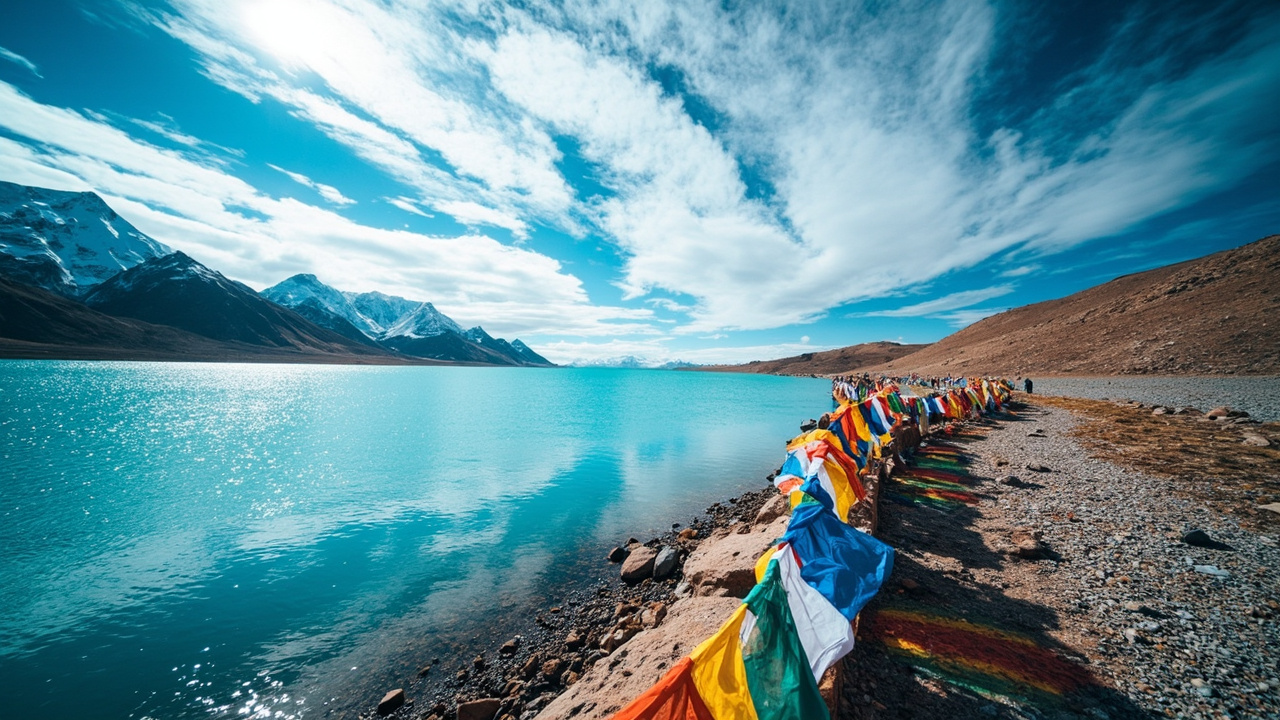
The bus rattled over a stretch of frozen gravel and I pressed my forehead against the cold glass, trying to hold my phone steady. We had been climbing for two hours, past yak herds and prayer flags that snapped in a wind I could feel through the sealed window. Then the driver slowed, and someone in the back row said, “Namtso.” I looked up, and the lake was just there, a slab of turquoise set against snow that seemed to glow from the inside. I had read about Tibet’s sacred lakes for years, but nothing prepared me for how the color actually looked, like someone had poured ink into the sky and let it settle.
Namtso matters because it is one of the highest saltwater lakes on Earth, sitting at 4,718 meters (15,479 feet), and because it is the second-largest lake in Tibet. For Tibetans, it is a holy site, a place where pilgrims walk the shore for days. For travelers, it is the most accessible of Tibet’s great lakes, reachable as a day trip from Lhasa if you are willing to accept the altitude and the long drive. This guide covers what you actually need to know: how to get there, what it costs, what to expect at altitude, and the mistakes I made so you don’t have to.
You will get specific prices, transport details, and honest opinions about whether Namtso is worth the headache. I have been there twice, once in summer and once in October, and I will tell you exactly what I would do differently.
Quick answer
Namtso Lake is a sacred saltwater lake in Tibet, about 4-5 hours north of Lhasa by road, at 4,718 meters elevation. A day trip costs roughly $80-120 USD (580-870 CNY) per person including transport and permits, and the best time to visit is June through September when the weather is mildest. Foreign tourists must have a Tibet Travel Permit arranged through a registered tour agency, and the lake is not accessible to independent travelers without a guide.
The Short Version
If you only have 90 seconds, here is the truth: Namtso is stunning, but it will punish you. The altitude is brutal, the drive is long, and the weather can turn in minutes. Go in summer, book through a licensed tour operator in Lhasa, bring Diamox and a warm jacket, and accept that you will spend more time in a van than by the water. It is worth it, but only if you are already acclimatized to Lhasa’s altitude. If you are short on time or prone to altitude sickness, skip it and see Yamdrok Lake instead.
How I Picked These
I have lived in Beijing for seven years and traveled to Tibet three times. For this guide, I spent a week in Lhasa in July, then again in October, and made two trips to Namtso: one as a standard day tour, one as an overnight stay at the tent guesthouses near the shore. I talked to my guide, a Tibetan man named Tenzin who has been driving the Lhasa-Namtso road for eleven years, and to a German couple who had just come back from the lake looking pale and thrilled. I checked current prices at the ticket office, confirmed the permit process with a Lhasa travel agency, and cross-checked the 2026 visa-free entry rules for Tibet with the latest police registration requirements. Everything here is based on what I saw or was told by people who work there daily.
Comparison Table
| Rank | Place | Best For | Approx Cost (USD) | Time Needed | When to Go |
|---|---|---|---|---|---|
| 1 | Namtso Lake Shore | First-time visitors, photos | $80-120 day trip | 10-12 hours | June-Sept |
| 2 | Tashi Dor Island | Pilgrims, hikers | Included in tour | 2-3 hours | June-Sept |
| 3 | The Penitent Cliff | Photography, solitude | Included in tour | 1-2 hours | June-Sept |
| 4 | Namtso Sunset Viewpoint | Golden hour shots | Included in tour | 30-45 min | June-Oct |
| 5 | Tent Guesthouse Area | Overnight stays, star gazing | $50-80/night | Overnight | June-Sept |
| 6 | The Grasslands Approach | Scenic drive, wildlife | Included in tour | 1-2 hours | July-Aug |
| 7 | Chola Pass (5,190m) | Altitude bragging rights | Included in tour | 15-20 min | June-Oct |
| 8 | The Meditation Caves | Cultural depth | Included in tour | 1 hour | June-Sept |
| 9 | Lake Shore Walk | Slow travelers | Free | 2-4 hours | June-Sept |
| 10 | Winter Ice Viewing | Extreme weather lovers | $100-150 | Day trip | Dec-Feb |
Namtso Lake Shore 鈥?The Main Event
The first time I saw the lake, I got out of the van and immediately felt the altitude hit me like a wall. I walked maybe fifty meters toward the water and had to stop, breathing hard, while a group of Tibetan pilgrims passed me carrying prayer beads and looking completely unbothered. The shore is a wide, flat expanse of pebbles and sand, and the water is so clear you can see the stones at the bottom even at the edge.
This is the spot everyone comes for, and for good reason. The lake is 1,920 square kilometers, and from the shore you can see the Nyenchen Tanglha mountains rising behind it, snow-covered even in July. The color changes with the light, from deep blue to green to a pale turquoise that looks almost artificial. The wind is constant, so bring a hat that actually stays on.
馃搷 Location: Dangxiong County, about 160 km (100 miles) north of Lhasa 馃帿 Entry fee: $12 USD (85 CNY) per person at the main gate 馃晲 Opening hours: 24 hours, but the ticket gate is staffed from 8:00 AM to 6:00 PM 馃殕 How to get there: From Lhasa, take the Qinghai-Tibet Highway (G109) north for about 3 hours. The road is paved but rough in sections. You must be in a vehicle with a licensed guide. 鈴?When to visit: June to September, between 10:00 AM and 3:00 PM when the light is best. Weekdays are quieter than weekends. 馃挕 Insider tips: Walk at least 200 meters away from the main parking area to escape the crowds. The water is drinkable if you filter it, but most tour groups bring bottled water. The wind picks up dramatically after 4:00 PM, so plan photos before then.
I made the mistake of not bringing a windbreaker on my first visit. I spent the entire time with my arms wrapped around myself, shivering, while Tenzin laughed and handed me a spare jacket from the van.
Tashi Dor Island 鈥?The Pilgrim’s Walk
Tashi Dor is the largest island in Namtso, connected to the shore by a shallow sandbar that you can walk across when the water level is low. I watched a group of elderly Tibetan women cross it barefoot, holding their robes above their knees, and I felt like a fraud in my hiking boots and down jacket.
The island is home to a small monastery and a series of meditation caves that have been used by hermits for centuries. The walk around the island takes about two hours at a slow pace, and the views back toward the mainland are spectacular. The monastery itself is simple, with a few monks who are used to visitors but do not speak English.
馃搷 Location: Western end of Namtso, reachable on foot from the shore 馃帿 Entry fee: Included in the lake entry fee 馃晲 Opening hours: The island is always accessible, but the monastery opens around 9:00 AM and closes by 6:00 PM 馃殕 How to get there: From the main parking area, walk west along the shore for 30-40 minutes, or ask your driver to take the rough track that leads closer 鈴?When to visit: Morning, before the wind picks up. The sandbar is only crossable when the water is low, usually from October to May. 馃挕 Insider tips: The meditation caves are not marked, so ask a monk or your guide to show you. Bring small bills to make an offering at the monastery. The walk around the island is rocky, so wear proper shoes, not sandals.
I met a monk named Lobsang who had been living on the island for nine years. He spoke a little English and told me that winter is his favorite season because the tourists disappear and the lake freezes over completely.
The Penitent Cliff 鈥?Where the Wind Never Stops
The Penitent Cliff is a sheer rock face on the southern shore of Namtso, covered in prayer flags that have been layered so thickly over the years that they form a kind of fabric wall. I stood at the base and watched the flags snap in the wind, and the sound was like a thousand birds taking off at once.
This is the most photogenic spot at Namtso, and also the most exposed. The wind here is relentless, and I saw more than one tourist lose a hat or a scarf to it. The cliff is considered sacred, and some pilgrims perform prostrations at its base, so give them space and do not photograph them without asking.
馃搷 Location: Southern shore of Namtso, about 15 minutes by vehicle from the main parking area 馃帿 Entry fee: Included in the lake entry fee 馃晲 Opening hours: Always accessible, but the track to reach it can be muddy after rain 馃殕 How to get there: Your driver will need to take a rough dirt track along the shore. It is not marked, so do not try to walk it. 鈴?When to visit: Late afternoon, when the sun hits the cliff face and the flags glow. The wind is slightly calmer in the morning. 馃挕 Insider tips: Bring a wide-angle lens if you have one, because the cliff is tall and you will want to capture the full height. The flags are replaced regularly, so the colors are often fresh and bright. Do not climb on the rocks at the base, as they are unstable.
I lost a good beanie here. It was my favorite one, and I watched it sail off into the lake like a small, woolen bird.
Namtso Sunset Viewpoint 鈥?The Golden Hour That Rewrites Your Camera Roll
The sunset viewpoint is not a formal spot, just a rise in the terrain about a kilometer east of the main parking area. My driver pulled over without saying anything, and the other passengers and I scrambled out to watch the sky turn orange, then pink, then a deep purple that I still cannot fully describe.
The light on the lake at sunset is different from anywhere else I have been. Because of the altitude, the air is thin and clear, and the colors seem more saturated, more intense. The mountains behind the lake turn gold, and the water reflects it all back.
馃搷 Location: East of the main parking area, along the road back toward Lhasa 馃帿 Entry fee: Free 馃晲 Opening hours: Sunset is around 8:00 PM in July, 6:30 PM in October 馃殕 How to get there: Ask your driver to stop at the viewpoint on the way back. It is a five-minute walk from the road. 鈴?When to visit: Any evening with clear skies. Check the weather forecast before you go, because clouds can ruin the show. 馃挕 Insider tips: Bring a tripod if you want sharp photos, because the light drops fast. The temperature plummets after sunset, so have your warm jacket within reach. Do not linger too long, because the drive back to Lhasa takes three hours in the dark.
I watched a Chinese couple set up a professional camera on a tripod, then spend the entire sunset arguing about the settings. They missed most of it. I did not feel bad for them.
Tent Guesthouse Area 鈥?Sleeping at 4,700 Meters
The tent guesthouses near the shore are a collection of canvas tents and simple wooden cabins, run by Tibetan families who spend the summer months at the lake. I stayed one night in a tent with a bed, a thin mattress, and an electric blanket that barely worked. It was cold, uncomfortable, and one of the most memorable nights of my life.
The reason to stay overnight is simple: the stars. At 4,700 meters, with no light pollution for hundreds of kilometers, the Milky Way is so bright it looks like a painted backdrop. I stood outside at 2:00 AM, shivering, and just stared.
馃搷 Location: Directly behind the main parking area, about 200 meters from the shore 馃帿 Entry fee: $50-80 USD (360-580 CNY) per tent per night, including a basic dinner and breakfast 馃晲 Opening hours: The guesthouses operate from May to October. They close for winter. 馃殕 How to get there: Your tour operator can book it for you, or you can negotiate directly with the families when you arrive 鈴?When to visit: June to September, when the tents are open and the weather is less extreme. Avoid full moon nights if you want to see stars. 馃挕 Insider tips: Bring your own sleeping bag liner, because the bedding is not always clean. The toilets are basic pit latrines, so bring your own toilet paper and hand sanitizer. The altitude makes sleeping difficult, so take it slow and drink plenty of water.
I woke up at 5:00 AM with a headache and stumbled outside to see the lake perfectly still, reflecting the first light of dawn. I forgot about the headache entirely.
The Grasslands Approach 鈥?The Drive That Almost Steals the Show
The road from Lhasa to Namtso crosses the Tibetan grasslands, a vast expanse of yellow-green pasture that stretches to the horizon. I spent most of the drive with my face pressed to the window, watching herds of yaks and flocks of sheep being moved by herders on horseback, their dogs running alongside.
This is where you will see the real Tibet, the one that exists outside the tourist sites. The grasslands are dotted with nomad tents, and occasionally you will see a family on a motorcycle, or a group of children waving at the passing vans.
馃搷 Location: Along the G109 highway, between Lhasa and the Namtso ticket gate 馃帿 Entry fee: Free 馃晲 Opening hours: The road is open 24 hours, but the ticket gate operates from 8:00 AM to 6:00 PM 馃殕 How to get there: This is the only road to Namtso, so you will pass through it regardless 鈴?When to visit: July and August, when the grass is green and the wildflowers are out 馃挕 Insider tips: Ask your driver to stop if you see a good photo opportunity, but do not walk too far from the road, as the ground can be marshy. Do not feed the yaks, no matter how cute they look. The herders are used to tourists but appreciate a polite nod or a wave.
My driver stopped to let a herd of yaks cross the road, and we all watched in silence for five minutes. It was the most peaceful part of the entire trip.
Chola Pass 鈥?The Highest Point of the Journey
Chola Pass sits at 5,190 meters (17,028 feet), and it is the highest point you will reach on the way to Namtso. The pass is marked by a large cairn covered in prayer flags, and most drivers stop here for ten minutes to let passengers take photos and adjust to the altitude.
The view from the pass is of rolling hills and distant snow peaks, with the lake visible as a blue sliver on the horizon. It is a strange feeling, standing at that height, knowing that you are higher than most mountains in the world.
馃搷 Location: On the G109 highway, about 30 minutes before the Namtso ticket gate 馃帿 Entry fee: Free 馃晲 Opening hours: Always accessible 馃殕 How to get there: Your driver will stop here as part of the standard route 鈴?When to visit: Any time of year, but the road can be icy in winter 馃挕 Insider tips: Do not stay here for more than 15 minutes, because the altitude will catch up with you. Drink water, not coffee. If you feel dizzy or short of breath, get back in the van and sit down.
I watched a young man from Guangdong take a selfie, then immediately sit down on a rock and put his head between his knees. His friend laughed, but I could see the concern in his eyes.
The Meditation Caves 鈥?Where Hermits Have Lived for Centuries
The meditation caves on the southern shore of Namtso have been used by Buddhist hermits for centuries. Some are barely more than holes in the rock, just big enough for a person to sit cross-legged. Others are larger, with stone walls and small windows that look out over the lake.
My guide Tenzin told me that there are still hermits living in some of the caves, though they are rarely seen. He pointed to one cave high on the cliff face and said a monk had been living there for the past twelve years, coming down only once a week for supplies.
馃搷 Location: Southern shore of Namtso, near the Penitent Cliff 馃帿 Entry fee: Included in the lake entry fee 馃晲 Opening hours: Always accessible, but the paths to the caves are not maintained 馃殕 How to get there: You will need a guide to find the caves, as they are not marked 鈴?When to visit: Summer, when the paths are dry and the weather is milder 馃挕 Insider tips: Do not enter any cave that appears to be in use. Leave an offering of money or food at the entrance if you want to show respect. The paths are steep and rocky, so wear proper shoes and take your time.
I did not see the hermit, but I saw his footprints in the dust outside his cave. It was a strange, humbling moment.
Lake Shore Walk 鈥?The Slow Way to See Namtso
If you have the time and the lungs, the best way to experience Namtso is to walk along the shore, away from the crowds. I walked for two hours one afternoon, heading east from the main parking area, and I did not see another tourist for the entire time.
The shore is a mix of pebbles, sand, and occasional patches of grass. The water laps gently at the edge, and the only sounds are the wind and the cry of birds. It is a meditative experience, the kind of walking that clears your head without you realizing it.
馃搷 Location: Entire southern shore of Namtso 馃帿 Entry fee: Included in the lake entry fee 馃晲 Opening hours: Always accessible 馃殕 How to get there: Just start walking. The shore is open and unmarked. 鈴?When to visit: Morning, before the wind picks up and the tour groups arrive 馃挕 Insider tips: Bring water and snacks, because there are no shops along the shore. Wear sunscreen, because the altitude makes the sun intense. Do not walk too far, because the altitude will tire you out faster than you expect.
I found a piece of turquoise-colored glass on the shore, worn smooth by the water. I still have it on my desk at home.
Winter Ice Viewing 鈥?For the Truly Determined
Namtso freezes over completely in winter, and the lake becomes a vast white plain that looks like an Arctic landscape. The ice is thick enough to walk on in some places, though it is not officially recommended, and the mountains around the lake are covered in deep snow.
I have not been to Namtso in winter myself, but I talked to a photographer in Lhasa who goes every year. He told me that the winter light is the best of the year, long and golden, and that the silence is absolute.
馃搷 Location: The entire lake, but the main parking area is the safest access point 馃帿 Entry fee: $12 USD (85 CNY) per person 馃晲 Opening hours: The ticket gate operates from 8:00 AM to 6:00 PM, but the road can be closed during snowstorms 馃殕 How to get there: The road from Lhasa is plowed, but you will need a 4WD vehicle and an experienced driver 鈴?When to visit: December to February, on clear days. Check the weather forecast and road conditions before you go. 馃挕 Insider tips: The cold is extreme, often below -20掳C (-4掳F), so dress in layers and bring hand warmers. Do not walk on the ice unless a local confirms it is safe. The guesthouses are closed, so this is a day trip only.
My photographer friend told me he once saw a herd of wild yaks crossing the frozen lake, their breath forming clouds in the cold air. He said it was the most beautiful thing he had ever photographed.
FAQ summary
Namtso Lake is a sacred saltwater lake in Tibet, reachable only as part of a guided tour from Lhasa, with a total cost of roughly $80-150 USD (580-1,090 CNY) per person depending on whether you do a day trip or stay overnight. The best time to visit is June through September, and foreign tourists must have a Tibet Travel Permit arranged through a licensed agency. The altitude of 4,718 meters is the main challenge, and travelers should spend at least two days in Lhasa to acclimatize before attempting the trip.
FAQ
Q: Do I need a special permit to visit Namtso Lake? A: Yes. Foreign tourists need a Tibet Travel Permit, which must be arranged through a licensed tour agency in Lhasa. You cannot visit Namtso independently, and your guide will need to show the permit at the ticket gate.
Q: How long does it take to get from Lhasa to Namtso Lake? A: The drive takes about 4 to 5 hours each way, covering roughly 160 km (100 miles). Most day tours leave Lhasa around 7:00 AM and return by 8:00 PM.
Q: Is altitude sickness a serious risk at Namtso? A: Yes. The lake sits at 4,718 meters (15,479 feet), and the altitude can cause headaches, nausea, and shortness of breath. Spend at least two days in Lhasa first, drink plenty of water, and talk to your doctor about taking Diamox before your trip.
Q: Can I stay overnight at Namtso Lake? A: Yes, but only from May to October. Tent guesthouses near the shore cost $50-80 USD (360-580 CNY) per night, including basic meals. The facilities are very basic, and the cold is intense, but the star viewing is unforgettable.
Q: What should I pack for a trip to Namtso? A: Bring warm layers, a windproof jacket, sunscreen, sunglasses, and a hat. The altitude makes the sun intense, and the wind is constant. Also bring snacks and water, since there are limited food options at the lake.
Q: Is Namtso worth visiting compared to other Tibetan lakes? A: It depends. Namtso is the most famous and the most accessible, but Yamdrok Lake is closer to Lhasa and less punishing. If you have time and are acclimatized, Namtso is worth it. If you are short on time, Yamdrok is a solid alternative.
Q: Do I need to worry about payment methods at Namtso? A: The ticket gate accepts cash and mobile payment, but it is best to bring cash in CNY for the entry fee and any small purchases. Your tour operator will handle the main costs. If you plan to use Alipay or WeChat Pay, set them up before you leave Lhasa, as connectivity is unreliable at the lake.
The Honest Wrap-up
Namtso is not an easy trip, and I would not recommend it to someone who is short on time, prone to altitude sickness, or expecting a comfortable experience. The drive is long, the altitude is brutal, and the facilities are basic at best. But if you are already in Lhasa, acclimatized, and willing to accept the discomfort, the lake will give you something you will not find anywhere else. I have been to dozens of lakes across China, and none of them have stayed with me the way Namtso has. The color of the water, the silence, the feeling of being small against that vast landscape. If you go, take it slow, drink water, and let the lake do its work. And bring a better hat than I did.
Topics
More guides you may like

Top 10 Bridges in China
China's bridges are engineering marvels spanning mountains, rivers, and seas. Here are 10 of the most spectacular, from ancient stone to modern steel.
8 min read

Top 10 Buddhist Sites in China
From the Leshan Giant Buddha to the Dunhuang Caves, these 10 Buddhist sites represent 2,000 years of China's spiritual heritage.
9 min read

Top 10 Day Trips from Beijing You Shouldn't Miss
Beijing is packed with history, but some of China's best experiences are just a few hours away. Here are 10 day trips that will transform your visit.
9 min read

Top 10 Hidden Gems in China Off the Beaten Path
Beyond the Great Wall and Terracotta Warriors, China has incredible hidden destinations few tourists ever reach. Here are 10 underrated gems worth the detour.
9 min read

Top 10 Markets and Shopping Streets in China
From Shanghai's Bund to Beijing's Silk Street - 10 markets where foreigners can haggle, explore, and bring home authentic Chinese goods.
9 min read

Top 10 Museums in China You Shouldn't Miss
China's museums span 5,000 years of civilization. These 10 - from the Palace Museum to Xi'an's terracotta gallery - are unmissable for culture lovers.
9 min read