
Qufu Confucius Homeland
The high-speed train slid into Qufu East Station and I stepped out into air that smelled like fresh-cut grass and coal smoke from a distant village.
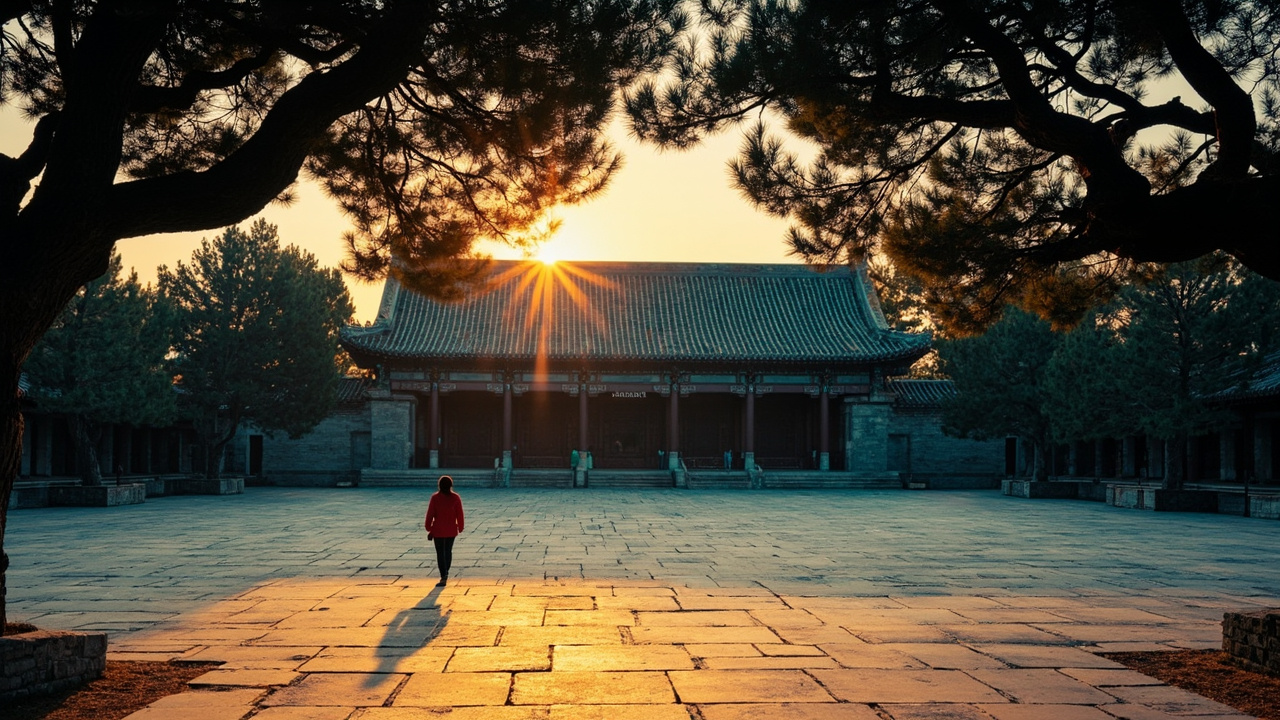
The high-speed train slid into Qufu East Station and I stepped out into air that smelled like fresh-cut grass and coal smoke from a distant village. It was April, and the plane trees lining the road were dropping their fuzzy seeds like slow-motion snow. A taxi driver named Mr. Kong — yes, that Kong, he told me proudly — waved me over and asked if I was here to see the ancestors.
I’ve been to Qufu four times now, and every visit feels different. The first time I rushed through the Temple of Confucius in two hours and left feeling like I’d checked a box. The second time I stayed three days and barely scratched the surface. This guide is the result of those trips: the conversations with local guides, the wrong turns down alleyways, the bowls of noodles eaten in shadowy courtyards while rain dripped off thousand-year-old cypress trees.
Qufu is not a city that dazzles you. It’s a city that settles into you slowly, like the dust that coats everything in the dry Shandong spring. It’s the birthplace of Confucius, the man whose ideas shaped China’s moral and political landscape for over two millennia, and it’s where you’ll find the most important Confucian sites in the world. But it’s also a small city of about 600,000 people where life moves at a pace that feels almost radical in modern China.
This guide covers the ten places I think matter most, with the practical details that actually matter: how to get there, what it costs, when to go, and what to skip if you’re short on time. I’ll also tell you where I made mistakes so you don’t have to.
Quick answer
Qufu is a small city in Shandong Province, about 2 hours by high-speed train from Beijing and 3 hours from Shanghai, and it’s home to the Temple of Confucius, the Kong Family Mansion, and the Cemetery of Confucius — a UNESCO World Heritage site collectively known as the “Three Confucian Sites.” Most visitors can see the main sites in one full day, with a combined ticket costing about $20 (¥150), and the best time to visit is April-May or September-October when the weather is mild. If you’re traveling on the 240-hour visa-free transit policy, Qufu is an easy addition to a Beijing-Shanghai itinerary.
The Short Version
If you only have 90 seconds, here’s the deal: Qufu is worth a day, maybe two if you’re a history buff. The Temple of Confucius is genuinely impressive — the cypress trees alone are worth the trip. The Kong Family Mansion is interesting but can be rushed. The cemetery is the most atmospheric of the three, especially in the late afternoon when the tour groups leave. Skip the modern Confucius-themed attractions on the outskirts. Eat at a local restaurant near the south gate, not the tourist spots inside the scenic area. And for the love of god, hire a guide or read up beforehand — walking through these sites without context is like watching a movie with the sound off.
How I Picked These
I’ve spent a total of nine days in Qufu across four visits, starting in 2019 and most recently in October 2025. I walked every major site at least twice, at different times of day and in different seasons. I hired local guides (one of whom turned out to be a direct descendant of Confucius, 76th generation) and I also wandered alone. I ate at the tourist restaurants and the local ones. I talked to taxi drivers, hotel receptionists, and a retired schoolteacher who spends his mornings practicing calligraphy in the temple courtyard. I made mistakes — paid too much for a “guided tour” that was really just a guy walking me to a souvenir shop, got lost looking for the north gate of the cemetery, and once ate the worst dumplings of my life in the scenic area. This list reflects what I’d tell a friend, not what the brochures say.
Comparison Table
| Rank | Place | Best For | Approx Cost (USD) | Time Needed | When to Go |
|---|---|---|---|---|---|
| 1 | Temple of Confucius | History, architecture, atmosphere | $10 (¥70) | 2-3 hours | Early morning, weekday |
| 2 | Cemetery of Confucius | Quiet reflection, walking | $5 (¥35) | 2-3 hours | Late afternoon |
| 3 | Kong Family Mansion | Understanding Confucian life | $10 (¥70, combined with temple) | 1.5-2 hours | Mid-morning |
| 4 | Confucius Museum | Context, artifacts | Free (reservation needed) | 2 hours | Any time |
| 5 | Qufu Old Town Wall | City views, photos | Free | 1 hour | Sunset |
| 6 | Yan Temple | Smaller, quieter alternative | $5 (¥35) | 1 hour | Morning |
| 7 | Nishan (Mount Ni) | Birthplace legend, scenery | $15 (¥100) | Half day | Spring/autumn |
| 8 | Shusheng Temple | Off-the-beaten-path | Free | 1 hour | Any time |
| 9 | Qufu Normal University | Local life, student energy | Free | 1 hour | Evening |
| 10 | Confucius Six Arts City | Family-friendly, interactive | $20 (¥150) | Half day | Any time |
Temple of Confucius — the beating heart of it all
The first time I walked through the Temple of Confucius, I almost missed the point entirely. I was rushing toward the main hall, camera out, ticking off sights. Then I stopped under a cypress tree that was supposedly planted by Confucius himself, and I noticed the silence. Not a dead silence — a living one, full of birdsong and wind in the branches and the distant clatter of a tour group somewhere else entirely.
The temple is a series of courtyards, each one leading deeper into the complex, each one framed by ancient trees and stone tablets. The architecture is classic Ming and Qing dynasty style, but the soul of the place is older. This is where emperors came to pay homage for over two thousand years. The main hall, Dacheng Hall, is enormous — nine bays wide, with carved stone dragons on the columns that are best seen in the soft light of early morning.
- 📍 Location: Inside the walled old city, south of the cemetery, east of the mansion
- 🎫 Entry fee: $10 (¥70) for the temple alone; combined ticket with mansion and cemetery is $20 (¥150)
- 🕒 Opening hours: 8:00-17:30 (April-October), 8:00-17:00 (November-March)
- 🚕 How to get there: From Qufu East Station, take bus K01 to the south gate of the old city, or taxi for about $5 (¥35). Enter through the south gate and walk north — the temple entrance is on your left after about 10 minutes.
- ⏰ When to visit: Go at 8:00 when the gates open. The light is golden, the crowds are thin, and the temple feels like it belongs to you.
- 💡 Insider tips: The stone steles in the courtyards are original — some date back to the Tang dynasty. Look for the one with the words “Temple of Confucius” written by Emperor Xuanzong. Also, the cypress tree in the first courtyard is said to be 2,500 years old, but locals will tell you it’s more like 2,000. Don’t argue with them. The calligraphy on the plaques inside Dacheng Hall is worth reading slowly, even if you can’t read Chinese — the brushwork is extraordinary.
I met a retired teacher named Wang who comes to the temple every morning to practice calligraphy with a water brush on the stone pavement. He told me, in broken English and patient gestures, that Confucius said “learning without thinking is labor lost.” I think about that every time I travel now.
Cemetery of Confucius — where the silence gets loud
The Cemetery of Confucius, or Kong Lin, is the largest family cemetery in the world — over 200,000 descendants of Confucius are buried here, and the grounds cover more than 200 hectares. But numbers don’t capture what it feels like to walk through it.
I went on a weekday afternoon in late October. The tour groups had mostly left, and I had the main path almost to myself. The trees are ancient — some are over a thousand years old — and they create a canopy that filters the light into a greenish glow. The tombstones are everywhere, some grand and ornate, others simple stones barely visible in the undergrowth. It’s not a sad place, exactly. It’s a place that makes you think about time in a way that’s hard to describe.
- 📍 Location: North of the old city wall, about 1 km from the Temple of Confucius
- 🎫 Entry fee: $5 (¥35) if bought separately; included in combined ticket
- 🕒 Opening hours: 8:00-17:30 (April-October), 8:00-17:00 (November-March)
- 🚕 How to get there: Walk north from the temple through the old city, or take a rickshaw for about $2 (¥15). The main entrance is on the south side.
- ⏰ When to visit: Late afternoon, after 15:00. The light gets warm and the crowds thin out dramatically.
- 💡 Insider tips: The tomb of Confucius himself is in the center of the cemetery — follow the main path and you can’t miss it. The stone path leading to it is called the “Spirit Way” and is lined with stone animals and figures. There’s a small stream called the Zhushui River that runs through the cemetery — locals say it separates the living from the dead. Also, don’t skip the area to the east of the main path, where the older, more weathered tombstones are. That’s where you’ll find the most atmospheric spots. Bring water — there’s not much shade on the main path and it gets hot in summer.
I got lost in the cemetery once, trying to find the tomb of Confucius’s grandson. A groundskeeper found me wandering and walked me there himself, pointing out interesting tombstones along the way. He didn’t speak English, and I don’t speak much Chinese, but we managed.
Kong Family Mansion — the house that Confucius built (sort of)
The Kong Family Mansion is where the direct descendants of Confucius lived for over 2,000 years, and it’s a strange mix of grandeur and domesticity. The buildings are impressive — courtyards, gardens, reception halls — but what I remember most is the feeling of walking through rooms where actual families lived, argued, celebrated, and mourned.
The mansion is divided into three sections: the official reception area, the family living quarters, and the garden. The living quarters are the most interesting to me — you can see the actual rooms where the last direct descendant (the 77th generation, Kong Decheng) lived before he fled to Taiwan in 1949. The rooms are preserved as they were, with furniture and personal effects.
- 📍 Location: East of the Temple of Confucius, inside the old city
- 🎫 Entry fee: Included in combined ticket ($20/¥150); $10 (¥70) alone
- 🕒 Opening hours: 8:00-17:30 (April-October), 8:00-17:00 (November-March)
- 🚕 How to get there: From the temple’s east gate, it’s a 5-minute walk. Look for the large stone lions at the entrance.
- ⏰ When to visit: Mid-morning, after you’ve done the temple. The light in the courtyards is nice around 10:00.
- 💡 Insider tips: The mansion has a fascinating system of “inner” and “outer” quarters — women and children lived in the back, and there’s a special corridor that servants used to avoid being seen by the family. Look for the small openings in the walls where they would pass food through. The garden at the back is small but worth a wander — there’s a rockery that’s over 400 years old. Also, the mansion’s kitchens were famous for their elaborate banquets — the “Kong Family Banquet” is still a thing in Qufu, but I’d skip the fancy versions and just eat at a local restaurant instead.
I overheard a tour guide telling her group that the mansion had 463 rooms in its heyday. I don’t know if that’s accurate, but it sounds right. The place is a maze.
Confucius Museum — the context you didn’t know you needed
Here’s the thing about the Temple of Confucius: it’s beautiful, but if you don’t know the history, it’s just a bunch of old buildings. The Confucius Museum, which opened in 2019, changes that. It’s a modern, well-designed museum that tells the story of Confucius’s life, his teachings, and how his legacy shaped China and beyond.
I’ll be honest — I wasn’t expecting much from a museum in a small city like Qufu. But this one is genuinely excellent. The exhibits are well-curated, with English translations throughout, and the layout tells a coherent story. You’ll learn about Confucius’s life as a teacher, his political career (which was mostly a disaster), his exile, and his eventual deification by emperors who found his philosophy useful.
- 📍 Location: South of the old city, about 2 km from the Temple of Confucius
- 🎫 Entry fee: Free, but you need to reserve a ticket in advance (bring your passport)
- 🕒 Opening hours: 9:00-17:00, closed Mondays
- 🚕 How to get there: Taxi from the old city for about $3 (¥20), or bus K01 to the south gate and walk
- ⏰ When to visit: Before you visit the temple, if you can manage it. The museum gives you the context that makes the temple come alive.
- 💡 Insider tips: The museum has a great collection of artifacts from the tomb of Confucius’s father, which was excavated in the 1970s. There’s also a section on how Confucianism spread to Korea, Japan, and Vietnam that most visitors skip — worth a look if you’re interested in cultural exchange. The museum building itself is worth a walk around the outside — it’s a striking piece of modern architecture. And if you’re traveling with kids, there’s an interactive section where they can try writing Chinese characters.
I spent three hours in the museum and still felt rushed. My favorite exhibit was a set of bamboo slips with Confucius’s teachings written on them — the original “books” from the Warring States period.
Qufu Old Town Wall — the best free thing in the city
Qufu’s old city is surrounded by a Ming dynasty wall, and while you can’t walk the entire circumference, the southern section has been restored and you can climb up for views over the old town. It’s the best free thing to do in Qufu, and it’s where I go when I need to clear my head.
The wall is about 10 meters tall and 5 meters wide at the top. From the south gate, you can see the temple’s rooftops rising above the old town, the modern city sprawling beyond, and the cemetery’s trees darkening the horizon to the north. It’s a good place to get your bearings and to watch the city wake up or wind down.
- 📍 Location: The south gate of the old city, next to the main pedestrian entrance
- 🎫 Entry fee: Free
- 🕒 Opening hours: Always open, but the wall walk is best in daylight
- 🚕 How to get there: It’s the big gate you’ll walk through to enter the old city from the south
- ⏰ When to visit: Sunset, when the light turns golden and the city below starts to glow
- 💡 Insider tips: The wall is lit up at night, which is pretty, but the views are better during the day. There’s a small park at the base of the wall where locals practice tai chi in the morning — worth watching if you’re up early. Also, the area just outside the south gate is where you’ll find the best street food in Qufu. Try the jianbing (savory crepes) from the stall on the corner.
I sat on the wall for an hour one evening, watching a man fly a kite shaped like a dragon. The kite was so high it was barely visible, but he kept it dancing in the wind with small, precise movements of his hands.
Yan Temple — the quiet one
Yan Temple is dedicated to Yan Hui, Confucius’s favorite disciple, who died young and poor but was later honored with his own temple. It’s smaller and less grand than the main temple, but it’s also less crowded and, to my mind, more peaceful.
The temple follows the same basic layout as the main temple — courtyards, halls, ancient trees — but on a smaller scale. The main hall is dedicated to Yan Hui, and there’s a stele with a famous inscription praising his virtue. The best part, though, is the atmosphere. On a weekday morning, you might have the place almost to yourself.
- 📍 Location: North of the Temple of Confucius, about 500 meters
- 🎫 Entry fee: $5 (¥35)
- 🕒 Opening hours: 8:00-17:30 (April-October), 8:00-17:00 (November-March)
- 🚕 How to get there: Walk north from the Temple of Confucius’s north gate, or take a rickshaw for $2 (¥15)
- ⏰ When to visit: Morning, before the tour groups arrive (they mostly skip this one)
- 💡 Insider tips: The temple’s cypress trees are younger than the ones in the main temple, but they’re still impressive. There’s a small stele pavilion in the front courtyard with a famous calligraphy piece by the Song dynasty poet Su Shi. Also, the temple is a favorite spot for local students before exams — they come to pray for good grades. If you see them, don’t interrupt; just observe.
I watched a young woman in a school uniform bow three times in front of the main hall, then place a small offering of fruit on the stone altar. She was gone before I could say anything.
Nishan (Mount Ni) — where the legend begins
According to tradition, Confucius was born in a cave on Nishan, a small mountain about 30 kilometers southeast of Qufu. The site has been a place of pilgrimage for centuries, and it’s now home to a large temple complex and a massive modern cultural park.
The mountain itself is modest — you can hike to the top in about 30 minutes — but the views over the surrounding farmland are lovely. The temple complex at the base is called Nishan Academy, and it’s where the story of Confucius’s birth is commemorated. The cave where he was supposedly born is still there, marked by a small shrine.
- 📍 Location: 30 km southeast of Qufu, about 40 minutes by car
- 🎫 Entry fee: $15 (¥100) for the cultural park; the mountain trail is free
- 🕒 Opening hours: 8:00-17:30
- 🚕 How to get there: Taxi from Qufu for about $20 (¥150) each way, or take bus K01 to the Nishan stop and walk (it’s a long walk)
- ⏰ When to visit: Spring or autumn, when the weather is mild. The mountain is best in the morning before it gets hot.
- 💡 Insider tips: The cave where Confucius was born is small and easy to miss — look for the red banners and incense smoke. The cultural park at the base has a massive statue of Confucius that’s visible from the highway — it’s a popular photo spot, but I found it a bit kitsch. The real highlight is the hike up the mountain and the views from the top. Also, there’s a small village at the base of the mountain where you can buy local honey and mountain herbs.
I hiked to the top of Nishan with a group of Chinese pilgrims who were singing Confucian hymns. They invited me to join them for a picnic at the summit, and we shared hard-boiled eggs and steamed buns while looking out over the wheat fields below.
Shusheng Temple — the one the guidebooks miss
Shusheng Temple is a small, obscure temple dedicated to Confucius’s mother, Yan Zhengzai. It’s not in most guidebooks, and even many taxi drivers don’t know where it is. But it’s one of my favorite places in Qufu precisely because it’s so unremarkable.
The temple is a simple courtyard with a few halls and a stele recording the story of Yan Zhengzai’s devotion to her son’s education. The story goes that she moved three times to find a good environment for Confucius to study — the famous “Mencius’s mother moved three times” story is actually about a different philosopher, but the sentiment is the same.
- 📍 Location: North of the old city, near the cemetery
- 🎫 Entry fee: Free
- 🕒 Opening hours: 8:00-17:00
- 🚕 How to get there: Taxi from the old city for $3 (¥20), or walk north from the cemetery’s north gate
- ⏰ When to visit: Any time — it’s never crowded
- 💡 Insider tips: The temple’s stele has an inscription by the Ming dynasty official Li Dongyang, who wrote about Confucius’s mother’s dedication. The courtyard has a well that locals say was used by Yan Zhengzai herself — the water is still clear. Also, the temple is a good place to practice your Chinese with the elderly caretaker, who lives on site and is happy to chat.
The caretaker, an old man named Liu, showed me the well and told me, in slow, patient Chinese, that the water was “sweet and pure, like a mother’s love.” I didn’t have the heart to tell him I only understood half of what he said.
Qufu Normal University — where the locals actually hang out
Qufu is a university town — Qufu Normal University is one of the largest in Shandong Province, with over 30,000 students. The campus is worth a visit not for any specific sight, but for the energy of the place and the chance to see how young Chinese people actually live.
The campus is a mix of old and new buildings, with tree-lined paths and a small lake. In the evenings, students gather in the squares to practice tai chi, play badminton, or just hang out. The area around the campus is full of cheap restaurants, bubble tea shops, and street food stalls.
- 📍 Location: West of the old city, about 2 km
- 🎫 Entry fee: Free
- 🕒 Opening hours: Always open, but the campus is most lively in the evening
- 🚕 How to get there: Taxi from the old city for $3 (¥20), or walk if you have the energy
- ⏰ When to visit: Evening, when the students come out
- 💡 Insider tips: The university has a small Confucius research institute that occasionally hosts lectures in English — check the notice board if you’re interested. The food street near the north gate is the best place in Qufu for cheap, authentic Chinese food. Try the malatang (spicy skewer soup) — it’s a student staple. Also, the university’s library has a collection of Confucian texts that’s open to visitors, but you’ll need to ask at the front desk.
I ate dinner at a tiny noodle shop near the campus, squeezed between two students who were arguing about a philosophy assignment. The owner, a woman in her 60s, kept refilling my tea and asking if I was a teacher. I said no, and she said, “You have the face of a teacher.”
Confucius Six Arts City — the theme park version
I have mixed feelings about the Confucius Six Arts City. On one hand, it’s a modern theme park that feels more like a movie set than a historical site. On the other hand, it’s genuinely fun, and it does a good job of teaching visitors about the “six arts” that Confucius believed every gentleman should master: ritual, music, archery, charioteering, calligraphy, and mathematics.
The park has interactive exhibits for each of the six arts. You can try your hand at archery, practice calligraphy, or watch a performance of ancient music and dance. It’s popular with Chinese school groups, so it can get crowded and noisy, but it’s also a good option if you’re traveling with kids who need something more hands-on.
- 📍 Location: South of the city, about 5 km from the old town
- 🎫 Entry fee: $20 (¥150)
- 🕒 Opening hours: 8:30-17:30
- 🚕 How to get there: Taxi from the old city for $5 (¥35)
- ⏰ When to visit: Weekdays, when the school groups are fewer
- 💡 Insider tips: The archery range is the most popular activity — go early to avoid the queue. The calligraphy class is more relaxed and you get to keep what you write. The park has a large restaurant that serves “Confucius Family Banquet” style meals — it’s touristy, but the food is actually decent. Also, the park’s evening light show, which projects images onto the main building, is surprisingly good.
I tried the archery and missed the target entirely. The instructor, a young man who looked about 20, laughed and said in English, “Confucius said: ‘The archer who misses should not blame the target.’” I still don’t know if that’s a real quote.
FAQ summary
Qufu’s three main Confucian sites — the Temple of Confucius, the Kong Family Mansion, and the Cemetery of Confucius — are best visited as a single day trip from Beijing (2 hours by high-speed rail) or Jinan (30 minutes by train), with a combined ticket costing about $20 (¥150). The city is accessible under China’s visa-free transit policies, and most major attractions accept Alipay and WeChat Pay, though you should carry some cash for small vendors. The best time to visit is April-May or September-October, and English signage is limited, so a translation app and ideally a guide are recommended.
FAQ
Q: How do I get from Beijing to Qufu? A: Take the high-speed train from Beijing South Station to Qufu East Station — the journey takes about 2 hours and costs $45-60 (¥320-430) for second class. Trains run frequently throughout the day, and you can book tickets through the official China Railway app or at the station.
Q: Do I need a visa to visit Qufu? A: If you’re eligible for China’s visa-free transit policy (240 hours for most nationalities), you can visit Qufu as part of a Beijing-Shanghai itinerary. Otherwise, you’ll need a standard tourist visa. Check the China visa guide for the latest rules.
Q: Is one day enough for Qufu? A: Yes, one full day is enough to see the three main Confucian sites, but you’ll be rushing. If you can, stay overnight and spend a second day at the Confucius Museum and Nishan.
Q: Can I use my credit card in Qufu? A: Not reliably. Most places accept Alipay or WeChat Pay, which you can set up with a foreign card through the payment guide. Carry some cash as backup for small vendors and taxis.
Q: Is English spoken in Qufu? A: Not much. The main tourist sites have some English signage, but you’ll need a translation app for most interactions. Download one before you arrive — Google Translate works, but you’ll need a VPN.
Q: What should I eat in Qufu? A: The local specialty is “Kong Family Banquet” cuisine, which is elaborate and delicious but expensive. For everyday food, try the jianbing (savory crepes) on the street, the malatang near the university, and the steamed buns at any local restaurant.
Q: Do I need a guide for the Confucian sites? A: Not strictly, but I’d recommend one if you want to understand what you’re looking at. Official guides at the temple cost about $20 (¥150) for a 2-hour tour and are worth it. Alternatively, read up beforehand or use an audio guide app.
The Honest Wrap-up
Qufu is not for everyone. If you’re looking for dramatic landscapes, nightlife, or world-class food, this isn’t the place. But if you’re curious about the ideas that shaped China — and by extension, East Asia — for over two millennia, Qufu is essential. It’s a quiet city, and it rewards quiet travelers. The best moments I had here weren’t in the grand halls or the famous courtyards; they were in the small details: the way the light filtered through a thousand-year-old cypress, the taste of a jianbing eaten on a street corner, the smile of an old man who wanted to practice his English with me.
If you’re planning a trip to China and trying to decide whether to include Qufu, I’d say this: if you have the time, do it. It’s an easy add-on to a Beijing-Shanghai itinerary, and it will give you a deeper understanding of everything else you see in China. Just don’t rush it. Give it a day, maybe two, and let the city work its slow magic on you.
Topics
More guides you may like
Top 10 Bridges in China
China's bridges are engineering marvels spanning mountains, rivers, and seas. Here are 10 of the most spectacular, from ancient stone to modern steel.
8 min read

Top 10 Buddhist Sites in China
From the Leshan Giant Buddha to the Dunhuang Caves, these 10 Buddhist sites represent 2,000 years of China's spiritual heritage.
9 min read
Top 10 Day Trips from Beijing You Shouldn't Miss
Beijing is packed with history, but some of China's best experiences are just a few hours away. Here are 10 day trips that will transform your visit.
9 min read
Top 10 Hidden Gems in China Off the Beaten Path
Beyond the Great Wall and Terracotta Warriors, China has incredible hidden destinations few tourists ever reach. Here are 10 underrated gems worth the detour.
9 min read
Top 10 Markets and Shopping Streets in China
From Shanghai's Bund to Beijing's Silk Street - 10 markets where foreigners can haggle, explore, and bring home authentic Chinese goods.
9 min read
Top 10 Museums in China You Shouldn't Miss
China's museums span 5,000 years of civilization. These 10 - from the Palace Museum to Xi'an's terracotta gallery - are unmissable for culture lovers.
9 min read