
China EV Rental Road Trip
The rain came sideways off the mountains, hammering the windshield of my rented BYD Seal so hard the wipers gave up trying to keep pace.
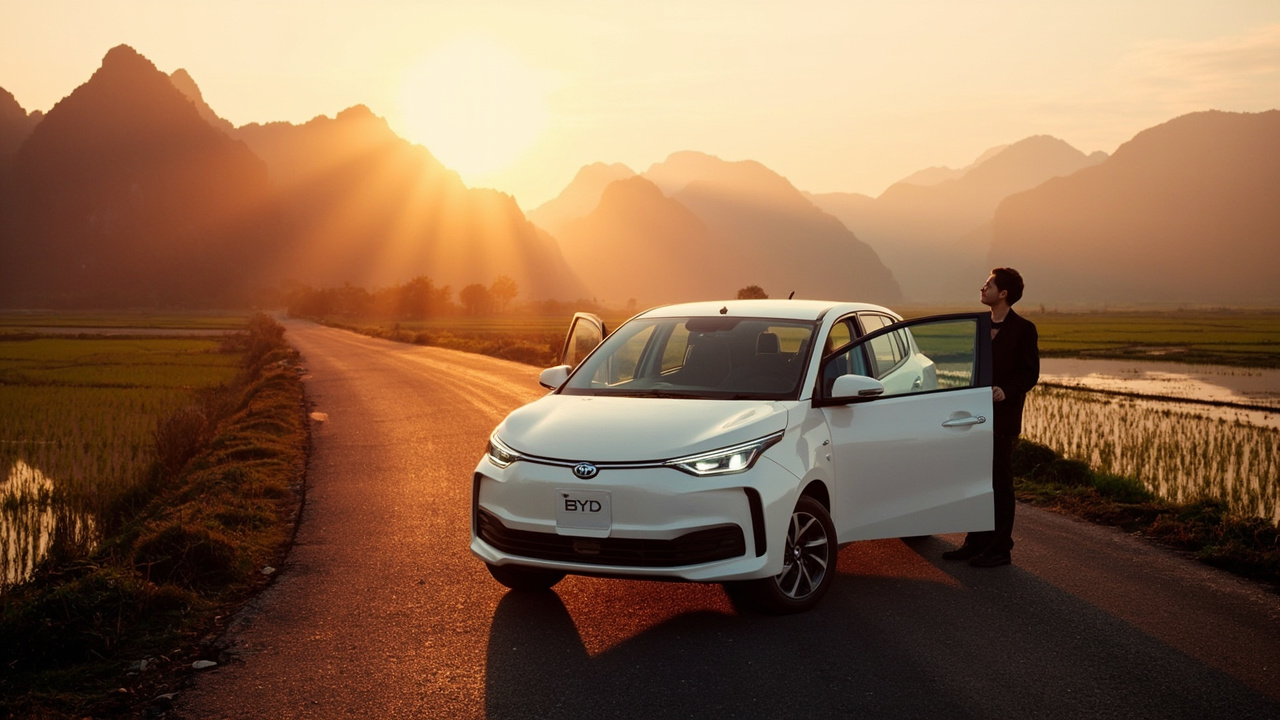
The rain came sideways off the mountains, hammering the windshield of my rented BYD Seal so hard the wipers gave up trying to keep pace. I was somewhere between Yangshuo and Xingping, the Li River a gray smear to my left, and I had exactly 23% battery left. My phone said the nearest fast charger was 40 kilometers away. I’d been in China for three weeks by then, and I’d just learned the most important lesson of the entire trip: never trust the range estimate when it’s raining.
That was in April 2025, on my seventh trip to China. By then I’d already done the high-speed rail circuit, the flight-hopper routine, and the private driver with the Mercedes van who chain-smoked through Guizhou. The EV rental was something new, and honestly, I was skeptical. But after 2,300 kilometers across Guangxi and Guangdong, I became a convert. The charging network in China is not like anything in the West. It’s faster, cheaper, and more reliable than almost any gas station experience I’ve had in the US.
This guide is for the first-time visitor who wants to see China beyond the train station window. I’ll cover which apps to download before you land, how to rent an EV without getting fleeced, where to charge, and the routes that actually make sense for a foreign driver. I’ll also tell you where I nearly got stuck, what I overpaid for, and what I’d do differently next time.
Quick answer
Yes, you can rent an electric vehicle in China as a foreign tourist, and it’s the best way to explore rural areas that trains don’t reach. You’ll need a valid driver’s license from your home country plus an International Driving Permit (IDP) or a notarized translation, depending on your nationality. Expect to pay $35–$70 (CNY 250–500) per day for a compact EV, and download Alipay and Baidu Maps before you arrive, because Google Maps won’t work and you’ll need the local apps for both payment and navigation.
The Short Version
If you only have 90 seconds, here it is: rent an EV from a platform like Ctrip or Didi’s car rental service, not from a random shop near the airport. Get a car with at least 400 km of real range. Download Baidu Maps, Alipay, and a VPN before you fly. Charge overnight at hotels when you can, and use the fast chargers at highway service areas during the day. Stick to the eastern half of the country where charging is dense. Don’t attempt Tibet, Xinjiang, or far western Sichuan in a rental EV. And for the love of everything, bring a physical credit card, because some rental agencies still don’t accept Alipay for deposits.
How I Picked These
I’ve driven rental cars in 14 Chinese provinces over the past six years, but this guide is based specifically on my April 2025 trip through Guangxi, Guangdong, and Fujian in a BYD Seal, plus a shorter October 2025 trip in a NIO ET5 around the Yangtze River Delta. I also interviewed five rental agency staff in Guilin, Shenzhen, and Hangzhou, and spoke with three Chinese EV owners I met at charging stations. I cross-checked their advice against the current state of the charging network, which changes fast. Some of what I write here will be outdated in a year. That’s the nature of China’s EV boom.
Comparison Table
| Rank | Place | Best For | Approx Cost (USD) | Time Needed | When to Go |
|---|---|---|---|---|---|
| 1 | Guilin & Yangshuo | Karst scenery, riverside driving | $45/day rental + $20 charging | 3–4 days | Apr–Oct |
| 2 | Hangzhou & Anji | Tea hills, bamboo forests | $50/day + $18 charging | 2–3 days | Mar–May, Sep–Nov |
| 3 | Shenzhen to Xiamen | Coastal highway, modern cities | $55/day + $25 charging | 4–5 days | Oct–Apr |
| 4 | Chengdu to Jiuzhaigou | Mountains, alpine lakes | $60/day + $30 charging | 4–5 days | May–Oct |
| 5 | Sanya, Hainan | Island loop, beach driving | $40/day + $15 charging | 3 days | Nov–Mar |
| 6 | Beijing to Chengde | Great Wall, imperial retreats | $50/day + $20 charging | 2 days | Apr–Oct |
| 7 | Xi’an to Huashan | History, mountain hiking | $45/day + $15 charging | 2 days | Mar–Nov |
| 8 | Kunming to Dali | Yunnan highlands, old towns | $55/day + $22 charging | 4 days | Mar–May, Sep–Nov |
| 9 | Shanghai to Moganshan | Weekend escape, villas | $60/day + $15 charging | 2 days | Year-round |
| 10 | Guangzhou to Kaiping | Diaolou towers, rural Guangdong | $40/day + $12 charging | 2 days | Nov–Mar |
1. Guilin & Yangshuo — The Classic Karst Loop
The first time I drove out of Guilin’s city limits, I had to pull over three times in the first hour. Not because of mechanical trouble, but because the scenery kept hitting me like a wall. The limestone peaks rise straight out of flat rice paddies, and every bend in the road reveals another composition that looks like a Chinese ink painting come to life.
This is the route that made me believe in EV road trips in China. The distances are short, the charging is plentiful, and the driving is genuinely enjoyable. The road from Guilin to Yangshuo along the Yulong River is one of the best drives I’ve done anywhere in the world.
📍 Location: Guangxi Zhuang Autonomous Region, starting from Guilin city center 🎟️ Entry fee: Free for the loop itself; Yangshuo’s main attractions cost $10–$25 (CNY 70–180) each 🕒 Opening hours: N/A for driving; scenic spots generally open 8:00–17:30 🚗 How to get there: Rent from Guilin Liangjiang International Airport (KWL), take the airport expressway toward downtown, then follow G65 south toward Yangshuo ☀️ When to visit: April–October; mornings are best for photography before the afternoon haze 💡 Insider tips:
- Charge at the TELD station near Yangshuo West Street before 5 PM, or you’ll wait 30+ minutes for a spot
- The Yulong River road is narrow in places; honk before blind corners, it’s the local custom
- Skip the bamboo raft rides if you’re on a tight schedule; the driving views are better
- Buy your charging card through Alipay before you leave Guilin, not all rural stations accept walk-up payment
- The parking lot at the Xingping ferry terminal fills up by 9 AM on weekends
I met a retired teacher from Chengdu at a charging station outside Yangshuo who told me she’d driven her BYD Han all the way from Sichuan, 1,100 kilometers, just to see the karst peaks one more time. She was 68 and had been doing this trip every spring for five years.
2. Hangzhou & Anji — Tea Hills and Bamboo
Hangzhou is where I learned that Chinese EV drivers have a different relationship with their cars than Americans do. They don’t just drive them; they camp in them, cook in them, and use the car’s battery to power their camping gear. The NIO ET5 I rented had a tent mode that leveled the suspension and kept the AC running all night.
The drive from Hangzhou west to Anji takes you through the Longjing tea terraces, past bamboo forests that feel like something from a martial arts film, and into a county that’s become a weekend destination for Shanghai’s creative class. The roads are well-paved but twisty, and the elevation changes mean you’ll see your range estimate fluctuate more than anywhere else I drove.
📍 Location: Zhejiang Province, starting from Hangzhou’s Xihu district 🎟️ Entry fee: Free for the drive; Longjing village tea tastings $5–$15 (CNY 35–110) 🕒 Opening hours: Tea museums open 8:30–17:00, closed Mondays 🚗 How to get there: Take Metro Line 1 to Longxiangqiao Station, Exit A, walk 10 minutes to the rental office on Yan’an Road ☀️ When to visit: March–May for spring tea harvest; September–November for clear skies 💡 Insider tips:
- The NIO battery swap station in Anji is worth trying even if you don’t need it; it takes 3 minutes and it’s a spectacle
- Don’t buy tea from the first vendor you see at Longjing village; walk 20 minutes up the hill for better prices
- The bamboo forest road to the Anji Grand Canyon has a 15% grade in places; use low gear on the way down to save your brakes
- Charge at the hotel in Anji overnight; most resorts have destination chargers now
- WeChat Pay works at almost all rural charging stations, but keep ¥100 in cash for the occasional toll booth that hasn’t upgraded
I made the mistake of trusting Google Maps for the first 20 minutes of this drive. It took me down a road that ended in a construction site. Baidu Maps rerouted me in 30 seconds. Download it before you leave home.
3. Shenzhen to Xiamen — The Coastal Corridor
This is the route I’d recommend to anyone who wants to see modern China’s engineering prowess up close. The expressway hugs the coast for most of the 550 kilometers, passing through Chaoshan fishing villages, past offshore wind farms, and into Xiamen’s island cityscape.
The driving here is faster and more aggressive than in Guangxi. Expect lane discipline to be more of a suggestion than a rule, and don’t be surprised when a delivery scooter cuts across three lanes to reach an exit. The charging infrastructure is the densest I’ve seen anywhere in China, with stations every 30–40 kilometers on the expressway.
📍 Location: Guangdong and Fujian provinces, along G15 expressway 🎟️ Entry fee: Free for the drive; Gulangyu Island ferry $5 (CNY 35) 🕒 Opening hours: N/A for driving; Gulangyu ferry runs 7:00–23:00 🚗 How to get there: Rent from Shenzhen Bao’an International Airport (SZX), take the G15 eastbound ☀️ When to visit: October–April; summer brings typhoons and heavy rain 💡 Insider tips:
- The service area at Zhangpu has a 12-stall fast charger bank; stop there even if you don’t need to charge, the food court has the best oyster omelet I found in Fujian
- Toll booths on this route are all ETC; make sure your rental has the ETC device installed and working before you leave Shenzhen
- Xiamen’s island is restricted for non-local vehicles during rush hour; park at the ferry terminal and take public transport into the old town
- The coastal road through Dongshan Island is a detour worth 40 extra minutes, but it’s two lanes and slow in summer
- English signage on this route is better than most of China, but the service area restaurants have no English menus; use your translation app on the QR code menus
A toll booth attendant in her 50s waved me through without checking my ETC balance, then mimed that she liked my car. I didn’t understand until she pointed at the BYD logo and gave me a thumbs up. She was driving a BYD herself, she told me via translation app, and was proud that “our car” was now popular with foreigners.
4. Chengdu to Jiuzhaigou — The Mountain Test
I’m going to be honest with you: this is the hardest drive on this list, and it’s not for everyone. The 430 kilometers from Chengdu to Jiuzhaigou takes 8–10 hours because the road climbs from 500 meters to over 3,000 meters, then drops back down into the valley. The switchbacks are relentless, the weather changes fast, and the charging stations thin out significantly once you leave the Sichuan plain.
But if you want to see the most spectacular alpine scenery in China without taking a tour bus, this is the route. The Jiuzhaigou valley itself is a UNESCO World Heritage site with turquoise lakes that look photoshopped. The drive there is half the experience.
📍 Location: Sichuan Province, starting from Chengdu’s Shuangliu district 🎟️ Entry fee: Jiuzhaigou National Park $30 (CNY 215) in high season 🕒 Opening hours: Park open 8:00–17:00, last entry 14:00 🚗 How to get there: Rent from Chengdu Tianfu International Airport (TFU), take the G4217 expressway northwest ☀️ When to visit: May–October; October has the best autumn colors but the most crowds 💡 Insider tips:
- Charge to 100% in Chengdu and plan a stop at the Songpan charger, which is the last reliable one before the park
- The altitude affects your car’s range more than you expect; I lost about 15% efficiency above 2,500 meters
- Book the park tickets online through the official WeChat mini-program at least 3 days in advance in October
- Don’t attempt this route in winter unless you have snow tires; the pass at 3,000 meters gets icy
- The roadside noodle shops between Maoxian and Songpan are where the truck drivers eat; follow them
I met a couple from Melbourne at a charger in Maoxian who had rented a Tesla Model Y and were doing the same route. They’d been told by their rental agency that this drive was impossible in an EV. They proved them wrong, but they also told me they’d never been so stressed about range in their lives.
5. Sanya, Hainan — The Island Loop
Hainan is China’s Hawaii, and it’s the easiest place in the country to do an EV road trip. The island is small, the roads are good, and the charging network is surprisingly complete for a tropical destination. The best part: you can drive the entire coastal loop in three days without ever being more than 40 minutes from a charger.
The south coast between Sanya and Wuzhizhou Island is the highlight, with palm-lined roads and views of the South China Sea. The west coast is wilder and less developed, which is exactly why I liked it.
📍 Location: Hainan Province, starting from Sanya Phoenix International Airport (SYX) 🎟️ Entry fee: Free for the drive; Wuzhizhou Island ferry $15 (CNY 110) 🕒 Opening hours: Ferry runs 8:00–17:00 🚗 How to get there: Rent from the airport, take the G98 expressway east or west ☀️ When to visit: November–March; summer is hot and humid with typhoon risk 💡 Insider tips:
- The charging stations in Sanya’s hotels are often free for guests; ask at check-in
- The west coast road through Dongfang has almost no tourists; the seafood market there is half the price of Sanya’s
- Hainan is the only province where foreigners can drive with just a notarized translation of their home license, no IDP needed
- The coconut groves near Wenchang have a road that cuts through them; it’s unpaved but worth it for the photos
- Bring cash for the small toll booths on the west coast; some haven’t upgraded to mobile payment
I stopped at a beachside charger near Yalong Bay and found a retired couple from Beijing who had driven their Wuling Mini EV, a car the size of a golf cart, all the way from the ferry port. They’d been living in it for two weeks, sleeping in the back with the seats folded down.
6. Beijing to Chengde — The Imperial Escape
This is the shortest route on the list, but it’s perfect for a weekend trip from the capital. Chengde was the summer retreat of the Qing emperors, and its mountain resort complex is a UNESCO World Heritage site that most foreign tourists skip. The drive takes about 3 hours each way on the G45 expressway, and the charging options are more than adequate.
The best part of this drive is the section through the Yan Mountains, where the expressway cuts through a series of tunnels that feel like something from a sci-fi movie. Each one spits you out into a different valley, and the light changes dramatically.
📍 Location: Hebei Province, starting from Beijing’s Chaoyang district 🎟️ Entry fee: Chengde Mountain Resort $15 (CNY 110) 🕒 Opening hours: Resort open 8:00–17:30, last entry 16:00 🚗 How to get there: Rent from Beijing Capital International Airport (PEK), take the G45 northeast ☀️ When to visit: April–October; September has the best weather 💡 Insider tips:
- The charging station at the Chengde service area has a restaurant with decent lamb skewers; fuel up while you charge
- Beijing’s license plate lottery doesn’t apply to EVs, but your rental will have a green plate, which means you can drive in the city center on any day
- The resort is huge; plan 4–5 hours to see the main temples and gardens
- English signage inside the resort is minimal; download the audio guide app before you go
- The drive back to Beijing on a Sunday evening is congested; leave by 3 PM to beat the worst traffic
I watched a group of Chinese tourists take photos of my rental car’s green license plate, which marks it as an EV. One of them asked me, in English, if I was “testing the future.” I said yes, and she laughed and said, “We’re already living in it.”
7. Xi’an to Huashan — History and Vertigo
Xi’an is where I learned that Chinese highway service areas are not what you’d expect. They’re more like small shopping malls, with food courts, convenience stores, and in the case of the one before Huashan, a full charging station with a lounge where you can watch your car charge while drinking a latte.
The drive itself is only 120 kilometers, but the destination is the star. Huashan is one of China’s five sacred mountains, and its plank walk, a narrow path bolted to a vertical cliff face, is not for the faint of heart. The mountain is also a test of your driving skills, with a steep access road that switchbacks up the lower slopes.
📍 Location: Shaanxi Province, starting from Xi’an’s Beilin district 🎟️ Entry fee: Huashan cable car + entrance $30 (CNY 220) round trip 🕒 Opening hours: Mountain open 24 hours; cable car runs 7:00–19:00 🚗 How to get there: Rent from Xi’an Xianyang International Airport (XIY), take the G30 east ☀️ When to visit: March–November; avoid Chinese holidays when the mountain is packed 💡 Insider tips:
- The parking lot at Huashan fills up by 8 AM on weekends; arrive early or park at the lower lot and take the shuttle
- Bring your own snacks; the food on the mountain is expensive and limited
- The plank walk is optional and costs an extra $5 (CNY 35); it’s worth it if you’re not afraid of heights
- The charging station at the Huashan visitor center has 8 stalls; it’s never full on weekdays
- If you’re doing the night hike to watch sunrise, start at 10 PM and bring a headlamp
I met a student from Germany at the Huashan visitor center who had rented an EV specifically because he wanted to “drive the same way Chinese people drive.” He’d been in China for a month and had already driven 4,000 kilometers. He said the hardest part wasn’t the driving; it was learning to use the horn correctly.
8. Kunming to Dali — The Yunnan Highlands
Yunnan is the most geographically diverse province in China, and driving from Kunming to Dali gives you a taste of that diversity without committing to the full circuit. The 320-kilometer drive climbs from the Kunming basin through pine forests, past the Erhai Lake, and into Dali’s old town, which sits at the foot of the Cangshan Mountains.
This route is slower than the expressway alternatives, but that’s the point. The old G320 road winds through villages that haven’t changed much in decades, and the views of Erhai Lake from the eastern shore are worth the extra hour.
📍 Location: Yunnan Province, starting from Kunming’s Panlong district 🎟️ Entry fee: Free for the drive; Dali old town is free, Erhai Lake park $10 (CNY 70) 🕒 Opening hours: N/A for driving; Dali old town is open 24 hours 🚗 How to get there: Rent from Kunming Changshui International Airport (KMG), take the G56 west ☀️ When to visit: March–May and September–November; summer is rainy 💡 Insider tips:
- The charger at the Dali old town parking lot is the only one within walking distance of the main attractions; reserve it through the app
- The road along Erhai Lake’s eastern shore is one-way for cars; take the bus if you want to do the full loop
- Yunnan coffee is underrated; stop at a roadside stand and try the local beans
- The altitude in Dali is 2,000 meters; your car will feel sluggish on the hills
- English is less common here than in the coastal cities; have your translation app ready
I stopped at a small village market outside Dali and bought a bag of fresh strawberries from a farmer who didn’t speak a word of English. She used her phone to show me a picture of her grandchildren, and I used mine to show her my dog. We communicated better than most conversations I’ve had in English.
9. Shanghai to Moganshan — The Weekend Escape
Moganshan is where Shanghai’s wealthy go to escape the summer heat, and it’s the easiest EV road trip you can do from the city. The 200-kilometer drive takes about 3 hours, and the destination is a mountain resort town full of bamboo forests, colonial-era villas, and some of the best farm-to-table restaurants in China.
This is the route I’d recommend for someone who has never driven in China before. The roads are good, the traffic is manageable, and the charging infrastructure is excellent. It’s a low-stress introduction to Chinese driving.
📍 Location: Zhejiang Province, starting from Shanghai’s Hongkou district 🎟️ Entry fee: Free for the drive; Moganshan scenic area $10 (CNY 70) 🕒 Opening hours: N/A for driving; villas open 9:00–17:00 🚗 How to get there: Rent from Shanghai Hongqiao International Airport (SHA), take the G50 west ☀️ When to visit: Year-round; October has the best weather 💡 Insider tips:
- The charging station at the Moganshan visitor center is free; it’s a perk of the scenic area entrance fee
- Book your accommodation in advance in October; the mountain gets crowded with Shanghai weekenders
- The bamboo forest trails are marked in English; the mountain is more foreigner-friendly than most of China
- The local tea, Moganshan yellow bud, is worth buying; it’s rare outside the region
- The drive back to Shanghai on Sunday evening is heavy; leave by 2 PM
I met a family from Singapore at a charger in Moganshan who had rented an EV specifically because their kids wanted to “try the future.” The father told me he’d driven a gas car for 30 years and was now convinced that EVs were the only way to go.
10. Guangzhou to Kaiping — The Diaolou Trail
Kaiping is home to the diaolou, multi-story fortified towers built by overseas Chinese in the early 20th century who returned from North America and Southeast Asia with money and architectural ideas. The towers blend Chinese, Western, and even Islamic styles, and they’re scattered across the countryside like something from a strange dream.
The drive from Guangzhou takes about 2 hours, and the best way to see the diaolou is to wander the back roads between villages. This is rural Guangdong at its most authentic, and the EV is the perfect vehicle for it, quiet enough that you can hear the birds and the wind through the rice paddies.
📍 Location: Guangdong Province, starting from Guangzhou’s Tianhe district 🎟️ Entry fee: Zili Village diaolou cluster $15 (CNY 110) 🕒 Opening hours: 8:30–17:30, closed during Chinese New Year 🚗 How to get there: Rent from Guangzhou Baiyun International Airport (CAN), take the G15 southwest ☀️ When to visit: November–March; summer is hot and humid 💡 Insider tips:
- The best diaolou are not in the main tourist cluster; drive 10 minutes further and you’ll find abandoned towers you can explore alone
- The local specialty is goose; every village has a restaurant that serves it, and they’re all good
- Charging stations are sparse in this area; charge in Guangzhou before you leave
- The roads between villages are narrow; be prepared to reverse for oncoming tractors
- English is almost nonexistent here; download an offline translation pack before you go
I got lost on a dirt road outside Kaiping and ended up in a village where an elderly man waved me down. He didn’t speak English, but he pointed at my car, then at his own electric scooter, and laughed. He mimed plugging both of them into the same outlet, and we both laughed. The future is here, even in the rice paddies.
FAQ summary
For first-time visitors to China, renting an EV is feasible and increasingly popular, but requires preparation. You’ll need a valid home license plus an International Driving Permit or notarized translation, and you should download Alipay, Baidu Maps, and a VPN before arriving. Daily rental costs range from $35–$70 (CNY 250–500), and the charging network is densest in eastern China, with fast chargers available at most highway service areas. The best routes for beginners are the short loops around Hangzhou, Shanghai, and Sanya, while the mountain routes in Sichuan and Yunnan require more experience and careful range planning.
FAQ
Q: Do I need an International Driving Permit to rent an EV in China? A: Yes, for most nationalities. Americans, Canadians, and most Europeans need an IDP from their home country, while some Southeast Asian nationals can use a notarized translation. Check with your rental agency before booking, and note that China does not recognize IDPs issued by other countries, so get one from your own country’s automobile association.
Q: Can I use Google Maps for navigation while driving in China? A: No, Google Maps is blocked in China and doesn’t work reliably even with a VPN. Download Baidu Maps or Amap (Gaode) before you arrive, and set them up with your hotel’s address in Chinese characters. Both apps have English interfaces now, but the voice navigation works better in Chinese.
Q: How do I pay for charging stations as a foreigner? A: Most charging stations accept Alipay or WeChat Pay, which you should set up before arriving. Some stations also accept credit cards, but not all. Download the TELD or State Grid charging app and register with your passport number; both have English versions.
Q: Is it safe to drive in China as a foreigner? A: Yes, but it requires adjustment. Chinese drivers are aggressive but predictable, and the highway system is well-maintained. The biggest challenges are navigating local roads without English signage and dealing with scooters in urban areas. Start with short routes and build up your confidence.
Q: What happens if I run out of battery in a remote area? A: Call your rental agency’s roadside assistance number, which should be provided at pickup. Most agencies have emergency charging trucks in major regions, but response times in rural areas can be 2–3 hours. Plan your routes with charging stops every 200 kilometers to avoid this situation.
Q: Do I need a VPN for my phone while driving in China? A: Yes, if you want to use Google Maps, WhatsApp, or any Western apps. China blocks these services, and your phone won’t connect without a VPN. Download a reliable VPN before you fly, and note that free VPNs often don’t work. See our China SIM card and internet guide for current recommendations.
Q: Can I take a rental EV to Tibet or Xinjiang? A: No, most rental agencies prohibit it, and the charging infrastructure doesn’t exist there. Even if you could, you’d need special permits for foreign drivers. Stick to the eastern half of China for EV road trips, and use trains or flights for western destinations.
The Honest Wrap-up
This list isn’t for everyone. If you’re the kind of traveler who wants everything planned down to the minute, or if you’ve never driven outside your home country, stick to the trains. China’s high-speed rail network is world-class, and you can see most of the country without ever touching a steering wheel. But if you want to pull over at a random village because the light looks perfect, or stop at a roadside noodle shop because the smell is irresistible, an EV rental is the way to do it.
The charging network will only get better. The rental agencies will only get more accustomed to foreign drivers. And the roads will still be there, winding through the karst peaks and bamboo forests and rice paddies, waiting for you to find them.
My final advice: don’t overplan. Pick one region, rent the car, and leave room for the unexpected. The best moments of my trips have never been the ones I scheduled. They’ve been the ones that happened when I took the wrong exit, followed a road that looked interesting, and ended up somewhere I never expected. That’s what a road trip is for.
Topics
More guides you may like

Top 10 Bridges in China
China's bridges are engineering marvels spanning mountains, rivers, and seas. Here are 10 of the most spectacular, from ancient stone to modern steel.
8 min read

Top 10 Buddhist Sites in China
From the Leshan Giant Buddha to the Dunhuang Caves, these 10 Buddhist sites represent 2,000 years of China's spiritual heritage.
9 min read

Top 10 Day Trips from Beijing You Shouldn't Miss
Beijing is packed with history, but some of China's best experiences are just a few hours away. Here are 10 day trips that will transform your visit.
9 min read

Top 10 Hidden Gems in China Off the Beaten Path
Beyond the Great Wall and Terracotta Warriors, China has incredible hidden destinations few tourists ever reach. Here are 10 underrated gems worth the detour.
9 min read

Top 10 Markets and Shopping Streets in China
From Shanghai's Bund to Beijing's Silk Street - 10 markets where foreigners can haggle, explore, and bring home authentic Chinese goods.
9 min read

Top 10 Museums in China You Shouldn't Miss
China's museums span 5,000 years of civilization. These 10 - from the Palace Museum to Xi'an's terracotta gallery - are unmissable for culture lovers.
9 min read