
Datong Yungang Grottoes Guide
The cab driver in Datong looked at me in the rearview mirror and said something I didn't catch. He pointed at the hills west of the city.
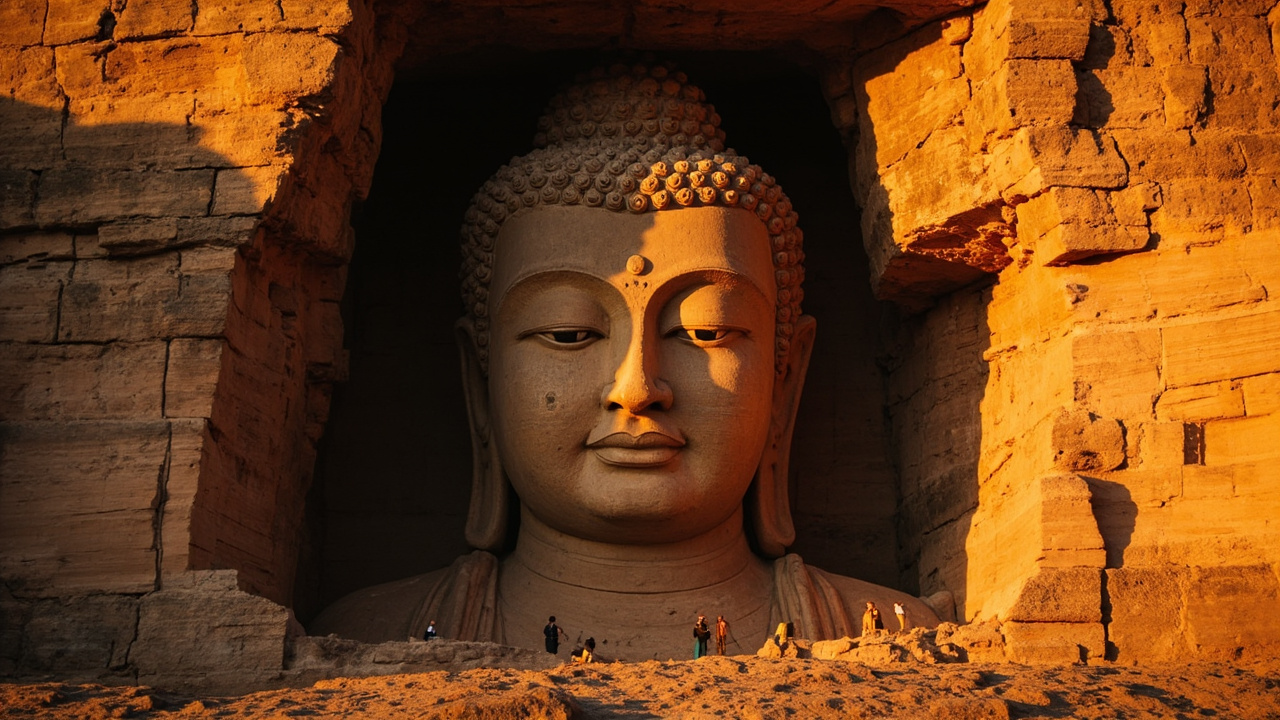
The cab driver in Datong looked at me in the rearview mirror and said something I didn’t catch. He pointed at the hills west of the city, where the grey-brown slopes looked like they’d been carved by a giant’s fingernails. “Yungang,” he said, slower this time. I nodded. I had no idea what I was about to see.
That was seven years ago, my first trip to Datong. I’d read the guidebooks, but nothing prepared me for the scale of it. The Yungang Grottoes aren’t a museum piece or a restored theme park. They’re 252 caves hacked into a sandstone cliff face, holding more than 51,000 Buddhist statues, some of them 17 meters tall. The earliest ones date back to 460 AD, carved by monks and laborers under the Northern Wei dynasty. The sheer physical effort is hard to wrap your head around, even standing right in front of it.
This guide covers everything you need to know before you go: how to get there, what it costs, which caves actually matter, and the mistakes I’ve made so you don’t have to. I’ve been back four times since that first visit, and I still find something new each trip.
Quick answer
The Yungang Grottoes are a UNESCO World Heritage site about 16 kilometers west of Datong city center, with entry at approximately $18 (CNY 120) in 2026. Most visitors spend 3-4 hours exploring the caves, and the best time to visit is April through October, ideally on a weekday morning when tour groups haven’t arrived yet. The site is easily reachable by taxi or bus from Datong, and no special permit or guide is required for independent exploration.
The Short Version
If you only have 90 seconds: Yungang is one of China’s three great Buddhist cave complexes, and it’s the most accessible of the three. The must-see caves are 5, 6, 9, 10, 12, and 16-20. Go early, hire a guide at the entrance (or download the audio app), and don’t skip the small caves at the far western end. Budget a half day. Datong itself is a gritty industrial city but worth one night for the hanging temple and the wooden pagoda nearby. Don’t try to do both grottoes and the hanging temple in one day unless you like rushing.
How I Picked These
I’ve visited the Yungang Grottoes four times over seven years, in spring, summer, and winter. I’ve walked the site with a professional guide, wandered it alone with a translation app, and once got caught in a sudden hailstorm that sent everyone scrambling for the exit pavilions. I’ve also spent time in Datong city proper, eating at the local noodle shops and talking to hotel staff about what they think visitors miss. This guide is based on those visits, plus conversations with three different local guides who’ve worked the site for years. Where I’m uncertain about a price or a schedule, I say so.
Comparison Table
| Rank | Place | Best For | Approx Cost (USD) | Time Needed | When to Go |
|---|---|---|---|---|---|
| 1 | Cave 5 & 6 | The giant Buddha and the most intricate carvings | Included in entry | 45 min | Morning, before crowds |
| 2 | Cave 16-20 (Five Caves of Tan Yao) | The oldest and most historically significant caves | Included in entry | 1 hour | Any time |
| 3 | Cave 9 & 10 | The twin caves with the best-preserved facades | Included in entry | 30 min | Mid-morning |
| 4 | Cave 12 (Music Cave) | The carved musicians and dancers | Included in entry | 20 min | Any time |
| 5 | Cave 20 (the famous露天大佛) | The iconic seated Buddha, most photographed spot | Included in entry | 15 min | Early morning for light |
| 6 | The Wooden Eaved Caves (5-13) | Understanding how the caves originally looked | Included in entry | 30 min | Any time |
| 7 | The Western Caves (21-45) | Quiet, less-crowded caves with smaller carvings | Included in entry | 40 min | Afternoon |
| 8 | The Exhibition Hall | Context on the Northern Wei dynasty and the carving process | Included in entry | 30 min | Before or after the caves |
| 9 | The Hanging Temple (nearby) | A separate site, 60km away, worth a day trip | $15 (CNY 100) | Half day | Spring or autumn |
| 10 | Datong City Museum | Understanding the region’s history before you see the caves | Free | 1-2 hours | Any time |
Cave 5 & 6 — The One That Makes Your Neck Hurt
I remember standing in Cave 5, looking up at the 17-meter seated Buddha, and feeling my jaw actually drop. It’s not just the size. It’s the calm on the face. The statue was carved in the 5th century and it still holds a serenity that makes the noisy crowd around you fade out. The eyes are inlaid with dark stones, and in the dim light they seem to follow you.
Cave 6 is right next door and it’s the opposite experience: claustrophobic, intricate, overwhelming. The central pillar is covered floor-to-ceiling with relief carvings depicting the life of the Buddha. Every surface has something. I spent a full hour in there and still felt like I’d missed half of it.
📍 Location: Central section of the grottoes, caves 5 and 6 are connected by a shared wooden walkway. 🎫 Entry fee: Included in the general admission of $18 (CNY 120). No separate ticket needed. 🕒 Opening hours: 8:30 AM to 5:30 PM (April-October), 8:30 AM to 5:00 PM (November-March). Last entry is 30 minutes before close. 🚕 How to get there: From Datong city center, take a taxi (about $6-8 / CNY 40-60, 30 minutes). Or take bus route 3 from the city center to the Yungang stop, then walk 10 minutes to the entrance. ⏰ When to visit: Go at 8:30 AM when the gates open. The light is better and you’ll have Cave 5 mostly to yourself for the first 20 minutes. 💡 Insider tips: The wooden walkway between caves 5 and 6 gets congested. Go 5 first, then 6, then backtrack to the smaller caves. Don’t use flash photography inside the caves; the light-sensitive pigments are already fading.
I once spent 20 minutes in Cave 6 trying to photograph the ceiling with my phone, and a guard politely tapped my shoulder and pointed at the “no photos” sign. I’d missed it entirely.
Cave 16-20 — The Five Caves of Tan Yao
These five caves, carved between 460 and 465 AD, are the oldest at Yungang and the reason the site exists. They were commissioned by the monk Tan Yao, who convinced the Northern Wei emperor that carving giant Buddhas into the cliff would legitimize his rule. It worked. The statues here are massive, simple, and more weathered than the later ones, which gives them a raw power.
Cave 20 is the one you’ve seen in every photograph: the seated Buddha with the serene face, the cliff wall behind it long since collapsed, leaving the statue exposed to the open air. It’s the most photographed spot in the entire site, and for good reason. But don’t rush past 16-19. Cave 16 has a standing Buddha with a distinctly more human face, and Cave 18 features a central Buddha surrounded by thousands of smaller carved figures.
📍 Location: Western end of the main cliff face, a 5-minute walk from Cave 5. 🎫 Entry fee: Included in general admission. 🕒 Opening hours: Same as the main site. 🚕 How to get there: Just follow the main path west from the entrance. You can’t miss them. ⏰ When to visit: Late afternoon, when the low sun hits the exposed Buddha in Cave 20 directly. The light turns the sandstone gold. 💡 Insider tips: The viewing platform in front of Cave 20 is where everyone takes selfies. Walk 50 meters further west to the small path behind the statue for a different angle that almost nobody uses. Also, the small caves between 16 and 20 are often empty and worth a quick look.
I watched a Chinese tour guide tell her group that the Buddha in Cave 20 was “smiling at the sunrise,” and honestly, standing there at 4 PM with the light hitting his face, I believed it.
Cave 9 & 10 — The Twin Caves With the Facades
Cave 9 and 10 are the ones that make you understand what the whole site looked like before the wooden structures were added. These two caves have the best-preserved exterior facades, with carved columns and intricate reliefs that mimic wooden architecture. The detail is astonishing.
Inside, the carvings are different from the earlier caves. The style is more refined, more decorative, with rows of seated Buddhas and celestial beings. Cave 10 has a particularly beautiful ceiling carving of a coiled dragon. I’ve seen a lot of Buddhist art across China, and these two caves are the ones I’d call genuinely elegant.
📍 Location: Central section, between Cave 8 and Cave 11. 🎫 Entry fee: Included. 🕒 Opening hours: Same as main site. 🚕 How to get there: Follow the main path from the entrance, past Cave 5 and 6, about 5 minutes. ⏰ When to visit: Mid-morning, after the first wave of tour groups has moved past. 💡 Insider tips: The facades are best photographed from the raised walkway opposite, not from directly in front. Also, the interior of Cave 10 has a small side chamber that most visitors miss; it’s easy to walk past the doorway.
I once stood next to a French couple in Cave 10 who were arguing about whether the carvings were “baroque” or “romanesque.” I didn’t have the vocabulary to join in, but they were both wrong and right at the same time.
Cave 12 — The Music Cave
Cave 12 is small, but it’s my favorite. The upper section of the cave is carved with a band of celestial musicians and dancers, each one playing a different instrument: pipas, flutes, drums, cymbals. The poses are lively, almost playful, a stark contrast to the solemn Buddhas elsewhere.
The detail is remarkable. You can see the individual strings on the pipas, the folds in the dancers’ robes, the expressions on their faces. It’s easy to spend 20 minutes just looking at the upper register. The cave also has a central pillar with carvings on all four sides, so you can walk around it and see something different from every angle.
📍 Location: Central section, directly after Cave 11. 🎫 Entry fee: Included. 🕒 Opening hours: Same as main site. 🚕 How to get there: Follow the main path; it’s on the left side as you walk west. ⏰ When to visit: Any time, but the light is best in the morning when the sun hits the cave mouth. 💡 Insider tips: Look for the two musicians playing cymbals near the center of the band. They’re the most dynamic figures in the entire cave. Also, the cave is small and gets crowded fast; go during a tour group changeover (usually at the top of the hour) to have it to yourself.
I tried to identify all the instruments in Cave 12 once and gave up after counting seven different types. A local guide later told me there are more than 20.
Cave 20 — The Iconic Seated Buddha
Yes, I already covered this in the Tan Yao section, but Cave 20 deserves its own entry because it’s the image that defines Yungang. The exposed Buddha, 13.7 meters tall, sits with his hands in a meditation mudra, his face calm and slightly weathered. The cliff wall behind him collapsed centuries ago, which is why he’s now out in the open.
The effect is different from the enclosed caves. You can see the Buddha from a distance, framed against the sky, and as you walk closer, the details emerge: the folds of the robe, the curls of the hair, the faint traces of pigment that survived the centuries. It’s the one spot at Yungang where you feel the full scale of the place.
📍 Location: Western end of the main cliff, the last of the Tan Yao caves. 🎫 Entry fee: Included. 🕒 Opening hours: Same as main site. 🚕 How to get there: Walk west from the entrance, about 10 minutes along the main path. ⏰ When to visit: Early morning for the cleanest light, or late afternoon for golden hour. 💡 Insider tips: The best photo spot is not directly in front, but from the raised platform to the right, which gives you a three-quarter angle. Also, the small cave immediately to the left of Cave 20 has a standing Buddha that most people walk past without noticing.
I’ve seen Cave 20 in rain, snow, and blazing sun. The snow was the best. The white made the sandstone look almost pink.
The Wooden Eaved Caves (5-13) — Seeing the Original Design
When the Yungang Grottoes were built, most of the caves had wooden facades in front of them, protecting the carvings and providing a place for monks to live. Those structures are long gone, except for a few that were rebuilt in the Qing dynasty. Caves 5 through 13 have these wooden eaves, and they give you a sense of what the site looked like when it was a functioning monastery.
The wooden structures are beautiful in their own right, with painted beams and upturned eaves. They also create a different atmosphere inside the caves, filtering the light and making the carvings feel more intimate. Cave 5’s wooden facade is the most impressive, with a three-story structure that towers over the entrance.
📍 Location: Central section of the grottoes. 🎫 Entry fee: Included. 🕒 Opening hours: Same as main site. 🚕 How to get there: They’re on the main path, impossible to miss. ⏰ When to visit: Morning, when the light comes from the east and filters through the wooden lattice. 💡 Insider tips: The wooden structures are original Qing dynasty work, but they’ve been restored multiple times. Don’t touch the painted surfaces; the lacquer is fragile. Also, the upper floors of some of the wooden structures are accessible via steep stairs, and the view from up there is worth the climb.
I climbed to the top of the wooden structure at Cave 5 once and looked down at the crowd below. From up there, the site makes sense in a way it doesn’t from ground level.
The Western Caves (21-45) — Where the Crowds Aren’t
Most visitors stop at Cave 20 and turn around. That’s a mistake. The western section of the grottoes, caves 21 through 45, is where you’ll find the smaller, quieter caves that most tour groups skip entirely. These caves date from a later period and are generally smaller, but they have their own charm.
Some of these caves have been badly damaged by erosion and earthquakes, but others are remarkably well-preserved. Cave 38 has a particularly nice set of carvings, and Cave 39 features a central pillar that mimics a wooden pagoda. The best part is the solitude. On my last visit, I had the entire western section to myself for 20 minutes before anyone else wandered over.
📍 Location: Western end of the site, a 10-15 minute walk from Cave 20. 🎫 Entry fee: Included. 🕒 Opening hours: Same as main site. 🚕 How to get there: Follow the path west past Cave 20 and keep going. ⏰ When to visit: Afternoon, when the tour groups have left. 💡 Insider tips: The path through the western section is less maintained, so wear decent shoes. Also, some of the caves here are gated off for conservation; don’t climb over the barriers.
I found a small cave in this section with a carving of a monkey that had been worn smooth by centuries of hands. I touched it, and for a second, I felt connected to every pilgrim who’d done the same.
The Exhibition Hall — Context Before the Carvings
Before you walk into the caves, spend 30 minutes in the exhibition hall near the entrance. It’s easy to skip, and most people do, but it’s worth your time. The hall has a collection of artifacts excavated from the site, including pottery, coins, and fragments of the original painted plaster.
There are also detailed models showing how the caves were carved, plus information about the Northern Wei dynasty and the Buddhist art traditions that influenced the work. The signage is in Chinese and English, so you can actually read it without a translation app.
📍 Location: Near the main entrance, before the ticket gate. 🎫 Entry fee: Included in admission. 🕒 Opening hours: Same as main site. 🚕 How to get there: It’s the large building to your left as you enter. ⏰ When to visit: Before the caves, so you have context. Or after, if you want to reinforce what you saw. 💡 Insider tips: The hall has a small gift shop with decent books about the grottoes in English. The prices are reasonable, and the books are better than anything you’ll find online.
I bought a book about the Northern Wei dynasty in that gift shop and read it on the train back to Beijing. It made the whole trip make more sense.
The Hanging Temple — The Other Must-See Near Datong
The Hanging Temple (Xuankong Si) is 60 kilometers from Datong, built into a cliff face above a deep gorge. It’s a completely different experience from Yungang: instead of giant Buddhas, you get a fragile-looking wooden structure clinging to the rock, with narrow corridors and steep stairs.
The temple is dedicated to three religions: Buddhism, Taoism, and Confucianism, which is unusual. The buildings date mostly from the Ming and Qing dynasties, though the site is much older. It’s worth the trip, but it’s not a half-day excursion. Plan for a full day if you want to see both Yungang and Hanging Temple.
📍 Location: Hunyuan County, about 60 km southeast of Datong. 🎫 Entry fee: Approximately $15 (CNY 100). 🕒 Opening hours: 8:00 AM to 5:30 PM (April-October), 8:30 AM to 5:00 PM (November-March). 🚕 How to get there: Taxi from Datong, about $40-50 (CNY 280-350) each way. Or take a bus from Datong’s long-distance bus station to Hunyuan County, then a short taxi ride. ⏰ When to visit: Spring or autumn, when the weather is mild. The site is crowded on weekends. 💡 Insider tips: The temple is built into a north-facing cliff, so it’s always in shadow. Bring a light jacket even in summer. Also, the stairs are steep and narrow, so skip this if you have mobility issues.
I got vertigo halfway up the Hanging Temple and had to sit down on a narrow bench for five minutes. A Chinese grandmother patted my shoulder and said something that I think meant “you’ll be fine.” I was.
Datong City Museum — Free Context
If you have an extra hour in Datong, the city museum is worth a visit. It’s a modern building with a surprisingly good collection, covering the region’s history from prehistoric times through the Northern Wei dynasty and beyond. The exhibits are well-designed, with English translations on most panels.
The museum is free, which makes it an easy add-on. It’s also a good way to understand the context of the grottoes before you see them, especially if you’re visiting Datong for just one day.
📍 Location: Near the city center, about 10 minutes by taxi from the train station. 🎫 Entry fee: Free, but you need to show your passport to get a ticket. 🕒 Opening hours: 9:00 AM to 5:00 PM, closed Mondays. 🚕 How to get there: Taxi from anywhere in the city, about $2-3 (CNY 15-20). ⏰ When to visit: Before your Yungang trip, as a primer. 💡 Insider tips: The museum has a small cafe with decent coffee, which is rare in Datong. Also, the gift shop sells postcards that make good souvenirs.
I spent an hour in the museum before my second Yungang visit, and it genuinely changed how I saw the caves. Context matters.
FAQ summary
The Yungang Grottoes cost approximately $18 (CNY 120) for general admission in 2026, are open daily from 8:30 AM, and require about 3-4 hours to explore properly. The site is 16 kilometers west of Datong city center, reachable by taxi for about $6-8 or by public bus. The most important caves to prioritize are 5, 6, 12, and 16-20, and the best time to visit is a weekday morning outside of Chinese public holidays. No advance booking is required for individual visitors, and the site is fully accessible with English signage at major caves.
FAQ
Q: How much does it cost to visit the Yungang Grottoes? A: General admission is approximately $18 (CNY 120) in 2026. There are no separate tickets for individual caves, and the exhibition hall is included. Students with an international student ID may get a discount.
Q: How long should I spend at the Yungang Grottoes? A: Plan for 3-4 hours. The main caves take about 2 hours, and the western section adds another hour. If you want to visit the exhibition hall and take your time, budget a full half day.
Q: How do I get from Datong to the Yungang Grottoes? A: A taxi from Datong city center costs about $6-8 (CNY 40-60) and takes 30 minutes. Bus route 3 from the city center also goes to the grottoes, but it’s slower and less convenient with luggage.
Q: Do I need to book tickets in advance? A: No, individual visitors can buy tickets at the entrance. During Chinese public holidays (Golden Week in October, Labor Day in May), the site gets crowded, so arriving early is more important than booking ahead.
Q: Is the Yungang Grottoes site accessible for people with mobility issues? A: The main path is flat and paved, and the major caves are accessible by wheelchair. However, the western section has uneven paths, and some caves require climbing stairs. The Hanging Temple, by contrast, is not accessible due to steep stairs and narrow corridors.
Q: Can I take photos inside the caves? A: Photography is allowed in most caves, but flash is prohibited. Some caves have “no photography” signs, and guards will ask you to stop if you miss them. The exposed Buddha in Cave 20 is the best place for photos.
Q: What else should I see near Datong besides the grottoes? A: The Hanging Temple (Xuankong Si) is the most famous nearby attraction, about 60 kilometers away. The Datong City Museum is free and worth an hour. The Huayan Temple in the city center is also worth a visit if you have time.
The Honest Wrap-up
The Yungang Grottoes are one of those places that sound like homework until you actually stand in front of them. The guidebooks say “UNESCO World Heritage Site” and “5th-century Buddhist art,” and your brain files it under “things I should see.” Then you walk into Cave 5 and look up at a 17-meter Buddha who’s been sitting there for 1,500 years, and you get it.
This list is for first-time visitors who want to see the best of Yungang without rushing. It’s not for people who want to check a box and move on, because this place rewards patience. If you have the time, spend the night in Datong, eat the local noodles, and go back to the grottoes in the late afternoon when the light turns the sandstone gold.
One final piece of advice: bring cash or make sure your Alipay or WeChat Pay is set up before you go. The ticket office takes cards, but the gift shops and food stalls mostly don’t. And if you’re coming from Beijing, the high-speed train makes this an easy weekend trip. Just don’t try to do it in one day. You’ll regret it.
Topics
More guides you may like

Top 10 Bridges in China
China's bridges are engineering marvels spanning mountains, rivers, and seas. Here are 10 of the most spectacular, from ancient stone to modern steel.
8 min read

Top 10 Buddhist Sites in China
From the Leshan Giant Buddha to the Dunhuang Caves, these 10 Buddhist sites represent 2,000 years of China's spiritual heritage.
9 min read

Top 10 Day Trips from Beijing You Shouldn't Miss
Beijing is packed with history, but some of China's best experiences are just a few hours away. Here are 10 day trips that will transform your visit.
9 min read

Top 10 Hidden Gems in China Off the Beaten Path
Beyond the Great Wall and Terracotta Warriors, China has incredible hidden destinations few tourists ever reach. Here are 10 underrated gems worth the detour.
9 min read

Top 10 Markets and Shopping Streets in China
From Shanghai's Bund to Beijing's Silk Street - 10 markets where foreigners can haggle, explore, and bring home authentic Chinese goods.
9 min read

Top 10 Museums in China You Shouldn't Miss
China's museums span 5,000 years of civilization. These 10 - from the Palace Museum to Xi'an's terracotta gallery - are unmissable for culture lovers.
9 min read