
Guizhou Minority Villages
The first time I really understood Guizhou, I was standing in a rice paddy in the rain, holding a tiny umbrella that belonged to a four-year-old girl named Mei.
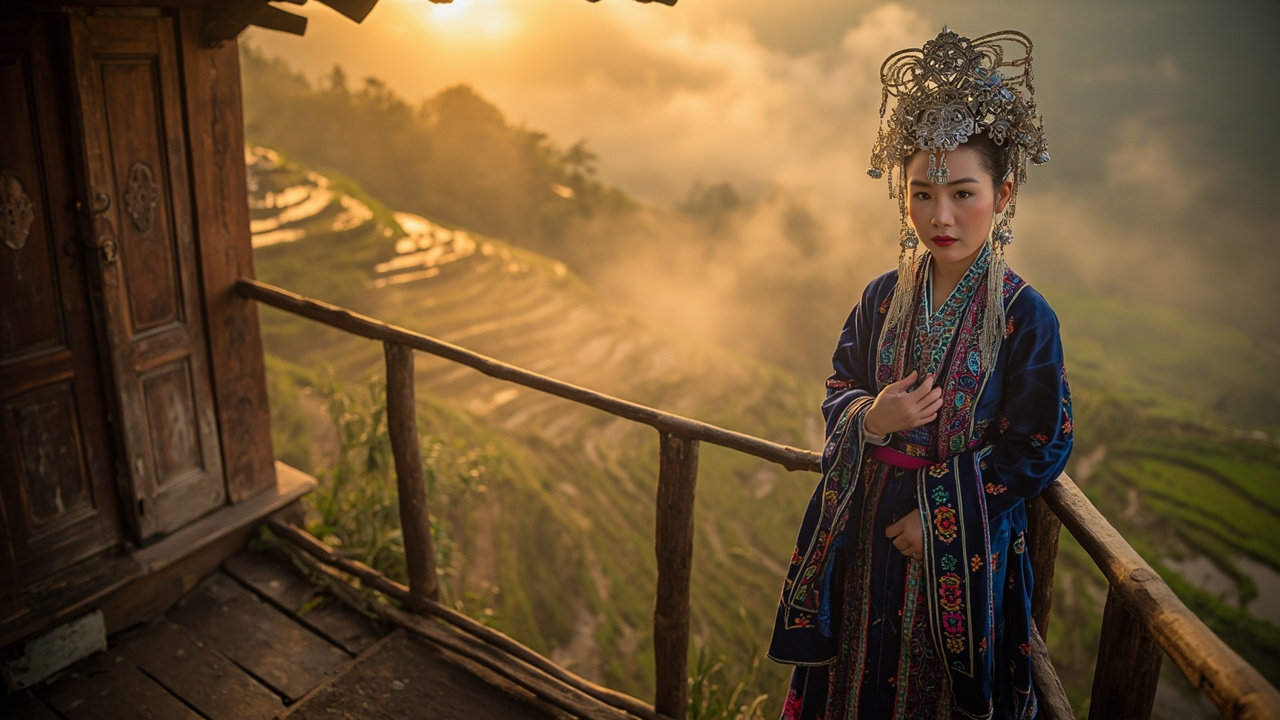
The first time I really understood Guizhou, I was standing in a rice paddy in the rain, holding a tiny umbrella that belonged to a four-year-old girl named Mei. Her grandmother was laughing at me, not unkindly, because I was trying to photograph a water buffalo while simultaneously not falling face-first into the mud. The rain came off the mountains in sheets, and the whole valley smelled like wet earth and woodsmoke. Mei tugged my sleeve and pointed at the buffalo. Then she pointed at me. Then she laughed, because I was the funniest thing she had seen all day.
That is Guizhou. It is not polished. It is not convenient. It is the province that most Chinese tourists skip, and it is exactly why you should not.
This guide covers the ten minority villages I have visited over four separate trips, some of them twice. I have slept in wooden stilt houses, eaten food I could not identify, and missed buses that only run twice a day. I have also seen some of the most extraordinary landscapes in China, places where the Miao, Dong, and Buyi people have built entire worlds on mountainsides that look impossible to farm. By the end of this, you will know exactly which villages are worth your time, how to get there, what it costs, and which ones you can safely skip.
Quick answer
Guizhou’s minority villages are remote, beautiful, and best visited between April and October, when the weather is mild and festivals are frequent. A typical village visit costs $5-15 (35-105 CNY) for entry and local transport, plus $20-40 (140-280 CNY) per night for guesthouses. Most international visitors can enter China visa-free for up to 240 hours (10 days) under the 2026 transit policy, which is enough time for a focused Guizhou trip if you fly into and out of eligible cities like Beijing, Shanghai, or Guangzhou.
The Short Version
If you only have 90 seconds: Xijiang is the famous one and it is worth exactly one night, no more. Zhaoxing is better, more real, and easier to love. Basha is a half-day stop that will stay with you for years. The rest of the list below is ranked by how much I would personally rearrange my itinerary to see them again. Skip the villages that require more than four hours of driving unless you have a full week. The bus rides are beautiful but they will eat your trip.
How I Picked These
I have been to Guizhou four times since 2019, most recently in October 2025. I do not do guided tours. I take public buses, I stay in guesthouses run by local families, and I have learned to ask “where do you eat?” instead of “what should I see?” I have also made every mistake a foreigner can make here, including booking a hotel in the wrong town with the same name and spending six hours on a bus that should have taken three. The villages below are the ones I would send my own mother to, with the caveat that she is in good shape and does not mind squat toilets.
Comparison Table
| Rank | Place | Best For | Approx Cost (USD) | Time Needed | When to Go |
|---|---|---|---|---|---|
| 1 | Zhaoxing Dong Village | Authentic culture, night views | $10 entry | 1-2 nights | Apr-Oct |
| 2 | Xijiang Miao Village | First-timers, photo ops | $15 entry | 1 night | Mar-Nov |
| 3 | Basha Miao Village | Unique traditions, day trip | $5 entry | Half day | Any |
| 4 | Zhenyuan Ancient Town | History, river views | Free | 1 night | Apr-Oct |
| 5 | Huanggang Dong Village | Untouched, quiet | Free | 1 night | May-Oct |
| 6 | Xiaohuang Dong Village | Grand song performances | Free | Day trip | Festivals |
| 7 | Tang’an Dong Village | Terraced rice fields | Free | Half day | Sep-Oct |
| 8 | Qingman Village | Authentic daily life | Free | Day trip | Any |
| 9 | Longli Ancient Town | Ming dynasty architecture | $3 entry | Half day | Any |
| 10 | Jidao Miao Village | Hiking, remoteness | Free | 1 night | Apr-Oct |
Zhaoxing Dong Village — the one I keep going back to
I have been to Zhaoxing three times. The first time, I arrived at dusk and walked into the central square just as the drum tower lights came on. The whole village glowed amber, and the sound of wooden flutes drifted down from the hillsides. I stood there with my backpack on, mouth open, until an old woman selling rice cakes waved me over and handed me one, free, because I looked lost.
Zhaoxing is the largest Dong village in China, with over 1,000 households, but it never feels crowded the way Xijiang does. The five drum towers anchor different clan quarters, and the river runs straight through the middle, crossed by a dozen covered bridges. The Dong are famous for their architecture, and this is the best place to see it. Grand song performances happen most evenings, and the village is big enough to have real restaurants, not just tourist buffets.
📍 Location: Zhaoxing Township, Liping County, southeastern Guizhou 🎫 Entry fee: $10 (70 CNY), includes the evening performance 🕒 Opening hours: Village is open 24/7; performance starts around 8 PM 🚌 Getting there: High-speed train to Congjiang Station, then a 20-minute taxi or shuttle bus to the village. From the station, follow the signs for “肇兴” and look for the green shuttle buses. 🕰 When to visit: April-June for green rice terraces, October for golden ones. Weekdays are noticeably quieter. 💡 Insider tips: Climb the hill behind the village for sunset photos. The covered bridges are the best place to hear locals singing informally. Ask your guesthouse to arrange a homestay meal, not the tourist buffet. The morning market starts at 6 AM and is over by 8. Bring earplugs, the drum tower bells ring all night. One thing I will never forget: eating a bowl of fermented rice noodles at 7 AM with a woman who did not speak a word of English, but who laughed at me for the entire meal because I kept slurping too loudly.
Xijiang Miao Village — the famous one, and it knows it
Xijiang is the postcard image of Guizhou: a thousand wooden stilt houses climbing a mountainside, lights flickering on at dusk like fireflies. It is also the most commercialized village in the province, and you will see more selfie sticks than silver jewelry. I am not saying skip it. I am saying go with adjusted expectations.
The village is enormous, and the views from the observation decks are genuinely spectacular. The Miao are the largest minority group in Guizhou, and Xijiang is their cultural capital. You will see the famous silver headdresses, the embroidered jackets, the batik workshops. But you will also see a Starbucks-adjacent coffee shop and shops selling the same mass-produced trinkets you will find in every Chinese tourist town.
📍 Location: Xijiang Township, Leishan County, about 35 km from Kaili 🎫 Entry fee: $15 (110 CNY), includes the sightseeing bus 🕒 Opening hours: Village is always open; the night show runs 8-9 PM 🚌 Getting there: High-speed train to Kaili South Station, then a 50-minute bus or taxi. The bus leaves from the station’s west exit and costs about $3 (20 CNY). 🕰 When to visit: Go on a weekday. The weekend crowds are genuinely overwhelming. October is the best month for the New Year celebrations of the Miao calendar. 💡 Insider tips: Stay at a guesthouse on the upper slopes, not the main street. The view from the top is worth the climb. Eat at a family-run restaurant that has no English menu, you will get better food. The silver workshops on the back streets sell real pieces, not the tourist stuff. If you want a photo of the village without crowds, go to the observation deck at 6 AM. I made the mistake of arriving on a Saturday afternoon in July and spent two hours just getting from the ticket gate to my guesthouse. Learn from me. Go midweek.
Basha Miao Village — the last gunmen of China
Basha is the place I think about most when I remember Guizhou. The men here carry rifles, actual muzzle-loading guns, as a daily accessory. They also wear traditional black clothing with distinctive topknots, and the village has become famous for its “gunman” identity. It sounds like a tourist trap. It is not.
The village is small, maybe 200 households, and it sits on a hillside surrounded by ancient fir trees. The Basha people believe the forest is sacred, and they have a ceremony where they cut down a tree for a funeral and plant a new one. The gun salute happens for visitors, yes, but it is also part of their actual culture. I watched a young man load his rifle with practiced hands while his son, maybe six years old, watched with complete seriousness. This is not a reenactment. This is their life.
📍 Location: Basha Village, Congjiang County, about 8 km from Congjiang town 🎫 Entry fee: $5 (35 CNY), includes the gun ceremony and dance performance 🕒 Opening hours: 8 AM-6 PM; performances at 10 AM and 2 PM 🚌 Getting there: From Congjiang Station, take a taxi (about $5, 35 CNY) or the local bus from the town center. The road is winding but paved. 🕰 When to visit: Morning is best, before the tour groups arrive. The light is also better for photos. 💡 Insider tips: The gun ceremony is short, maybe 15 minutes, so do not build your whole day around it. The village is small, so combine it with Zhaoxing in the same day. You can buy a photo with the gunmen for about $2 (15 CNY). Respect the rifles, they are real. The local rice wine is strong, do not drink it on an empty stomach. I watched an old man sharpen a knife for twenty minutes while his wife sold vegetables. He did not look up once. I have no idea what he was sharpening it for, and I did not ask.
Zhenyuan Ancient Town — history without the hype
Zhenyuan is not technically a minority village, but it is the gateway to the region and worth a stop. It is a 2,000-year-old town built along the Wuyang River, with Ming dynasty architecture, old stone bridges, and a mountain temple complex that requires climbing 2,000 steps to reach. The town is genuinely beautiful, especially at dusk when the lanterns come on and the river reflects the old buildings.
The town is more Chinese tourist than international, which means the food is authentic and the prices are reasonable. The night market along the river is one of the best I have found in Guizhou, with grilled fish, stinky tofu, and a local specialty called “dao hua” that I still cannot describe properly.
📍 Location: Zhenyuan County, eastern Guizhou, about 3 hours from Kaili 🎫 Entry fee: Free to enter; the temple complex costs $3 (20 CNY) 🕒 Opening hours: Town is always open; temple is 8 AM-6 PM 🚌 Getting there: High-speed train to Zhenyuan Station, then a 10-minute taxi to the old town. The station is new and well-connected to Guiyang and Kaili. 🕰 When to visit: April-May or September-October for pleasant weather. The town is lively on weekends but not overwhelming. 💡 Insider tips: Stay in a guesthouse on the river, the views are worth the extra $10. The boat ride on the river is a nice way to see the town from a different angle. Try the “miao” style sour fish soup, it is the local specialty. The temple climb is steep, bring water. The night market gets busy after 8 PM, go early for the best grilled fish. I met a retired teacher here who insisted on practicing his English with me for an hour while we shared a bottle of local beer. He told me more about Guizhou history than any guidebook ever has.
Huanggang Dong Village — where the tourists have not found it yet
Huanggang is the village I almost did not find. It is off the main road, up a valley, and the bus drops you at a junction where you have to walk the last kilometer. There are no ticket gates, no souvenir shops, no English menus. There is just a village of about 1,000 Dong people living exactly as they have for centuries.
The village is famous for its “grand song” tradition, a polyphonic choral style that UNESCO has recognized as intangible cultural heritage. The songs are performed by groups, often at night, and the harmonies are unlike anything I have heard. I sat in a wooden hall one evening while a group of women sang, their voices weaving together in ways that made the hair on my arms stand up.
📍 Location: Huanggang Village, Congjiang County, about 30 km from Congjiang town 🎫 Entry fee: Free 🕒 Opening hours: Village is always open; performances happen on demand, usually for groups 🚌 Getting there: From Congjiang, take a local bus toward Huanggang (about $2, 15 CNY). The bus drops you at the junction, then it is a 15-minute walk. Taxis from Congjiang cost about $10 (70 CNY). 🕰 When to visit: May-October. The rice terraces are green in summer and golden in autumn. 💡 Insider tips: Ask your guesthouse owner to arrange a song performance, it is worth the $20 (140 CNY) for a private show. The village has no ATMs, bring cash. The guesthouse food is simple but good. Learn to say “hello” in Dong, it goes a long way. The walk to the village is beautiful, do not take a taxi all the way. I tried a local dish here that involved fermented bamboo shoots and pork. I have no idea what it was called, but I have been thinking about it for two years.
Xiaohuang Dong Village — the grand song capital
Xiaohuang is a small village with an outsized reputation. It is considered the home of the Dong grand song, and the local choir has performed in Paris, Vienna, and Beijing. The village itself is quiet, with maybe 800 residents, and it feels like a place where time moves slowly.
The main reason to come is the singing. If you can time your visit with a festival, you will hear the full choir, which is genuinely one of the most moving experiences I have had in China. The songs are passed down through generations, and the oldest singers in the village are treated with the same respect as elders anywhere.
📍 Location: Xiaohuang Village, Congjiang County, about 25 km from Huanggang 🎫 Entry fee: Free; performances cost about $10 (70 CNY) for a private show 🕒 Opening hours: Village is always open 🚌 Getting there: From Huanggang, it is a 40-minute drive. The road is rough, so a taxi is recommended (about $15, 105 CNY). From Congjiang, it is about 1.5 hours. 🕰 When to visit: The Dong New Year (usually November) is the best time. Otherwise, May-October for pleasant weather. 💡 Insider tips: Combine Xiaohuang with Huanggang in the same trip, they are close and both worth it. The guesthouses are basic, bring your own toilet paper. The village has a small shop that sells local rice wine, buy some for your guesthouse host. If you want to hear the choir, ask the village head, he can arrange it. I heard a group of teenage girls singing in the village square at dusk, just practicing, and it was better than any performance I have paid to see.
Tang’an Dong Village — the terraces that made me stop talking
Tang’an is a village of about 500 people, perched on a hillside above a valley of rice terraces that look like a giant staircase to the sky. I arrived in the late afternoon, and the light was doing something to the terraces that I still cannot describe properly. I stood at the edge of the village for twenty minutes, not taking photos, just looking.
The village is known for its traditional architecture, including a drum tower that is over 200 years old. The Dong people here have farmed these terraces for generations, and the village is a UNESCO World Heritage candidate. It is also one of the quietest places I have been in China. At night, the only sound is the water flowing through the irrigation channels.
📍 Location: Tang’an Village, Liping County, about 30 km from Zhaoxing 🎫 Entry fee: Free 🕒 Opening hours: Village is always open 🚌 Getting there: From Zhaoxing, take a local bus or taxi (about $10, 70 CNY). The road is winding but paved. The bus leaves from the Zhaoxing bus station, ask for “堂安”. 🕰 When to visit: September-October for the golden terraces. April-May for the flooded terraces, which reflect the sky. 💡 Insider tips: The hike from Zhaoxing to Tang’an takes about 2 hours and is one of the best walks in Guizhou. Start early to avoid the midday heat. The village has one guesthouse, book ahead. Bring cash, there is no ATM. The drum tower is worth a close look, the woodwork is extraordinary. I watched a farmer plow a terrace with a water buffalo while his son, maybe ten years old, followed behind with a basket of seedlings. They did this for three hours. I watched for three hours.
Qingman Village — the one that made me question everything
Qingman is not on most tourist itineraries, and I almost did not include it here. But it is the village that made me realize how much I was missing by rushing. The village is small, maybe 300 households, and it has no drum tower, no performance stage, no ticket gate. It just has people living their lives.
I spent a morning here watching a woman weave fabric on a loom that looked like it was older than the village itself. She did not look up once, even when I stood directly in front of her. Her hands moved with a rhythm that was almost hypnotic. I bought a piece of her fabric, and she finally smiled, then went back to weaving.
📍 Location: Qingman Village, Congjiang County, about 15 km from Congjiang town 🎫 Entry fee: Free 🕒 Opening hours: Village is always open 🚌 Getting there: From Congjiang, take a local bus or taxi (about $8, 55 CNY). The road is good, and the village is easy to find. 🕰 When to visit: Any time, but morning is best for seeing daily life. 💡 Insider tips: This is not a place for photos, it is a place for watching. Sit at the village square and let life come to you. The local women sell handmade fabric, buy it directly from them, not from shops. Bring small bills, they cannot break large notes. Do not expect English, bring a translation app. I bought a piece of indigo-dyed fabric here for $5 (35 CNY) that I still have. It is the most beautiful thing I own from China.
Longli Ancient Town — the Ming dynasty time capsule
Longli is a bit different from the other villages on this list. It is not a minority village, but a Han Chinese garrison town built during the Ming dynasty, and it has been preserved almost exactly as it was. The town is a perfect square, surrounded by stone walls, with a grid of streets that has not changed in 600 years.
The town is small, and you can walk the entire thing in an hour. But it is worth a stop if you are in the area, especially if you are interested in Chinese history. The old buildings are genuine, not reconstructions, and the town has a quiet, contemplative atmosphere.
📍 Location: Longli Ancient Town, Guiding County, about 30 km from Guiyang 🎫 Entry fee: $3 (20 CNY) 🕒 Opening hours: 8 AM-6 PM 🚌 Getting there: From Guiyang, take a bus from the East Bus Station to Guiding (about $5, 35 CNY), then a taxi to Longli (about $3, 20 CNY). The whole trip takes about 1.5 hours. 🕰 When to visit: Any time, but spring and autumn are most pleasant. 💡 Insider tips: The town is quiet, so do not expect much nightlife. The local specialty is a type of rice noodle soup, try it at the small shop near the east gate. The town is a good half-day trip from Guiyang if you have extra time. The old city walls are worth climbing for the view. I met a man here who had lived in the town his entire life, 74 years. He showed me a photograph of the town from 1950, and it looked almost exactly the same.
Jidao Miao Village — the one that requires effort
Jidao is the hardest village on this list to reach, and it is also the one that rewards the effort. It is a Miao village of about 400 people, set in a valley that feels completely cut off from the modern world. There is no phone signal in parts of the village, and the guesthouse has no Wi-Fi. This is the point.
The village is known for its traditional architecture, including a drum tower that is over 300 years old. The Miao people here have preserved their traditions more than in the more accessible villages, and you will see women in full traditional dress doing their daily work, not just for tourists.
📍 Location: Jidao Village, Taijiang County, about 60 km from Kaili 🎫 Entry fee: Free 🕒 Opening hours: Village is always open 🚌 Getting there: From Kaili, take a bus to Taijiang (about $3, 20 CNY), then a taxi to Jidao (about $10, 70 CNY). The road is rough, and the last section is unpaved. Alternatively, hire a driver for the day from Kaili for about $50 (350 CNY). 🕰 When to visit: April-October. The village is especially beautiful during the Miao New Year (usually November). 💡 Insider tips: Bring everything you need, there is no shop in the village. The guesthouse is basic, expect a shared bathroom. The hiking around the village is excellent, ask the guesthouse owner for directions. The village has no English, bring a translation app. The local rice wine is famous, but it is also strong, pace yourself. I spent an evening here playing cards with a group of men who did not speak a word of English. We communicated entirely through gestures and laughter. It was one of the best nights of my travels.
FAQ summary
Guizhou’s minority villages are best visited between April and October, with Zhaoxing and Xijiang being the most accessible for first-timers. Most villages cost $5-15 (35-105 CNY) for entry, and guesthouses run $20-40 (140-280 CNY) per night. The region is well-connected by high-speed rail from Guiyang, with stations at Congjiang, Kaili, and Zhenyuan. International visitors should set up Alipay before arrival, bring cash for smaller villages, and expect limited English outside the main tourist centers. The 240-hour visa-free transit policy covers most visitors for a focused Guizhou trip.
FAQ
Q: Do I need a visa to visit Guizhou in 2026? A: Most international visitors can enter China visa-free for up to 240 hours (10 days) under the transit policy, as long as you fly into and out of eligible cities like Beijing, Shanghai, or Guangzhou. For longer stays, a standard tourist visa is needed. Check the visa-free transit guide for the latest rules.
Q: How many days do I need for Guizhou’s minority villages? A: A focused trip needs 5-7 days. With 3 days, you can see Zhaoxing and Basha. With 5 days, add Xijiang and Zhenyuan. With 7 days, you can include Huanggang and Tang’an. Any less and you will spend more time on buses than in villages.
Q: Is it safe to travel in Guizhou as a solo traveler? A: Yes. Guizhou is one of the safest provinces in China, and the villages are generally very safe. The main risks are getting lost and language barriers. I have traveled here solo multiple times without any problems.
Q: Do people in the villages speak English? A: In the main tourist villages like Xijiang and Zhaoxing, some people speak basic English. In smaller villages like Huanggang and Jidao, almost no one does. Download a translation app like Pleco or Google Translate before you go, and learn a few basic Mandarin phrases.
Q: How do I pay for things in the villages? A: The main tourist villages accept WeChat Pay and Alipay, and you should set these up before you arrive (see the payment guide). Smaller villages are cash-only, so bring enough for your stay. ATMs are rare outside the main towns.
Q: What should I pack for a trip to Guizhou? A: Comfortable walking shoes are essential, the villages are built on hillsides. Bring a rain jacket, the weather changes quickly. In summer, pack light clothing and insect repellent. In winter, bring warm layers, the villages can be cold and damp.
Q: Is the food safe to eat in the villages? A: Yes, but be adventurous. The local cuisine is delicious, featuring sour fish soup, rice noodles, and grilled meats. If you have a sensitive stomach, stick to cooked foods and avoid tap water. The rice wine is strong, so drink it slowly.
The Honest Wrap-up
This list is for travelers who want to see a China that is disappearing. The villages are changing, and some of them, like Xijiang, have already changed a lot. But there is still a version of Guizhou where old women weave fabric by hand, where men carry rifles as a matter of tradition, and where the sound of singing drifts down from the hills at dusk. Go now, before it is gone.
If you want luxury, if you want convenience, if you want everything to be easy, go to Shanghai instead. But if you want to feel like you have stepped into a different world, a world that has been here for centuries and will not be here forever, go to Guizhou. And when you get there, do not rush. Sit in the village square. Watch the old women weave. Drink the rice wine. Let the place change you, the way it changed me.
Topics
More guides you may like
Top 10 Bridges in China
China's bridges are engineering marvels spanning mountains, rivers, and seas. Here are 10 of the most spectacular, from ancient stone to modern steel.
8 min read

Top 10 Buddhist Sites in China
From the Leshan Giant Buddha to the Dunhuang Caves, these 10 Buddhist sites represent 2,000 years of China's spiritual heritage.
9 min read

Top 10 Day Trips from Beijing You Shouldn't Miss
Beijing is packed with history, but some of China's best experiences are just a few hours away. Here are 10 day trips that will transform your visit.
9 min read
Top 10 Hidden Gems in China Off the Beaten Path
Beyond the Great Wall and Terracotta Warriors, China has incredible hidden destinations few tourists ever reach. Here are 10 underrated gems worth the detour.
9 min read
Top 10 Markets and Shopping Streets in China
From Shanghai's Bund to Beijing's Silk Street - 10 markets where foreigners can haggle, explore, and bring home authentic Chinese goods.
9 min read
Top 10 Museums in China You Shouldn't Miss
China's museums span 5,000 years of civilization. These 10 - from the Palace Museum to Xi'an's terracotta gallery - are unmissable for culture lovers.
9 min read