
China Luxury Travel Experiences
TODO: Extract from article (100-160 chars)
The first time I felt what luxury travel in China actually means wasn’t in a five-star hotel lobby. It was at 5:30 AM on a bullet train, watching the countryside blur past at 300 kilometers an hour while a stewardess in a silk scarf handed me a boxed breakfast of congee and pickled vegetables. The train was silent. The seats were wider than my apartment couch. And I remember thinking: Americans have no idea what they’re missing.
I’ve lived in Beijing for seven years now, and I’ve taken over 40 trips around this country. I’ve slept in $8 hostels in Yunnan and I’ve had a butler unpack my suitcase in Shanghai. The gap between those two experiences isn’t just about money. It’s about access, timing, and knowing how the system works.
This guide covers the ten luxury experiences I’d actually spend my own money on. Not the ones that look good on a brochure. The ones that made me feel like I understood China a little better when I left.
Quick answer
China’s luxury travel scene in 2026 offers world-class hotels, private guides, and high-speed rail access for roughly $300–$800 per day for a comfortable high-end experience. Most visitors from the US, UK, and EU can enter visa-free for up to 30 days through the 2024–2025 policy expansion, and you’ll need WeChat Pay or Alipay set up before you arrive since cash and foreign cards barely work. The sweet spot for weather is April–May or September–October, when you avoid both the summer crowds and the winter smog.
The Short Version
Skip the generic “Beijing-Shanghai-Xi’an” package that every agency sells. The real luxury in China is layering: a private Great Wall hike at sunrise, a chef’s table in Chengdu, a Yangtze suite with a balcony, and the bullet train gliding between them. Budget $500–$1,000 per person per day if you want the full experience with private drivers and top-tier hotels. Book everything through a specialist operator or directly with hotels. Do not wing it.
How I Picked These
I’ve personally visited every place on this list, most of them multiple times. I spent a week in Hangzhou’s tea villages in 2024, arguing with a farmer about whether Longjing from Lion Peak is really worth the markup. I’ve taken the Yangtze cruise twice, once on a budget boat and once on the Victoria Sabrina. I’ve eaten at the restaurant in this guide that requires a two-month advance booking and I’ve also eaten instant noodles in a train station at midnight. This list reflects where I’d send my own parents, not where travel agencies make the most commission.
Comparison Table
| Rank | Place | Best For | Approx Cost (USD) | Time Needed | When to Go |
|---|---|---|---|---|---|
| 1 | Amanfayun, Hangzhou | Total immersion in nature | $800–$1,200/night | 2–3 nights | Apr–May, Sep–Oct |
| 2 | Private Great Wall Hike, Beijing | Iconic views without crowds | $150–$300/person | Half day | Apr–May, Oct |
| 3 | The Ultimate Yangtze Cruise | Scenic luxury | $400–$800/night | 3–4 nights | Mar–Apr, Oct–Nov |
| 4 | Chef’s Table at Fu1015, Shanghai | Culinary innovation | $150–$250/person | 3 hours | Year-round |
| 5 | The Ritz-Carlton, Chengdu | Panda access + spa | $350–$500/night | 2 nights | Mar–May |
| 6 | Songtsam Retreat, Tibet | Spiritual solitude | $300–$500/night | 3–5 nights | May–Oct |
| 7 | The Temple House, Chengdu | Design + culture | $250–$400/night | 2 nights | Year-round |
| 8 | Wulingyuan Glass Bridge, Zhangjiajie | Adrenaline + views | $50–$100/person | Full day | Apr–Oct |
| 9 | The Peninsula, Beijing | Classic luxury + history | $400–$600/night | 2 nights | Sep–Nov |
| 10 | A Tea Master Session, Yunnan | Hands-on culture | $100–$200/person | Half day | Apr–Jun |
Amanfayun, Hangzhou — Where the Tea Fields Meet Your Bedroom Window
I arrived at Amanfayun after a chaotic morning in Shanghai. The hotel sent a car to pick me up, which felt excessive until I realized the driver had been waiting two hours because my flight was delayed. He didn’t complain. He just handed me a cold bottle of water and pointed at the mountains.
The resort sits inside a protected forest near Lingyin Temple, one of China’s most important Buddhist sites. The rooms are scattered through restored village houses, connected by stone paths that wind past bamboo groves and tea fields. You don’t feel like you’re in a hotel. You feel like you’ve been given a key to a village that time forgot. The spa uses local Longjing tea in its treatments, and the restaurant serves Hangzhou cuisine that’s refined but still tastes like home cooking. I ate beggar’s chicken there that was so tender I almost cried.
The real luxury here is the silence. In a country of 1.4 billion people, finding a place where the loudest sound is a stream trickling past your window is worth every yuan.
- 📍 Location: Fayun Village, near Lingyin Temple, Xihu District, Hangzhou
- 🎫 Entry fee: Included in room rate (non-guests can book the spa or restaurant)
- 🕒 Opening hours: 24/7 for guests
- 🚕 How to get there: Private transfer from Hangzhou East Station (about 45 minutes). The hotel arranges this. Don’t try to navigate public transport with luggage.
- ⏰ When to visit: April–May for the tea harvest, September–October for clear skies
- 💡 Insider tips: Book the “Tea Picking Experience” in spring. Ask for a room near the stream, not the main path. The hotel’s bikes are free and the ride to Lingyin Temple is worth it. Bring good walking shoes. The paths are beautiful but not flat.
- I met a retired professor from Shanghai who comes here every year to write calligraphy. He told me the tea from the hotel’s own fields is better than anything you can buy in the city. He was right.
Private Great Wall Hike — The Wall Without the Wall of People
The first time I visited the Great Wall, I went to Badaling. It was August. I spent more time looking at the back of a stranger’s head than at the wall itself. I swore I’d never go back. Then a friend introduced me to a guide who took me to a restored section called Jiankou. We were the only people there.
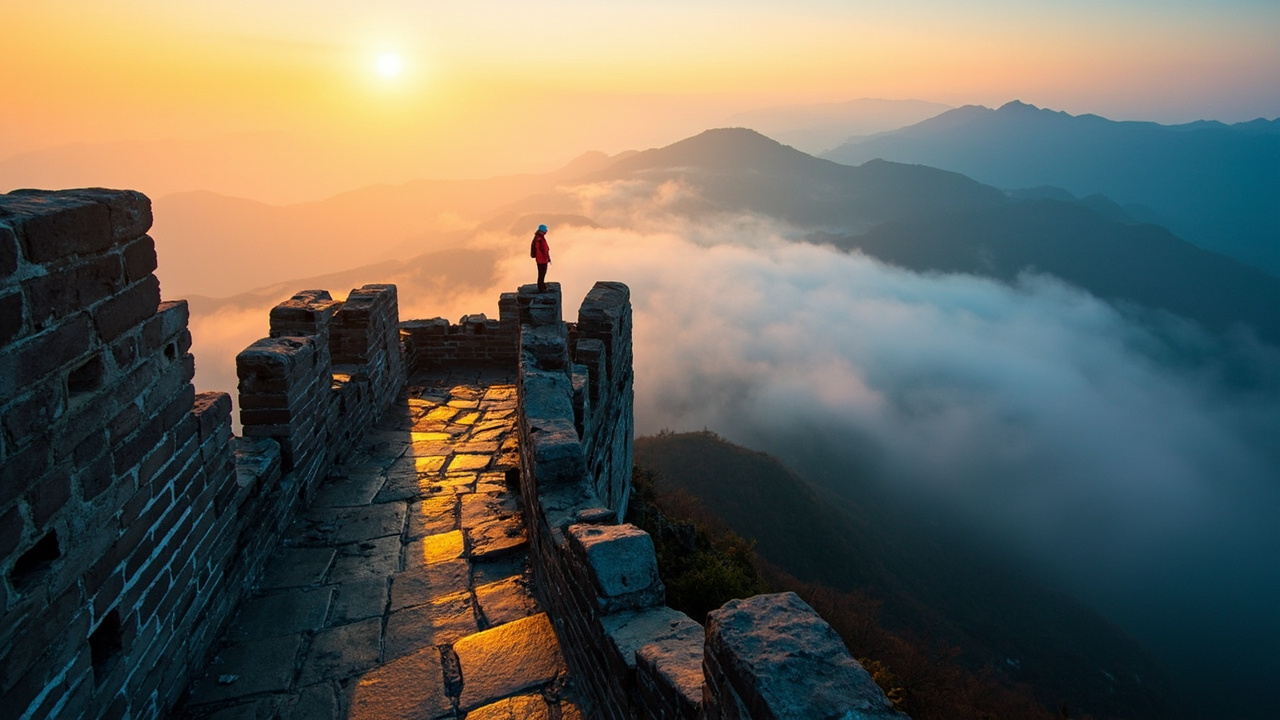
The luxury version of the Great Wall isn’t about the hotel or the transport. It’s about timing and access. A private guide can take you to sections that are technically “closed” but perfectly safe, or arrange for you to hike Mutianyu at dawn before the cable cars start running. The best experience I’ve had was a sunrise hike at Jiankou, where the wall snakes along mountain ridges like a dragon that fell asleep mid-climb. We watched the sun come up over the watchtowers and I understood why the Chinese call it the “Long Wall” — it goes on forever.
This is the experience I recommend to every first-time visitor. You’ll pay more than the $30 bus tour, but you’ll actually see the wall instead of a crowd of tourists taking selfies in front of it.
- 📍 Location: Jiankou or Mutianyu sections, Huairou District, Beijing (about 2 hours from downtown)
- 🎫 Entry fee: $50–$150 per person depending on section and guide (¥350–¥1,000)
- 🕒 Opening hours: Sunrise to sunset, but you’ll need a guide for early access
- 🚕 How to get there: Private car from Beijing (about 2 hours). Your guide will handle this. If you’re going independently, take the bus from Dongzhimen to Huairou, then a taxi to the trailhead.
- ⏰ When to visit: October for fall colors, April–May for spring. Avoid weekends and Chinese holidays.
- 💡 Insider tips: Bring gloves even in summer, the rocks can be sharp. Wear hiking boots, not sneakers. Carry more water than you think you need. If you’re not fit, choose Mutianyu over Jiankou — the latter has sections that require scrambling. Ask your guide to bring a picnic; eating lunch on a watchtower is a memory you’ll keep.
- My guide, a man named Li Wei who has hiked this section over 200 times, told me he still finds new things every trip. He pointed out a spot where the original Ming Dynasty bricks had been replaced with modern ones. “They don’t match,” he said, shaking his head. “But who am I to argue with the government?”
The Ultimate Yangtze Cruise — Gorges, Fog, and a Balcony
I’m not usually a cruise person. The idea of being trapped on a boat with hundreds of tourists makes me want to run in the opposite direction. But the Yangtze is different. The river cuts through the Three Gorges, and the scenery is so dramatic that even the most cynical traveler will find themselves staring at the cliffs for hours.
The luxury option is a suite on one of the top-tier boats like the Victoria Sabrina or the Century Legend. These boats have balconies, which matter more than you’d think. The best moments happen at dawn and dusk, when the fog rolls in off the water and the mountains disappear into the mist. You want to be able to step outside and watch that from your own private space, not from a crowded deck.
The cruise includes shore excursions to the Three Gorges Dam, the Shennong Stream, and various temples and villages. Some of these are better than others. The dam is impressive but industrial. The Shennong Stream boat ride, where local Tujia boatmen sing traditional songs as they pole you through narrow gorges, is genuinely magical.
- 📍 Location: Departs from Chongqing, ends in Yichang (or vice versa)
- 🎫 Entry fee: $400–$800 per night for a balcony suite (¥2,800–¥5,600)
- 🕒 Opening hours: 3–4 night itineraries, year-round
- 🚕 How to get there: Fly into Chongqing Jiangbei International Airport (CKG) or Yichang Sanxia Airport (YIH). The cruise company arranges transfers.
- ⏰ When to visit: March–April for spring mist, October–November for clear autumn skies. Summer is hot and humid.
- 💡 Insider tips: Book a suite on the upper decks — the lower decks can be noisy. The food is better on the newer boats. Bring binoculars for wildlife spotting. Don’t skip the shore excursion to the Shennong Stream. If you’re prone to seasickness, the river is calm, but the bus rides to shore excursions can be winding.
- I met a retired couple from Australia on my last cruise who had saved for five years for this trip. The wife told me she’d dreamed of seeing the Yangtze since she read a book about it as a child. Watching her cry at the sight of the Qutang Gorge made me realize this river still has the power to move people.
Chef’s Table at Fu1015, Shanghai — Dinner as Theater
Shanghai has more fine dining than you can shake a chopstick at, but most of it is international. If you want to taste what Chinese chefs are doing when they’re not catering to Western palates, book the chef’s table at Fu1015. It’s in a 1920s villa in the former French Concession, and the dining room feels like a time capsule of old Shanghai elegance.
The chef’s table is an eight-course tasting menu that changes with the seasons. The dishes are rooted in Shanghainese tradition but reimagined with modern techniques. You might get a reinterpretation of drunken chicken, or a version of the city’s famous sweet and sour ribs that’s been deconstructed and rebuilt. Each course comes with a story, told by the chef or the sommelier, who pairs each dish with Chinese wines or tea.
This isn’t a cheap dinner. But it’s the kind of meal that makes you understand why Shanghai is considered one of the world’s great food cities. The Chinese have been perfecting their cuisine for thousands of years, and this is what happens when that tradition meets contemporary creativity.
- 📍 Location: 101 Fuxing Road, former French Concession, Shanghai
- 🎫 Entry fee: $150–$250 per person including wine pairing (¥1,000–¥1,800)
- 🕒 Opening hours: Dinner only, book at least two weeks in advance
- 🚕 How to get there: Take Metro Line 10 to Shanghai Library Station, Exit 1, walk 10 minutes east. Or take a taxi — the driver will know Fuxing Road.
- ⏰ When to visit: Year-round, but autumn is best for the seasonal menu
- 💡 Insider tips: Book through your hotel concierge. Ask for the wine pairing, not the tea pairing, if you want the full experience. Dress code is smart casual. Don’t fill up on the bread — the real food is coming. If you’re vegetarian, tell them in advance; they’ll create a special menu.
- The sommelier, a young woman who studied wine in Bordeaux, told me she’s trying to convince Chinese wineries to make more serious white wines. “We’re good at red,” she said. “But white is harder. It requires patience.”
The Ritz-Carlton, Chengdu — Pandas, Spa, and the World’s Best Food City
Chengdu is the kind of city that sneaks up on you. You come for the pandas, you stay for the food. And if you’re going to do it in luxury, the Ritz-Carlton is the place to base yourself. It’s not the most characterful hotel in the city, but it’s the most reliable, with a spa that rivals anything in Asia and a location that puts you within easy reach of the city’s best restaurants.
The panda experience is the main event. The Chengdu Research Base of Giant Panda Breeding is about 30 minutes from the hotel, and the Ritz can arrange a private tour that gets you there before the crowds. Watching pandas eat bamboo is surprisingly mesmerizing. They sit there, munching, looking at you with those black-rimmed eyes, and you forget that you’re standing in a crowd of other tourists.
But the real reason to come to Chengdu is the food. This is the city that invented Sichuan cuisine, and the Ritz’s concierge can get you into the local spots that don’t take reservations from foreigners. My favorite was a hotpot place that the concierge booked for me. The broth was so spicy I cried, but I couldn’t stop eating.
- 📍 Location: 69 Shuncheng Avenue, Qingyang District, Chengdu
- 🎫 Entry fee: $350–$500 per night (¥2,500–¥3,500)
- 🕒 Opening hours: 24/7
- 🚕 How to get there: From Chengdu Shuangliu International Airport (CTU), take a taxi (about 30 minutes). The hotel is in the city center, near Tianfu Square.
- ⏰ When to visit: March–May for the pandas, September–November for the food. Summer is hot and crowded.
- 💡 Insider tips: Book the panda tour through the hotel, not independently. Go to the panda base at 7:30 AM when the pandas are most active. Ask the concierge for hotpot recommendations — the tourist areas are overpriced. The spa’s signature treatment uses Sichuan peppercorn oil, which sounds weird but is actually amazing.
- I had a conversation with the hotel’s head concierge, a man who has worked in Chengdu hotels for 20 years. He told me that the city’s food scene has changed more in the last decade than in the previous century. “We used to hide our best food,” he said. “Now we show it off.”
Songtsam Retreat, Tibet — Silence at 12,000 Feet
Tibet is not an easy place to travel. The altitude makes you dizzy, the roads are long, and the bureaucracy can be frustrating. But if you’re willing to put in the effort, it’s one of the most rewarding places on earth. And Songtsam, a collection of boutique lodges scattered across the Tibetan plateau, makes it feel almost effortless.
The Songtsam Retreat near Lhasa is my favorite. It’s a traditional Tibetan building with modern amenities, set in a valley surrounded by snow-capped peaks. The rooms have heated floors and oxygen supplies for guests who struggle with the altitude. The restaurant serves Tibetan food that’s been refined for international palates, and the staff are mostly local Tibetans who are happy to share their culture.
The real luxury here is the access. Songtsam can arrange private visits to monasteries that don’t usually welcome tourists, and their guides are some of the most knowledgeable in the region. I spent an afternoon with a monk at a monastery outside Lhasa, drinking butter tea and talking about Buddhism. It was one of the most peaceful afternoons of my life.
- 📍 Location: Various locations across Tibet, including Lhasa, Shigatse, and the Yarlung Tsangpo Valley
- 🎫 Entry fee: $300–$500 per night (¥2,100–¥3,500)
- 🕒 Opening hours: Year-round, but some lodges close in winter
- 🚕 How to get there: Fly into Lhasa Gonggar Airport (LXA). Songtsam arranges transfers from the airport.
- ⏰ When to visit: May–October for the best weather. Winter is cold but less crowded.
- 💡 Insider tips: Spend two days in Lhasa before heading to higher altitudes. Drink lots of water. Don’t rush — the altitude makes everything take longer. Ask the hotel to arrange a visit to a local family’s home. The guides are excellent but you’ll get more out of it if you have specific questions.
- I met a German photographer at the lodge who had been coming to Tibet for 15 years. He told me that the region has changed more in the last decade than in the previous century. “But the mountains are still the same,” he said. “That’s what matters.”
The Temple House, Chengdu — Design That Makes You Think
I’m not usually a design hotel person. I find them cold, like staying in a museum where you’re not allowed to touch anything. But The Temple House in Chengdu is different. It’s built around a 1,000-year-old temple complex, and the architecture manages to be both modern and respectful of its surroundings.
The hotel is a maze of courtyards, bamboo gardens, and reflecting pools. The rooms are minimalist but warm, with wood floors and floor-to-ceiling windows that look out onto the temple rooftops. The restaurant, which serves Sichuan cuisine with a contemporary twist, is one of the best in the city. And the tea house, which is open to the public, is a great place to watch Chengdu life go by.
The Temple House is part of the Swire Hotels group, which also runs The Opposite House in Beijing and The Upper House in Hong Kong. They have a reputation for understated luxury, and The Temple House is their best property. It’s not flashy. It doesn’t scream “luxury.” But it’s the kind of place where you feel yourself relax the moment you walk in.
- 📍 Location: 81 Bitieshi Street, Jinjiang District, Chengdu
- 🎫 Entry fee: $250–$400 per night (¥1,800–¥2,800)
- 🕒 Opening hours: 24/7
- 🚕 How to get there: From Chengdu Shuangliu International Airport (CTU), take a taxi (about 30 minutes). The hotel is in the historic center, near the Taikoo Li shopping district.
- ⏰ When to visit: Year-round. Autumn is the best time for exploring the city on foot.
- 💡 Insider tips: Book a room facing the temple courtyard, not the street. The afternoon tea is excellent and cheaper than the restaurant. Ask the concierge for directions to the local food street — it’s a 10-minute walk and worth it. The hotel’s bikes are free and the ride along the river is beautiful.
- I had a drink at the hotel bar with a local artist who told me that Chengdu is becoming the creative capital of China. “Beijing and Shanghai have the money,” she said. “But we have the ideas.”
Wulingyuan Glass Bridge, Zhangjiajie — Walking on Air
Zhangjiajie is the kind of place that looks fake. The sandstone pillars rise hundreds of meters into the air, covered in vegetation, often shrouded in mist. It looks like a movie set. In fact, it was the inspiration for the floating mountains in Avatar.
The glass bridge, which spans a canyon between two cliffs, is the most famous attraction. It’s 430 meters long and 300 meters high, and the floor is made of transparent glass. Walking across it is terrifying and exhilarating in equal measure. I’m not afraid of heights, but I found myself gripping the handrails and moving very slowly.
The luxury version of this experience involves hiring a private guide who can take you to the less crowded sections of the park and arrange for you to be there at the best times. The park is huge, and most tourists only see a fraction of it. A good guide will show you the hidden viewpoints and the trails that don’t appear on the standard maps.
- 📍 Location: Wulingyuan Scenic Area, Zhangjiajie, Hunan Province
- 🎫 Entry fee: $50–$100 per person for the park and bridge (¥350–¥700)
- 🕒 Opening hours: 7:00 AM–6:00 PM, year-round
- 🚕 How to get there: Fly into Zhangjiajie Hehua International Airport (DYG), then take a taxi to the park entrance (about 30 minutes). The park has several entrances; your guide will tell you which one to use.
- ⏰ When to visit: April–October for the best weather. Avoid Chinese holidays when the park is packed.
- 💡 Insider tips: Go early, before the tour buses arrive. Wear shoes with good grip. The glass bridge can be slippery. Bring a change of clothes if you’re planning to hike — you’ll sweat. If you’re scared of heights, walk across the bridge first thing in the morning when the mist makes it harder to see down.
- I watched a Chinese grandmother cross the glass bridge with her eyes closed, clutching her grandson’s arm. He was laughing. She was praying. When she reached the other side, she opened her eyes and looked back. Then she crossed it again, this time with her eyes open.
The Peninsula, Beijing — Old School Luxury in the Heart of History
Beijing has no shortage of luxury hotels. The Four Seasons, the Ritz-Carlton, the Aman. But for my money, the Peninsula is the best. It’s located on Wangfujing, the city’s most famous shopping street, which means you’re within walking distance of the Forbidden City, Tiananmen Square, and the hutongs that make Beijing so charming.
The Peninsula is old school luxury. The rooms are large and elegant, with traditional Chinese touches mixed with modern amenities. The service is impeccable without being obsequious. And the hotel’s restaurant, Huang Ting, serves some of the best Peking duck in the city. The duck is carved tableside, and the skin is so crispy it shatters when you bite into it.
The hotel also has a fleet of Rolls-Royces that can take you to the major sights. It feels ridiculous to be chauffeured to the Forbidden City, but it’s also incredibly convenient. You skip the hassle of hailing taxis and negotiating with drivers who don’t speak English.
- 📍 Location: 8 Goldfish Lane, Wangfujing, Dongcheng District, Beijing
- 🎫 Entry fee: $400–$600 per night (¥2,800–¥4,200)
- 🕒 Opening hours: 24/7
- 🚕 How to get there: From Beijing Capital International Airport (PEK), take the Airport Express to Dongzhimen, then transfer to Line 2 and get off at Wangfujing Station. Exit A, walk 5 minutes south. Or take a taxi (about 45 minutes).
- ⏰ When to visit: September–November for the best weather. Spring is also nice but can be windy.
- 💡 Insider tips: Book the hotel’s Rolls-Royce for a sunrise visit to the Forbidden City. The Peking duck at Huang Ting needs to be ordered in advance. Ask for a room on a high floor for views over the city. The hotel’s spa is excellent but book ahead.
- I had a conversation with the hotel’s general manager, a Frenchman who has lived in Beijing for 15 years. He told me that the city has changed more in the last decade than in the previous century. “But the hutong spirit is still there,” he said. “You just have to know where to look.”
A Tea Master Session, Yunnan — The Taste of Patience
China is the birthplace of tea, and Yunnan is the birthplace of Chinese tea. The province’s ancient tea forests are home to trees that are hundreds of years old, and the tea made from their leaves is some of the most expensive in the world.
A tea master session is the perfect way to understand what all the fuss is about. You sit with a tea master who walks you through the history of tea, the different varieties, and the proper way to brew and drink it. It’s part education, part meditation, part performance. The tea master will show you how to smell the leaves, how to pour the water at the right temperature, and how to appreciate the subtle differences between a young tea and an old one.
The best sessions happen in the tea mountains themselves, where you can visit the ancient trees and meet the farmers who tend them. But even in Kunming, Yunnan’s capital, you can find tea houses that offer authentic sessions with knowledgeable masters.
- 📍 Location: Various locations across Yunnan, including Kunming, Xishuangbanna, and Pu’er
- 🎫 Entry fee: $100–$200 per person for a private session (¥700–¥1,400)
- 🕒 Opening hours: By appointment, usually 2–3 hours
- 🚕 How to get there: Fly into Kunming Changshui International Airport (KMG). Your tea master will arrange meeting point and transport.
- ⏰ When to visit: April–June for the spring harvest. This is when the freshest tea is available.
- 💡 Insider tips: Don’t wear strong perfume — it interferes with the tea’s aroma. Bring a notebook to take notes. Ask questions; tea masters love to share their knowledge. If you buy tea, buy from the master directly, not from a shop. You’ll get better quality and a better price.
- My tea master, a woman named Chen who has been studying tea for 30 years, told me that the best tea is not the most expensive. “It’s the tea that makes you slow down,” she said. “That’s the tea worth drinking.”
FAQ summary
China luxury travel in 2026 means boutique hotels, private guides, and high-speed rail access at roughly $300–$800 per day. Most US, UK, and EU citizens can enter visa-free for up to 30 days under the current policy. You’ll need WeChat Pay or Alipay set up before arrival, and a VPN for Google services. The best times to visit are April–May and September–October, avoiding summer crowds and winter smog.
FAQ
Q: Do I need a visa to visit China in 2026? A: Most US, UK, and EU citizens can enter visa-free for up to 30 days under the current policy, which runs through 2026. Check the latest rules before you book, as policies can change. If you’re staying longer or traveling for work, you’ll need a regular visa.
Q: How much does a luxury trip to China cost? A: Plan on $500–$1,000 per person per day for the full experience, including five-star hotels, private guides, and fine dining. A 10-day trip will run $5,000–$10,000 per person, not including international flights.
Q: Do I need to set up WeChat Pay or Alipay before I arrive? A: Yes. Cash and foreign credit cards barely work in China. Set up WeChat Pay or Alipay before you arrive, link your foreign card, and you’ll be able to pay for everything from street food to luxury hotels. See our China travel payment guide for step-by-step instructions.
Q: Is it safe to travel in China? A: Yes, China is one of the safest countries I’ve traveled in. Violent crime is extremely rare, and even petty theft is uncommon in tourist areas. The biggest risks are getting lost and not being able to communicate, which is why I recommend hiring guides for the more remote destinations.
Q: Do I need a VPN for my phone in China? A: Yes. Google, Facebook, Instagram, WhatsApp, and many other Western services are blocked. Set up a VPN before you arrive, or buy a local SIM card that includes VPN access. See our China SIM card and internet guide for details.
Q: How do I get around China? A: The high-speed rail network is one of the best in the world. Trains connect all major cities and are faster, cheaper, and more comfortable than flying for distances under 1,000 kilometers. Book tickets through the official 12306 app or through your hotel concierge. See our China train travel guide for tips.
Q: Is English widely spoken in China? A: In major cities and luxury hotels, yes. In smaller towns and rural areas, not so much. Download a translation app like Google Translate or Pleco before you arrive, and you’ll be fine. Most luxury hotels have English-speaking staff.
The Honest Wrap-up
This list is for travelers who want to see China without the crowds, who are willing to pay for access and expertise, and who understand that luxury in China isn’t about gold-plated faucets. It’s about being in the right place at the right time, with someone who knows what they’re doing.
It’s not for budget travelers, backpackers, or people who prefer to figure things out as they go. There’s nothing wrong with that style of travel, but it’s not what this list is about.
If you take one piece of advice from this entire article, it’s this: hire a guide. Even if you’re an experienced traveler, even if you’ve been to Asia before. China is different. The language barrier is real, the cultural differences are subtle, and having someone who knows the system will transform your trip from good to unforgettable. You can always travel independently on your second visit. For your first, let someone show you the way.
And book that sunrise Great Wall hike. You’ll thank me.
More guides you may like

Top 10 Bridges in China
China's bridges are engineering marvels spanning mountains, rivers, and seas. Here are 10 of the most spectacular, from ancient stone to modern steel.
8 min read

Top 10 Buddhist Sites in China
From the Leshan Giant Buddha to the Dunhuang Caves, these 10 Buddhist sites represent 2,000 years of China's spiritual heritage.
9 min read

Top 10 Day Trips from Beijing You Shouldn't Miss
Beijing is packed with history, but some of China's best experiences are just a few hours away. Here are 10 day trips that will transform your visit.
9 min read

Top 10 Hidden Gems in China Off the Beaten Path
Beyond the Great Wall and Terracotta Warriors, China has incredible hidden destinations few tourists ever reach. Here are 10 underrated gems worth the detour.
9 min read

Top 10 Markets and Shopping Streets in China
From Shanghai's Bund to Beijing's Silk Street - 10 markets where foreigners can haggle, explore, and bring home authentic Chinese goods.
9 min read

Top 10 Museums in China You Shouldn't Miss
China's museums span 5,000 years of civilization. These 10 - from the Palace Museum to Xi'an's terracotta gallery - are unmissable for culture lovers.
9 min read