
China 2 Week Itinerary
TODO: Extract from article (100-160 chars)
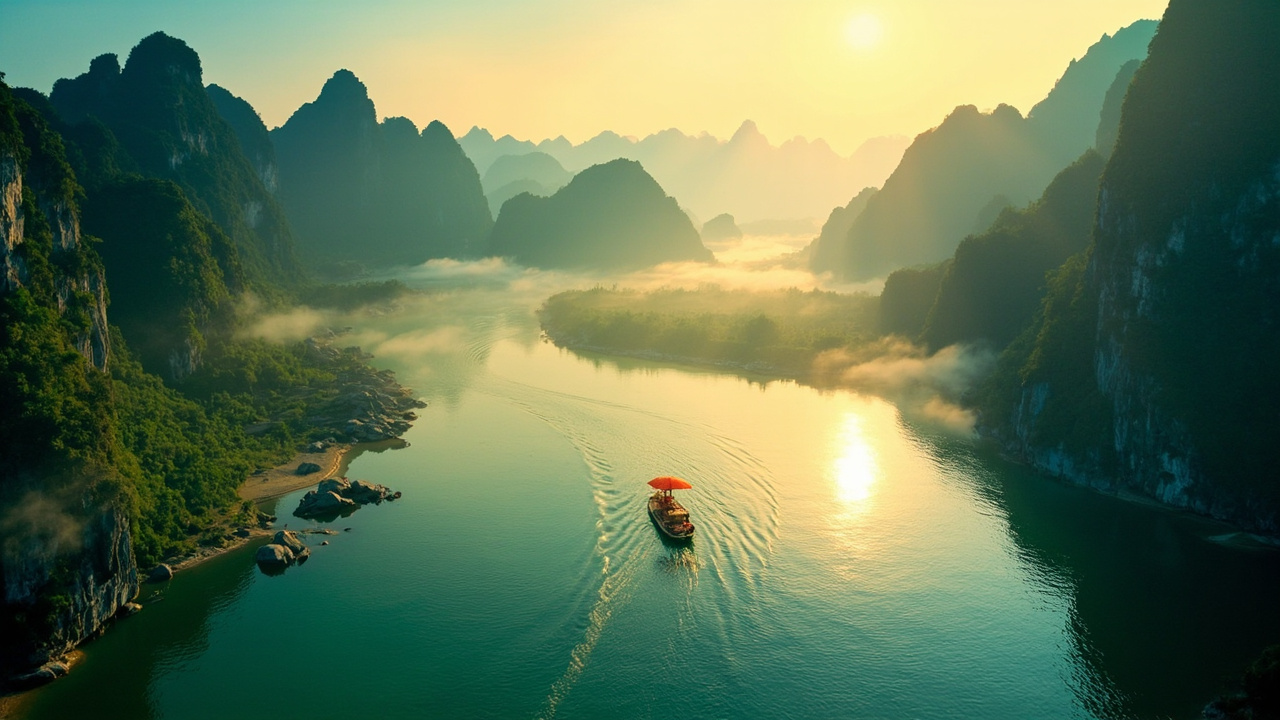
The rain came down in sheets over the Li River, turning the karst peaks into gray ghosts. I was on a bamboo raft, soaked through, and the elderly boatman behind me was humming something I couldn’t quite hear over the downpour. He didn’t seem bothered. Neither did the water buffalo standing mid-river, head low, waiting it out. I’d planned to spend that afternoon in a museum in Guilin. Instead, I sat in the rain for two hours, watching China do what China does best: being completely indifferent to your schedule, and far more interesting because of it.
That trip taught me something. China isn’t a country you can rush. But it’s also not a country you should wander through without a plan, because the distances are enormous and the good stuff is spread out. This guide is the two-week route I’ve refined over seven years of living in Beijing and more than forty trips around the country. It hits the five cities that give you the clearest picture of what China actually is: ancient, futuristic, chaotic, serene, and completely unlike anything you’ve seen before.
You’ll get exact train times, station exits, prices, and the kind of advice that only comes from missing a train or two yourself. No fluff. No “hidden gems” that require a four-hour detour. Just the route I’d give a friend who’s about to book the flight.
Quick answer
A well-paced two weeks in China covers Beijing (3 days), Xi’an (2 days), Chengdu (2 days), Guilin/Yangshuo (3 days), and Shanghai (3 days), connected by high-speed rail and one short flight. Expect to spend $1,800–$2,500 (¥13,000–¥18,000) per person including transport, mid-range hotels, food, and entry fees, and note that citizens of 54 countries including the US, UK, and most of Europe currently qualify for 240-hour visa-free transit if you’re flying through a major hub. Book trains through Trip.com or the official 12306 app, and set up Alipay before you land because cash is genuinely awkward here.
The Short Version
Five cities in 14 days sounds like a lot. It’s not, because China’s high-speed rail network makes it feel like you’re taking regional trains in Europe, not crossing a continent. Beijing for history, Xi’an for the Terracotta Army, Chengdu for food and pandas, Yangshuo for scenery, Shanghai for the future. Skip the Great Wall at Badaling and go to Mutianyu instead. Skip the tourist restaurants on Muslim Street in Xi’an and eat where the locals queue. Download Alipay, a VPN, and a translation app before you land. You’ll be fine.
How I Picked These
I’ve done this exact route three times with visiting friends and family, plus dozens of variations on it. I’ve also made every mistake you can make: booking the wrong train station, showing up to a “closed for renovation” temple, eating at a restaurant that clearly served me the tourist menu at triple the price. The picks below are the ones I’d defend in an argument. They’re not the only places worth seeing in China, but they’re the ones that give you the most return for your jet lag. I’ve skipped places I love, like the Tibetan plateau and Yunnan’s rice terraces, because they need more time and altitude acclimatization than a two-week trip allows. I’ve also skipped the places that sound essential but disappoint, and I’ll tell you which ones those are along the way.
Comparison Table
| Rank | Place | Best For | Approx Cost (USD) | Time Needed | When to Go |
|---|---|---|---|---|---|
| 1 | Beijing | History, food, scale | $300–400 (¥2,200–2,900) | 3 days | Apr–May, Sep–Oct |
| 2 | Xi’an | Terracotta Army, ancient walls | $200–300 (¥1,400–2,200) | 2 days | Mar–May, Sep–Nov |
| 3 | Chengdu | Pandas, Sichuan food, teahouses | $200–300 (¥1,400–2,200) | 2 days | Mar–Jun, Sep–Nov |
| 4 | Yangshuo | Karst scenery, cycling, river | $250–350 (¥1,800–2,500) | 3 days | Apr–Oct |
| 5 | Shanghai | Modern China, nightlife, museums | $300–400 (¥2,200–2,900) | 3 days | Mar–May, Oct–Nov |
Beijing — Where Every Dynasty Left Its Mark
I remember my first morning in Beijing, standing on the ramparts of the Forbidden City and watching the fog burn off the golden roofs. A Chinese tour guide next to me was telling her group that the complex has 9,999 rooms, because only the Jade Emperor in heaven could have 10,000. I’ve never verified that number. I don’t want to.
Beijing is the political and cultural heart of China, and it’s been that way for 800 years. The city is overwhelming in scale: the Forbidden City alone covers 180 acres, and Tiananmen Square could swallow several football stadiums. But the city’s real magic is in the hutong alleys that still survive between the skyscrapers, where old men play chess on street corners and someone’s grandmother is hanging laundry above a shared courtyard. You need three days here minimum, and you’ll still leave feeling like you’ve only scratched the surface.
📍 Location: Central Beijing, mostly concentrated in Dongcheng and Xicheng districts 🎫 Entry fee: Forbidden City $10 (¥60) in peak season, Great Wall at Mutianyu $6 (¥45) plus cable car $15 (¥100), Temple of Heaven $5 (¥30) 🕒 Opening hours: Forbidden City 8:30am–5pm Tue–Sun (closed Mondays), Mutianyu Great Wall 7:30am–6pm daily, Temple of Heaven 6am–10pm (park), 8am–5:30pm (main buildings) 🚕 How to get there: For the Forbidden City, take Subway Line 1 to Tiananmen East Station, Exit A, and walk 5 minutes north through the security checkpoint. For Mutianyu, take a Didi (ride-hailing app) from your hotel, about $40 (¥300) each way, or join a small group tour if you don’t want to negotiate with drivers. ☀️ When to visit: April to May and September to October for mild weather. Go to the Forbidden City on a weekday, and arrive at opening time to beat the tour groups. Mutianyu is quieter than Badaling, but still busy by 10am. 💡 Insider tips:
- Book Forbidden City tickets on the official WeChat mini-program at least 7 days in advance. They sell out daily, and you can’t buy at the gate anymore.
- Bring your passport to the security check at Tiananmen. They won’t let you through without it.
- The Mutianyu cable car is optional. The walk up takes 40 minutes and the views are better.
- Eat Peking duck at Siji Minfu near the Forbidden City, not the famous Quanjude. Locals go to Siji Minfu.
- Download a translation app before you arrive. English signage exists at major sites, but menus and train station announcements are another story.
I paid $40 for a “private car” to Mutianyu once before I realized the driver was just a guy with a car who hung around tourist hotels. He was lovely, his name was Mr. Wang, and he waited four hours while I walked the wall. We’re still WeChat friends.
Xi’an — The Eastern End of the Silk Road
The first time I saw the Terracotta Army, I cried. That sounds dramatic, but I’d been reading about these warriors since I was a kid, and seeing 8,000 life-sized soldiers staring out of a pit the size of two football fields is genuinely overwhelming. My friend Rachel, who was with me, didn’t cry. She just kept saying “holy shit” under her breath, which I think was her version of the same thing.
Xi’an was China’s capital for over 1,000 years, through 13 dynasties, and it was the largest city in the world for much of that time. Today it’s a modern city of 12 million people, but the 8-mile Ming Dynasty city wall still encircles the old center, and the Muslim Quarter’s narrow streets still smell of cumin and lamb skewers. The Terracotta Army is the headline act, but the city itself deserves a full day of wandering.
📍 Location: Xi’an city center is inside the Ming Dynasty wall; the Terracotta Army is 25 miles east in Lintong District 🎫 Entry fee: Terracotta Army $18 (¥120), City Wall $7 (¥54), Shaanxi History Museum free but requires advance booking 🕒 Opening hours: Terracotta Army 8:30am–5:30pm daily (last entry 4:30pm), City Wall 8am–10pm daily, Shaanxi History Museum 9am–5:30pm Tue–Sun (closed Mondays) 🚕 How to get there: For the Terracotta Army, take Metro Line 9 to Huaqing Pool Station, Exit C, then a 10-minute taxi or bus 602 to the site. Or book a driver through your hotel for about $30 (¥220) round trip. The metro takes 90 minutes; the taxi takes an hour. ☀️ When to visit: March to May or September to November. The Terracotta Army is busiest from 10am–2pm; go at opening or after 3pm when the tour groups thin out. 💡 Insider tips:
- Hire a licensed guide at the Terracotta Army entrance for about $20 (¥150). The site is poorly labeled in English, and the stories behind the warriors are half the experience.
- Skip the “official” museum shops inside the site. The real souvenir market outside has better prices.
- The Muslim Quarter is touristy, but the food is legit. Try the roujiamo (Chinese hamburger) at the stall with the longest queue.
- Rent a bike on the City Wall at sunset. The 8-mile loop takes about 90 minutes and the light is spectacular.
- The Shaanxi History Museum is free but books out a week in advance. If you can’t get tickets, the Xi’an Museum is a solid backup.
I ate lamb paomo (flatbread soaked in lamb broth) at a tiny shop in the Muslim Quarter and spent the next hour trying to explain to my host, a retired teacher named Auntie Chen, that no, I really didn’t need more food, I was full. She didn’t believe me. She was right not to.
Chengdu — Where the Food Is Spicy and the Life Is Slow
My first Chengdu meal nearly broke me. I’d asked for “not spicy” at a hotpot restaurant, and the waiter nodded seriously, then brought me a bubbling pot of chili oil that looked like molten lava. I ate it anyway, sweating through my shirt, and by the end I understood why Chengdu people do this every single day. It’s not masochism. It’s joy.
Chengdu is the capital of Sichuan province, and it’s famous for two things: pandas and food. But the city’s real personality is in its teahouses, where old men play mahjong for hours over cups of jasmine tea, and its laid-back rhythm that feels almost Mediterranean compared to Beijing or Shanghai. The pandas are the draw, but the city itself is the reason people move here and never leave.
📍 Location: Chengdu city center, with the Giant Panda Base 10 miles north in Chenghua District 🎫 Entry fee: Giant Panda Base $7 (¥55), Wenshu Monastery free, People’s Park teahouse $2 (¥15) for tea 🕒 Opening hours: Panda Base 7:30am–6pm daily (pandas are most active in the morning), Wenshu Monastery 8am–5pm daily, People’s Park 6am–10pm daily 🚕 How to get there: For the Panda Base, take Metro Line 3 to Panda Avenue Station, Exit B, then a 10-minute walk or free shuttle bus to the entrance. For the city center, take Metro Line 2 to Chunxi Road Station for shopping or Line 4 to Kuanzhai Alley for the old streets. ☀️ When to visit: March to June or September to November. Go to the Panda Base at 7:30am opening time, before the pandas nap and the crowds arrive. Weekdays are significantly quieter than weekends. 💡 Insider tips:
- The Panda Base is huge. Take the electric shuttle from the entrance to the top, then walk down. It saves you an hour of uphill walking.
- Order hotpot with “weizi” (mild) if you’re not used to Sichuan spice. The waiter will still think you’re weak, but your stomach will thank you.
- Skip Kuanzhai Alley’s tourist restaurants. Walk 10 minutes to the nearby streets around Changshun Street for the real Sichuan food.
- The teahouse in People’s Park is where locals go. Order a cup of jasmine tea, sit back, and watch the mahjong players argue.
- Sichuan peppercorns numb your mouth, they don’t just burn it. It’s a completely different sensation from chili heat.
I spent an afternoon at a teahouse in People’s Park, and a retired man named Uncle Zhang taught me to play mahjong with hand gestures and a lot of laughing at my mistakes. I lost every round. I’d do it again tomorrow.
Yangshuo — The Landscape That Looks Photoshopped
The karst peaks of Yangshuo look fake. They rise out of the flat farmland like something from a fantasy movie, all jagged green towers wrapped in morning mist. I’ve been here six times, and every single time I look out the window of the bus and think, “that can’t be real.” Then the bus turns a corner and there’s another range of them, and I realize the whole valley is like this.
Yangshuo is a small town in Guangxi province, surrounded by the Li River and the karst mountains that have inspired Chinese painters for centuries. It’s become a backpacker hub, which means the main street is full of bars and souvenir shops, but the countryside around it is still rural and quiet and absurdly beautiful. This is where you slow down, rent a bicycle, and let the scenery do the work.
📍 Location: Yangshuo town center, with the best scenery in the surrounding countryside along the Yulong River 🎫 Entry fee: Li River cruise from Guilin $60 (¥450) for the 4-hour trip, Yulong River bamboo raft $40 (¥300) per raft, most other attractions free 🕒 Opening hours: The Li River cruise runs 9am–10am departures daily from Guilin’s Zhujiang Pier. Bamboo rafts on the Yulong River operate 8am–6pm daily. 🚕 How to get there: Take the high-speed train from Guilin North Station to Yangshuo Station (30 minutes, $8/¥60), then a 40-minute taxi or shuttle bus to town. Or take the direct bus from Guilin airport, about $8 (¥60) and 2 hours. ☀️ When to visit: April to October for warm weather and green rice paddies. September and October are the sweet spot: less rain, fewer crowds, and the rice is golden. Go bamboo rafting in the morning before the tour groups arrive. 💡 Insider tips:
- Skip the big Li River cruise and do a bamboo raft on the Yulong River instead. It’s quieter, cheaper, and you’re actually on the water rather than on a big boat.
- Rent an e-bike for $8 (¥60) a day and ride the country roads between the karst peaks. You’ll find rice paddies, water buffalo, and villages that haven’t changed in decades.
- The “Impression Liu Sanjie” night show is spectacular but expensive at $50 (¥360). Book through your hotel for a discount.
- Stay in a guesthouse outside the town center, near the Yulong River. The town itself is loud until midnight.
- Learn to say “bu yao la” (not spicy). The local food is milder than Sichuan, but the tourist restaurants will still assume you want heat.
I got caught in that rainstorm I mentioned at the start of this article on a bamboo raft on the Yulong River. The boatman, a man in his sixties named Mr. Mo, just laughed and kept poling. When we reached the dock, he pointed at a small pavilion and said, in English he’d clearly practiced, “You wait. Rain stop soon.” It did. He was right.
Shanghai — China’s Window to the Future
The first time I saw the Shanghai skyline from the Bund, I thought someone had left a screensaver on. The Pudong towers across the river look like something from a sci-fi movie, all glass and neon and impossible angles. Then I turned around and saw the colonial-era buildings on the Bund behind me, all stone columns and Art Deco flourishes, and I realized the city was telling its whole story in one glance.
Shanghai is China’s most international city, the place where old meets new more dramatically than anywhere else in the country. It’s not the most “Chinese” city in the traditional sense, but it’s the most honest picture of where China is heading. You need three days here to see the Bund, the former French Concession, and the museums that rival anything in Europe.
📍 Location: Central Shanghai, with the Bund on the west bank of the Huangpu River and Pudong’s skyscrapers on the east bank 🎫 Entry fee: Shanghai Museum free (advance booking required), Yu Garden $6 (¥40), Shanghai Tower observation deck $30 (¥220), French Concession walking tour free 🕒 Opening hours: Shanghai Museum 9am–5pm Tue–Sun (closed Mondays), Yu Garden 9am–4:30pm daily, Shanghai Tower 9am–10pm daily 🚕 How to get there: For the Bund, take Metro Line 2 to East Nanjing Road Station, Exit 1, and walk 10 minutes east. For the French Concession, take Line 10 to Xintiandi Station and explore on foot. For Pudong’s skyscrapers, take Line 2 to Lujiazui Station. ☀️ When to visit: March to May or October to November. The Bund is spectacular at sunset when the Pudong lights come on. Go on a weekday evening to avoid the weekend crowds. 💡 Insider tips:
- The Bund is beautiful at night, but it’s also shoulder-to-shoulder crowded. Go at 6am on a Sunday morning once. It’s a completely different experience.
- The French Concession’s best streets are Wukang Road and Anfu Road. Skip the main shopping streets and wander the side alleys.
- Shanghai Museum is world-class and free, but you need to book a time slot on their official WeChat account at least a day in advance.
- Eat xiaolongbao (soup dumplings) at Din Tai Fung or Jia Jia Tang Bao. The latter has a queue but it moves fast.
- Take the ferry across the Huangpu River for $0.30 (¥2) instead of the $30 (¥220) tunnel tour. Same view, 100 times cheaper.
I took my parents to Shanghai last year, and my dad, who’s never been impressed by anything, stood on the Bund for a full ten minutes without saying a word. Finally he turned to me and said, “Well, that’s something.” From my dad, that’s a standing ovation.
How to Actually Plan This Trip
The logistics of a two-week China trip are simpler than they look, but there are a few things you need to sort out before you land.
Getting around: The high-speed rail network is the backbone of this route. Beijing to Xi’an is 4.5 hours ($80/¥580 in second class), Xi’an to Chengdu is 3.5 hours ($75/¥540), Chengdu to Guilin is 6 hours ($90/¥650), and Guilin to Shanghai is 8 hours ($110/¥800). The Chengdu to Guilin leg is the longest; consider flying instead (1.5 hours, $100–150/¥700–1,100). Book trains through Trip.com or the official 12306 app, and book at least 3 days in advance for popular routes.
Visa and entry: Citizens of 54 countries, including the US, UK, Australia, and most of Europe, qualify for 240-hour visa-free transit if you’re flying through a major hub like Beijing, Shanghai, or Guangzhou. This covers most two-week itineraries, but check the specific rules before you book. If you need a full tourist visa, apply at least a month in advance through your nearest Chinese embassy or visa center.
Money and apps: Set up Alipay before you land. It’s how everyone pays for everything, from street food to train tickets. Link an international credit card and you’re set. Cash is accepted but awkward; some smaller vendors won’t have change for large bills.
Phone and internet: Google, WhatsApp, Instagram, and Facebook are all blocked in China. You need a VPN installed before you arrive, and a Chinese SIM card or international roaming plan. Consider getting a SIM card at the airport upon arrival, which costs about $10–20 (¥70–140) for a week of data.
Language: English is not widely spoken outside major tourist sites and international hotels. Download a translation app like Google Translate (with offline packs) or Pleco, and learn a few phrases: “ni hao” (hello), “xie xie” (thank you), “bu yao la” (not spicy), and “duo shao qian” (how much).
FAQ summary
A two-week China itinerary covering Beijing, Xi’an, Chengdu, Yangshuo, and Shanghai costs approximately $1,800–$2,500 per person including transport, accommodation, food, and entry fees. The best time to visit is spring (April–May) or autumn (September–October) when temperatures are mild and rainfall is low. Citizens of 54 countries can visit visa-free for up to 240 hours under the transit policy, provided they’re flying through a major Chinese hub, and all travelers should set up Alipay and a VPN before arrival.
FAQ
Q: How much does a 2-week trip to China cost? A: Plan for $1,800–$2,500 (¥13,000–¥18,000) per person, excluding international flights. This covers mid-range hotels at $60–100 (¥430–720) per night, high-speed rail between cities, meals at $10–20 (¥70–140) per day, and entry fees. Budget travelers can do it for less by staying in hostels and eating street food.
Q: Do I need a visa for China in 2026? A: Citizens of 54 countries, including the US, UK, Australia, Canada, and most of Europe, can enter visa-free for up to 240 hours under the transit policy if flying through major hubs like Beijing, Shanghai, or Guangzhou. If your itinerary doesn’t fit the transit rules, apply for a standard L tourist visa through your nearest Chinese embassy or visa center at least a month in advance.
Q: Is it safe to travel in China as a tourist? A: Yes. China is one of the safest countries I’ve traveled in, with low violent crime rates and a strong police presence in tourist areas. The main risks are petty scams at tourist sites and traffic, which is chaotic by Western standards. Use common sense, keep your passport safe, and you’ll have no problems.
Q: Can I use Google Maps and WhatsApp in China? A: No. Google, WhatsApp, Instagram, and Facebook are all blocked. Install a VPN before you arrive, and download alternative apps: use Apple Maps or Amap for navigation, and WeChat for messaging. Trip.com works well for trains and hotels without a VPN.
Q: Is the food in China too spicy for Westerners? A: It depends where you go. Sichuan food in Chengdu is genuinely spicy, but you can always ask for “bu la” (not spicy) or “wei la” (mildly spicy). Beijing and Shanghai food is much milder. The bigger challenge is unfamiliar ingredients, but that’s half the fun. Try everything at least once.
Q: How do I get around between cities in China? A: High-speed rail is the best option for most routes. Trains are punctual, comfortable, and cheaper than flying when you factor in airport transfer times. Book through Trip.com or the official 12306 app. For the Chengdu to Guilin leg, consider flying since the train takes 6 hours.
Q: What should I pack for a 2-week China trip? A: Pack for the season, but always bring a light jacket because air conditioning is aggressive in summer and heating is inconsistent in winter. Comfortable walking shoes are essential, and bring a power bank because you’ll be using your phone for maps, translation, and payments constantly.
The Honest Wrap-up
This itinerary is for first-timers who want to see the greatest hits without feeling like they’re on a conveyor belt. It’s not for people who want to go deep into one region, or who are looking for off-the-beaten-path experiences, or who have a burning desire to see the Tibetan plateau. If you have three weeks instead of two, add a few days in Yunnan or a trip to the Yellow Mountains. If you have two weeks and want to see China’s highlights, this is the route I’d give my own family.
One last thing: don’t overplan. China rewards spontaneity in a way that few countries do. Leave an afternoon free in each city to wander, to follow a smell that seems interesting, to sit in a park and watch the old men play cards. The Forbidden City and the Terracotta Army will be there. The moments you’ll remember longest are the ones you didn’t plan for.
More guides you may like
Top 10 Bridges in China
China's bridges are engineering marvels spanning mountains, rivers, and seas. Here are 10 of the most spectacular, from ancient stone to modern steel.
8 min read

Top 10 Buddhist Sites in China
From the Leshan Giant Buddha to the Dunhuang Caves, these 10 Buddhist sites represent 2,000 years of China's spiritual heritage.
9 min read
Top 10 Day Trips from Beijing You Shouldn't Miss
Beijing is packed with history, but some of China's best experiences are just a few hours away. Here are 10 day trips that will transform your visit.
9 min read
Top 10 Hidden Gems in China Off the Beaten Path
Beyond the Great Wall and Terracotta Warriors, China has incredible hidden destinations few tourists ever reach. Here are 10 underrated gems worth the detour.
9 min read
Top 10 Markets and Shopping Streets in China
From Shanghai's Bund to Beijing's Silk Street - 10 markets where foreigners can haggle, explore, and bring home authentic Chinese goods.
9 min read
Top 10 Museums in China You Shouldn't Miss
China's museums span 5,000 years of civilization. These 10 - from the Palace Museum to Xi'an's terracotta gallery - are unmissable for culture lovers.
9 min read