
China Coastal Route Guide
TODO: Extract from article (100-160 chars)
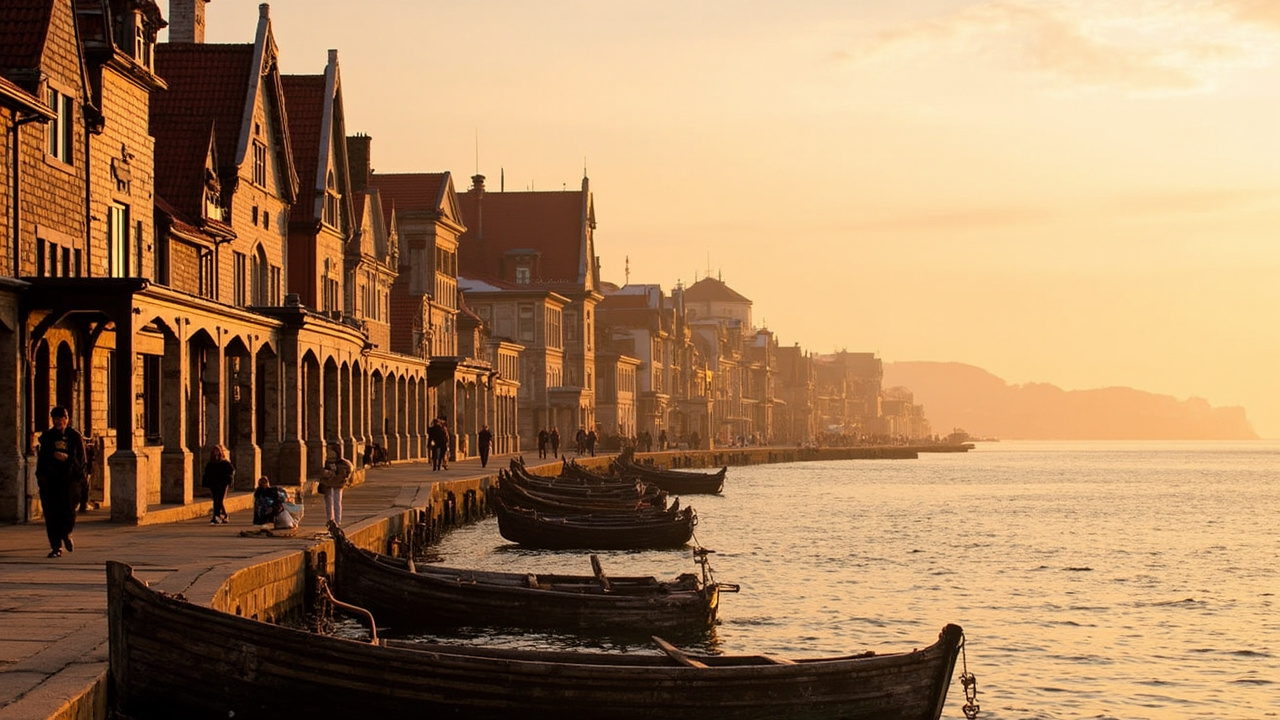
The rain came down sideways off the East China Sea, and I was standing under the awning of a seafood stall in Qingdao, watching a woman sort through a bucket of live crabs like she was picking out jewelry. My phone had died an hour earlier, my hotel key card had demagnetized in my pocket, and I couldn’t have been happier. That trip down the coast, from the German beer halls of Qingdao to the subtropical gardens of Xiamen, turned into seven years of repeat visits. This is the route I tell every friend who asks me where to go in China beyond the Beijing-Shanghai circuit.
China’s coastline runs over 18,000 kilometers, and most first-time visitors never see any of it. They fly into Beijing, take the train to Shanghai, maybe squeeze in Xi’an for the terracotta warriors, and go home. That’s a fine trip. But you’re missing the China that actually faces the world: the port cities where trade routes shaped everything from architecture to food, the beaches where locals escape the summer heat, and the seafood markets that smell like the ocean at low tide.
This guide covers ten stops along the coast, from north to south, with the exact logistics I wish someone had given me on that first rainy afternoon in Qingdao. You’ll get prices in both currencies, specific metro exits, and the kind of insider details that only come from getting things wrong a few times.
Quick answer
The classic China coastal route runs from Qingdao in the north to Xiamen in the south, with stops in Shanghai, Ningbo, and Fuzhou along the way. Plan for 10-14 days, budget roughly $80-150 per day (CNY 580-1,090) for mid-range travel, and note that most international visitors can enter visa-free for up to 30 days under China’s 2024-2025 visa-free policies, extended through 2026. The best season is April-May or September-October, when temperatures are mild and the summer crowds haven’t arrived.
The Short Version
If you only have 90 seconds, here’s the truth: skip the beaches entirely and go for the cities. China’s coast isn’t a beach vacation destination like Thailand or Vietnam. It’s a string of historic port cities with distinct regional cultures, incredible food, and waterfront promenades that tell the story of China’s relationship with the sea. Qingdao and Xiamen are the two unmissable stops. Shanghai is worth three days. The rest you can pick based on how much time you have and whether you’d rather eat, hike, or wander through old colonial neighborhoods.
How I Picked These
I’ve lived in Beijing since 2019 and have made seven trips down the coast, usually combining work with long weekends. I’ve eaten my way through Qingdao’s beer streets with a local named Liu who runs a guesthouse near the pier. I’ve gotten hopelessly lost in Xiamen’s alleyways and been rescued by a tea shop owner who insisted I sit down for an hour before attempting navigation again. I’ve taken the overnight train, the high-speed rail, and a ferry that I’m fairly certain was not designed for the sea conditions we encountered. Every place on this list earned its spot through at least one visit, and most through several. I’ve excluded places I’ve only read about, no matter how highly recommended they were.
Comparison Table
| Rank | Place | Best For | Approx Cost (USD) | Time Needed | When to Go |
|---|---|---|---|---|---|
| 1 | Qingdao | Beer, beaches, German architecture | $60-90/day | 2-3 days | May-Oct |
| 2 | Xiamen | Old streets, islands, relaxed vibe | $50-80/day | 2-3 days | Oct-Apr |
| 3 | Shanghai | Urban energy, food, nightlife | $80-150/day | 3-4 days | Mar-May, Sep-Nov |
| 4 | Ningbo | History, temples, fewer crowds | $40-70/day | 1-2 days | Year-round |
| 5 | Fuzhou | Hot springs, mountain temples | $40-60/day | 1-2 days | Oct-Mar |
| 6 | Dalian | Russian architecture, seafood | $50-80/day | 2 days | May-Sep |
| 7 | Weihai | Quiet beaches, local life | $35-55/day | 1-2 days | Jun-Sep |
| 8 | Wenzhou | Mountains meeting the sea | $40-60/day | 1-2 days | Apr-Oct |
| 9 | Quanzhou | Maritime history, temples | $35-55/day | 1-2 days | Oct-Apr |
| 10 | Zhoushan | Islands, fishing villages | $45-70/day | 2 days | May-Oct |
Qingdao — Where Germany Left Its Mark and the Beer Never Stops
The first thing you notice in Qingdao isn’t the sea. It’s the architecture. Red-roofed German buildings from the early 1900s line the streets near the waterfront, and for a moment you could convince yourself you’re in a small European town that somehow ended up on the Yellow Sea. Then you turn a corner and hit a Chinese temple, and the reality of this layered history snaps back into focus.
Qingdao was a German concession from 1898 to 1914, and that colonial period shaped everything from the city’s famous brewery to its urban layout. The beer is still brewed here using the original German recipes, and the locals take it seriously. I sat at a street-side table one evening with a plate of grilled squid and a glass of the local brew, watching families stroll past with plastic bags full of beer bought directly from the brewery taps. That’s a Qingdao tradition: buying fresh beer by the bag, like milk in the old days.
📍 Location: Shinan District, along the coast from Zhanqiao Pier to the May Fourth Square area
🎟️ Entry fee: Free for the beaches and boardwalk. The Qingdao Beer Museum costs about $8 (CNY 60). Signal Hill Park is $3 (CNY 20).
🕒 Opening hours: Beer Museum is open daily 8:30 AM-5:30 PM. The coastal paths are always open.
🚇 How to get there: Take the high-speed train to Qingdao Station. From there, the coastal sights are walkable, or take Metro Line 3 to Zhongshan Park Station and walk east toward the sea.
🌤️ When to visit: May-June and September-October are ideal. July-August brings domestic tourists in huge numbers, and the humidity can be brutal.
💡 Insider tips:
- Buy fresh beer from the Qingdao Brewery’s outdoor taps near the museum. It costs about $1 (CNY 7) per bag and tastes completely different from the bottled version.
- The seafood market near the pier lets you buy live seafood and have nearby restaurants cook it for you. Expect to pay $10-15 (CNY 70-110) for a full meal including the cooking fee.
- Climb Signal Hill at sunset for the best view of the red-roofed old town against the sea.
- Learn to say “ganbei” (cheers) before you go. You’ll need it.
I met a retired sailor named Wang on the boardwalk who told me he’d visited 40 countries during his career and still thought Qingdao had the best seafood in the world. I didn’t argue.
Dalian — Russia’s Influence on China’s Northern Coast
Dalian feels different from anywhere else on this list. The Russian influence from the late 19th and early 20th centuries left behind broad boulevards and square, solid buildings that wouldn’t look out of place in Saint Petersburg. The city sits on the southern tip of the Liaodong Peninsula, and on clear days you can see across the Bohai Strait.
The seafood here is exceptional, and the local specialty is sea urchin, which you can buy fresh at the markets and eat raw with a squeeze of lemon. I was skeptical the first time, but the sweetness of the urchin caught me off guard. The city’s Russian Street, a pedestrian area near the old train station, is touristy but worth a wander for the architecture and the chance to try Russian-Chinese fusion food, which is exactly as strange as it sounds.
📍 Location: Zhongshan District, centered around the old Russian Quarter and the coastal road to Bangchui Island
🎟️ Entry fee: Free for most sights. The Discovery Kingdom theme park is $30 (CNY 220) but not worth it unless you have kids.
🕒 Opening hours: Most sights open 8 AM-5 PM. The coastal promenade is always accessible.
🚇 How to get there: Fly into Dalian Zhoushuizi International Airport, then take Metro Line 2 to the city center. The Russian Quarter is a 10-minute walk from Dalian Station.
🌤️ When to visit: May-September for the best weather. The city gets crowded in August with domestic tourists.
💡 Insider tips:
- The seafood market near the old pier has the best selection. Go early in the morning when the fishing boats come in.
- Bangchui Island is worth the trip for the views, but skip the paid beach area and walk the free coastal path instead.
- Russian Street is best visited in the evening when the lights come on and the crowds thin out.
- The local dialect has a distinctive northeastern flavor. Don’t be surprised if you can’t understand the Mandarin here as well as you do in Beijing.
I got lost trying to find the Russian Quarter and ended up in a small park where an elderly man was practicing calligraphy with water on the pavement. He wrote my name in Chinese characters and refused to let me leave without taking a photo of his work.
Weihai — The Quiet One
Weihai is the stop I almost didn’t include. It’s smaller and less famous than its neighbors, and there’s no dramatic colonial history or world-class attraction pulling travelers in. But that’s exactly why I keep coming back. This is what a Chinese coastal city looks like when it isn’t performing for tourists.
The city sits on the easternmost tip of the Shandong Peninsula, facing South Korea across the Yellow Sea. The beaches are clean and surprisingly uncrowded, the seafood is fresh and cheap, and the local pace of life feels slower than anywhere else on this route. I spent an afternoon here watching fishermen mend their nets on the beach while a group of retired men played cards under a pine tree. No one tried to sell me anything. No one even looked up.
📍 Location: Huancui District, along the coast from the International Bathing Beach to Chengshantou
🎟️ Entry fee: Free for the beaches. Chengshantou scenic area is about $15 (CNY 110).
🕒 Opening hours: Beaches are always open. Chengshantou is open 7:30 AM-5:30 PM.
🚇 How to get there: Take the high-speed train from Qingdao (about 1.5 hours) or fly into Weihai Dashuibo Airport. The city is small enough to explore on foot or by taxi.
🌤️ When to visit: June-September for beach weather. The rest of the year is quiet and can be cold and windy.
💡 Insider tips:
- The International Bathing Beach is the best for swimming. Local beaches further east are better for watching fishermen but not for swimming.
- Chengshantou, the easternmost point of the Chinese mainland, is worth the trip for the dramatic cliffs and sea views.
- Try the local specialty: Weihai apples, which are smaller and sweeter than the ones you’ll find elsewhere in China.
- The ferry to South Korea leaves from here if you’re planning to continue your trip across the Yellow Sea.
I ate a bowl of seafood noodles at a tiny shop near the beach and the owner, seeing me struggle with chopsticks, sat down and showed me the proper technique. I still can’t do it right, but I appreciated the effort.
Shanghai — The Big One
Shanghai needs no introduction, but it deserves a proper place on this route. The city is China’s most international, and for many visitors it’s the first stop. The Bund’s colonial architecture faces the futuristic skyline of Pudong across the Huangpu River, and the contrast still manages to surprise me after dozens of visits.
The food scene here is the best in China, full stop. From street-side xiaolongbao (soup dumplings) to Michelin-starred restaurants serving innovative takes on Shanghainese classics, you can eat your way through the city for weeks and never repeat a meal. The nightlife is equally varied, from rooftop bars overlooking the skyline to underground clubs playing techno until sunrise.
📍 Location: Multiple districts. The Bund is in Huangpu District, the French Concession spans Xuhui and Luwan, and Pudong is across the river.
🎟️ Entry fee: Free for the Bund and most parks. The Shanghai Museum is free but requires advance booking. The Shanghai Tower observation deck is $25 (CNY 180).
🕒 Opening hours: Varies by venue. Most museums are closed on Mondays. The Bund is best visited at sunset.
🚇 How to get there: Shanghai has two major airports. From Pudong Airport, take the Maglev train to Longyang Road Station, then transfer to Metro Line 2. Hongqiao Airport is directly on Metro Line 2 and Line 10.
🌤️ When to visit: March-May and September-November. Summer is hot and humid, and winter can be damp and cold.
💡 Insider tips:
- Book the Shanghai Museum in advance online. Same-day tickets are rarely available.
- The French Concession is best explored on foot or by bicycle. Rent a shared bike and wander the tree-lined streets.
- For the best view of the Bund, cross to the Pudong side and look back. The view of the colonial buildings lit up at night is spectacular.
- The metro system is excellent and English signage is good. Buy a transport card at any station.
- Learn to use Alipay before you arrive. Many smaller shops in Shanghai don’t accept cash or foreign cards.
I took a first-time visitor to a xiaolongbao shop in the old city and watched her burn her tongue on the soup inside her first dumpling. She now claims it was the best thing she ate in China, which tells you everything about how good those dumplings are.
Ningbo — History Without the Crowds
Ningbo doesn’t make most first-time itineraries, and that’s precisely why it should be on yours. This port city south of Shanghai has over 1,200 years of maritime history, a stunning lakeside library complex, and a fraction of the tourists you’ll find in nearby Hangzhou or Suzhou.
The city’s old town retains its traditional layout, with narrow streets and whitewashed buildings that feel a world away from Shanghai’s glass towers. The Tianyi Pavilion, China’s oldest private library, is the main draw, but I found myself spending more time wandering the surrounding streets and watching local life unfold than I did inside the museums. The food here is also distinctive: Ningbo is famous for its salted and preserved dishes, which take some getting used to but reward adventurous eaters.
📍 Location: Haishu District, centered around the old town and Tianyi Pavilion
🎟️ Entry fee: Tianyi Pavilion is about $5 (CNY 35). The old town area is free to wander.
🕒 Opening hours: Tianyi Pavilion is open 8 AM-5 PM daily. The lakeside area is always accessible.
🚇 How to get there: Take the high-speed train from Shanghai (about 2 hours) or fly into Ningbo Lishe International Airport. The old town is a short taxi ride from the train station.
🌤️ When to visit: Year-round, but April-May and September-October are most comfortable.
💡 Insider tips:
- The Tianyi Pavilion complex includes several gardens and exhibition halls. Allow at least two hours.
- Try the local specialty: Ningbo tangyuan (sweet rice balls) filled with black sesame paste. They’re the best in China.
- The waterfront area has been redeveloped with restaurants and bars. It’s touristy but pleasant in the evening.
- Ningbo makes a good day trip from Shanghai if you’re short on time, but staying overnight lets you experience the city after the day-trippers leave.
A shopkeeper in the old town insisted I try her homemade pickled vegetables, then refused to let me pay for the jar she packed for me to take home. “You’re a guest,” she said, as if that settled everything.
Zhoushan — Islands and Fishing Villages
Zhoushan is technically an archipelago of over 1,000 islands, but most visitors only see one or two. The main island, also called Zhoushan, is connected to the mainland by a series of bridges, and it’s here that you’ll find the fishing villages, seafood markets, and quiet beaches that make this stop worthwhile.
The islands have a distinct maritime culture that feels different from the mainland. The houses are built to withstand typhoons, the boats are painted in bright colors, and the pace of life follows the tides rather than the clock. I spent a morning here watching the fishing fleet return to port, the decks piled high with the night’s catch, and I understood why so many Chinese poets have written about this place.
📍 Location: Putuo District, centered around the main town of Dinghai and the fishing port of Shenjiamen
🎟️ Entry fee: Free for the villages and beaches. Ferries to the outer islands cost $3-8 (CNY 20-60) depending on distance.
🕒 Opening hours: The fishing port is busiest in the early morning when boats return. Markets are open from dawn until late afternoon.
🚇 How to get there: Take the high-speed train to Ningbo, then a bus or taxi to the Zhoushan bridge crossing (about 1.5 hours). Alternatively, fly into Zhoushan Putuoshan Airport, which has limited connections.
🌤️ When to visit: May-October for the best weather. Avoid July-August if you dislike crowds and humidity.
💡 Insider tips:
- The morning fish market at Shenjiamen is the highlight. Arrive by 6 AM to see the catch being unloaded.
- Take a ferry to one of the smaller islands for a day trip. Dongji Island is the most scenic but requires a longer boat ride.
- The local seafood is exceptional. Try the grilled squid skewers sold by street vendors near the port.
- If you’re interested in Buddhism, the nearby island of Putuoshan is one of China’s four sacred Buddhist mountains and worth a separate visit.
I took a ferry to a small island and ended up sharing it with a cargo of live chickens, a grandmother with a basket of vegetables, and a young couple who spent the entire crossing taking selfies against the rail. The chickens were the calmest passengers on board.
Wenzhou — Where Mountains Meet the Sea
Wenzhou is known in China for its entrepreneurs and its dialect, which is famously incomprehensible even to other Chinese people. But for travelers, the appeal is the landscape: this is where the coastal mountains plunge into the sea, creating dramatic scenery that you won’t find anywhere else on this route.
The city itself is modern and prosperous, but the real attractions are outside town. The Yandang Mountains, a two-hour drive away, are among China’s most dramatic peaks, with sheer granite cliffs and waterfalls that seem to hang in mid-air. The coastal areas south of the city have rugged beaches and fishing villages that have changed little in centuries.
📍 Location: Lucheng District for the city, with day trips to Yandang Mountains and the southern coast
🎟️ Entry fee: Yandang Mountains are about $15 (CNY 110). The coastal villages are free.
🕒 Opening hours: Yandang Mountains are open 7 AM-5 PM daily. The coastal areas are always accessible.
🚇 How to get there: Take the high-speed train from Ningbo (about 1.5 hours) or fly into Wenzhou Longwan International Airport. Yandang Mountains are accessible by bus from the city.
🌤️ When to visit: April-October for the mountains. The coast is best in May-June and September-October.
💡 Insider tips:
- Yandang Mountains require a full day. The cable car saves time but misses some of the best views.
- The coastal fishing villages south of Wenzhou are best explored by hiring a driver for the day. Expect to pay $50-80 (CNY 360-580) including waiting time.
- Wenzhou’s local cuisine is distinctive and often spicy. Try the fish balls and the pickled mustard greens.
- Don’t attempt to learn the local dialect. Even Chinese people from other provinces can’t understand it.
I asked a local for directions in Mandarin and she answered in Wenzhou dialect. We both laughed, and she switched to Mandarin, explaining that she’d forgotten I was a foreigner.
Fuzhou — Hot Springs and Mountain Temples
Fuzhou, the capital of Fujian province, is often skipped by travelers heading straight to Xiamen. That’s a mistake. The city has a relaxed atmosphere, excellent hot springs, and some of the most impressive mountain temples in southern China.
The city’s hot springs have been famous for over a thousand years, and several public bathhouses still operate in the old town. The Drum Mountain (Gushan) area, just outside the city, is home to a complex of Buddhist temples that cling to the mountainside and offer views over the city and the sea beyond. I spent a morning here watching monks go about their daily routines while tourists wandered through the temple courtyards, and the contrast felt oddly peaceful.
📍 Location: Gulou District for the old town, with Gushan Mountain to the east
🎟️ Entry fee: Free for the old town. Gushan Mountain is about $6 (CNY 45). Hot spring baths range from $10-30 (CNY 70-220) depending on the facility.
🕒 Opening hours: Gushan Mountain temples are open 6 AM-5 PM daily. Hot springs are typically open until 10 PM.
🚇 How to get there: Take the high-speed train from Xiamen (about 1.5 hours) or fly into Fuzhou Changle International Airport. The old town is walkable from the train station.
🌤️ When to visit: October-March for the hot springs. The rest of the year is hot and humid.
💡 Insider tips:
- The public bathhouses in the old town are a fraction of the cost of the spa resorts. Expect basic facilities but an authentic experience.
- Gushan Mountain requires a full morning. The cable car saves time but the walk up through the forest is rewarding.
- Fuzhou is famous for its jasmine tea. Visit a tea house in the old town and ask for a proper gongfu ceremony.
- The local snack is fish balls stuffed with pork. They’re sold everywhere and make a cheap, filling meal.
I tried the hot springs at a public bathhouse and found myself the only foreigner among dozens of elderly locals who seemed to find my presence endlessly amusing. One woman taught me the proper way to pour the hot water over my shoulders, then patted my arm approvingly.
Quanzhou — The Maritime Silk Road’s Starting Point
Quanzhou was once one of the world’s greatest ports. In the 13th century, Marco Polo called it one of the two greatest havens for commerce in the world, and the city’s wealth attracted traders from across Asia, the Middle East, and Europe. That history has left Quanzhou with a remarkable religious and cultural diversity that you won’t find anywhere else in China.
The city’s temples reflect its cosmopolitan past: a Buddhist temple, a Taoist temple, a mosque dating to the 11th century, and a Hindu temple all stand within walking distance of each other. The old town’s narrow streets are lined with traditional Fujianese houses, and the atmosphere is relaxed and welcoming. Quanzhou was added to the UNESCO World Heritage list in 2021, and the recognition has brought more visitors, but it still feels authentic compared to more touristed cities.
📍 Location: Licheng District, centered around the old town and the waterfront
🎟️ Entry fee: Free for most temples. The Maritime Museum is about $3 (CNY 20).
🕒 Opening hours: Temples are typically open 8 AM-5 PM daily. The old town streets are always accessible.
🚇 How to get there: Take the high-speed train from Fuzhou (about 1 hour) or Xiamen (about 30 minutes). The old town is a short taxi ride from the train station.
🌤️ When to visit: October-April for the most comfortable weather. Summer is hot and humid.
💡 Insider tips:
- The old town is best explored on foot. Allow a full day to see the temples and wander the streets.
- The Qingjing Mosque, dating to 1009, is one of the oldest in China and a testament to the city’s trading history.
- Try the local snack: oyster omelets, a Fujianese specialty that’s best eaten fresh from the street-side stalls.
- The Maritime Museum is worth a visit for its collection of shipwreck artifacts and trade goods.
- Quanzhou is quieter than Xiamen and makes a good base for exploring the surrounding countryside.
I met a tea seller in the old town who traced his family’s business back to the Ming Dynasty. He served me a cup of Tieguanyin oolong and told me stories about his grandfather trading with merchants from Persia. The tea was extraordinary.
Xiamen — The One You’ll Want to Stay In
Xiamen is the stop that most travelers fall in love with. The city has a relaxed, subtropical atmosphere that feels more like Southeast Asia than mainland China, and its location on an island means the sea is never far away. The old town’s narrow streets are lined with colonial-era buildings, and the nearby island of Gulangyu is a car-free pedestrian paradise.
I’ve been to Xiamen six times, and I still find new things to discover. The city’s food scene is exceptional, with fresh seafood, Fujianese classics, and a distinctive local style that blends Chinese and Southeast Asian influences. The coffee culture is also surprisingly strong, with independent cafes tucked into every corner of the old town.
📍 Location: Siming District for the old town, with Gulangyu Island a short ferry ride away
🎟️ Entry fee: Free for the old town. Gulangyu Island requires a ferry ticket of about $4 (CNY 35), and some attractions on the island charge separate entry fees.
🕒 Opening hours: The ferry to Gulangyu runs from early morning until late evening. The old town is always accessible.
🚇 How to get there: Fly into Xiamen Gaoqi International Airport, then take a taxi or the airport bus to the city center. The old town is walkable from most hotels.
🌤️ When to visit: October-April for the most comfortable weather. Summer is hot, humid, and crowded with domestic tourists.
💡 Insider tips:
- Book your Gulangyu ferry ticket in advance, especially on weekends and holidays. The ferry terminal requires a passport for ticket purchase.
- The old town’s alleys are a maze. Getting lost is part of the experience, but keep a general sense of direction toward the sea.
- Try the local specialty: satay noodles, a Fujianese take on the Southeast Asian dish that reflects the region’s trading history.
- The Xiamen University campus is worth a wander, but you’ll need to book entry in advance during peak season.
- The city’s night markets are excellent. Go hungry and try everything.
I spent an afternoon in a tea shop on Gulangyu Island, where the owner taught me the proper way to brew Tieguanyin and refused to let me leave until I’d tasted at least four different vintages. I bought two tins and still think about that afternoon whenever I brew a pot at home.
FAQ summary
For a first-time visitor, the coastal route from Qingdao to Xiamen offers a manageable introduction to China’s maritime history and regional diversity. Most travelers should plan for 10-14 days and budget $80-150 per day (CNY 580-1,090) for mid-range travel. The visa-free policies that allow most Western passport holders to stay up to 30 days remain in effect through 2026, and the high-speed rail network connects all major stops on this route. The best seasons are spring (April-May) and autumn (September-October), when temperatures are mild and crowds are thinner than in summer.
FAQ
Q: Do I need a visa to travel along China’s coast in 2026?
A: Most travelers from the US, UK, EU, Australia, and several other countries can enter China visa-free for up to 30 days under policies that have been extended through 2026. Check the latest visa requirements before booking, and confirm your eligibility with the Chinese embassy in your country.
Q: How long should I spend on the coastal route?
A: The minimum is 10 days, which allows for Qingdao (2 days), Shanghai (3 days), Xiamen (2 days), and travel time in between. For a more relaxed pace, add 3-4 days to include Ningbo, Fuzhou, or Quanzhou. The full route from Qingdao to Xiamen takes 2-3 weeks if you want to see everything at a comfortable pace.
Q: Is it better to fly or take the train between coastal cities?
A: The high-speed rail network is excellent and often faster than flying once you factor in airport security and travel to and from airports. The train from Shanghai to Ningbo takes 2 hours, and from Fuzhou to Xiamen takes 1.5 hours. Book tickets in advance through the official railway website or a travel agent.
Q: How do I pay for things along the coast?
A: Alipay and WeChat Pay are essential. Set up at least one of these apps before you arrive, as many smaller shops and restaurants don’t accept cash or foreign cards. Both apps now accept international credit cards, making the setup process straightforward.
Q: Will I need a VPN for internet access?
A: Yes. Google, Facebook, Instagram, WhatsApp, and many other Western services are blocked in China. Purchase a VPN before you arrive and install it on your phone and laptop. A local SIM card with a data plan is also worth getting for reliable connectivity.
Q: Is English widely spoken along the coast?
A: Less than you might expect. In Shanghai, you’ll find English speakers in hotels and tourist areas, but in smaller cities like Weihai or Quanzhou, you’ll need a translation app. Download an offline translation app before you arrive, and learn a few basic phrases like “ni hao” (hello) and “xie xie” (thank you).
Q: What’s the best time of year for the coastal route?
A: April-May and September-October are ideal. Summer (June-August) brings heat, humidity, and domestic tourists, while winter (December-February) can be cold and damp in the north. If you’re flexible, aim for late spring or early autumn.
The Honest Wrap-up
This route isn’t for everyone. If you’re looking for pristine beaches and resort-style relaxation, head to Thailand or Vietnam instead. But if you want to understand how China has interacted with the world for over a thousand years, through trade, migration, and cultural exchange, this is the trip to take. The coastal cities each have their own character, shaped by different colonial powers, trading partners, and local traditions, and together they tell a story that you won’t find in Beijing or Shanghai alone.
My final advice to a friend about to book this trip: don’t try to see everything. Pick three or four cities, spend enough time in each to get a feel for the place, and leave room for spontaneity. The best moments on my coastal trips have almost always been the unplanned ones: the tea shop I stumbled into, the fishing village I took a wrong turn toward, the conversation with a stranger that started with a shared table and ended with an invitation to dinner. China rewards the curious traveler who isn’t in a hurry. Give yourself the time to be that traveler.
More guides you may like
Top 10 Bridges in China
China's bridges are engineering marvels spanning mountains, rivers, and seas. Here are 10 of the most spectacular, from ancient stone to modern steel.
8 min read

Top 10 Buddhist Sites in China
From the Leshan Giant Buddha to the Dunhuang Caves, these 10 Buddhist sites represent 2,000 years of China's spiritual heritage.
9 min read

Top 10 Day Trips from Beijing You Shouldn't Miss
Beijing is packed with history, but some of China's best experiences are just a few hours away. Here are 10 day trips that will transform your visit.
9 min read

Top 10 Hidden Gems in China Off the Beaten Path
Beyond the Great Wall and Terracotta Warriors, China has incredible hidden destinations few tourists ever reach. Here are 10 underrated gems worth the detour.
9 min read

Top 10 Markets and Shopping Streets in China
From Shanghai's Bund to Beijing's Silk Street - 10 markets where foreigners can haggle, explore, and bring home authentic Chinese goods.
9 min read

Top 10 Museums in China You Shouldn't Miss
China's museums span 5,000 years of civilization. These 10 - from the Palace Museum to Xi'an's terracotta gallery - are unmissable for culture lovers.
9 min read