
China National Parks Guide
TODO: Extract from article (100-160 chars)
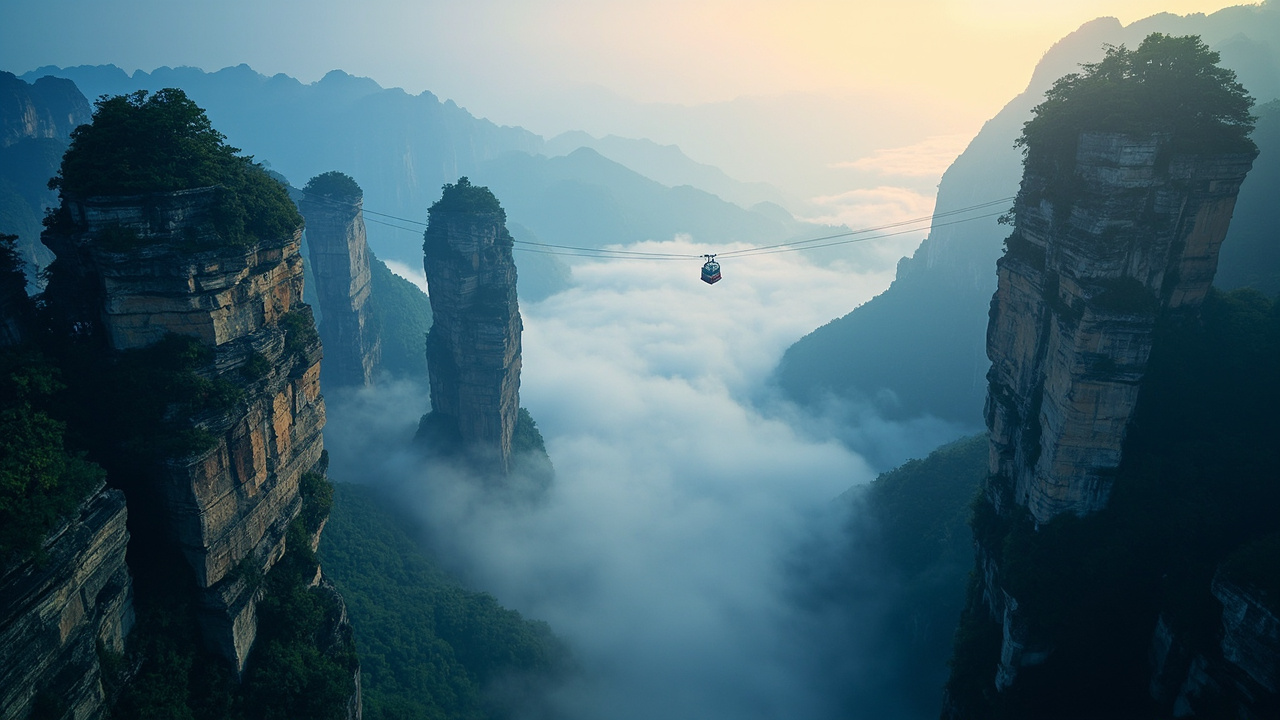
The cab driver in Zhangjiajie looked at me in the rearview mirror and asked, in the universal language of confused taxi drivers everywhere, why I had come to see rocks. I fumbled with my translation app, gave up, and just pointed at the sandstone pillars rising out of the mist like something from a dream I couldn’t quite remember. He shrugged, turned up the radio, and drove me toward the park entrance. That was seven years ago, and I’ve been chasing that feeling across China ever since.
China’s national parks aren’t Yellowstone. They’re not Yosemite. They’re something else entirely: thousand-year-old staircases carved into cliff faces, giant pandas shuffling through bamboo that disappears into fog, karst peaks that inspired painters a millennium ago and still stop you cold today. The country has 244 national parks and scenic areas, and most Western tourists skip them entirely, sticking to Beijing’s hutongs and Shanghai’s skyline. That’s a mistake.
I’ve spent the last seven years living in Beijing and traveling through China more than forty times, and these ten parks are the ones I keep going back to. This guide covers what each one actually costs, how to get there without losing your mind, and the specific mistakes I’ve made so you don’t have to.
Quick answer
China’s national parks are open to international tourists, and with the current 240-hour visa-free transit policy, you can visit many of them without a full tourist visa if you’re transiting through major cities like Beijing, Shanghai, or Chengdu. Budget $30-80 (¥215-575) per park for entry fees and internal transport, plan for 1-3 days per park, and go between April-June or September-October to avoid both crowds and extreme weather. Book everything through WeChat or Alipay, because most parks don’t accept cash or foreign credit cards at the gate.
The Short Version
If you only have 90 seconds: go to Zhangjiajie and Jiuzhaigou first, they’re the ones that look fake in photos but aren’t. Skip Huangshan if you hate crowds. Don’t try to do more than three parks in one trip, they’re all far apart and China’s distances are bigger than they look on a map. And for the love of everything, book your tickets on WeChat before you arrive, because the ticket windows are chaos and the machines don’t take foreign cards.
How I Picked These
I’ve visited all ten of these parks at least once, most of them multiple times, across every season. I’ve been caught in a thunderstorm on the Great Wall, gotten lost in Jiuzhaigou’s boardwalks after closing time, and paid entirely too much for a “private driver” who turned out to be a guy with a minivan and a cousin who sold tea. I’ve also eaten questionable noodles at park food courts and had conversations with park rangers that consisted mostly of nodding and smiling. These picks reflect what I’d tell a friend visiting China for the first time, not what a tourism board would print.
Comparison Table
| Rank | Place | Best For | Approx Cost (USD) | Time Needed | When to Go |
|---|---|---|---|---|---|
| 1 | Zhangjiajie National Forest Park | Avatar mountains, glass bridges | $40-60 (¥290-430) | 2-3 days | Apr-Jun, Sep-Oct |
| 2 | Jiuzhaigou Valley | Turquoise lakes, autumn color | $50-70 (¥360-500) | 1-2 days | Oct (early) |
| 3 | Huangshan (Yellow Mountain) | Granite peaks, sunrises | $35-55 (¥250-400) | 2 days | Apr-May, Sep-Nov |
| 4 | Great Wall at Mutianyu | History, less crowded section | $20-40 (¥145-290) | Half day | Mar-Nov |
| 5 | Giant Panda Base, Chengdu | Pandas, easy day trip | $10-15 (¥70-110) | 3-4 hours | Early morning |
| 6 | Guilin & Yangshuo | Karst scenery, river cruises | $30-60 (¥215-430) | 2-3 days | Apr-Oct |
| 7 | Wulingyuan (Zhangjiajie Grand Canyon) | Glass bridge, canyon hiking | $25-40 (¥180-290) | 1 day | Apr-Oct |
| 8 | Emeishan (Mount Emei) | Sacred Buddhist mountain | $40-60 (¥290-430) | 2 days | May-Oct |
| 9 | Zhangye Danxia | Rainbow mountains | $20-30 (¥145-215) | Half day | Jun-Sep |
| 10 | Hulunbuir Grasslands | Vast prairie, Mongolian culture | $30-50 (¥215-360) | 2-3 days | Jun-Aug |
Zhangjiajie National Forest Park — The One That Started It All
The first time I saw the sandstone pillars of Zhangjiajie, I was hungover, sleep-deprived, and convinced I was hallucinating. I wasn’t. These are the mountains that inspired the floating peaks in Avatar, and they look just as impossible in person. The park covers 120 square miles of quartz-sandstone pillars that rise hundreds of feet from the forest floor, often disappearing into clouds that roll through the valleys like slow-motion waves.
What makes Zhangjiajie genuinely special isn’t just the scenery, it’s the scale. You can spend three days here and still not see everything. The park has multiple entrances, a network of shuttle buses, cable cars that climb nearly vertical cliff faces, and a glass elevator called the Bailong that rises 1,070 feet up the side of a mountain. It’s touristy, yes, but it’s touristy for a reason.
📍 Location: Wulingyuan District, Zhangjiajie City, Hunan Province 🎫 Entry fee: $40 (¥290) for the main park, valid for 4 days. The Zhangjiajie Grand Canyon glass bridge is separate, about $25 (¥180). 🕒 Opening hours: 7:00 AM - 6:00 PM (April-November), 8:00 AM - 5:00 PM (December-March) 🚕 Getting there: Fly into Zhangjiajie Hehua International Airport (DYG), then take a taxi or airport shuttle to Wulingyuan town, about 40 minutes. The park’s main entrance is a 10-minute walk from most hotels in Wulingyuan. 📅 When to visit: April-June for fresh green and fewer crowds, September-October for clear skies. Avoid Chinese national holidays (October 1-7) at all costs. 💡 Insider tips: Enter through the South Gate (Zimugang) instead of the main East Gate to skip the tour group crowds. Take the shuttle to Yangjiajie first, it’s the least visited area and has the best views. Bring cash for the mountain vendors, their card machines are unreliable. The Bailong elevator is worth it once, but the walk down takes 2 hours and is more memorable. Download the park’s official app before you go, it has an English map that actually works.
I met a retired couple from Melbourne on the shuttle bus who had been traveling China for three months. They’d skipped Zhangjiajie on their first trip and regretted it for twenty years. “We thought it would be too touristy,” the wife said, watching a pillar emerge from the fog. “We were idiots.”
Jiuzhaigou Valley — Blue Water That Doesn’t Look Real
Jiuzhaigou is the place where I stopped trusting my own eyes. The lakes here are so clear and so intensely colored, turquoise and sapphire and emerald, that I kept checking my camera to make sure the saturation settings weren’t broken. They weren’t. The color comes from calcium carbonate deposits and aquatic plants, and it shifts throughout the day as the light changes.
The valley sits in northern Sichuan at 7,800 feet elevation, surrounded by snow-capped peaks and forested ridges. A massive earthquake in 2017 damaged parts of the park, but it’s fully reopened and the restoration work is impressive. The boardwalks are well-maintained, the shuttle system is efficient, and the whole place feels like walking through a nature documentary.
📍 Location: Jiuzhaigou County, Aba Prefecture, Sichuan Province 🎫 Entry fee: $55 (¥395) including mandatory shuttle bus. The park limits daily visitors to 41,000, so book ahead. 🕒 Opening hours: 7:30 AM - 5:00 PM (peak season), 8:30 AM - 5:00 PM (winter) 🚕 Getting there: Fly into Jiuzhaigou Huanglong Airport (JZH), then take a 2-hour airport shuttle to the park entrance. Or take the new high-speed rail to Huanglongjiuzhai Station and transfer, about 3 hours from Chengdu. 📅 When to visit: Early October for autumn colors, but expect crowds. May-June for fewer people and still-beautiful scenery. The park closes partially in winter (December-March), so check current conditions. 💡 Insider tips: The shuttle bus drops everyone at the top, so walk backwards from the lower lakes to avoid the crowd flow. Bring your own food, the park restaurants are overpriced and mediocre. The Mirror Lake is best photographed before 9 AM when the water is still. Wear layers, the temperature drops significantly in the afternoon. Book your ticket on the official WeChat mini-program at least 3 days in advance, same-day tickets sell out.
I got caught in an afternoon thunderstorm here and huddled under a pavilion with a group of Tibetan grandmothers who shared their dried yak meat with me. I couldn’t understand a word they said, but they laughed at my attempts to eat it without breaking a tooth, and that was enough.
Huangshan — The Mountain That Made Chinese Painters Famous
Huangshan is the mountain that Chinese landscape painters have been trying to capture for over a thousand years, and they still haven’t gotten it right. The granite peaks, twisted pine trees, and seas of clouds that roll through the valleys create scenes so perfectly composed that they look like someone designed them. The famous “Four Wonders” are the odd-shaped pines, grotesque rock formations, sea of clouds, and hot springs, and they’re all genuinely remarkable.
But here’s my honest opinion: Huangshan is also the most crowded park on this list, and the crowds can ruin it. The main paths are paved and packed shoulder-to-shoulder during peak season. The sunrise viewing spots fill up by 4 AM. I’ve been here three times, and the best experience I had was on a rainy Tuesday in November when most tour groups stayed away.
📍 Location: Huangshan City, Anhui Province 🎫 Entry fee: $35 (¥255) for the park, plus $15-25 (¥110-180) for cable cars (you’ll want at least one). 🕒 Opening hours: 24 hours, but cable cars run 6:30 AM - 5:00 PM 🚕 Getting there: Take the high-speed train to Huangshan North Station, then a 1-hour bus to the Tangkou transfer center. From there, shuttle buses go to the East and West cable car entrances. 📅 When to visit: April-May for spring flowers, September-November for clear autumn skies. Avoid weekends and Chinese holidays. The “sea of clouds” phenomenon is most common in November. 💡 Insider tips: Stay overnight in one of the mountain hotels to catch sunrise and sunset without the day-trip crowds. The West Sea Grand Canyon is the most spectacular section and requires about 4 hours of walking, start early. Bring cash for the mountain food stalls, some don’t take cards. The “Welcome Pine” is iconic but surrounded by selfie sticks, the less-famous pines along the back trails are more photogenic. Rent a down jacket at the hotel if you’re visiting in winter, the summit temperature drops well below freezing.
I watched a sunrise here with a group of Chinese college students who had hiked all night to get the best spot. They shared their instant noodles and taught me the proper way to eat them with chopsticks while balancing on a cliff edge. I’ve never felt more alive or more terrified.
Great Wall at Mutianyu — The Section That Won’t Destroy Your Knees
I’m going to say something controversial: skip the Badaling section of the Great Wall. It’s the most famous, but it’s also a human conveyor belt with cable cars and crowds so thick you’ll spend more time waiting than walking. Instead, go to Mutianyu, about 70 miles northeast of Beijing. It’s less crowded, more scenic, and the restoration is just as good.
The Mutianyu section winds along forested ridges with watchtowers every few hundred feet. You can walk it in either direction, and the views of the wall disappearing over successive hills are exactly what you imagine when you think of China. The wall here was originally built in the Ming Dynasty and restored in the 1980s, and it’s steep enough to feel like a real hike without requiring mountaineering skills.
📍 Location: Bohai Town, Huairou District, Beijing 🎫 Entry fee: $6 (¥45) for the park, plus $15 (¥110) for the cable car round trip or $10 (¥70) for the toboggan down. 🕒 Opening hours: 7:30 AM - 6:00 PM (summer), 8:00 AM - 5:00 PM (winter) 🚕 Getting there: Take subway Line 2 to Dongzhimen Station, Exit B, then bus 916快 to Huairou, then transfer to the H23 bus to Mutianyu. Or book a private driver through your hotel, about $60-80 (¥430-580) round trip. 📅 When to visit: March-November. Go on a weekday and arrive by 8 AM to beat the tour buses. The wall is beautiful in autumn when the surrounding forest turns gold and red. 💡 Insider tips: Take the cable car up and the toboggan down, it’s a genuinely fun slide that runs alongside the wall. Walk left from the cable car station for the less-crowded section. Bring water and snacks, the vendors on the wall charge triple. The watchtowers make great windbreaks, use them for rest stops. If you’re visiting in winter, the wall can be icy, wear proper shoes.
I took my parents here when they visited Beijing, and my 68-year-old father, who had been complaining about the walk from the parking lot, made it to the fourth watchtower before admitting he was having the time of his life. He still talks about the toboggan ride down.
Giant Panda Base, Chengdu — Worth the 5 AM Wake-Up
The Chengdu Research Base of Giant Panda Breeding is technically a research facility, but it functions as the best panda viewing experience in China. The pandas here are more active in the morning, which means you need to be at the gate when it opens at 7:30 AM if you want to see them actually doing things instead of sleeping in piles.
I’ve been here four times, and the early morning visits are always worth the exhaustion. The red pandas are my favorite, they’re smaller, more active, and somehow more mischievous than the giant pandas. The base is also home to black-necked cranes, peacocks, and other species that roam freely through the bamboo groves.
📍 Location: 1375 Xiongmao Avenue, Chenghua District, Chengdu, Sichuan Province 🎫 Entry fee: $8 (¥55) 🕒 Opening hours: 7:30 AM - 6:00 PM, but pandas are most active before 10 AM 🚕 Getting there: Take Metro Line 3 to Panda Avenue Station, Exit B, then a 10-minute walk or short taxi ride. Or take bus 198 or 198A from the city center. 📅 When to visit: Any time of year, but go on a weekday and arrive by 7:15 AM. The pandas are fed around 8-9 AM, which is when they’re most active. 💡 Insider tips: Skip the panda “volunteer” programs, they’re overpriced and you mostly clean bamboo. The Moonlight House has the newborn panda nursery, check the schedule for feeding times. Bring an umbrella or rain jacket, Chengdu’s weather is unpredictable. The souvenir shop has better quality items than the street vendors outside. You can see everything in 3-4 hours, so combine this with a visit to the nearby Jinsha Site Museum.
I watched a giant panda methodically destroy an entire bamboo stalk while a group of French tourists debated whether it was eating or just being dramatic. It was eating. It was always eating.
Guilin & Yangshuo — Where the Postcards Come From
The karst peaks of Guilin and Yangshuo are the landscape that’s been on Chinese currency, postcards, and travel posters for decades. The limestone towers rise abruptly from the rice paddies and the Li River winds between them, creating scenes that feel almost two-dimensional, like a painting that’s been flattened by time.
The best way to experience this area is to base yourself in Yangshuo, the small town about an hour south of Guilin, and explore from there. Rent a bicycle or electric scooter and ride through the countryside, take a bamboo raft on the Yulong River, and hike up Moon Hill for the panoramic view. The Li River cruise from Guilin to Yangshuo is scenic but slow and crowded; the shorter Yulong River raft ride is more intimate.
📍 Location: Guilin City and Yangshuo County, Guangxi Province 🎫 Entry fee: Free for the general scenery. The Li River cruise is $50-70 (¥360-500), the Yulong River raft is $20-30 (¥145-215). 🕒 Opening hours: N/A for the open scenery, but attractions like Moon Hill have specific hours (7:30 AM - 6:30 PM) 🚕 Getting there: Fly into Guilin Liangjiang International Airport (KWL), then take the high-speed train from Guilin North Station to Yangshuo Station (about 30 minutes). From Yangshuo Station, it’s a 20-minute taxi to town. 📅 When to visit: April-October for warm weather and green rice paddies. The scenery is best after rain when the peaks are wreathed in mist. 💡 Insider tips: Rent an electric scooter for $10-15 (¥70-110) per day and explore the back roads, the main tourist route is crowded but the countryside is empty. The “Impression Liu Sanjie” show at night is touristy but genuinely impressive, it’s a massive outdoor performance on the river. Bargain with the bamboo raft operators, the official price is negotiable. The best photo spots are along the Yulong River between Yangshuo and the village of Yulong Bridge. Learn to say “no thank you” in Chinese, the souvenir sellers at the main viewpoints are persistent.
I rented a scooter here and got hopelessly lost in the rice paddies, only to be rescued by a farmer who gestured for me to follow his tractor back to the main road. He refused the money I tried to give him and just waved as he drove off.
Wulingyuan Grand Canyon — The Glass Bridge and Everything Around It
Wulingyuan Grand Canyon, technically part of the larger Zhangjiajie area but often overlooked, is home to the famous glass bridge. The bridge spans 1,410 feet across the canyon at a height of nearly 1,000 feet, and walking across it is one of the most terrifying experiences I’ve had in China. The glass panels are clear enough that you can see the canyon floor beneath your feet, and yes, they’re safe, but your brain doesn’t know that.
The canyon itself is worth visiting even if you skip the bridge. The walking trail follows the canyon floor past waterfalls, streams, and rock formations that are smaller but more intimate than the main Zhangjiajie park. The canyon is less crowded, which makes it a good addition to a Zhangjiajie itinerary.
📍 Location: Cili County, Zhangjiajie City, Hunan Province 🎫 Entry fee: $25 (¥180) for the canyon and glass bridge combined 🕒 Opening hours: 8:00 AM - 5:00 PM 🚕 Getting there: From Zhangjiajie city center, take a taxi or bus to the canyon entrance, about 1 hour. The canyon is about 30 minutes from Wulingyuan town. 📅 When to visit: April-October. Go on a weekday to avoid the glass bridge crowds, which can mean 2-hour waits on weekends. 💡 Insider tips: The glass bridge has a strict dress code, no skirts or loose clothing, and you’ll need to wear provided shoe covers. Don’t bring loose items, they’ll make you store them in lockers. The canyon walk takes about 2-3 hours and ends at a boat dock where you take a short ferry back to the entrance. The “Grand Canyon” name is misleading, it’s more of a deep gorge than a canyon. Bring a change of socks, the canyon trail has some wet sections.
I watched a grown man crawl across the glass bridge on his hands and knees while his wife filmed him and laughed so hard she almost dropped her phone. I don’t blame him. I wasn’t much braver.
Mount Emei — The Sacred Mountain That Tests Your Legs
Mount Emei, one of China’s four sacred Buddhist mountains, is a test of endurance disguised as a pilgrimage. The summit sits at 10,167 feet, and the main trail climbs over 30 miles from the base. Most visitors take the bus partway up and then hike the final section, but even that involves thousands of stone steps and hours of climbing.
The mountain is home to dozens of temples, some dating back over a thousand years, and the atmosphere is genuinely spiritual. Monks in gray robes move between buildings, incense smoke drifts through the forest, and the occasional monkey steals food from unprepared hikers. The sunrise from the summit, with the sea of clouds below and the distant peaks of Tibet visible on clear days, is one of the most moving sights I’ve seen in China.
📍 Location: Emeishan City, Leshan, Sichuan Province 🎫 Entry fee: $40 (¥290) for the park, plus $30-40 (¥215-290) for the bus and cable car 🕒 Opening hours: The park is open 24 hours, but buses run 5:30 AM - 6:00 PM and the cable car runs 6:00 AM - 6:00 PM 🚕 Getting there: Take the high-speed train from Chengdu to Emeishan Station (about 1 hour), then a 20-minute bus to the park entrance. From there, buses go to various points up the mountain. 📅 When to visit: May-October for the best weather. The summit can be cold even in summer, bring layers. Avoid winter unless you’re prepared for snow and ice. 💡 Insider tips: Take the bus to Leidongping (the highest bus stop) and hike the final 2 hours to the summit, this is the most scenic section. Stay overnight at one of the summit hotels to catch the sunrise, book ahead. The monkeys are aggressive and will steal anything shiny, keep your belongings secured. The vegetarian food at the temples is surprisingly good and cheap. The Golden Summit temple complex is worth the climb, the bronze statues and golden roofs are spectacular.
I stayed overnight at a temple on the mountain and woke up to the sound of monks chanting at 4 AM. I couldn’t understand the words, but the rhythm of it, rising and falling in the cold morning air, was one of the most peaceful moments of my life.
Zhangye Danxia — The Rainbow Mountains That Break Cameras
The Zhangye Danxia landform in Gansu Province looks like someone took a paintbrush to the mountains. The layered sandstone creates stripes of red, orange, yellow, green, and blue that stretch across the hills like a geological rainbow. The colors are most vivid in the early morning or late afternoon light, and they’re almost impossible to capture on camera.
I’ll be honest: the park is smaller than you might expect, and the viewing platforms are the only places you can actually see the formations. You can’t hike through the rainbow hills themselves, which is frustrating. But the views from the platforms are genuinely spectacular, and the scale of the formations is impressive once you understand what you’re looking at: millions of years of geological history exposed by erosion.
📍 Location: Linze County, Zhangye City, Gansu Province 🎫 Entry fee: $15 (¥110) including the shuttle bus 🕒 Opening hours: 6:00 AM - 7:00 PM (summer), 7:00 AM - 6:00 PM (winter) 🚕 Getting there: Take the high-speed train to Zhangye West Station, then a 1-hour taxi or bus to the park. The park is about 40 miles from Zhangye city center. 📅 When to visit: June-September for the best light. Go at sunset when the colors are most vivid, and try to visit on a weekday when the tour groups are fewer. 💡 Insider tips: The shuttle bus stops at four viewing platforms, and the fourth one has the best views. Skip the first platform if you’re short on time. The colors are best after rain when the minerals are more saturated. Bring a wide-angle lens if you’re into photography, the standard phone camera doesn’t do justice to the scale. The park is at 5,000 feet elevation, so the sun is intense, bring sunscreen and water.
I met a geology professor from Germany here who was on his fifth visit to the Danxia formations. He spent an hour explaining the geological history to me while I nodded and pretended to understand. I didn’t understand most of it, but his passion was infectious.
Hulunbuir Grasslands — The Place That Makes You Feel Small
The Hulunbuir Grasslands in Inner Mongolia are not a national park in the traditional sense, but they’re one of China’s most spectacular natural areas. The grassland stretches as far as you can see in every direction, a sea of green that rolls gently toward the horizon. Herds of sheep and cattle move across the landscape, and the occasional ger (Mongolian yurt) marks a nomadic family’s summer camp.
This is the China that most tourists never see. There are no ticket gates or viewing platforms here, just endless prairie, big sky, and the sense that you’ve stumbled into a world that operates on its own schedule. The best way to experience it is to stay in a ger camp, eat Mongolian food, and ride horses across the grassland.
📍 Location: Hulunbuir City, Inner Mongolia Autonomous Region 🎫 Entry fee: Free for the open grassland. Ger camp stays cost $30-60 (¥215-430) per night including meals. 🕒 Opening hours: N/A, it’s open country 🚕 Getting there: Fly into Hulunbuir Hailar Airport (HLD), then hire a driver or join a tour to explore the grassland. The main scenic areas are 1-3 hours from Hailar. 📅 When to visit: June-August for green grass and warm weather. The grassland turns golden in September, which is also beautiful. Winter is brutally cold and not recommended for first-time visitors. 💡 Insider tips: The best grassland experiences require a local driver who knows the area, ask your hotel to arrange one. Learn a few Mongolian phrases, the herders appreciate the effort. The fermented mare’s milk drink (airag) is an acquired taste, try it but don’t commit to a full glass. Mosquitoes are fierce in summer, bring repellent. The border with Russia is nearby, and the town of Manzhouli has a fascinating mix of Chinese and Russian culture.
I spent an evening at a ger camp watching the sunset paint the grassland gold while a Mongolian throat singer performed by the fire. I couldn’t understand the songs, but I didn’t need to. The music carried across the prairie like the wind itself.
FAQ summary
China’s national parks are accessible to international tourists, with entry fees ranging from $6-55 (¥45-395) depending on the park. The current 240-hour visa-free transit policy allows many visitors to explore these parks without a full tourist visa when transiting through major Chinese cities. Most parks require advance booking through WeChat mini-programs, and visitors should prepare for limited English signage, the need for a VPN for Google services, and the necessity of Alipay or WeChat Pay for transactions. The best overall seasons are April-June and September-October, avoiding Chinese national holidays when domestic tourism peaks.
FAQ
Q: Do I need a visa to visit China’s national parks? A: If you’re transiting through Beijing, Shanghai, Chengdu, or other eligible cities, the 240-hour visa-free transit policy may cover your visit. For longer stays or direct entry, you’ll need a standard L tourist visa, which costs about $140 (¥1000) and takes 4-5 business days to process. Check the current visa-free transit rules before booking.
Q: How do I book tickets for China’s national parks? A: Most major parks require advance booking through their official WeChat mini-programs. You’ll need WeChat set up with a working payment method. Some parks accept walk-ins, but popular ones like Jiuzhaigou and Zhangjiajie can sell out days in advance. See our payment guide for setup help.
Q: Can I use my credit card at China’s national parks? A: Generally no. Most park ticket offices, shuttle buses, and vendors only accept Chinese mobile payments like Alipay or WeChat Pay. Some major attractions accept foreign credit cards at their main ticket offices, but it’s unreliable. Set up Alipay before you arrive and link your foreign card.
Q: Will I need a VPN to use my phone in China? A: Yes. Google services, Instagram, Facebook, and many Western websites are blocked in China. You’ll need a VPN installed before you arrive, as most VPN services are also blocked and can’t be downloaded after you land. Check our SIM card and internet guide for current recommendations.
Q: Is English spoken at China’s national parks? A: Limited. Major parks have some English signage and information boards, but most staff speak only Chinese. Download a translation app like Pleco or Google Translate (with offline packs) before you go. The parks’ official apps often have English versions.
Q: How do I get between China’s national parks? A: The high-speed rail network connects most major cities near the parks, but the parks themselves are often 1-3 hours from the nearest station. You’ll typically need a combination of high-speed rail, local buses, and taxis. See our train travel guide for detailed route planning.
Q: What should I pack for visiting China’s national parks? A: Comfortable walking shoes are essential, many parks involve significant hiking. Bring layers, as mountain temperatures can drop dramatically. Pack sunscreen, insect repellent, and a reusable water bottle. Cash is useful for small purchases, but mobile payment is the primary method.
The Honest Wrap-up
This list isn’t for everyone. If you want luxury resorts and guided tours where everything is handled for you, these parks might feel rough around the edges. If you’re not willing to wake up early, walk long distances, and occasionally communicate through hand gestures and translation apps, you might be better off with a different kind of trip.
But if you’re willing to put in the effort, China’s national parks will give you experiences you can’t find anywhere else. I’ve watched sunrises from sacred peaks, gotten lost in limestone canyons, and shared instant noodles with strangers who became friends. The country is vast, the distances are real, and the rewards are proportional to the effort you’re willing to make.
My final advice: pick two or three parks, not ten. Give yourself time to actually experience them rather than rushing through a checklist. And when you’re standing on a mountaintop watching the clouds roll through the valleys below, put your phone down for a minute and just look. That’s the moment you came for.
More guides you may like
Top 10 Bridges in China
China's bridges are engineering marvels spanning mountains, rivers, and seas. Here are 10 of the most spectacular, from ancient stone to modern steel.
8 min read

Top 10 Buddhist Sites in China
From the Leshan Giant Buddha to the Dunhuang Caves, these 10 Buddhist sites represent 2,000 years of China's spiritual heritage.
9 min read
Top 10 Day Trips from Beijing You Shouldn't Miss
Beijing is packed with history, but some of China's best experiences are just a few hours away. Here are 10 day trips that will transform your visit.
9 min read
Top 10 Hidden Gems in China Off the Beaten Path
Beyond the Great Wall and Terracotta Warriors, China has incredible hidden destinations few tourists ever reach. Here are 10 underrated gems worth the detour.
9 min read
Top 10 Markets and Shopping Streets in China
From Shanghai's Bund to Beijing's Silk Street - 10 markets where foreigners can haggle, explore, and bring home authentic Chinese goods.
9 min read
Top 10 Museums in China You Shouldn't Miss
China's museums span 5,000 years of civilization. These 10 - from the Palace Museum to Xi'an's terracotta gallery - are unmissable for culture lovers.
9 min read